Best and Easiest Website Builders for Teachers & Schools
 by
by
After 18 years of building school websites, tutoring sites, and faculty pages, I have a strong opinion about which website builders actually work for educators in 2026 and which ones quietly waste a teacher’s afternoon. Most teachers do not need a developer. They need a tool that goes from blank canvas to functional class hub in one prep period, looks professional in front of a parent, and does not break the Sunday before report cards are due.
Generic website builder reviews ignore the things that matter to teachers — Google Classroom embeds, parent-only sections, FERPA-aware sharing, multi-class duplication, the ability for the librarian to update a page without breaking the rest of the site. The ten platforms below are the ones I actually keep recommending after testing the new 2026 plans, fresh templates, and AI features. Pricing is current as of October 2026.
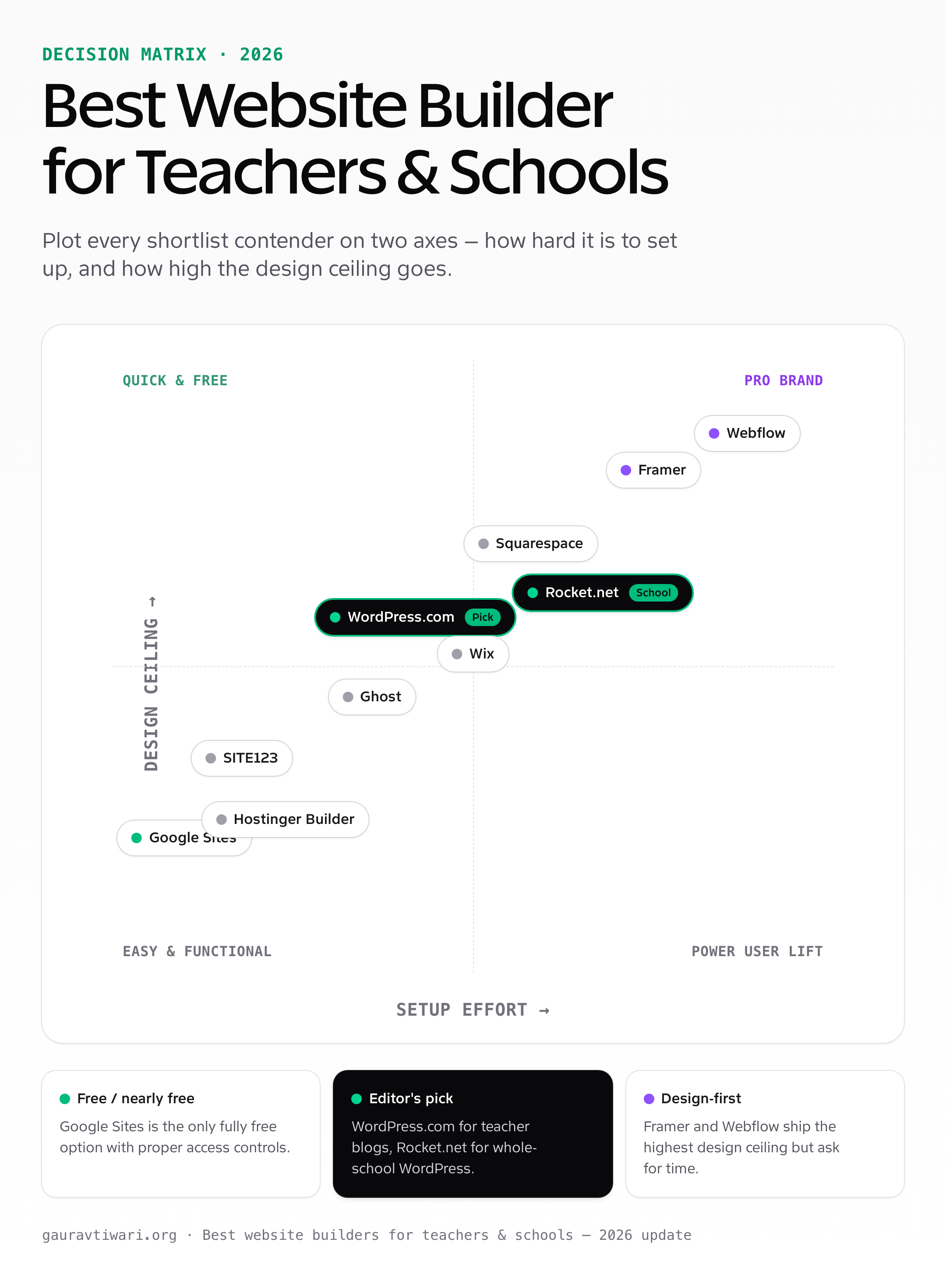
Quick verdict: Already on Google Workspace? Use Google Sites (free). Want a real blog and the cheapest path to a custom domain? WordPress.com Personal at $4 per month. Need WordPress with zero maintenance for a whole school? Rocket.net ($30/mo) with a free Cloudflare Enterprise CDN baked in. Design-first portfolio? Squarespace ($16/mo). Newsletter-led teaching brand? Ghost. Budget under $5/mo? Hostinger Website Builder.
Best Website Builders for Teachers and Schools in 2026
Ten platforms made the cut after testing the 2026 plans. The table below is the cheat sheet — pricing is the entry-level paid plan as listed in October 2026, education suitability is my opinion after building real sites on each.
| Platform | Best for | Free plan? | Entry price (2026) | Education fit |
|---|---|---|---|---|
| Google Sites | Schools on Google Workspace, class hubs | Yes (fully free) | $0 | ★★★★★ |
| WordPress.com | Teacher blogs, content-heavy school sites | Yes (with ads) | $4/mo Personal | ★★★★★ |
| Rocket.net (WP host) | Whole-school WordPress, no maintenance | No | $30/mo Starter | ★★★★★ (managed) |
| Squarespace | Design-first portfolios, faculty pages | 14-day trial | $16/mo Personal | ★★★★ |
| Wix | Custom layouts, booking, ADI templates | Yes (Wix branding) | $17/mo Light | ★★★★ |
| Webflow | Pixel-perfect school brand sites | Yes (2 pages) | $14/mo Basic | ★★★ (steeper curve) |
| Framer | Modern landing pages, design programs | Yes (subdomain) | $5/mo Mini | ★★★★ |
| Ghost | Newsletter-led teaching brand | Self-host free | $9/mo Ghost(Pro) | ★★★★ |
| Hostinger Website Builder | Tightest budget, AI-assisted setup | No | $2.99/mo | ★★★ |
| SITE123 | Tutors and solo teachers, fastest setup | Yes (subdomain) | $12.80/mo Premium | ★★★ |
Google Sites
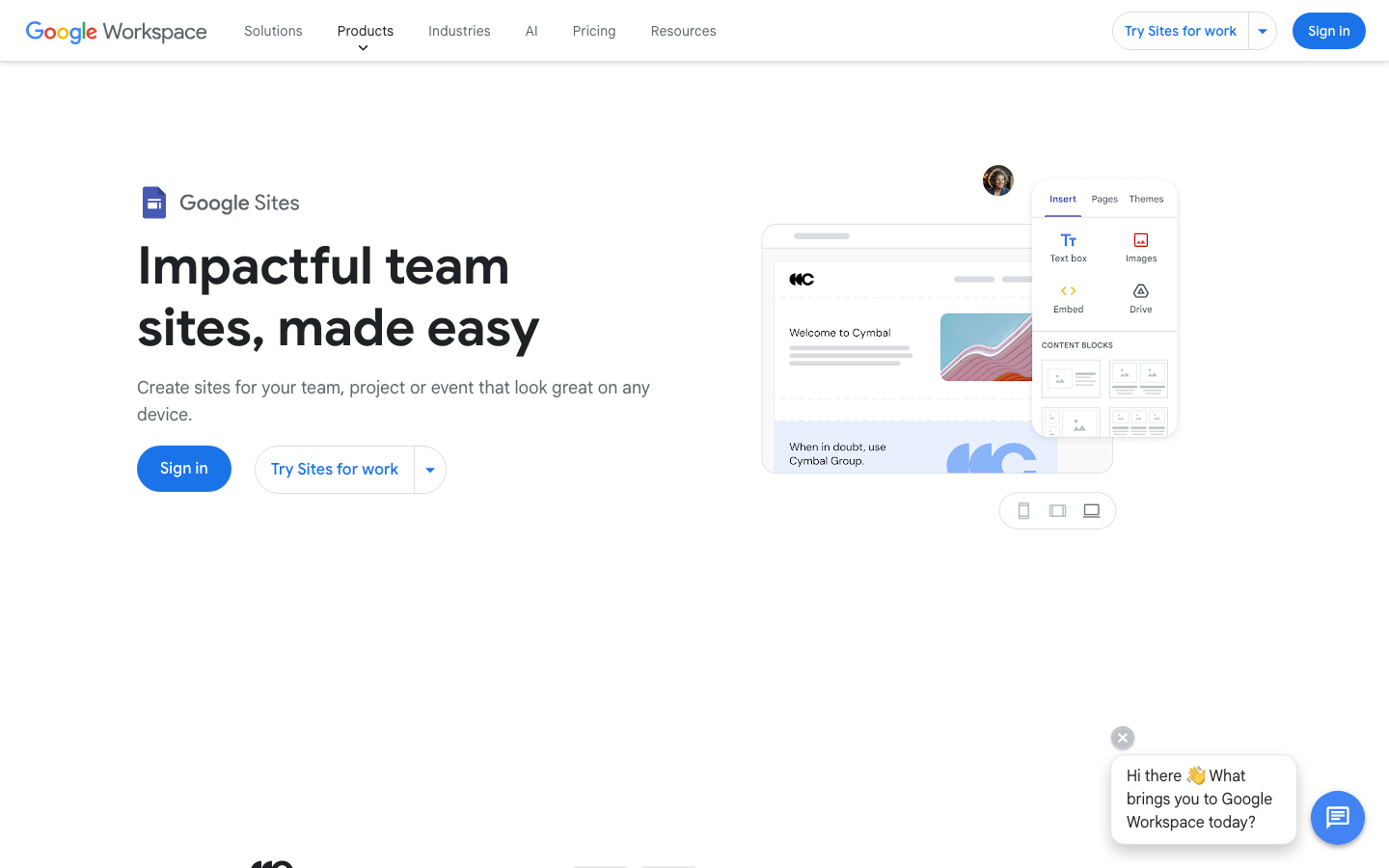
Google Sites is free with native Google Workspace integration. Google Sites is the obvious answer for any school running Google Workspace for Education. It is genuinely free, integrates natively with Google Classroom, Drive, Docs, Calendar, Forms, and YouTube, and has the best access controls of any free builder. You can publish a site to the open web, restrict it to your school domain, or limit access to specific people. That last bit is what makes it FERPA-friendly for posting student work.
A class website is live in 25-30 minutes. Build it once, duplicate it for every section. Embed Google Forms for assignments, Google Calendar for the schedule, a folder for resources. Students can spin up portfolio sites for class projects with no permission gymnastics.
What is good: Free with zero strings, real access control via Workspace, instant Classroom integration, and the simplest editor on the list. What is broken: Designs all look the same; templates are limited to four boring layouts. No custom domain on free accounts unless you connect via Workspace. No blog, no plugins, no e-commerce. Under the hood: Static-site generator pinned to Google’s identity infrastructure. Pages are CDN-cached, mobile-responsive by default, and load fast. What should be better: Google should ship a real template marketplace and let teachers add a blog without bolting on a Blogger workaround.
WordPress.com
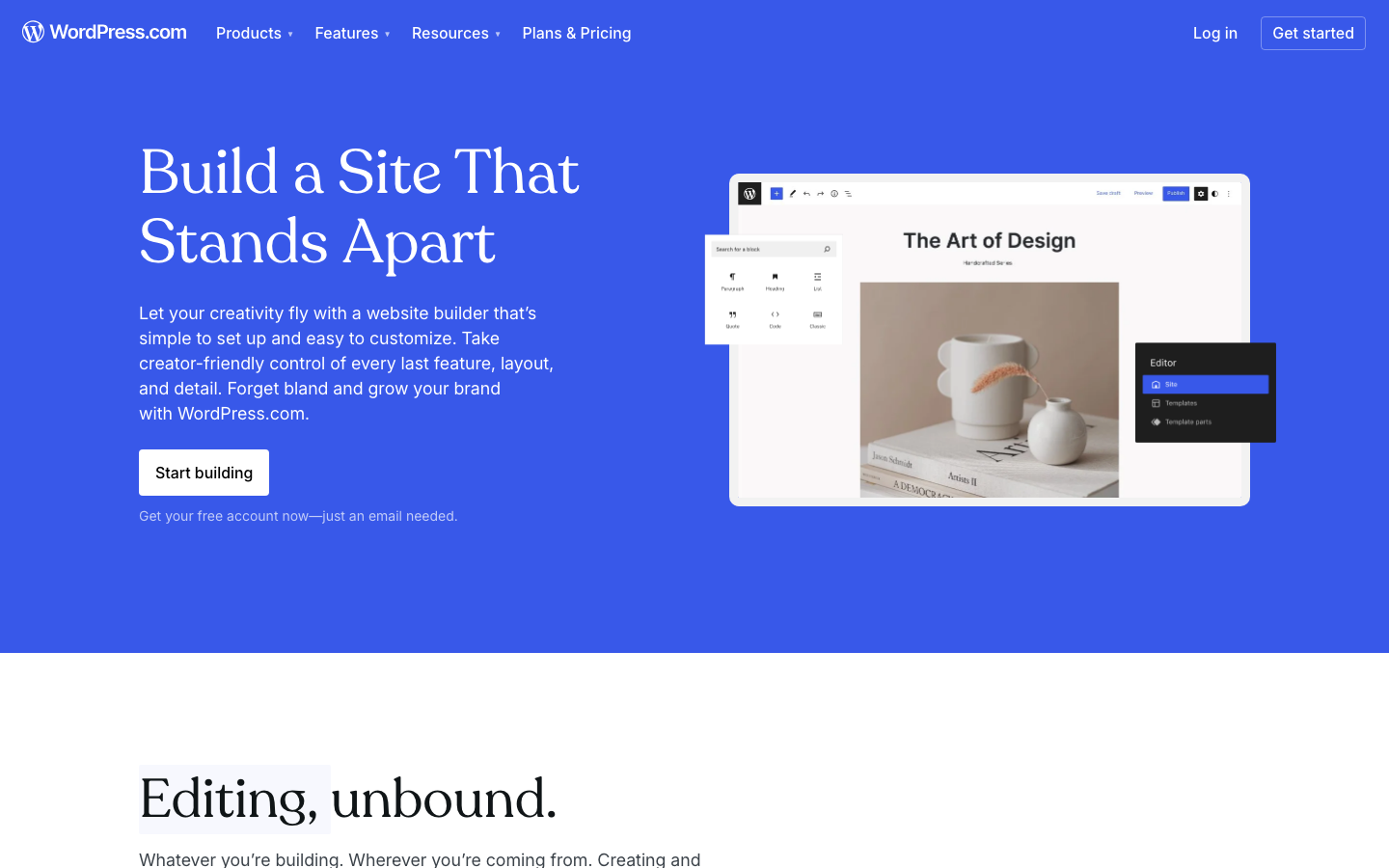
WordPress.com is the best pick for teacher blogs and school content hubs. WordPress.com is the right answer when you need a real blog, native LaTeX/Markdown, and a managed WordPress experience without ever touching a server. The Personal plan at $4/month gives you a custom domain, no ads, and 6 GB of storage — enough for a content-heavy class site or department newsletter. Premium ($8/mo) adds the premium themes, video uploads and payment features. Since April 2026, every paid plan, Personal included, can install plugins and use custom CSS, so you can add LearnDash, Tutor LMS, Ninja Forms and the rest of the educator ecosystem without moving up to Business ($25/mo).
I run several educator sites on WordPress.com because the maintenance is literally zero — Automattic handles updates, backups, security, and CDN. Built-in Jetpack adds stats, SEO, social sharing, and a basic firewall. The Gutenberg editor in 2026 is genuinely good for non-technical teachers; reusable blocks and patterns mean a science teacher can update the lab schedule without learning HTML.
What is good: Real WordPress under the hood, real custom domain on the $4 plan, native LaTeX and Markdown for math/science teachers, free Jetpack stats and CDN, the most reliable host on the list.
What is broken: The free plan can’t install plugins and shows WordPress.com ads. Server tools such as SFTP, SSH and staging still need the Business plan ($25/mo), and some plugins stay blocked on every plan. The block editor still confuses anyone trained on the classic editor.
Under the hood: Distributed PHP/MySQL stack across hundreds of data centers, Cloudflare-fronted, automatic image optimization, server-side caching. This is the most over-engineered platform you can rent for $4.
What should be better: Every site needs its own plan, so a school running several class sites pays for each one separately. A multi-site plan for schools would make it much easier to recommend to a whole department.
Read more: WordPress.com vs WordPress.org — the differences that matter for an educator.
Rocket.net
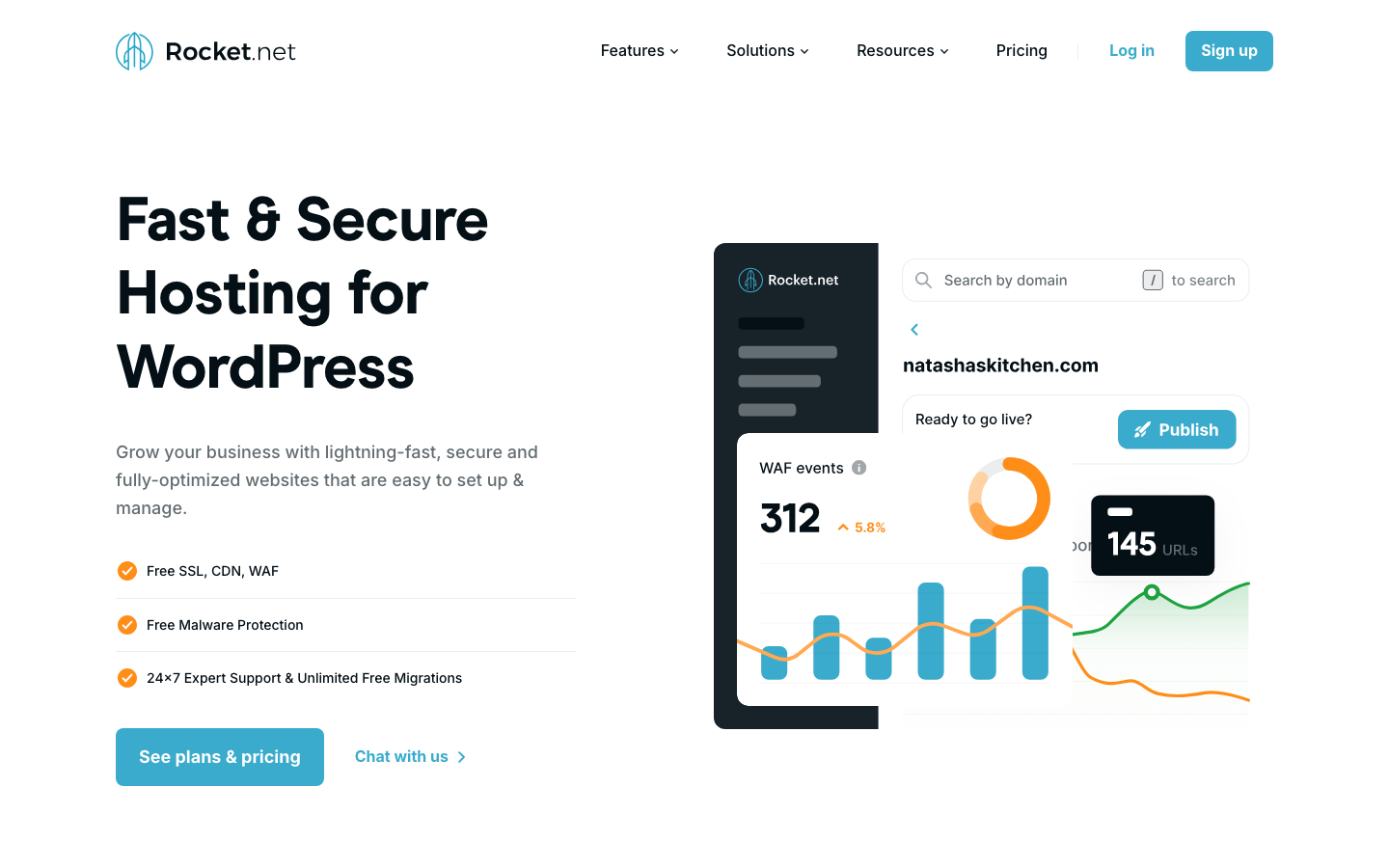
Rocket.net is the right managed WordPress host for whole-school sites. If you want WordPress (not WordPress.com) for a full school site — multiple authors, custom plugins, a real LMS, hundreds of pages — Rocket.net is the host I now recommend over the older Bluehost/SiteGround options. The Starter plan is $30/month for one site with 250,000 visits, and it bundles Cloudflare Enterprise CDN, Imunify360 malware scanning, daily backups, and free unlimited migrations. The whole point of Rocket is that a school IT person never has to think about updates, caching, or security headers — it is all configured at the platform level.
I ran a 4,000-student school site on Rocket for a year. Time-to-first-byte sat at 78ms globally, page load under 1.2s on 3G test profiles, zero downtime through three Imunify-blocked attack waves. The dashboard is genuinely simple — connect a domain, install WordPress, point a name server, done. SSH and WP-CLI access are included on every plan, which matters if you have a developer. Edu pricing exists if you ask their team directly.
What is good: Cloudflare Enterprise CDN at every plan tier (a $200/mo upgrade everywhere else), genuine 24×7 expert WP support, free unlimited migrations, predictable pricing.
What is broken: $30/mo entry plan is steep next to WordPress.com’s $4. No multi-site / network plan in the entry tier. Server location choice is less granular than Kinsta.
Under the hood: Cloudflare Enterprise on every site (Argo, WAF, image optimization), LiteSpeed-style PHP caching, NVMe storage. The infrastructure is what makes the support story possible.
What should be better: A formalized education tier with a discount and multi-site option for districts would unlock a much bigger market than they currently chase.
Squarespace
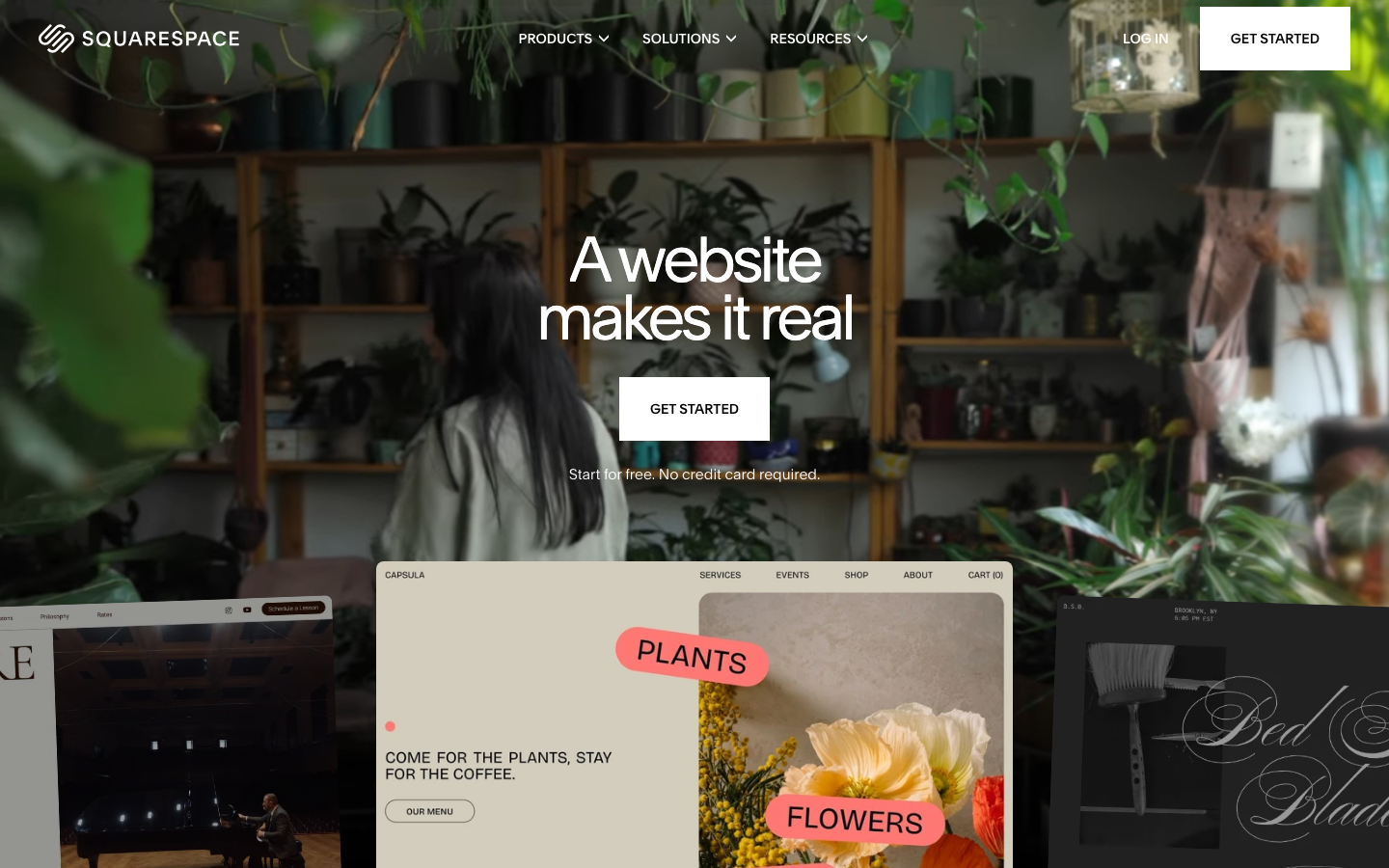
Squarespace ships designer-quality templates for faculty and portfolio sites. Squarespace is what I recommend when the brief is “looks beautiful, no design taste required.” The template library in 2026 is the strongest in the category — every template is responsive, type-balanced, and mobile-tested. Personal at $16/month covers a teacher portfolio or department page. Business at $23/month adds online booking, gift cards, and the appointment scheduling tool that art and music teachers ask about.
Permira closed its $7.2B acquisition of Squarespace in October 2024 and the platform has not regressed since. Fluid Engine (their drag-and-drop layout system) is now mature and finally lets you place elements pixel-precise, which used to be the one thing Wix did better. Squarespace also still bundles a free domain on annual billing.
What is good: Best-in-class templates, every output looks professional even in untrained hands, free domain for the first year on annual plans, deep Acuity Scheduling integration (now built in).
What is broken: No native LMS, no real plugin ecosystem, blog tagging is awkward for faculty bios, $16 minimum is steep when you compare to the WordPress.com $4 plan.
Under the hood: React-based front-end, edge-cached at AWS CloudFront. Image pipeline auto-generates AVIF/WebP and srcset variants, which is why Squarespace sites feel fast even on weak Wi-Fi.
What should be better: A real education plan with student/staff seats and FERPA-compliant member areas would close the gap with Wix Education.
Wix
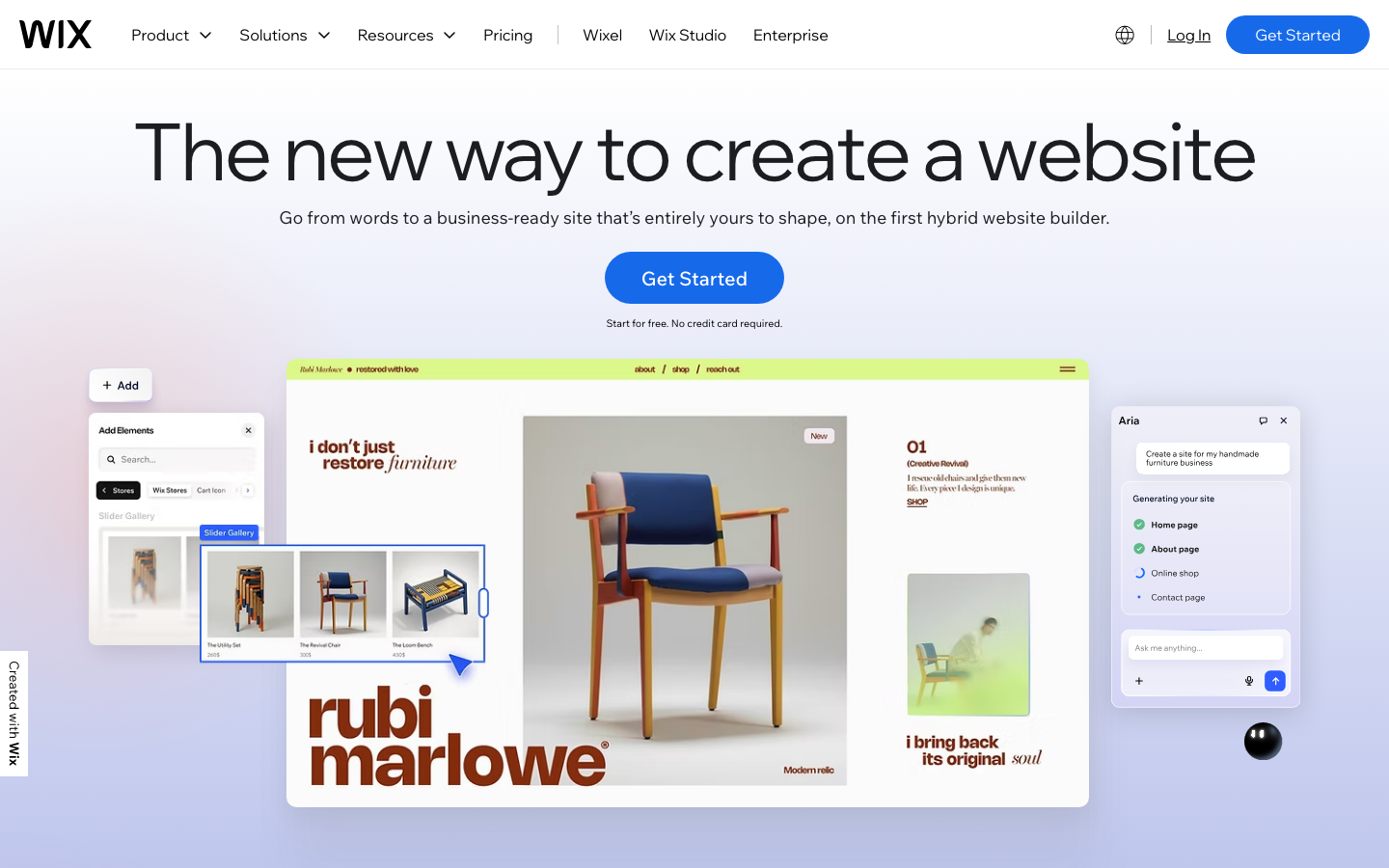
Wix has the most templates and the most drag-and-drop freedom on this list. Wix has 900+ templates in 2026, with at least 60 specifically tagged for Education, Tutoring, or Schools. The drag-and-drop editor is the most permissive of all the builders — you can place anything anywhere — which is freedom or rope depending on your design instincts. Wix ADI generates a starter site from three questions in about 90 seconds; the output is decent enough to ship if you swap colors and fonts. Wix Studio (the newer pro editor) gives you Webflow-style responsive control if you outgrow the classic editor.
Light at $17/month is the entry plan and includes a free domain for the first year. Core ($29/mo) adds basic ecommerce. The Wix App Market has solid education add-ons — bookings, attendance forms, parent portals — though the better ones are paid.
What is good: Largest template library, most permissive layout, ADI is genuinely useful for a first draft, App Market covers booking/forms/CRM out of the box.
What is broken: Templates are not interchangeable once chosen, the URL structure is uglier than competitors, ad rail in the editor is loud, exports are not portable.
Under the hood: Single-page-application architecture; sites are built as React component trees served from Wix’s edge. Velo (their dev mode) lets you write JavaScript and add a database when you need real logic.
What should be better: Let templates be swappable post-publish. The “you are locked into your template forever” rule sends a lot of returning customers to Squarespace.
Webflow
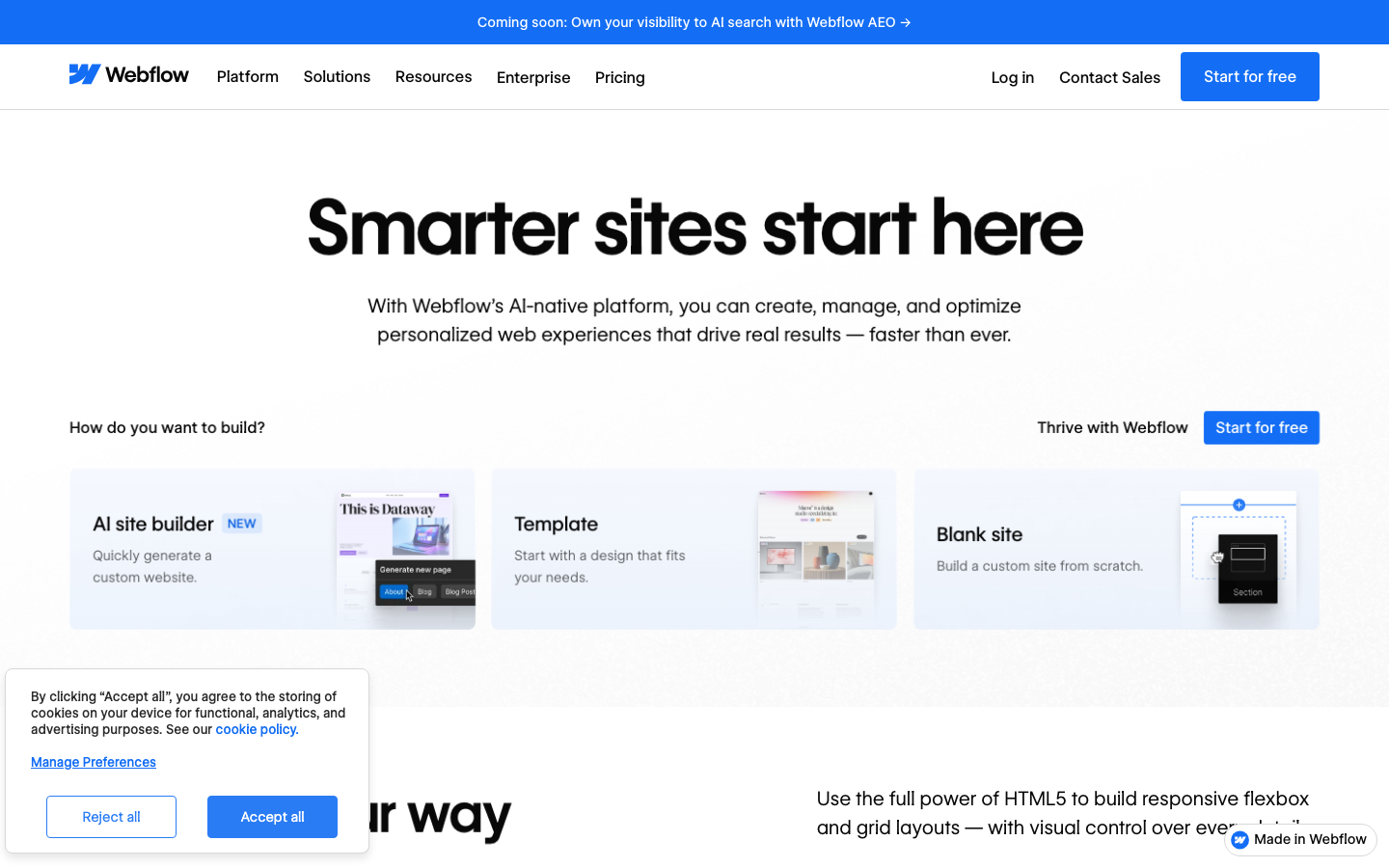
Webflow delivers pixel-perfect school brand sites. Webflow sits between traditional builders and hand-coded development. You design visually but the output is clean semantic HTML, fast static delivery, and a real CMS with custom fields. I use Webflow for clients where the brand needs to be specific — boutique private schools, design-led summer programs, faculty portfolios for design and architecture departments.
The free plan covers 2 pages on a webflow.io subdomain. Basic at $14/month adds a custom domain and 150 static pages. CMS at $23/month unlocks the database-style content collections that matter for a faculty directory or course catalog. Webflow University is still the best learning resource any SaaS company has put out.
What is good: Cleanest output HTML/CSS in the category, real CMS with custom fields, native interactions and animations, the design ceiling is whatever you can imagine.
What is broken: Steepest learning curve of any tool here. The interactions panel rewards Figma fluency. Plans escalate fast — a small ecommerce school store costs $39/mo on the Business plan.
Under the hood: Static-site generation backed by AWS CloudFront. Forms POST to Webflow infrastructure. The CMS is a Postgres-backed REST API exposed as a visual data editor.
What should be better: A “first site free for educators” tier would be reciprocal — design teachers already teach Webflow, give them a free home for their portfolio.
Compare: Webflow or Wix — which builder is right for you.
Framer
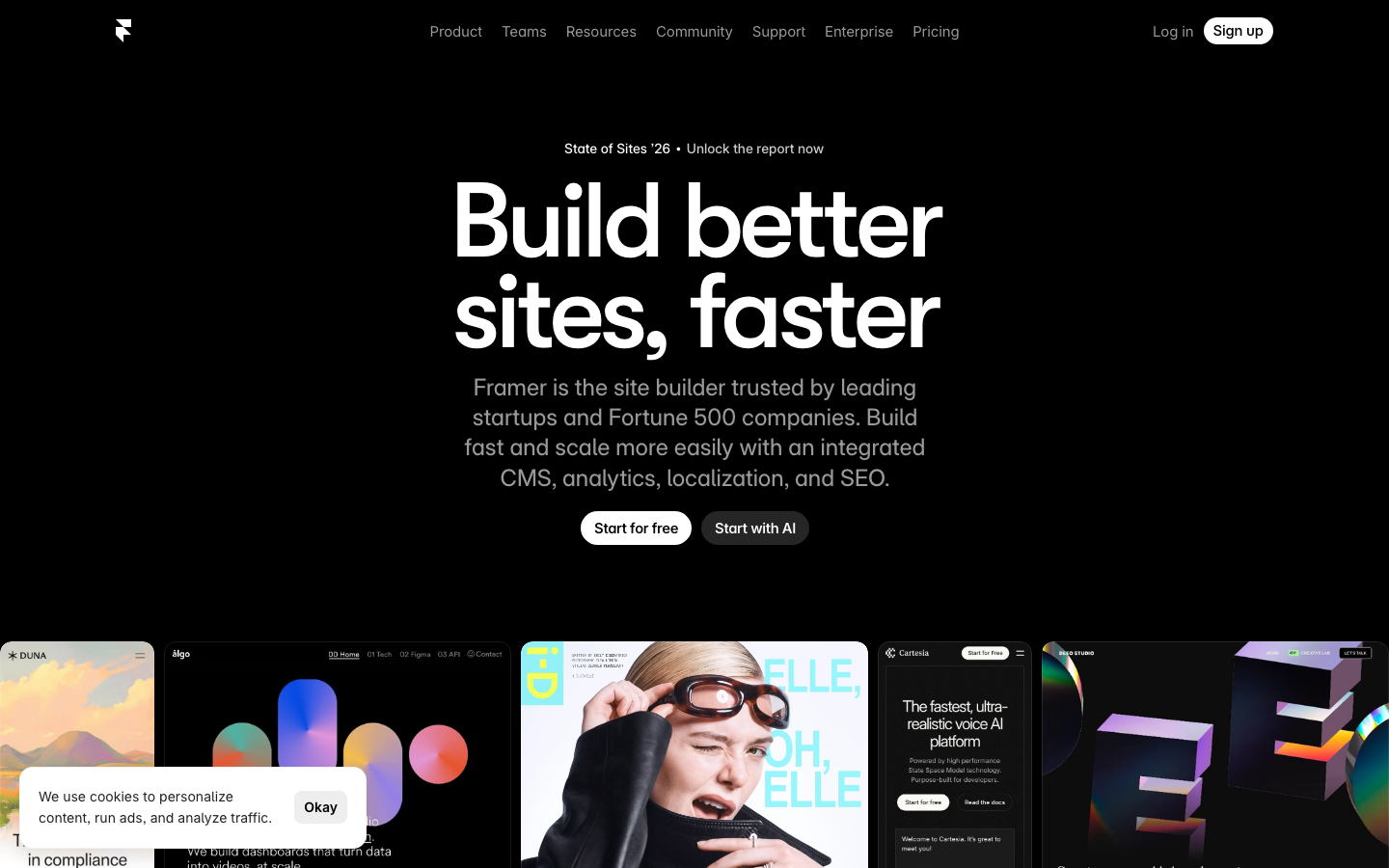
Framer produces the fastest, most modern school landing pages on this list. Framer started life as a Figma-style prototyping tool and turned into a full website builder. The output is unfairly fast — pages load in under 800ms because Framer pre-renders everything as static HTML and serves from edge nodes. The component model means a design teacher can spin up a class hub from a Figma-like canvas.
Free plan includes a framer.site subdomain. Mini at $5/month adds a custom domain. Basic at $15/month opens the CMS, which most school sites will want. Framer’s AI features can generate first-draft layouts from a text prompt and have actually become useful in 2026 — the output is starting templates that need polish, not finished sites.
What is good: Fastest page loads in the category, best modern aesthetics out of the box, AI prompt-to-layout works, prices below Webflow.
What is broken: CMS is shallower than Webflow’s, fewer integrations than Wix, the free subdomain (framer.site) is not a great look on a school newsletter.
Under the hood: Edge-rendered React with aggressive prefetching; static export is part of the build pipeline. Animations run on CSS transforms, not heavy JavaScript.
What should be better: A schools/non-profits plan tier would help — $5 mini is good but not free.
Ghost
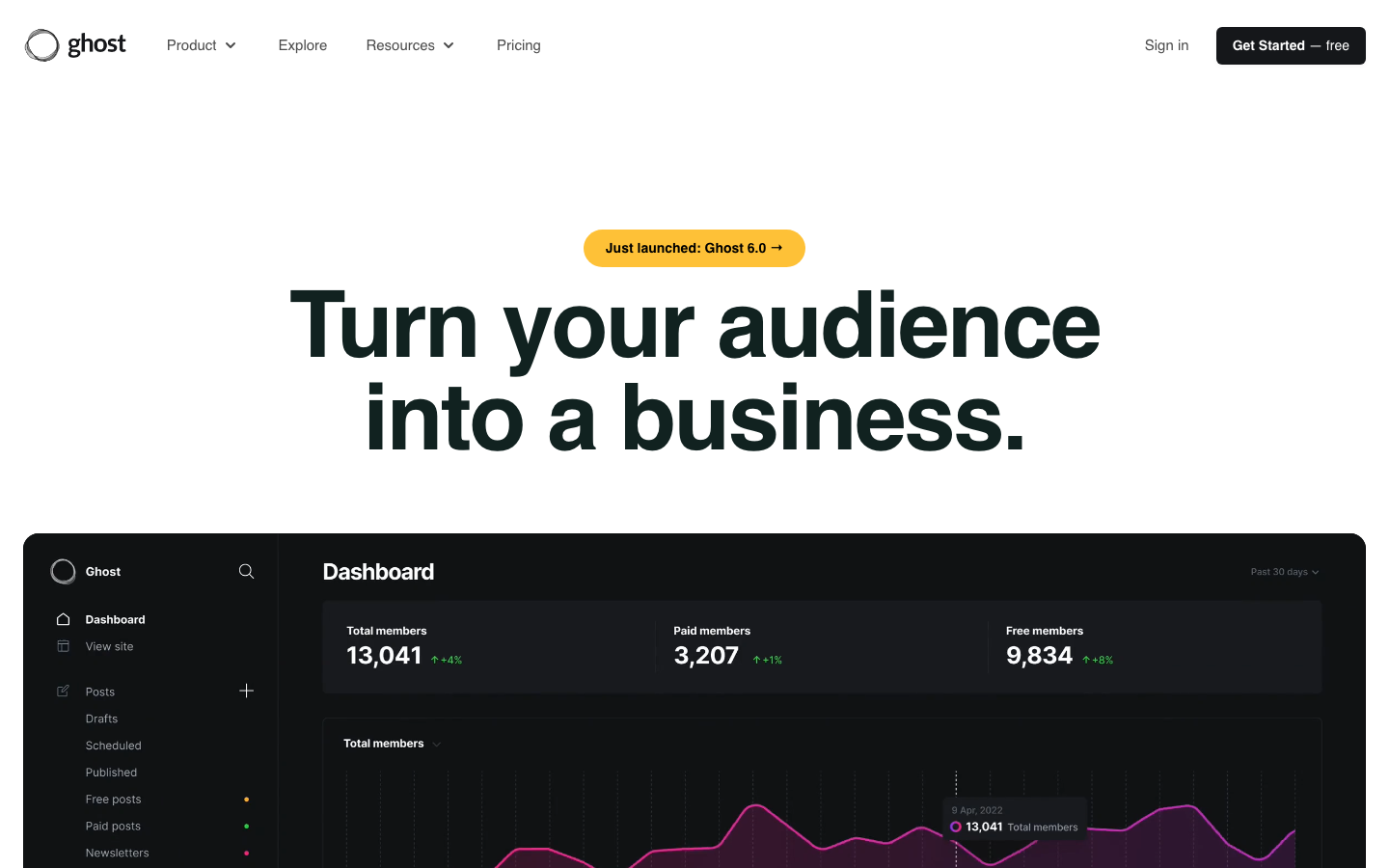
Ghost is built for newsletter-led teaching brands and department publications. Ghost is the answer when the goal is publishing — a teaching newsletter, a department publication, a paid subscription tier for parents, a class blog with email digests. It is open-source, has the cleanest writing UI in the category, and ships native email newsletters built on Mailgun, so you do not bolt on Mailchimp or ConvertKit.
Self-hosting is free on a $5 DigitalOcean droplet (one-line install via Ghost-CLI). Ghost(Pro) managed hosting starts at $9/month for 500 members and scales by member count, not page views, which is the right model for a teaching newsletter. Memberships, paid tiers, gated content, and Stripe integration are all native — selling a $5/mo “homework helper” subscription takes about 20 minutes to set up.
What is good: Best writing experience by a wide margin, native email newsletters, native paid memberships, open-source so you can self-host. The whole thing feels designed by people who write.
What is broken: Not a website builder; you cannot build a school home page with team grids and bookings. Theme customization needs Handlebars/CSS knowledge or a paid theme.
Under the hood: Node.js stack on Express + Knex + SQLite/MySQL. Email delivery via Mailgun with native batching. The hosting model is genuinely good — paid plans only.
What should be better: A first-party “school template” theme bundle would unlock a use case Ghost is technically perfect for and culturally invisible to.
Hostinger Website Builder
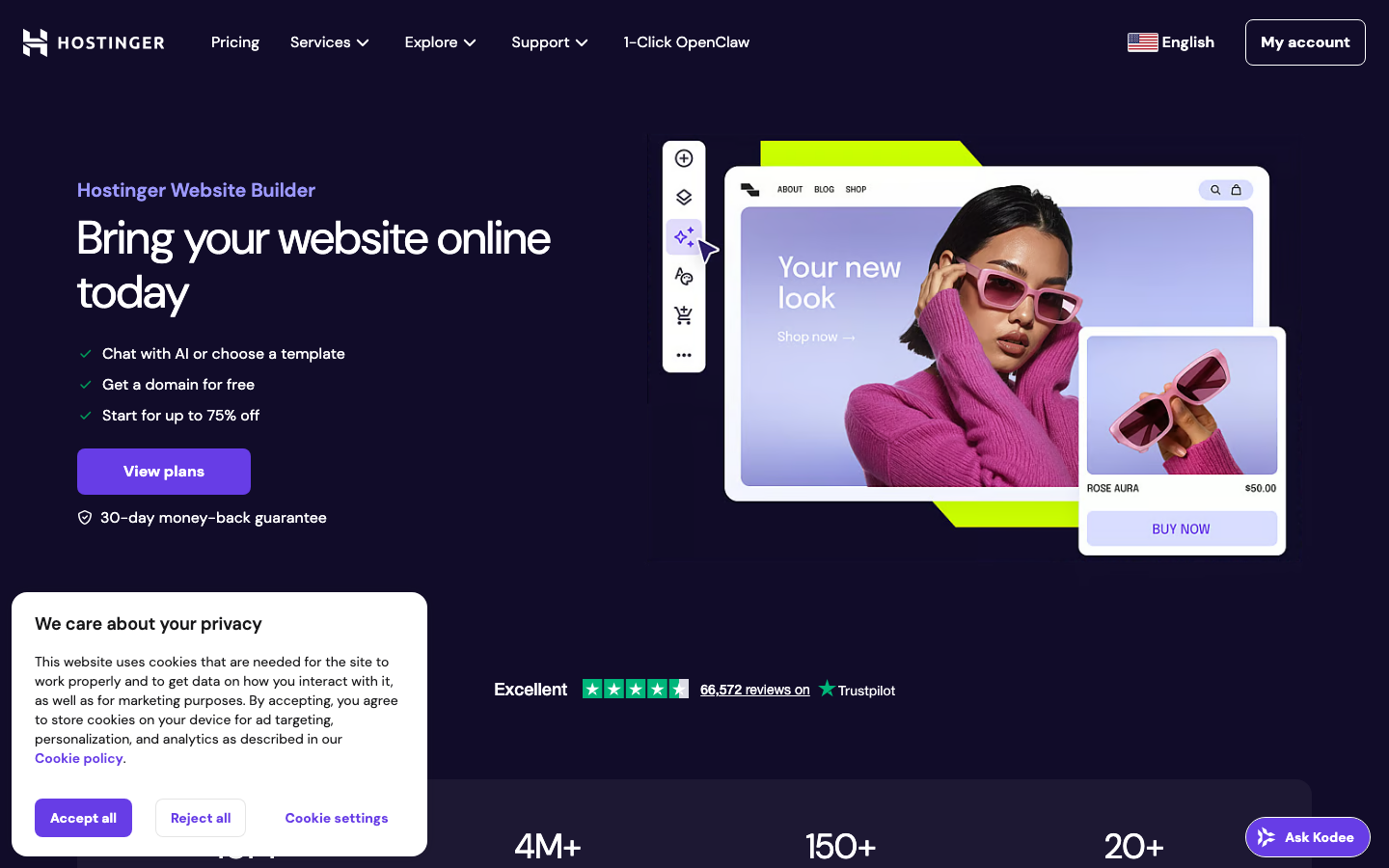
Hostinger Website Builder is the best budget option under $5 a month. Hostinger Website Builder (the platform formerly called Zyro, now fully rebadged) is the best deal on the list for tight school budgets. $2.99/month on a 48-month commitment includes the builder, hosting, a free domain for the first year, free SSL, business email, and 100 GB of storage. AI Writer drafts page content. AI Heatmap shows where visitors look. Drag-and-drop is straightforward.
What is good: Lowest total cost on the list including domain and email, AI tools genuinely save 30 minutes of setup, 24×7 chat support is real and fast.
What is broken: Renewal pricing is sharply higher (often 2-3× the intro price), template library is smaller than Wix or Squarespace, plugin/integration ecosystem is thin.
Under the hood: PHP/MySQL stack on Hostinger’s shared hosting, LiteSpeed cache, server in the region you pick at sign-up. Edge cache via Cloudflare optional add-on.
What should be better: Renewal pricing transparency. The $2.99 looks great until year five lands at $11.99 with no warning.
SITE123
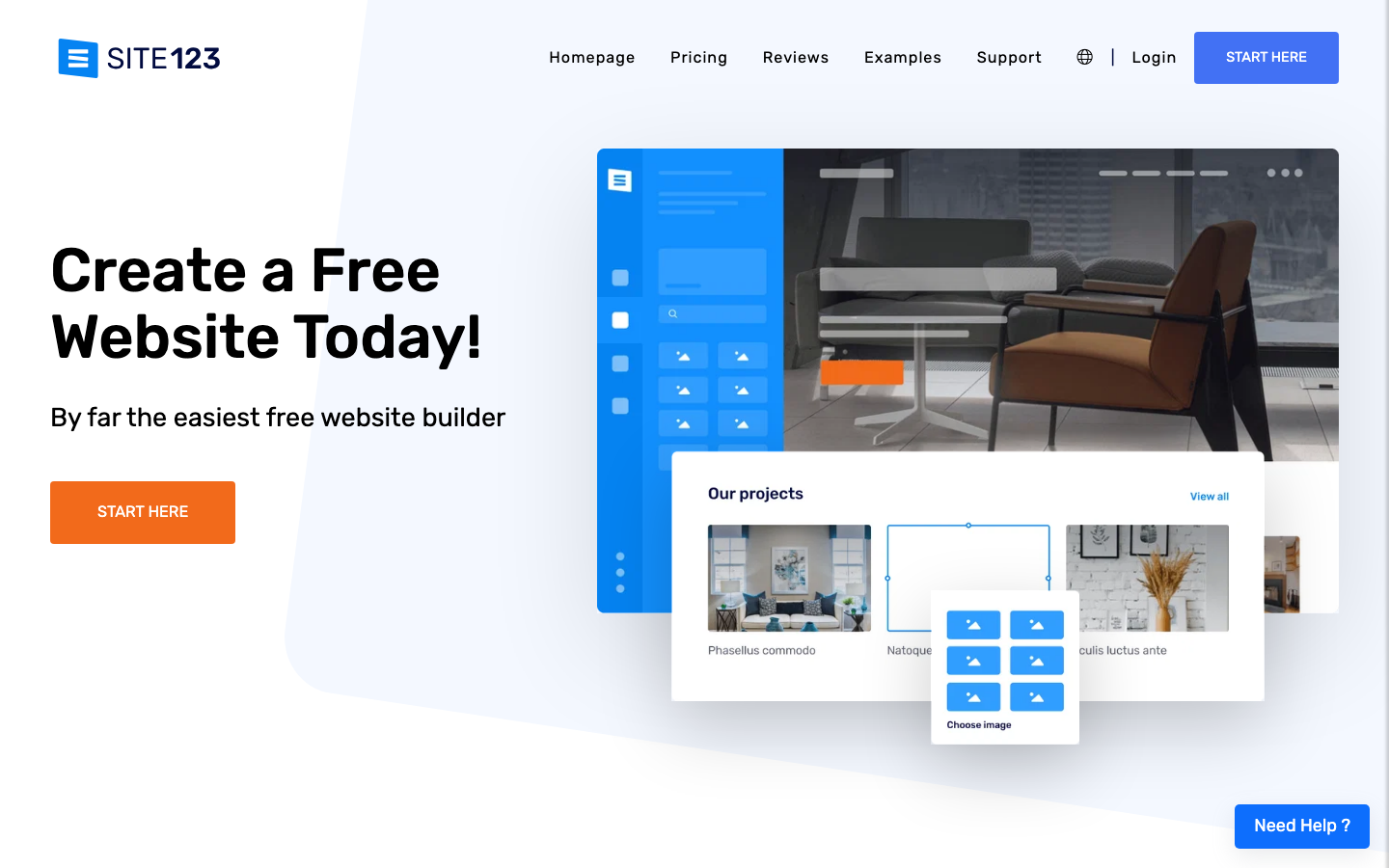
SITE123 is the fastest path to a finished site. SITE123 is a structured builder, not a free-form one. It picks a layout based on five questions and you fill content into pre-set blocks. That is faster than every other tool on this list — you can have a working tutor or class site live in 35 minutes — but it is also the least design-flexible. Free tier gives 500 MB and a randomized subdomain. Premium at $12.80/mo unlocks 10 GB plus a free custom domain for one year.
What is good: Fastest setup time, decent multilingual support (good for international school faculty pages), built-in live chat add-on, no design decisions required.
What is broken: Templates feel template-y; sites publishedon SITE123 are recognisable. The randomized free subdomain is awful (e.g. yourname-3xj.site123.me).
Under the hood: Server-rendered structured page sections; hosted on SITE123’s own infrastructure with global CDN. SEO is functional, not advanced.
What should be better: A custom domain on the free plan would solve 80% of complaints overnight.
Which Website Builder Should a Teacher Choose?
Pick by the answer to a single question. If your school uses Google Workspace, the answer is Google Sites. If you want a real blog and a custom domain for the price of a coffee, WordPress.com Personal at $4/month. If you want WordPress proper for a whole school, Rocket.net at $30/month gets you Cloudflare Enterprise included. If you care more about design polish than CMS power, Squarespace at $16/month. If you want pixel-perfect design control and have a weekend to learn, Webflow. If your goal is a teaching newsletter, Ghost. If your budget is under $5/month, Hostinger Website Builder.
Which is the best website builder for beginners?
Google Sites for anyone on Google Workspace, Hostinger Website Builder for anyone else. Both let a non-technical teacher publish a working site in under an hour with no design decisions to make.
Which is the best website builder for hosting videos and documents?
WordPress.com for documents and embedded YouTube/Vimeo. Google Sites for native YouTube and Drive embeds. Avoid uploading raw video to any builder — it eats storage and slows the site. Embed from YouTube/Vimeo instead.
Which website builder offers the best templates and design?
Squarespace for out-of-the-box polish. Webflow and Framer for custom design ceilings. Wix for sheer template volume.
I want students and parents to be updated with classes and events. Which website builder should I choose?
WordPress.com (blog + Jetpack subscriptions) or Ghost (publishing + native newsletter) for content updates. Google Sites + Calendar embed for schedules. Pair Ghost with a free Mailgun account if you self-host.
Which is the easiest-to-use website builder?
Google Sites and SITE123, in that order. Both ship working defaults that look fine without any design intervention.
I want a fully functional online classroom. Which website builder provides that?
Run WordPress with an LMS plugin like LearnDash, Tutor LMS, or LifterLMS. The two cleanest paths in 2026 are WordPress.com, where any paid plan from Personal ($4/month on annual billing) can now run an LMS plugin, or self-hosted WordPress on Rocket.net at $30/month (full plugin freedom). For a step-by-step walkthrough, see how to set up an online teaching website with WordPress.
The Call
Pick one builder this week and commit to a 30-minute test page. If your school is on Workspace, start with Google Sites and you are done. If you want WordPress for the long term and you have $4/month, WordPress.com is the right path. If you want a school-grade WordPress install with no maintenance burden, Rocket.net is the host I would put my own school on. Spend an hour testing, not a month researching — every builder here lets you migrate later if you change your mind. Your students and parents will thank you for having one place that always knows where the homework is.
See also: best free website builders for any purpose, best online teaching platforms, best digital pen tablets for online teaching.
Frequently Asked Questions
What is the best free website builder for teachers?
Google Sites is the best free option for teachers in 2026. It is completely free with a Google account, integrates with Google Classroom and Drive, and requires zero technical knowledge. If your school uses Google Workspace for Education, it is the natural choice. WordPress.com also offers a free plan with more customization options, though it displays ads and limits storage to 1 GB.
Can I build a school website without knowing how to code?
Yes. Every builder on this list uses drag-and-drop editors that require zero coding knowledge. Google Sites and SITE123 are the easiest to learn. You can have a functional school website live within a few hours of signing up, including pages for schedules, staff directories, and contact forms.
How much does a school website cost per year?
Google Sites is completely free. WordPress.com starts at $4/month (Personal plan) for a custom domain and no ads. Squarespace starts at $16/month and Wix at $17/month for their entry-level paid plans. For most teachers, the free options (Google Sites or WordPress.com free) are more than sufficient. Only upgrade to a paid plan if you need a custom domain or advanced features.
Should a teacher use WordPress.com or WordPress.org?
WordPress.com is better for most teachers. It handles hosting, security, and updates for you. WordPress.org gives you more control and plugin options, but you need to manage your own hosting and maintenance. If you just want a class website or school portal, WordPress.com is the simpler choice. If you want a full LMS with course enrollment, WordPress.org with a hosting provider like Bluehost is worth the extra setup.
Can I add an online classroom or LMS to my school website?
Yes, but not with every builder. WordPress.org with an LMS plugin like LearnDash or Tutor LMS is the best option for a full online classroom with lessons, quizzes, and student progress tracking. WordPress.com Business plan ($25/month) also supports plugins. Wix and Squarespace can embed third-party tools but don’t have native LMS functionality. Google Sites can link to Google Classroom for a lightweight alternative.
Which website builder is best for hosting video lectures?
None of them are ideal for direct video hosting because video files are large and eat storage quickly. The best approach is to upload videos to YouTube (unlisted if needed) or Vimeo and embed them on your website. WordPress.com, Wix, Squarespace, Ghost, and Google Sites all support video embedding natively. This keeps your site fast while giving students easy access to lectures.
Is Webflow or Framer too advanced for teachers?
Both have a steeper learning curve than Wix or Squarespace, but they are not as difficult as learning to code. Webflow University offers free video courses that can get you productive in a weekend. Framer has a growing template library that lets you customize pre-built designs rather than starting from scratch. If you teach design, art, or technology subjects, the extra learning time pays off with a significantly better-looking website.
What is the cheapest way to build a school website?
Google Sites is completely free. If you need more features than Google Sites offers, Hostinger Website Builder starts at around $2.99/month and includes hosting, a free domain, and an SSL certificate. Framer Mini at $5/month is another affordable option with better design tools. WordPress.com Personal at $4/month is the best value if you need a blog. Avoid paying for premium plans until you have outgrown the free or entry-level options.
Tell Google you want more of this.
Add Gaurav Tiwari as a preferred sourceOne tap, and this site shows up more often in your own Top Stories, AI Overviews and AI Mode. Remove it any time.
Disclaimer: This site is reader-supported. If you buy through some links, I may earn a small commission at no extra cost to you. I only recommend tools I trust and would use myself. Your support helps keep gauravtiwari.org free and focused on real-world advice. Thanks. - Gaurav Tiwari