
A transistor uses a small signal to control a larger current, so it can switch or amplify. See how BJTs and MOSFETs work, with circuit diagrams, CMOS logic and FinFET vs GAAFET.
Physics
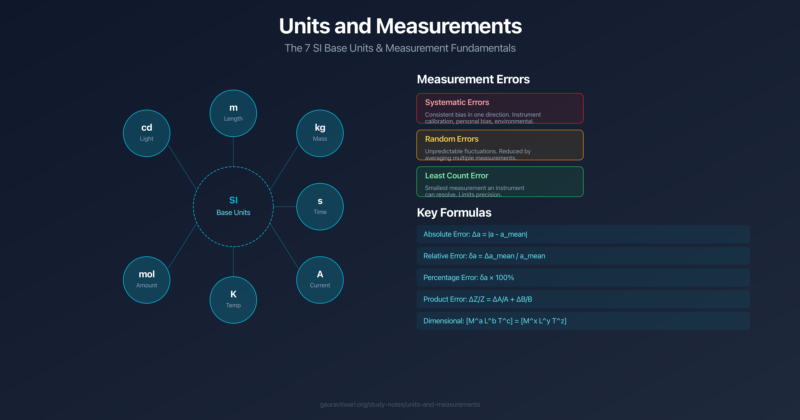
Units and measurements form the foundation of all scientific calculation. From SI units and dimensional analysis to significant figures and unit conversion, mastering these concepts is essential for physics, chemistry, and engineering students. This reference guide covers all standard units, conversion factors, and measurement principles you’ll need throughout your studies.

Physics fundamentals start with understanding forces, motion, and energy. This reference covers the key concepts in classical mechanics, including Newton’s laws, friction, gravity, and work-energy theorems. Designed for students who need a clear, organized review of basic physics principles with formulas, definitions, and examples in one place.

Bosons have integer total spin and follow bosonic statistics. Learn elementary and composite examples, force carriers, the Higgs boson and the distinction between statistical classification and interaction roles.

The four fundamental forces are gravity, electromagnetism, the strong interaction, and the weak interaction. Compare what they act on, their ranges, and their roles.

The Standard Model of particle physics is the most successful scientific theory ever tested. It describes 17 fundamental particles and three of the four fundamental forces. This guide covers quarks, leptons, bosons, the Higgs mechanism, and the mathematical framework that holds it all together. Essential reading for physics students wanting to understand the building blocks of matter.

Special relativity changed our understanding of space, time, and energy forever. Einstein’s two postulates lead to mind-bending consequences: time dilation, length contraction, and mass-energy equivalence. This guide covers the mathematical framework of special relativity with clear derivations, thought experiments, and practical applications in modern physics.
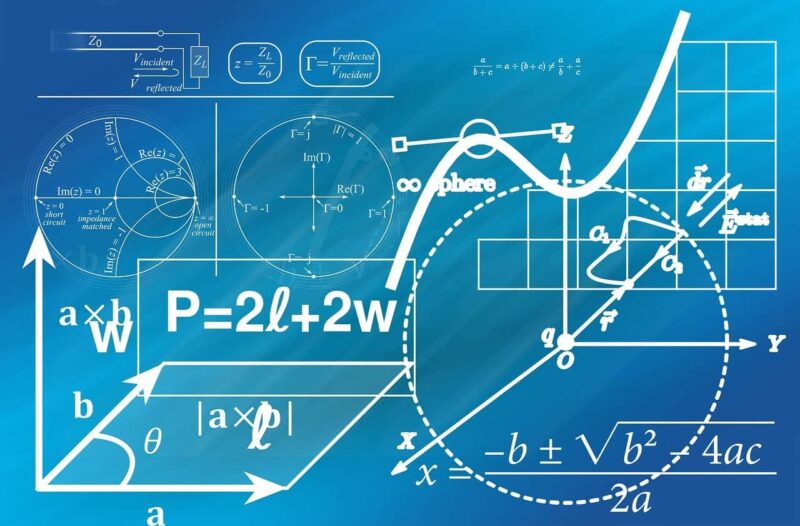
Learn the four kinematic equations for constant acceleration, how to choose the right formula, and how to solve motion, braking, and free-fall problems.

The Boltzmann constant connects temperature with energy per particle. Learn its exact value, units, kBT, entropy, probability, and ideal-gas uses.

Symmetry in physics means invariance under transformation. Learn Noether’s theorem, conservation laws, gauge symmetry, and spontaneous symmetry breaking.

Macrostates describe bulk conditions; microstates specify the underlying microscopic arrangement. Learn multiplicity, entropy, probability, and worked examples.
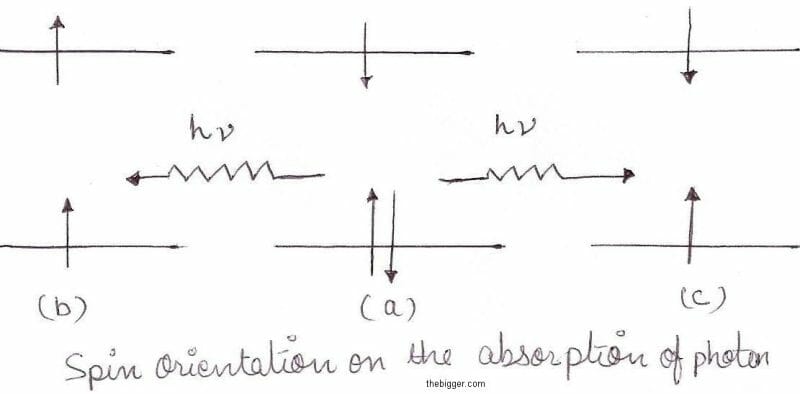
A Jablonski diagram explained with a clear visual and process table for absorption, relaxation, fluorescence, intersystem crossing, and phosphorescence.