by
by
WordPress security plugins are one layer of protection, not the whole security system. For most sites, Wordfence is the strongest free starting point. Sucuri is the better fit when you need a cloud firewall and cleanup service, while Patchstack is built around vulnerability intelligence and virtual patching.
The wrong way to choose is by counting features. A scanner, login limiter, endpoint firewall, cloud WAF, backup service and incident-response service solve different problems. Start with the layer your host does not already provide, then add two-factor authentication, tested backups, prompt updates and monitoring.
A plugin can block malicious WordPress requests, but it cannot absorb every distributed denial-of-service attack. Large volumetric attacks must be handled upstream by your host, reverse proxy, CDN or cloud WAF. Cloudflare’s DDoS explainer is a useful starting point for that distinction.
Best WordPress Security Plugins in 2026
These ten WordPress security plugins are not interchangeable. The comparison below shows where each control runs, what it can see and the main gap you still need to cover. Check your host’s prohibited-plugin list before installing a scanner or firewall because some managed WordPress platforms already provide those controls.
- Defender Pro: All-in-one security inside the WPMU DEV suite
- Wordfence: Best free firewall and malware scanner (5M+ installs)
- Jetpack Security: Real-time cloud backups + malware scanning from Automattic
- All-In-One Security: Capable free hardening and login controls, with an optional Premium tier
- Sucuri: Cloud-based WAF + malware removal for high-traffic sites
- Kadence Security: Veteran plugin (formerly Solid Security) with strong brute force and 2FA features
- Patchstack: Virtual patching that fixes vulnerabilities before developers do
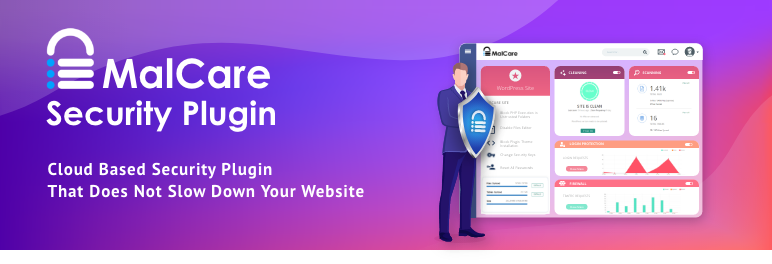
- MalCare: Cloud-based scanning with one-click malware removal
- WP fail2ban: Server-level brute force blocking for technical users
- Hide My WP Ghost: Optional fingerprint reduction, not a complete security suite
Compare the security layer before you choose
WordPress security plugins are easiest to compare by layer. The right choice fills a real gap in your stack. Running two full endpoint firewalls often creates duplicate scans, lockouts and harder troubleshooting.
| Product | Primary layer | Runs mainly | Best use | Main limit |
|---|---|---|---|---|
| Defender | Hardening, login, scanning | WordPress/server | WPMU DEV stacks | Pro value depends on the wider membership |
| Wordfence | Endpoint WAF, scanning, login | Your server | Strong free all-round protection | Scans and firewall work can strain small hosting plans |
| Jetpack Security | Backups, activity, scanning | WordPress.com cloud plus plugin | Sites already using Jetpack | Paid bundle can be more than a small site needs |
| All-In-One Security | Hardening and login controls | Your server | Guided free configuration | Advanced scanning and support sit in Premium |
| Sucuri | Cloud WAF and cleanup | Upstream cloud | Stores and high-value sites | Meaningful protection is in paid plans |
| Kadence Security | Login, hardening, monitoring | Your server | Login-focused protection | Pro security is bundled with Kadence Pro and Elite |
| Patchstack | Vulnerability intelligence | Cloud service plus plugin | Agencies and vulnerable-plugin response | Not a backup or malware-cleanup service |
| MalCare | Scanning and cleanup | Cloud service plus plugin | Offloaded malware workflows | Cleanup starts at $299/year |
| WP fail2ban | Login event logging | Server | Administrators who control fail2ban | Needs server access and covers a narrow layer |
| Functionalities (my plugin, not ranked) | Login throttling and attack-surface cleanup | WordPress | Sites whose host already runs a WAF and scanner | No firewall, malware scan or 2FA |
| Hide My WP Ghost | Fingerprint and path changes | WordPress | Reducing low-effort automated noise | Does not replace patching, WAF, backups or monitoring |
Defender and Defender Pro
Best for: WPMU DEV members who want security bundled with their hosting and site management tools.
Pros
- Comprehensive security hardening suite
- Built-in two-factor authentication
- Excellent audit logging
- Clean, intuitive interface
Cons
- Cloud backups need the full WPMU DEV membership
- Some features only available in premium
Summary
Defender by WPMU DEV is a comprehensive WordPress security plugin offering malware scanning, firewall protection, two-factor authentication, and security hardening. Defender Pro starts at $50 a year and adds real-time monitoring, the advanced firewall, IP blocklists and geo-blocking.
Price: USD 50 /year
Try Defender ProDefender by WPMU DEV is a solid security plugin that covers firewalls, malware scanning, 2FA and hardening in one package. It comes in free and premium versions (Defender Pro), and if you’re already paying for a WPMU DEV membership, you get Pro included.
Here are the free features that Defender offers:
- Security Hardening: Disables PHP execution in unknown directories, prevents information disclosure and locks down wp-config.php and .htaccess files.
- Login Protection: Limits login attempts, enforces strong passwords and locks out IPs after failed attempts.
- Two-Factor Authentication (2FA): Adds 2FA to your WordPress login so only verified users can access the admin area.
- Security Headers: Adds Content Security Policy, X-Content-Type-Options and other headers that reduce cross-site scripting risks.
- Audit Logging: Tracks user activity and every change on your site so you can spot suspicious behavior fast.
- Regular Security Scans: Automatic scans check for malware, vulnerabilities and file changes on a schedule you set.
If you’re looking for more advanced protection, you can upgrade to Defender’s premium version, Defender Pro, starting at $50 per year for 1 site. The premium version offers additional features such as:
- Real-Time Monitoring: Get instant alerts when something suspicious happens so you can act before damage spreads.
- Advanced Firewall: A Web Application Firewall (WAF) that filters and blocks malicious traffic before it hits your site.
- IP Blacklist: Blocks IPs with a history of malicious activity before they can touch your site.
- Geo-Blocking: Block traffic from specific countries where most of your attacks originate.
If you’re already on WPMU DEV for hosting or site management, Defender Pro is a no-brainer add-on. As a standalone purchase at $50/year, it holds up well against Wordfence and Sucuri, though the real value comes from the full WPMU DEV membership, which is also where cloud backups come from.
Wordfence Security
Best for: Site owners who want the strongest free security plugin available.

Pros
- Extremely generous free version
- Real-time firewall rule updates (Premium)
- Excellent malware detection
- Two-factor authentication included
Cons
- Can be resource-intensive on shared hosting
- Free version has 30-day delayed firewall rules
Summary
Wordfence combines an endpoint firewall, malware scanner, login security, and two-factor authentication. The free edition is a strong default; Premium costs $149/year for one license.
I call Wordfence the King of Free WordPress Security. Used by 5 million websites all around the world, Wordfence offers so many things for free and is one of the top security plugins for WordPress that you can rely on.
Here are the free features that Wordfence offers:
- Web Application Firewall: This identifies and blocks malicious traffic.
- Wordfence protects your website by securing the endpoint and allowing an extensive Integration with WordPress.
- Integrated malware scanner blocks bad requests that try to inject malicious code or content.
- Protects from brute force attacks by limiting login attempts.
- Malware scanner checks core files, themes and plugins for malware etc. and compares your core files, themes and plugins with what is in the WordPress.org repository. It also tries to restore the files that might have been changed by hackers with original files.
- Wordfence also checks your site for known security vulnerabilities, content insertions and more, and alerts you to any issues.
- Improves login security by enabling various security measures like:
- Two-factor authentication (2FA)
- Login Page CAPTCHA
- Disabling XML-RPC
- Blocks logins for administrators using known compromised passwords.
Wordfence Premium is $149 per year for one license on the current official product page. It adds real-time firewall rules and malware signatures, country blocking and the real-time IP blocklist. The free edition remains the better default when you need capable protection without a subscription.
Jetpack Security
Best for: Bloggers and small sites already using the WordPress.com/Jetpack ecosystem.

Pros
- Real-time cloud backups
- Integrated with WordPress.com
- Activity log tracks all changes
- Free brute force protection
Cons
- Premium features can be expensive
- Requires WordPress.com account
Summary
Jetpack Security is part of the popular Jetpack plugin by Automattic. It offers real-time backups, malware scanning, and spam protection. Best for sites already using WordPress.com ecosystem.
Jetpack security is a freemium upgrade in the popular Jetpack plugin. It offers backups, malware scanning and realtime spam protection to WordPress websites. If you have a blog or a general website with basic protection in need, Jetpack offers a free protect module. This, when activated, this can protect your website from brute force attacks for free.
Premium versions come with a lot more.
- Back up and restore your website automatically in real time.
- See every site change and who made it with the activity log
- Automatically perform malware scans and security scans
- Block spam comments and form responses (with Akismet)
- Secured WordPress.com login with 2FA
All-in-One WP Security and Firewall
Best for: Budget-conscious site owners who want solid security without paying a cent.

Pros
- Capable free hardening and login controls
- Easy security grading system
- Comprehensive feature set
- Database prefix change feature
Cons
- No malware scanning in the free version
- Interface feels dated
Summary
All-In-One Security offers a capable free hardening and login toolkit. A separate Premium tier adds malware scanning, country blocking, monitoring, advanced 2FA, and ticketed support.
All-In-One Security has a useful free edition, but it is not a free-only product. The paid Premium tier adds features such as malware scanning, country blocking, advanced two-factor authentication, uptime and response monitoring, and ticketed support. Choose the free edition for guided hardening and login controls; compare Premium only if you need those extra layers.
All-in-One WP Security and Firewall comes with the following free features:
- User accounts security like username & password strength check.
- User login security with brute force login attack protection with Login Lockdown.
- IP Blocking
- Force logout after a configured time
- Monitoring of failed login attempts
- Captcha and honeypot integration to forms
- Manual approval of WordPress user accounts
- Database security
- File system security and permission strengthening
- .htaccess and wp-config.php file backup and restore.
- Banning of users by IP address, user agents.
- Firewall
- Security scanner
- Comment spam security
- Disabling right-click
- And more.
Sucuri Security
Best for: High-traffic and eCommerce sites that need cloud-based WAF and professional malware cleanup.
Pros
- Industry-leading malware removal
- Powerful cloud-based WAF
- DDoS protection included
- Free security hardening plugin
Cons
- Premium plans are expensive
- Free plugin has limited features
Summary
Sucuri is an industry leader in website security, now owned by GoDaddy. The free plugin offers security hardening and monitoring, while premium plans include a powerful WAF and malware removal.
Price: USD 229 /year
Try SucuriSucuri is now owned and maintained by GoDaddy. The free plugin handles monitoring and hardening, while the paid plans are where the real protection lives. Here’s what the free version gives you:
- Security Activity Auditing
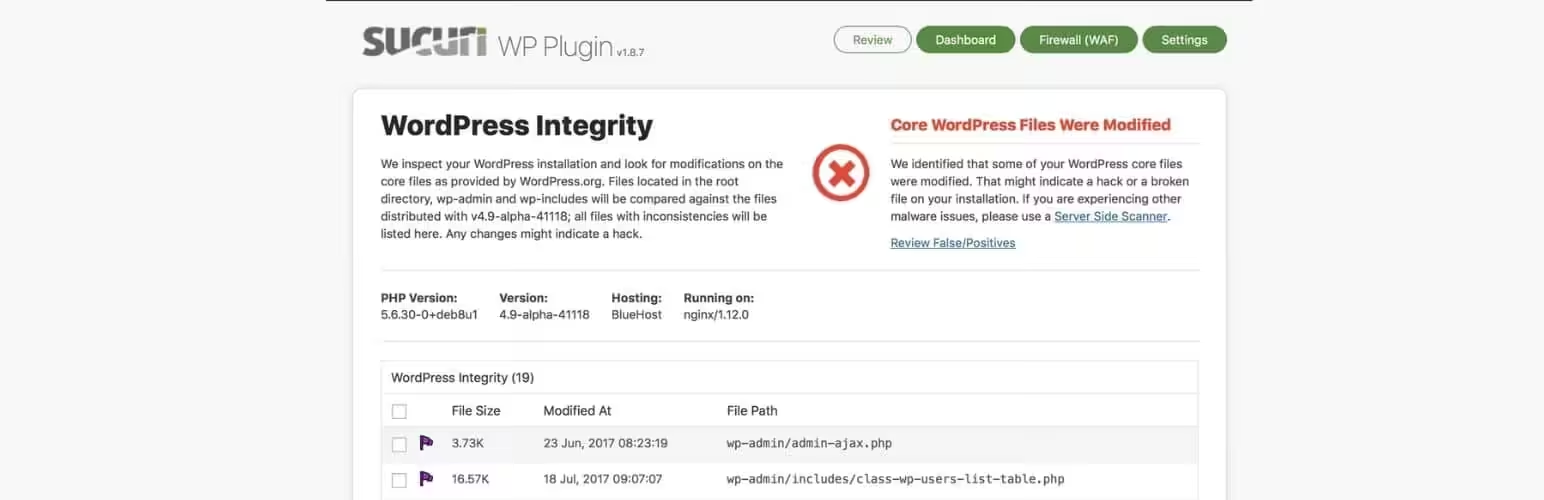
- File Integrity Monitoring
- Remote Malware Scanning
- Blocklist Monitoring
- Security Hardening
- Post-Hack Security Actions
- Security Notifications
All of that is free with the Sucuri plugin. The premium plans ($229/year and up) add a cloud-based WAF, DDoS protection, CDN and priority malware removal. It’s pricey, but for eCommerce sites where downtime costs real money, the investment pays for itself fast.
Kadence Security (formerly iThemes Security, then Solid Security)
Best for: Site owners who want strong login protection and brute force blocking with a clean dashboard.
Pros
- Established plugin with long track record
- Excellent brute force protection
- Strong password enforcement
- Good free version available
Cons
- Recent rebrand may cause confusion
- Some advanced features require Pro
Summary
Kadence Security, formerly iThemes Security and Solid Security, focuses on login protection, hardening, monitoring and account controls. Its Pro security features now come bundled with Kadence Pro and Elite plans.
Kadence Security is the plugin you used to know as iThemes Security, then Solid Security. Liquid Web folded the SolidWP brand into Kadence in 2026, so on WordPress.org it now installs as Kadence Security. It runs on 700,000+ sites, and the free tier covers the basics well.
What you get:
- Brute Force Protection: Limits login attempts and bans repeat offenders automatically.
- Two-Factor Authentication: Adds an extra layer of security to your login process.
- File Change Detection: Monitors your WordPress files for unexpected changes that could indicate a hack.
- Security Dashboard: Provides a clear overview of your site’s security status and recommended actions.
- Password Requirements: Enforces strong passwords for all users on your site.
The free tier covers brute-force protection and two-factor authentication. The Pro security features, including a real-time firewall and Patchstack-powered virtual patching, now come bundled with Kadence’s Pro and Elite plans ($299 and $499 a year) instead of a separate security license.
Patchstack
Best for: Agencies and developers managing multiple sites who need proactive vulnerability protection.
Pros
- Proactive virtual patching
- Large WordPress vulnerability database
- Extremely lightweight
- Great for agencies
Cons
- No malware scanning
- Focused on vulnerabilities only
Summary
Patchstack takes a different approach with virtual patching, protecting against known vulnerabilities before developers release fixes. Protection for a single site costs $5 a month.
Price: USD 60 /year
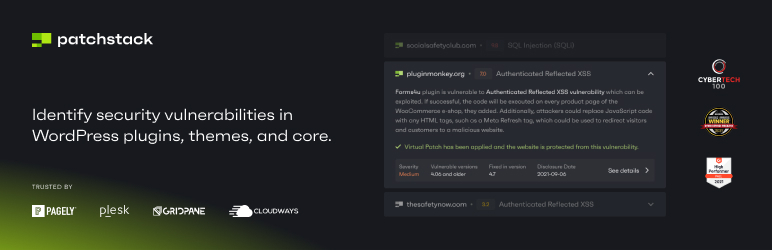
Try PatchstackPatchstack takes a unique approach to WordPress security by focusing on virtual patching. Instead of just detecting threats, it provides real-time protection against known vulnerabilities in WordPress core, plugins and themes.
What makes Patchstack stand out:
- Virtual Patching: Automatically protects against vulnerabilities even before plugin developers release fixes.
- Vulnerability Database: Patchstack says it maintains the largest WordPress vulnerability database, with real-time updates.
- Lightweight: Minimal performance impact compared to traditional security plugins.
- Developer Friendly: Works alongside your existing security setup without conflicts.
- Compliance Reports: Generates security reports useful for client communication and compliance.
The free plan is now called Personal, and you can add protection to a site for $5 a month. Agencies pay $69 a month billed annually for the Developer plan.
MalCare
Best for: Sites on shared hosting that can’t afford the performance hit of server-side scanning.
Pros
- Cloud-assisted scanning reduces host-side work
- One-click malware removal
- Deep malware detection
- Real-time threat intelligence
Cons
- The $99/yr Protect plan doesn't include cleanup
- Malware removal starts at $299/yr (Repair)
Summary
MalCare uses cloud-assisted scanning and offers one-click cleanup on paid plans. Offloading analysis can reduce host work, but it does not guarantee zero resource use.
Price: USD 99 /year
Try MalCareMalCare specializes in cloud-assisted malware detection and removal. Offloading the heavy analysis can reduce the work performed on your host, but the connector, synchronization, API calls and administrative tasks still need resources. Measure it on your own hosting plan.
MalCare’s standout features:
- Deep Malware Scanning: Detects complex malware that other scanners miss, including zero-day threats.
- One-Click Malware Removal: Clean your hacked site instantly without waiting for support tickets.
- Cloud-Based Scanning: No server load means your site stays fast during scans.
- Intelligent Firewall: Blocks bad traffic based on real-time threat intelligence from 400,000+ sites.
- Login Protection: CAPTCHA-based login protection and bot blocking.
MalCare’s free plan includes a firewall, login protection, weekly scans and vulnerability alerts. The $99/year Protect plan doesn’t remove malware; cleanup starts with the Repair plan at $299/year, and Fortify at $499/year adds hourly scans.
WP fail2ban
Best for: Technical users on VPS/dedicated servers who want server-level brute force blocking.

Pros
- Server-level protection
- Extremely lightweight
- Works with existing fail2ban
- Free and open source
Cons
- Requires server access to configure
- Free edition last updated April 2025
Summary
WP fail2ban is a focused security plugin that integrates WordPress with the server-level fail2ban service. Excellent for brute force protection at the server level.
WP fail2ban does one thing and does it well: it connects WordPress to your server’s fail2ban service for brute force blocking at the server level, not the application level. The free plugin now sits beside a separate Premium edition with a full blocklist and event history. The free edition was last updated in April 2025 and is only tested up to WordPress 6.8, so check it on staging first. If you have root server access and know your way around fail2ban config, this is the most lightweight approach to login protection you’ll find.
Hide My WP Ghost
Best for: Sites that want to hide WordPress fingerprints and reduce automated attack surface.

Pros
- Reduces obvious fingerprints seen by basic scanners
- Changes wp-admin, wp-content paths
- Removes WordPress version info
- Compatible with most themes/plugins
Cons
- Can break some plugins if not configured properly
- Security through obscurity is debated
Summary
Hide My WP Ghost changes common paths and removes obvious WordPress fingerprints. It is an optional noise-reduction layer, not a replacement for patching, authentication, backups, or a WAF.
Hide My WP Ghost changes common paths and removes some obvious WordPress fingerprints. That can reduce low-effort bot traffic and make commodity scans less useful. It does not make WordPress invisible, and it should sit behind patching, strong authentication, backups and a firewall rather than replace them.
What it does:
- Hide WordPress Paths: Changes wp-admin, wp-content, wp-includes to custom paths.
- Remove Fingerprints: Hides WordPress version, meta tags and common identifiers.
- Brute Force Protection: Limits login attempts and blocks suspicious IPs.
- Security Headers: Adds important security headers automatically.
The plugin is now branded WP Ghost. Its free version already changes the wp-admin and wp-login paths and includes a firewall, two-factor login and passkeys, while premium adds deeper hiding options. The obscurity caveat above still applies.
If Your Host Already Runs a Firewall
Best for: Sites whose host already provides a firewall and malware scanning and just need login throttling and attack-surface cleanup.
Many managed hosts already filter traffic and scan for malware, and some block security suites outright. For those sites, a full suite duplicates work. Functionalities is a free modular utility plugin I built, so weigh this with that in mind and I’ve kept it out of the ten above. Its Login Security module is off by default. Once enabled, it:
- Limits login attempts (5 attempts and a 15-minute lockout by default) and throttles per username
- Keeps an IP allowlist and a lockout log with manual unlock
- Disables XML-RPC authentication and can turn off Application Passwords
- Shows generic login errors, so attackers can’t confirm which usernames exist
Its cleanup module can also disable XML-RPC entirely and remove the WordPress version tag, and a separate check flags missing security headers or an open REST users endpoint without changing anything.
It has no firewall, malware scanning, two-factor authentication or custom login URL. Pair it with your host’s WAF and a 2FA plugin, and use it when those layers are already covered and you only want the login and cleanup pieces.
What to do when a WordPress site is already compromised
A security plugin can help identify malware, but cleanup is an incident-response job. Preserve evidence first, then restore trust in the site and every credential connected to it.
- Put the site in maintenance mode or restrict access if it is harming visitors.
- Take a full backup of files, database, logs and the current environment before changing anything.
- Check hosting, CDN, WordPress, SFTP, SSH, database, email and API access logs for the first suspicious event.
- Remove unknown administrators and rotate every credential, including salts and application passwords.
- Replace WordPress core and trusted plugins/themes with clean copies. Remove abandoned or pirated code.
- Scan the database, uploads, mu-plugins, cron events and writable directories. A clean core scan does not prove the site is clean.
- Patch the entry point before restoring traffic. Otherwise the site can be reinfected immediately.
- Restore from a known-clean backup when that is safer than manual cleanup, then monitor new file and user changes.
WordPress Security Hardening Checklist
Which Security Plugin Should You Pick?
What is the best free WordPress security plugin?
Wordfence is the strongest free all-round option when your host allows endpoint firewalls and scans. It combines a WAF, malware scanning, two-factor authentication, and login controls. All-In-One Security is easier for guided hardening, while a managed host may already cover several of these layers.
Does every WordPress site need a security plugin?
No. Every site needs security controls, but they do not all have to come from one plugin. A managed host may already provide a WAF, malware scanning, backups, and login protection. Map those controls first, then install a plugin only for the gaps. When the only gap is login throttling, a small module such as the one in Functionalities, a plugin I built, can fill it without a full suite.
What is the difference between Wordfence and Sucuri?
Wordfence runs an endpoint firewall and scanner on the WordPress server. Sucuri’s paid service filters traffic through a cloud WAF before it reaches that server and includes cleanup services. Wordfence has the stronger free toolkit; Sucuri is the clearer upstream option.
Can WordPress security plugins slow down a site?
Yes. Endpoint scans, file comparisons, logging, and firewall rules use CPU, memory, storage, or database capacity. Cloud-assisted tools can offload part of that work but still use a connector and API calls. Test admin, cron, checkout, and uncached traffic after installation.
Which plugins include two-factor authentication?
Wordfence, Defender, Kadence Security, and several dedicated login plugins support two-factor authentication. Protect administrators, editors, store managers, and any account that can change code or data. Keep recovery codes outside WordPress.
How do I reduce WordPress brute-force attacks?
Use unique passwords, two-factor authentication, rate limits, and an upstream firewall. WP fail2ban is useful when you control the server. Changing the login URL may reduce noise, but it is not an authentication control and should never be the main defense.
Can a WordPress security plugin stop DDoS attacks?
It may block abusive application requests, but it cannot reliably absorb a large volumetric DDoS attack after the traffic reaches your server. Use a host, reverse proxy, CDN, or cloud WAF with upstream DDoS capacity.
Can I run more than one security plugin?
Avoid two full endpoint suites because duplicate firewalls, scans, and lockout rules can conflict. Complementary layers can coexist, such as a cloud WAF plus an endpoint scanner or Patchstack plus a backup service. Document which product owns each control.
What should I do if my WordPress site is hacked?
Restrict access, preserve a backup and logs, rotate every credential, remove unknown users, replace compromised code with clean copies, and patch the entry point. Scan the database and uploads too. Restore from a known-clean backup or use a professional cleanup service when needed.
How often should a WordPress site be scanned?
Set the schedule around change rate and business risk. A frequently updated store needs tighter monitoring than a static brochure site. More important than an arbitrary daily rule is alerting, a tested response process, and checking after code or user changes.
Start with Wordfence when you need a capable free endpoint suite. Pick MalCare when cloud-assisted scanning and paid cleanup fit the problem. Agencies that already have backups and monitoring may get more value from Patchstack‘s narrower vulnerability layer.
No plugin replaces prompt updates, least-privilege accounts, two-factor authentication, tested off-site backups and an upstream firewall. Build those controls first. Then choose one security product whose job is clear enough that you know what it catches and what it leaves exposed.
Tell Google you want more of this.
Add Gaurav Tiwari as a preferred sourceOne tap, and this site shows up more often in your own Top Stories, AI Overviews and AI Mode. Remove it any time.
Disclaimer: This site is reader-supported. If you buy through some links, I may earn a small commission at no extra cost to you. I only recommend tools I trust and would use myself. Your support helps keep gauravtiwari.org free and focused on real-world advice. Thanks. - Gaurav Tiwari