
10 Best Computer Brands and Laptop Manufacturers in 2026
A laptop hinge cracks at 18 months. The battery holds 40 minutes on a full charge. Customer support puts you on hold for two hours, then tells you to mail it in. According to Laptop Mag’s annual reliability survey, 23% of laptop owners experience a hardware failure within the first two years. Another 31% report dissatisfaction with after-sales support from their brand.
The wrong brand doesn’t just waste money. It wastes your time, kills your productivity, and leaves you scrambling for a replacement when you can least afford it. Consumer Reports found that laptop brand matters more than any individual spec when predicting long-term satisfaction, with failure rates varying by as much as 40% between top and bottom-ranked manufacturers.
Not every brand earns your money. Some coast on marketing while shipping mediocre hardware and worse support. This list cuts through the noise: 10 brands ranked by build quality, after-sales support, and real-world value in 2026, with specific models, honest downsides, and pricing that reflects what you’ll actually pay.
Top Computer Brands in 2026
Quick look at all 10 brands and what each one does best:
- Apple: Only laptop brand that ships 18+ hour battery life as standard
- Dell: Next-business-day onsite support in most countries, no other Windows brand matches it
- Lenovo: World’s top-selling PC brand, home to the best laptop keyboard money can buy
- HP: Spectre x360 OLED is one of the most beautiful Windows convertibles ever made
- ASUS: ROG Zephyrus packs RTX 5090 into a 0.59-inch chassis no competitor matches
- Acer: Nitro 5 remains the best-selling gaming laptop under $800 for a reason
- Razer: CNC aluminum gaming chassis that looks professional enough to open in a boardroom
- Microsoft: Surface Laptop 7 hits 20-22 hours of battery on ARM, rivaling MacBook Air
- Samsung: Galaxy Book5 Pro ships with 3K Dynamic AMOLED panels Samsung manufactures itself
- MSI: Raider and Stealth lines offer RTX 50-series GPUs at $500 less than Razer’s equivalent
1. Apple
Best for: Creative professionals, developers, and anyone who values battery life above all else.
Apple dominates the creative professional laptop market, and the M5 chip family (M5, M5 Pro, M5 Max) explains why. The MacBook Air M5 starts at $1,099 and delivers 18+ hours of battery life on a single charge. No Windows laptop at that price point comes within 6 hours of matching it. The M5 chip packs a 10-core CPU, 10-core GPU, and 16-core Neural Engine with 120 GB/s memory bandwidth into a fanless design that runs completely silent.
Build quality is the benchmark the industry measures everything else against. Aluminum unibody construction, a 13.6-inch Liquid Retina display with 500 nits brightness, and a trackpad that no Windows laptop has matched for precision or feel. The macOS ecosystem creates genuine workflow benefits if an iPhone or iPad is already part of the setup, with features like Handoff, AirDrop, and Universal Clipboard working without any configuration. Apple Intelligence, launched in 2024, integrates AI writing, image generation, and notification summaries system-wide on M5 devices.
The downsides are real. A specced-out MacBook Pro M5 Max with 48GB RAM crosses $4,000. Repairs outside AppleCare+ are expensive, often $400-600 for screen replacements. RAM and storage are soldered, so the configuration chosen at purchase is permanent. Windows-only software requires Parallels (around $100/year) or a separate machine. For pure build quality and longevity, though, no Windows brand consistently delivers at the same level across its entire lineup.
Apple-related articles:
2. Dell
Best for: Business users, enterprise IT, and anyone who needs next-day onsite support.

Dell is the standard choice for business machines, and the 2026 XPS line is the most significant redesign in years. The XPS 14 starts at $1,599 with an Intel Core Ultra 5 325, 16GB LPDDR5x, and a 14-inch 2K display. It measures just 14.6mm thin and weighs under 3 pounds, making it Dell’s thinnest laptop ever. The top-tier XPS 16 with a 3.2K OLED touchscreen and Core Ultra X9 388H pushes toward $2,199. Both models pack a 70Wh battery that Dell rates up to 27 hours on the LCD display configurations.
What separates Dell from every other Windows brand is ProSupport. Next-business-day onsite service is available in over 160 countries. Service manuals are publicly available, parts are orderable, and enterprise IT teams can deploy and manage Dell fleets at scale through Dell Command tools. The Latitude series is the enterprise workhorse across thousands of corporate deployments, and Precision workstations handle CAD, 3D rendering, and data science workloads without thermal throttling.
The XPS keyboard received criticism in early reviews for shallower key travel compared to the Lenovo ThinkPad. The Alienware gaming line delivers performance but costs $300-500 more than comparable ASUS and MSI machines at the same GPU tier. Budget Inspiron laptops use more plastic than the premium lines and feel it. In the mid-to-premium range from $1,000 upward, Dell delivers consistent hardware quality and the best business support infrastructure in the Windows ecosystem.
3. Lenovo
Best for: Business professionals, keyboard snobs, and anyone who drops laptops more often than they’d admit.
Lenovo is the world’s largest PC vendor by unit sales, shipping over 60 million units annually. The ThinkPad X1 Carbon Gen 13 is the current business flagship: Intel Core Ultra 7 258V, 32GB LPDDR5X, 2.8K OLED display, Wi-Fi 7, and a starting weight under 2.5 pounds. The Gen 14, announced for March 2026 at $1,999, introduces a new Space Frame chassis that places components on both sides of the motherboard, improving cooling by up to 20% while staying under 1 kilogram. The keyboard on every ThinkPad uses 1.5mm key travel and a concave key design that reduces finger fatigue over long typing sessions, making it the preferred choice among software developers and writers who type for hours daily.
Beyond ThinkPads, Lenovo’s range covers every segment. The Yoga 9i is a premium 2-in-1 convertible with OLED display options starting around $1,400. The IdeaPad Slim 5 delivers solid aluminum construction under $700 for students and mainstream users. The Legion gaming line competes directly with ASUS ROG on thermals and performance, often undercutting ASUS by $100-200 at equivalent specs.
Lenovo’s consumer models ship with bloatware that’s absent on ThinkPads. IdeaPads and Yoga laptops come with McAfee trials, Lenovo Vantage extras, and preloaded apps that slow down first boot. Removing them on day one takes about 15 minutes and is worth doing. ThinkPads remain some of the best laptops for working from home, combining MIL-STD-810H durability testing, spill-resistant keyboards, and up to 4-year next-business-day warranty options.
4. Hewlett-Packard (HP)
Best for: Mainstream buyers who want premium design on Windows, and enterprise users who need EliteBook-level reliability.
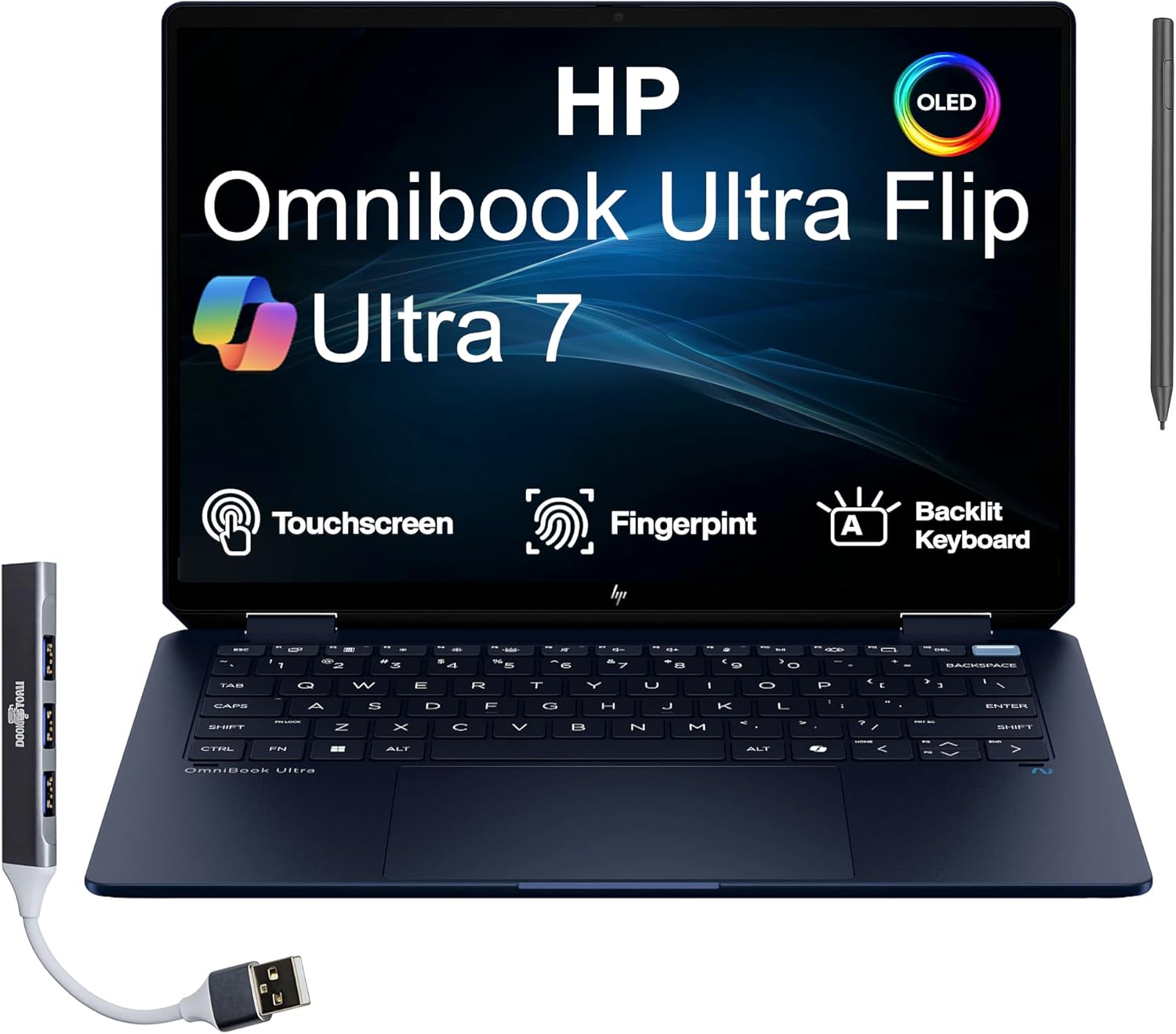
HP covers every segment from $300 Chromebooks to $1,800 premium ultrabooks. The Spectre x360 16 with Intel Core Ultra 7-155H, 32GB LPDDR5X, and a 2.8K OLED 120Hz touchscreen is one of the most visually striking Windows laptops on the market, featuring HP’s signature gem-cut chamfered edge design in a 360-degree convertible form factor. Pricing runs $1,299-$1,799 depending on storage configuration. The EliteBook Ultra 14 targets enterprise buyers with MIL-STD-810H durability testing, HP Wolf Security built-in, and support tiers that rival Dell ProSupport for corporate deployments.
HP’s OMEN gaming line has improved consistently. The OMEN 16 and OMEN Transcend deliver strong gaming performance with thermal management that keeps sustained workloads from throttling. For everyday use, the Pavilion and Envy series hit the $600-$1,200 range with competitive specs for the price, particularly during HP’s frequent sale events where 20-30% discounts appear regularly.
HP’s customer support splits sharply by tier. EliteBook and business-line support through HP Care Packs offers strong response times and dedicated business channels. Consumer support for Pavilion and budget Envy models is average at best, with long hold times and mail-in repair requirements. Spending the extra $100-$150 on HP’s Care Pack warranty for premium models is worth it, as out-of-warranty screen repairs for the Spectre typically run $350-500.
5. ASUS
Best for: Gamers, content creators who need color-accurate displays, and PC builders.

ASUS dominates the gaming laptop market with the ROG (Republic of Gamers) lineup. The 2026 ROG Zephyrus G16 measures just 0.59 inches thick while fitting an Intel Core Ultra 9 386H and up to an NVIDIA GeForce RTX 5090 GPU, making it the thinnest laptop in its performance class. The display is a 2.5K ROG Nebula HDR OLED panel at 240Hz with 1,100 nits peak brightness and VESA HDR TrueBlack 1000 certification. Pricing starts around $1,799 for RTX 5070 Ti configurations and climbs to $3,499 for the RTX 5090 variant. ASUS also makes some of the best motherboards and components for custom desktop PC builders through its ROG and TUF component lines.
Outside gaming, the ZenBook S 16 (AMD Ryzen AI 9 HX 370, 16GB, 1TB, 3K OLED) offers one of the best thin-and-light experiences on Windows at $1,299-$1,499, lighter than 2.65 pounds. The ASUS ProArt Studiobook targets creators with factory-calibrated OLED displays and Pantone-validated color accuracy. VivoBook covers budget-to-mid-range from $500 with competitive specs for students and mainstream users. ASUS also makes some of the best monitors for programmers through its ProArt display line.
ASUS customer support ratings sit below Apple and Dell in most independent surveys. Wait times on consumer product support can reach 30-45 minutes. The ROG Zephyrus G16’s RAM is soldered to the motherboard, limiting future upgrades. ASUS’ budget VivoBook line uses more plastic than competitors at the same price. But for gaming and creative work, ASUS consistently delivers better thermal engineering, more display options, and lower pricing than Razer at equivalent GPU tiers. ASUS ROG also makes some of the best graphics cards for gaming.
6. Acer
Best for: Budget-conscious buyers, students, and anyone who needs a solid machine under $600.
Acer is the right choice when budget is the primary constraint. The Swift series delivers aluminum builds and IPS displays starting around $499, with the Swift 14 AI featuring Intel Core Ultra processors and Copilot+ features at a price point most competitors can’t match. The Aspire line goes lower, down to $350, without sacrificing usable performance for everyday tasks like browsing, documents, and streaming. Both lines ship with sufficient storage for typical student workloads and can be upgraded with an extra RAM stick on most models, unlike the soldered memory found in more premium machines.
For gaming, the Predator Helios Neo 16 AI is the headline story. It pairs Intel Core Ultra 9 275HX with an NVIDIA GeForce RTX 5070 Ti in a 16-inch WQXGA OLED chassis at $1,299-$1,999, undercutting comparable ASUS ROG and Razer configurations by $200-400. The Nitro 5 remains one of the best-selling budget gaming laptops on Amazon because it delivers a 144Hz display, dedicated GPU, and upgradeable DDR5 RAM under $800. The Predator Helios 18 AI goes further, offering up to an RTX 5090 and 192GB DDR5 RAM for users who need desktop-replacement performance at $5,999.
Acer’s build quality on budget models is noticeably behind Dell and Lenovo. Hinges loosen faster, keyboards have less travel, and trackpads use lower-grade sensors. The trade-off is transparent: lower price, lower build standards. Consumer support for Acer in the US involves long phone queues and mail-in repairs with typical turnaround of 7-10 business days. Acer Chromebooks remain popular in K-12 education for their low cost and all-day battery, but the Windows line is where the value proposition is strongest for general consumers in 2026.
7. Razer
Best for: Gamers who want a laptop they won’t be embarrassed to open in a meeting.
Razer makes the MacBook equivalent of gaming laptops. The Blade 16 (2025) is built from CNC-milled aircraft-grade aluminum, features per-key Chroma RGB, an OLED 240Hz QHD+ display, and fits an AMD Ryzen AI 9 HX 370 with NVIDIA GeForce RTX 5090 in a chassis that looks at home in a coffee shop or a boardroom. Starting at $3,499 and climbing to $4,500 for the top-spec RTX 5090 configuration, it’s the most expensive mainstream gaming laptop on the market. The aluminum construction and fit-and-finish are measurably better than ASUS or MSI at comparable specs. Lid flex, chassis flex, and hinge quality all rank at the top of third-party teardown and durability tests.
The Blade 18 serves as Razer’s desktop replacement, fitting RTX 5090 power into an 18-inch chassis with a 300Hz display and triple-fan cooling. For users who need maximum portability without sacrificing power, the Blade 14 hits around $2,499 with RTX 4070/5070 GPU options in a sub-4-pound package. Razer also makes premium peripherals, headsets, and streaming gear through the same ecosystem, so brand-matched setups are possible across multiple product categories.
The price premium over comparable ASUS and MSI configurations runs $500-$1,000 at equivalent GPU tiers. Razer’s customer support has a below-average reputation in independent reliability surveys, with warranty claims sometimes requiring extended wait times. Battery life during non-gaming tasks averages 4-6 hours, well below the Lenovo and Dell alternatives. Razer is a brand-and-build premium. The specs don’t justify the price differential over ASUS ROG. The design and construction might, depending on how much the laptop’s appearance matters in the environments where it gets used.
8. Microsoft
Best for: Windows purists, pen-input users, and people who want MacBook-like integration on Windows.
Microsoft Surface devices demonstrate what Windows hardware looks like when the software company controls the full stack. The Surface Laptop 7 with Snapdragon X Elite delivers 20-22 hours of battery life, matching MacBook Air M5 territory that no Intel-based Windows laptop reaches. The 13.8-inch HDR touchscreen with 2256×1504 resolution at 3:2 aspect ratio is optimized for productivity, displaying more vertical content than 16:9 screens. The Snapdragon X Plus (10-core) version starts at $1,199; the X Elite (12-core) configuration with 32GB RAM runs $1,699. The Surface Pro 11 remains the best Windows tablet with a detachable keyboard, though the keyboard and Slim Pen 2 cost an additional $300+ combined.
Microsoft’s hardware-software integration is unmatched in Windows. Copilot+ features including Recall, live captions, and AI-enhanced photo editing work without additional setup. Windows Hello facial recognition unlocks in under a second with the Surface’s dedicated IR camera. The Surface Studio 2+ remains a niche product, but for digital artists who need a large-format touchscreen with pen input, there’s nothing comparable in the Windows ecosystem at any price.
Surface devices score among the lowest in repairability. iFixit gives the Surface Laptop series a 0-1 out of 10, meaning virtually no user-serviceable components. The Snapdragon X chips run Windows on ARM, which creates occasional compatibility issues with older x64-only applications, though most mainstream software now has ARM-native versions. Availability outside the US can be limited, and Microsoft’s retail presence is smaller than Dell or Lenovo’s channel. For users who want the tightest Windows hardware-software integration available with genuine all-day battery life, Surface is the answer.
9. Samsung
Best for: Galaxy phone owners and anyone who prioritizes display quality over everything else.
Samsung makes some of the best laptop displays available because they manufacture the AMOLED panels themselves. The Galaxy Book5 Pro 360 16-inch ships with a 3K Dynamic AMOLED 2X touchscreen at 2880×1800 resolution, 120Hz refresh, and anti-reflective coating that makes Dell and HP IPS panels look washed out in direct comparisons. Powered by Intel Core Ultra 7 (Series 2) with up to 47 TOPS AI performance, Wi-Fi 7, and S Pen included, the Galaxy Book5 Pro 360 16-inch runs $1,649 at retail and regularly drops to $1,099-$1,299 during Samsung promotions. Battery life hits up to 25 hours, with quick charging to 35% in 30 minutes.
Samsung’s Galaxy ecosystem integration creates real workflow benefits for Android users. Galaxy Link connects the laptop to Galaxy phones for notification mirroring, call forwarding, and file transfer. Samsung DeX mode turns compatible Galaxy phones into a desktop interface when connected to the laptop. Quick Share works faster than Bluetooth file transfer between Samsung devices. The Galaxy Book5 Pro weighs just 2.7 pounds in the 14-inch version, lighter than the MacBook Pro 14-inch.
Samsung’s laptop support infrastructure doesn’t match its phone support quality. Repair centers for Galaxy Books are fewer than for Galaxy phones, and out-of-warranty screen repairs can be slow and expensive. Software bloat on Galaxy Books mirrors Samsung’s Android phones: Samsung-branded apps for most system functions, some of which can’t be uninstalled without admin tools. Availability outside the US and South Korea is limited compared to Dell, HP, and Lenovo. For display quality above all else, though, the Galaxy Book5 Pro’s AMOLED is the most accurate screen in its price range.
10. MSI

Best for: Gamers and creators who want top specs per dollar, plus easy upgradability.
MSI is a Taiwanese manufacturer that has built a serious gaming laptop reputation over the past decade. The 2026 Stealth 16 AI+ measures 16.6mm thin and weighs under 2kg while fitting Intel Core Ultra 9 386H and up to NVIDIA GeForce RTX 5090 in a premium aluminum chassis. The display is a 16-inch QHD+ OLED at 240Hz with 100% DCI-P3 and VESA DisplayHDR True Black 600. Pricing starts around $2,000 for RTX 5060 configurations. The Raider GE78 HX targets the desktop-replacement segment with up to 128GB DDR5 RAM, 300W total system power, and RTX 5090 configurations pushing toward $3,999.
MSI’s thermal engineering is a genuine differentiator. Cooler Boost 5 technology uses multiple fans and heat pipes to maintain sustained performance without the thermal throttling that affects thinner competitors. Raider and Stealth models keep upgradeable RAM and dual M.2 storage slots accessible without voiding warranty, a practical advantage over Razer and ASUS Zephyrus models with soldered components. The Creator Z and Prestige series offer quieter fan profiles and calibrated displays for video editing and motion graphics work at prices $300-500 below comparable Razer alternatives.
MSI’s brand recognition outside the gaming community is low. Most buyers haven’t heard of it, which means resale value trails ASUS and Razer. Customer support is adequate but not at Dell or Apple’s tier, with phone wait times averaging 15-20 minutes and mail-in repairs standard for most issues. MSI’s budget Modern and GF lines are unremarkable and not worth prioritizing over Lenovo IdeaPad or Acer Nitro at the same price. For gaming and creative work in the $2,000-$3,500 range, though, MSI consistently delivers better specs per dollar than Razer and comparable performance to ASUS ROG with more upgradeable hardware.
Computer Brands Compared
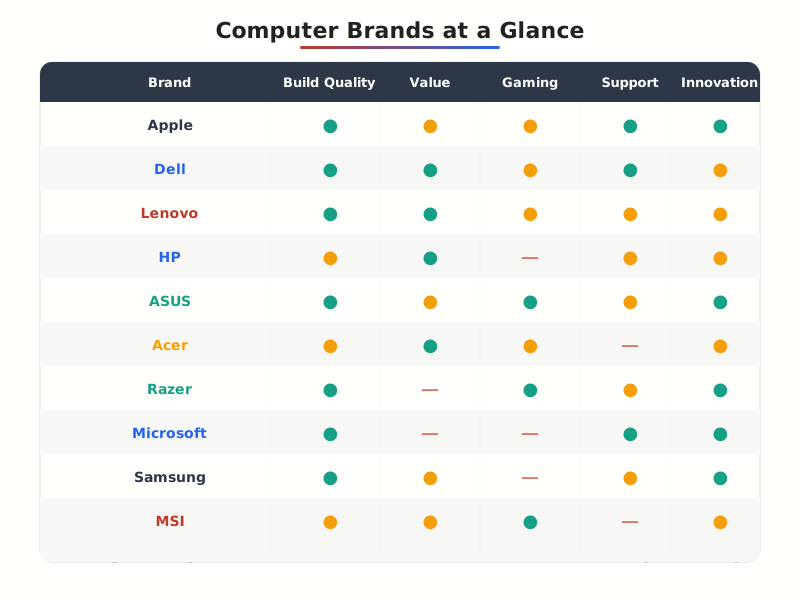
Here’s a quick comparison of all 10 brands across the factors that matter most when buying a computer or laptop in 2026:
| Brand | Best For | Top Models (2026) | Price Range | Support Rating |
|---|---|---|---|---|
| Apple | Creative pros, developers | MacBook Air M5, MacBook Pro M5 | $1,099 – $4,000+ | Excellent |
| Dell | Business, all-rounders | XPS 14/16 (2026), Latitude, Alienware | $500 – $3,500 | Excellent |
| Lenovo | Business, budget, students | ThinkPad X1 Carbon Gen 13/14, Yoga, Legion | $400 – $3,000 | Good |
| HP | Business, mainstream | Spectre x360, EliteBook Ultra, OMEN | $450 – $3,000 | Good |
| ASUS | Gaming, creators | ROG Zephyrus G16 (2026), ZenBook S16, ProArt | $500 – $3,500 | Average |
| Acer | Budget buyers, students | Swift 14 AI, Predator Helios Neo 16 AI, Nitro 5 | $300 – $2,500 | Average |
| Razer | Premium gaming | Blade 16 (2025), Blade 18 | $1,500 – $4,500 | Below Average |
| Microsoft | Windows ecosystem | Surface Laptop 7, Surface Pro 11 | $1,199 – $3,000 | Good |
| Samsung | Display quality, Galaxy users | Galaxy Book5 Pro 360 | $700 – $2,500 | Average |
| MSI | Gaming, value performance | Stealth 16 AI+, Raider GE78 HX | $600 – $3,999 | Average |
How to Choose the Right Brand
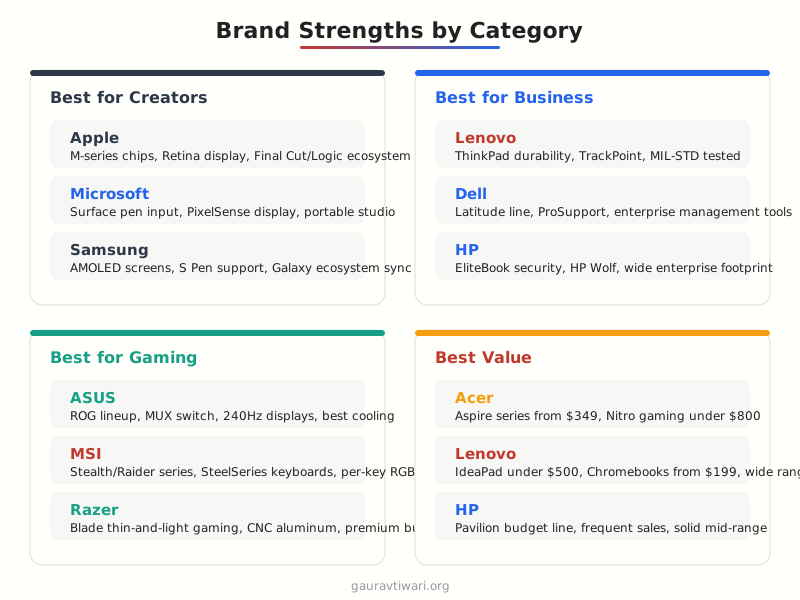
Don’t just pick a brand. Pick the brand that aligns with your primary use case:
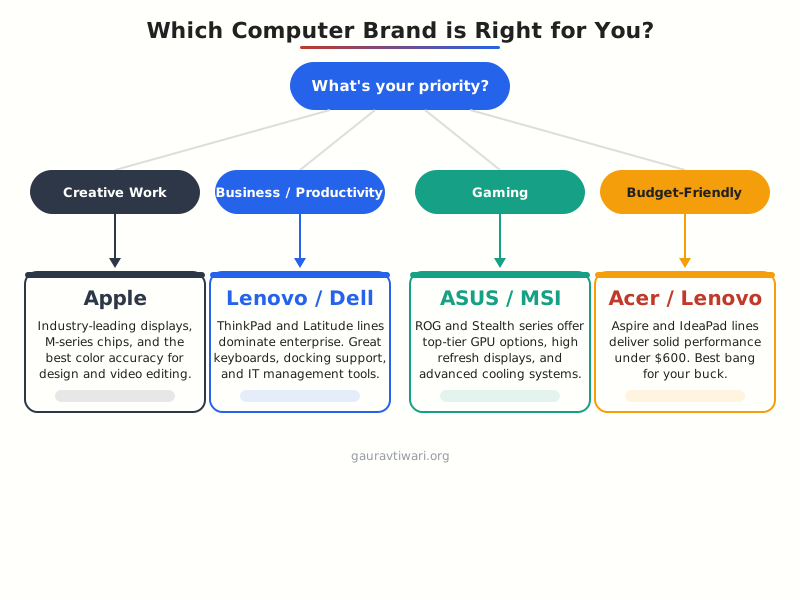
- Creative work (video, design, music): Apple MacBook Pro or ASUS ProArt. Apple’s M5 chips are optimized for creative apps. ASUS ProArt offers calibrated displays on Windows.
- Business and productivity: Lenovo ThinkPad or Dell Latitude. Both offer military-grade durability, great keyboards, and enterprise support. ThinkPad’s keyboard is better; Dell’s support is faster.
- Gaming: ASUS ROG or MSI. Best thermal management and GPU options for the price. Razer if you want premium design and don’t mind paying more.
- Budget under $600: Acer Swift/Aspire or Lenovo IdeaPad. Both deliver usable performance for everyday tasks. Lenovo’s build quality edges ahead.
- Students: Apple MacBook Air (if budget allows) or Lenovo IdeaPad/Acer Swift. Check if your school has student discounts. A good study chair matters as much as the laptop.
- Data analysis and programming: Lenovo ThinkPad or Dell XPS. 16GB RAM minimum, SSD storage, and a comfortable keyboard for long sessions. See the picks for best laptops for data analysts.
Which Brand Should You Actually Buy?
Four brands stand out in 2026 for distinct reasons. Apple MacBook Air M5 at $1,099 remains unbeatable on battery life and build quality for creative professionals. Lenovo ThinkPad X1 Carbon Gen 13 at $1,499-$1,999 is the right call for business professionals who type all day and need enterprise support. ASUS ROG Zephyrus G16 at $1,799+ delivers the best gaming performance-per-dollar among premium thin gaming laptops. Acer Swift or Nitro 5 covers students and budget buyers under $600-$800 where value matters more than prestige.
Don’t overspend on brand name alone. A $700 Lenovo IdeaPad outperforms a $700 Razer or Microsoft Surface on raw specs. Match the brand to the actual use case, not the logo on the lid. And whatever you buy, spend the extra $50-$100 on an extended warranty. That hinge starts creaking in year three.
Which computer brand is the most reliable in 2026?
Apple and Lenovo ThinkPad consistently rank highest for reliability. Apple’s aluminum unibody construction and tight software-hardware integration minimize hardware failures. Lenovo ThinkPads are MIL-STD-810H tested for durability and are the standard in enterprise environments where reliability is non-negotiable.
What is the best computer brand for gaming?
ASUS ROG and MSI lead the gaming laptop market in 2026. ASUS ROG offers the best combination of thermal management, display options, and GPU performance. MSI provides better value at similar specs. Razer makes the most premium gaming laptops but costs significantly more.
Which brand offers the best value for money?
Acer and Lenovo IdeaPad offer the best price-to-performance ratio in the budget and mid-range segments. Acer’s Nitro 5 is consistently one of the best-selling budget gaming laptops, while Lenovo IdeaPad delivers solid build quality under $600. For mid-range, Dell XPS and HP Spectre provide premium features at competitive prices during sales.
Is Apple worth the premium price over Windows laptops?
For creative professionals, yes. Apple’s M5 chips deliver superior performance per watt for video editing, music production, and design work. The MacBook Air M5 at $1,099 offers 18+ hours of battery life that no Windows laptop at the same price can match. For general office work or gaming, Windows laptops from Dell, Lenovo, or ASUS offer better value.
Which computer brand has the best customer support?
Apple leads with its Genius Bar and AppleCare+ service offering in-store diagnostics and repairs. Dell ProSupport is the best in the Windows world, with next-business-day onsite service. Lenovo and HP offer solid enterprise support through their business lines (ThinkPad and EliteBook). Consumer support across all brands tends to be slower and less helpful than business-tier support.
Why is Toshiba not on this list anymore?
Toshiba sold its laptop business to Sharp Corporation in 2020, and the brand was renamed to Dynabook. Toshiba no longer manufactures consumer laptops. MSI has replaced Toshiba on this list as a more relevant brand for gaming and creator laptops in 2026.
Disclaimer: This site is reader-supported. If you buy through some links, I may earn a small commission at no extra cost to you. I only recommend tools I trust and would use myself. Your support helps keep gauravtiwari.org free and focused on real-world advice. Thanks. - Gaurav Tiwari