
Being a Freelance Makeup Artist
You picked up a skill. Got good at it. Maybe even great. And now you’re stuck charging $50 for something that takes real talent, wondering why the person down the street with half your ability is booked solid for months.
I’ve watched this pattern play out across dozens of freelance industries. Makeup artists, photographers, personal trainers, web developers, interior designers. The skill isn’t the problem. The business side is.
After working with freelancers across 90+ industries over 16 years, I’ve noticed something: the ones who make it past year two all figured out the same 8-10 things. And they figured them out the hard way. I want to save you that trouble.
This guide uses freelance makeup artistry as the primary case study, but every principle applies whether you’re doing bridal makeup, shooting weddings, training clients at 6 AM, or building websites at midnight. The freelancing playbook is universal. The specifics just change.
What’s your biggest challenge as a freelancer?
Portfolio Beats Resume Every Single Time
Nobody hires a freelance makeup artist because they have a degree. They hire because they saw a before-and-after photo that made them think, “I want to look like that on my wedding day.” The same goes for photographers showing their portfolio, personal trainers sharing client transformations, and designers displaying their work.
Your portfolio does the selling that a resume never will. And here’s the thing most new freelancers get wrong: you don’t need paying clients to build one.
When I started freelancing, I did work for free. But I did it strategically. Every free project had one rule: I got to document it, photograph it, and use it in my portfolio. That’s the exchange. Not “exposure.” Portfolio pieces.
For makeup artists specifically, this means before-and-after photos shot in good lighting. For photographers, it means styled shoots with friends. For trainers, it means 90-day transformation documentation with willing clients. The format changes, the principle stays the same.
Social media is your live portfolio now. Instagram isn’t optional for visual freelancers. Neither is TikTok if your audience is under 35. Post your work consistently. Three times a week minimum. Document the process, not just the result.
The Three Pricing Phases Every Freelancer Goes Through
Pricing is where most freelancers either stall out or give up entirely. I’ve seen it hundreds of times: talented people charging so little they can’t sustain the business, or pricing so high before they’ve built credibility that nobody bites.
There are three phases, and you need to move through them deliberately.
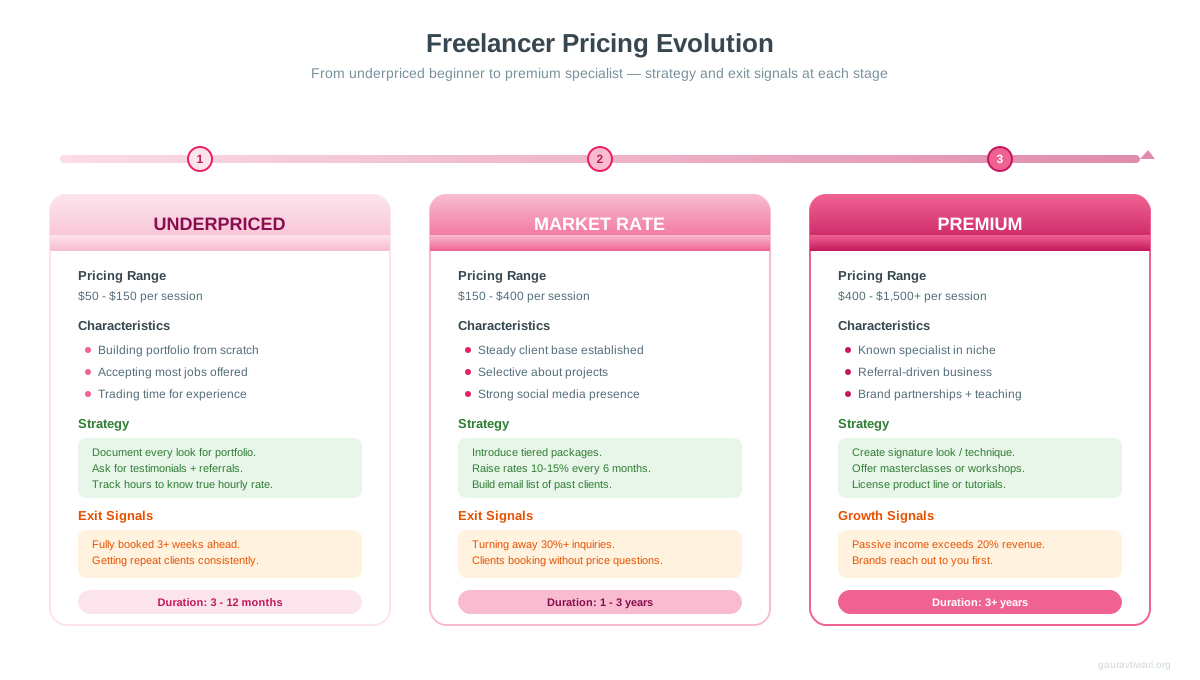
Phase 1: Underpriced to Get Clients (Months 0-6)
You charge 30-50% below market rate. This isn’t desperation. It’s a calculated move. You’re buying testimonials, portfolio pieces, and referral relationships. A bridal makeup artist might charge $75 when the market rate is $150. The gap is the cost of building proof.
Exit this phase once you’re booked 2+ weeks out and have at least 5 strong testimonials. If you’re still undercharging after 6 months with a full calendar, you’re not building a business. You’re subsidizing your clients.
Phase 2: Market Rate to Sustain (Months 6-24)
You match what competitors charge. You introduce package-based pricing instead of hourly rates. A makeup artist might offer a “bridal package” at $300 (consultation + trial + day-of) instead of $150/hour. Packages make the value clear and eliminate haggling.
Raise your prices 10-15% annually. If nobody pushes back on your pricing, you’re probably still too cheap. The right price is where about 20% of inquiries say “that’s more than I expected” but most still book.
Phase 3: Premium to Select Clients (Month 24+)
You charge 2-3x market rate and you’re selective about who you work with. You’ve earned this through specialization and reputation. A bridal makeup artist who only does South Asian weddings and has 200+ five-star reviews can charge $500-800 per booking because she’s the specialist, not a vendor.
How to Find Clients Without Cold Outreach
Referrals are the single best client acquisition channel for freelancers. Period. They convert at 3-5x the rate of any other channel, they come with built-in trust, and they cost you nothing except doing great work.
But you can’t just hope referrals happen. You need to ask for them. After every completed project, send a simple message: “I loved working with you. If you know anyone who might need similar help, I’d appreciate the introduction.”
That one sentence has generated more business for my clients than any marketing funnel I’ve ever built.
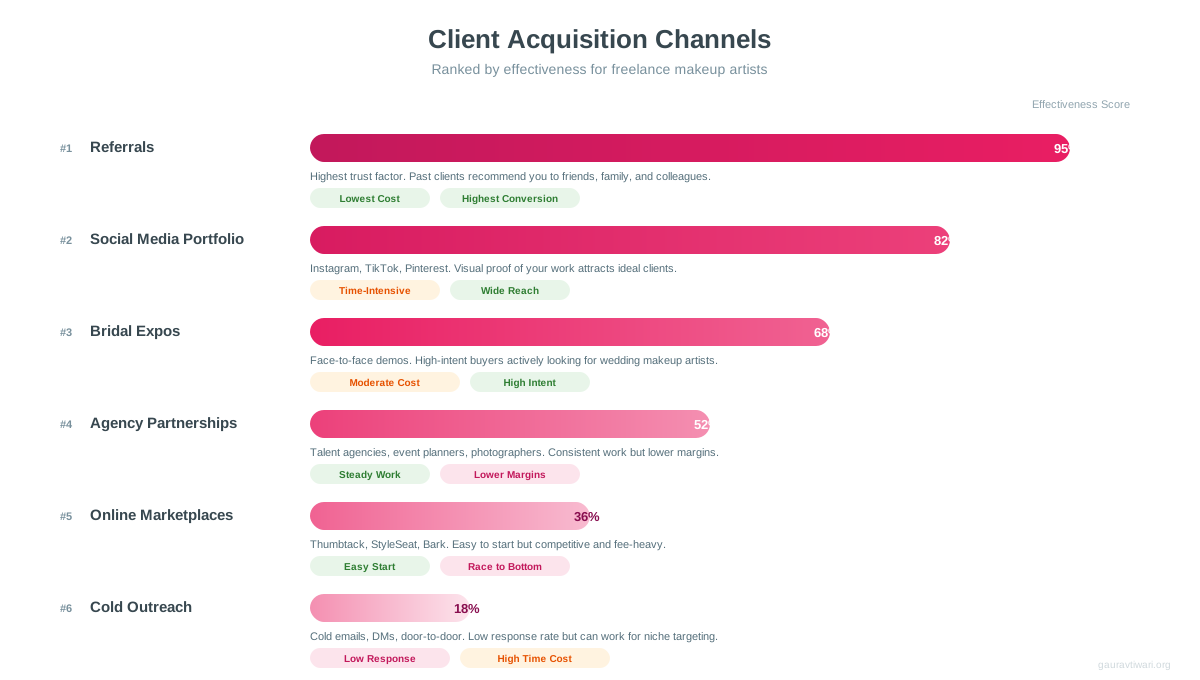
Here’s how the channels stack up:
| Channel | Cost | Best For | Timeline to Results |
|---|---|---|---|
| Client referrals | Free | All freelancers | Immediate |
| Social media portfolio | Free (time investment) | Visual industries | 3-6 months |
| Google Business Profile | Free | Local service providers | 2-4 months |
| Industry networking | Low (event fees) | B2B and creative niches | 1-3 months |
| Freelance marketplaces (Upwork, Fiverr, Thumbtack) | Platform fees (10-20%) | Getting started | 1-4 weeks |
| Cold outreach | Free (high time cost) | B2B services | Unpredictable |
For makeup artists, referrals often come from wedding planners, venue coordinators, and photographers. Building relationships with these complementary professionals creates a referral loop. The photographer recommends you to her clients, you recommend her to yours. Everyone wins.
Google Business Profile is underrated for local freelancers. Set it up. Add photos weekly. Ask every happy client to leave a Google review. Within 6 months, you’ll start appearing in “makeup artist near me” searches. And those leads are gold because they’re actively looking to hire someone right now.
The Business Side Nobody Teaches You
Most freelancers are great at their craft and terrible at running a business. I don’t say that to be harsh. I say it because I’ve watched talented people quit freelancing entirely because they couldn’t figure out invoicing, taxes, or cash flow.
You need three systems from day one: invoicing, contracts, and bookkeeping. Not “eventually.” Not “when I get bigger.” Day one.
FreshBooks handles invoicing and basic bookkeeping for $17/month. Other invoice generators exist too, but FreshBooks is what I recommend because it’s built specifically for freelancers and it tracks expenses, mileage, and time alongside invoicing.

- Automatic payment reminders reduce late invoices by 30%
- Expense tracking with receipt scanning
- Time tracking built into every invoice
- Tax-ready reports for freelance deductions
For contracts, you don’t need a lawyer (yet). Use a template from your industry association or a service like HelloSign. The contract should cover: scope of work, payment terms, cancellation policy, and usage rights for portfolio photos. A makeup artist’s contract might specify that the trial session fee applies toward the full bridal package, and that last-minute cancellations within 48 hours incur a 50% fee.
Track every business expense. Your makeup kit, brushes, travel to clients, phone bill (partial), website hosting, software subscriptions. These are all deductible. Most new freelancers leave $2,000-5,000 in deductions on the table because they don’t track expenses.
Building a Personal Brand That Actually Works
Personal brand isn’t about having a fancy logo or a color palette. It’s about being the person people think of when they need your service. When someone in your city says “I need a makeup artist for my wedding,” your name should be the first one that comes up. That’s brand.
Three things build it:
Consistency across platforms. Your Instagram, Google Business Profile, website, and business cards should all tell the same story. Same name, same positioning, same vibe. A makeup artist who positions herself as “luxury bridal specialist” on Instagram but takes $40 prom jobs on Facebook is confusing her market.
Testimonial strategy. Don’t just collect testimonials. Collect specific ones. “She was great!” is worthless. “She arrived 30 minutes early, matched my foundation perfectly, and my makeup lasted 14 hours through an outdoor ceremony in August heat” is a client magnet. Guide your clients with specific questions: What were you worried about before? What surprised you? Would you book again?
Document the process. People love seeing how things get made. A makeup artist’s time-lapse of a bridal look gets 10x the engagement of a static final photo. A photographer showing their editing workflow. A trainer showing how they design a program. Process content builds trust in a way that finished-product content can’t.
Canva is your best friend for making all of this look professional without hiring a designer. Templates for social posts, business cards, price lists, and client guides are all there. I’ve used it for years and it saves me 5-6 hours a week on design work.

- Thousands of templates for social media and marketing
- Brand kit keeps fonts, colors, and logos consistent
- Free plan covers most freelancer needs
- Resize one design for every platform instantly
Building credibility in a new industry takes time, but it compounds. Every testimonial makes the next one easier to get. Every portfolio piece attracts a slightly better client. After 18 months of consistent effort, you won’t need to chase clients anymore. They’ll find you.
Word-of-Mouth vs. Cold Outreach
I’ve tested both. Extensively. Across multiple freelance businesses I’ve either run or advised.
Cold outreach (emails, DMs, cold calls) converts at about 1-3% for most freelancers. You send 100 emails, get 1-3 meetings, close maybe 1. It’s a numbers game and it’s exhausting.
Word-of-mouth referrals convert at 40-60%. That’s not a typo. When someone’s friend says “hire this person,” the trust is already built. You’re just confirming it with a conversation.
The freelancers who spend 80% of their marketing energy on making current clients happy enough to refer them outperform the ones who spend 80% on finding new leads. Every time.
This doesn’t mean cold outreach is useless. It’s good for getting your first 3-5 clients when you have zero network. But once you have those first clients, shift your energy to referrals. Ask. Follow up. Send a thank-you note (or small gift) when someone sends you a referral. Build the machine.
Specialization Beats Generalization
A makeup artist who does “everything” competes with every other makeup artist. A makeup artist who specializes in South Asian bridal makeup in Dallas competes with maybe 5 people. And she can charge 3x more because she’s the expert, not the option.
This applies across every freelance industry. A photographer who shoots “everything” versus one who only does newborn photography. A personal trainer who works with “anyone” versus one who specializes in postpartum fitness. A web developer who builds “any website” versus one who only builds e-commerce stores for jewelry brands.
Specialization scares people because it feels like you’re turning away business. You are. On purpose. The business you turn away is the low-margin, high-headache work that keeps you stuck in Phase 1 pricing.
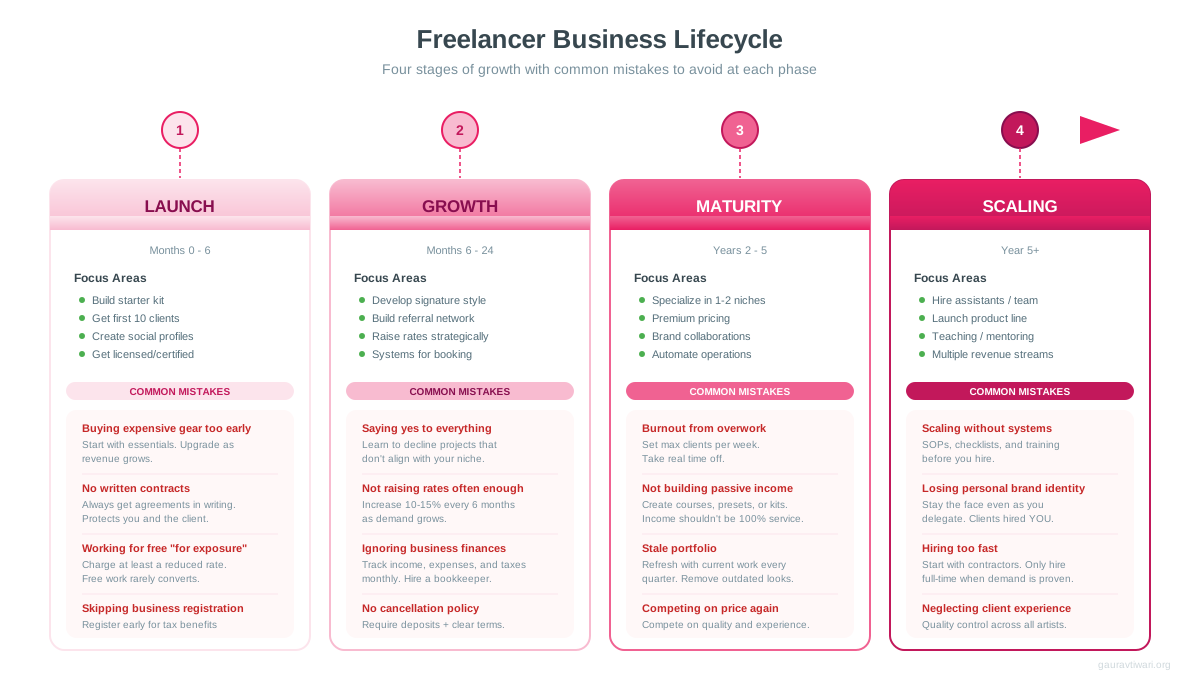
Solving the Feast-or-Famine Problem
Every freelancer knows this cycle. Two months of too much work, followed by three weeks of nothing. It’s the number one reason people go back to full-time jobs. And it’s fixable.
Three strategies that actually work:
Retainers. Offer your best clients a monthly package at a slight discount. A makeup artist might offer a monthly “content creation” retainer to a beauty brand. A photographer might do monthly social media shoots for local restaurants. Retainers give you predictable baseline income, and clients love the priority access.
Recurring clients. Some services naturally recur. Personal trainers have weekly sessions. Makeup artists have seasonal events. Photographers have quarterly headshot updates. Build your service menu around repeatability. A client who books once is revenue. A client who books monthly is a business.
Digital products. Package your expertise into something you sell while you sleep. A makeup artist can sell a “bridal beauty prep guide” for $27. A photographer can sell Lightroom presets. A trainer can sell workout programs. It’s not going to replace client work, but $500-2,000/month in passive income smooths out the feast-or-famine swings significantly.
The goal isn’t to eliminate busy and slow periods. It’s to make sure your slow periods still cover your bills. Retainers and recurring clients are how you get there.
Managing Clients and Communication
Bad client communication kills more freelance businesses than bad skills ever will. You can be the most talented makeup artist in your city, but if you’re slow to respond, unclear about timelines, or disorganized with scheduling, clients won’t come back.
Google Workspace at $7/month gives you a professional email (yourname@yourbusiness.com), Google Calendar for scheduling, Google Drive for sharing contracts and mood boards, and Google Meet for virtual consultations. It’s the single best $7 you’ll spend on your business.
- Custom email address builds instant credibility
- Shared calendars eliminate scheduling back-and-forth
- Google Drive for contracts, mood boards, and files
- Starts at $7/month for everything you need
Set response time expectations with clients. I tell mine: email responses within 24 hours on business days. Text messages within 4 hours for active projects. This sets boundaries while showing you’re reliable. Don’t be available 24/7. That’s not professionalism, that’s a trap.
Use a time tracking tool to understand where your hours actually go. Most freelancers discover they spend 30-40% of their time on admin, communication, and non-billable work. Once you see that number, you’ll start automating and delegating fast.
Scaling Beyond Solo
There’s a ceiling on solo freelancing. You only have so many hours. Once you’re fully booked at premium rates, your options are: raise prices further (diminishing returns), work more hours (burnout), or bring in help.
Here’s how freelancers in service industries typically scale:
Step 1: Hire an assistant. Not for client work. For admin. Scheduling, invoicing, email management, social media posting. This frees up 10-15 hours per week that you redirect into billable work. A part-time virtual assistant costs $500-1,500/month and pays for themselves within the first week.
Step 2: Train subcontractors. A makeup artist might train 1-2 junior artists to handle smaller bookings under her brand. She charges the full rate, pays the subcontractor 50-60%, and keeps the rest. She’s now making money on work she doesn’t personally do. That’s the shift from freelancer to business owner.
Step 3: Build a small agency. With 3-5 subcontractors and an admin assistant, you’re running a boutique agency. You handle high-end clients personally and delegate the rest. Revenue can 3-5x compared to solo work, with better margins because your time goes to sales and quality control, not production.
Legal and Insurance Basics You Can’t Skip
Freelancers tend to ignore legal stuff until something goes wrong. Then it goes really wrong. A client has an allergic reaction. A venue claims you damaged property. A client refuses to pay. A competitor copies your brand.
Four things to handle in your first 90 days:
Business structure. Register as an LLC. It costs $50-500 depending on your state and separates your personal assets from your business liability. If someone sues your business, they can’t take your house. Worth every penny.
General liability insurance. $300-600/year for most freelancers. Covers property damage, bodily injury, and client claims. Makeup artists need this because of potential allergic reactions. Photographers need it for venue requirements. Trainers need it because someone will eventually hurt themselves. Many clients and venues require proof of insurance before they’ll book you.
Contracts for every project. I said it before and I’ll say it again. No handshake deals. No verbal agreements. No “we’ll figure it out.” Every project gets a signed contract before work begins. Period.
IP protection. If you create original content (looks, photos, designs, programs), you own it unless your contract says otherwise. Make sure your contracts specify who owns the work product. A makeup artist’s before-and-after photos are hers unless she signs away the rights.
Industry Applications: Same Principles, Different Packaging
Everything I’ve covered applies universally, but here’s how it looks in three different industries:
Makeup Artists
Niches: bridal (highest per-booking revenue), fashion/editorial (prestige + portfolio building), film/TV (consistent work, union potential), special effects (niche within a niche, premium pricing). The bridal market alone is worth $72 billion annually in the US. A skilled bridal makeup artist in a major metro can earn $80,000-150,000/year within 3 years of going full-time.
Key differentiator: reliability. Brides don’t care if you’re the most creative artist in the world. They care that you’ll show up on time, match their skin tone perfectly, and make their makeup last 12+ hours. Reliability is the brand.
Photographers
Niches: weddings ($3,000-8,000/event), product photography ($100-500/hour for e-commerce), real estate ($150-400/property), corporate headshots ($200-500/session). The recurring revenue play is commercial clients who need monthly or quarterly content. One restaurant client needing monthly menu photos is worth more than 6 one-off portrait sessions.
Personal Trainers
Niches: postpartum fitness, athletic performance, senior mobility, online coaching. The online coaching model has exploded because it removes the geographic limit. A trainer charging $200/month for 20 online clients makes $4,000/month with 10-15 hours of work per week. Add a $47 workout program that sells 50 copies monthly, and that’s another $2,350 in near-passive income.
Your First 90 Days: A Practical Checklist
If you’re starting from scratch in 2026, here’s exactly what to do in the first three months. I’ve distilled this from watching hundreds of freelancers launch.
Week 1-2: Choose your niche. Set up a Google Business Profile. Create Instagram and one other platform account. Order business cards.
Week 3-4: Complete 3-5 free portfolio projects. Photograph everything. Set up FreshBooks or your chosen invoicing tool. Draft your contract template.
Month 2: Post on social media 3x/week. Start reaching out to complementary freelancers for referral partnerships. Register your LLC. Get liability insurance. Set your Phase 1 pricing.
Month 3: You should have your first 2-5 paying clients. Collect testimonials from every one. Start a simple email list (even 20 people matters). Evaluate which acquisition channels are working. Double down on those.
By the end of 90 days, you’ll know if this is viable. Not profitable yet, necessarily. But viable. You’ll have proof of concept, a small portfolio, a handful of clients, and the systems to handle more when they come.
Tools That Make Freelancing Easier
You don’t need 20 tools. You need 5-6 good ones. Here’s what I recommend based on what’s worked for me and the freelancers I’ve advised:
| Need | Tool | Cost |
|---|---|---|
| Invoicing and bookkeeping | FreshBooks | From $17/month |
| Design and marketing materials | Canva | Free / $13/month Pro |
| Email, calendar, file sharing | Google Workspace | $7/month |
| Time tracking | See top picks | Free-$10/month |
| Contracts and e-signatures | HelloSign or PandaDoc | Free-$15/month |
| Scheduling | Calendly or Acuity | Free-$16/month |
Total cost for a full freelance tech stack: $25-60/month. That’s less than one client session for most freelancers. There’s no excuse to run your business on sticky notes and text messages.
Frequently Asked Questions
How much can a freelance makeup artist earn in 2026?
Income varies by location and niche. A bridal makeup artist in a major US city typically earns $60,000-150,000/year once established. Starting out, expect $20,000-40,000 in year one. Fashion and film MUAs can earn more but work is less consistent. The key factor is pricing phase: Phase 1 freelancers earn far less per hour than Phase 3 specialists doing the same work.
Do I need a certification to freelance as a makeup artist?
Requirements vary by state. Some states require a cosmetology or esthetician license. Others have no requirements at all. Check your state’s licensing board. Certification from recognized schools (like CIDESCO or local beauty academies) adds credibility but your portfolio matters far more than your diploma when it comes to booking clients.
How do I handle clients who want to negotiate my price?
Don’t lower your price. Instead, adjust the scope. If your bridal package is $400 and they want to pay $250, offer a reduced package: day-of makeup only, no trial session, no lash application. This maintains your rate integrity while giving price-sensitive clients an option. Clients who push hard on price are almost always the most difficult to work with.
What’s the best way to get my first clients with no experience?
Do 5-10 strategic free projects for portfolio building. Then post that work on Instagram, set up a Google Business Profile, and tell everyone you know that you’re taking clients. Your first paying clients will almost always come from personal connections. After that, referrals take over. Most freelancers get their first paid client within 2-4 weeks of actively putting themselves out there.
Should I use freelance marketplaces like Fiverr or Upwork?
They’re useful for getting started but shouldn’t be your long-term strategy. Platform fees eat 10-20% of your earnings, you compete on price against thousands of others, and you don’t own the client relationship. Use marketplaces to get your first 5-10 clients, then transition to direct bookings through your own channels. The goal is always to move clients off the platform.
How much should I invest in my freelance business to start?
Depends on your industry. A makeup artist needs $500-2,000 for a professional kit. A photographer needs $2,000-5,000 for camera gear. A personal trainer needs $200-500 for certifications. Add $200-500 for business basics (LLC filing, insurance, business cards, website domain). You can start a service-based freelance business for under $1,000 in many industries. Don’t go into debt. Start lean and reinvest profits.
When should I quit my day job and freelance full-time?
When your freelance income covers your essential expenses for 3 consecutive months AND you have 3-6 months of expenses saved. Don’t quit based on one good month. Freelance income fluctuates. The safety net isn’t optional. Many successful freelancers transition gradually: reducing day job hours as freelance income grows, rather than making a dramatic leap.
How do I deal with the feast-or-famine income cycle?
Three strategies: retainer agreements with regular clients (monthly packages at a slight discount), building recurring service offerings (weekly training sessions, monthly content shoots), and creating digital products for passive income (guides, presets, templates). Also maintain a pipeline by marketing even when you’re busy. Most freelancers stop marketing during busy periods, which guarantees a dry spell 4-6 weeks later.
Freelancing isn’t glamorous. The Instagram version of it is. The real version involves chasing invoices, working weekends, and figuring out quarterly taxes on your kitchen table. But it’s also the most direct path to getting paid what you’re worth for work you actually enjoy doing.
Start with the portfolio. Get your pricing right. Build the referral engine. Handle the business basics. Everything else is details. The freelancers who make it aren’t the most talented ones. They’re the ones who figured out the business side and stuck with it long enough for the compounding to kick in.
Disclaimer: This site is reader-supported. If you buy through some links, I may earn a small commission at no extra cost to you. I only recommend tools I trust and would use myself. Your support helps keep gauravtiwari.org free and focused on real-world advice. Thanks. - Gaurav Tiwari