
How to Attract Traffic to Your New Website?
You built the website. You picked the domain, chose hosting, installed WordPress, tweaked the design until it looked right. And then you hit publish, waited, and… nothing. No visitors. No comments. No sales. Just your own page views staring back at you in Google Analytics.
I’ve launched dozens of websites over the past 16 years, and that silence after launch hits everyone the same way. The truth is, building a website is the easy part. Getting people to actually visit it is where the real work begins. Traffic doesn’t just show up because your site exists. You have to earn every single visitor.
The good news? There’s a proven playbook for driving traffic to a brand new website. I’ve used these exact strategies to grow sites from zero to tens of thousands of monthly visitors. Some channels deliver results within days. Others take months but become your biggest traffic sources long-term. You need both.
Here’s everything I know about attracting traffic to a new website, broken down into strategies that actually work in 2026.
Start with a Content Strategy, Not Random Posts
There are millions of websites out there. Yours won’t stand out by covering everything under the sun. The websites that attract real traffic are the ones that pick a lane and own it.
Before you publish a single post, decide what your website is about at a granular level. Not “marketing” but “email marketing for e-commerce stores.” Not “fitness” but “strength training for people over 40.” The narrower your focus, the faster you’ll build authority in that space.
I recommend creating a simple content calendar with 20-30 article topics before you write anything. Map out the questions your audience asks, the problems they face, and the comparisons they make before buying. That’s your content roadmap for the first 3-6 months.
Consistency matters more than frequency. Publishing one well-researched article per week beats publishing five thin posts that nobody shares. I’ve seen sites gain traction with just 2 posts per month, as long as every post delivered real value. Give people a reason to come back. Give search engines a reason to crawl your site regularly.
Check your competitors. What topics are they covering? Where are the gaps? Those gaps are your opportunity to publish something better, more detailed, and more useful than what already exists.
Learn the Basics of SEO (It’s Your Biggest Traffic Source Long-Term)
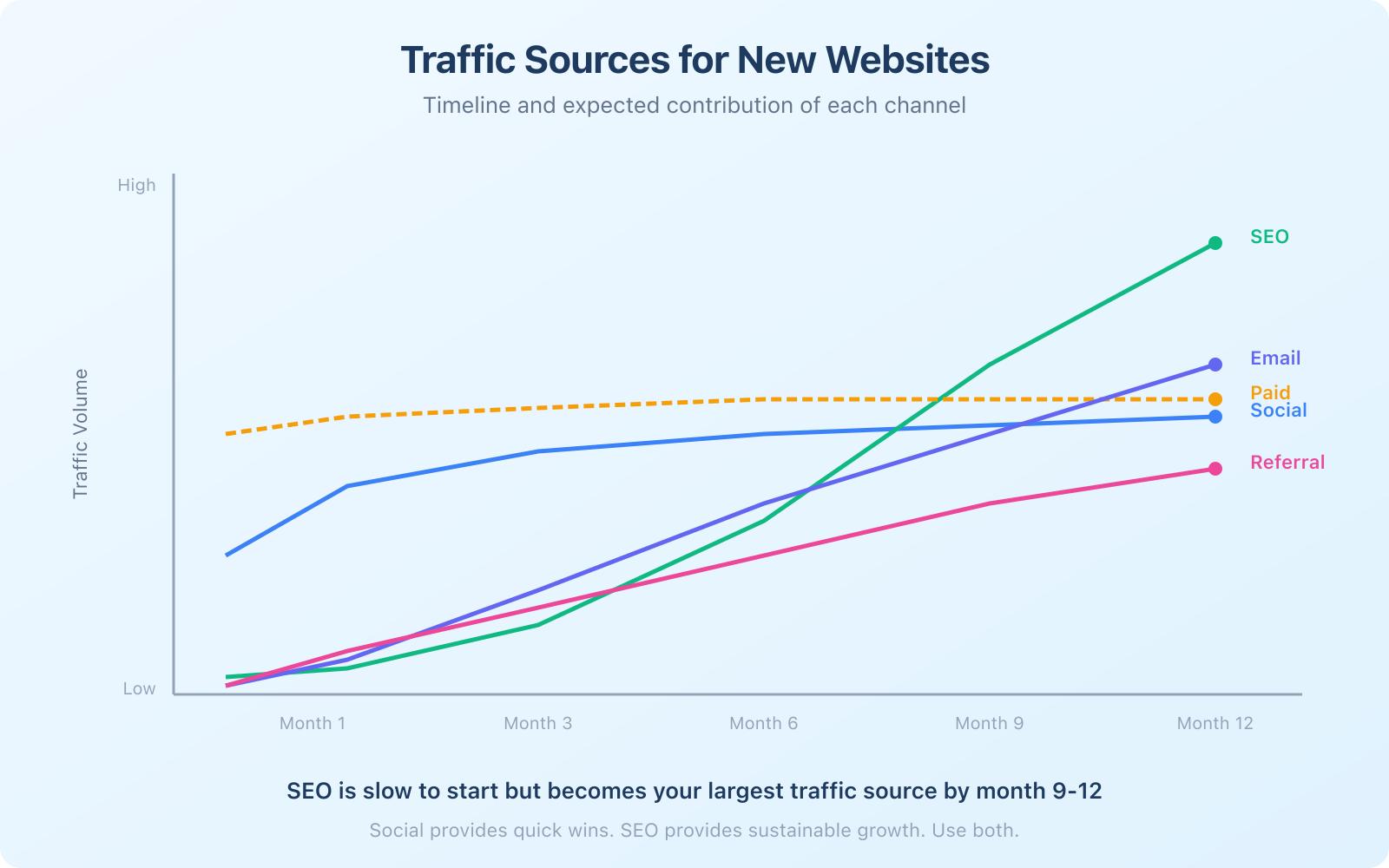
Search engine optimization is the single most important traffic channel for any new website. It’s slow to start, but once it kicks in, it delivers free, targeted visitors every single day without you lifting a finger. I’ve seen SEO become the dominant traffic source for every website I’ve worked on within 9-12 months.
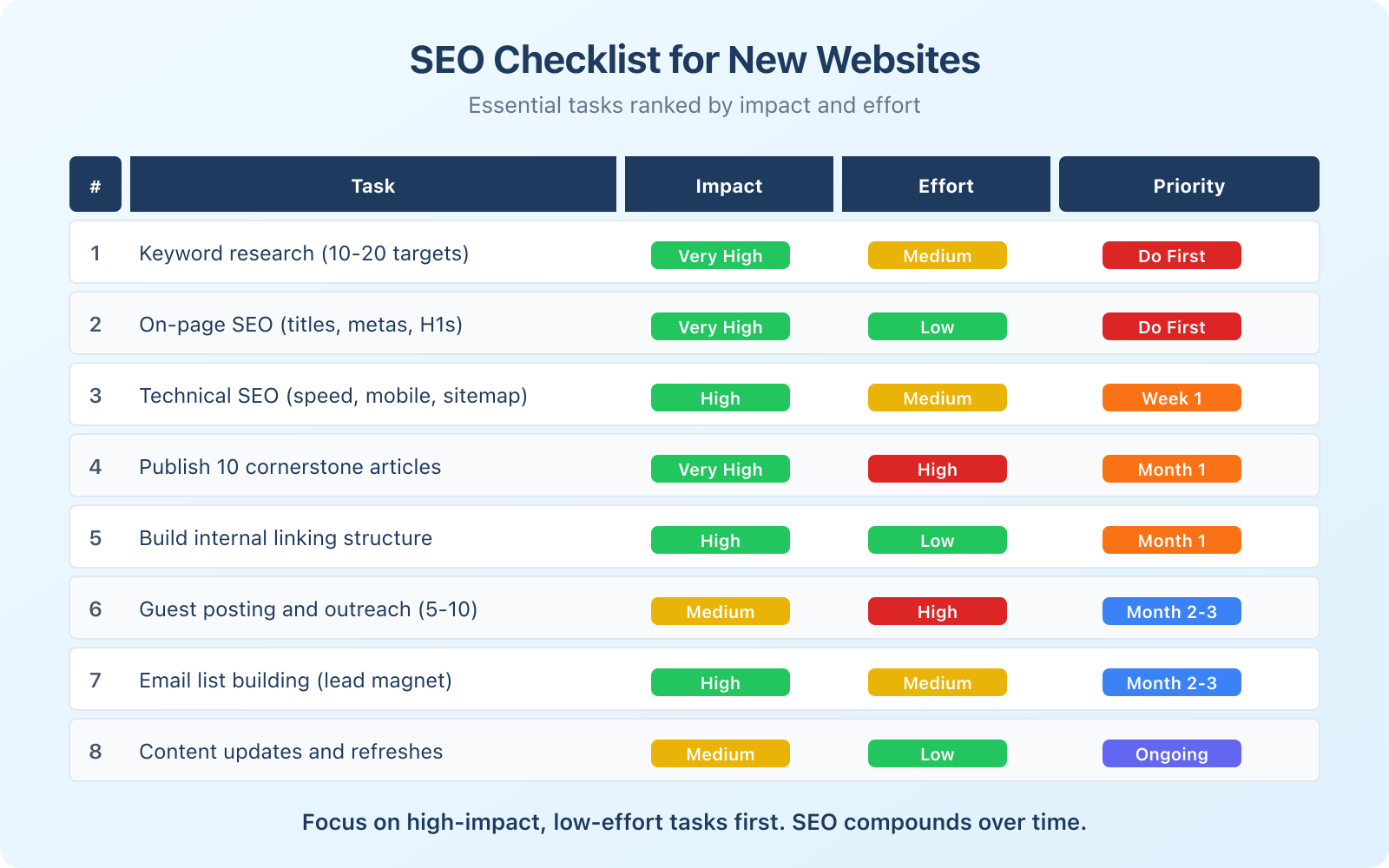
Start with keyword research. You need to know what people are actually searching for before you write about it. Tools like Ahrefs, SEMrush, and even free options like Google Keyword Planner will show you search volume and competition for any topic.
The sweet spot for a new website is long-tail keywords. These are specific phrases with lower search volume but much less competition. Instead of targeting “best laptops” (which sites like CNET own), target “best laptops for graphic design students under $800.” You’ll rank faster and attract visitors who are closer to making a decision.
Focus on long-tail keywords with 100-1,000 monthly searches and low competition. A new site can rank for these within 2-3 months. Targeting high-volume keywords right away is a waste of time because established sites will outrank you every time.
On-page SEO is straightforward but non-negotiable. Every page needs a unique title tag with your target keyword, a meta description that makes people want to click, proper heading structure (one H1, logical H2s and H3s), and natural keyword usage throughout the content. Don’t stuff keywords. Write for humans first, then optimize for search engines.
Technical SEO matters too. Submit your sitemap to Google Search Console. Make sure your site loads in under 3 seconds. Ensure every page is mobile-friendly. Fix any broken links immediately. Install an SEO plugin like Rank Math to handle the basics automatically.
Seasonal trends also affect what people search for. Search volume for “best air conditioners” spikes in summer. “Tax software” peaks in early spring. Plan your content calendar around these patterns to capture traffic when demand is highest.
Use Social Media Strategically
Social media is your fastest path to initial traffic. While SEO takes months, a well-timed social media post can drive hundreds of visitors to your site within hours of publishing.
But here’s where most people go wrong: they try to be everywhere at once. You don’t need to be on every platform. You need to be on the 1-2 platforms where your audience actually spends time.
If you’re targeting professionals and B2B audiences, LinkedIn is your primary channel. The organic reach on LinkedIn is still incredible compared to other platforms. Share your articles as posts (not just links), add your own commentary, and engage with comments. I’ve seen single LinkedIn posts drive 500+ visits to a new website.
For consumer-facing content, look at Facebook Groups, Reddit communities, and Twitter/X. Facebook Groups in your niche are goldmines. Don’t spam your links. Join the conversation, answer questions, and share your content when it genuinely helps someone. Reddit works similarly. Find relevant subreddits, contribute value, and share your content when it fits the discussion.
Instagram and Pinterest work well for visual niches like food, travel, fashion, and home decor. YouTube is a traffic channel on its own if you’re willing to create video content. Each platform has different formatting requirements. What works on LinkedIn won’t work on Twitter. Learn the culture of each platform before posting.
The key is to not just drop a link and disappear. Write a compelling hook, share the key insight from your article, and give people a reason to click through to your site for the full story. Treat every social post as a miniature piece of content on its own.
Build Backlinks the Right Way
Backlinks are still one of Google’s most important ranking factors. When other websites link to yours, it signals to search engines that your content is worth ranking. A new website with zero backlinks is invisible to Google, no matter how good the content is.
There are legitimate ways to build backlinks, and there are shady tactics that will get you penalized. Stick to the legitimate approaches.
Guest posting is the most reliable backlink building strategy for new websites. Find blogs in your niche that accept guest contributions. Write something genuinely valuable for their audience. Include a link back to your site in your author bio or within the content where it’s relevant. Start with smaller blogs and work your way up as your portfolio grows.
Answering questions on forums like Reddit and Quora is another approach that works. Don’t just paste your link everywhere. Write a thorough, helpful answer and link to your article as a resource for people who want to dig deeper. This builds traffic directly and creates backlinks at the same time.
Create linkable assets. These are pieces of content so useful that people link to them naturally. Original research, comprehensive guides, free tools, infographics, and industry surveys all attract natural backlinks. My most-linked articles are always the ones that include original data or a unique framework that people reference in their own content.
Keep checking the quality of sites that link to you. If you notice spammy or irrelevant sites linking to your content, use Google’s disavow tool to prevent those links from hurting your rankings. Focus on earning links from sites that are relevant to your niche and have genuine traffic of their own.
Start Building an Email List from Day One
If I could go back and give my younger self one piece of advice about building websites, it would be this: start collecting emails from the very first day your site goes live.
Your email list is the only traffic channel you truly own. Social media algorithms change. Google updates rankings. But your email list? That’s yours. You can reach those people whenever you want, and open rates for a well-maintained email list hover around 20-30%, which crushes the engagement rates on any social platform.
Create a lead magnet to incentivize signups. This could be a free PDF guide, a checklist, a template, a mini-course, or an exclusive resource that your audience would find valuable. “Subscribe to my newsletter” doesn’t work anymore. “Get my free 10-page SEO checklist” does.
Place your opt-in form in multiple locations: after blog posts, in the sidebar, as a welcome popup (with a delay, not immediately), and on a dedicated landing page. Use email marketing software to automate a welcome sequence that introduces new subscribers to your best content.
Every time you publish a new article, email your list. This drives immediate traffic to fresh content, generates social shares, and sends positive engagement signals to Google. An email list of even 500 engaged subscribers can drive more traffic to a new post than a social media following of 10,000.
Make Your Website Fast and Mobile-Friendly
None of your traffic-building efforts matter if people land on your site and leave because it takes too long to load. Over 60% of web traffic comes from mobile devices in 2026. If your site isn’t fast and mobile-friendly, you’re losing more than half your potential visitors.
Your website should load in under 3 seconds on both desktop and mobile. Every second beyond that costs you roughly 7% of your conversions. Use Google PageSpeed Insights to test your current performance and identify specific issues to fix.
Google uses Core Web Vitals as a ranking factor. Largest Contentful Paint (LCP) should be under 2.5 seconds, First Input Delay (FID) under 100ms, and Cumulative Layout Shift (CLS) under 0.1. These metrics directly affect your search rankings and user experience.
The most common speed killers for new websites are unoptimized images, too many plugins, cheap hosting, and bloated themes. Compress your images before uploading (I use ShortPixel or TinyPNG). Keep your plugin count under 20. Invest in quality hosting from a provider like a reliable web host that offers server-level caching and CDN support. Choose a lightweight theme that doesn’t load unnecessary CSS and JavaScript.
Internal linking also plays a huge role in keeping visitors on your site. Link related articles to each other naturally. If someone reads your article about email marketing, link them to your article about building landing pages. This increases time on site, reduces bounce rate, and helps search engines understand how your content is connected. Make sure you don’t have any broken links, because they hurt both user experience and your search rankings.
Get Active in Your Community
The most underrated traffic strategy is simply showing up where your audience hangs out and being genuinely helpful. No links. No pitches. Just value. The traffic follows naturally.
Find the online communities where your target audience gathers. These could be Reddit subreddits, Facebook Groups, Discord servers, Slack communities, industry forums, or comment sections on popular blogs in your niche. Join 3-5 of the most active ones and commit to participating regularly.
Answer questions thoroughly. Share your expertise. Help people solve problems. When you consistently show up as someone who knows their stuff, people will naturally check out your profile, find your website, and become regular visitors. I’ve gotten some of my most loyal readers from random Reddit comments where I took 10 minutes to write a detailed answer.
Collaborate with other content creators in your space. Guest post on their blogs. Appear on podcasts. Do joint webinars or live sessions. Co-create content. Every collaboration exposes you to a new audience that you wouldn’t have reached on your own. These partnerships become your most valuable traffic sources because they come with built-in trust.
Respond to every comment on your blog and social media posts. When people see that you actually engage, they’re more likely to come back and bring others with them. You can even host Q&A sessions or AMAs (Ask Me Anything) to drive engagement and traffic simultaneously.
Update Your Content Regularly
Publishing content once and forgetting about it is one of the biggest mistakes new website owners make. The internet moves fast. An article you wrote 12 months ago might already contain outdated statistics, broken links, or advice that no longer applies.
Google actively rewards fresh, updated content. I’ve seen articles jump from page 3 to page 1 simply by updating the information, refreshing the data, and adding new sections that cover developments since the original publish date.
Set a quarterly review cycle. Go through your published articles and check for outdated information, broken links, and opportunities to add new content. Update your titles and meta descriptions if they’re not generating clicks. Add new sections that cover questions readers have asked in the comments.
Use Google Search Console to identify articles that are losing traffic. If a post that used to rank on page 1 has dropped to page 2, it probably needs a refresh. Look at what the current top-ranking articles cover that yours doesn’t, then fill those gaps. Content updates are the lowest-effort, highest-return traffic activity you can do for an established site.
Don’t forget to update the publish date when you make significant changes. A post with a 2026 date gets more clicks than one showing a date from 3 years ago, even if the content is identical.
Use Paid Advertising to Accelerate Growth
Organic traffic takes time. If you have budget to invest, paid advertising can bridge the gap between launching your site and seeing organic results kick in. It’s not a replacement for organic strategies, but it’s a powerful accelerator.
Google Ads lets you appear at the top of search results immediately for your target keywords. This is especially valuable for commercial keywords where people are ready to buy. You only pay when someone clicks, and you can set daily budgets to control spending. Start with $10-20 per day and scale up once you’ve identified which keywords convert.
Social media ads on platforms like Facebook, Instagram, and LinkedIn let you target specific demographics, interests, and behaviors. The beauty of social ads is the precision. You can show your content to exactly the type of person who would find it valuable. I’ve seen Facebook ads drive blog traffic at costs as low as $0.05-0.15 per click when the targeting and creative are dialed in.
The key with paid advertising is to send traffic to your best content, not your homepage. Create landing pages or use your highest-quality articles as the destination. Make sure you have conversion elements in place (email opt-ins, clear CTAs, related content links) so that paid traffic doesn’t just bounce immediately.
Retargeting is another powerful tactic. Install tracking pixels from Google and Facebook on your site. Then create ads that specifically target people who’ve already visited your site but didn’t convert. These visitors already know you exist, so retargeting ads are significantly cheaper and more effective than cold traffic campaigns.
How All These Channels Work Together
Here’s what most traffic guides don’t tell you: these strategies don’t work in isolation. They compound each other.
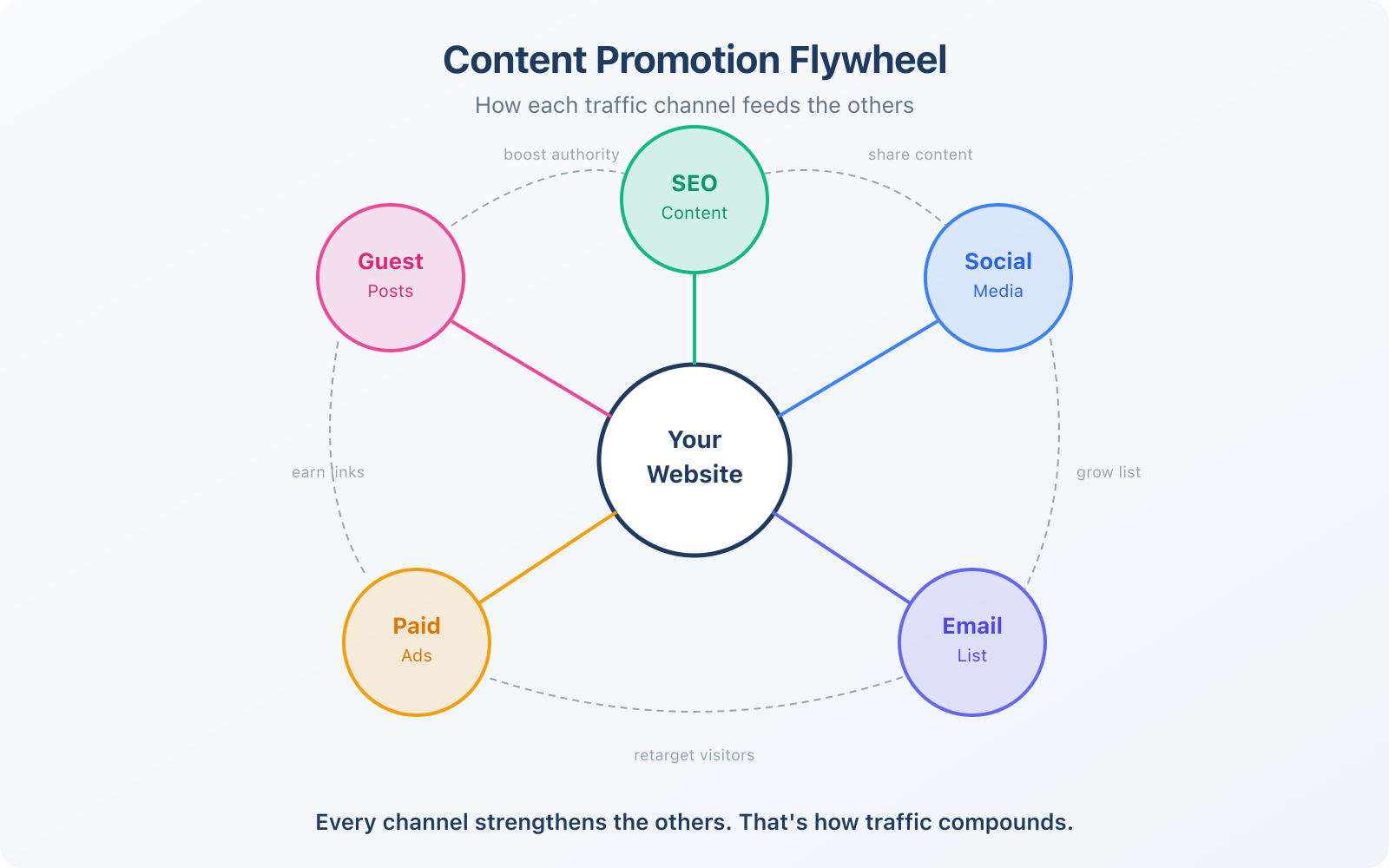
When you publish a new article (content strategy), you share it on social media (social traffic) and email it to your list (email traffic). Some of those readers share it with their audiences, creating backlinks and referral traffic. Those signals tell Google your content is valuable, which boosts your SEO rankings. Better rankings bring more organic traffic. More organic traffic grows your email list. And the cycle repeats.
This flywheel effect is why traffic growth often looks exponential rather than linear. The first few months feel painfully slow. You’re building all the pieces. But once they start feeding each other, growth accelerates dramatically.
I’ve seen websites go from 0 to 1,000 monthly visitors in 3 months using social and email. Then from 1,000 to 10,000 in the next 6 months as SEO kicked in. And from 10,000 to 50,000 in the year after that as the flywheel really started spinning. Patience and consistency are everything.
Common Mistakes That Kill New Website Traffic
After helping hundreds of clients with their websites, I see the same mistakes over and over. Avoid these and you’re already ahead of 90% of new website owners.
- Writing for search engines instead of people. Google is smart enough to understand context. Write naturally. Stuffing keywords into every sentence makes your content unreadable and actually hurts rankings.
- Ignoring analytics. If you don’t know where your traffic comes from and what content performs best, you’re flying blind. Set up Google Analytics and Search Console on day one and check them weekly.
- Trying to do everything at once. Pick 2-3 traffic channels and master them before adding more. Spreading yourself across 7 platforms means doing none of them well.
- Giving up too early. Most websites that fail do so because the owner expected results in 30 days. Real traffic growth takes 6-12 months of consistent effort. The people who succeed are the ones who kept going when the numbers looked discouraging.
- Neglecting website speed and security. A slow, insecure site repels visitors and search engines alike. Invest in proper security and performance optimization before you start driving traffic.
- Not building an email list. Every visitor who leaves without giving you their email address is a visitor you might never see again. Capture emails from the start.
Your First 90-Day Traffic Plan
If I were launching a brand new website today, here’s exactly what I’d do in the first 90 days.
Days 1-7: Foundation. Set up Google Analytics and Search Console. Install an SEO plugin. Create your lead magnet and email opt-in forms. Choose your 2 primary social media platforms. Do keyword research and create a content calendar with 12 article topics.
Days 8-30: Content sprint. Publish 4 cornerstone articles (2,000+ words each) targeting your most important keywords. Share each one on social media and in relevant communities. Set up your internal linking structure between these articles.
Days 31-60: Distribution. Continue publishing 1-2 articles per week. Start guest posting outreach (aim for 3-5 guest posts). Build relationships in 3 online communities. Send your first email newsletter. Consider a small paid traffic test ($100-200) to your best-performing content.
Days 61-90: Optimization. Review analytics and double down on what’s working. Update any underperforming content. Expand your email list strategy. Continue guest posting and community engagement. By now, you should be seeing early organic traffic from long-tail keywords.
This isn’t a get-rich-quick scheme. It’s a proven system that works if you stick with it. Every successful website you admire went through this same grind in the early days. The ones that made it are the ones that didn’t stop.
Frequently Asked Questions
How long does it take to get traffic to a new website?
Most new websites start seeing meaningful organic traffic within 3-6 months of consistent content publication and SEO efforts. Social media and email can drive traffic within the first week. Paid ads deliver immediate results but stop when you stop paying. The realistic timeline for reaching 1,000 monthly organic visitors is 4-8 months, depending on your niche competition and content quality.
What is the cheapest way to drive traffic to a new website?
SEO and community engagement are the most cost-effective traffic strategies because they only require your time. Write keyword-targeted content, participate in relevant online communities (Reddit, Facebook Groups, forums), and answer questions on Quora. Guest posting is also free and builds both backlinks and referral traffic. These approaches cost nothing except your effort and deliver compounding returns over time.
How many blog posts do I need before my site starts ranking?
There’s no magic number, but I recommend having at least 10-15 well-written, keyword-targeted articles before expecting significant organic traffic. Google needs to see that your site has depth and expertise in your topic area. Focus on quality over quantity. Ten comprehensive 2,000-word articles will outperform fifty 500-word posts every time. Build topical clusters around your main keywords for the fastest results.
Should I use paid ads for a brand new website?
Paid ads can be useful for testing content and building an initial audience, but they shouldn’t be your only strategy. Start with a small budget ($10-20 per day) to drive traffic to your best content and build your email list. Use the data to understand which topics resonate with your audience. As organic traffic grows, you can reduce ad spend or shift it toward retargeting campaigns that convert existing visitors into subscribers or customers.
Which social media platform is best for driving website traffic?
It depends entirely on your audience. LinkedIn works best for B2B and professional content. Pinterest drives significant traffic for visual niches like food, home decor, and fashion. Reddit and Facebook Groups work well for niche communities. Twitter/X is good for tech, news, and commentary. Don’t try to be on every platform. Pick the 1-2 where your specific audience is most active and focus your energy there.
Building traffic to a new website isn’t complicated. It’s just consistent. Publish valuable content targeting the right keywords. Share it where your audience hangs out. Build an email list from day one. Earn backlinks through genuine relationships and great content. And don’t quit when the first three months feel slow.
The websites that succeed are the ones whose owners treated traffic building as a daily habit, not a one-time project. Start with one strategy, get good at it, then add the next. Before you know it, you’ll have a traffic flywheel that feeds itself.