
14 Best Ways to Earn Online Without Investment
Fourteen genuinely zero-investment online earning methods that actually pay in 2026, with realistic monthly income ranges, India and global platform names, the eight scams to avoid, and a 90-day skill roadmap for going from your first ₹1,000 to ₹1,00,000+ a month.
 by
by

Earning money online without any upfront investment is genuinely possible in 2026 — but only if you’re honest with yourself about the trade-offs. You’re not investing money; you’re investing time, attention, and skill-building. Anyone who promises ₹50,000 a month from a ten-minute task on your phone is selling you a scam, not a job.
This guide is the version I wish I had when I started building income streams online over a decade ago. Fourteen real methods, what each actually pays in months 3 to 6 of consistent effort, the exact platforms (with links and screenshots) that work in India and globally, step-by-step instructions to get started on each, and the eight red flags that separate legitimate work from the scam economy.
How “zero-investment” online earning actually works
Two truths sit at the heart of every honest online earning guide. First, you don’t need money to start — a smartphone, an internet connection, and a few hours a week are enough. Second, the methods that actually pay require you to build something — a skill, a portfolio, a small audience, or a track record. Pure “money for clicking buttons” doesn’t exist at meaningful scale, and the platforms that pretend it does are either microtask sites that pay $1 an hour or outright scams.
The fastest path to your first ₹1,000 (or $15) online is a microtask platform like UserTesting or AI data labelling — you can usually book that within two to four weeks. The path to ₹40,000+ a month is freelancing, tutoring, or content creation, and that takes three to six months of focused work. The path to ₹2,00,000+ a month is one of those scaled into a business, which takes 12 to 24 months. Knowing which path you’re on prevents the disappointment that drives most people to quit too early.
The trade-off pattern at a glance
The chart below plots all 14 methods on the same two axes — how fast they pay you and how much they realistically pay per month at month six. Both axes are logarithmic. The diagonal pattern is the trade-off you’re choosing between.
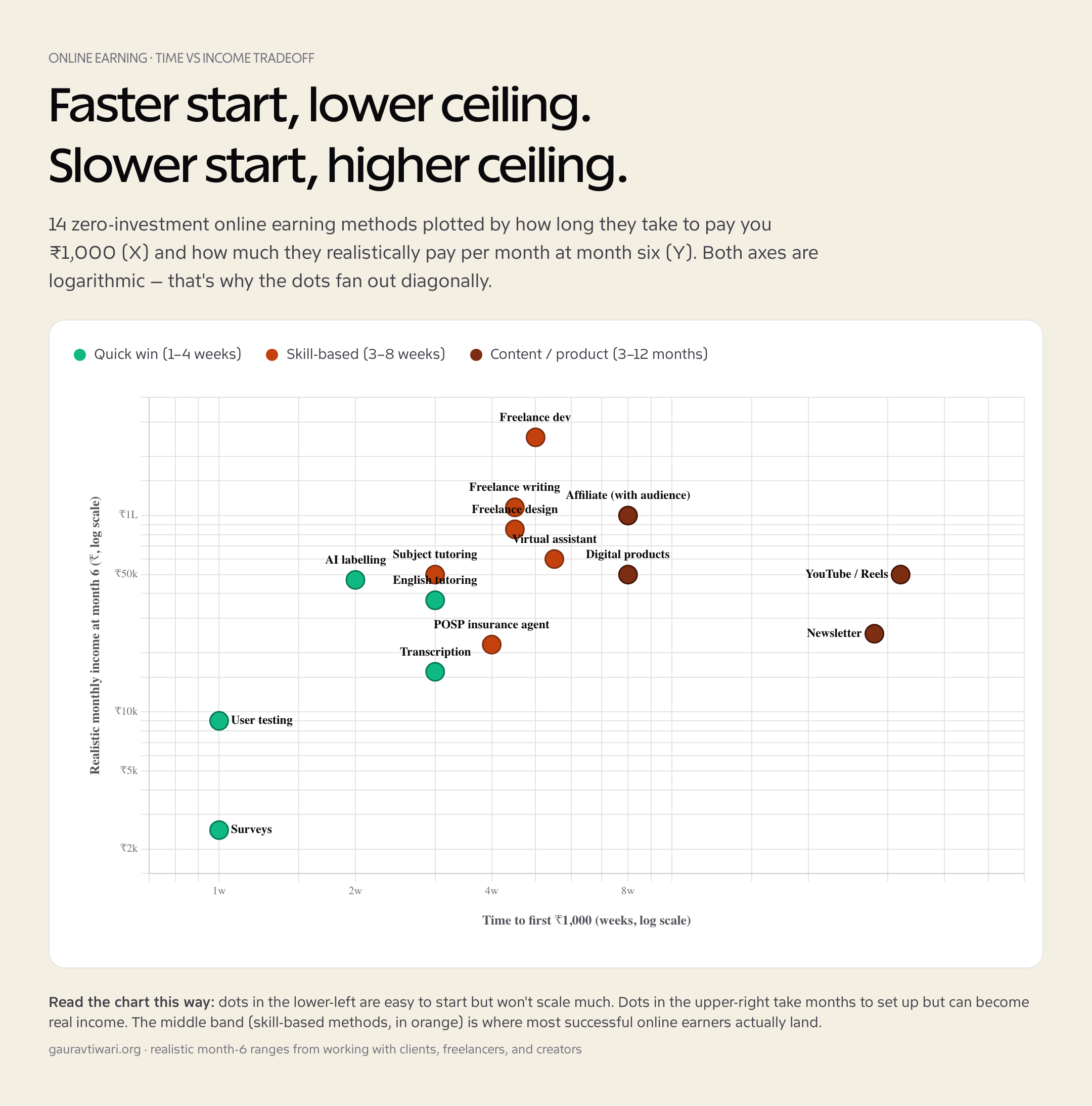
14 methods compared at a glance
Numbers below are the ranges I’ve seen in practice from working with clients, freelancers, and creators. They’re not best-case anecdotes — they’re typical results in months 3–6 of consistent effort. The top of each range assumes you treat it like a job; the bottom assumes 5–8 hours a week.
| Method | Time to first ₹1,000 / $15 | Realistic monthly (mo. 6) | Skill needed |
|---|---|---|---|
| User testing (UserTesting, Userlytics) | 1 week | ₹3k–₹15k | Clear English speaking |
| AI data labelling (Outlier, Scale, DataAnnotation) | 2 weeks | ₹15k–₹80k | Domain expertise (code/math/writing) |
| Transcription (Rev, GoTranscript) | 2–4 weeks | ₹8k–₹25k | Fast typing + good ear |
| English tutoring (Cambly, Preply) | 2–4 weeks | ₹15k–₹60k | Fluent English + patience |
| Subject tutoring (Chegg, Vedantu, Wyzant) | 2–4 weeks | ₹20k–₹80k | Subject mastery + teaching |
| Freelance writing (Upwork, Contra, direct) | 3–6 weeks | ₹25k–₹2L | Clear writing + niche |
| Freelance design (Fiverr, Behance) | 3–6 weeks | ₹20k–₹1.5L | Portfolio + tools (Figma) |
| Freelance dev (Upwork, Toptal, direct) | 2–8 weeks | ₹50k–₹5L+ | Stack mastery + GitHub |
| Virtual assistant (Belay, Time etc, direct) | 3–8 weeks | ₹25k–₹1L | Organization + comms |
| Affiliate marketing (existing audience) | 1–3 months | ₹5k–₹2L | Audience + relevance match |
| YouTube / Reels monetization | 3–12 months | ₹0–₹1L (highly variable) | Editing + niche + consistency |
| Newsletter (Substack, Beehiiv) | 3–9 months | ₹0–₹50k | Distinct voice + topic |
| Digital products (Gumroad, Etsy, templates) | 1–3 months | ₹3k–₹1L | One sellable skill |
| POSP insurance agent (India only) | 2–6 weeks | ₹5k–₹40k | IRDAI training + sales |
Quick-win methods (your first ₹1,000 in under a month)
These pay modestly — typically ₹3,000–₹25,000 a month at part-time effort — but they require almost no skill ramp and can produce real money inside the first few weeks. Useful as starter income while you build something bigger.
1. User testing platforms
Companies pay for ordinary people to try their websites and apps and talk through their experience out loud. Sessions are usually 5–20 minutes and pay $4–$30 depending on length and complexity. Expect ₹3,000–₹15,000 a month doing 1–2 tests a day. The work is sporadic — you sit on a panel and accept invitations as they appear — but the pay-per-hour rate is reasonable for unskilled work.
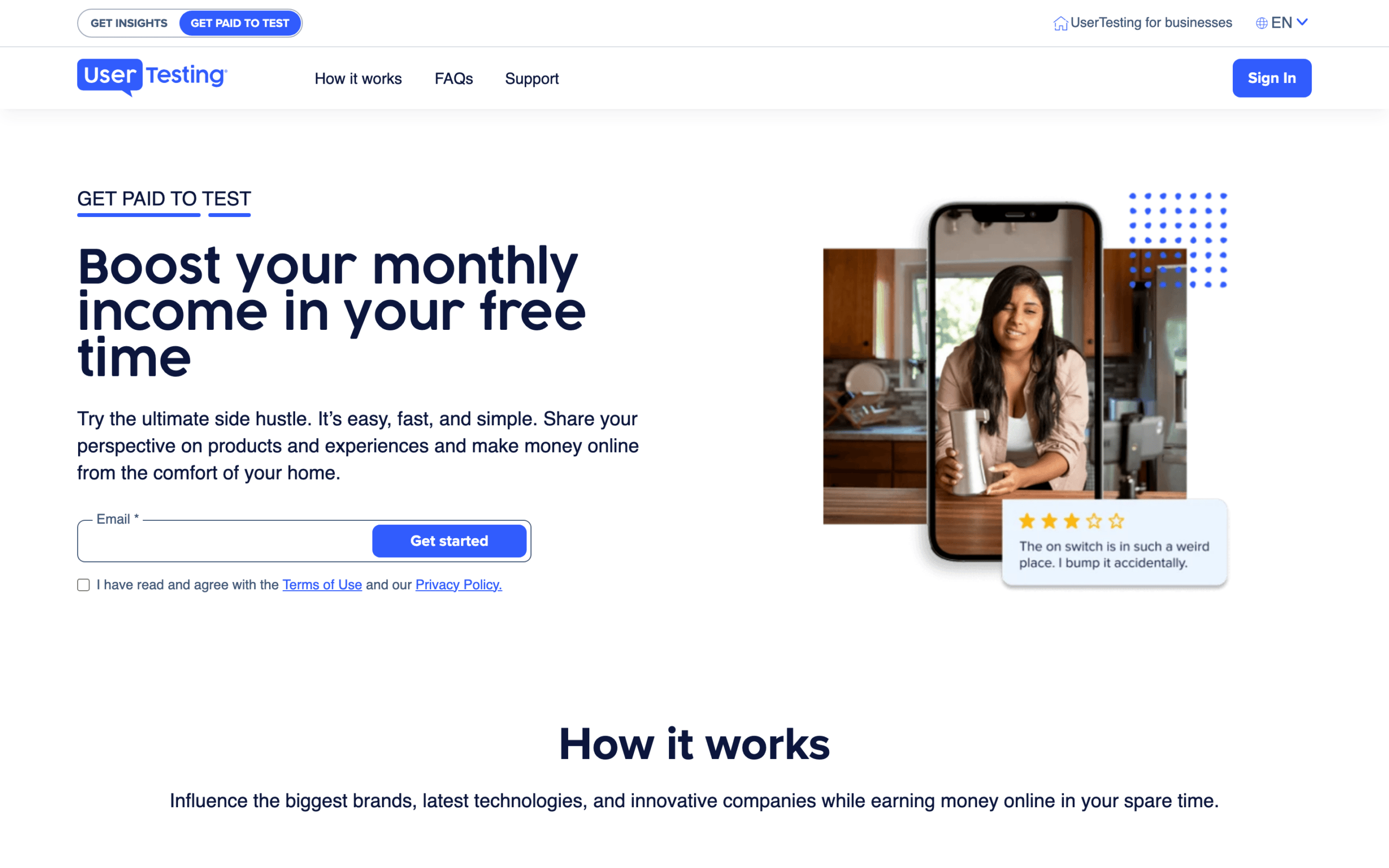
Where to sign up (free, accept Indian and global testers):
- UserTesting — largest panel, $4–$60 per test
- Userlytics — $5–$90 per test, supports many languages
- UserBrain — quick 5-minute tests, $3 each, very accessible
- Trymata (formerly TryMyUI) — $10 per 20-minute test
- TestingTime — Europe-focused, $50 per moderated 60-min interview
How to start (90 minutes total):
- Sign up for at least 3 of the platforms above — the more panels you sit on, the more invitations you’ll get.
- Complete the qualification test on each platform (5–10 min); record yourself thinking out loud as you use a website.
- Use Chrome with the platform’s screen-recorder extension; have a quiet room with a working mic.
- Set up a Wise or Payoneer account to receive USD payouts; minimum payout thresholds are typically $5–$10.
- Check the panels daily for invitations; first paid tests usually arrive within a week.
2. AI training and data labelling
The AI boom has created a massive market for human-in-the-loop training data. Companies hire contractors to write training data, rate model outputs, and check responses for quality. Pay rates are tiered by skill: $15–$25/hour for general English work, $30–$60+ for math, code, and specialized domains. This is one of the highest-leverage entry-level online jobs available in 2026 — if you can pass the entry assessments (they’re rigorous), the income is real and consistent. Expect ₹15,000–₹80,000 a month at part-time effort.
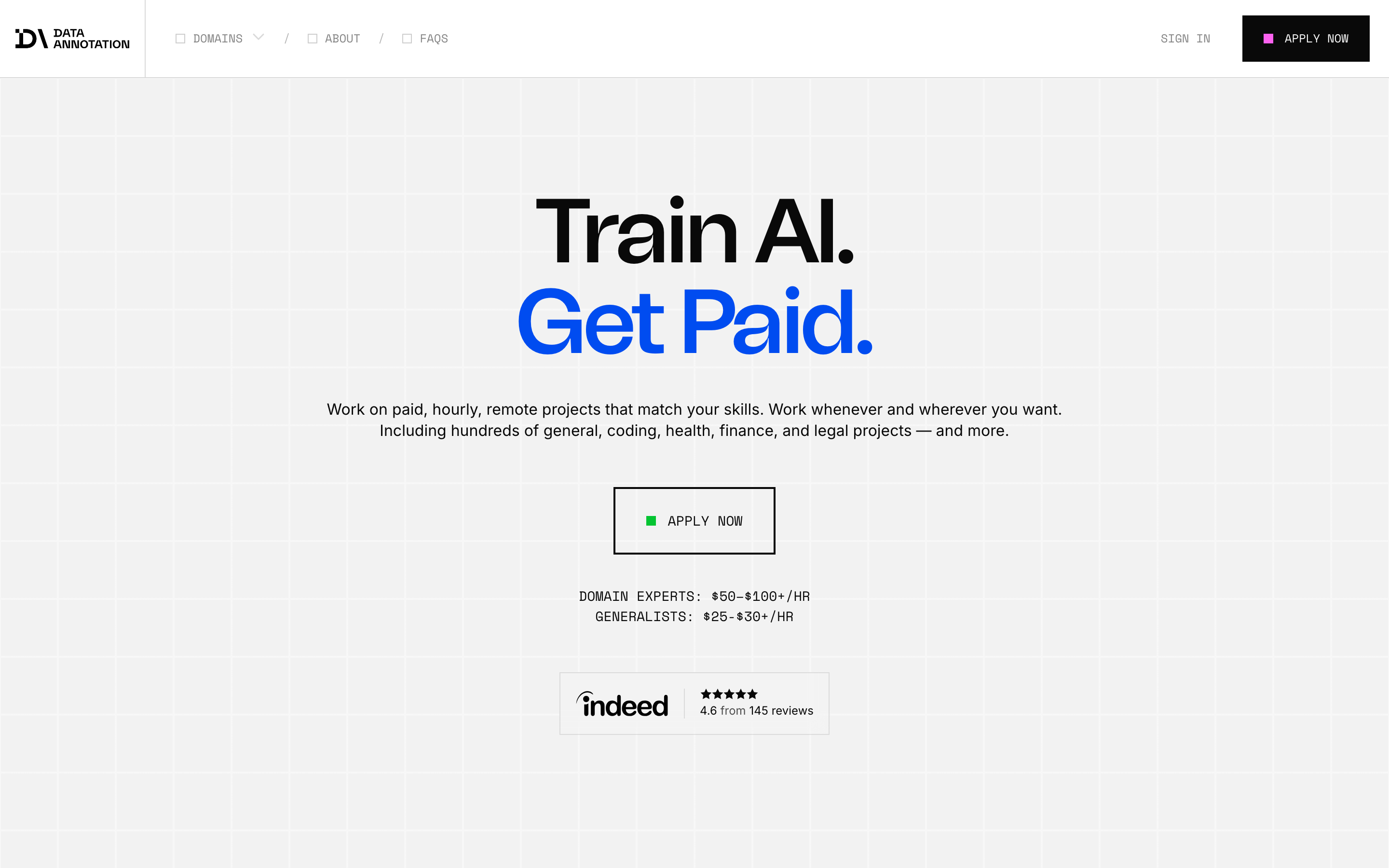
Where to apply:
- Outlier.ai — high-skill RLHF work for math, code, writing; $15–$50/hr
- DataAnnotation Tech — text-based AI training; $20–$40/hr
- Remotasks (Scale AI) — labelling, transcription, complex categorization
- Surge AI — selective; specialized labelling work
- Appen — large-scale crowd platform with consistent task availability
How to start:
- Pick the platform whose specialty matches your strongest skill (Outlier for code/math, DataAnnotation for general writing).
- Take the entry assessment seriously — most applicants fail their first attempt. Write longer, more thoughtful responses than feel necessary.
- Once approved, you’re added to a project pool; tasks appear in your dashboard daily.
- Maintain your quality rating above the threshold — low ratings get you removed from active projects.
- Stack 2–3 platforms once you’ve passed the first; income is project-dependent and stacking smooths out gaps.
3. Transcription and translation
Companies and researchers need audio and video converted to text. Rates: $0.30–$1.10 per audio minute. With practice, you can transcribe 4–6 hours of audio per workday at full speed. Translation work pays similarly or better, especially for Indian-language pairs (Hindi, Bengali, Tamil, Telugu, Marathi, Gujarati to/from English) where supply is scarcer than demand. Expect ₹8,000–₹25,000 monthly for transcription, more for skilled translation.
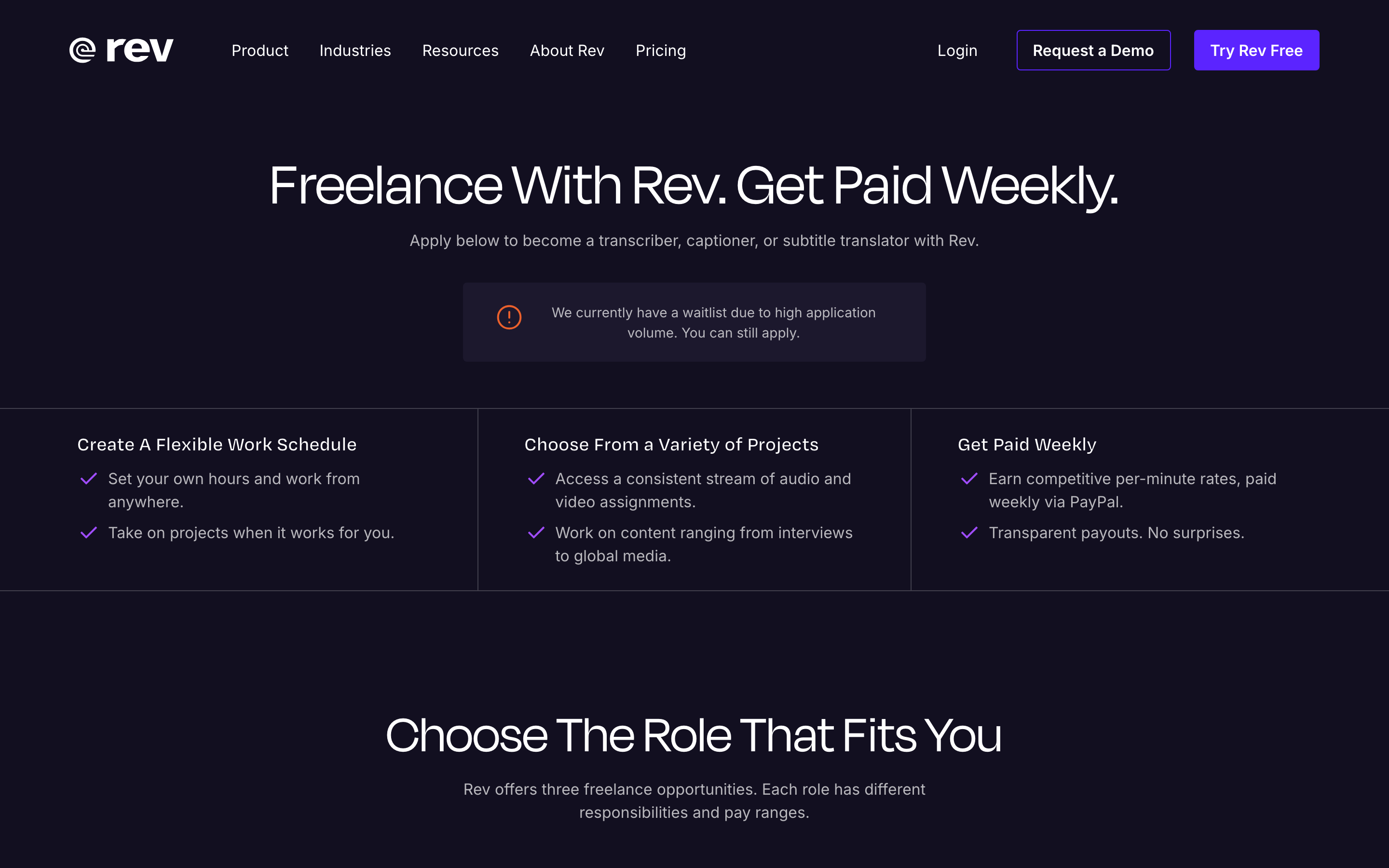
Transcription platforms:
- Rev — most established; $0.30–$1.10/audio min
- GoTranscript — accepts global applicants; $0.60/audio min average
- TranscribeMe — short audio chunks, beginner-friendly
- Scribie — accepts international transcribers
Translation platforms:
- Gengo — straightforward platform, takes a translation test
- TranslatorsCafe — direct client connection, no platform fee
- ProZ — industry standard for professional translators
- Smartling and Lionbridge — enterprise-grade, scale work for skilled translators
How to start:
- Test your typing speed at TypingTest — you need at least 60 WPM for transcription to be worthwhile.
- Get a basic noise-cancelling headphone (₹500–1,500); audio quality is the biggest factor in your speed.
- Apply to 2–3 platforms simultaneously; expect a 1–2 week assessment process.
- Start with shorter audio files (under 10 minutes) until you build speed; longer files pay better per minute.
- For translation, list your specific language pair (e.g., “English to Hindi medical translation”) rather than generalist services.
4. Legitimate survey panels (manage expectations)
Real survey panels exist but they pay realistic rates: $0.50–$3.00 per hour of survey time, often in vouchers rather than cash. Treat surveys as light supplementary income (₹1,000–₹4,000/month), not a primary stream. Anyone advertising “₹500 a day from surveys” is selling you a referral list, not paying you.
Legitimate panels (free to join):
- Prolific — academic research surveys; pays $8–$12/hour, the best in the industry, but invites are limited
- Toluna — global panel, available in India
- Swagbucks — surveys + cashback; pays in PayPal cash or Amazon vouchers
- YouGov India — political and consumer surveys; quarterly payouts
- Pinecone Research — invitation-only, $3 per completed survey
How to use surveys efficiently:
- Complete the demographic profile fully on every platform — surveys are matched to your profile.
- Sit on multiple panels simultaneously; no single panel will give you enough invitations.
- Cap your time at 30 minutes a day; surveys aren’t worth more than that at the going rates.
- Pair surveys with a passive activity (TV, podcasts) — never make surveys your dedicated income time.
- Cash out promptly when you reach minimum payout; some panels have expiring balances.
One boundary worth keeping: reward apps that pay in cashback or vouchers belong in your savings column, not your income column. If you’re weighing those up, the best money earning apps in India guide labels every app by what it actually pays out: cash, cashback, or credits.
Skill-based methods (₹20,000–₹2,00,000 monthly potential)
This is where most people who succeed at “earning online” actually live. The ramp-up takes longer — usually 3 to 6 months — but the ceiling is genuinely high. The common thread: you’re paid for a specific skill someone else can’t or doesn’t want to do.
5. Freelance writing, design, or development
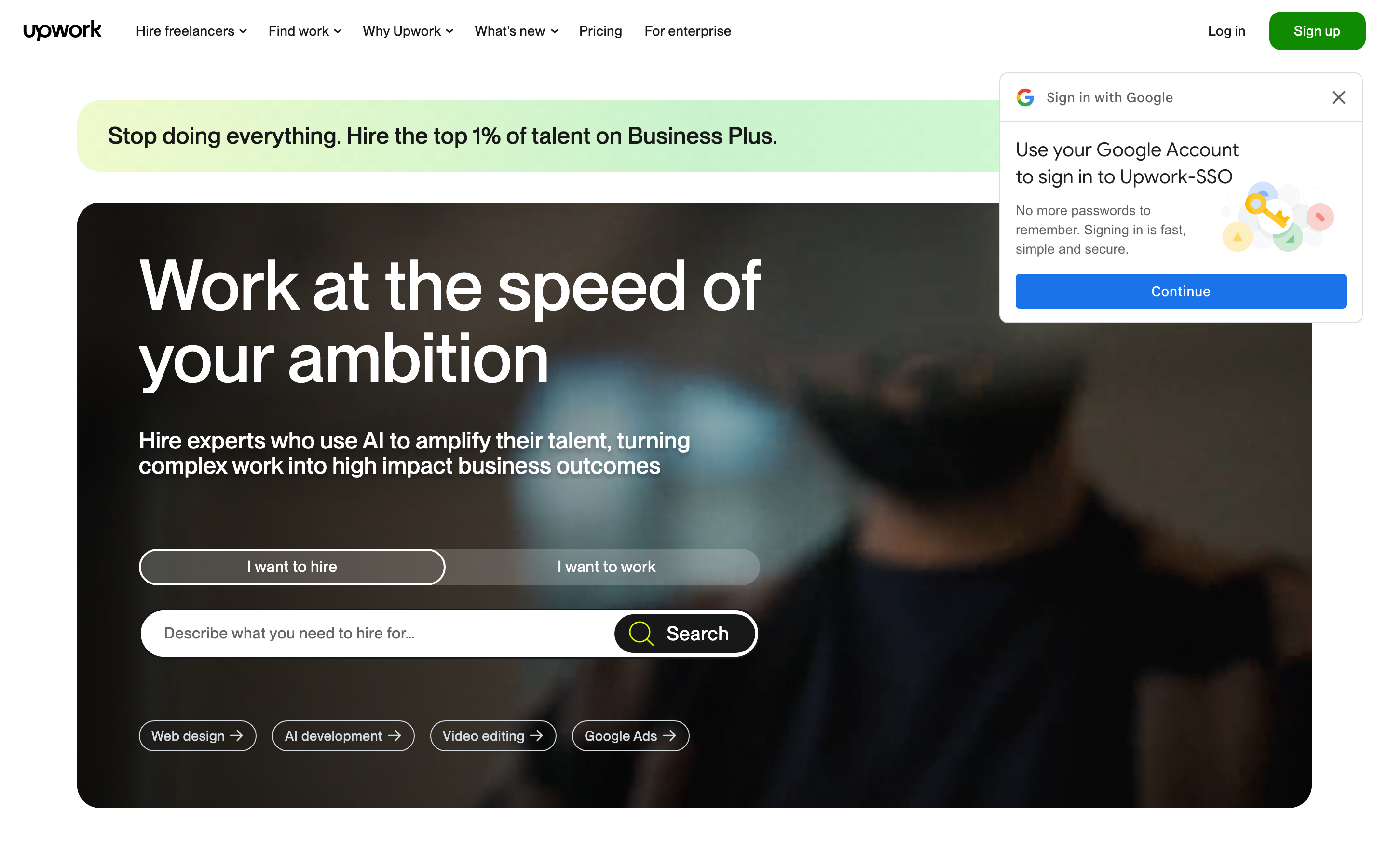
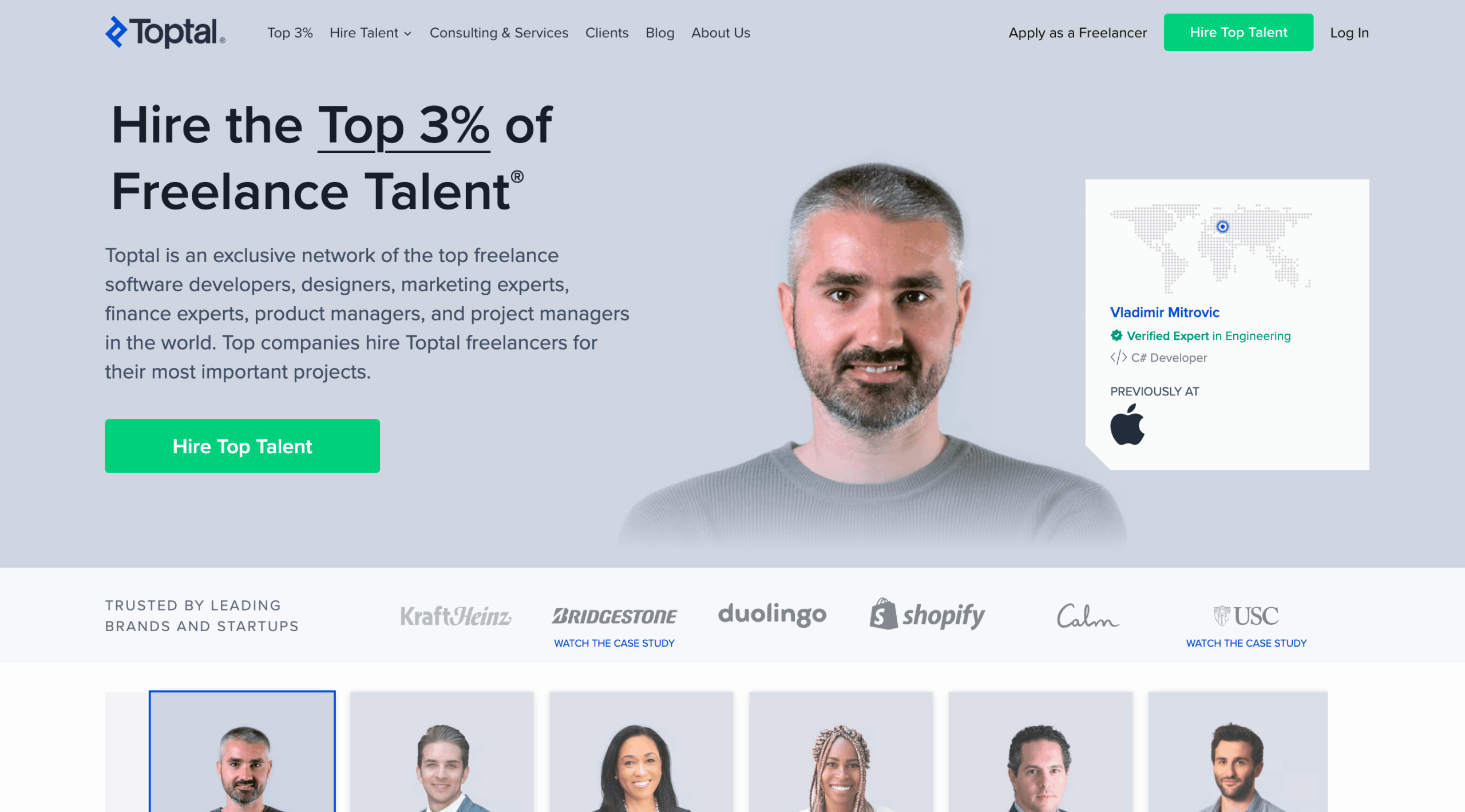
If you can write clearly, design something usable in Figma, or ship working code, freelance platforms will pay you. Realistic monthly income at month 6 of consistent work: ₹25,000–₹2,00,000 for writing, ₹20,000–₹1,50,000 for design, ₹50,000–₹5,00,000+ for development. The wide ranges reflect skill level, niche specialization, and whether you’re charging Indian or US/EU rates. The single biggest leverage point: pick a niche (SaaS landing pages, e-commerce product photography, React for fintech) instead of being a generalist. Niche specialists charge 3–10× what generalists charge.
Global freelance marketplaces:
- Upwork — bid on posted projects; broadest job range, takes 5–10% fee
- Fiverr — list packages, clients order them; better for visual/quick services
- Toptal — top 3% only; long screening; $60–$200+/hr rates if accepted
- Contra — zero commission, designer/creator-focused, growing fast
- Working Not Working — premium creative talent network
- Behance — Adobe’s portfolio + jobs platform for designers
- We Work Remotely — long-term remote contracts; better for developers
India-focused platforms:
- Truelancer — India’s largest freelance platform, INR payouts
- Internshala Freelance Projects — student-friendly entry point
- FlexC — flexible work for women professionals
- Frapp — gig and project work for Indian college students
How to start (3-week launch plan):
- Week 1 — pick one specific niche (don’t say “I write content”; say “I write SaaS landing pages” or “I design e-commerce product galleries”).
- Week 1 — build 3 portfolio samples even if no client asked for them; create them as case studies for fictional or real businesses.
- Week 2 — set up profiles on Upwork + Fiverr + Contra. Use the same niche-specific positioning everywhere. Add the 3 portfolio samples.
- Week 2 — set your initial rate at the 25th percentile for your niche; you’ll raise it after 5 successful projects.
- Week 3 — start applying. On Upwork, send 5–10 thoughtful proposals daily (Connects cost real money — be selective). On Fiverr, optimize your gig titles for search.
- Week 4+ — when offers come, accept everything for the first 5 reviews, then start raising rates and rejecting bad-fit projects.
6. Online tutoring (your strongest subject is your edge)
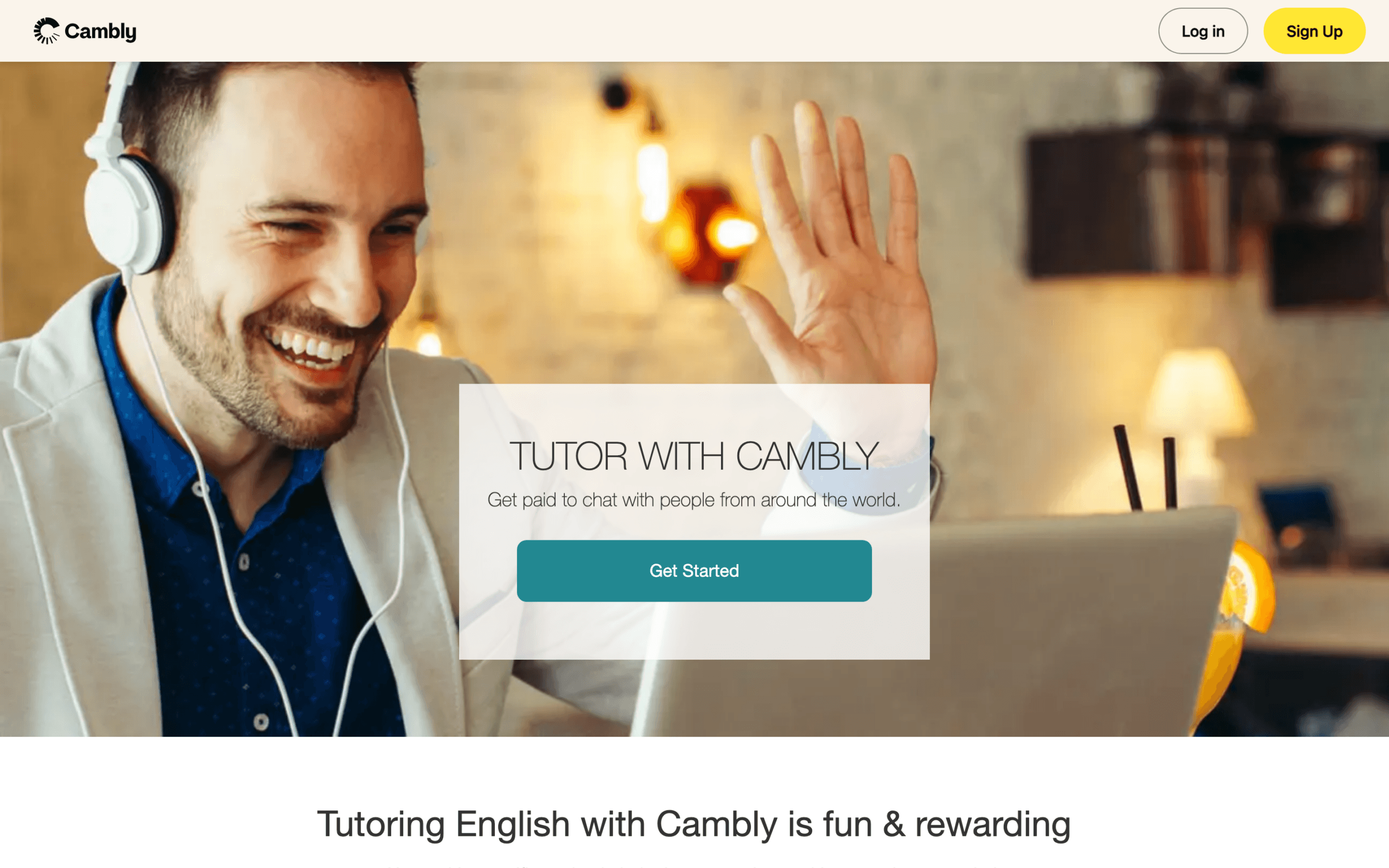
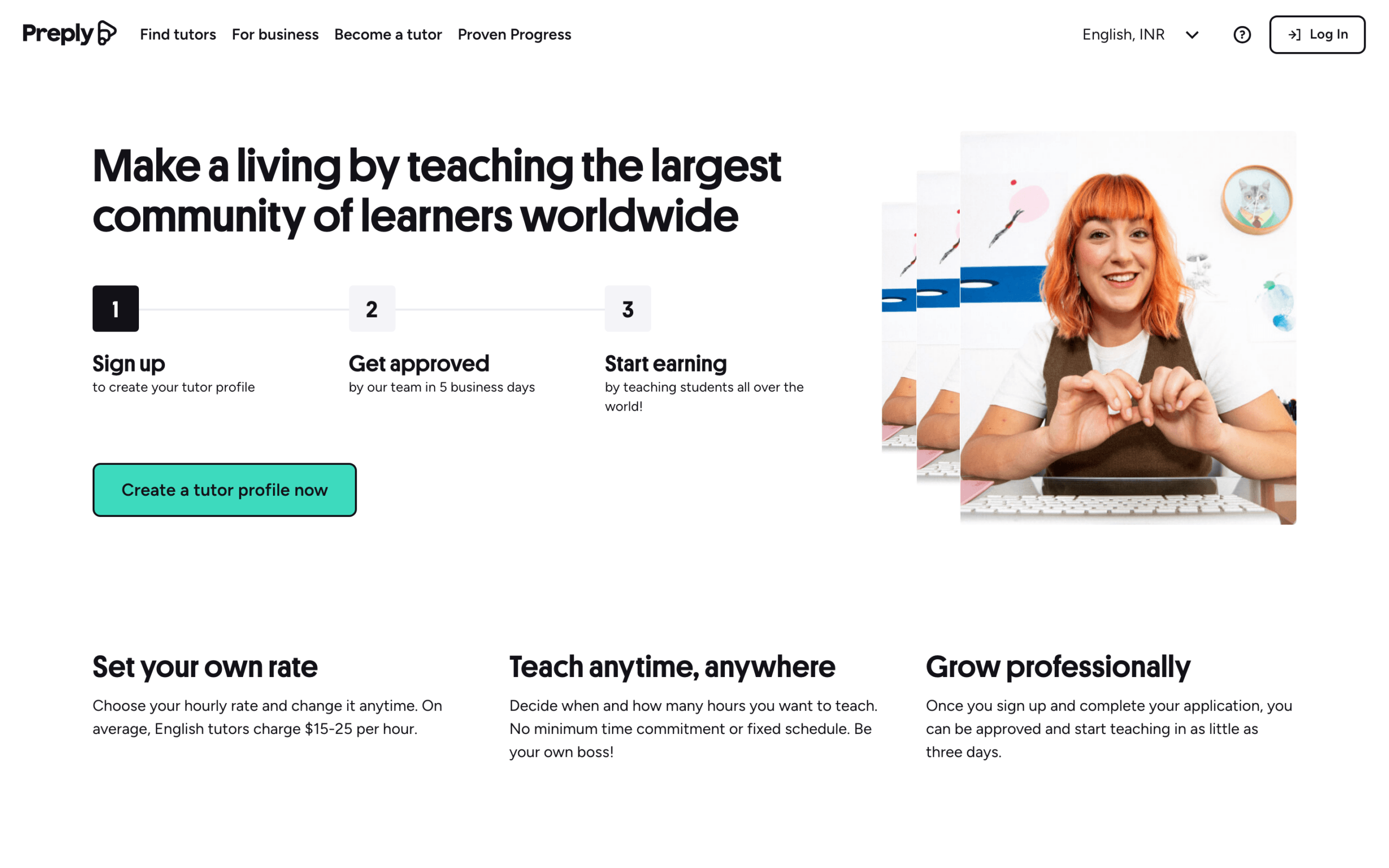
If you’re strong in any subject taught at school or college level, online tutoring pays ₹200–₹800 an hour in India and $10–$30 an hour internationally. Realistic monthly income: ₹15,000–₹80,000 depending on subject, hours, and platform. Math, sciences, and English coaching pay the best. STEM tutoring at the college level can hit ₹1,00,000+ per month for engaged tutors.
International platforms (USD/EUR pay):
- Cambly Tutor — chat with English learners; no formal qualifications needed; $0.17/minute (~$10/hr)
- Preply — set your own rate; 1-on-1 lessons; commission decreases with hours
- Chegg Tutors — homework help and 1-on-1; pays per session
- Wyzant — US-focused; you set rate, they take 25%
- italki — language teaching; popular for English/Hindi/regional Indian languages
India-focused platforms (INR pay):
- Vedantu — K–12 + competitive exams; structured curriculum
- BYJU’s Tutor — large platform; rigorous teaching standards
- Unacademy Educator — exam prep (UPSC, JEE, NEET, etc.)
- UrbanPro — connects local tutors with students; broad subject range
- Filo — instant 1-on-1 help; pays per minute of tutoring
How to start:
- Pick one subject you can teach without preparation (your strongest one). Teaching outside your comfort zone fails fast.
- Apply to 2 platforms — one international (Cambly, Preply) and one Indian (Vedantu, UrbanPro). Diversifying smooths income gaps.
- Set up a quiet room with good lighting and a working webcam; both factors strongly affect your platform rating.
- Record a short demo video showing how you teach a sample concept; most platforms require this in the application.
- Start with low rates and free trial lessons to build reviews, then raise rates as your rating accumulates.
- For long-term scale, build a personal brand outside the platform (YouTube, Instagram) and migrate students to direct billing.
7. Virtual assistant for SMBs and creators
Small business owners, content creators, and consultants need help with calendar management, email triage, social media scheduling, customer support, and basic research. Hourly rates: $5–$25/hour for general VA work, $15–$50/hour for specialized VA (paid ads management, podcast editing, e-commerce). The big advantage: the same client often pays you every month — recurring income beats one-off project work. Combine 2–3 retainers and you have a stable income with minimal hustle. Realistic monthly: ₹25,000–₹1,00,000.
Where to find VA clients:
- Upwork — Virtual Assistant jobs
- Belay — premium VA agency; thorough vetting
- Time etc — UK-based agency, ongoing assignments
- VirtualStaff.ph — open to non-Philippine VAs in many roles
- Fancy Hands — task-based, US-based clients
- Direct outreach on Twitter/X to creators and founders in your niche — by far the highest-paying entry point
How to land your first VA client:
- Pick a niche client type (SaaS founders, real estate agents, podcasters, e-commerce brands) — generalist VAs compete on price; niche VAs compete on expertise.
- Build a 1-page portfolio site showing one specific VA service you offer (e.g., “Inbox management for SaaS founders” or “Podcast scheduling and guest outreach”).
- Send 20 personalized cold emails per week to founders/creators in that niche — short, specific, with one example of what you’d improve in their current setup.
- Offer a 2-week trial at half rate to your first 3 clients in exchange for a written testimonial.
- Once you have 3 retainers, pause new outreach and focus on becoming indispensable to the existing clients.
- Raise rates by 25% every 6 months for existing clients with track record.
Content and digital product paths (slow start, high ceiling)
These take longest to monetize but have the highest ceiling. They’re also the most rewarding because you’re building an asset that compounds — readers, subscribers, products that sell while you sleep. Read more in passive wealth strategies for creators and blog income diversification.
8. YouTube, Reels, and short-form video
YouTube monetization unlocks at 1,000 subscribers + 4,000 watch hours (or 1,000 subscribers + 10 million Shorts views in 90 days). Once monetized, expect $0.50–$5 RPM (revenue per 1,000 views) depending on niche — finance, tech, and education pay 5–10× higher than vlogs and gaming. A small channel doing 50,000 views a month earns roughly $100–$300; a mid-sized channel doing 500,000 views a month earns $1,500–$8,000. Plan for 9–18 months to first meaningful income, and treat it as a long-term audience-building exercise. The real money in content creation comes from brand sponsorships and your own product or service — not from ad revenue.
Platforms and partner programs:
- YouTube Partner Program — eligibility and monetization details
- Instagram Reels Bonuses — invite-only in many regions
- TikTok Creator Rewards — for eligible creators
- Snapchat Spotlight — pays per views on viral clips
How to start a YouTube channel from zero:
- Pick a tightly-defined niche where you have genuine interest (not just “tech” — pick “self-hosting tutorials for small businesses”).
- Use a smartphone with good lighting; do not buy expensive gear before you’ve published 50 videos.
- Edit with free tools — CapCut (mobile/desktop), DaVinci Resolve (desktop, professional-grade).
- Post 1–3 times per week on a fixed schedule for 6 months without checking analytics.
- Study which of your videos got the most views; make 3 more like them.
- Apply for monetization the moment you cross 1,000 subscribers + 4,000 watch hours.
- Pitch your first brand sponsor only after 5,000+ subscribers; rates start around $20–$50 per 1,000 views.
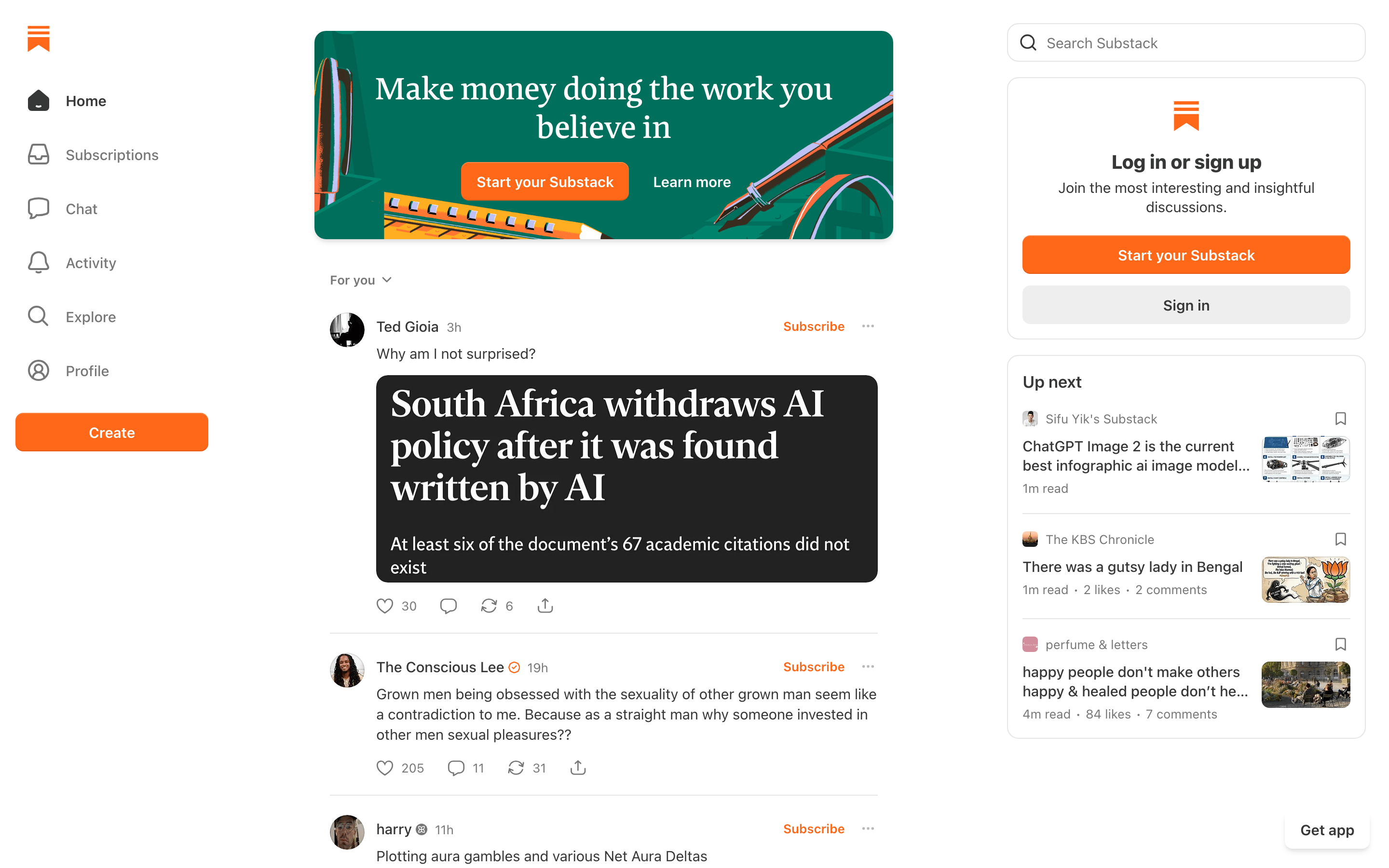
9. Newsletters, blogs, and Substack
A focused newsletter or blog on a specific topic is one of the most defensible content businesses you can build. Realistic timeline: 3 months to first 100 readers, 6 months to first paying subscriber, 12 months to ₹10,000–₹50,000 monthly. The compounding effect is real — readers from year one keep reading in year three, while every new piece you write adds to the search-traffic flywheel.
Free / low-friction platforms:
- Substack — paid subscriptions built in; takes 10% + Stripe fees
- Beehiiv — most generous free tier (up to 2,500 subscribers); ad network, sponsorships, paid tier all built in
- Kit (formerly ConvertKit) — free up to 10,000 subscribers; better for established creators
- Medium Partner Program — pays based on member read time
- Self-hosted WordPress + your own domain — best long-term defensibility (see personal blog sites)
How to start (90-day plan):
- Pick one specific topic and one specific reader (e.g., “weekly digest for Indian small-business owners on GST and tax law”).
- Day 1 — set up on Beehiiv or Substack. Pick a memorable name.
- Days 2–7 — write your first 3 issues before publishing any. This buys you a buffer when motivation dips.
- Week 2 — publish your first issue and share in 3 communities where your target reader hangs out (Reddit, Facebook groups, LinkedIn).
- Weeks 2–12 — publish weekly without missing. Don’t check subscriber count; check whether you’re shipping consistently.
- Month 4 — once you cross 250 engaged subscribers, consider a paid tier with one bonus per month for paying readers.
- Read blogging for students from zero to first 100 for the first-100-readers playbook.
10. Digital products and templates
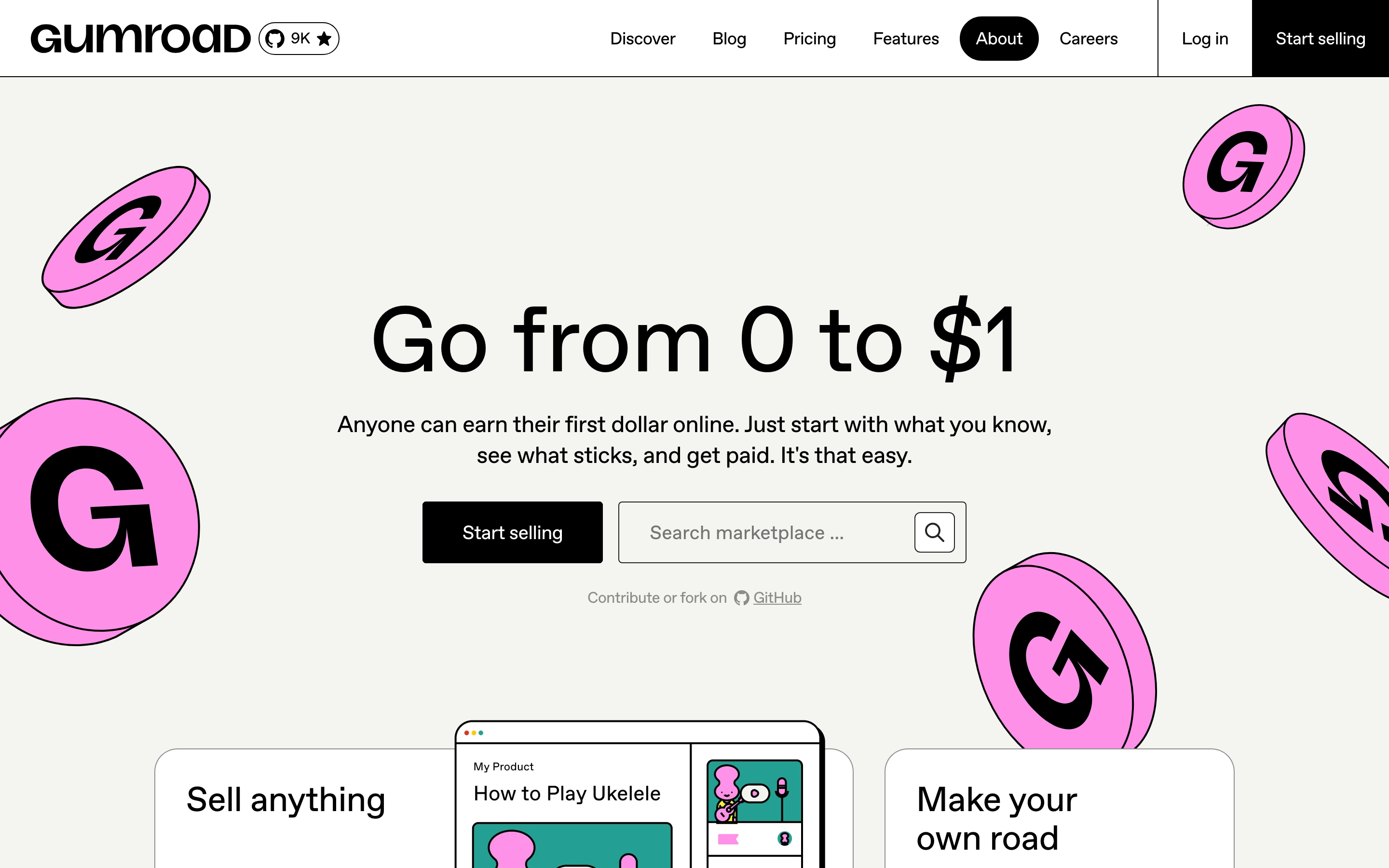
Sell something once and earn from it forever. Notion templates, Canva templates, e-books, design assets, code snippets, spreadsheet tools — anything skill-encoded into a digital file can sell. Realistic income: most digital products earn $0–$50/month forever; the top 5% earn $1,000+/month. The math works because product creation is one-time effort and each new product you launch increases the cumulative income from the catalogue. Distribution is the bottleneck — without an audience, products don’t sell themselves. Build distribution first (newsletter, YouTube, social), then launch products to that audience.
Where to sell digital products:
- Gumroad — simplest setup, no upfront cost, takes 10% per sale
- Payhip — alternative to Gumroad with lower fees on higher tiers
- Etsy — strong for printables, planners, design templates
- Teachable or Thinkific — for video courses
- Notion Template Gallery — featured templates can drive thousands of installs
- Canva Creators — earn royalties from templates and elements
How to launch your first digital product:
- Pick a problem you solved for yourself in the last year that took several hours to figure out.
- Package the solution: a Notion template, a spreadsheet, a PDF guide, a code repository, or a Canva template pack.
- Spend at most 2 weekends building it. The first version doesn’t need to be polished; it needs to ship.
- List on Gumroad with a clear product description, 3–5 screenshots, and a price between $5 and $25 (most micro-products land here).
- Share with your audience (newsletter, social) on launch day; post on relevant subreddits and Indie Hackers.
- Iterate based on the first 10 customers’ feedback; raise the price by 50% after 50 sales.
- Build product #2 on the same launch playbook. Catalogue compounds.
11. Affiliate marketing (only with an existing audience)
If you have an audience — newsletter, blog, YouTube, social — affiliate links are a clean way to monetize without selling your own product. Recommend tools you genuinely use, share your honest experience, and earn 5–50% commission per sale. Read the longer playbook in affiliate marketing for beginners.
Major affiliate networks (free to join):
- Amazon Associates India — broadest catalogue, low commission (1–10%)
- Flipkart Affiliate — India-specific, similar structure
- Impact — large network, hosts thousands of brand programs
- CJ Affiliate — established global network
- Awin — strong for SaaS and e-commerce niches
- PartnerStack — focused on B2B SaaS, high commission rates
How to actually earn from affiliate marketing:
- Don’t start affiliate marketing without an existing audience or a publishing channel with monthly traffic — it’s the single biggest reason people quit with zero earnings.
- Recommend only tools you actively use; broken trust takes years to rebuild.
- Disclose affiliate links clearly (FTC and ASCI India both require this).
- Write detailed, honest reviews comparing 2–3 alternatives — these convert 10× better than single-product promotional posts.
- Track which links convert; double down on the brands and product categories that pay.
- Treat the “share affiliate links via WhatsApp groups” approach as a side experiment, not a primary strategy — it generates ₹500–₹3,000/month at best.
Scams and traps to avoid
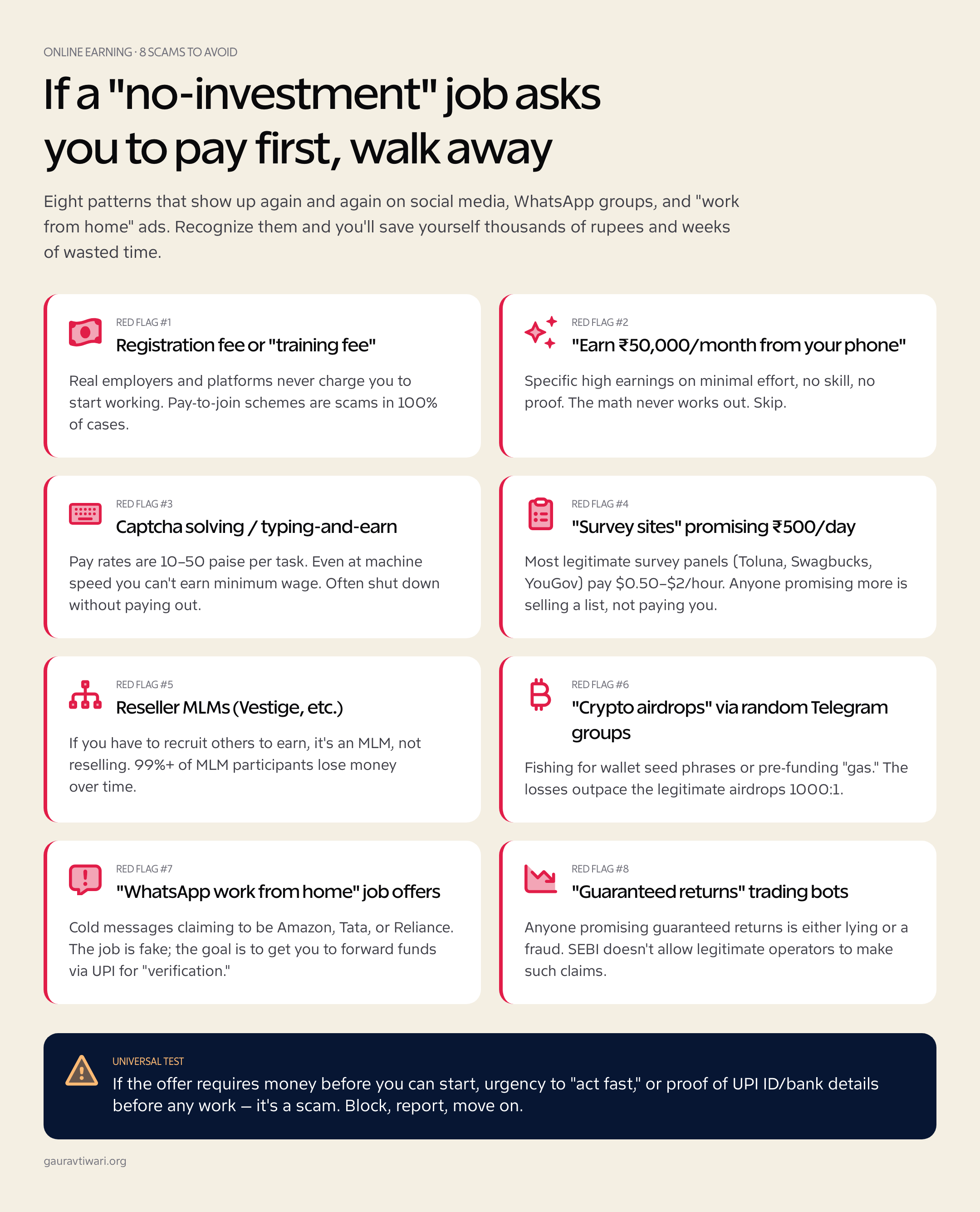
The flip side of every legitimate online income method is a scam built around the same idea. Some are obvious; some are sophisticated enough to fool people who should know better. Here’s how to spot them quickly.
- Anyone asking for a “registration fee” or “training fee” is running a scam. Real platforms make money when you earn (Upwork takes 10%, Fiverr takes 20%); they never charge you upfront.
- Captcha-solving and “type-and-earn” sites pay 10–50 paise per task. Even at machine speed, you’d earn far below minimum wage. Many of these sites also vanish without paying out balances.
- “Earn ₹50,000/month from your phone in spare time” ads are scams. The math doesn’t work. If a method paid that well at low effort, the labour market would have absorbed all available workers within months and the rate would have collapsed.
- Multi-level marketing (MLM) disguised as “reselling.” If you have to recruit people downline to maximize earnings, it’s an MLM. Studies consistently show 99%+ of MLM participants lose money over time. Real reselling apps like Meesho and GlowRoad don’t require recruitment.
- WhatsApp job offers from “Amazon” or “Tata.” Cold messages claiming to be from major companies offering work-from-home jobs are uniformly fake. They lead to UPI scams, account takeover attempts, or recruitment into a fraud ring.
- “Crypto airdrops” via random Telegram groups. Most are phishing for wallet seed phrases or charging “gas fees” upfront for nonexistent tokens.
- “Guaranteed returns” trading bots. SEBI doesn’t allow legitimate operators to make such claims; anyone promising guaranteed returns is either lying or a fraud.
How to verify before joining anything new:
- Search “[platform name] scam” and “[platform name] payment proof” before signing up.
- Check the platform’s reviews on Trustpilot and the relevant subreddit (e.g., r/beermoneyindia, r/freelance).
- Check the company on LinkedIn — real platforms have employees with full profiles; fakes have shell pages.
- Never share OTPs, bank account passwords, or wallet seed phrases — no legitimate platform asks for these.
- If the offer triggers urgency (“act in the next 30 minutes”), it’s almost always a scam.
India-specific opportunities worth considering
A few opportunities that work especially well for Indian readers because they’re either domestic-only or built around the Indian market.
12. Vernacular content creation
The fastest-growing segment of YouTube India in 2024–2026 is vernacular content — Hindi, Tamil, Telugu, Bengali, Marathi, Punjabi, Kannada, Malayalam. CPMs are lower than English content, but competition is far thinner and audiences are large. A regional-language tech, cooking, finance, or education channel can reach 100k subscribers faster than the equivalent English channel. Read more in SEO for regional languages in India.
How to start a vernacular channel:
- Pick the language you genuinely speak natively — accent matters in vernacular content.
- Pick an under-served vertical in that language (financial literacy, government scheme explainers, government exam prep, parenting, agriculture).
- Use simple production: smartphone, ring light, free editing on CapCut.
- Publish 3+ times a week for at least 6 months; vernacular YouTube growth tends to be steeper than English once you find your niche.
- Apply to YouTube Partner Program at 1,000 subscribers + 4,000 watch hours.
- For brand deals, list yourself on Qoruz or Influencer.in once you cross 10,000 subscribers.
13. Reselling on Meesho, GlowRoad, and ONDC
Reselling apps let you sell products from suppliers to your network without holding inventory. The biggest legitimate players in India:
- Meesho — largest, 100M+ buyers; reselling and direct selling both supported
- GlowRoad — large active reseller community
- Shop101 — fashion-heavy catalogue
- CityMall — group buying, semi-urban India focus
- ONDC (Open Network for Digital Commerce) — direct seller participation; expanding rapidly
Reality check: typical resellers earn ₹3,000–₹15,000 a month for moderate effort. Margins are 5–20% per sale, and you spend significant time managing customer queries, returns, and chasing payments. It’s legitimate work, but the income claims circulating on social media (₹50,000+/month casually) are outliers. Treat reselling as a supplementary income, not a career.
14. POSP insurance agent (genuine but slow)
Point of Sales Person (POSP) is an IRDAI-licensed role that lets you sell motor, health, and travel insurance from home. Training is online and free; the IRDAI exam is accessible. Honest income range: ₹5,000–₹40,000 per month for active POSP agents. Commissions are 1–15% of premium depending on policy type. The upper end requires consistent referrals from your network and ongoing customer service. Don’t believe stories of casual ₹1,00,000/month POSP income — those are top performers with established sales pipelines, not typical newcomers.
Insurers that run POSP partner programs:
- Digit Insurance — fully digital onboarding, motor + health + travel
- HDFC ERGO POSP
- ICICI Lombard POSP
- Bajaj Allianz General Insurance POSP
- PolicyBazaar PB Partners — multi-insurer aggregator program
How to start as a POSP agent:
- You need to be 18+, have at least Class 10 (SSC) education, and a PAN + Aadhaar.
- Apply via the insurer’s POSP portal; they handle the IRDAI registration paperwork.
- Complete the mandatory 15-hour IRDAI online training and pass the assessment exam.
- You’re assigned an insurer code; you can now legally sell that insurer’s policies.
- Earn commissions on premiums sold; commission rates and payout schedules vary by insurer.
- Most successful POSP agents are people with existing networks (drivers, college groups, RWAs, local communities) — pure cold calling rarely works.
How to actually start (next 90 days)
The mistake almost everyone makes is sampling 10 methods at once and quitting them all when none produce income in week one. The methods on this list reward focus. Pick one or two, commit for 90 days, and only branch out after one is producing real income.
If you need money fast (this week):
- Sign up at UserTesting, UserBrain, and Userlytics.
- Apply for assessments at Outlier and DataAnnotation Tech.
- Open a Wise or Payoneer account to receive USD payouts.
- First payment usually arrives within 1–2 weeks.
If you have a marketable skill (writing, design, code, teaching):
- Pick the niche specialization within your skill (don’t say “writer”; say “B2B SaaS feature-launch writer”).
- Set up profiles on Upwork, Fiverr, and Contra.
- Build 3 portfolio pieces in your niche even if no one asked for them.
- Bid/list aggressively for 3 weeks; expect first paid project by week 6.
- For tutors: pick one international platform (Cambly, Preply) and one Indian (Vedantu, UrbanPro) and apply this week.
If you want a long-term content business:
- Pick one platform and one tightly-defined niche.
- Publish 2–4 pieces per week for 6 months without checking analytics.
- Then evaluate. Most people quit at month 2 right before traction kicks in.
- Use Beehiiv for newsletters or YouTube for video.
Tools you’ll actually need
For receiving international payments, the two professional standards are Payoneer and Wise — both let you accept USD, EUR, and GBP payments and transfer to your Indian bank account at near-mid-market rates. PayPal works but charges 4–5% in conversion fees; avoid it for amounts above ₹5,000 unless the client insists.
Productivity essentials (free tiers cover beginner needs):
- Notion — client tracking, project management, documentation
- Canva — graphic design without learning Photoshop
- Figma — UI/web design (free for individuals)
- Grammarly — writing checker; the free version catches most errors
- OBS Studio — free screen recording for tutorials and YouTube
- DaVinci Resolve — professional video editing, free version is excellent
- GitHub — required for serious developer freelancing; free public repos
What “earning online” actually looks like at each stage
The honest breakdown most guides skip:
- Months 1–3: ₹2,000–₹15,000/month from microtasks while you build a portfolio or audience. Your first ₹1,000 will feel disproportionately exciting; the second ₹1,000 will feel grueling. This is normal.
- Months 4–6: ₹15,000–₹40,000/month if you’ve focused on one skill or platform consistently. Most people quit before this stage.
- Months 7–12: ₹40,000–₹1,50,000/month for those who specialized into a niche, built repeat clients, or grew an audience to ~1,000 engaged followers.
- Year 2 onwards: ₹1,50,000+/month for those who treat their online income as a real business — multiple income streams, productized services, audience compounding.
The dropout rate at each stage is enormous. Out of 100 people who start, maybe 60 reach month 3 income, 25 reach month 6 income, and 5–10 reach the year-2 numbers. The differentiator is almost never talent — it’s whether you kept showing up after the early excitement faded. Read more in passive wealth strategies for creators and set financial goals and achieve them.
The bottom line
Earning online without any upfront investment is real, accessible, and works for tens of millions of people across India and globally. It is not a shortcut. The methods that pay are the ones that require you to build a skill, an audience, or a track record over months — not the ones that promise ₹50,000 in your account by Friday.
Pick one method from the table above that fits your skills and time. Treat the first 90 days as an investment in learning, not earning. Track what works, kill what doesn’t, and double down where traction shows up. The people who make significant online income aren’t smarter than you — they just stayed in the game long enough for compounding to do its work.
FAQs
Is it actually possible to earn online without any investment in India?
Yes — methods like UserTesting, AI data labelling (Outlier, DataAnnotation), online tutoring (Cambly, Preply, Vedantu), and freelancing (Fiverr, Upwork) all let you start with zero rupees and a smartphone or laptop. Realistic earnings in months 3–6 range from ₹3,000 to ₹2,00,000+ per month depending on the method and your skill level. Anyone advertising ₹50,000/month from minimal effort is selling a scam.
Which online earning method pays the most without investment?
AI data labelling and skilled freelancing (development, specialized writing, niche design) have the highest realistic ceilings — ₹50,000–₹5,00,000+ monthly for committed practitioners. They require either domain expertise or skill-building over 3–6 months. For absolute beginners, AI data labelling (₹15,000–₹80,000) and English tutoring on Cambly or Preply (₹15,000–₹60,000) are the highest-paying low-friction starting points.
How do I avoid online earning scams?
Three rules cover 95% of scams. First, never pay any upfront fee — real platforms charge a percentage of what you earn, never to join. Second, ignore promises of high specific income on minimal effort. Third, treat WhatsApp messages from “Amazon” or “Tata” recruiters as fraud — real recruiters don’t cold-DM you. The 8-point red-flag checklist in this article covers the patterns to recognize.
How fast can I make my first ₹1,000 online?
Within 1–2 weeks for UserTesting (typically 1–4 sessions to reach ₹1,000), 2–4 weeks for AI data labelling assessment + first task batch, and 2–4 weeks for tutoring or transcription. Freelancing usually takes 4–8 weeks to land the first client because you need a portfolio. Content creation (YouTube, newsletter) takes 3–12 months to reach the first ₹1,000.
Are POSP insurance agent jobs real?
Yes, POSP (Point of Sales Person) is a legitimate IRDAI-licensed role where you can sell motor, health, and travel insurance from home. Major insurers including Digit, HDFC ERGO, ICICI Lombard, and Bajaj Allianz run POSP partner programs. Honest income range is ₹5,000–₹40,000/month for active agents — much less than some marketing claims. Training is free and online, but the work is genuine sales, not passive income.
What’s the difference between Fiverr and Upwork for freelancers?
Fiverr is package-based — you list services with fixed prices and clients order them. Better for visual portfolios (design, video editing, voice). Upwork is bid-based — clients post projects and freelancers apply. Better for ongoing work and longer engagements. Both take a fee from your earnings (Fiverr 20%, Upwork 5–10% sliding scale). Most successful freelancers use both at first and gradually concentrate where they get the most repeat clients.
Can students earn online without investment?
Yes — students are often best positioned because they have time and learning capacity. Best starter methods for students: AI data labelling (math/code/writing pays well and aligns with study), online tutoring in subjects you already know, freelance writing if you write well, and content creation in your area of expertise. ₹10,000–₹40,000 a month is achievable alongside studies with consistent part-time effort.
How do I receive international payments from clients?
Wise (formerly TransferWise) and Payoneer are the standard professional tools — both let you accept USD, EUR, and GBP and convert to INR at near-mid-market rates. Wise is generally faster and cheaper for one-off transfers; Payoneer integrates better with US freelance platforms. PayPal works but costs 4–5% in conversion fees; use only when clients insist.
Are online surveys worth my time?
Mostly no for primary income — legitimate panels (Toluna, Swagbucks, YouGov, Pinecone Research) pay $0.50–$3/hour. Prolific is the highest-paying at around $8–$12/hour but invites are limited. Treat surveys as light supplementary income (₹1,000–₹4,000/month max), not a real earning path.
Can I earn online from my smartphone alone?
Yes for most quick-win methods (user testing on mobile-friendly platforms, surveys, light content creation, reselling apps). Skilled freelancing (writing, design, development) realistically requires a laptop. Tutoring works on smartphone for chat-based platforms but is much better with a laptop and a webcam.
How long until online income replaces my regular income?
For most people who treat it seriously, 12–24 months of consistent work to reach a ₹50,000+ monthly online income that could plausibly replace an entry-level job. 24–36 months to reach ₹1,00,000+. The replacement happens earlier for those with high-demand skills and later for content/audience-based businesses. Keep your day job until your online income exceeds 80% of your salary for three consecutive months.
Is reselling on Meesho or GlowRoad legitimate?
Yes — Meesho, GlowRoad, Shop101, and CityMall are legitimate Indian reselling platforms. They’re not MLMs (no recruitment requirement). Realistic income is ₹3,000–₹15,000/month for moderate effort. Margins are 5–20% per sale, and you spend significant time on customer service, queries, and returns.
What’s the safest first step for someone with zero experience?
Sign up for UserTesting and one tutoring platform (Cambly if your English is good; Vedantu/Chegg if you have subject expertise). Both can produce real earnings within 1–2 weeks with no skills beyond clear communication. Use those first earnings as motivation while you decide which longer-term path fits your interests and time.
Tell Google you want more of this.
Add Gaurav Tiwari as a preferred sourceOne tap, and this site shows up more often in your own Top Stories, AI Overviews and AI Mode. Remove it any time.