
Russian Peasant Multiplication: The Ancient Method That Uses Only Doubling and Halving
Multiplication is probably the most important elementary operation in mathematics. Every math enthusiast develops their own preferred techniques over time.
But have you ever multiplied two numbers using only doubling and halving? No multiplication tables required?
This method has been around for thousands of years. The ancient Egyptians used it. Russian peasants passed it down through generations (hence the name). And it’s still fascinating today because it reveals a deep connection between arithmetic and binary numbers.
Let me show you how it works.
The Method in Action: 48 × 35
Let’s multiply 48 by 35 using this technique.
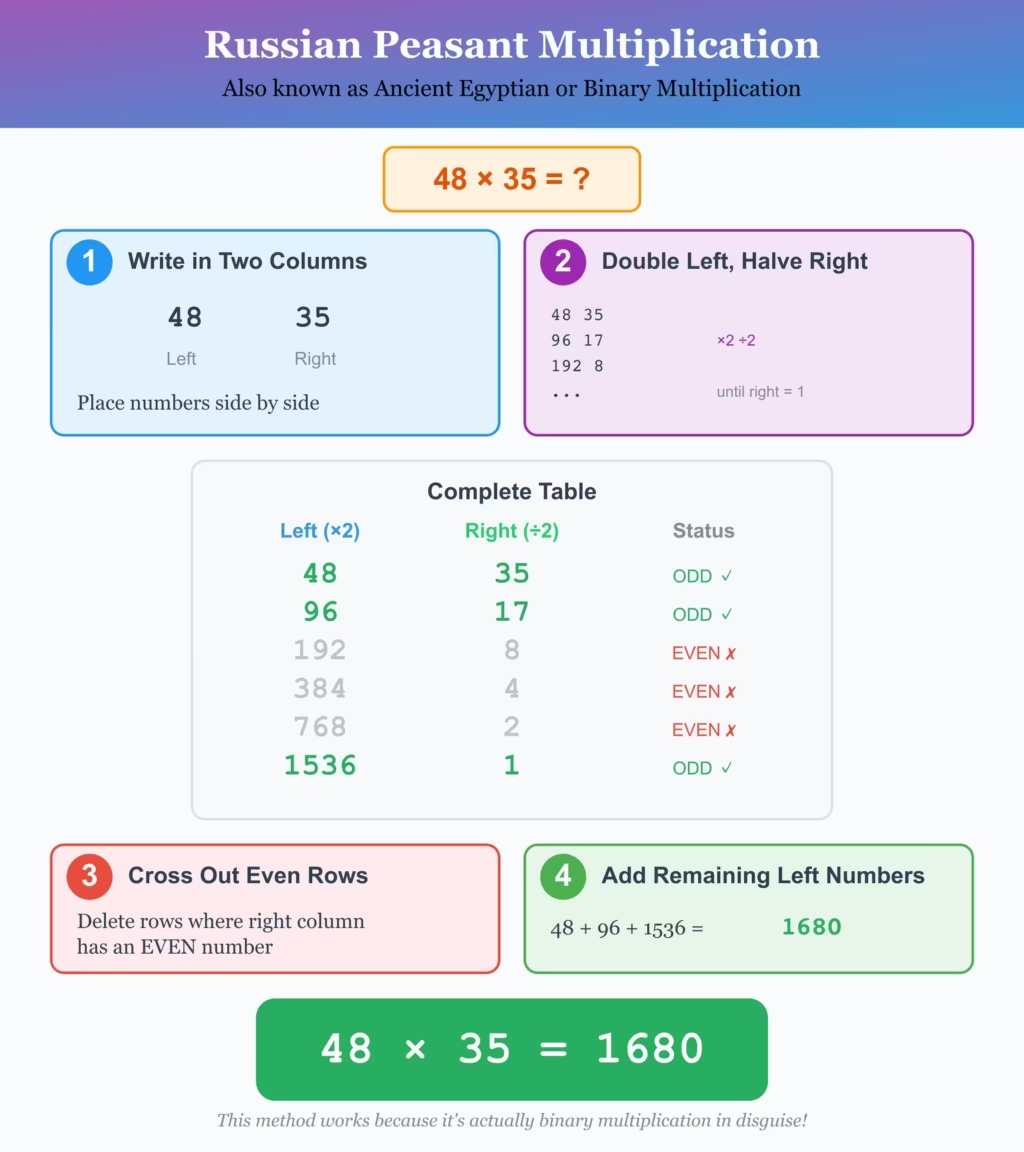
Step 1: Set Up Two Columns
Write your two numbers in separate columns, side by side.
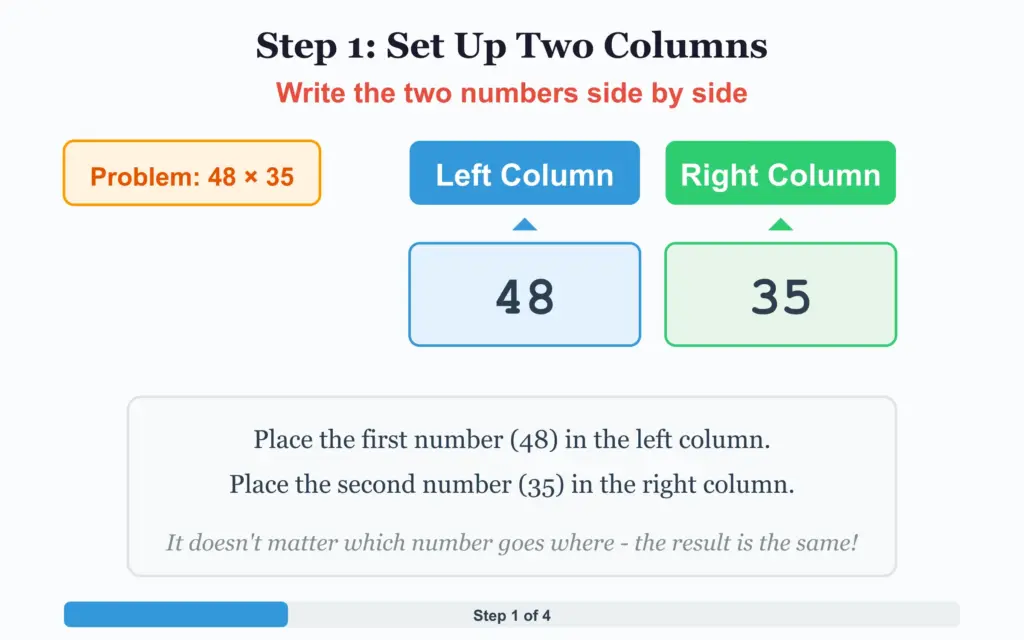
Put 48 in the left column and 35 in the right column. (It doesn’t actually matter which number goes where – the result is the same.)
Step 2: Double the Left, Halve the Right
Now comes the core operation:
- Left column: Keep doubling (multiply by 2)
- Right column: Keep halving (divide by 2, dropping any remainder)
Continue until the right column reaches 1.
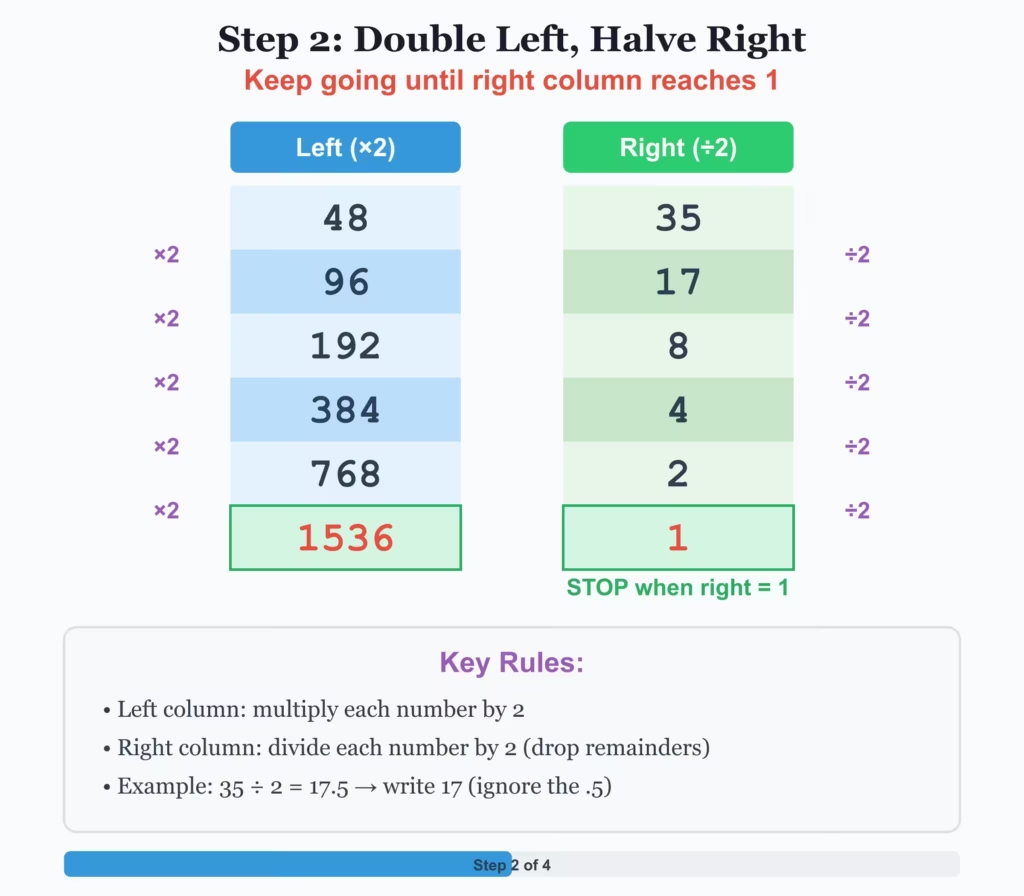
Here’s what happens:
| Left (×2) | Right (÷2) |
|---|---|
| 48 | 35 |
| 96 | 17 |
| 192 | 8 |
| 384 | 4 |
| 768 | 2 |
| 1536 | 1 |
Important: When halving odd numbers, drop the fraction. 35 ÷ 2 = 17.5 becomes just 17. We only work with whole numbers.
Step 3: Cross Out Rows Where Right Column is Even
Look at the right column. Any row where the right number is even gets crossed out entirely.
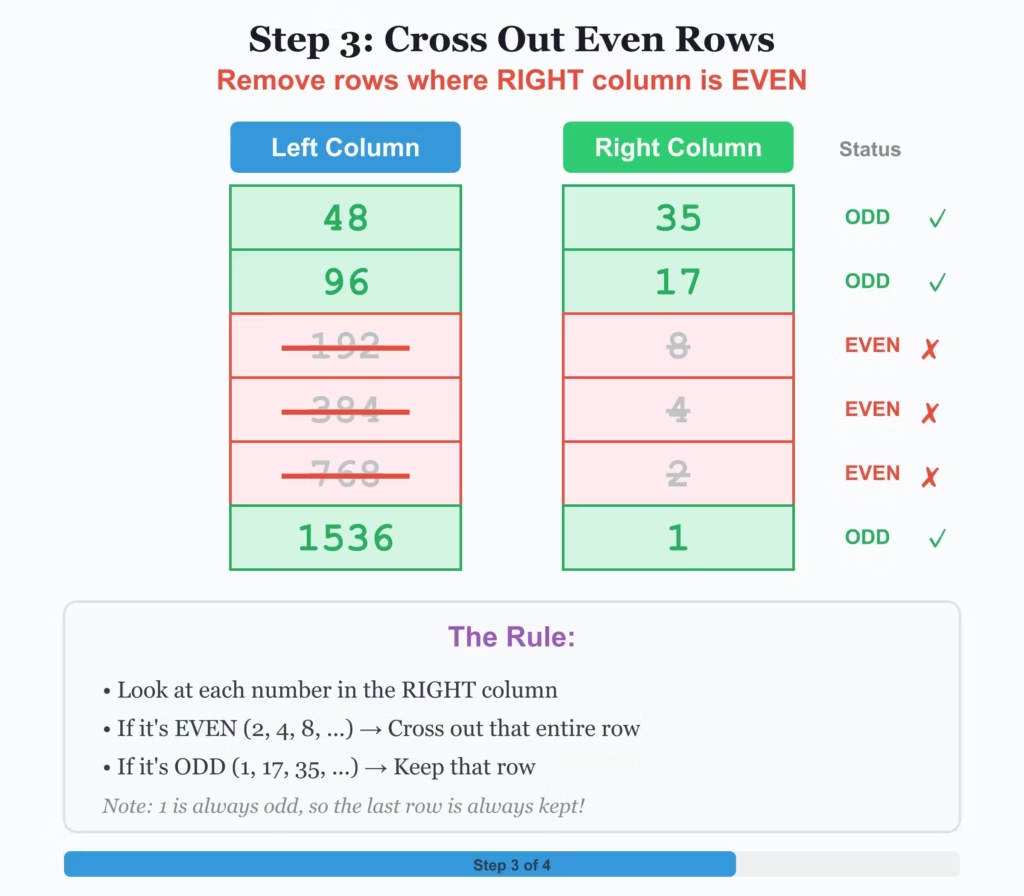
| Left | Right | Keep? |
|---|---|---|
| 48 | 35 | ✓ ODD |
| 96 | 17 | ✓ ODD |
| ✗ EVEN | ||
| ✗ EVEN | ||
| ✗ EVEN | ||
| 1536 | 1 | ✓ ODD |
Notice that the last row (where right = 1) is always kept, since 1 is odd.
Step 4: Sum the Remaining Left Column Numbers
Add up all the left-column numbers that weren’t crossed out.
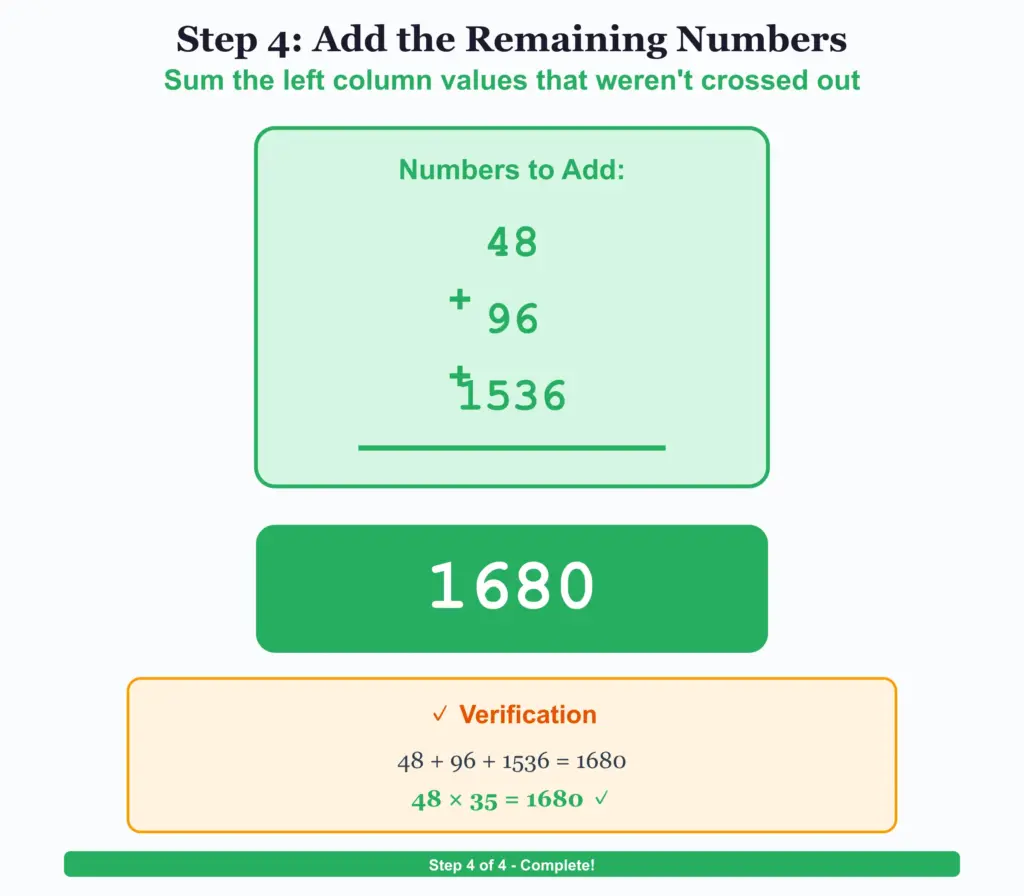
48 + 96 + 1536 = 1680
And there’s your answer: 48 × 35 = 1680 ✓
The Complete Process at a Glance
Here’s the entire method visualized in one diagram:
Why Does This Actually Work?
This isn’t magic – it’s binary arithmetic in disguise.
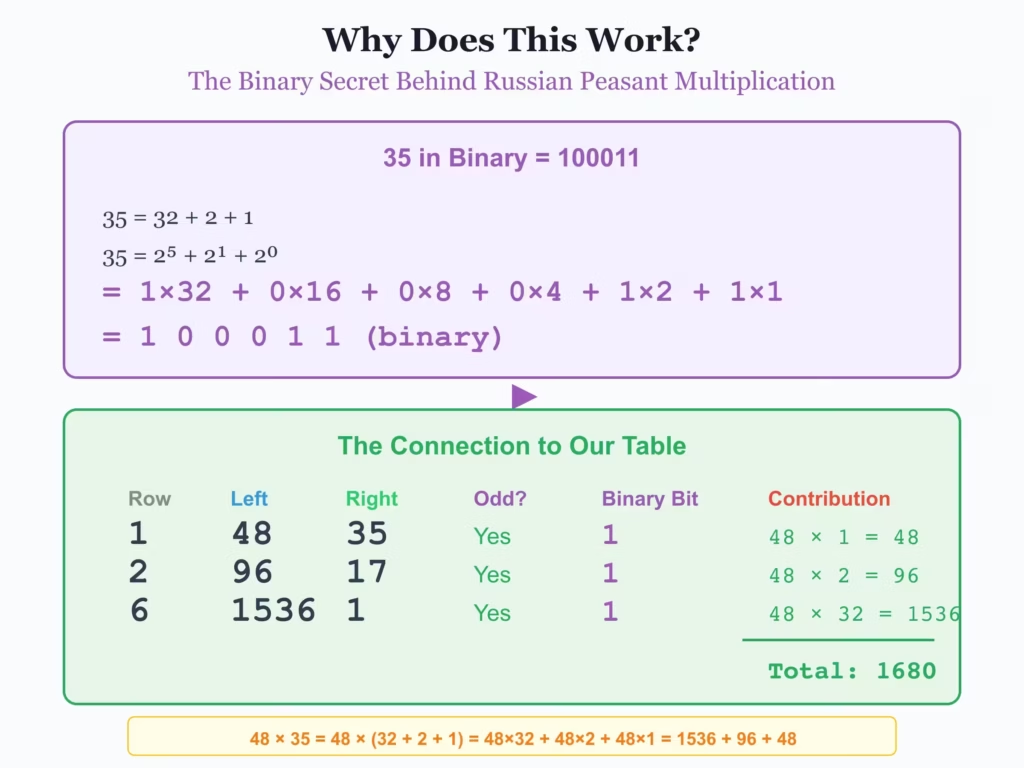
When you halve numbers and check if they’re odd or even, you’re essentially reading the binary representation of that number. Each “odd” row corresponds to a 1 in the binary representation; each “even” row corresponds to a 0.
Let’s break it down:
35 in binary = 100011
This means: 35 = 32 + 2 + 1 = 2⁵ + 2¹ + 2⁰
So when we multiply 48 × 35, we’re really computing:
- 48 × 32 = 1536 (row 6, right column = 1, which is odd)
- 48 × 2 = 96 (row 2, right column = 17, which is odd)
- 48 × 1 = 48 (row 1, right column = 35, which is odd)
Total: 1536 + 96 + 48 = 1680
The rows we kept correspond exactly to the powers of 2 that make up 35!
Another Example: 88 × 45
Let’s verify with another calculation.
| Left (×2) | Right (÷2) | Keep? |
|---|---|---|
| 88 | 45 | ✓ ODD |
| 176 | 22 | ✗ EVEN |
| 352 | 11 | ✓ ODD |
| 704 | 5 | ✓ ODD |
| 1408 | 2 | ✗ EVEN |
| 2816 | 1 | ✓ ODD |
Sum: 88 + 352 + 704 + 2816 = 3960
Check: 88 × 45 = 3960 ✓
When Would You Actually Use This?
I’ll be honest – you’re not going to use this for everyday calculations. It’s longer than standard multiplication once you know your times tables.
But this method is valuable for:
- Teaching binary concepts – It makes binary numbers tangible
- Computer science education – This is essentially how computers multiply
- Historical appreciation – The Egyptians used this 4,000 years ago
- Mental math party tricks – Impress friends by multiplying without knowing any multiplication facts beyond doubling
- Backup method – If you only know how to double and halve, you can multiply anything
Try It Yourself
Practice with these:
- 23 × 17 = ?
- 56 × 43 = ?
- 127 × 89 = ?
Work through the table, cross out even rows, sum what remains.
The Beauty of Ancient Mathematics
What amazes me about this method is that ancient Egyptians discovered an algorithm that modern computers essentially still use. They didn’t know about binary numbers or computer science – they just found a pattern that worked.
The fact that doubling, halving, and checking for odd/even naturally decomposes into binary multiplication is one of those beautiful coincidences in mathematics that feels almost inevitable in hindsight.
Try it a few times. Once you see the pattern, you’ll never forget it.
I do love Math, however I’m not very good at it. I need more practice. I was wondering how you enabled the posts on your index after the first post to be all underneath each other with only the titles.
Hi Matt! Thanks for dropping by. That’s theme dependent. Twenty Eleven theme has a showcase template. You can set a static page with showcase template and enjoy this way. All sticky posts will work like slideshows. See here: http://wpbtips.wordpress.com/2011/05/04/workings-of-duster/
Thanks for your reply.
I don’t think we need to tease our friends Gaurav.And of course it is really typical ,cannot be used in daily lives.It will take more time to solve relatively to the normal one.
I think I already said it in last paragraph of the post. It is not for everyday multiplication. It’s just another way to multiply.
we can even prove this using basic number theory ………
Btw whats the logic behind leaving those numerals wid even corresponding numbers?
We convert one of the two numbers into binary (the number which is halved on
every line) and then do the required calculation.
Yet again, why do we do this?
Let’s look at a different way of doing the same calculation by converting “35” into binary.
In binary 35=100011=
$ 1times 2^5 + 0times 2^4 +0 times 2^3 +0 times 2^2+1 times 2^1+1 times 2^0$.
So to multiply 35 by 48 we could work out the following:
$ 48 times 35=48 times 1 times 2^5 + 48 times 0 times 2^4 +48 times 0 times 2^3 +48 times 0 times 2^2+48 times 1 times 2^1 + 48 times 1 times 2^0$
The zeros belonging to binary of 35 (even part indeed) cancel out doubled part of 48 and vice-versa. And the actual summation reaches to $ 48 times 35= 48 times 1 times 2^5 +48 times 1 times 2^1 + 48 times 1 times 2^0$.
P.S. If, still, you’re not satisfied, you may comment again. Your comments are heartly welcomed.
[Comment edited once.]
Here’s another way to look at it (instead of using binary numbers):
$ 88 times 45 \ = 88 + 88 times 44 \ = 88 + 176 times 22 \ = 88 + 352 times 11 \ = 88 + 352 + 352 times 10 \ = 88 + 352 + 704 times 5 \ = 88 + 352 + 704 + 704 times 4 \ = 88 + 352 + 704 + 1408 times 2 \ = 88 + 352 + 704 + 2816 \ = 3960$
Here’s another way to look at it (instead of using binary numbers):
$ 88 times 45 \ = 88 + 88 times 44 \ = 88 + 176 times 22 \ = 88 + 352 times 11 \ = 88 + 352 + 352 times 10 \ = 88 + 352 + 704 times 5 \ = 88 + 352 + 704 + 704 times 4 \ = 88 + 352 + 704 + 1408 times 2 \ = 88 + 352 + 704 + 2816 \ = 3960$
Updates and Corrections
Update I: (Really, I didn’t know about this.)
rhlewis from reddit told that it’s called the Russian Peasant Algorithm.
Russian Peasant Algorithm : Math Forum FAQ http://mathforum.org/dr.math/faq/faq.peasant.html
Update II:
Wikipedia Page for Multiplication Algorithm