
The Best Chess Books for Beginners to Help Them Become Grandmasters
I learned chess from a beat-up paperback my uncle left behind. No coach, no YouTube videos, no chess.com puzzles. Just a book, a board, and a lot of losing. That’s still the best way to build real understanding of the game, and I’ll stand by it.
Apps are great for practice. Mind mapping tools can help you visualize what you learn. But a good chess book forces you to slow down, visualize the board in your head, and actually think through positions. That’s the skill gap between casual players and everyone else.
I’ve gone through dozens of chess books over the years. Some were too advanced, some were dumbed down to the point of being useless, and a handful were exactly right for beginners who want to get serious. These 10 are the ones I’d recommend in 2026.
Best Chess Books for Beginners in 2026

Whether you’re a total beginner or someone who knows the rules but keeps losing, these 10 books cover everything from openings to endgames. I’ve organized them so you can pick based on where you’re at right now.
Winning Chess Middlegames: An Essential Guide to Pawn Structures
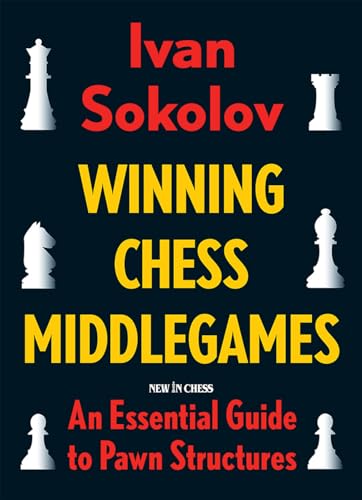
Winning Chess Middlegames An Essential Guide to Pawn Structures
- Covers 4 pawn structure types: doubled, isolated, hanging, and majorities
- 288 pages with real position analysis by GM Ivan Sokolov
- Available on Kindle Unlimited for free
Most beginners obsess over openings and endgames but ignore the middlegame. That’s a mistake. The middlegame is where 80% of your games are actually won or lost, and pawn structures are the backbone of it.
Ivan Sokolov wrote this 288-page book to fill that exact gap. It breaks pawn structures into 4 categories: doubled pawns, isolated pawns, hanging pawns, and pawn majorities. Each one gets real analysis with real positions, not vague generalizations.
I like this book because it solves the middlegame’s three biggest headaches: space, tension, and initiative. If you’re the kind of player who gets a good opening and then doesn’t know what to do next, this is your book. It’s also available on Kindle Unlimited for free, so there’s no reason not to try it.
Best for: Players who can open a game fine but keep losing in the middle. Rated 800-1400 on chess.com? Start here.
Strategic Chess Exercises: Find the Right Way to Outplay Your Opponent
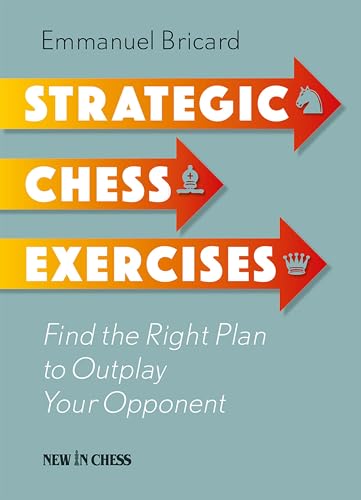
Strategic Chess Exercises Find the Right Way to Outplay Your Opponent
- Exercise-based manual focused on strategic decision-making
- Written by well-known chess trainer Emmanuel Bricard
- Trains you to find the right plan when tactics aren't available
Here’s something nobody tells beginners: tactics don’t always work. You can study forks, pins, and skewers all day, but against a decent opponent, you won’t always find a clean tactical shot. What do you do then?
That’s where Emmanuel Bricard’s book comes in. He’s a well-known chess trainer, and this book is a practical exercise manual focused on strategic thinking. It teaches you how to develop the right plan at the right time, how to apply strategic principles in concrete positions, and how to save time on the clock by calculating fewer but smarter variations.
Each exercise is tested and selected to build your decision-making muscle. I’d pair this with Winning Chess Middlegames if you want a one-two punch that covers both strategy and structure.
Best for: Players who can spot basic tactics but struggle when there’s no obvious move. If you keep running out of time on the clock, this book will help.
Bobby Fischer Teaches Chess
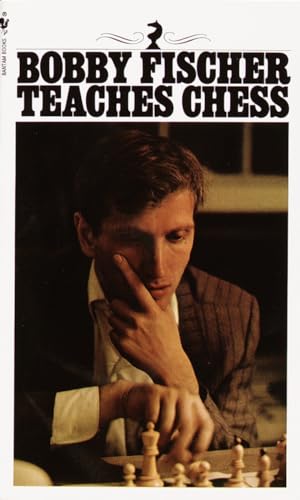
- Exercise-based format: solve positions, flip for answers
- Flowchart teaching method builds pattern recognition fast
- Best-selling chess book for 50+ years, still in print
If you only buy one chess book ever, make it this one. Bobby Fischer Teaches Chess has been the go-to beginner book for over 50 years, and there’s a reason it’s still in print.
The format is what makes it special. It’s exercise-based: you look at a position, try to solve it, then flip the page for the answer. Fischer uses a flowchart-style teaching method that helps you visualize moves and build pattern recognition fast. No long walls of text, no dense theory. Just puzzles and clear explanations.
I’ve gifted this book to at least 4 people who said they wanted to learn chess. All of them actually finished it, which tells you something about how engaging the writing is.
Best for: Absolute beginners who know the rules but nothing else. Also a great gift for someone who just watched “The Queen’s Gambit” and wants to start playing.
The Right Way to Teach Chess to Kids
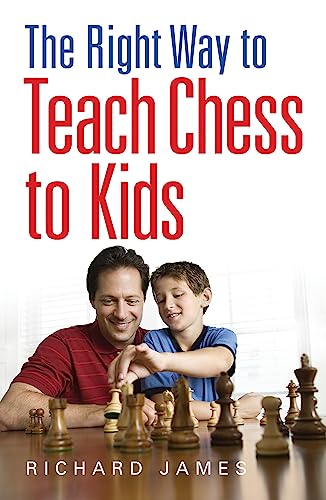
The Right Way to Teach Chess to Kids
- Written for parents and teachers, not just kids
- Short lessons, worksheets, and activities for ages 6-12
- Author taught future GMs Luke McShane and Jonathan Rowson
This one’s written for parents and teachers, not directly for kids. And that distinction matters. Most “kids’ chess books” are just simplified adult books. This one is actually designed around how children learn.
Richard James is an International Chess Master who taught grandmasters Luke McShane and Jonathan Rowson when they were young. He knows how to break down chess for kids without dumbing it down. The book uses short lessons, worksheets, and activities to introduce chess pieces, notation, and board dynamics.
I also recommend this for adult beginners who feel overwhelmed by dense theory books. The bite-sized lessons make it easier to stick with than a 400-page strategy manual.
Best for: Parents teaching kids ages 6-12. Also works for any adult who prefers short, structured lessons over long chapters.
Complete Book of Chess Strategy
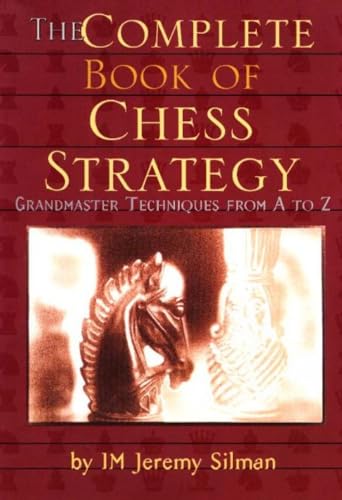
Complete Book of Chess Strategy
- Dictionary format: look up any chess concept alphabetically
- 360 pages with examples and test positions for every topic
- Works as a long-term reference book by Jeremy Silman
Jeremy Silman is one of the best chess writers alive, and this 360-page book proves it. It’s written in dictionary format, which sounds weird for a chess book, but it works. You can flip to any topic alphabetically, read about it, and move on.
That makes it more of a reference book than a cover-to-cover read. I keep mine on my desk and look things up when I hit a concept I don’t understand in another book or after a confusing game. Every topic has examples and test positions so you’re not just reading, you’re working through ideas.
If you’re the type of person who likes structured, organized learning material, you’ll love this format. It’s also great as a second book, after you’ve finished something like Bobby Fischer Teaches Chess and want to go deeper.
Best for: Beginners who want a chess reference they’ll use for years. Think of it as your chess dictionary.
Silman’s Complete Endgame Course
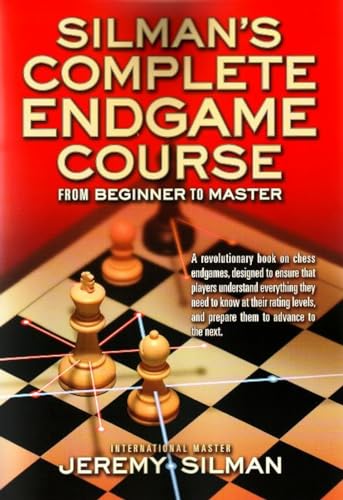
Silman s Complete Endgame Course From Beginner to Master
- Structured by rating level: study only what matches your skill
- Covers beginner through master-level endgame concepts
- The definitive endgame book by Jeremy Silman
I hate when beginners skip the endgame. You can play a perfect opening, dominate the middlegame, and then blow it all when there are only a few pieces left on the board. It happens more than you’d think.
Jeremy Silman (yes, the same author) wrote the definitive endgame book. What makes this one different from other endgame books is how it’s structured: by rating level. You only study the endgame concepts appropriate for your current skill. Beginner sections come first, and you progress through to master-level material as you improve.
That’s a smart design choice. It means you won’t waste time on advanced rook endgames when you can’t even convert a king-and-pawn advantage. Knowing how to close out a game is the fastest way to win more of the games you’re already playing well.
Best for: Anyone who keeps drawing or losing games they should have won. If you’ve ever had a winning position and didn’t know how to finish it, get this book.
How to Become a Junior Chess Master
How to Become a Junior Chess Master
- Covers chess history, rules, and practical strategies
- Focuses on openings and endgames you will actually encounter
- Compact and direct, no obscure variations or filler
This book gives you a no-nonsense overview of chess from the ground up. It covers the history and origins of chess (which is actually interesting, not dry), the fundamental rules, and basic strategies and tactics that work in casual games.
What I appreciate about this one is that it doesn’t pretend you’re training for a tournament. It teaches the most popular openings and endgames, the kind you’ll actually see in real games with friends or online. It’s compact, direct, and doesn’t waste your time with obscure variations you’ll never encounter.
If you’re a teenager or young adult who wants to get good enough to beat your friends and hold your own online, this book gets you there fast.
Best for: Young players (12-18) who want a practical, focused path to getting good. No fluff, just actionable chess knowledge.
Grandmaster Opening Preparation
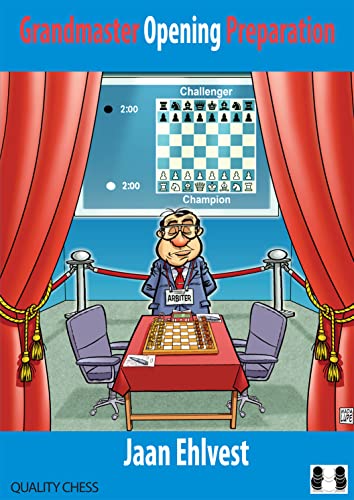
Grandmaster Opening Preparation
- Build an opening repertoire that fits your playing style
- Written by Grandmaster Jaan Ehlvest
- Balances computer analysis with over-the-board intuition
Opening preparation is where most beginners fall into a trap: they memorize lines without understanding them. Jaan Ehlvest, a Grandmaster, wrote this book to fix that problem. It teaches you how to build a collection of opening strategies that actually fit your style, not just copy what Magnus Carlsen plays.
The book answers practical questions like: How do you balance computer analysis with over-the-board intuition? What should you do in Isolated Queen’s Pawn positions? How deep should your preparation go at your level?
I’d recommend this one after you’ve been playing for a few months. It’s not a “first chess book” pick, but once you’ve got the basics down and want to build a real opening repertoire, this is where you go. It works for beginners and intermediate players who are still building their chess foundation.
Best for: Players rated 1000+ who want to stop winging their openings and start playing with a plan from move 1.
Chess for Kids
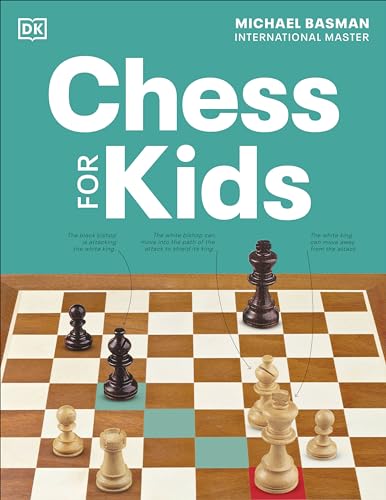
- Colorful diagrams and illustrations for visual learners
- Written by International Master Michael Basman
- Perfect for kids under 10 and intimidated adult beginners
Don’t let the title fool you. Michael Basman is an International Master with 20+ years of chess experience, and this book works for anyone who’s brand new to the game, not just kids.
What sets this apart from other beginner books is the visual approach. Basman uses colorful diagrams and illustrations to explain starting strategies, fundamental rules, and the tactics you’ll see most often in casual games. It’s not trying to prepare you for tournament play. It’s trying to make you a solid casual player who actually understands what they’re doing.
If you’re buying a chess book for a child under 10, this is the one I’d pick. But it’s also a comfortable entry point for adults who feel intimidated by thicker, more academic chess books.
Best for: Kids under 10 and adults who want a visual, low-pressure introduction to chess. No prior knowledge needed.
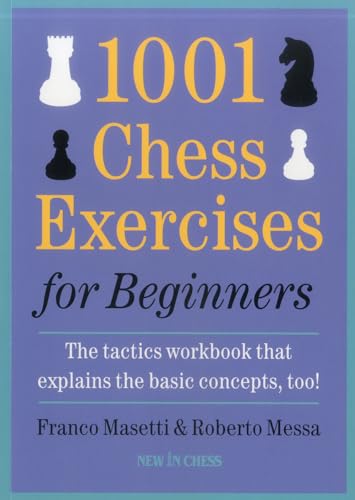
1001 Chess Exercises for Beginners
1001 Chess Exercises for Beginners The Tactics Workbook that Explains the Basic Concepts Too
- 1,001 tactical exercises with explained solutions
- Builds pattern recognition for forks, pins, and skewers
- Perfect daily practice book: 5-10 exercises per session
Reading about chess theory is one thing. Actually solving positions is how you get better. Franco Masetti wrote this book with exactly that philosophy: 1,001 tactical exercises designed for beginners.
Each exercise builds your pattern recognition, teaches you to spot your opponent’s tricks, and trains you to find the right move under pressure. The book also explains the basic concepts behind each tactic, so you’re not just solving blindly. You’re understanding why the solution works.
I’d use this as a daily practice book. Do 5-10 exercises a day, and you’ll notice improvement within a month. It’s the chess equivalent of going to the gym. The theory books teach you what to do, and this book makes you actually good at doing it.
Best for: Anyone who reads chess books but doesn’t practice enough. Pair this with any theory book on this list for the fastest improvement.
Which Chess Book Should You Start With?
If you’re a total beginner, start with Bobby Fischer Teaches Chess. It’s the fastest path from “I know how the pieces move” to “I can actually play a real game.” From there, pick based on your weakness: Silman’s Endgame Course if you keep blowing won positions, Winning Chess Middlegames if you lose in the middle, or 1001 Chess Exercises if you need raw practice.
My personal combination? Bobby Fischer Teaches Chess first, then 1001 Chess Exercises for daily practice, and Silman’s Complete Endgame Course as your third book. That three-book stack will take you from beginner to a solid intermediate player faster than any chess course or app I’ve tried. If you’re also into logic and problem-solving, check out my picks for the best algebra books too.
Chess books aren’t going anywhere. The principles in these books are the same ones grandmasters used 50 years ago, and they’ll be the same 50 years from now. Pick one, start reading, and play more games. That’s really all there is to it.
Frequently Asked Questions
What’s the single best chess book for a complete beginner?
Bobby Fischer Teaches Chess. It’s exercise-based, uses a simple flowchart teaching style, and doesn’t assume you know anything beyond how the pieces move. It’s been the top recommendation for beginners for over 50 years, and most chess coaches still suggest it as a first book.
Can I actually improve at chess just by reading books?
Yes, but only if you also play and practice. Books teach you the concepts and patterns. Playing games forces you to apply them. I’d recommend pairing any theory book with a puzzle book like 1001 Chess Exercises for Beginners. Read a chapter, do 10 puzzles, play 2-3 games. That cycle works.
Are chess books better than chess apps and online courses?
They serve different purposes. Apps like chess.com are great for playing games and doing daily puzzles. But books force you to slow down and think deeply about positions without a hint button. Most strong players use both. If you had to pick one, start with a book and add an app later for practice games.
Do I need a physical chess board while reading these books?
It helps a lot, especially for exercise-based books. Setting up the positions on a real board builds your spatial memory faster than just looking at diagrams on a page. You can also use note-taking apps to track the positions and your solutions. You don’t need an expensive set. A basic tournament-style board and plastic pieces for $10-15 will do the job.
What’s the best chess book for teaching kids?
For kids under 10, Chess for Kids by Michael Basman is the best option. It uses colorful visuals and keeps things fun. For parents and teachers who want a structured curriculum, The Right Way to Teach Chess to Kids by Richard James is designed specifically for that. It includes worksheets and short lessons that work well with young learners.
Should I study openings, middlegames, or endgames first?
Start with basic tactics and endgames. Most beginners focus too much on memorizing openings, but that doesn’t help when you don’t know what to do once the opening is over. Learn a few solid opening principles (control the center, develop your pieces, castle early), then spend most of your study time on tactics and endgame patterns. Once you’re rated 1000+, then start building a proper opening repertoire.
Disclaimer: This site is reader-supported. If you buy through some links, I may earn a small commission at no extra cost to you. I only recommend tools I trust and would use myself. Your support helps keep gauravtiwari.org free and focused on real-world advice. Thanks. - Gaurav Tiwari