
Blog Income Diversification: Beyond Ads and Affiliates
Display ads and affiliate links are where most bloggers start. They’re easy to set up, require minimal ongoing effort, and can generate passive income once traffic reaches certain thresholds. I’ve made money from both for over a decade. But I’ve also watched both revenue streams disappear overnight, and that experience changed how I think about blog income entirely.
Ad revenue depends on traffic volume. Affiliate income depends on readers buying specific products at the right time. Both remain outside your control. Amazon cut affiliate rates from 8% to 1-3% in many categories back in 2020. I know bloggers who lost 60% of their monthly income in a single email notification. Google algorithm updates can halve traffic in a day. Ad networks change terms or close entirely. These aren’t theoretical risks. They’re regular occurrences.
Real income security comes from diversification. Multiple revenue streams that don’t all depend on the same factors. If one source drops, others continue. This guide covers income strategies beyond the basics, how to evaluate which fit your blog, and practical approaches to building multiple revenue streams without spreading yourself too thin.
The Problem with Single-Stream Income
Dependency Risk
Relying on one income source creates fragility that you don’t notice until it’s too late. I spent my first three years blogging with affiliate income as my primary revenue. When Amazon slashed rates, I learned a painful lesson about building on rented land.
Your hosting choice affects profitability more than most bloggers realize. Hostinger and Bluehost both offer managed WordPress plans under $5/month that handle performance, security, and staging environments. For Indian traffic, HostGator WordPress Hosting with their local data centers gives better TTFB than US-based hosts.
Diversification reduces the impact of any single change. If ads provide 30% of income and display ad rates drop 20%, you lose 6% of total income rather than 20%. The same event with ads as your only income source means 20% income loss. The math strongly favors multiple streams, even if each individual stream is smaller.
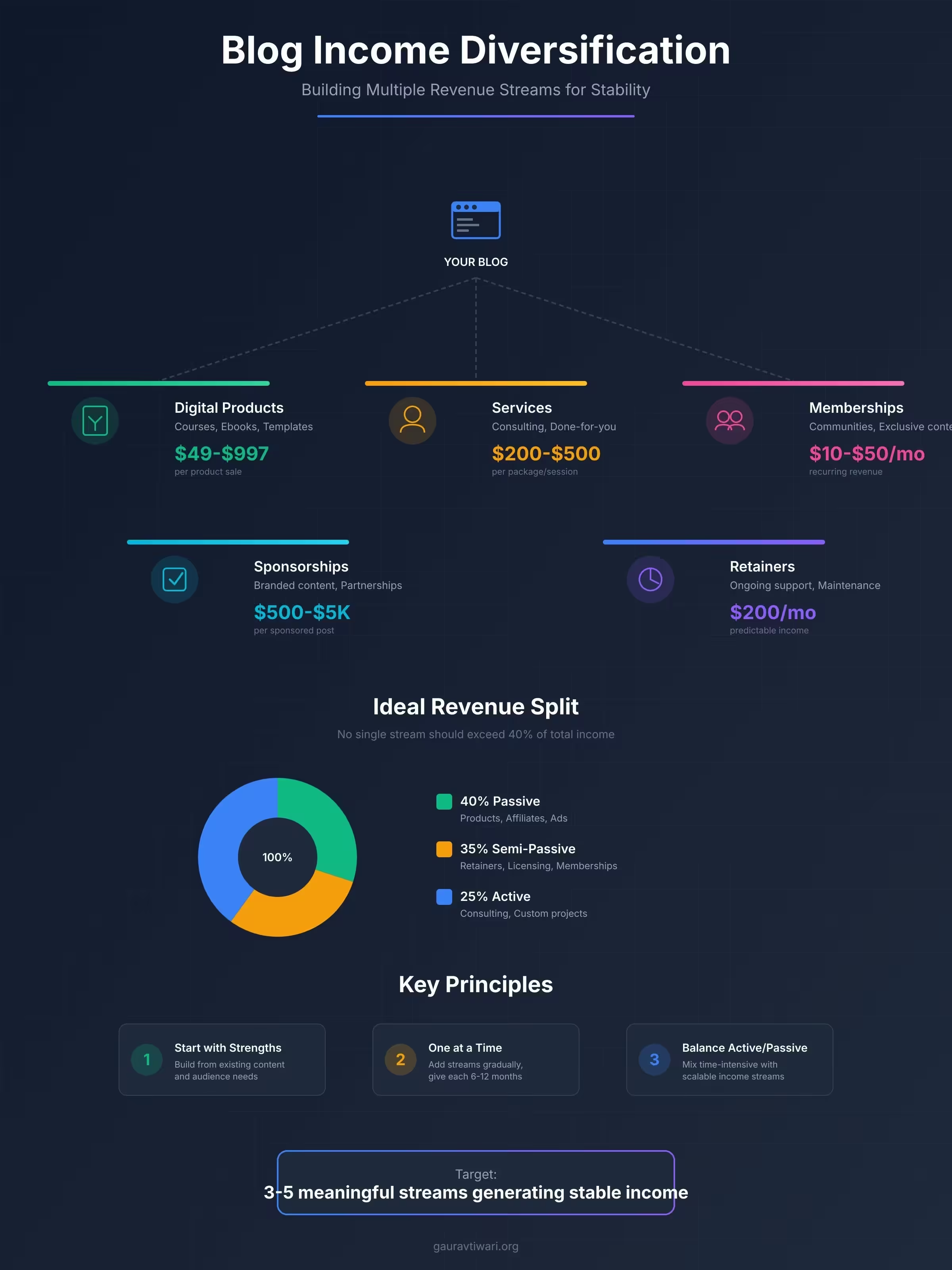
The bloggers I know who’ve been at this for 10+ years all have the same advice: never let a single revenue source account for more than 40% of your income. That’s the threshold where a sudden change stops being annoying and starts being dangerous.
Growth Ceiling Problems
Some revenue streams have natural ceilings. Display ads scale with traffic but rates plateau. Affiliate income depends on conversion rates that hit walls. I’ve seen sites stuck at $3,000/month from ads for years because traffic growth stalled and there’s only so much you can optimize ad placement.
Without diversification, you eventually hit walls that can’t be overcome by more effort on existing streams. New revenue types break through these ceilings.
This becomes especially important as blogs mature. Early growth often comes from increasing traffic, which lifts all boats. Mature blogs with stable traffic need to increase revenue per visitor since traffic itself isn’t growing. Diversification provides multiple levers for revenue growth beyond traffic alone. I cover this shift in detail in my guide on monetization strategies beyond traditional ads.
Information Products
Courses and Workshops
Online courses monetize expertise in scalable ways. Create once, sell repeatedly. The initial investment in course creation is significant, but the marginal cost of additional sales approaches zero. Courses work well for blogs that have built authority on teachable topics.
Course topics should address problems your readers actively try to solve. Look at which blog posts generate the most engagement, questions, and shares. These indicate topics where readers invest significant attention, suggesting willingness to invest money too. The blog post demonstrates your expertise. The course goes deeper than any post could.
Pricing varies enormously based on topic and audience. A $49 course on hobby topics might convert at 2-3%. A $997 course on business skills might convert at 0.5% to a different audience and still generate more revenue per visitor. Test pricing through actual sales data rather than assumptions. I’ve seen too many bloggers underprice by 50% or more because they’re afraid to charge what their content is worth.
For hosting and selling courses, I recommend Teachable for most bloggers. Clean interface, handles payments and delivery, and you’re not locked into their ecosystem. Thinkific is the alternative if you want more customization. If you’re already running WordPress and want everything in one place, LearnDash integrates directly into your existing site, though it requires more technical setup.
Ebooks and Guides
Ebooks require less production investment than courses while still creating scalable products. A comprehensive guide on your expertise area can sell for $19-79 depending on depth and topic. The key is covering a subject thoroughly enough that the ebook provides value beyond what’s available in free blog content.
Digital guides work especially well for reference-type content that readers return to repeatedly. Checklists, templates, and procedural guides that people use while doing tasks have ongoing value that justifies purchase. Pure information consumed once competes more directly with free content.
I sell ebooks through Gumroad because the setup takes about 20 minutes and they handle everything. They take a cut of sales, but the simplicity is worth it unless you’re doing serious volume. For WordPress sites where you want full control, Easy Digital Downloads is the standard choice.
Templates and Tools
If your audience does repetitive work, templates and tools save them time. Spreadsheet templates, document templates, planning tools, calculators, or design assets that readers would otherwise create themselves. These products often sell well at low price points with high volume because the time savings are immediately obvious.
Templates work particularly well in business and productivity niches where time has clear monetary value. A $29 spreadsheet that saves two hours of work each month has obvious ROI. The same template in a hobby niche might not convert as well since time savings aren’t monetized.
I’ve seen bloggers build $2,000-5,000/month revenue streams entirely from templates that took a weekend to create. The key is solving a specific, recurring problem your readers have.
Services
Consulting and Coaching
One-on-one consulting converts blog authority into premium services. Readers who trust your expertise often want personalized guidance for their specific situations. Consulting commands premium rates because it provides individualized attention that content can’t match.
Structure consulting as packages rather than hourly billing. A “WordPress Performance Audit” at $500 is easier to sell than “$100/hour, tell me what you need.” Packages define scope, set expectations, and allow you to systematize delivery for efficiency. They also prevent scope creep that plagues hourly arrangements.
Limit consulting availability to protect your time. Consulting revenue doesn’t scale like products, so it should complement product income rather than replace it. I keep my consulting slots to 4-5 per month maximum. More than that, and I can’t focus on content that drives long-term growth.
Done-For-You Services
Some readers want results without learning how to achieve them. Done-for-you services provide those results directly. For a WordPress blog like mine, this means site setup, migration, optimization, or maintenance services. Readers trust your expertise from content and want you to apply it to their sites.
Services require careful pricing to account for time investment and expertise. Underpricing leads to unsustainable workload and resentment. Price based on value delivered, not time spent. A migration that takes you two hours but would take a client a full day of frustration has value beyond those two hours.
Productize services with standardized deliverables and fixed pricing. This creates scalability within service offerings and clarifies expectations for both parties. A “WordPress Launch Package” with defined deliverables converts better than vague service descriptions.
Retainer Arrangements
Retainer services provide recurring revenue, which dramatically improves income predictability. Ongoing maintenance, support, or advisory arrangements create monthly income that doesn’t require constant new sales. Ten clients at $200/month provides $2,000 monthly before any new sales efforts.
Retainers work for services with ongoing need: site maintenance, security monitoring, content updates, SEO management, or general technical support. Structure retainers around defined service levels rather than unlimited access, which leads to overcommitment and client frustration when you’re unavailable.
I’ve maintained retainer clients for 5+ years in some cases. The relationship becomes autopilot income that funds everything else.
Membership and Community
Paid Communities
Membership communities monetize ongoing access rather than one-time purchases. Members pay monthly or annually for community participation, exclusive content, or direct access to you. This model provides recurring revenue while building a group of highly engaged audience members.
Communities require ongoing attention to maintain value. Unlike products that sell without involvement, communities need moderation, content updates, and your presence. Evaluate whether the recurring revenue justifies the ongoing time commitment. Some communities generate $100+ per hour invested. Others become time sinks that drain energy for minimal return.
Circle has become my recommendation for paid community platforms. Clean interface, good mobile experience, and purpose-built for paid membership. Discord with Patreon integration works for more casual communities and has lower friction for members who already use Discord.
Content Memberships
Content memberships provide exclusive content to paying subscribers rather than community interaction. Similar to paid newsletters but potentially including more formats: video content, extended tutorials, early access to new content, or members-only posts. Less interactive than communities but also less demanding to maintain.
This model works when you consistently produce content valuable enough that some readers will pay for enhanced access. The free content proves value. Paid membership provides more of it. Clear differentiation between free and paid content is essential so free readers understand what they’re missing.
My guide on starting your blog monetization journey covers how to structure free vs. paid content so you’re not cannibalizing your own audience.
Physical Products
Books
Traditional book publishing provides credibility alongside revenue. Even with modest advances and royalty rates, a published book establishes authority in ways that blog posts don’t match. Books serve marketing functions beyond their direct revenue, opening speaking opportunities and consulting engagements.
Self-publishing through Amazon KDP bypasses traditional gatekeepers entirely. You control content, pricing, and timing. Royalties on self-published books often exceed traditional publishing on a per-book basis, though you lose the distribution advantages of major publishers.
Self-publishing works particularly well when you already have an audience to market to. Traditional publishing makes more sense when you need the publisher’s distribution to reach new audiences. Many authors do both: traditionally publish for reach, self-publish for control and margin.
Merchandise
Merchandise works for blogs with strong brand identity or enthusiastic communities. T-shirts, stickers, mugs, and similar items let readers express affiliation with your content. Revenue per item is often modest, but merchandise creates marketing value as readers display your brand publicly.
Print-on-demand services like Printful eliminate inventory risk. Products are printed when ordered and shipped directly to customers. You upload designs and integrate with your store. They handle production and fulfillment. Margins are lower than bulk ordering but require no upfront investment or inventory management.
I don’t personally do much with merchandise, but I’ve seen niche bloggers with passionate audiences generate $500-1,500/month from simple designs. It works when your readers genuinely identify with your brand.
Partnerships and Licensing
Sponsored Content
Sponsored content pays you to create content featuring products or services. Unlike display ads that you simply insert, sponsored content involves your creative work and voice. This commands premium rates because you’re lending your credibility, not just your page views.
Maintain editorial standards with sponsored content. Only accept sponsorships for products you’d genuinely recommend. Disclose sponsorship clearly. Poor sponsored content damages reader trust that took years to build. Rates should reflect this risk and the effort of producing quality sponsored content.
I turn down 90% of sponsorship requests because they don’t meet my quality bar. The 10% I accept pay well and align with what my readers actually need. If you’re new to affiliate marketing and partnerships, start selective and stay selective.
Licensing Content
Existing content can be licensed to other publishers, courses, or products. Evergreen tutorials, comprehensive guides, or unique research have value beyond your own platform. Other creators might pay to include your content in their products, generating revenue from content you’ve already created.
This works best for highly specialized content that fills specific gaps. Generic content is widely available. Specialized expertise is scarce. Position content licensing as a premium offering for quality content, not a desperate monetization of anything someone might want.
White-Label Products
If you’ve created tools, templates, or products for your own audience, other creators might want them for theirs. White-label arrangements let them rebrand your products as their own for their audiences. You get revenue without marketing effort. They get products without creation effort.
This approach scales existing product creation work across multiple markets. A WordPress starter template sold on your site might also sell through five other bloggers to their audiences under their brands. Each sale generates revenue from work you’ve already completed.
Compare Affiliate Marketing Tools
| Feature | Semrush | ThirstyAffiliates | Link Whisper | AAWP | ShareASale |
|---|---|---|---|---|---|
| Type | SEO + keyword research | Link management (WP) | Internal linking (WP) | Amazon display (WP) | Affiliate network |
| Price | $129.95/mo | $49.50/yr | $77/yr | $49/yr | Free to join |
| For Affiliates Core Use | Keyword + competitor research | Cloak + manage affiliate links | Auto internal link suggestions | Amazon product displays | Find affiliate programs |
| Link Cloaking | No | Yes (core feature) | No | No | No |
| Click Tracking | No | Yes | No | No | Yes (network level) |
| Revenue Impact ROI | Find profitable keywords | Organize 1000s of links | Boost SEO with internal links | Higher Amazon conversions | Access to 16,500+ programs |
| Auto-linking | No | Yes (keyword auto-linker) | Yes (AI suggestions) | No | No |
| Reports | Yes (extensive) | Click reports | Link reports | No | Commission reports |
| Best For | Finding what to write about | Managing affiliate links at scale | SEO-boosting internal links | Amazon niche sites | Finding programs to join |
| Visit Semrush | Visit ThirstyAffiliates | Visit Link Whisper | Visit AAWP | Visit ShareASale |
Compare Social Media Management Tools
| Feature | SocialPilot | Buffer | Hootsuite | CoSchedule | Tailwind |
|---|---|---|---|---|---|
| Free Plan | No (14-day trial) | Yes (3 channels) | No (30-day trial) | Yes (1 user, 2 profiles) | Yes (limited) |
| Starting Price | $25/mo | $5/channel/mo | $99/mo | $19/mo | $19.99/mo |
| Supported Platforms Coverage | FB, IG, X, LinkedIn, Pinterest, TikTok, Google Business | FB, IG, X, LinkedIn, Pinterest, TikTok, Mastodon | FB, IG, X, LinkedIn, Pinterest, TikTok, YouTube | FB, IG, X, LinkedIn, Pinterest | Pinterest, Instagram, FB |
| Bulk Scheduling | Yes (CSV upload) | No | Yes | Yes | Yes (SmartSchedule) |
| AI Content | Yes (AI assistant) | Yes (AI assistant) | Yes (OwlyWriter AI) | Yes (AI Social Assistant) | Yes (Ghostwriter AI) |
| Best Value Price/Feature | Excellent (most features/dollar) | Good for solopreneurs | Expensive but powerful | Good with marketing calendar | Best for Pinterest |
| Analytics | Yes (detailed) | Yes | Yes (advanced) | Basic | Yes (Pinterest-focused) |
| Team Collaboration | Yes (client management) | Yes | Yes (advanced) | Yes (marketing calendar) | Basic |
| WordPress Integration | No | No | No | Yes (editorial calendar) | No |
| Best For | Agencies, best value | Simple scheduling | Enterprise teams | Content marketing calendar | Pinterest + Instagram |
| Visit SocialPilot | Visit Buffer | Visit Hootsuite | Visit CoSchedule | Visit Tailwind |
Building Your Revenue Mix
Start with Strengths
Don’t try to add all revenue streams simultaneously. Start with what aligns most naturally with your existing content, audience, and skills. If your blog already includes tutorials, a course is a natural extension. If readers frequently ask for recommendations, affiliate content develops naturally. Build from strength rather than scrambling to add every possible revenue type.
Add one new revenue stream at a time. Give each 6-12 months to develop before evaluating whether it works for your situation. Spreading attention across too many new initiatives ensures none of them succeed. Focused development of one stream, then the next, builds more effectively than scattered effort.
For more on building your first monetization strategy, my guide on profitable blog monetization walks through the sequence that’s worked for me.
Evaluate Fit
Not every revenue stream fits every blog. Consider:
- Audience willingness: Will your specific readers pay for this? Hobby niches might buy courses but not consulting. B2B niches might buy consulting but not merchandise. I’ve tested products that flopped despite traffic because my audience wasn’t the right fit.
- Topic alignment: Does the revenue stream connect naturally to your content? Forced monetization attempts feel inauthentic and perform poorly.
- Time investment: How much ongoing effort does this stream require? Products scale better than services, but services might convert better for your audience.
- Revenue potential: What’s realistic given your traffic and engagement? A 1% conversion rate on a $200 product requires significant traffic to generate meaningful revenue. Run the numbers before investing months in building something.
Balance Active and Passive
Some revenue requires ongoing time investment: consulting, services, community management. Other revenue is more passive: digital products, advertising, affiliate sales. A healthy mix provides both immediate income opportunities and scalable long-term growth.
Heavy weighting toward active income creates time constraints. Heavy weighting toward passive income makes growth dependent on traffic. The ideal balance depends on your goals, available time, and where you are in blog development. Early-stage blogs often need active income while building audience for passive income later.
My current split is roughly 40% passive (products, affiliates), 35% semi-passive (content licensing, retainers), and 25% active (consulting, custom projects). That ratio took years to achieve, and it shifts based on what opportunities appear.
The Long-Term Perspective
Income diversification starts with a solid content foundation. The blogging checklist covers what every post needs before publishing. If you’re exploring email as a revenue channel, my MailerPress review shows how I handle email marketing without SaaS fees. For the business side of blogging, the freelance rate calculator helps price services you might offer alongside your blog.
Building diversified income takes years, not months. Each new revenue stream requires development time, audience education, and iteration to find what works. Expect the first attempt at any new stream to underperform while you learn what works for your specific situation.
The compounding benefits of diversification justify this patience. Multiple revenue streams create stability that allows for long-term planning. You can invest in content and audience growth without anxiety about income fluctuations. That stability paradoxically leads to faster growth because you’re not making desperate decisions based on short-term revenue needs.
The blogs that generate substantial income almost always have multiple revenue streams. They didn’t achieve this overnight but built methodically over years, adding streams as earlier ones stabilized. The path involves patience, experimentation, and willingness to learn new skills. But the destination, stable diversified income, is worth the journey.
If you’re just starting out and want a structured approach, my guide to blog monetization from day one covers the foundational steps before you worry about diversification.
FAQs
How many income streams should a blog have?
Aim for 3-5 meaningful streams rather than trying to maximize count. Each stream requires attention to develop and maintain. Too many streams spread effort too thin. Better to have three well-developed streams than seven underperforming ones. I currently maintain four primary streams and rotate a fifth based on opportunities.
Should I drop ads if I have other income?
Not necessarily. Ads provide passive income that requires minimal ongoing effort once set up. If ads don’t significantly harm user experience and generate meaningful revenue, keep them even with other income streams. But if ads distract from higher-value conversions like course sales or email signups, reducing ads might increase total revenue. Test it.
What’s the best revenue stream for a new blog?
Services or consulting often work better initially because they don’t require traffic volume. You can generate meaningful income from a small engaged audience through high-value services. As traffic grows, add scalable products like courses or ebooks. Ads typically require 25,000+ monthly sessions to generate worthwhile income.
How do I know if a revenue stream is working?
Evaluate revenue per hour invested, not just total revenue. A stream generating $500/month with 10 hours of work outperforms one generating $600/month requiring 40 hours. Also consider growth trajectory: a stream generating small but growing revenue might be worth continuing even if current returns seem modest. Give new streams 6-12 months before deciding.
Should I create courses or ebooks first?
Ebooks require less production investment, so they’re often easier to start with. An ebook can validate demand before you invest in course creation. If the ebook sells well, consider expanding to a course on the same topic with video content and more depth. The ebook becomes a lower-priced entry point to your product ecosystem.
How do I price digital products?
Price based on value delivered, not cost to create or competitor pricing. What outcome does your product enable? What’s that worth to your specific audience? A template saving 10 hours might justify $50 to business professionals but not to hobbyists. Start higher than feels comfortable. You can always discount, but raising prices on existing products is harder.
Can services scale alongside products?
Yes, but manage time carefully. Position services as premium offerings with premium prices to limit volume. Use products to serve readers who can’t afford services. Some successful bloggers keep a few high-value service clients while scaling product revenue, using service work to stay connected to real customer problems that inform product development.
Disclaimer: This site is reader-supported. If you buy through some links, I may earn a small commission at no extra cost to you. I only recommend tools I trust and would use myself. Your support helps keep gauravtiwari.org free and focused on real-world advice. Thanks. - Gaurav Tiwari