
Sports Betting in India: The Beginner’s Guide
Everything changed in August 2025. The Indian Parliament passed the Promotion and Regulation of Online Gaming Act (PROGA), and the sports betting landscape I’d been writing about for years effectively ceased to exist. Dream11 shut down. MPL pulled the plug. Offshore sites got blocked. The gray area that millions of Indians had been operating in turned definitively illegal.
If you’re reading this in 2026 looking for advice on where to place bets online, I need to be direct: the legal pathways are extremely limited now. What was once a thriving, if legally ambiguous, industry has been reduced to a handful of state-specific exceptions and free-to-play alternatives.
This guide covers exactly what’s legal, what’s not, and what options remain for sports enthusiasts in India. I’ll walk through the constitutional framework, the new federal law, state-by-state variations, taxation, and the realistic alternatives available today.
The 2025 Online Gaming Act: What Actually Happened
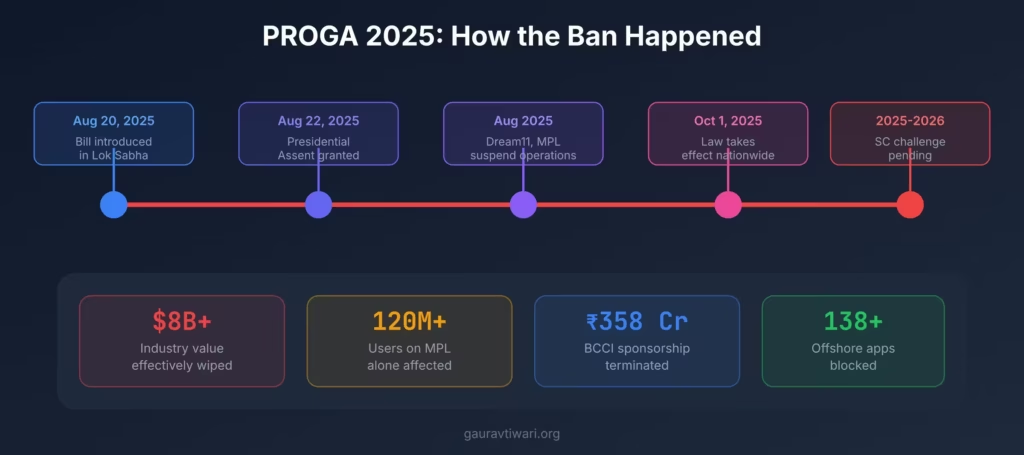
On August 20, 2025, the Promotion and Regulation of Online Gaming Bill was introduced in Lok Sabha. Two days later, it passed both houses and received Presidential Assent. By October 1, 2025, the law took effect nationwide.
The law doesn’t distinguish between skill and chance. That’s the crucial shift. For years, fantasy sports platforms like Dream11 operated under the legal principle that skill-based games weren’t gambling. The Supreme Court had upheld this distinction multiple times. PROGA 2025 threw that out entirely.
What the Law Prohibits
Under PROGA 2025, all online money games are banned regardless of whether they involve skill or chance. This includes:
- Fantasy sports for stakes (Dream11, MPL Fantasy, etc.)
- Online poker and rummy for real money
- Sports betting through any platform
- Online casino games
- Any game where users stake money for potential winnings
The ban extends beyond just operating these platforms. Advertising, sponsorships, and influencer promotions for money-gaming platforms are explicitly prohibited. Financial institutions and payment providers can’t process related transactions. UPI, bank transfers, credit cards, and even cryptocurrency transactions linked to betting are restricted or blocked.
The Penalties Are Severe
PROGA 2025 introduced harsh penalties that make the old Public Gambling Act look lenient:
- Operating real money games: Up to 3 years imprisonment or ₹1 crore fine, or both
- Advertising illegal gambling: Up to 2 years imprisonment or ₹50 lakh fine
- Repeat offenders: 3-5 years imprisonment and fines between ₹1-2 crore
The law also enables warrantless arrests for operators and players engaged in prohibited activities. That’s a significant escalation from the previous regime where enforcement was sporadic and penalties were minimal.
The Constitutional Challenge
PROGA 2025 is currently facing a constitutional challenge before the Supreme Court. Head Digital Works and other stakeholders argue that the blanket ban violates Article 19(1)(g) of the Constitution, which guarantees the right to livelihood and trade.
The core argument is that skill-based games have been repeatedly upheld as legitimate business activities by Indian courts. A blanket ban that ignores this distinction may be unconstitutional overreach. However, until the Supreme Court rules, the law remains in effect.
What Happened to Dream11, MPL, and Other Platforms
The impact on India’s gaming industry was immediate and devastating. Dream11, valued at $8 billion before the ban, completely shut down its real-money gaming business. CEO Harsh Jain informed employees that there was “no legal pathway to continue operations once the law takes effect.”
The BCCI lost its title sponsor. Dream11 had a contract worth $44 million (around ₹358 crore) for the 2023-2026 cycle. That sponsorship ended abruptly. The company has pivoted to becoming a “second-screen sports entertainment platform,” offering creator-led live match watch-alongs instead of fantasy contests.
MPL, with approximately 120 million registered users, suspended all money-based gaming offerings immediately. The company assured users that existing wallet balances could be withdrawn, but the core business model was finished.
Zupee discontinued all paid games. Their spokesperson announced that popular titles like Ludo Supreme, Ludo Turbo, Snakes & Ladders, and Trump Card Mania would continue as free-to-play only.
The pattern repeated across the industry. PokerBaazi, WinZO, and dozens of smaller platforms either shut down entirely or pivoted to free-to-play models. Thousands of jobs were lost. An industry that had attracted billions in investment essentially evaporated overnight.
The Constitutional Framework: Why India’s Gambling Laws Are So Complicated
To understand why sports betting laws vary so much across India, you need to understand how legislative powers are divided under the Constitution.
India operates under a federal framework. The Constitution’s Seventh Schedule divides legislative subjects between the Centre and the States. “Betting and gambling” appears in the State List (List II), Entry 34. This means each of India’s 28 states has the power to regulate gambling and betting for its own territory.
This is why Goa can have casinos while Tamil Nadu can ban online games. It’s why Kerala runs one of the largest lottery operations in the country while some states prohibit lotteries entirely. Each state makes its own rules.
PROGA 2025 represents the Centre asserting federal authority over online gaming by treating it as a matter of national concern. This creates a potential conflict with state powers, which is part of what’s being challenged in the Supreme Court.
The Public Gambling Act of 1867
Before PROGA, most states relied on variations of the Public Gambling Act, 1867, a colonial-era law that predates telephones, let alone the internet. This law prohibited operating or visiting “common gaming houses” but said nothing about online platforms because such things didn’t exist in 1867.
The Act also exempted “games of skill” from its prohibitions. This single exception created the legal foundation for fantasy sports, online rummy, and poker platforms. Courts consistently held that games requiring substantial skill weren’t “gambling” under this framework.
PROGA 2025 superseded this distinction at the federal level, but the skill vs. chance debate remains relevant for state-level enforcement and for activities that fall outside PROGA’s online scope.
The Bharatiya Nyaya Sanhita, 2023
The new criminal code that replaced the Indian Penal Code explicitly addresses gambling. Section 112 prescribes punishment for unauthorized betting and gambling. Offenders can face 1 to 7 years imprisonment and significant fines. This applies alongside PROGA for criminal enforcement.
What’s Actually Legal in 2026
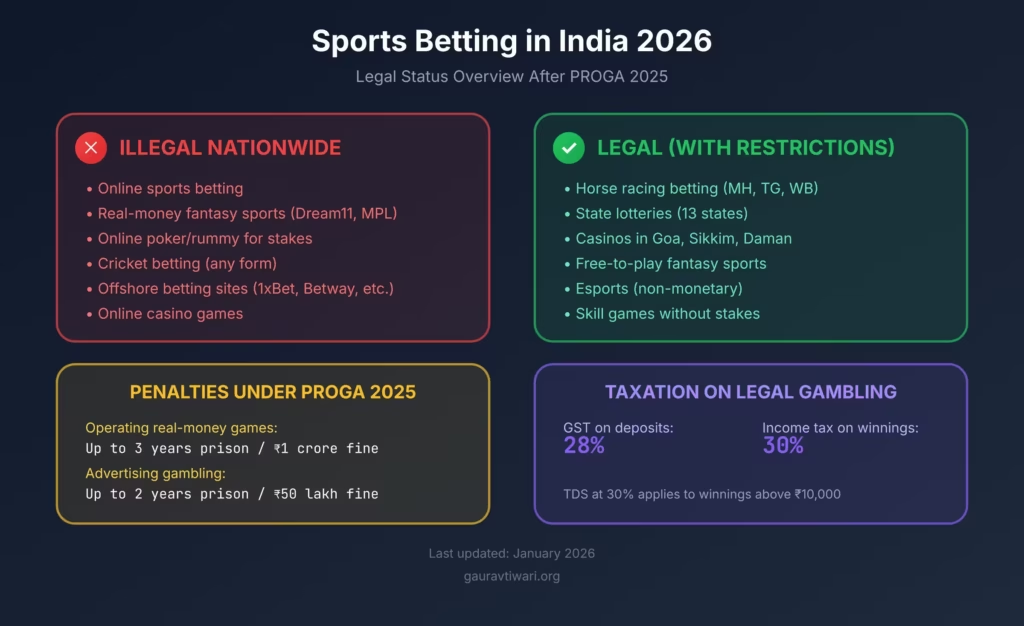
Despite the sweeping ban on online money gaming, several forms of betting and gambling remain legal in India. Understanding these exceptions is crucial if you want to participate in any form of legal wagering.
Horse Racing: The Skill Game Exception
Betting on horse racing remains legal in India. The Supreme Court ruled in Dr. K.R. Lakshmanan v. State of Tamil Nadu that horse racing is a game of skill, not chance. Successful betting requires knowledge of horses, jockeys, track conditions, and current form. This distinction gives horse racing a specific exemption under most State Gaming Laws.
However, there are conditions. Betting must typically occur on the day of the race, within state government-designated enclosures. You can’t just bet on any horse race through any platform.
Currently, Maharashtra, Telangana, and West Bengal have granted permission to their respective turf clubs to offer online betting on horse races. This is one of the few legal online betting options available to Indians.
Karnataka is attempting to legalize online wagering on horse racing, which sets up a direct confrontation with PROGA. The state argues it has constitutional authority over betting within its territory. This case will likely end up before the Supreme Court alongside the broader PROGA challenge.
State Lotteries: 13 States Allow Them
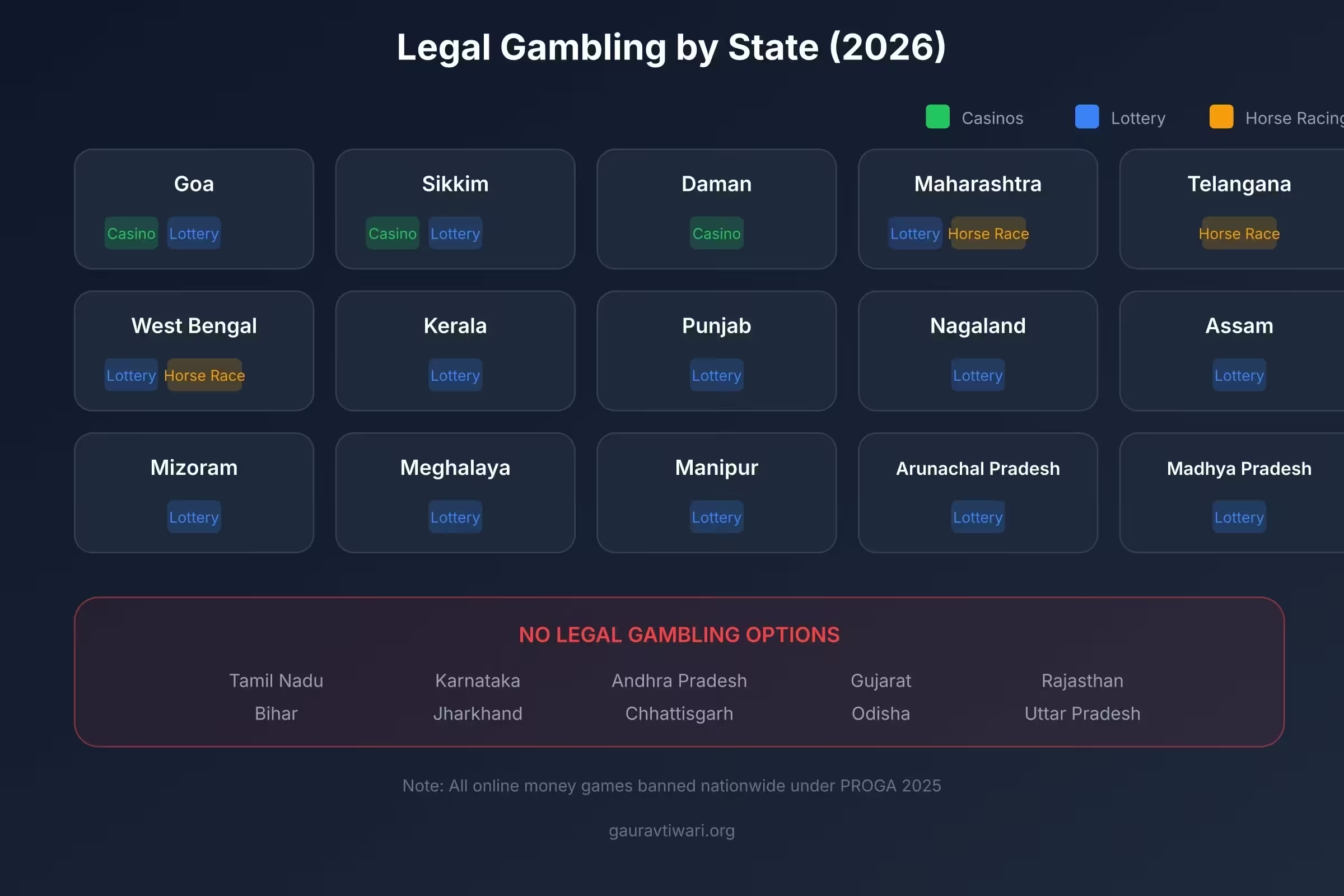
Government-run lotteries are legal in 13 Indian states under the Lotteries (Regulation) Act, 1998. These states are:
- Kerala (the largest lottery network in India)
- Punjab
- West Bengal
- Maharashtra
- Goa
- Sikkim
- Nagaland
- Assam
- Mizoram
- Meghalaya
- Manipur
- Arunachal Pradesh
- Madhya Pradesh
Kerala State Lotteries, established in 1967, was the first of its kind in India and remains the largest lottery network with thousands of agents and vendors. The state generates substantial revenue from lottery operations.
Important distinction: Legal lotteries are state-run and sold as physical paper tickets through authorized channels. Online lottery wagering for real money is banned nationwide under PROGA 2025. You can’t legally buy lottery tickets through apps or websites.
Land-Based Casinos: Goa, Sikkim, and Daman
Only three territories in India allow casino gambling: Goa, Sikkim, and Daman. If you want to legally gamble at a casino in India, these are your only options.
Goa has ten casinos, six land-based and four floating casinos that operate on the Mandovi River. The floating casinos are a unique attraction. Land-based casinos operate within five-star hotels under strict licensing. The annual license fee ranges from ₹11 crore to ₹44 crore depending on the casino’s size.
Sikkim has two casinos: Casino Sikkim and Casino Mahjong. They operate under the Sikkim Casino Games (Control and Tax) Rules, 2007. The annual license fee is ₹5 crore. Some Sikkim casinos restrict entry to foreign tourists only, with Indian citizens facing limitations.
To gamble at these casinos, you must be at least 21 years old and carry a valid government-issued ID (passport or Aadhaar). Tourists are welcome, and these destinations attract visitors specifically for legal gambling.
Free-to-Play Fantasy Sports and Esports
PROGA 2025 explicitly exempts esports and free-to-play fantasy apps. Skill-based, non-monetary competition remains fully legal. You can play fantasy cricket on Dream11’s new platform, but you can’t win money. You can compete in esports tournaments, but prize pools must comply with regulations.
This is cold comfort for those who enjoyed the competitive aspect of real-money fantasy sports, but it’s the reality of the current legal landscape.
Offshore Betting Sites: The Risks Are Real Now
Before PROGA 2025, millions of Indians used offshore betting sites like 1xBet, Betway, Parimatch, and Bet365. These platforms operated in a legal gray zone. They weren’t licensed in India, but there was no specific law prohibiting Indians from using them. Enforcement was minimal.
That’s no longer the case.
The government has actively blocked 138+ offshore betting apps including 1xBet, Betway, Parimatch, and Lotus 365. The Ministry of Electronics and Information Technology has geo-blocked these platforms and removed them from app stores.
Why Using VPNs Doesn’t Make It Legal
I see this misconception constantly. Using a VPN or cryptocurrency doesn’t make offshore betting legal. The law applies to Indian residents regardless of how or where the platform is accessed. Crypto transactions and VPN usage are traceable, and payment failures are increasingly common due to restrictions imposed by Indian banks and payment providers.
Parimatch, for example, operates under a Curaçao license. That license has zero validity in India. Using the platform violates the 2025 Online Gaming law and exposes users to financial and legal risks.
The Financial Risks
Even if you manage to access an offshore site, you face serious practical problems:
- Transactions linked to banned betting platforms may be blocked by banks
- Withdrawals can be delayed indefinitely or frozen
- Accounts may be flagged by payment gateways
- You have no legal recourse if funds are frozen or access is restricted
Since these platforms have no legal status in India, you’re completely unprotected if something goes wrong. The operator could refuse to pay out your winnings, and you’d have no way to pursue the matter legally.
Taxation: What You Need to Know
Even for legal gambling activities, India’s tax regime is punishing. Understanding these taxes is essential before participating in any form of wagering.
GST at 28%
Effective October 1, 2023, GST at 28% applies to the total value paid by players to operators. This covers online gaming, sports betting, and casino operations. The tax is levied on the amount deposited at the entry stage, not on winnings.
For example, if you deposit ₹1,000 to play at a legal casino, ₹280 goes to GST immediately. You’re playing with ₹720 of effective value. This makes the house edge significantly worse than the stated odds.
One favorable provision: GST is not levied on re-application of winnings from past bets. If you win and reinvest your winnings, you don’t pay GST again on the same money.
Income Tax at 30%
Winnings from gambling, betting, lotteries, and games are taxed at a flat rate of 30% under the head “Income from Other Sources.” This is one of the highest rates in the world for gambling winnings.
For winnings exceeding ₹10,000 from a single transaction, Tax Deducted at Source (TDS) at 30% applies immediately. The person responsible for paying the winnings must withhold this tax before paying you.
If you win ₹1,00,000 from the lottery, you’ll receive ₹70,000 after TDS. Add surcharge and cess, and the effective tax rate can exceed 31%.
Horse Racing Taxation
Horse racing winnings fall under the same 30% flat rate. Earnings above ₹10,000 from a single transaction attract immediate TDS at 30%. There’s no distinction between professional and casual bettors for tax purposes.
Lottery Taxation
India has one of the highest lottery tax rates globally. Winners pay 30% tax on their winnings, and TDS applies to amounts above ₹10,000. Large lottery wins can push you into the highest surcharge brackets, increasing your effective tax rate further.
State-by-State Breakdown
Given that betting and gambling remain primarily state subjects, here’s what the law looks like across major states:
Maharashtra
Lotteries are legal. Horse racing betting is permitted through turf clubs, including online betting. Casinos are not legal. PROGA 2025 applies to all online money games.
Goa
Casinos are legal in five-star hotels and on floating vessels. Lotteries are legal. Horse racing betting is permitted. Goa remains the most gambling-friendly state in India. PROGA 2025 applies to online money games.
Sikkim
Casinos are legal in five-star hotels. Lotteries are legal and actively run by the state. Before PROGA, Sikkim had attempted to regulate online gaming within its territory. PROGA 2025 overrides state online gaming regulations.
Kerala
Home to India’s largest lottery network. Casinos are not legal. The Kerala Gaming Act prohibits most forms of gambling. Online money games are banned under both state law and PROGA 2025.
Tamil Nadu
Has attempted multiple times to ban online gaming, including skill games. The state’s ban on online rummy was struck down by the Madras High Court, but the state remains hostile to gambling. Lotteries are not legal. PROGA 2025 aligns with the state’s existing restrictive stance.
Karnataka
Currently testing PROGA 2025 by attempting to legalize online horse racing betting. The state argues it has constitutional authority over betting within its territory. This case could reshape the Centre-State dynamic on gambling regulation.
Telangana
Horse racing betting is permitted through turf clubs, including online. The state banned all online gaming for stakes in 2017, making it one of the first states to take a hardline approach. PROGA 2025 codifies this stance at the federal level.
West Bengal
Lotteries are legal. Horse racing betting is permitted, including online through authorized turf clubs. The state has generally been permissive toward skill-based games, but PROGA 2025 applies.
Haryana
In April 2025, Haryana enacted the Haryana Prevention of Public Gambling Act, 2025. This law expanded definitions of “betting” and “common gambling house” to cover electronic communication and computer networks. It maintains a distinction between games of chance (prohibited) and games of skill (exempt), but PROGA 2025 overrides this for online money games.
Cricket Betting: The Elephant in the Room
Let’s address what most people actually want to know about: cricket betting.
Betting on cricket matches is illegal throughout India. There’s no state that permits it. There’s no legal platform that offers it. The massive underground market for cricket betting exists entirely outside the law.
PROGA 2025 doesn’t change this fundamental reality. It just closes some of the gray areas that offshore platforms exploited. If you were betting on cricket through 1xBet or Bet365, that was never legal. It’s now more actively enforced as illegal.
The Law Commission of India has recommended legalizing and regulating sports betting multiple times. The argument is that a regulated market would reduce match-fixing, generate tax revenue, and protect consumers. But Parliament has moved in the opposite direction with PROGA 2025.
Why Legalization Arguments Failed
The government cited several concerns when passing PROGA 2025:
- Addiction and financial harm to vulnerable populations
- Money laundering and financial scams
- National security risks from unregulated foreign platforms
- Tax evasion by offshore operators
- Match-fixing and sports integrity concerns
Whether a blanket ban addresses these concerns better than regulation is debatable. But for now, the prohibition approach has won.
Practical Advice for 2026
Given the current legal landscape, here’s my honest assessment of your options:
If You Want to Gamble Legally
- Visit Goa or Sikkim for casino gambling. This is your only legal option for casino games. Plan a trip, enjoy the experience, but understand the house edge and tax implications.
- Participate in state lotteries. If you’re in one of the 13 states with legal lotteries, buy physical tickets from authorized vendors. The odds are terrible (as with all lotteries), but it’s legal.
- Bet on horse racing through authorized channels. If you’re in Maharashtra, Telangana, or West Bengal, you can legally bet on races through turf clubs, including online.
If You Want to Play Fantasy Sports
Free-to-play fantasy platforms remain legal. You won’t win money, but you can still enjoy the competition. Dream11 has pivoted to this model with watch-alongs and community features. Other platforms offer similar free experiences.
What I Recommend Against
- Using offshore betting sites: The risks now outweigh any potential benefits. Payment failures, frozen funds, and legal exposure are real.
- Using VPNs to access blocked platforms: This doesn’t make it legal, and it doesn’t protect you from payment issues.
- Using cryptocurrency for betting: Still traceable, still illegal, and adds complexity without reducing risk.
- Participating in informal betting networks: The underground cricket betting market continues to exist, but participation exposes you to criminal penalties under the Bharatiya Nyaya Sanhita.
The Future: What Might Change
PROGA 2025 isn’t necessarily the final word on online gaming in India. Several factors could change the landscape:
Supreme Court Challenge
The constitutional challenge to PROGA 2025 is pending. If the Supreme Court strikes down the law or narrows its scope, skill-based gaming could return. The skill vs. chance distinction has strong legal precedent, and the Court may not accept a blanket ban that ignores this.
State Pushback
Karnataka’s attempt to legalize online horse racing betting challenges PROGA’s federal overreach. If states successfully assert their constitutional authority over betting within their territories, we could see a patchwork of regulations emerge.
Economic Pressure
The online gaming industry contributed significant GST revenue before the ban. The loss of jobs, investment, and tax revenue may eventually prompt reconsideration. Other countries that implemented blanket bans have often moved toward regulated markets after seeing the economic costs.
International Precedent
Most developed economies have moved toward regulated online gambling markets. The UK, several US states, and most of Europe allow regulated online betting. India’s prohibition approach is increasingly out of step with global trends.
Payment Methods: What Still Works
One of the most effective enforcement mechanisms under PROGA 2025 is the payment blockade. Even if you find a way to access an offshore betting site, actually moving money in and out has become extremely difficult.
UPI and Bank Transfers
Major banks and UPI providers have implemented blocks on transactions to known betting platforms. Attempts to deposit or withdraw through these channels frequently fail. Some users report accounts being flagged for suspicious activity after attempted betting transactions.
Credit and Debit Cards
International card transactions to gambling sites are routinely declined. Card networks have merchant category codes that identify gambling transactions, and Indian issuers block these by default. Even if a transaction goes through initially, it may be reversed or flagged for review.
Cryptocurrency
Some offshore platforms accept cryptocurrency deposits, and users assume this provides anonymity. It doesn’t. Blockchain transactions are permanently recorded and traceable. Indian authorities have access to chain analysis tools. Converting crypto back to rupees through Indian exchanges creates a clear paper trail linking you to the transaction.
E-Wallets and Payment Processors
Third-party payment processors that once facilitated betting transactions have either exited the Indian market or stopped serving gambling clients. The few that remain operate in legal gray zones and offer no consumer protection if funds are frozen or lost.
Responsible Gambling: A Note
Regardless of the legal status, gambling carries real risks. Addiction, financial harm, and relationship damage affect millions of people. If you choose to gamble in any legal context, set strict limits on time and money. Never chase losses. Never bet money you can’t afford to lose.
India lacks the robust responsible gambling infrastructure that regulated markets provide. There are no mandatory self-exclusion programs, no deposit limits enforced by law, no industry-funded addiction support. If you or someone you know struggles with gambling, seek help from mental health professionals.
Frequently Asked Questions
Is sports betting legal in India in 2026?
No. Sports betting is illegal throughout India. The Promotion and Regulation of Online Gaming Act, 2025 (PROGA) banned all online money games, including sports betting. The only exception is horse racing betting, which is legal in Maharashtra, Telangana, and West Bengal through authorized turf clubs.
What happened to Dream11 and fantasy sports?
Dream11 and other real-money fantasy sports platforms shut down their money-based operations after PROGA 2025 took effect. Dream11 pivoted to a free-to-play model with creator-led watch-alongs. You can still play fantasy sports for free, but you cannot win real money.
Can I use betting sites like Bet365 or 1xBet from India?
These sites are illegal to use from India. The government has geo-blocked 138+ offshore betting apps including 1xBet, Betway, and Parimatch. Using VPNs doesn’t make it legal. You face payment failures, frozen funds, and potential legal consequences if you attempt to use these platforms.
Where can I legally gamble in India?
Legal gambling options in India include: casinos in Goa, Sikkim, and Daman; state lotteries in 13 states; and horse racing betting through authorized turf clubs in Maharashtra, Telangana, and West Bengal. All online money games are banned under PROGA 2025.
What are the penalties for illegal betting in India?
Under PROGA 2025, operating real money games carries up to 3 years imprisonment or ₹1 crore fine. Advertising illegal gambling can result in 2 years imprisonment or ₹50 lakh fine. The Bharatiya Nyaya Sanhita prescribes 1-7 years imprisonment for unauthorized betting and gambling.
How is gambling winnings taxed in India?
Gambling winnings are taxed at 30% flat rate plus surcharge and cess. TDS at 30% applies to winnings exceeding ₹10,000 from a single transaction. GST at 28% is charged on the amount deposited with gaming operators. India has one of the highest gambling tax rates globally.
Is the Online Gaming Act 2025 being challenged?
Yes. PROGA 2025 faces a constitutional challenge before the Supreme Court. Petitioners argue the blanket ban violates Article 19(1)(g) which guarantees the right to livelihood and trade. The skill vs. chance distinction has strong legal precedent. Until the Court rules, the law remains in effect.
Is horse racing betting legal in India?
Yes. The Supreme Court ruled that horse racing is a game of skill, exempting it from gambling laws. Betting is legal through authorized turf clubs, and Maharashtra, Telangana, and West Bengal permit online horse racing betting. Karnataka is attempting to legalize online horse racing betting as well.
The sports betting landscape in India has fundamentally changed. What was a gray area filled with workarounds and offshore platforms has become explicitly prohibited territory. The legal options are narrow: casinos in three territories, lotteries in thirteen states, and horse racing in a handful of markets. Everything else carries real legal and financial risk. The Supreme Court challenge may eventually restore some flexibility, but for now, the safest approach is to stick with what’s explicitly legal or avoid wagering altogether.
Disclaimer: This article is for information only, not legal or financial advice. Online betting and iGaming are regulated, and rules vary by location. Make sure you are allowed to play where you live. Gambling involves real financial risk and can be addictive. Only play with money you can afford to lose, and get help if it stops being fun.
Looks like a confusing and contradictory article. No conclusion can be drawn from it whether betting is legal or not in india.
Hey Manish,
This is from the article: