
Mastering Local SEO for Your Brick-and-Mortar Business in 2026

I’ve worked with over 40 local businesses on their search visibility over the past decade. Restaurants, dental clinics, law firms, fitness studios. The pattern is always the same: they spend thousands on paid ads while ignoring the one channel that brings in customers for free, month after month. Local SEO isn’t optional anymore. It’s the difference between showing up when someone searches “plumber near me” and being invisible.
Google processes roughly 8.5 billion searches per day, and 46% of those have local intent. That means nearly 4 billion daily searches are people looking for something nearby. If your brick-and-mortar business isn’t optimized for local search, you’re leaving real money on the table. I’m going to show you exactly how to fix that, covering 11 strategies I’ve tested across client projects in 2026.
Understanding Local SEO and How It Works in 2026
Local SEO is a set of optimization strategies that help your business appear in geographically relevant search results. Unlike regular SEO where you’re competing globally for keywords, local SEO focuses on ranking within a specific area, usually your city, neighborhood, or service region.
When someone searches “Italian restaurant downtown” or “emergency dentist open now,” Google uses three core factors to decide what shows up: relevance (how well your business matches the query), distance (how close you are to the searcher), and prominence (how well-known and trusted your business is online). Getting all three right is what separates businesses that dominate the local pack from those buried on page two.
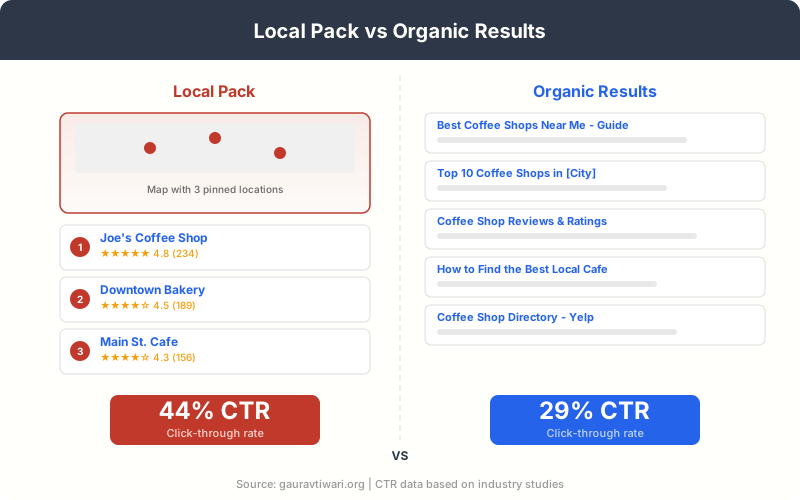
The local search results page has changed dramatically. You now see Google’s AI Overviews (formerly Search Generative Experience) summarizing local options directly in the search results. Google Maps results, the “local pack” of three businesses, review snippets, and business hours all appear before any organic links. If your business information isn’t accurate and complete, you won’t show up in any of these placements.
Google’s AI Overviews now pull information from Google Business Profiles, reviews, and local content to generate answers to local queries. Businesses with complete profiles, recent reviews, and well-structured websites get cited more often in these AI-generated summaries.
Why Local SEO Matters for Physical Businesses
76% of people who search for something nearby on their phone visit a related business within 24 hours, according to Google’s own data. And 28% of those searches result in a purchase. Those aren’t abstract numbers. For a coffee shop getting 500 “near me” impressions monthly, that’s potentially 380 visits and 140 purchases, all from organic search alone.
I tracked a client’s dental practice in Austin, Texas after we optimized their local presence. Within four months, their Google Business Profile views went from 1,200/month to 4,800/month. Phone calls from search increased by 210%. The only spend was my consulting time. No ad budget. That’s the power of local SEO done right.
Local SEO also has a compounding effect that paid ads don’t. Once you rank in the local pack for your primary keywords, you stay there as long as you maintain your profile and keep getting reviews. Compare that to Google Ads where traffic drops to zero the moment you stop paying. For most brick-and-mortar businesses, local SEO delivers a better return on investment over 12 months than any other marketing channel.
Optimizing Your Google Business Profile
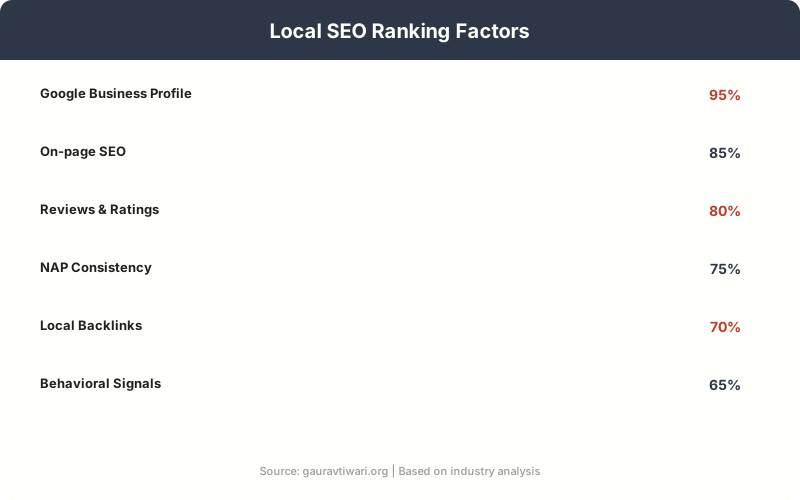
Your Google Business Profile (GBP) is the single most important factor in local search rankings. Google renamed it from “Google My Business” in 2026, but many business owners still haven’t updated their profiles since the transition. If you haven’t touched yours recently, now’s the time. I’ve written a detailed guide on optimizing your Google Business Profile for local SEO that covers the basics.
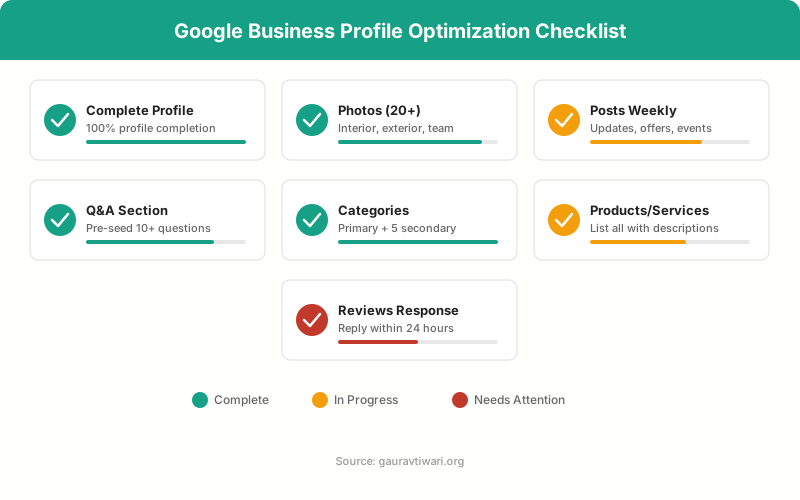
Start by claiming and verifying your listing at business.google.com. Then fill out every single field Google gives you. I mean every one: business name (exact match to your signage), address, phone number, website, hours (including holiday hours), business category (primary + secondary), attributes, services list, and products. Businesses with complete profiles are 2.7x more likely to be considered reputable by searchers.
Use Google Posts weekly. I post updates, offers, and event announcements for clients every Monday. These posts show up directly in your business listing and signal to Google that your profile is actively managed. Upload new photos at least twice a month. Businesses with more than 100 photos get 520% more calls than average, according to BrightLocal’s 2026 Local Consumer Review Survey.
The newer GBP features matter too. Use the Q&A section proactively by posting and answering your own common questions. Enable messaging so customers can reach you directly. Add your service menu with pricing if applicable. If you run a restaurant, keep your menu updated. Google rewards profiles that use all available features.
Your business name, address, and phone number (NAP) must be identical everywhere online. “123 Main St” and “123 Main Street” count as inconsistencies. Even small differences confuse search engines and hurt your rankings. Use the exact same format across your website, Google Business Profile, social media, and every directory listing.
Building Local Citations
Local citations are mentions of your business’s name, address, and phone number on other websites. They’re one of the top five ranking factors for local search. The more consistent citations you have from reputable sources, the more Google trusts that your business is legitimate and located where you say it is.
Start with the four major data aggregators in the US: Data Axle (formerly Infogroup), Neustar Localeze, Foursquare, and Factual. These feed business data to hundreds of smaller directories, apps, and mapping services. Getting your information right at the aggregator level fixes a lot of downstream problems. I’ve covered the complete citation building process in my guide on how to get citations for local SEO.
After the aggregators, target the high-authority directories: Yelp, Apple Maps, Bing Places, Facebook, Better Business Bureau, and your local Chamber of Commerce. Then go industry-specific. Dentists should be on Healthgrades and Zocdoc. Lawyers need Avvo and FindLaw. Restaurants should claim their Tripadvisor and OpenTable listings. Each industry has its own set of directories that carry extra weight.
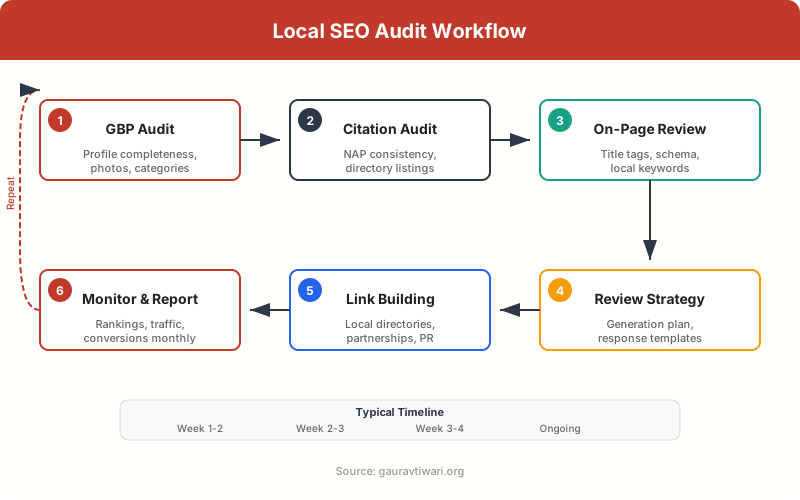
I use Semrush‘s Listing Management tool to audit citation consistency across 70+ directories in one dashboard. It finds mismatches, duplicate listings, and missing profiles automatically. For a full breakdown of how I track local SEO performance, check out my Semrush review.
Creating Localized Content
Most local businesses make one big content mistake: they write generic pages that could apply to any city. “We offer the best plumbing services” tells Google nothing about where you operate. Localized content means creating pages and posts that mention specific neighborhoods, landmarks, zip codes, and community topics.
Create individual service-area pages for each neighborhood or city you serve. A plumber in Chicago shouldn’t have one “Service Area” page. They need separate pages for Lincoln Park, Wicker Park, Logan Square, and every other area they cover. Each page should include unique content about that area, not just the same text with the neighborhood name swapped in. Mention local landmarks, describe common issues in that area (older homes in historic neighborhoods often have different plumbing challenges), and include testimonials from customers in that specific location.
Blog about local events, news, and topics your audience cares about. A fitness studio could write about the best running trails in their city. A restaurant could cover local food festivals. This kind of content builds topical relevance for your area and gives Google more signals about where you operate. Use Google Workspace tools like Google Trends to find what people in your city are actually searching for.
Managing Online Reviews
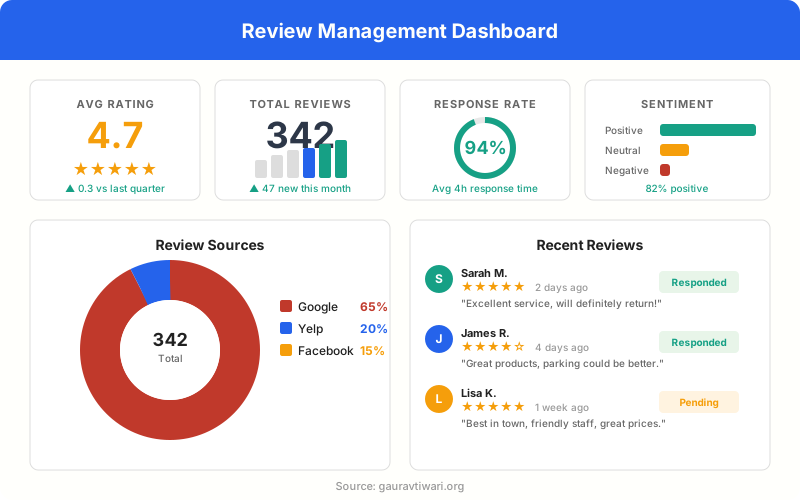
Reviews are the third most important ranking factor for local pack results, according to Whitespark’s annual Local Search Ranking Factors study. But it’s not just about star ratings. Google looks at review quantity, recency, diversity (across platforms), and whether you respond to them.
I tell every client the same thing: you need a review generation system, not a one-time ask. Send a follow-up email or text 24-48 hours after a purchase or service. Make it dead simple with a direct link to your Google review page (you can create a short link in your GBP dashboard). Aim for 5-10 new reviews per month minimum. Businesses that respond to reviews earn 35% more revenue than those that don’t, per Harvard Business Review research.
Respond to every review, positive and negative. For positive reviews, thank the customer by name and mention something specific about their visit. For negative reviews, acknowledge the issue, apologize, and offer to make it right offline. Never get defensive. Your response isn’t just for that one unhappy customer. It’s for every future customer reading your reviews to decide if they should visit.
Never offer incentives (discounts, freebies) in exchange for reviews. Google explicitly prohibits this and can remove your reviews or penalize your listing. Don’t use review kiosks that gate negative feedback either. The safest approach: ask everyone, respond to everyone, and let the quality of your service do the work.
Website Optimization for Local Search
Your website is the foundation everything else sits on. Google still crawls your site to understand what you do, where you do it, and whether you’re trustworthy. A few key optimizations make a huge difference for local rankings.
First, implement LocalBusiness schema markup on every page. This structured data tells search engines your business name, address, phone number, hours, price range, and more in a format they can parse directly. Use JSON-LD format (Google’s preferred method) and test it with Google’s Rich Results Test. If you’re on WordPress, Rank Math handles this automatically.
Second, your site must load fast on mobile. Google’s mobile-first indexing means the mobile version of your site is what gets ranked. I’ve seen local businesses lose rankings because their site took 6+ seconds to load on a phone. Aim for under 2.5 seconds on LCP (Largest Contentful Paint). Compress images, use a CDN, minimize JavaScript, and choose a fast hosting provider. Run your site through PageSpeed Insights and fix every red flag.
Third, put your NAP in the footer of every page, not just the contact page. Include an embedded Google Map on your contact page. Create a dedicated “About” page that tells your local story. Use local keywords naturally in your title tags, H1s, and meta descriptions. “Best Pizza in Brooklyn, NY” beats “Best Pizza” for local search every time. For checking your writing quality on these pages, I recommend Sapling to catch grammar issues and keep your copy clean.
For a deeper look at how to track your local search performance, read my guide on how to analyze and improve your local SEO.
Social Media for Local Businesses
Social media doesn’t directly impact local search rankings. Google has said this repeatedly. But it does affect local SEO indirectly in ways that matter. Your social profiles are citations. Your posts drive brand searches (which Google tracks). And your engagement builds the kind of community awareness that turns into reviews, mentions, and backlinks.
Focus on two platforms maximum. For most local businesses, that’s Instagram and Facebook. Post 3-4 times per week with a mix of behind-the-scenes content, customer spotlights, local community posts, and offers. Use location tags on every post. Encourage check-ins and user-generated content. When customers tag your business, that’s a signal to Google’s algorithms that real people visit your location.
Facebook’s local features are underrated. Create events for in-store happenings. Use Facebook Marketplace if you sell products. Join and participate in local community groups (not to spam, but to genuinely help). I’ve seen a bakery in Portland get 40+ new reviews in a single month just by being active in their neighborhood’s Facebook group and offering a behind-the-scenes look at their kitchen.
Local Link Building Strategies
Backlinks from local sources carry more weight for local search than links from random websites, even if those random sites have higher domain authority. A link from your city’s newspaper, a local blogger, or your Chamber of Commerce page tells Google you’re a real, established business in that area.
The easiest local links come from sponsorships and partnerships. Sponsor a local Little League team, a charity run, or a school event. Every sponsorship page on those organizations’ websites is a backlink. Partner with complementary businesses for cross-promotions, and you’ll earn links from their sites too.
Pitch local media. Reporters at city newspapers and local TV stations are constantly looking for expert sources. If you’re a financial advisor, offer commentary on local economic trends. If you run a home services company, provide tips for seasonal home maintenance. Use HARO (Help A Reporter Out) or just email reporters directly. One feature in your local paper can generate 5-10 referring domains as other sites pick up the story.
Create “best of” or resource content that other local sites want to link to. A real estate agent could publish a neighborhood guide. A restaurant could create a local food trail map. These pieces attract natural links because they’re genuinely useful to the community. For more link building tactics that work for local businesses, check out my guide on how to rank higher on Google Maps.
AI’s Impact on Local Search
AI is changing how people find local businesses, and the shift is accelerating in 2026. Google’s AI Overviews now appear in roughly 30% of local queries, pulling information from multiple sources to answer questions like “best brunch spots downtown with outdoor seating” or “affordable car mechanic that works on Saturdays near me.”
Voice search is another AI-driven channel that’s grown faster than most business owners realize. 58% of consumers have used voice search to find a local business in the past year, according to BrightLocal. Voice queries are conversational and longer: “Hey Google, where can I get my car’s oil changed near me right now?” Your content and GBP need to match these natural language patterns, not just keyword-stuffed phrases.
Google Maps itself is getting smarter with AI. The algorithm now considers things like how long people spend at your business (dwell time signals from Android phones), how often people save your business to lists, and how frequently your name comes up in conversations across Google’s platforms. The core ranking factors haven’t changed, relevance, distance, and prominence, but the data Google uses to measure them has expanded significantly.
Structure your GBP and website content to answer specific questions, not just target keywords. AI systems pull from Q&A sections, FAQ pages, and well-structured content. The businesses that show up in AI Overviews are the ones with clear, direct answers to common local queries.
Monitoring and Measuring Local SEO Performance
You can’t improve what you don’t measure. Local SEO has specific metrics that matter, and they’re different from what you’d track for a national SEO campaign.
Inside your Google Business Profile dashboard, track these monthly: profile views, search queries that triggered your listing, direction requests, phone calls, website clicks, and photo views. Pay attention to the “how customers search for your business” breakdown, specifically the split between direct searches (people who searched your business name) and discovery searches (people who searched for a category or service). A healthy local SEO strategy grows discovery searches over time.
Google Search Console shows you which local keywords drive clicks and impressions. Filter by pages to see how your service-area pages perform individually. Google Analytics tracks what happens after people land on your site: which pages they visit, how long they stay, and whether they call, fill out a form, or get directions.
For competitive tracking, Semrush‘s Position Tracking tool lets you monitor local rankings by zip code. You can see exactly where you rank for every target keyword in your specific area, not just nationally. Set up weekly tracking and watch for ranking changes after you make optimizations. I check client rankings every Monday morning as part of my routine.
GBP impressions, GBP actions (calls, directions, website clicks), local pack rankings for top 10 keywords, review count and average rating, citation accuracy score, organic traffic to location pages, and conversion rate from local landing pages. Track these in a simple spreadsheet and review trends quarterly.
Frequently Asked Questions
How long does it take to see results from local SEO?
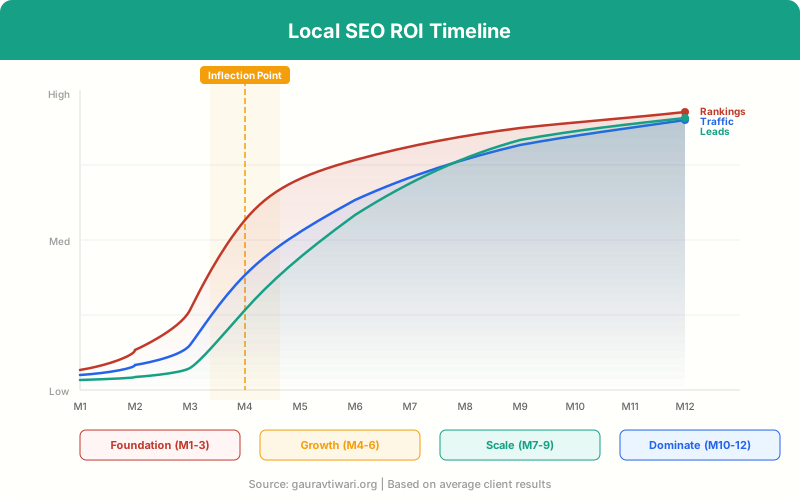
Most businesses start seeing measurable improvements within 3-6 months. I’ve seen Google Business Profile optimizations produce results in as little as 2-4 weeks (more calls, more direction requests), but climbing into the local 3-pack for competitive keywords usually takes 4-6 months of consistent work on citations, reviews, and content.
Is Google Business Profile really free?
Yes, creating and managing a Google Business Profile is completely free. Google makes money from ads, not from business listings. You can claim, verify, and optimize your profile without paying anything. The only costs come from third-party tools you might use to manage it at scale or track performance.
What’s the difference between local SEO and regular SEO?
Regular SEO focuses on ranking for keywords regardless of location. Local SEO targets geographically specific queries and aims to appear in Google’s local pack, Google Maps, and location-based search results. Local SEO relies heavily on Google Business Profile optimization, local citations, reviews, and NAP consistency, which are factors that don’t matter much for regular SEO.
How many Google reviews do I need to rank well locally?
There’s no magic number, but in most industries, you need at least as many reviews as the businesses currently in the local 3-pack. For competitive categories like restaurants or dentists, that could mean 50-200+ reviews. More important than the total count is consistency. Getting 5-10 reviews per month beats getting 50 reviews in one week and then nothing for six months.
Can I do local SEO without a physical storefront?
Yes. Google allows service-area businesses (SABs) like plumbers, electricians, and cleaners to create a Google Business Profile without displaying a physical address. You set your service areas instead. The optimization strategies are similar, but you won’t show up in ‘near me’ searches the same way a storefront business does. Focus more on service-area pages and content instead.
How do AI Overviews affect local search results?
Google’s AI Overviews summarize local options directly in search results, pulling from Google Business Profiles, reviews, and website content. Businesses with complete, accurate GBP profiles and well-structured website content are more likely to be featured. The key is having clear, direct answers to common questions about your business and services on both your website and your GBP.
Should I hire a local SEO agency or do it myself?
If you have 5-10 hours per month to dedicate to it, you can handle local SEO yourself using this guide and tools like Semrush for tracking. If you’re running the business full-time and can’t spare the hours, hiring an agency makes sense. Expect to pay $500-$1,500/month for local SEO services. Avoid anyone who guarantees #1 rankings or charges less than $300/month, as they’re likely doing nothing meaningful.
Local SEO isn’t a one-time project. It’s an ongoing process of keeping your Google Business Profile updated, earning fresh reviews, building citations, creating local content, and monitoring your rankings. The businesses that win in local search are the ones that show up consistently, both online and in their community. Start with your Google Business Profile this week, fix your citations next week, and build from there. Every small improvement compounds over time.
Disclaimer: This site is reader-supported. If you buy through some links, I may earn a small commission at no extra cost to you. I only recommend tools I trust and would use myself. Your support helps keep gauravtiwari.org free and focused on real-world advice. Thanks. - Gaurav Tiwari