
English as a Second Language (ESL) in Technical Writing
Technical writing in English when English isn’t your first language creates invisible friction. Native speakers don’t see it because they’ve never experienced it. Other English as a Second Language (ESL) writers rarely discuss it because admitting difficulty feels like admitting inadequacy.
But millions of developers, engineers, and technical professionals write in English as their second, third, or fourth language. The documentation, tutorials, blog posts, and Stack Overflow answers that power the tech ecosystem come from writers working in a language they didn’t grow up speaking.
I’m one of them. Writing from India, where English is technically an “official language” but rarely anyone’s mother tongue. Hindi was my first language. English came through school, textbooks, and eventually, necessity.
This is the reality of ESL technical writing: the challenges, the advantages, and the strategies for writing confidently in a borrowed language.
The 2026 Global Freelance Writing Reality
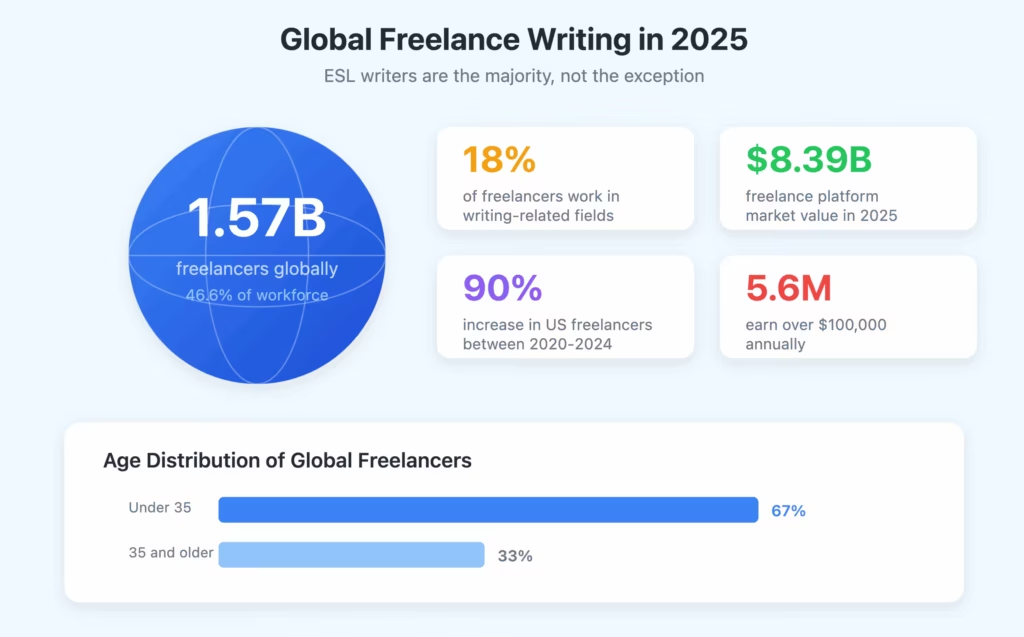
The data shows just how international the freelance workforce has become.
There are 1.57 billion freelancers globally in 2026, representing 46.6% of the total workforce of 3.38 billion. Writing is one of the most popular freelance skills, with 18% of freelancers working in writing-related fields. In the US alone, 82% of freelancers work as content writers. The global nature of this workforce means ESL writers are the majority, not the exception.
The United States has over 76.4 million freelancers, and the number increased by 90% between 2020 and 2024. By 2027, 86.5 million Americans will be freelancing. But the global picture matters more for understanding ESL writing: over two-thirds of freelancers worldwide are under age 35, and they’re working across borders constantly.
The freelance platform market is expected to hit $8.39 billion in 2026. US skilled knowledge freelancers earned roughly $1.5 trillion in 2024. A record 5.6 million independent workers earn over $100,000 annually. These numbers represent opportunity for anyone who can communicate effectively in English—regardless of whether English is their first language.
Remote work job postings increased by 3% in Q4 2024, marking a shift from earlier cooling. Fifty percent of all global freelancers perform skilled jobs including IT services, programming, marketing, and counseling. Technical writing falls squarely in this category. Thanks to remote technology, freelancers no longer limit themselves to working where they were born. English proficiency, not native English, becomes the qualification.
The Indian ESL Writer’s Reality
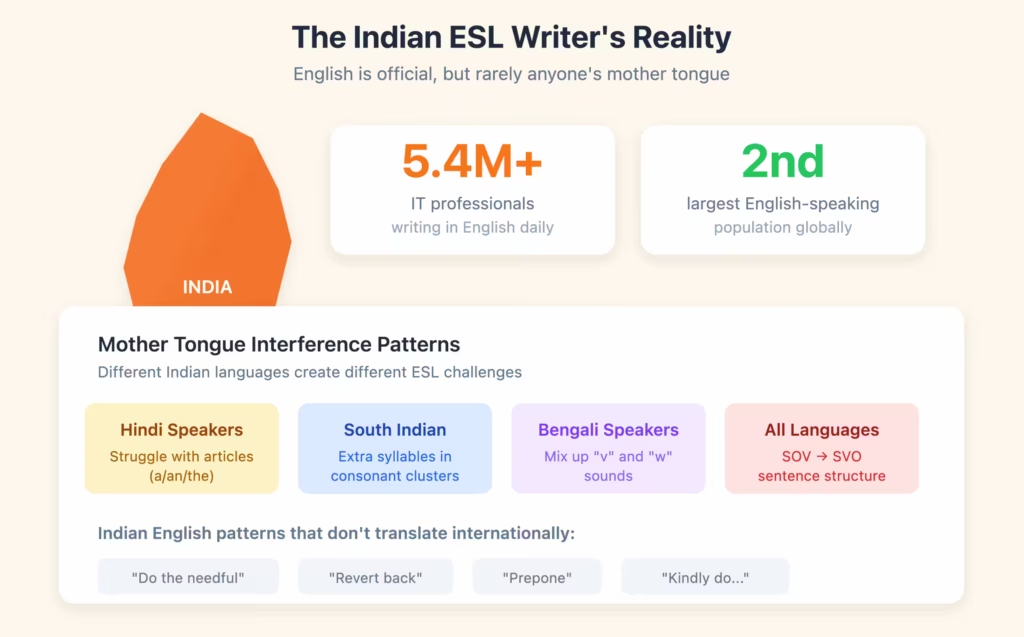
India occupies a strange position in the ESL conversation. We’re the world’s second-largest English-speaking population. English is an “associate official language.” Every educated Indian learns it in school.
And yet.
English isn’t what we speak at home. It isn’t what we think in. For most of us, it’s a professional tool we picked up along the way. My inner monologue runs in Hindi with English technical terms sprinkled in. That’s the reality for most Indian technical writers.
India’s IT services industry employs over 5.4 million people. A significant chunk of that workforce writes in English daily—documentation, emails, reports, client communications. We’re not exceptional. We’re the norm.
But here’s what makes the Indian experience distinct: mother tongue influence varies wildly. A Tamil speaker’s English sounds different from a Bengali speaker’s. A Punjabi’s sentence structure differs from a Malayali’s. We’re not one ESL community. We’re dozens, each with unique interference patterns.
Hindi speakers struggle with articles because Hindi doesn’t have them. South Indian language speakers often add extra syllables to consonant clusters. Bengali speakers mix up “v” and “w” sounds. These patterns mark our writing in ways we don’t always notice.
The Mental Overhead of Writing in English
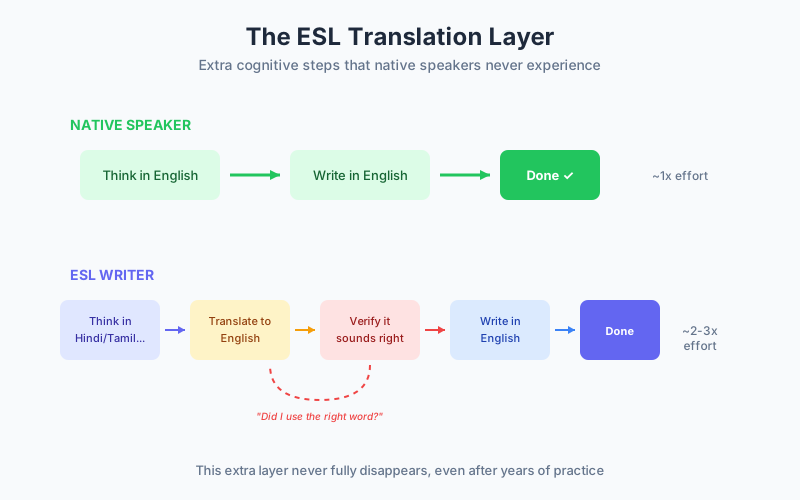
Native speakers write in their thinking language. ESL writers translate.
The translation layer: Every sentence goes through an extra step. Think in native language, translate to English, verify the translation works, write it down. The process is faster with practice but never disappears entirely. This extra cognitive load affects output speed and mental fatigue.
For Indian writers, this gets complicated. Many of us code-switch constantly—thinking in Hindi, using English technical terms, structuring sentences somewhere in between. My brain doesn’t do a clean translation. It does a messy remix.
Idiom uncertainty: English idioms permeate technical writing. “Out of the box,” “under the hood,” “boilerplate code,” “edge cases,” “spin up a server.” Native speakers use these automatically. ESL writers must learn them, verify their meaning in context, and use them correctly. Misusing an idiom marks you as non-native instantly.
Indian English has its own idioms that don’t translate. “Do the needful” makes perfect sense to us. Americans find it quaint or confusing. “Prepone” (the opposite of postpone) isn’t a word in American English but should be.
Register uncertainty: Technical writing has expected formality levels. Too formal reads as stiff. Too casual reads as unprofessional. Native speakers navigate this intuitively. ESL writers consciously choose each register decision. Should this be “you should” or “you might want to” or “consider” or “it’s recommended to”?
Indian English tends toward formality. We learned English from textbooks, not conversations. “Kindly” feels natural to us. “Please do the needful and revert back” is standard Indian business English. But it reads as oddly formal—or outright wrong—to American readers.
The confidence tax: Even with excellent English, self-doubt persists. “Did I use the right word?” “Does this sentence sound natural?” “Will readers think this is poorly written?” This doubt slows writing and creates anxiety that native speakers don’t experience.
Common ESL Technical Writing Challenges
Specific patterns that trip up non-native writers.
Article usage (a/an/the): Many languages don’t have articles or use them differently. Getting articles right in English is notoriously difficult for ESL learners—and errors are immediately visible to native readers.
Problematic: “Install the WordPress on server”
Correct: “Install WordPress on a server” or “Install WordPress on the server”
Technical writing amplifies this because precision matters. “The database” (specific one) versus “a database” (any database) changes meaning.
Hindi, Tamil, Telugu, Bengali—none of India’s major languages have articles. We’re essentially learning an entirely foreign grammatical concept. After 16+ years of writing in English, I still catch myself dropping articles in first drafts.
Preposition inconsistency: Prepositions are essentially arbitrary in English. “Depend on” not “depend from.” “Based on” not “based in.” “Work on a project” but “work with a team.” Every combination must be memorized.
Technical writing has its own preposition patterns:
- “Connect to the database”
- “Write to the file”
- “Read from the API”
- “Log in to the dashboard” (not “log into” though commonly used)
Sentence structure complexity: ESL writers often construct sentences following native language patterns. German speakers create long compound sentences. Romance language speakers use more subordinate clauses. Asian language speakers sometimes omit subjects.
Indian languages are SOV (Subject-Object-Verb). English is SVO (Subject-Verb-Object). “I the file saved” versus “I saved the file.” We learn to restructure, but under pressure—tight deadlines, complex explanations—native patterns creep back.
Technical writing benefits from simple, direct sentences. ESL writers must consciously fight native language structure habits.
Tense consistency: Technical writing typically uses present tense for instructions: “Click the button. The dialog appears.” ESL writers sometimes drift into other tenses, especially when describing processes or troubleshooting.
The Hidden Advantages
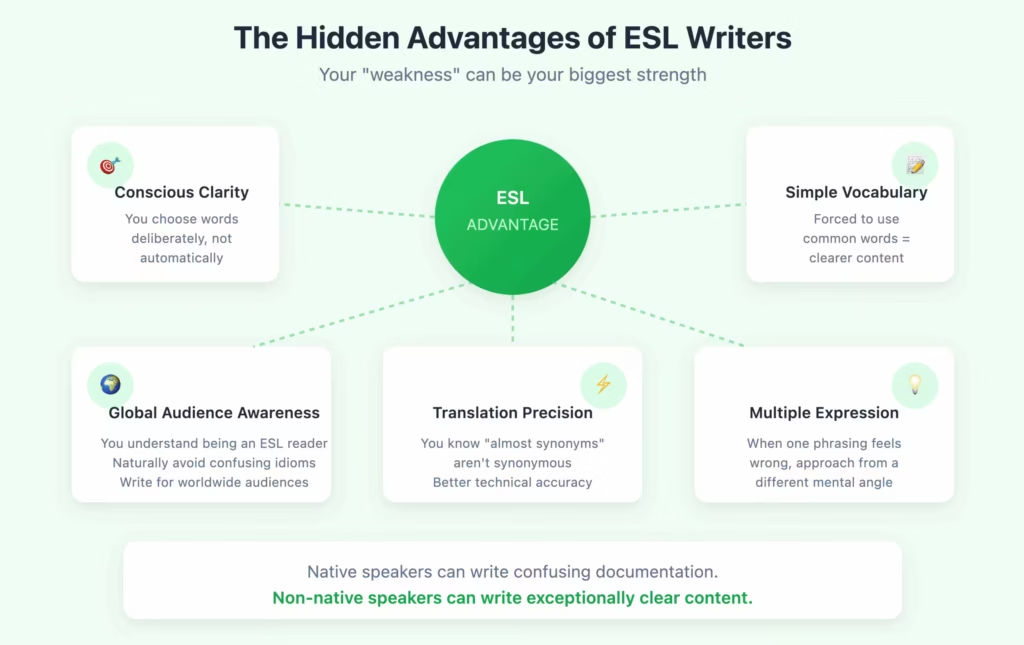
ESL status brings unexpected benefits to technical writing.
- Conscious clarity: Native speakers write idiomatically without thinking. ESL writers choose words deliberately. This consciousness often produces clearer prose. When you can’t rely on idiom, you use plain language—which is often better for technical communication.
- Simplified vocabulary: Not having immediate access to obscure vocabulary forces using common words. “The function calculates the total” instead of “The function ascertains the aggregate summation.” Simpler is better for technical content.
- Global audience awareness: ESL writers understand being an ESL reader. This creates empathy for the global audience reading your technical content. You naturally avoid idioms, cultural references, and assumptions that would confuse international readers.
- Indian writers serve a global audience constantly. We work with American clients, European teams, and Asian markets. This forces adaptability. You learn to write for the confused developer in Brazil, not just the native speaker in Boston.
- Translation thinking: Experience translating between languages develops sensitivity to precision. You know how “almost synonyms” aren’t actually synonymous. This precision improves technical writing where exact meaning matters.
- Multiple expression options: Knowing multiple languages provides alternative ways to express concepts. When one phrasing feels wrong in English, you can approach it from a different mental angle.
- Time zone advantage: Indian writers working with US clients have a natural async workflow. You write while they sleep. They review while you sleep. This constraint often improves writing quality—you can’t clarify immediately, so you write more precisely the first time.
Practical Strategies for ESL Technical Writers
Building confidence and quality in English technical content.
Read extensively in English: Passive vocabulary builds faster through reading than active study. Read technical blogs, documentation, tutorials—not just for content but for language patterns. Notice how native speakers structure sentences and use technical vocabulary.
I spent years reading American tech blogs before my writing started sounding natural. CSS-Tricks, Smashing Magazine, A List Apart. Not just learning the tech, but absorbing the voice.
Build a phrase library: Collect correctly-used phrases from native speakers:
- “This function takes X as an argument and returns Y”
- “If you encounter this error, try…”
- “Before proceeding, ensure that…”
- “This approach works well for…”
These templates reduce the translation burden. You’re not constructing sentences from scratch but filling in frameworks.
Master technical vocabulary: Technical vocabulary is actually easier than general vocabulary because it’s more standardized. “Deploy,” “instantiate,” “refactor,” “dependency”—these mean the same thing everywhere. Build strong technical vocabulary and writing becomes easier.
Use consistent patterns: Develop personal conventions:
- Start tutorials the same way
- Structure explanations consistently
- Use familiar transition phrases
- Standardize your error explanation format
Consistency reduces decision fatigue.
Embrace the editorial process: First drafts in any language benefit from editing. ESL writers often feel pressure to produce perfect first drafts. Instead, write freely and edit carefully. The editing phase catches language issues without slowing initial composition.
Unlearn “Indian English” patterns: Some constructions that are standard in Indian business English don’t work internationally. “Revert back” is redundant (revert already means go back). “Do the needful” confuses non-Indian readers. “Prepone” isn’t globally recognized. Identify your regional patterns and decide when to keep them and when to adapt.
Tools for ESL Technical Writers
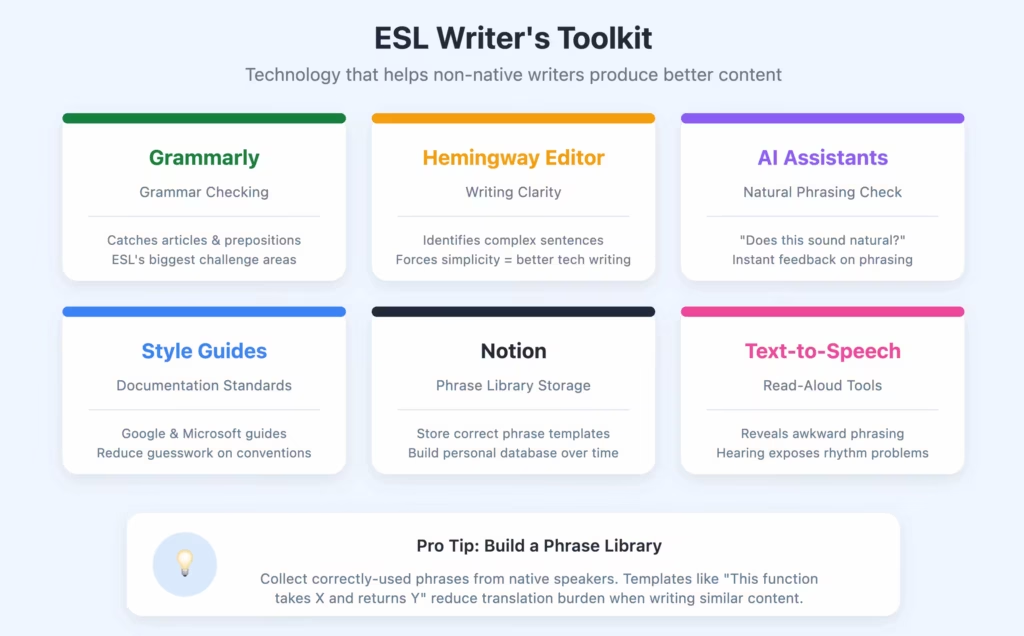
Technology specifically helpful for non-native writers.
- Grammar checking. Grammarly catches articles and prepositions—the ESL challenge areas. The premium version explains why corrections are made, which teaches patterns over time. Not perfect, but catches obvious errors before readers see them.
- Writing clarity. Hemingway Editor identifies complex sentences and suggests simpler alternatives. This aligns with ESL advantage: forced simplicity often produces better technical writing.
- Documentation reference. Notion stores your phrase library—correctly-used templates you’ve collected from native speakers. Building a personal database of reliable phrases reduces the translation burden.
- AI writing assistance. Tools like Claude can check whether phrasing sounds natural or suggest alternative ways to express technical concepts. Use AI as a second opinion on whether your writing communicates clearly. This has been game-changing for me—I can now ask “does this sound natural to American readers?” and get useful feedback instantly.
- Style guides. The Google Developer Documentation Style Guide and Microsoft Writing Style Guide are free references that reduce guesswork about conventions. Follow established patterns rather than guessing.
- Read-aloud tools. Text-to-speech reveals awkward phrasing that looks fine visually. Hearing your writing exposes rhythm problems that reading silently misses.
The Imposter Syndrome Dimension
ESL status interacts with imposter syndrome in technical fields.
- The double burden: Feeling uncertain about technical abilities AND language abilities compounds. “Am I wrong about the technical concept or just expressing it poorly?” This uncertainty can prevent publishing altogether.
- Visible versus invisible mistakes: A native speaker’s technical error looks like a technical error. An ESL writer’s technical error might be attributed to language issues. This creates pressure to be twice as technically correct to compensate for language vulnerability.
- Accent anxiety in video/audio: Written English is one thing—speaking is another. Creating video tutorials or podcast content adds accent visibility. Some ESL creators avoid video entirely because of this anxiety.
Indian accents carry specific baggage. Hollywood’s call center jokes. The “tech support” stereotype. We’re often the punchline. This makes putting yourself on camera harder than it should be. I know Indian creators with massive knowledge who won’t do video because they’re tired of comments about how they sound.
Here’s what I’ve learned: the people who matter don’t care about your accent. They care whether you helped them solve their problem. The ones who mock accents weren’t your audience anyway.
The authenticity question: Some ESL writers try to sound native, hiding their language background. Others embrace it, openly acknowledging ESL status. Neither approach is wrong, but the decision itself requires energy native speakers don’t spend.
Building Writing Confidence
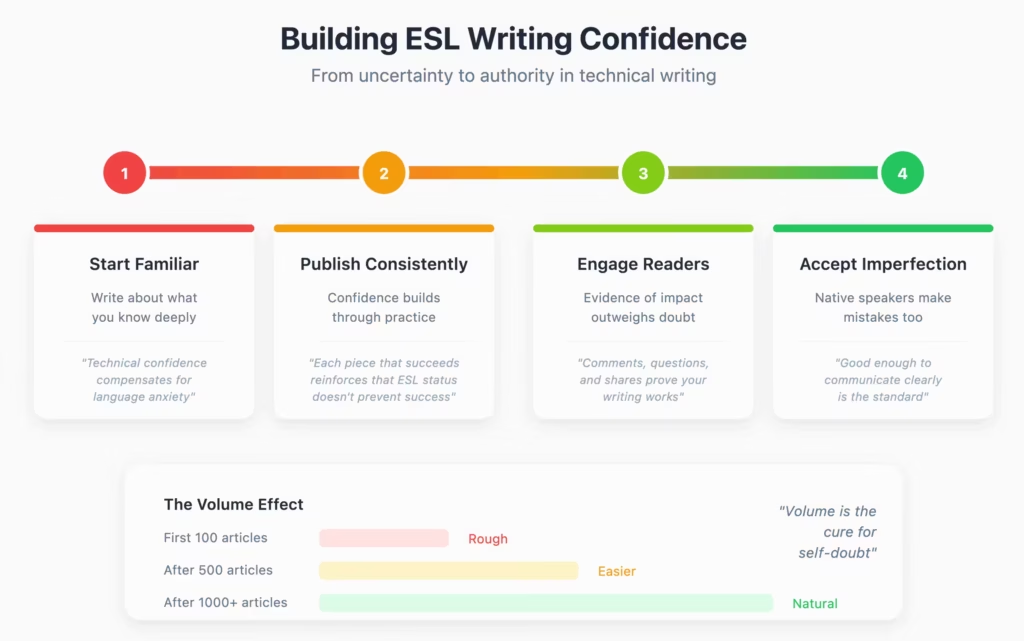
Moving from uncertainty to authority in English technical writing.
- Start with familiar topics: Write about what you know deeply. When technical content is certain, language anxiety decreases. Expertise in subject matter compensates for language uncertainty.
- Publish consistently: Confidence builds through practice. Each published piece provides feedback. Each piece that succeeds reinforces that ESL status doesn’t prevent effective communication.
- I’ve published over 1,750 articles. The first hundred were rough. By article five hundred, the language came easier. By a thousand, I stopped thinking about it. Volume is the cure for self-doubt.
- Engage with readers: Comments, questions, and shares indicate successful communication. When readers understand and appreciate your content, language concerns diminish. Evidence of impact outweighs internal doubt.
- Accept imperfection: Native speakers make language mistakes too. Perfect English doesn’t exist. “Good enough to communicate clearly” is the practical standard. Waiting for perfection prevents publishing.
- Find ESL community: Other ESL technical writers understand the challenges. Shared experience normalizes the struggle and provides strategies. You’re not alone in navigating this.
Career Advancement for ESL Technical Writers
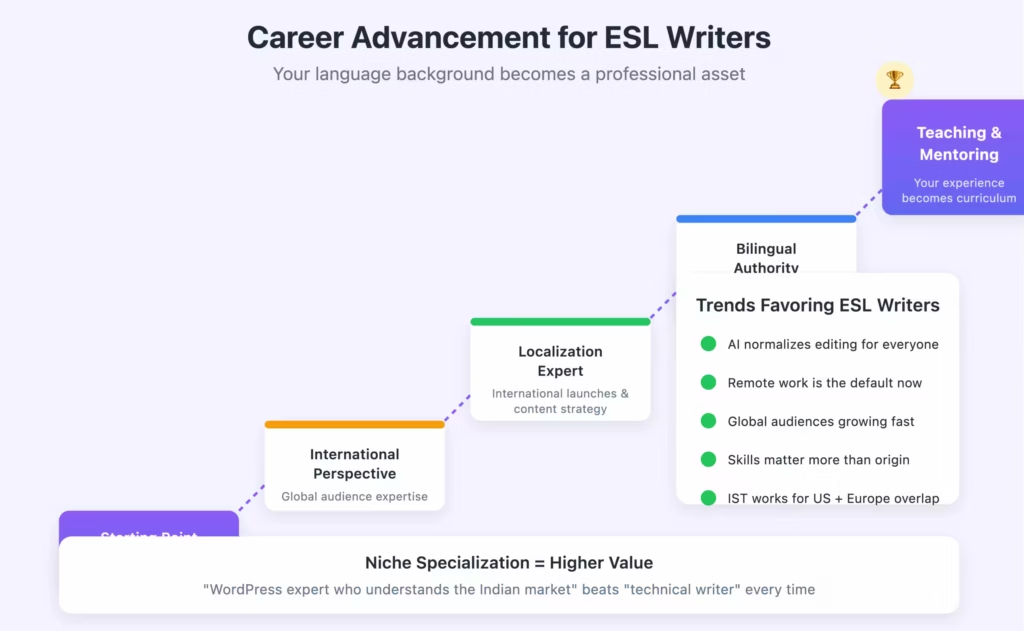
Your language background can become a professional asset.
- International perspective value. Companies expanding globally need writers who understand international audiences. Your ESL experience makes you naturally suited to writing documentation that works across cultures. You catch assumptions that native speakers make unconsciously.
- Localization expertise. Having translated mentally your entire career, you understand what works across languages. This positions you for localization work, international product launches, and global content strategy roles.
- Bilingual opportunities. Companies with presence in your native language market value writers who can work in both languages. Indian writers can serve the massive Hindi, Tamil, or regional language markets while also producing English content. That’s rare and valuable.
- Teaching and mentoring. As you develop strategies for ESL technical writing, you can help others. This creates consulting, teaching, and community-building opportunities. Your experience becomes curriculum.
- Niche specialization. Combine technical depth with your unique background. WordPress performance expert who understands the Indian hosting market” is more specific than generic technical writer. Your context becomes differentiation.
Building an ESL Writing Portfolio
Evidence matters more than claims of ability.
- Start with what you know. Write about your technical expertise. Deep knowledge compensates for language hesitation. Confidence in content enables focus on communication rather than survival.
- Document publicly. Blog posts, GitHub documentation, Stack Overflow answers—create visible evidence of competent English writing. Each published piece proves you can do the work.
- Seek feedback actively. Ask native speakers to identify unclear passages. Use the feedback to improve specific patterns. Targeted improvement beats generic “getting better at English.”
- Highlight process. Clients care about reliable delivery, not perfect English. Document your review and quality assurance process. Show how you catch and correct errors systematically.
- Collect testimonials. Client feedback about communication quality is powerful. Testimonials from native English speakers specifically endorsing your writing address the unstated concern directly.
The Future of ESL Technical Writing
Trends favor non-native English speakers.
- AI assistance normalizes editing. Everyone uses grammar checkers and AI writing assistance now. The line between “native writing” and “assisted writing” blurs. Tools that once revealed ESL status now help everyone.
- Remote work default. Location matters less. The 90% increase in US freelancers between 2020 and 2024 reflects broader acceptance of distributed work. Your timezone and location become features, not limitations.
- For Indian writers, IST works surprisingly well. Overlap with US East Coast in evenings. Overlap with Europe in afternoons. You can serve global clients without destroying your sleep schedule.
- Global audience growth. Technical products serve international users. Content that works globally has more value than content optimized for native English speakers alone. Your audience awareness becomes competitive advantage.
- Skill-based hiring. Technical expertise increasingly matters more than credentials or background. Can you write clear documentation? That’s the question. The answer doesn’t require native English status.
Daily Practice Habits
Building English fluency through consistent effort.
- Morning reading routine. Start each day reading English technical content for fifteen to thirty minutes. Blog posts, documentation, newsletters. Absorb patterns before writing begins.
- Write daily. Even brief writing builds fluency. Internal notes, draft blog posts, documentation contributions. Quantity builds quality over time.
- Review your own writing. Read yesterday’s work with fresh eyes. Notice patterns in your errors. Targeted improvement beats generic study.
- Collect phrases. When you encounter well-constructed sentences, save them. Build a personal library of effective technical phrasing. Reference before writing similar content.
- Think in English. Practice internal monologue in English during technical work. Reduces the translation overhead when writing. This is hard for Indian multilingual speakers. We code-switch constantly. But dedicating even one hour to pure English thinking each day builds the muscle.
- Speak regularly. Video calls, voice notes, recorded explanations. Speaking English reinforces writing fluency. The skills compound.
The Bigger Picture
ESL technical writing is more common than the industry acknowledges.
Global contribution
The tech ecosystem depends on non-native English speakers. Documentation, tutorials, Stack Overflow answers, blog posts—a significant portion comes from ESL contributors. This contribution deserves recognition.
Indian developers alone answer millions of Stack Overflow questions. Indian technical writers produce documentation for products used worldwide. We’re not peripheral to the ecosystem. We’re fundamental to it.
Lowering barriers
The more openly we discuss ESL technical writing challenges, the easier we make it for others. Pretending language doesn’t matter creates false expectations. Acknowledging the challenge invites more diverse voices.
Quality versus nativeness
Clear thinking produces clear writing. Native English speakers can write confusing documentation. Non-native speakers can write exceptionally clear content. Language nativeness correlates weakly with writing quality.
The writing, not the writer
Ultimately, readers care whether content helps them solve problems. Your articles and prepositions matter less than your accuracy and helpfulness. Focus on serving readers, and language takes its proper secondary place.
Writing technical content in English as a second language is harder than native speakers realize and easier than ESL writers often fear. The challenges are real but manageable. The advantages are genuine. With conscious practice and appropriate strategies, ESL status becomes background noise rather than foreground obstacle.
I’ve been doing this for 16+ years now. From stumbling through my first blog posts to running a content business serving enterprise clients. The language barrier didn’t disappear. I just stopped letting it stop me.
You can too.
FAQs
What are the biggest challenges for ESL technical writers?
Article usage (a/an/the) trips up writers from languages without articles—including most Indian languages. Prepositions must be memorized individually—there’s no logic to ‘depend on’ versus ‘based on.’ Idiom uncertainty creates hesitation. The constant translation layer adds cognitive load and slows writing. Register choices (formal vs casual) require conscious decisions that native speakers make automatically.
Do ESL writers have any advantages in technical writing?
Yes. Conscious word choice often produces clearer prose than automatic idiomatic writing. Limited vocabulary access forces simpler language—which is better for technical content. ESL writers naturally avoid confusing idioms and cultural references, making content more accessible to global audiences. Translation experience builds precision with meaning that benefits technical accuracy.
How can ESL writers improve their technical English?
Read extensively—technical blogs, documentation, tutorials—absorbing natural patterns. Build a library of correct phrase templates from native speakers. Master technical vocabulary which is standardized and easier than general vocabulary. Develop consistent personal patterns for tutorials and explanations. Use grammar tools like Grammarly for article and preposition checks. Publish regularly to build confidence through practice.
Should ESL writers try to hide their non-native status?
There’s no right answer. Some writers successfully mimic native patterns; others openly acknowledge ESL status. What matters is clear communication that helps readers. Readers care whether content solves their problems, not whether the writer is a native speaker. Focus on accuracy and helpfulness rather than performing nativeness.
How do I overcome imposter syndrome as an ESL technical writer?
Start with topics you know deeply—technical confidence compensates for language uncertainty. Publish consistently to build evidence of successful communication. Engage with reader feedback; understanding and appreciation prove your writing works. Accept that native speakers make mistakes too; perfect English doesn’t exist. Connect with other ESL writers who share the experience and strategies.
How big is the global freelance writing market?
There are 1.57 billion freelancers globally, representing 46.6% of the total workforce. 18% work in writing-related fields. The freelance platform market is expected to hit $8.39 billion in 2025. A record 5.6 million independent workers earn over $100,000 annually. ESL writers are the majority in this global workforce.
What tools help ESL technical writers?
Grammarly catches articles and prepositions. Hemingway Editor identifies complex sentences. Notion stores phrase libraries. AI tools check whether phrasing sounds natural. Style guides (Google, Microsoft) reduce guesswork. Read-aloud tools expose awkward phrasing. Build a personal database of reliable phrases to reduce translation burden.
What unique challenges do Indian technical writers face?
Indian writers deal with mother tongue interference that varies by region—Hindi speakers struggle with articles differently than Tamil speakers handle consonant clusters. Indian English conventions like ‘do the needful’ and ‘revert back’ don’t translate internationally. Accent bias affects video content creation. The formal English learned in schools often sounds stiff in casual technical writing. But the massive IT ecosystem means Indian ESL writers have built-in community and global work opportunities.
Disclaimer: This site is reader-supported. If you buy through some links, I may earn a small commission at no extra cost to you. I only recommend tools I trust and would use myself. Your support helps keep gauravtiwari.org free and focused on real-world advice. Thanks. - Gaurav Tiwari