
10 Best Budget Ergonomic Chairs to Buy (Reviewed)
I spent 6 years working from a $40 dining chair. My lower back hated me for it. By year three, I was getting up every 30 minutes just to stretch, and my productivity tanked every afternoon. When I finally switched to a proper ergonomic chair, the difference was night and day.
The problem? Most people think a good ergonomic chair costs $800+. It doesn’t. I’ve tested and researched dozens of budget options under $400, and some of them are genuinely impressive. I’m talking real lumbar support, adjustable armrests, breathable mesh, the works.
If you’re working from home or sitting at a desk for 6-8 hours a day, this is the single best upgrade you can make for your health and focus. Here are 10 budget ergonomic chairs I’d actually recommend in 2026.
Best budget ergonomic chairs
I put this list together based on my own experience testing chairs, customer reviews from Amazon and Reddit, and what actually matters for long-term sitting comfort: lumbar support, adjustability, build quality, and breathability. These aren’t ranked in strict order because the “best” chair depends on your body type, desk height, and budget.
- Odinlake Ergonomic Office Chairs
- SIHOO Ergonomic Office Chair
- KERDOM Ergonomic Office Chair
- NOUHAUS Ergo3D Ergonomic Office Chair
- LMIKAF Ergonomic Office Chair
- Modway Ergonomic Office Chair
- Mimoglad Ergonomic Office Chair
- Duramont Ergonomic Office Chair
- XUER Ergonomic Office Chair
- NOBLEWELL Ergonomic Office Chair
- FelixKing Ergonomic Office Chair
Odinlake Ergonomic Office Chairs
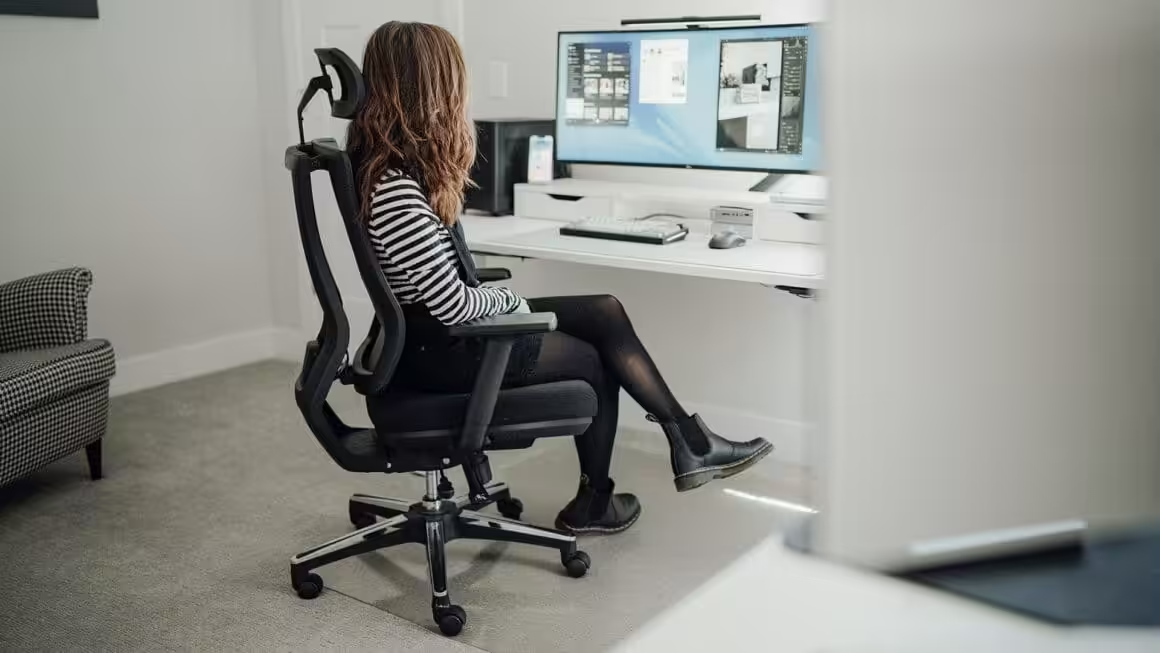

OdinLake Ergo Pro 633 Ergonomic Office Chair
- Dual lumbar back support that adapts to your sitting posture.
- Adjustable seat depth, recline lock, headrest, and 3D armrests for better fit.
- Wide breathable mesh seat with footrest for long work sessions.
- Certified build quality with smooth PU wheels and up to 300 lb capacity.
Odinlake is one of those brands that flies under the radar but makes surprisingly solid chairs. They focus on ergonomic office seating, and their Ergo PRO, Ergo ART, and Ergo CORE lines cover different price points and body types.
What I like about the Ergo Pro 633 is the dual lumbar support system. It actually adapts to how you sit, not just where you sit. You get 3D armrests, adjustable seat depth, a recline lock, and a breathable mesh seat with a built-in footrest. That’s a lot of adjustability for a chair in this price range.
The 300 lb weight capacity and PU wheels are solid for the price. One tip: check Odinlake’s own website before buying on Amazon. They often run better deals directly, and you can use promo code SD50 to save $50 on any chair.
SIHOO Ergonomic Office Chair
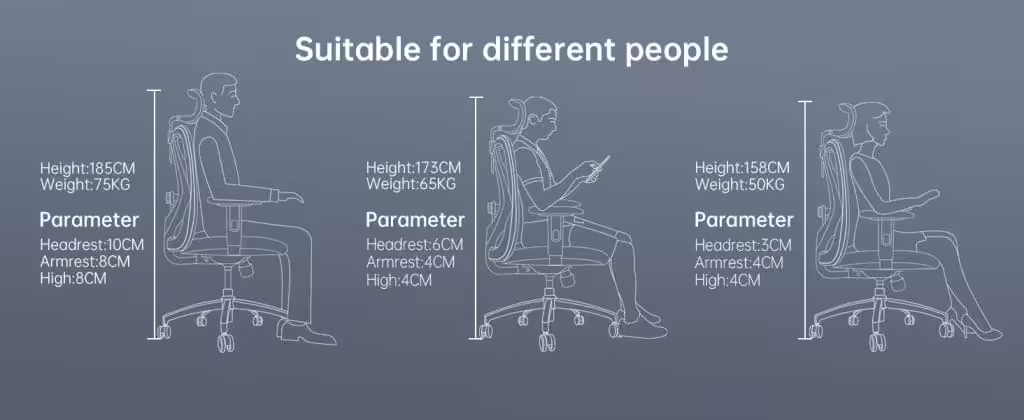
SIHOO has been a consistent performer in the budget ergonomic chair market, and this model shows why. You get five separate adjustments: back support, stepless seat height, headrest, tilt, and armrest height. For a chair under $300, that’s more adjustability than most competitors offer.
The W-shaped seat is the standout feature here. That waterfall front edge takes pressure off the back of your thighs, which matters a lot if you’re sitting for 6+ hours. I’ve noticed this design in chairs costing twice as much. The mesh back keeps airflow moving so you won’t end up with a sweaty back by 2 PM.
The PU armrest surface is a nice touch because it’s softer than the hard plastic you’ll find on cheaper chairs. And SIHOO backs this with a 3-year warranty, which tells you something about their confidence in the build quality. The only downside? Assembly instructions could be clearer, but you’ll get it done in about 20 minutes.
KERDOM Ergonomic Office Chair
KERDOM built this chair around what they call “human-oriented ergonomic construction,” and honestly, it lives up to the marketing speak. The high-density mesh back paired with a thick cushion and lumbar support does a good job distributing pressure across your back instead of concentrating it in one spot.
What sets this apart from other budget options is the flip-up armrest design. When you need to push the chair under your desk or want more room, you just flip the armrests up and out of the way. It’s a small thing, but if you have a compact workspace, it’s a big deal.
You also get pneumatic seat height adjustment, 360-degree swivel, tilt locking, and silencer caster wheels that won’t wake up the entire house when you roll across hardwood floors. Assembly takes 10-20 minutes with the included instructions and video guide. For the price, this is one of the better all-around options for people who want a no-fuss ergonomic chair for a home office setup.
NOUHAUS Ergo3D Ergonomic Office Chair
The NOUHAUS Ergo3D is probably the most feature-rich chair on this list. 4D adjustable armrests (forward, backward, up, down, and side to side), 135-degree back tilt, HydraLift mechanism, and dual hardwood floor blade casters. This is the chair I’d pick if adjustability is your number one priority.
The ElastoMesh material deserves a mention. Most cheap mesh chairs feel like you’re sitting on a screen door. The Ergo3D’s mesh is smooth and breathable without that uncomfortable wire-like texture. The 5-point base with dual casters gives it more stability than the typical 4-point, single-castor setup you’ll find at this price.
One honest caveat: the 275 lb weight capacity is on the lower end compared to others on this list. If you’re a bigger person, you might want to look at the Mimoglad (400 lbs) or Modway (331 lbs) instead. But for average-sized users, this chair punches well above its weight class in terms of comfort and build.
LMIKAF Ergonomic Office Chair
LMIKAF went all-in on spinal support with this chair. The backrest is shaped to follow your spine’s natural curve, and there’s a memory backboard inside that moves 1.3 inches forward and 1.6 inches up and down. That level of lumbar adjustability is rare under $300.
The 5D armrest and 5D headrest combo is the real selling point. Your arms, neck, and head all get proper support, which matters if you’re prone to neck stiffness or cervical issues from desk work. The 90 to 135-degree recline lets you lean back for a quick break without leaving your chair.
I also appreciate the 4.3-inch high-density sponge cushion. Mesh seats are great for breathability, but sponge cushions tend to be more comfortable for people who don’t like the “bouncy” feel of mesh. If you’ve tried mesh chairs and didn’t love the seating surface, give this one a look.
Modway Ergonomic Office Chair
Modway is a well-known furniture brand, and this chair reflects that experience. You get passive lumbar support, a breathable mesh back, and a 6-inch thick mesh seat cushion. That’s thicker than most chairs in this range, and you can feel the difference during long work sessions.
The 331 lb weight capacity makes it one of the sturdier options here. You can adjust the armrest height, tilt and lock the backrest, and change the seat height with one touch. It’s not the most adjustable chair on this list, but the build quality makes up for it. It feels solid.
The best part? It comes in a wide range of colors, so you can actually match it to your office or room. If you care about how your workspace looks (and you should, since you’re staring at it 8 hours a day), this is a good pick. The dual-wheel casters work well on both carpet and hardwood, which is a bonus if you move between rooms. For more workspace ideas, check out these study desks for students.
Mimoglad Ergonomic Office Chair
If you need a chair that can take a beating, the Mimoglad is it. The 400 lb weight capacity is the highest on this list, thanks to an all-metal base. That alone makes it the go-to pick for bigger folks who’ve had cheaper chairs buckle or wobble on them.
But it’s not just about strength. The S-shaped backrest design helps maintain your spine’s natural curve, which prevents that flattening effect you get from sitting in a straight-backed chair all day. The adjustable headrest, pneumatic height lever, and lumbar support all work together to keep you in a healthy position.
The high-density foam seat reduces pressure on your hips and tailbone. I find foam seats more forgiving than mesh for people with tailbone sensitivity. The recline and rocking functions give you a way to shift positions throughout the day, which your spine will thank you for.
Duramont Ergonomic Office Chair
Most ergonomic chairs give you two recline options: fully upright or fully reclined. The Duramont has a second adjustment lever that lets you lock the backrest at any angle you want. That’s a small design choice that makes a big practical difference because the “right” recline angle is different for everyone.
The breathable mesh back keeps you cool, and the lumbar support is adjustable so you can dial it in to exactly where your lower back needs it. The 330 lb weight capacity is solid, and the rollerblade-style caster wheels are noticeably smoother than standard office chair wheels.
Assembly is simple with the 8-step instructions included in the box. I’ve heard from people who got it set up in under 15 minutes. If you’re someone who fidgets with recline angles a lot (I am), this chair removes the frustration of being stuck between two fixed positions. It’s one of the more underrated picks on this list.
XUER Ergonomic Office Chair
The XUER follows the S-shaped backrest design that works well for lumbar and shoulder support. But what caught my attention is the W-shaped sponge cushion. It’s designed to reduce leg pressure during long sitting periods, and XUER specifically rates this chair for up to 8 hours of daily use.
The mesh material is abrasion-resistant and holds its shape well over time, which is a common failure point in budget chairs. After a year, cheap mesh starts sagging, and suddenly your “ergonomic” chair is anything but. XUER uses higher-grade mesh to avoid that.
Adjustability-wise, you get a 3.93-inch stepless height adjustment, 126-degree backrest tilt, adjustable headrest, and PU lift armrests. The 330 lb capacity and eco-friendly materials round out a strong package. If you’re looking for something that’ll last beyond the first year without the seat bottoming out, this is a safe bet. Also check our picks for study chairs for students if you need something more compact.
NOBLEWELL Ergonomic Office Chair
NOBLEWELL designed the NWOC4 specifically for larger and taller users. The wider, softer cushion is a clear upgrade over the standard mesh seats that most budget chairs offer, and the one-piece high backrest provides continuous support from your lower back up to your shoulders.
The breathable mesh material works well in warmer weather, keeping you dry even when it’s hot. You get the standard adjustability features: headrest, armrests, height adjustment, and lumbar support. Nothing flashy, but everything you need.
The 280 lb weight capacity is the lowest on this list, which is ironic for a chair marketed toward bigger people. The silent polyurethane casters and gas lift are SGS and BIFMA tested, so the components that matter for safety are certified. If you’re under 280 lbs and want a wider seat, this works. If you’re heavier, look at the Mimoglad instead.
FelixKing Ergonomic Office Chair
The FelixKing rounds out this list as a solid entry-level ergonomic chair. The high-elastic mesh back conforms to your waist and back curve, and the high-density natural sponge seat gives you a larger bearing area than most thin-cushion budget chairs.
You get 360-degree rotation, 30 degrees of recline, and a pressure-distributing structure that helps with blood circulation during long sessions. It’s not the most adjustable chair here, but for the price, it covers the basics well.
The biggest selling point is speed of assembly. FelixKing includes simple tools in the box, and most people get it set up in about 15 minutes. If you want a quick, affordable upgrade from whatever dining chair or folding chair you’re currently using, this is a good starting point. Don’t expect it to compete with the NOUHAUS or LMIKAF on adjustability, but for basic ergonomic support at a budget price, it delivers.
How to choose the right ergonomic chair
I’ve seen people spend hours comparing spec sheets and still end up with the wrong chair. Here’s what actually matters when you’re picking one.
Lumbar support is non-negotiable. Your lower back needs something pushing into it to maintain its natural curve. Adjustable lumbar support is better than fixed because everyone’s spine is different. The LMIKAF and Duramont stand out here.
Weight capacity matters more than people think. Don’t buy a chair rated for 275 lbs if you weigh 250. You want at least a 50 lb buffer for the chair to perform well long-term. If you’re over 300 lbs, the Mimoglad at 400 lbs is your best option on this list.
Mesh vs. foam seat is a personal preference. Mesh stays cooler but some people find it uncomfortable. Foam is softer but can get warm. If you run hot, go mesh. If you have tailbone sensitivity, go foam.
Armrest adjustability is the feature most people overlook and then regret. At minimum, you want height-adjustable armrests. 3D or 4D armrests (like on the NOUHAUS Ergo3D) let you position your arms so your shoulders stay relaxed instead of hunched up.
If you’re also setting up a gaming station, take a look at these gaming recliner chairs and gaming chair deals.
Frequently Asked Questions
How much should I spend on a budget ergonomic chair?
You can get a solid ergonomic chair with real lumbar support and adjustable features for $150 to $350. Anything under $100 usually cuts corners on build quality or adjustability. I’d recommend spending at least $150 if you sit for 6+ hours a day. The chairs on this list fall in the $150-$400 range and offer features you’d normally find in $600+ chairs.
Is a mesh seat or foam cushion better for long sitting sessions?
It depends on your body and climate. Mesh seats stay cooler and are better if you tend to sweat, but some people find them too firm. Foam cushions (like on the LMIKAF and Mimoglad) are softer on your tailbone and hips but can get warm after a few hours. If you work in a warm room or live in a hot climate, go with mesh. If comfort and cushioning matter more, pick foam.
How long do budget ergonomic chairs typically last?
A decent budget ergonomic chair lasts 3 to 5 years with daily use. The mesh and cushion are usually the first things to wear out. Chairs with higher-density foam or better mesh (like the XUER) tend to hold their shape longer. Look for chairs with at least a 2-year warranty as a baseline indicator of build quality. Replacing a $200 chair every 4 years is still cheaper than buying one $800 chair.
What’s the most important ergonomic feature in an office chair?
Adjustable lumbar support. Everything else is secondary. Your lower back bears most of the load when you sit, and without proper support, you’ll develop pain and stiffness over time. Look for chairs where the lumbar pad moves up, down, and in/out so you can position it exactly where your spine curves inward. The LMIKAF and Duramont have some of the best lumbar adjustability in the budget range.
Can I use an ergonomic office chair on hardwood floors?
Yes, but check the caster type first. Chairs with standard hard plastic casters can scratch hardwood and laminate floors. Look for chairs with PU (polyurethane) casters or rollerblade-style wheels, like the Duramont and OdinLake models on this list. You can also buy replacement soft casters for about $20 on Amazon if your chair comes with hard ones. A chair mat is another option but takes up floor space.
Do I need an ergonomic chair if I use a standing desk?
Yes. Most people with standing desks still sit for 4-6 hours a day. Standing all day is just as bad for your body as sitting all day. The key is alternating between sitting and standing every 30-60 minutes. A good ergonomic chair gives you proper support during your sitting periods, so you’re not undoing the benefits of your standing desk by slouching in a bad chair. Pair your standing desk with any chair from this list for a balanced setup.