
9 Best MCAT Prep Books for 2026: Complete Guide
The MCAT is a 7.5-hour test that covers four years of college science. You can’t wing it. And you can’t prepare for it with one book.
I’ve spent weeks researching every major MCAT prep book on the market, comparing publishers, editions, practice test quality, and real student feedback. The prep book industry is confusing on purpose. Kaplan, Princeton Review, ExamKrackers, and a dozen smaller publishers all claim their set is “the one.” Most premed students end up buying two or three sets before they find what works.
Here’s what I found: the best MCAT prep books depend on your timeline, budget, and where you’re starting from. A student with a 3.9 GPA in biochemistry needs different materials than someone retaking after a 500 score. I’ve organized this guide to help you pick the right combination without wasting money on books that overlap.
What’s New with the MCAT in 2026
The MCAT hasn’t changed structurally since the major 2015 overhaul, but AAMC continues to refine question styles and passage difficulty. The test still has four sections: Chemical and Physical Foundations of Biological Systems (Chem/Phys), Critical Analysis and Reasoning Skills (CARS), Biological and Biochemical Foundations of Living Systems (Bio/Biochem), and Psychological, Social, and Biological Foundations of Behavior (Psych/Soc).
Total testing time is about 7 hours and 30 minutes, including breaks. Scores range from 472 to 528, with 500 being the median. For competitive medical schools, you’re looking at 510+ (80th percentile). Top 20 schools typically want 515+.
The biggest shift in recent years is AAMC’s increasing emphasis on experimental design and data interpretation. Pure content memorization won’t cut it anymore. You need books that teach you how to analyze graphs, interpret research findings, and apply concepts to unfamiliar scenarios. That’s why I’ve weighted practice quality heavily in my recommendations.
If you’re studying for other competitive exams alongside this, check out my guide on the best study tools for college students to build a complete study system.
9 Best MCAT Prep Books for 2026
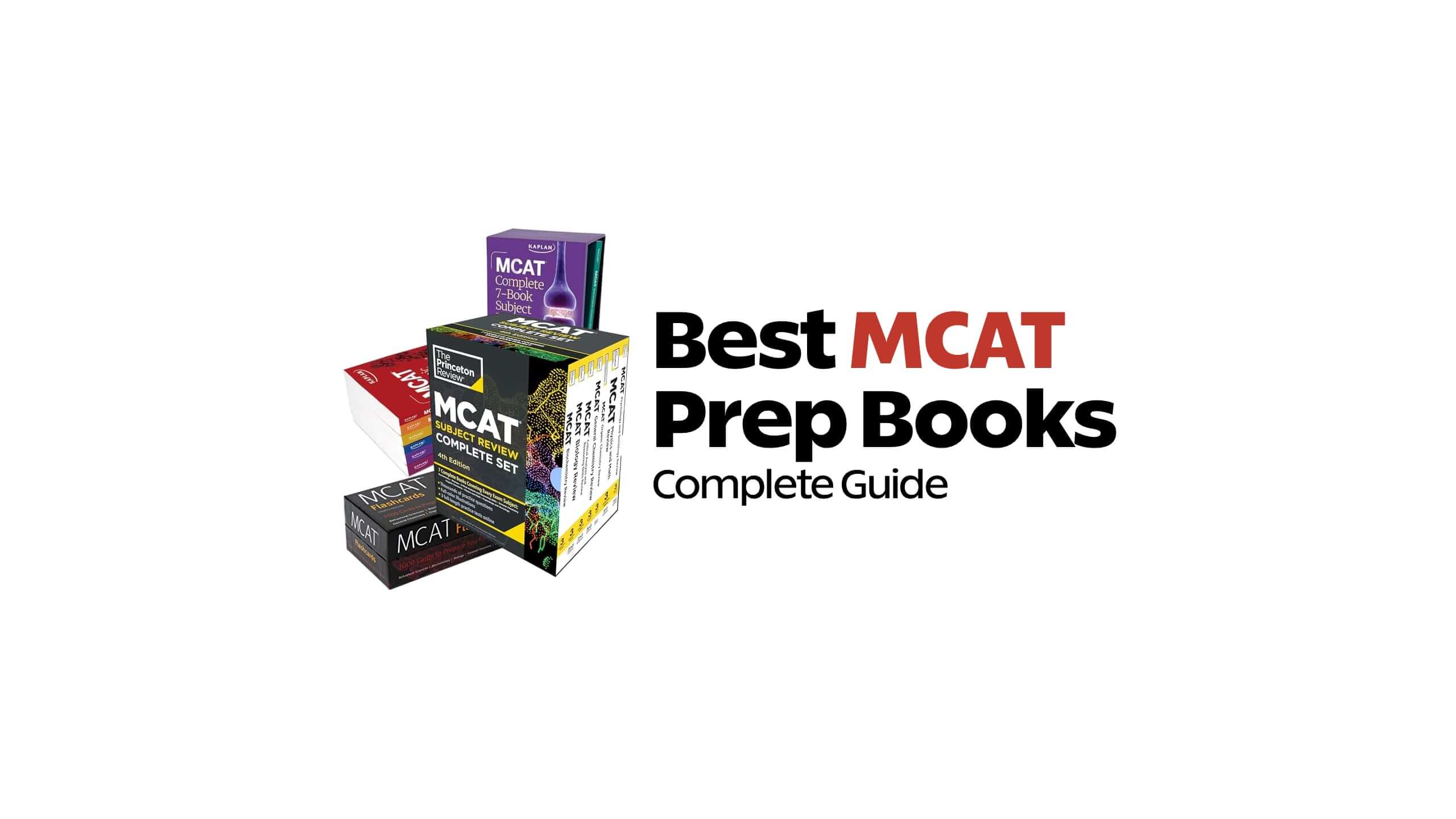
I’ve sorted these by use case, not just quality. The first two are complete book sets. The rest are supplements, practice resources, and strategy guides. Most students need one complete set plus 2-3 supplements.
If you want to supplement books with online practice, Magoosh offers video lessons and practice questions for standardized tests. Their adaptive practice technology focuses on your weak areas so you spend study time efficiently.
1. Kaplan MCAT Complete 7-Book Subject Review (Top Pick)
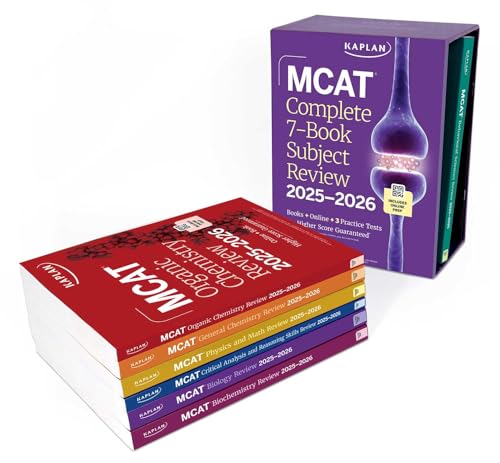
Kaplan MCAT Complete 7-Book Subject Review 2025-2026
- 7 subject-specific review books covering all MCAT sections
- Includes 3 full-length online practice tests
- Online resources and video tutorials included
- Updated for the latest MCAT exam format
Kaplan’s 7-book set is the default recommendation for a reason. It covers all four MCAT sections across seven dedicated books: General Chemistry, Organic Chemistry, Biology, Biochemistry, Physics and Math, Psychology and Sociology, and Critical Analysis and Reasoning Skills.
What makes Kaplan stand out is the balance between depth and readability. The content is detailed enough for students who need to rebuild their science foundation, but organized clearly enough that strong students can skim familiar topics and focus on gaps. Each chapter ends with practice questions that mirror actual MCAT question style, not textbook problems.
The 2025-2026 edition comes with three full-length online practice tests and access to Kaplan’s online learning resources. At $166.99 (42% off the retail price of $289.99), it’s a solid investment. This is the set I’d recommend if you can only buy one thing.
2. Princeton Review MCAT Subject Review Complete Box Set (Best Value)
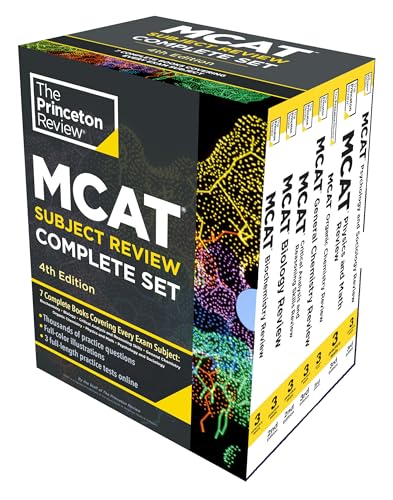
Princeton Review MCAT Subject Review Complete Box Set, 4th Edition
- 7 books covering every MCAT subject area
- 3 full-length online practice tests included
- Score conversion tables and study schedules
- 52% off retail price
Princeton Review’s box set is the strongest competitor to Kaplan, and at $119.71 (52% off), it’s significantly cheaper. You get seven subject review books plus three online practice tests, just like Kaplan.
The key difference is style. Princeton Review’s writing is more conversational and accessible. If you struggled with dense science textbooks in college, you’ll probably find Princeton Review easier to work through. The tradeoff: Kaplan goes deeper on some high-yield topics, particularly in biochemistry and organic chemistry.
Princeton Review also includes better study schedule templates. If you’re self-studying without a course, that structure matters. For students on a budget who need a complete set, this is the one to get. The $47 savings over Kaplan is real money you can spend on AAMC practice materials instead.
3. MCAT Official Guide, Fifth Edition (Must-Have)
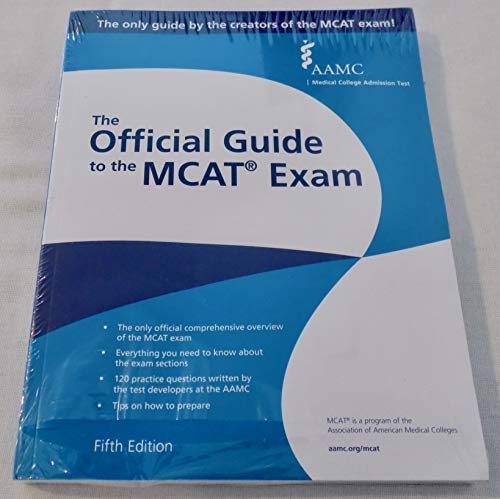
MCAT Official Guide to the MCAT Exam, Fifth Edition
- Published by AAMC, the makers of the MCAT
- 120 practice questions with detailed explanations
- Official scoring guidance and test format overview
This isn’t a study guide. It’s the official roadmap from the people who write the test.
The MCAT Official Guide is published by AAMC (Association of American Medical Colleges), the same organization that creates and administers the MCAT. It includes 120 practice questions that are as close to real MCAT questions as you’ll find in any book. Third-party publishers do their best to mimic MCAT style, but nothing matches the source.
At $30, this is a no-brainer. Buy it alongside whichever complete set you choose. Use it to understand what AAMC expects at each score level, calibrate your practice test performance, and identify which question types give you trouble. The detailed explanations for each answer show you exactly how AAMC thinks about correct vs. incorrect reasoning.
4. Mometrix MCAT Prep Books (Budget Pick)
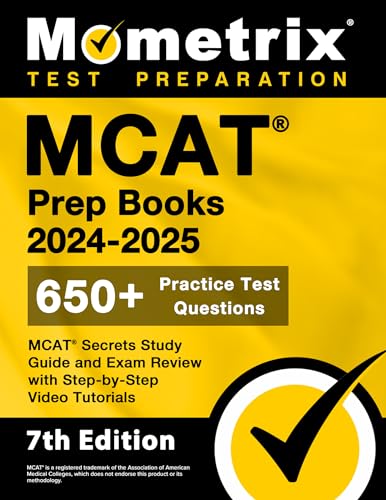
Mometrix MCAT Prep Books 2024-2025: 650+ Practice Questions
- 650+ practice questions with detailed answer explanations
- Step-by-step video tutorials included
- Covers all four MCAT sections
If $120-$170 for a complete book set feels steep, Mometrix offers a single-volume alternative at $54.99. You get 650+ practice questions, content review for all four sections, and access to step-by-step video tutorials.
The obvious tradeoff: one book can’t cover the same depth as a seven-book set. Mometrix works best for students who already have a strong science background and need a structured review rather than learning from scratch. If you scored well in your prerequisite courses and just need to organize your knowledge for MCAT format, this is plenty.
The included video tutorials are a nice bonus. They cover the most frequently tested concepts and tricky question types. For students who learn better from video than text, this adds real value that the big box sets don’t include.
5. Princeton Review MCAT Workout (Best for Practice Questions)
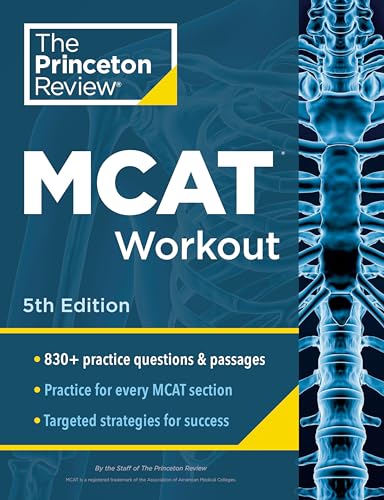
Princeton Review MCAT Workout, 5th Edition: 830+ Practice Questions
- 830+ practice questions and passages
- Organized by MCAT section and topic
- Detailed answer explanations for every question
Content review is only half the battle. You need to practice applying that knowledge under MCAT conditions, and that means more questions than any single book set provides.
The MCAT Workout gives you 830+ additional practice questions organized by section and topic. It’s not a content review book. It assumes you’ve already studied the material and need to drill it. Every question comes with a detailed explanation that walks through the reasoning, not just “the answer is B.”
At $31.20 (36% off), this is an affordable supplement to any complete set. I’d recommend finishing your content review first, then using this book for the last 4-6 weeks before your test. It’s the closest thing to a question bank in book form. If you’re also using digital tools to study, pair this with my recommendations in the AI study toolkit for students.
6. Kaplan MCAT Flashcards (Best Flashcards)
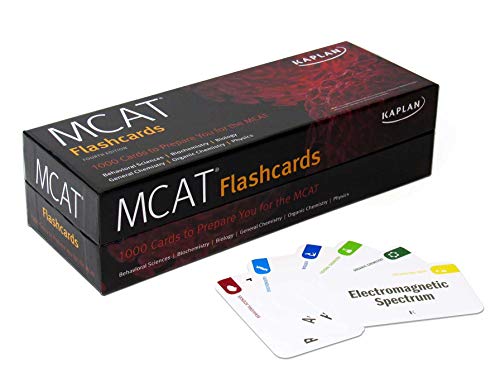
Kaplan MCAT Flashcards: 1,000 Cards to Prepare You for the MCAT
- 1,000 flashcards covering all MCAT subjects
- Portable format for on-the-go review
- Color-coded by subject for quick reference
Flashcards are underrated for MCAT prep. You can’t use them to learn complex passage analysis, but for drilling amino acids, organic chemistry reactions, physics formulas, and psych/soc terminology, nothing beats spaced repetition.
Kaplan’s set gives you 1,000 cards across all MCAT subjects, color-coded so you can isolate your weak areas. The physical format is useful for studying away from screens, which matters when you’re spending 6+ hours a day in front of a laptop during content review.
A common mistake: students buy flashcards and try to use them from day one. Don’t do that. Flashcards work best after you’ve done initial content review. Use them in the middle phase of your study plan, between finishing books and starting full-length practice tests. 20-30 minutes of flashcard review per day, focusing on your weakest subjects, makes a real difference.
If you prefer digital flashcards, check out AI-powered flashcard tools that can adapt to your learning pace.
7. 7 Full-Length MCAT Practice Tests (Most Practice Tests)
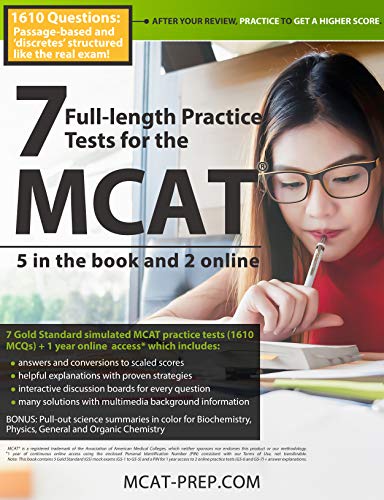
7 Full-Length MCAT Practice Tests: 1,610 Practice Questions
- 5 tests in the book, 2 available online
- 1,610 practice questions based on AAMC format
- Budget-friendly at under $10
At $8.14, this is the best deal on this list. You get seven full-length practice tests (five in the book, two online) with 1,610 questions modeled after the AAMC format.
The question quality isn’t Kaplan or Princeton Review level. Some passages are simpler and the answer choices are more straightforward than what you’ll see on test day. But that’s fine. These tests serve a different purpose: building stamina and timing.
The MCAT is a marathon. Sitting for 7+ hours and maintaining focus through 230 questions is a skill that needs practice. These seven tests give you that practice at a price that’s hard to argue with. Use the Kaplan and Princeton Review tests for score prediction. Use these for endurance training and topic-level diagnosis.
8. The Premed Playbook Guide to the MCAT (Best Strategy Guide)
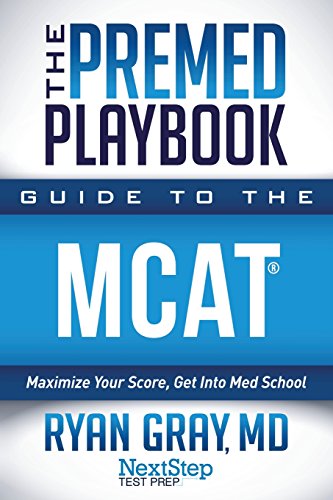
The Premed Playbook Guide to the MCAT
- Strategy-focused MCAT preparation guide
- Written by Dr. Ryan Gray, premed advisor
- Tips for maximizing your MCAT score
Most MCAT books teach you content. This one teaches you how to study.
Written by Dr. Ryan Gray, who runs one of the most popular pre-med podcasts, this book covers the meta-skills of MCAT preparation: how to build a study schedule, when to take practice tests, how to analyze your mistakes, and how to manage test anxiety. It’s the “how” book in a market full of “what” books.
At $9.99, it’s practically free compared to the investment you’re making in med school applications. Read this before you start your content review. It’ll save you from the most common mistakes: studying too many subjects at once, taking practice tests too early, and ignoring the CARS section until it’s too late.
Dr. Gray’s advice is practical and experience-backed. He’s helped thousands of premed students through his podcast and courses. This book distills that into a focused guide.
9. The Premed Playbook Guide to the Medical School Interview
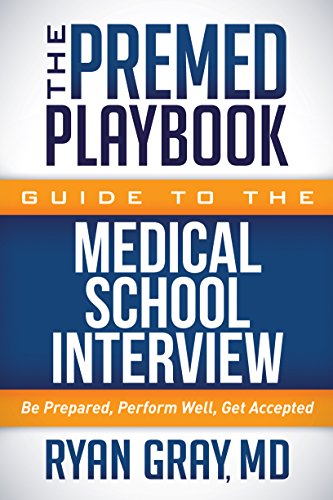
The Premed Playbook Guide to the Medical School Interview
- Complete medical school interview preparation
- Multiple Mini Interview (MMI) strategies
- Traditional and behavioral interview frameworks
I’m including this because MCAT prep doesn’t exist in a vacuum. You’re studying for the MCAT to get into medical school, and interviews are the next hurdle after your score.
Dr. Ryan Gray’s interview guide covers both traditional interviews and Multiple Mini Interviews (MMIs), which more schools are adopting each year. The book gives you frameworks for answering common questions, handling ethical scenarios, and presenting your application story in a way that connects with interviewers.
At $11.59 (42% off), pick this up while you’re ordering your MCAT books. You won’t need it for months, but when interview invitations start coming in, you’ll be glad you have it. Preparation compounds. The students who prepare for interviews while studying for the MCAT tend to perform better at both.
How to Choose the Right MCAT Prep Books
Picking MCAT prep books isn’t just about quality. It’s about matching materials to your situation. Here’s what matters:
- Your starting point. If you aced your prerequisite courses and remember the material well, you don’t need the deepest content review. Mometrix or a single Kaplan/Princeton Review set is enough. If your prereqs were years ago or you struggled, get a full 7-book set and give yourself extra time.
- Your timeline. Students with 6+ months can afford to go through a complete book set cover to cover. Students with 3-4 months need to be more strategic: skim what you know, drill what you don’t, and spend more time on practice tests. The Princeton Review MCAT Workout becomes more important with shorter timelines.
- Your budget. The “ideal” setup costs about $250: one complete book set ($120-$170), the AAMC Official Guide ($30), flashcards ($31), and a practice question book ($31). If that’s too much, start with Princeton Review’s box set at $119.71 and the AAMC guide at $30. That’s $150 total and covers the essentials.
- Your weak areas. Most students are weakest in CARS (Critical Analysis and Reasoning Skills) because it can’t be memorized. If CARS is your weak spot, prioritize practice over content review. The Princeton Review MCAT Workout and full-length practice tests matter more than another content book.
If you’re building a complete study system with digital tools, check out my list of the best study tools for college students. Pairing physical books with digital flashcard apps and practice platforms gives you the best coverage.
My Recommended MCAT Study Combinations
Instead of leaving you to figure out which books to combine, here are three packages based on budget and timeline.
- The Full Package ($230): Kaplan 7-Book Set + AAMC Official Guide + Kaplan Flashcards + Princeton Review MCAT Workout. This covers content review, official practice, memorization, and extra questions. Best for 5-6 month study plans.
- The Smart Budget ($150): Princeton Review Box Set + AAMC Official Guide + The Premed Playbook Guide to the MCAT. You get complete content coverage, official questions, and study strategy. Best for students with strong science backgrounds and 3-4 month timelines.
- The Bare Minimum ($63): Mometrix MCAT Prep + 7 Full-Length Practice Tests. Single-volume content review plus seven practice tests for endurance. Best for retakers who know the content but need more practice, or students on tight budgets.
Whatever combination you choose, always buy the AAMC Official Guide. Nothing from any third-party publisher matches the value of seeing real MCAT questions from the test makers. It’s $30 that’s worth more than any $200 book set.
For students preparing for both MCAT and medical college admissions in India, you might also find my guide on the best books for NEET preparation useful for cross-referencing science topics.
Test Prep Platforms Compared
| Feature | Magoosh | Unacademy | Khan Academy | Chegg Prep | Princeton Review |
|---|---|---|---|---|---|
| Price | $129-$399 (one-time) | Free + $4.50/mo (Plus) | 100% Free | $14.95/mo (bundled) | $499-$2,499 |
| Exams Covered Range | GRE, GMAT, SAT, ACT, TOEFL, IELTS | UPSC, JEE, NEET, CAT, GATE, SSC | SAT, LSAT, MCAT (free prep) | All subjects (flashcards) | SAT, ACT, GRE, GMAT, MCAT, LSAT |
| Video Lessons | Yes (200+ hours) | Yes (live + recorded) | Yes (10,000+) | No | Yes (140+ hours) |
| Practice Questions | 1,300+ per exam | 50,000+ | Yes (unlimited) | Flashcards only | 3,000+ |
| Score Improvement Guarantee Trust | Yes (+5 GRE, +50 GMAT) | No | N/A (free) | No | Yes (higher score or money back) |
| Live Classes | No (self-paced) | Yes (core feature) | No | No | Yes (tutoring add-on) |
| Mobile App | Yes | Yes | Yes | Yes | Yes |
| India Focus | GRE/GMAT/IELTS prep | Yes (UPSC, JEE, NEET specialist) | Some CBSE/NCERT | No | No |
| Best For | Affordable GRE/GMAT prep | Indian competitive exams | Free SAT + basics | Quick flashcard review | Premium US test prep |
| Visit Magoosh | Visit Unacademy | Visit Khan Academy | Visit Chegg | Visit Princeton Review |
Frequently Asked Questions
Your MCAT score is one number, but it represents months of work and thousands of dollars in opportunity cost. Picking the right prep books saves you from the most expensive mistake in premed: studying hard with the wrong materials.
Start with one complete book set (Kaplan or Princeton Review), add the AAMC Official Guide, and supplement based on your weak areas. Don’t buy everything at once. See where you stand after 4-6 weeks of content review, then add practice materials where you need them most.
The students who score highest aren’t the ones who buy the most books. They’re the ones who use fewer resources more deeply. Pick your combination, commit to a schedule, and work through the material consistently. That’s how you get a score that opens doors.
Disclaimer: This site is reader-supported. If you buy through some links, I may earn a small commission at no extra cost to you. I only recommend tools I trust and would use myself. Your support helps keep gauravtiwari.org free and focused on real-world advice. Thanks. - Gaurav Tiwari