by
by
You need a GIF. Maybe it’s a quick screen recording for a bug report. Maybe it’s a product demo for your landing page. Maybe you just want to show a colleague exactly what’s happening without scheduling another call. Whatever the reason, you need a tool that creates GIFs fast, keeps the file size reasonable, and doesn’t plaster a watermark across your work.
I’ve used GIF makers for years while building tutorials, documentation, and product demos. Most tools fall into two camps: bloated editors that do too much, or simple converters that produce pixelated output. The 15 tools below actually work. They cover desktop apps for Windows and Mac, browser-based editors, command-line tools for developers, and everything in between.
Eight of these are free and open-source (FOSS) projects on GitHub. The rest are free-to-use online tools. You don’t need to spend a dollar to make good GIFs.
Summary: 8 Best Free GIF Makers
- ScreenToGif — Best for Windows. Free, open-source, screen recorder + editor.
- Ezgif.com — Best browser-based GIF maker. No install, full editor.
- Gifski — Best quality output. macOS app, command-line on other platforms.
- ShareX — Free Windows screenshot + GIF combo tool.
- CleanShot X — Best paid macOS GIF maker. $29 one-time.
- GIMP — Free Photoshop alternative. Slower workflow but full control.
- Cap — Open-source Loom alternative with GIF export.
- Gifcap — Browser-based screen-to-GIF. Privacy-focused, works locally.
Best Free GIF Makers at a Glance
ScreenToGif is the best GIF maker for Windows. Gifski produces the highest quality GIFs on Mac. Ezgif handles everything in the browser without installing anything.
- ScreenToGif: Best overall GIF maker for Windows with a built-in frame-by-frame editor (FOSS, 26K+ GitHub stars)
- Ezgif.com: Best free online GIF editor with no watermarks, no account, and no file limits beyond 100MB
- Gifski: Best high-quality video-to-GIF converter for Mac using pngquant-based encoding (FOSS, MIT)
- ShareX: Best free screen-to-GIF recorder for Windows power users with auto-upload (FOSS, 36K+ stars)
- CleanShot X: Best Mac GIF recorder with annotation, scrolling capture, and instant cloud sharing ($29)
- GIMP: Best free image editor with full GIF animation support via layer-based frames (FOSS, cross-platform)
- Cap: Best open-source screen recorder with GIF export and instant shareable links (FOSS, 18K+ stars)
- Gifcap: Best browser-based screen-to-GIF tool with no install, no upload, fully local processing (FOSS)
- Canva: Best online tool for creating animated design GIFs for social media and presentations
- LICEcap: Best lightweight GIF screen capture for Windows and Mac under 1MB download (FOSS)
- FFmpeg + Gifsicle: Best command-line GIF pipeline for developers and batch processing (FOSS, 58K+ stars)
- Kapwing: Best online video-to-GIF editor with timeline, text overlays, and collaboration
- Imgflip: Best for meme GIFs with the largest template library on the web
- Photopea: Best free Photoshop alternative in the browser with animated GIF layer editing
- VHS: Best tool for creating terminal demo GIFs for GitHub READMEs and documentation (FOSS, 19K+ stars)
GIF Maker Comparison Table
Here’s how these GIF creators compare on the features that matter: whether they record your screen, convert video to GIF, edit frames, and what platform they run on.
| Tool | Platform | Screen Recording | Video to GIF | Frame Editor | Price | Open Source |
|---|---|---|---|---|---|---|
| ScreenToGif | Windows | Yes | Yes | Yes (full) | Free | Yes |
| Ezgif.com | Web | No | Yes | Yes | Free | No |
| Gifski | Mac | No | Yes | Trim only | Free | Yes |
| ShareX | Windows | Yes (GIF mode) | No | No | Free | Yes |
| CleanShot X | Mac | Yes | Yes | Trim | $29 | No |
| GIMP | Cross-platform | No | No | Yes (layers) | Free | Yes |
| Cap | Mac, Windows | Yes | No | No | Free | Yes |
| Gifcap | Web | Yes | No | Trim | Free | Yes |
| Canva | Web | No | No | Timeline | Free / $13/mo | No |
| LICEcap | Windows, Mac | Yes | No | No | Free | Yes |
| FFmpeg + Gifsicle | CLI (any OS) | No | Yes | Yes (CLI) | Free | Yes |
| Kapwing | Web | No | Yes | Yes (timeline) | Free / $16/mo | No |
| Imgflip | Web | No | Yes | Text/crop | Free / $10/mo | No |
| Photopea | Web | No | No | Yes (layers) | Free | No |
| VHS | CLI (any OS) | Terminal only | No | Script-based | Free | Yes |
1. ScreenToGif
Best for: Recording your screen and editing the result frame-by-frame before exporting as a GIF.
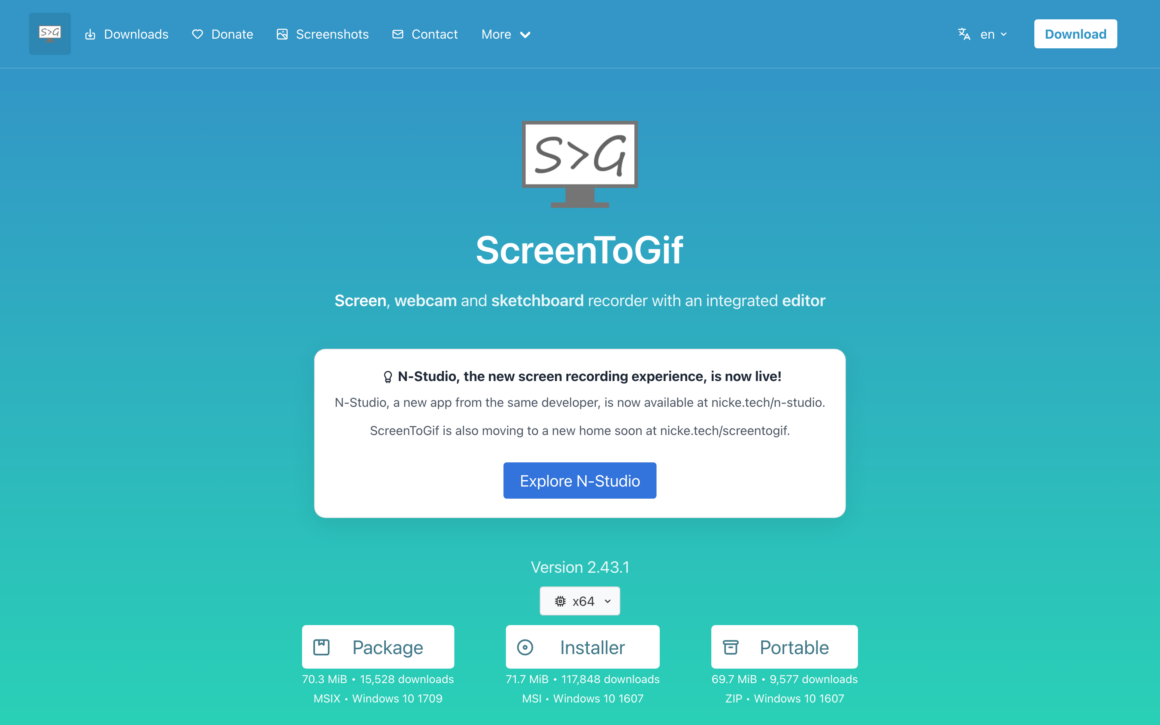
ScreenToGif does one thing better than any other free tool: it records a screen area and gives you a full frame editor before export. Select a region, hit record, stop, and you’re in the editor. Remove frames where your cursor wandered, adjust timing between frames, add text or captions to specific moments, crop, resize, apply transitions. Then export as GIF, APNG, WebP, or video.
I use ScreenToGif for every GitHub README demo and documentation GIF. The frame editor is the killer feature. You can delete individual frames, set custom delays (useful for pausing on important steps), and preview the animation before committing. No other free GIF maker gives you this level of control.
ScreenToGif also captures from your webcam and includes a sketchboard mode for drawing animations. It integrates with Imgur for quick uploads. Windows only, open-source under the Microsoft Public License, and 26,700+ GitHub stars with a release in March 2026.
2. Ezgif.com
Best for: Quick GIF editing, resizing, optimization, and video-to-GIF conversion without installing anything.
Ezgif is the Swiss Army knife of online GIF tools. Upload a video or images, and it creates a GIF. Upload an existing GIF, and you can crop, resize, rotate, reverse, adjust speed, add text, split frames, optimize file size, or convert to MP4/WebM/APNG. No account needed, no watermarks, no premium upsells for basic features.
The file size limit is 100MB, which handles most use cases. The GIF optimizer alone is worth bookmarking. It uses lossy compression that can cut GIF file size by 30-50% without visible quality loss. I run every GIF through Ezgif’s optimizer before uploading to WordPress.
Ezgif also handles format conversion: GIF to MP4, video to GIF, images to GIF, GIF to APNG, and dozens more. It’s ad-supported but completely free. If you only bookmark one GIF tool, make it this one.
3. Gifski
Best for: Converting video files to the highest quality GIFs possible on Mac.
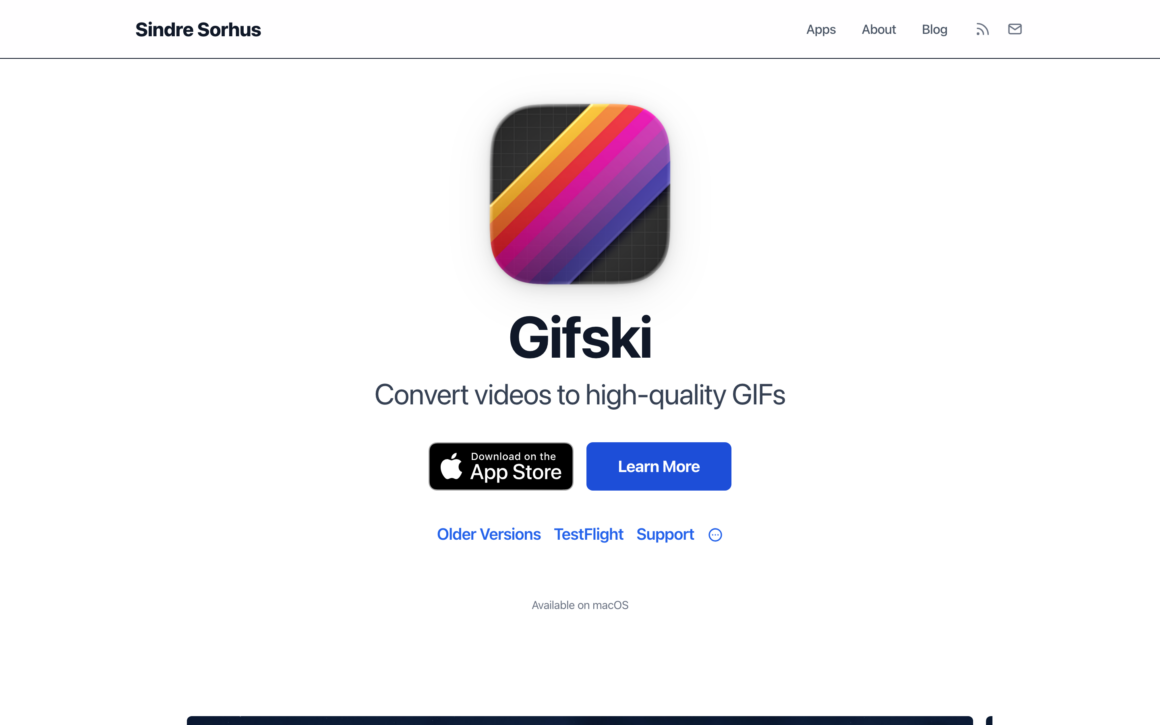
Most GIF converters produce mediocre output. Gifski doesn’t. It uses a pngquant-based encoding engine (also open-source, 5,400+ GitHub stars) that generates GIFs with noticeably better color reproduction and smoother gradients than standard tools. The difference is visible side by side.
The workflow is drag-and-drop simple. Drop a video file onto the app, set the quality slider, adjust FPS, trim the clip if needed, and export. That’s it. No timeline editor, no text overlays, no complexity. Gifski does one job and does it better than anything else on Mac.
Gifski is open-source (MIT license) with 8,300+ GitHub stars. The Mac app is free on the App Store. If you’re making product demo GIFs or animated explainers on a Mac and quality matters, this is the converter to use.
4. ShareX
Best for: Windows power users who want one-hotkey screen-to-GIF recording with auto-upload.
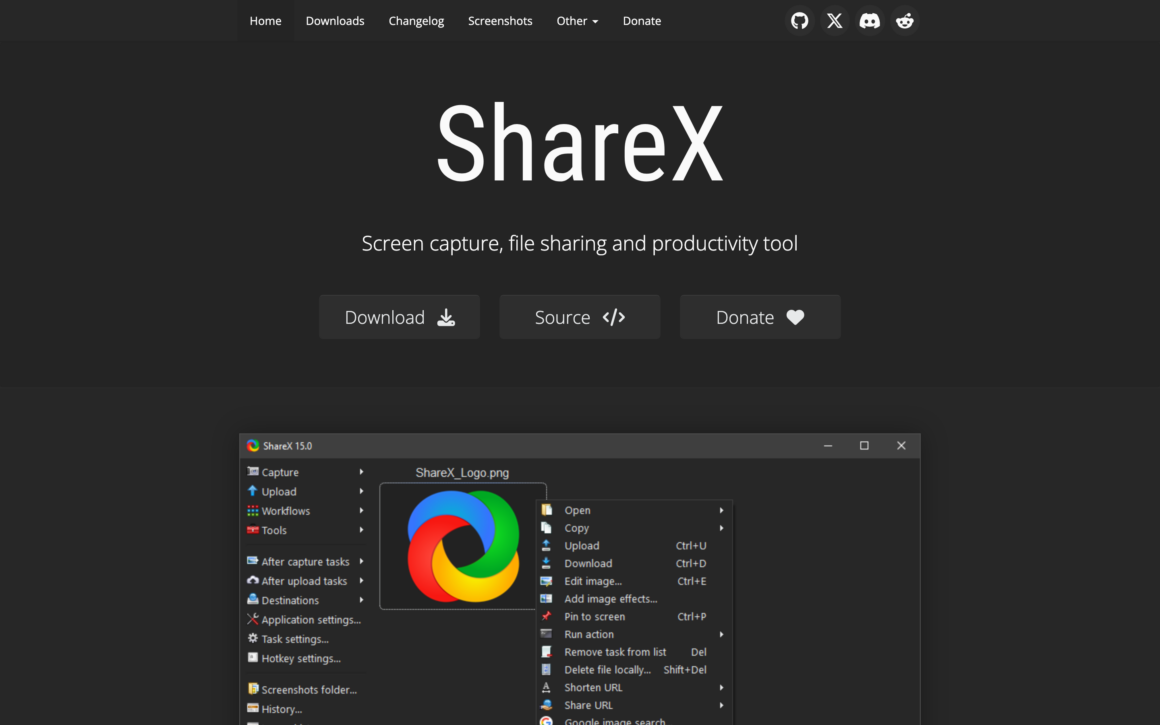
ShareX has a dedicated GIF recording mode. Set a hotkey, select a screen region, record, and it exports directly to GIF. You can auto-upload to Imgur, Dropbox, or your own server in the same step. One keypress from “I need a GIF of this” to “here’s the link.”
The GIF recording handles cursor inclusion toggle, custom FPS, and timed captures. ShareX won’t edit your frames after recording (use ScreenToGif for that), but for raw screen-to-GIF capture speed, nothing on Windows matches it. Free, open-source (GPL-3.0), 36,000+ GitHub stars, and actively maintained since 2007.
ShareX also does screenshots and screen recordings beyond GIF, making it the most versatile free capture tool on Windows.
5. CleanShot X
Best for: Mac users who want screen-to-GIF recording with annotation and cloud sharing built in.
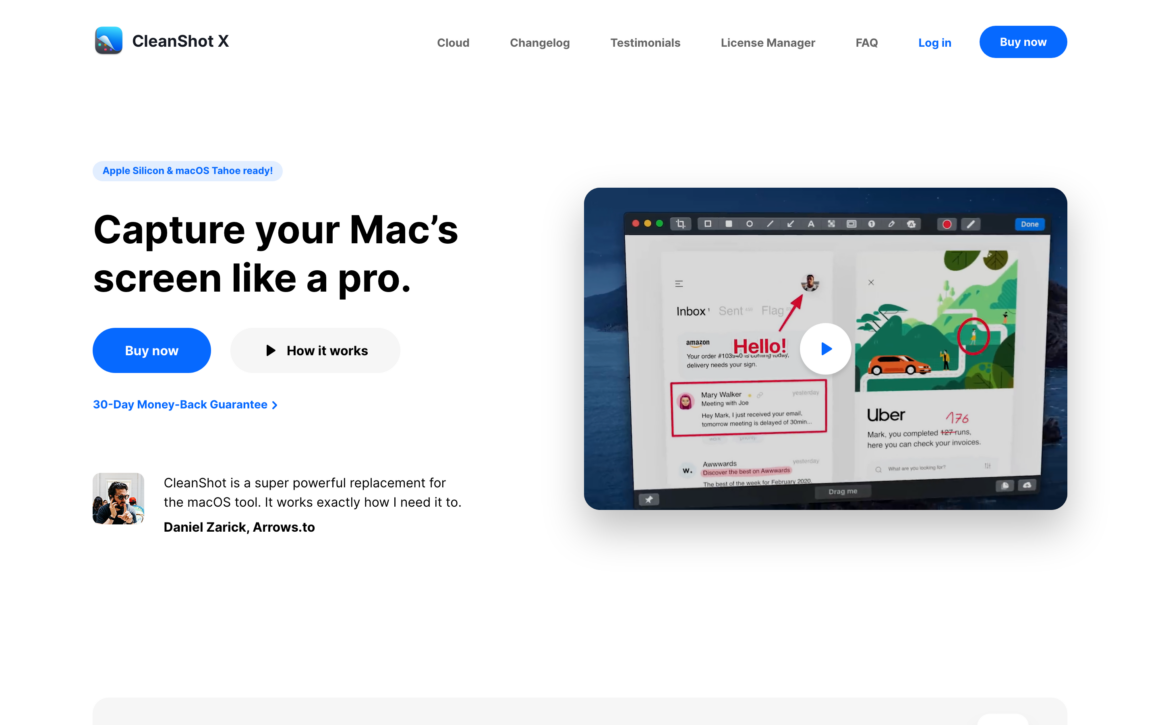
CleanShot X records your screen and converts the result to an optimized GIF with controllable quality and FPS settings. The GIF output is clean because CleanShot auto-hides desktop icons and notifications before recording. No retakes because a Slack notification appeared mid-capture.
After recording, you can trim the GIF, annotate it with arrows and text, and upload to CleanShot Cloud for an instant shareable link. The whole flow takes about 10 seconds from “start recording” to “link copied.” For $29 one-time, it’s the smoothest GIF creation workflow on Mac. If you use Setapp ($9.99/month for 240+ Mac apps), CleanShot X is included.
6. GIMP
Best for: Creating custom animated GIFs from scratch using layers as frames. Runs on Windows, Mac, and Linux.
GIMP is a full image editor, not just a GIF maker. But its GIF animation workflow is solid. Each layer in your GIMP file becomes a frame. Name layers with delay values like “Frame 1 (200ms)” to control timing. Use the Filters > Animation > Playback dialog to preview. Export as GIF with loop settings.
The learning curve is steeper than a simple “drag and drop” converter. But GIMP gives you full control over every pixel in every frame. You can draw, paint, add text, apply effects, and composite images into your animation. GIMP 3.0 launched in 2025 with a modernized interface.
GIMP is free and open-source (GPL-3.0) with 6,000+ GitHub stars. If you need a GIF animation maker that handles complex compositions (not just screen recordings or video conversions), GIMP is the free option.
Before exporting a GIF from GIMP, run Filters > Animation > Optimize (for GIF). This removes redundant pixels between frames and can shrink your file size by 40-60%.
7. Cap
Best for: Quick screen recordings exported as looping GIFs with instant shareable links.
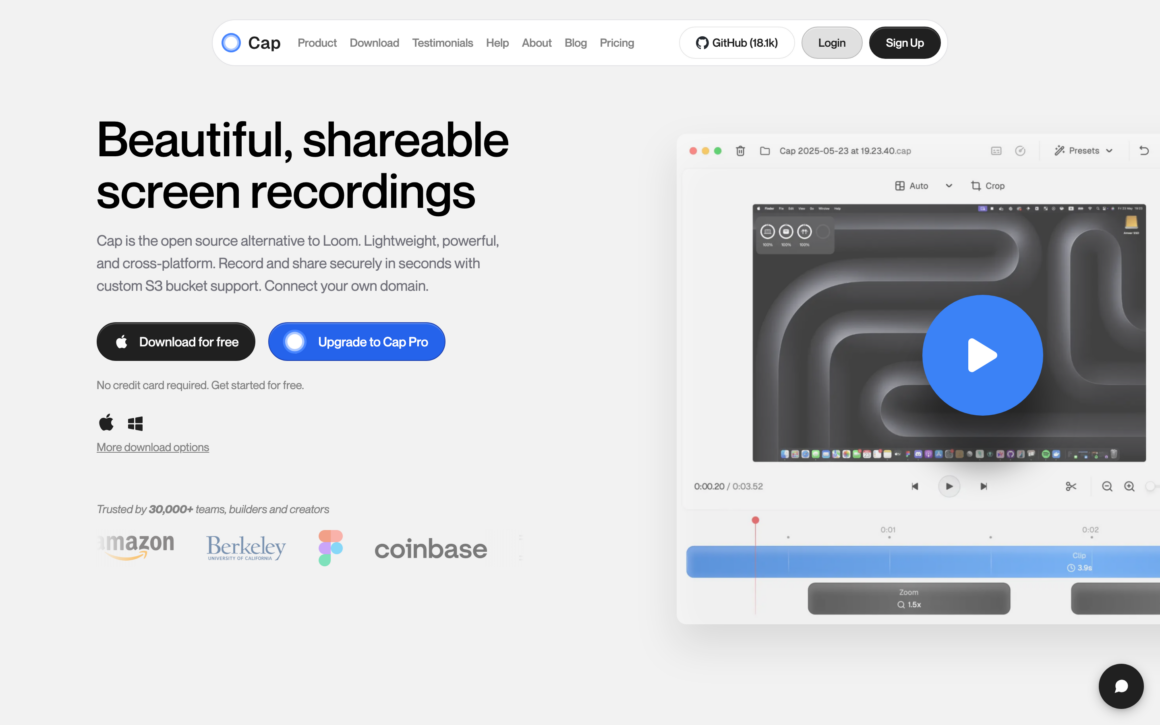
Cap is an open-source Loom alternative that exports recordings as GIF or MP4. Record your screen (with optional webcam overlay), and Cap generates a shareable link instantly. The GIF export creates looping animations, useful for product demos and feature showcases on landing pages.
Cap runs natively on Mac and Windows (built with Tauri, not Electron). It records at up to 4K 60fps and supports custom backgrounds and cursor effects in studio mode. Free for local recording. 18,000+ GitHub stars and near-daily releases. If you want a free screen-to-GIF workflow that also gives you shareable video links, Cap handles both.
8. Gifcap
Best for: Recording your screen to GIF directly in the browser with no install and no data leaving your machine.
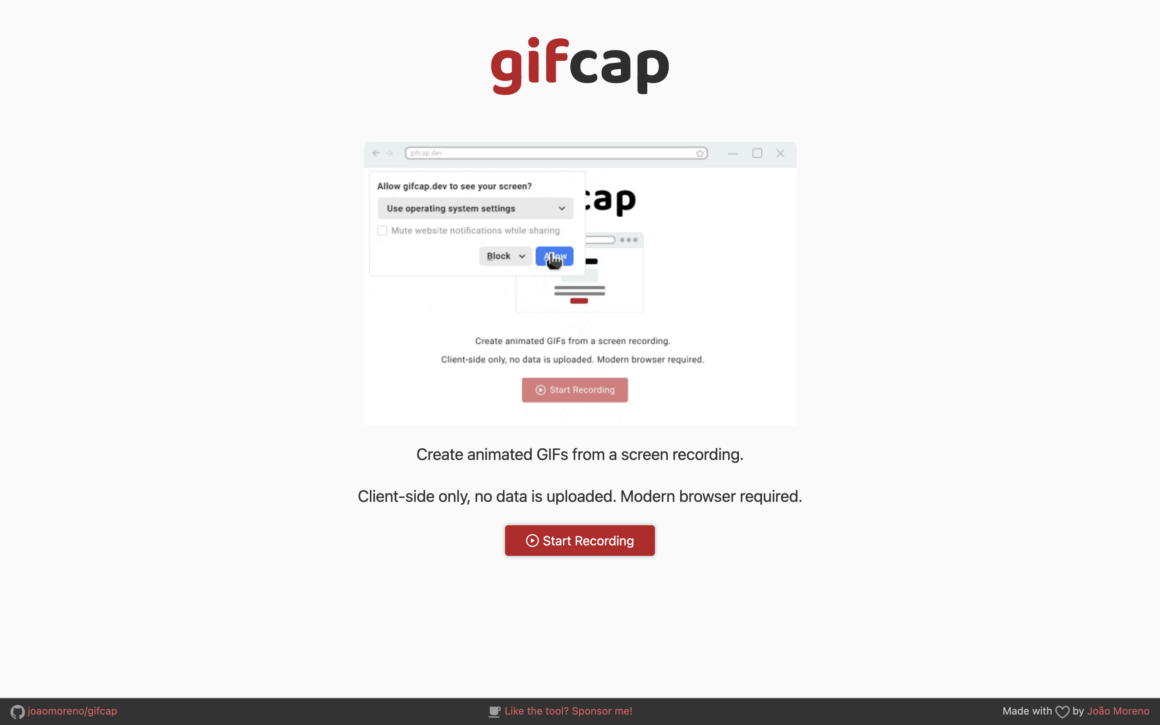
Gifcap.dev is a web app that records your screen and converts it to GIF entirely in your browser. No server upload, no account, no install. Everything runs locally using the MediaRecorder API and WebAssembly FFmpeg. Select a window or screen region, record, trim if needed, and download the GIF.
This is the tool I point people to when they say “I just need a quick GIF and don’t want to install anything.” Open the site, click record, done. It’s open-source (GPL-3.0) with 1,600+ GitHub stars. The privacy angle is real: your recording never leaves your browser. For quick, throwaway GIFs, Gifcap is hard to beat.
9. Canva
Best for: Creating animated design GIFs for social media, presentations, and email newsletters.
Canva isn’t a screen recorder. It’s a design tool with GIF export. You create animated graphics using templates, text animations, transitions, and GIPHY stickers. Then export as GIF. The result is polished animated content for Instagram stories, LinkedIn posts, or email headers.
The free tier handles most GIF creation needs. Canva Pro ($12.99/month) adds brand kit, background remover, and more templates. For design-heavy animated GIFs (not screen recordings or video conversions), Canva is the fastest path from idea to finished asset.
10. LICEcap
Best for: The lightest possible screen-to-GIF recorder on Windows and Mac. Under 1MB download.
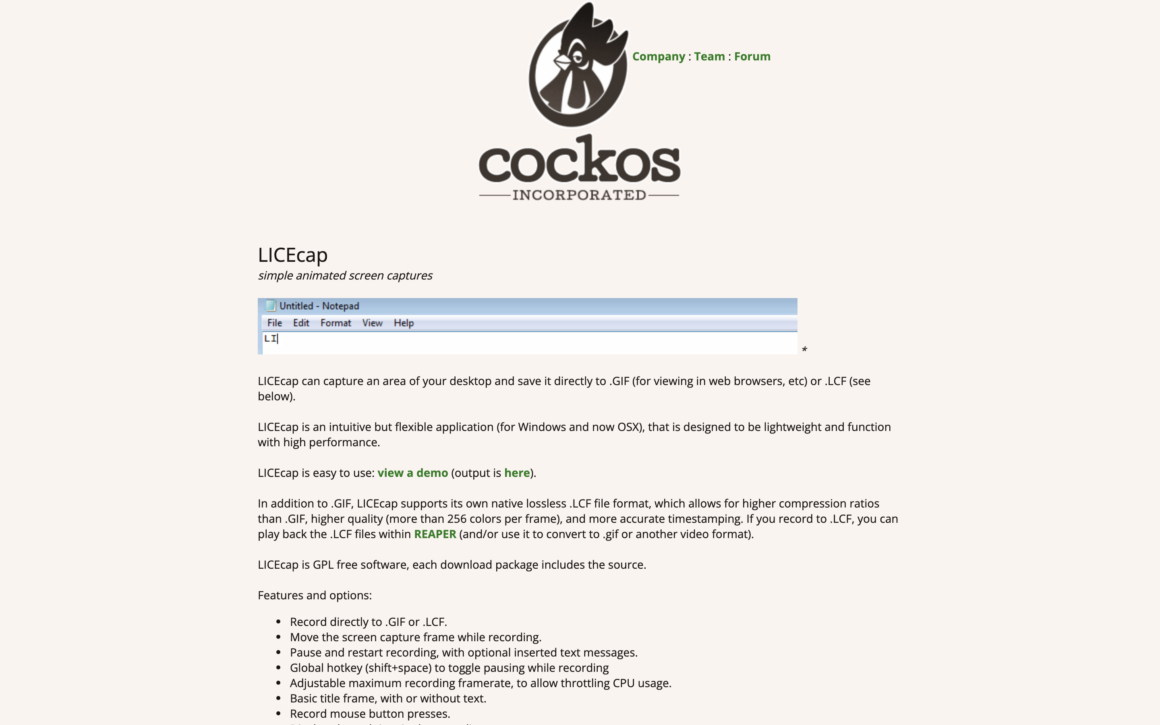
LICEcap is absurdly small. The entire app is under 1MB. It shows a transparent overlay on your screen, you drag it to the size you want, hit record, and it saves directly to GIF. No editor, no upload, no frills. Just raw screen-to-GIF capture.
You can set max FPS, add a title frame, and pause/resume during recording. LICEcap uses its own LCF format for lossless captures and standard GIF for output. It’s made by Justin Frankel, the creator of Winamp and REAPER. Open-source (GPL-2.0) with 5,500+ GitHub stars. The tool hasn’t been updated since 2023, but it still works on modern Windows and macOS. Sometimes the simplest tool is the right tool.
GIF file sizes grow fast. A 10-second screen recording at 15fps can easily hit 5-10MB. To keep GIFs under 2MB for web use, reduce the resolution (480px width is usually enough), drop the FPS to 10-12, and run the output through an optimizer like Ezgif or Gifsicle.
11. FFmpeg + Gifsicle
Best for: Developers who want the highest quality video-to-GIF conversion via command line, and anyone doing batch GIF processing.
FFmpeg is the backbone of most video processing tools. It converts anything to anything. For GIF creation, the palette generation technique produces output that’s noticeably better than naive conversion. The command generates a custom 256-color palette from your video, then uses it for the GIF encoding. The result has better color accuracy and less dithering.
Gifsicle handles the optimization step. It compresses GIFs with lossy and lossless modes, removes metadata, reduces colors, and can merge or split GIF animations. The two tools together form the standard developer pipeline: FFmpeg creates the GIF, Gifsicle optimizes it.
Both are free and open-source. FFmpeg has 58,900+ GitHub stars. Gifsicle has 4,200+ stars. They run on Windows, Mac, and Linux. If you’re comfortable with the terminal, this pipeline produces the best quality-to-size ratio of any GIF creation method.
12. Kapwing
Best for: Converting videos to GIFs online with a full timeline editor, text overlays, and team collaboration.
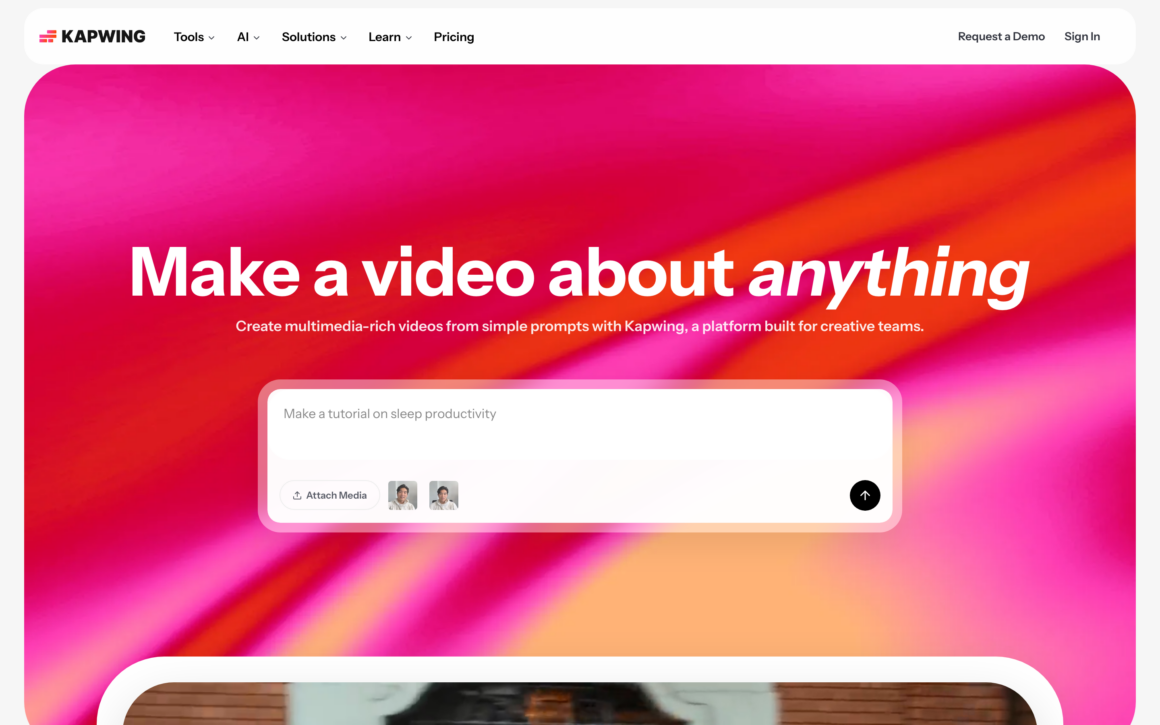
Kapwing is a full online video editor that also exports GIFs. Upload a video, trim it in the timeline, add text or subtitles, adjust speed, crop to any aspect ratio, and export as GIF. The editor feels like a simplified Premiere Pro in the browser.
The free tier exports at 720p with a watermark and a 4-minute limit. Kapwing Pro ($16/month) removes the watermark, increases resolution, and adds AI-powered features like auto-captions. For teams creating GIF content for social media or marketing, the collaboration features (shared projects, comments, brand assets) make it worth considering.
13. Imgflip
Best for: Creating meme GIFs and reaction GIFs from video URLs or uploads.
Imgflip has the largest meme template library on the web. Paste a YouTube URL or upload a video, select the segment you want, add text, and export as GIF. The process takes about 30 seconds. You can also create GIFs from image sequences.
The free tier adds a small watermark. Imgflip Pro ($9.95/month) removes it and adds higher quality output with no ads. If you’re making GIFs for Slack reactions, Reddit posts, or social media, Imgflip’s template library and video-to-GIF workflow is the fastest path.
14. Photopea
Best for: Editing animated GIFs with Photoshop-level tools in the browser for free.
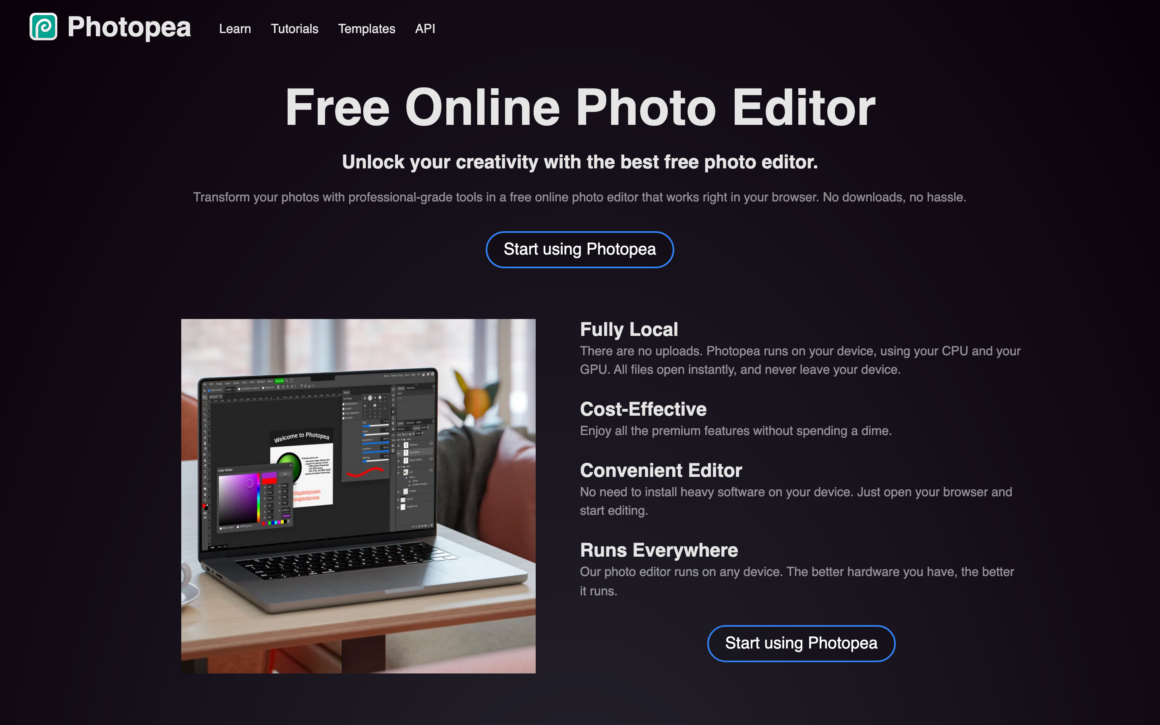
Photopea is basically Photoshop in a browser tab. It opens PSD, XCF, and Sketch files. For GIF animation, you work with layers as frames (similar to GIMP), set frame delays, add effects, and export as animated GIF. The interface is familiar if you’ve ever used Photoshop.
Photopea is free and runs entirely in the browser (ad-supported). No install, no account required. It’s not open-source (the GitHub repo is for issues only), but it’s free without watermarks. For detailed GIF editing when you don’t have access to Photoshop or GIMP, Photopea fills the gap.
15. VHS
Best for: Creating polished terminal demo GIFs for GitHub READMEs and developer documentation.
VHS is a terminal recording tool by Charmbracelet. Instead of recording your screen, you write a “tape file” that scripts what gets typed and executed. VHS runs the script and produces a GIF of the terminal session. The result looks clean, consistent, and reproducible.
You control typing speed, wait times, themes, padding, font size, and window dimensions. Every run produces the same output, which is impossible with manual screen recording. If you maintain open-source projects and need demo GIFs for your README, VHS is the tool. Free, open-source (MIT), 19,300+ GitHub stars, and very actively maintained.
How to Make a GIF: Three Methods
There are three ways to create a GIF, and the method you pick depends on what you’re starting with.
Method 1: Record Your Screen as a GIF
Use ScreenToGif (Windows), CleanShot X (Mac), ShareX (Windows), LICEcap (Windows/Mac), or Gifcap (browser). These tools record a screen region and save directly as GIF. Best for product demos, bug reports, and tutorials.
Method 2: Convert a Video to GIF
Use Gifski (Mac) for the highest quality, Ezgif.com for a quick online conversion, FFmpeg for CLI control, or Kapwing for an online editor with trimming. Upload or drag in a video file, set quality/FPS, and export. Best when you already have a video clip.
Method 3: Create a GIF from Images
Use GIMP or Photopea to create frame-by-frame animations from individual images or drawings. Each layer becomes a frame. Use Ezgif or Imgflip for simpler image-sequence-to-GIF conversion. Best for custom animations, infographics, and meme creation.
Which GIF Maker Should You Use?
On Windows, get ScreenToGif. It’s free, open-source, and the frame editor makes it the most capable GIF tool on any platform. For quick screen-to-GIF without editing, ShareX’s one-hotkey workflow is faster.
On Mac, Gifski for video-to-GIF conversion (best quality), CleanShot X for screen recording to GIF (smoothest workflow), or Cap for free screen-to-GIF with shareable links.
In the browser, Ezgif handles almost everything: video-to-GIF, editing, optimization, format conversion. Gifcap is the fastest way to record your screen to GIF without installing anything.
For developers, FFmpeg + Gifsicle is the gold standard pipeline. For terminal demos specifically, VHS produces cleaner results than any screen recorder.
Don’t overthink it. If you’re on Windows, install ScreenToGif. If you’re on Mac, install Gifski. Bookmark Ezgif for everything else. That covers 90% of GIF creation needs.
GIF Optimization Tips
GIFs get big fast. A 10-second recording at full resolution can hit 10-20MB. Here’s how to keep them under 2MB for web use:
- Reduce resolution: 480px width is enough for most blog and documentation GIFs. You rarely need full 1080p.
- Drop the FPS: 10-12 FPS looks smooth enough for UI demos. 15 FPS is the max you’d ever need. 30 FPS doubles the file size for barely perceptible improvement.
- Trim aggressively: Cut the start and end. Remove any dead time where nothing happens on screen.
- Use lossy compression: Ezgif’s optimizer or Gifsicle’s
--lossyflag can cut 30-50% from file size without visible quality loss. - Consider alternatives: For anything over 30 seconds, a short MP4 video is better than a GIF. Modern browsers play MP4 inline, and the file will be 80% smaller.
Related searches: Whether you are looking for the best free GIF maker, an animated GIF maker for Mac, a free GIF maker for Mac, a GIF creator for Mac, a free GIF creator, free GIF software, or a high-quality GIF maker software free, the 8 tools above cover Windows (ScreenToGif, ShareX), macOS (Gifski, CleanShot X, Cap), browser-based (Ezgif.com, Gifcap), and full-featured cross-platform (GIMP).
Frequently Asked Questions
What is the best free GIF maker?
ScreenToGif is the best free GIF maker for Windows. It records your screen and includes a full frame-by-frame editor for trimming, adding text, and adjusting timing before export. It’s open-source with 26,700+ GitHub stars. For Mac, Gifski produces the highest quality video-to-GIF output. For online use, Ezgif.com handles GIF creation, editing, and optimization without installing anything.
How do I make a GIF from a video?
Upload your video to Ezgif.com and click ‘Video to GIF.’ Set the start and end time, choose quality and FPS, then convert. For Mac, drag the video into Gifski for the highest quality output. For developers, use FFmpeg with palette generation: ffmpeg -i input.mp4 -vf ‘fps=15,scale=480:-1:flags=lanczos,split[s0][s1];[s0]palettegen[p];[s1][p]paletteuse’ output.gif
How do I make a GIF from a screen recording?
On Windows, use ScreenToGif or ShareX. Both record a screen region directly to GIF. ScreenToGif includes a frame editor for post-recording edits. On Mac, use CleanShot X ($29) or the free Cap app. In the browser without installing anything, use Gifcap.dev. It records your screen to GIF entirely in the browser with no server upload.
How do I reduce GIF file size?
Use Ezgif.com’s GIF Optimizer (lossy compression cuts 30-50% without visible quality loss). Reduce the resolution to 480px width, drop FPS to 10-12, and trim unnecessary frames. For developers, Gifsicle with the –lossy flag is the CLI standard. If the GIF is still too large, consider converting to MP4 instead, which is 80% smaller at the same quality.
What is the best GIF maker for Mac?
For video-to-GIF conversion, Gifski produces the highest quality output using pngquant-based encoding (free, open-source, MIT license). For screen-to-GIF recording, CleanShot X ($29) has the smoothest workflow with annotation and cloud sharing. Cap (free, open-source) records your screen and exports as GIF with shareable links.
Is there a GIF maker that works in the browser?
Yes. Gifcap.dev records your screen to GIF entirely in the browser with no install and no data uploaded to any server. Ezgif.com converts videos and images to GIF online. Kapwing offers a full video-to-GIF editor with timeline and text overlays. Imgflip is best for creating meme GIFs from video URLs. Photopea provides Photoshop-level GIF editing in the browser.
Can I create a GIF from images?
Yes. GIMP and Photopea both create animated GIFs from images by treating each image as a layer/frame. Upload multiple images to Ezgif.com’s ‘GIF Maker’ tool to combine them into an animated GIF with adjustable delays. Imgflip also creates GIFs from image sequences. For design-heavy animated GIFs, Canva lets you combine images with text animations and export as GIF.
What is the best open-source GIF tool?
For screen recording to GIF: ScreenToGif (26K+ GitHub stars, Windows) or ShareX (36K+ stars, Windows). For video-to-GIF: Gifski (8K+ stars, Mac) or FFmpeg (58K+ stars, CLI). For GIF optimization: Gifsicle (4K+ stars, CLI). For browser-based recording: Gifcap (1.6K+ stars). For terminal demos: VHS by Charmbracelet (19K+ stars). All are free and actively maintained on GitHub.
Tell Google you want more of this.
Add Gaurav Tiwari as a preferred sourceOne tap, and this site shows up more often in your own Top Stories, AI Overviews and AI Mode. Remove it any time.
Disclaimer: This site is reader-supported. If you buy through some links, I may earn a small commission at no extra cost to you. I only recommend tools I trust and would use myself. Your support helps keep gauravtiwari.org free and focused on real-world advice. Thanks. - Gaurav Tiwari