
10 Best Fitness Trackers and Smart Devices That Stand the Test of Time
Fitness tracker return rates on Amazon sit around 20% — well above the 8% average for electronics. The reason isn’t that the devices don’t work. It’s that most people buy the wrong one for how they actually live. A runner buys a sleep-focused ring. A casual walker pays $400 for running metrics they’ll never use. Someone who hates charging devices buys an Apple Watch that needs a nightly plug-in.
The 2026 market makes this worse. There are over 200 wearables on Amazon alone, and half copy the same spec sheet with different branding. Budget bands promise “150 workout modes” that nobody uses. $500 smart rings charge monthly subscriptions on top of the purchase price. Even the good ones won’t work if the battery dies every 18 hours or the form factor doesn’t fit daily life.
This list cuts through it. Ten fitness trackers and smart devices — sorted by what they’re actually best at. Every pick includes what it does well, where it falls flat, honest pricing, and who should skip it. No generic specs lists, no hedging. One answer per category.
Best Fitness Trackers and Smart Devices at a Glance
- Fitbit Luxe: Best looking tracker that passes for jewelry ($147)
- Fitbit Charge 6: Best band-style tracker with built-in GPS ($140)
- Xiaomi Smart Band 9: Best budget tracker under $50 with 21-day battery ($47.70)
- Apple Watch SE 2: Best smartwatch for iPhone users who want apps and cellular ($319)
- Samsung Galaxy Ring: Best smart ring with no subscription fee ($399.99)
- Garmin Vivosmart 5: Best for Garmin ecosystem users who want a simple band ($149.99)
- Garmin Lily 2: Best hidden-display tracker for formal settings ($299.99)
- Garmin Venu Sq 2: Best value GPS smartwatch with 11-day battery ($163.45)
- Polar Pacer Pro: Best lightweight GPS watch for serious runners ($290.29)
- Oura Ring 4: Best sleep and recovery tracking in a ring ($499 + $5.99/mo)
Fitbit Luxe
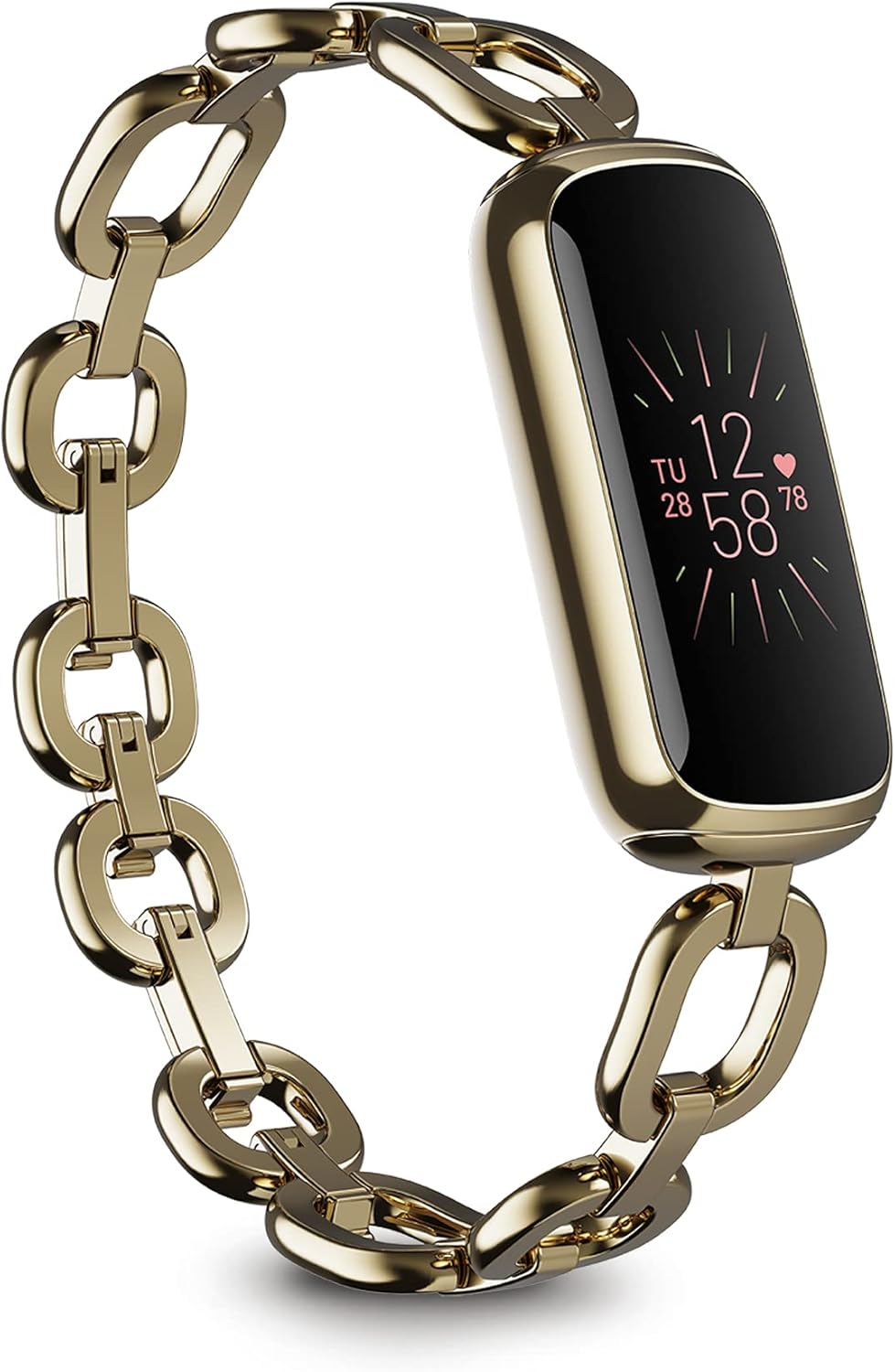
Best for: People who want a fitness tracker that looks like jewelry and don’t need GPS.
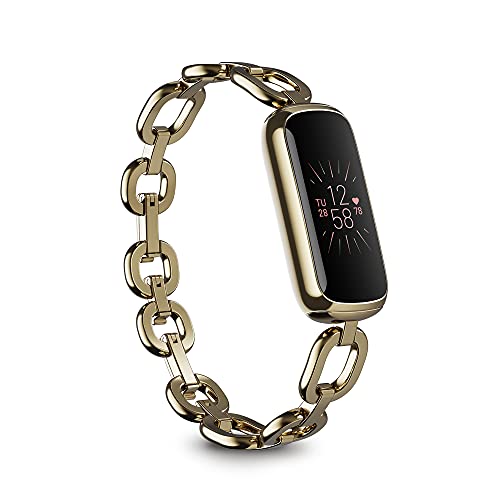
Fitbit Luxe Fitness and Wellness Tracker with Gorjana Gold Stainless Steel Bracelet
- Jewelry-style design with vibrant color AMOLED display and stainless steel case
- Tracks heart rate, sleep stages, stress, SpO2, and skin temperature
- Up to 5 days battery life with water resistance up to 50 meters
The Fitbit Luxe is the tracker to pick if appearances matter as much as accuracy. Most fitness bands look like fitness bands. The Luxe doesn’t. It has a stainless steel case, a slim 0.4-inch profile, and comes with a Gorjana gold bracelet in the Special Edition that passes for actual jewelry at dinner. It’s the only tracker on this list that someone could wear to a formal event without anyone noticing it’s a health device.
Under that polished exterior, the health tracking is solid. The full-color AMOLED display is up to twice as bright as the older Charge 4, and auto-brightness adjusts for outdoor conditions. Health sensors cover heart rate, sleep stage tracking, SpO2, stress management via EDA, and skin temperature — which tracks hormonal changes and illness signals over time. Fitbit’s app remains one of the cleaner options for turning raw health data into readable trends without burying users in charts. Battery sits at 5 days, decent for this form factor.
The trade-off is clear: there’s no built-in GPS. Outdoor runs and walks need a paired phone for accurate distance and pace data. Some advanced health metrics are locked behind Fitbit Premium at $9.99/month, which stings on a device that already costs $147. But if the goal is health tracking that doesn’t announce itself on the wrist, nothing else on this list competes. The Fitbit Charge 6 is the better workout tool. The Luxe is the better everyday companion.
- Jewelry-style design with a stainless steel case and Gorjana gold bracelet option
- Tracks heart rate, sleep stages, SpO2, stress, and skin temperature
- No built-in GPS, so you’ll need your phone for outdoor distance tracking
Fitbit Charge 6
Best for: Runners and gym-goers who want GPS and Google integration in a band form factor.
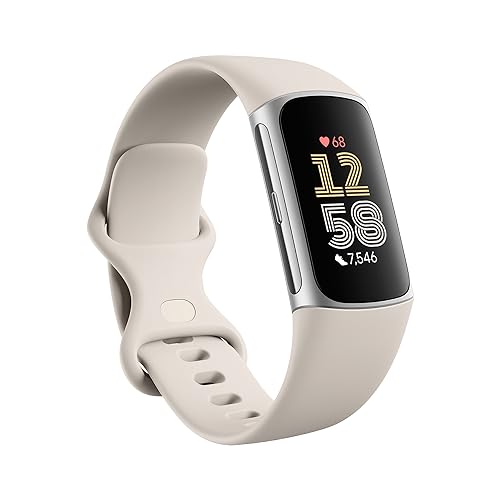
Fitbit Charge 6 Fitness Tracker with Heart Rate, GPS, and Premium Membership
- Built-in GPS, 40+ exercise modes, heart rate on gym equipment via Bluetooth
- Google Maps, Google Wallet, YouTube Music controls, and phone notifications
- ECG heart health readings, EDA stress sensor, and Daily Readiness Score
The Charge 6 is Fitbit’s most capable band and one of the strongest value propositions in fitness tracking right now. At $140, it includes built-in GPS — meaning you can leave the phone at home for runs and still get accurate distance and pace data. That alone separates it from the Luxe and from most trackers at this price point. Independent testing shows heart rate accuracy up to 60% better during vigorous activity like HIIT compared to the Charge 5.
The feature list runs deep for a band. ECG heart health readings, an EDA stress sensor, and a Daily Readiness Score sit alongside Google Maps turn-by-turn directions, Google Wallet for contactless payments, and YouTube Music controls. The Bluetooth heart rate sync with compatible gym equipment — treadmills and bikes — removes the need for a chest strap during cardio sessions. Battery lasts up to 7 days in normal use, which beats the 5-day Luxe and blows past the 18-hour Apple Watch SE.
The honest downside: some of those features sit behind Fitbit Premium at $9.99/month. The free tier is usable, but Daily Readiness Score, advanced sleep analysis, and guided health programs all require a subscription. At $140 for the hardware, that friction is real. Still, for someone who wants GPS tracking, Google ecosystem integration, and solid health monitoring in a slim band, the Charge 6 delivers more than anything else in this price range.
- Built-in GPS with 40+ exercise modes for serious training
- Google Maps, Wallet, and YouTube Music controls on your wrist
- ECG and EDA sensors, though some features need a Premium subscription
Xiaomi Smart Band 9
Best for: First-time buyers and budget-conscious users who want solid basics for under $50.
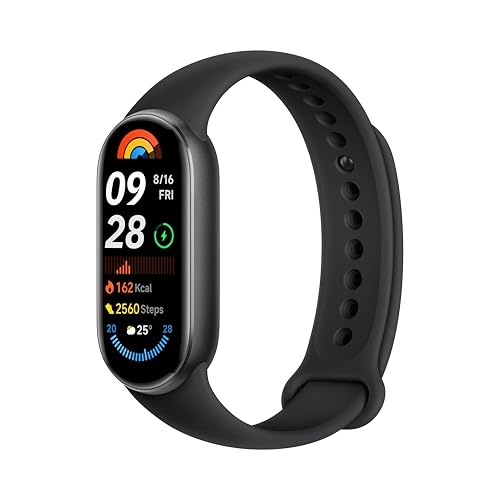
Xiaomi Smart Band 9 with 1.62-inch AMOLED Display, 21-Day Battery Life, 150+ Workout Modes
- 1.62-inch AMOLED display with 1200 nits peak brightness, readable in direct sunlight
- Aluminum alloy frame with 21 days battery life and 50m water resistance
- 150+ workout modes, heart rate, SpO2, sleep tracking, and Bluetooth 5.4
Under $50 for a fitness tracker with an AMOLED display, 21-day battery life, and 150+ workout modes. That’s the Xiaomi Smart Band 9, and it’s the strongest case for not overspending on fitness tracking when starting out. Xiaomi has dominated the budget band market for several years, and the Smart Band 9 keeps that streak alive with meaningful hardware upgrades over the Band 8.
The display is the biggest leap: 1.62 inches at 1200 nits peak brightness means it’s readable under direct sunlight without squinting. The aluminum alloy frame feels noticeably more premium than the all-plastic Band 8 did. Health sensors cover heart rate monitoring, SpO2, sleep tracking, stress monitoring, and water resistance to 50 meters. For a device priced around $48, that’s a health tracking stack that was only available in $150+ devices three years ago. The 21-day battery is the number that makes this stand out — most $100+ trackers top out at 7 days.
The limitations are predictable at this price: no GPS, so outdoor distance tracking needs a phone. The Xiaomi companion app has improved but still isn’t as polished as Fitbit’s or Garmin’s ecosystems. Long-term software support from Xiaomi also runs shorter than the established brands. That said, the Smart Band 9 makes sense as a first tracker, as a gift, or as a backup device. At $48, replacing it if it’s lost or damaged doesn’t sting the way a $150 Garmin would.
- 1.62-inch AMOLED display at 1200 nits, readable in bright sunlight
- 21-day battery life with 150+ workout modes and 50m water resistance
- No GPS, so you’ll need your phone for outdoor distance tracking
Apple Watch SE 2
Best for: iPhone users who want a full smartwatch with apps, cellular, and safety features.
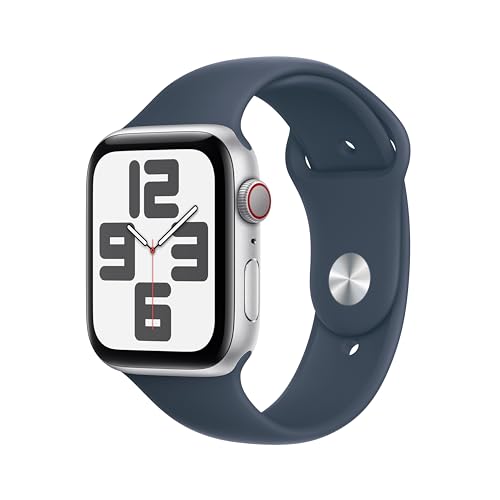
Apple Watch SE (2nd Gen) GPS + Cellular 44mm Smartwatch with Silver Aluminum Case
- GPS + Cellular connectivity for calls, texts, and music streaming without your phone
- Crash Detection, heart rate notifications, and emergency SOS safety features
- Full Apple ecosystem with third-party apps like Smartgym, AllTrails, and Strava
For iPhone users, the Apple Watch SE 2 is the practical choice — not because it’s the most powerful Apple Watch, but because it delivers the core Apple Watch experience at a meaningful discount. The S8 chip, GPS, heart rate monitoring, Crash Detection, Fall Detection, and Emergency SOS are all here. So is the full watchOS 26 app ecosystem: Strava, AllTrails, Smartgym, Nike Run Club, and hundreds of other third-party fitness apps that simply don’t exist on any Garmin or Fitbit.
The GPS + Cellular model at $319 is the version worth buying. Cellular means leaving the iPhone at home during runs, rides, or gym sessions while still taking calls, replying to texts, and streaming Apple Music. That freedom is the differentiator over every fitness band on this list. Safety features matter here too: Crash Detection has triggered emergency calls for real cyclists and drivers since its introduction in 2022, with documented cases of the watch summoning help when the user couldn’t.
The Apple Watch SE 2 makes clear trade-offs vs. the Series 10: no always-on display, no blood oxygen sensor, no ECG, no skin temperature sensing. Battery life is 18 hours — that means nightly charging, which is a genuine lifestyle adjustment after using a 7- or 11-day tracker. And it only works with iPhone; Android users should stop reading here. But for iPhone users who want apps, safety features, and a device that does more than track steps, the SE 2 is the entry point worth buying. A GPS-only version starts closer to $169 during sales if cellular isn’t a priority.
- Full Apple Watch experience with GPS + Cellular at a lower price
- Crash Detection, emergency SOS, and heart rate notifications for safety
- 18-hour battery life means daily charging, but you get a proper app ecosystem
Samsung Galaxy Ring
Best for: Sleep-focused users who want a smart ring without monthly subscription fees.
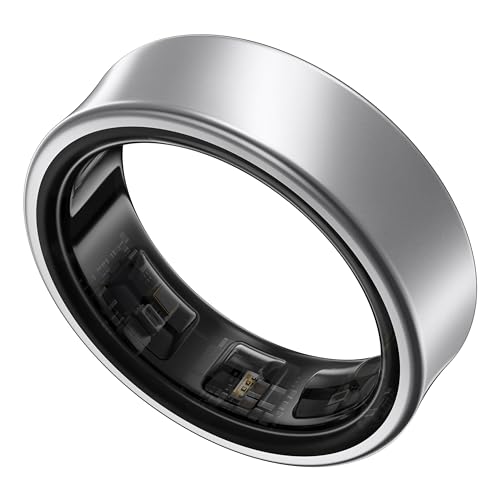
Samsung Galaxy Ring AI Smart Ring with Fitness Monitor, Sleep Tracker, and 7-Day Battery
- AI-powered sleep insights with Sleep Score, Energy Score, and sleep animal chronotype
- No subscription required, with up to 7 days of battery life in titanium design
- Tracks heart rate, skin temperature, movement, and auto-detects walking and running
Smart rings are the most disruptive new category in wearables, and the Samsung Galaxy Ring is the one that removes the biggest adoption barrier: a monthly subscription. Made from titanium in three colors — black, silver, and gold — with 9 sizes from 5 to 13, it tracks sleep, heart rate, skin temperature, and daily activity from the finger rather than the wrist. For people who find wrist trackers uncomfortable during sleep, the ring form factor delivers better overnight sensor contact and more accurate sleep data.
Sleep tracking is the Galaxy Ring’s headline feature. Samsung’s AI-powered analysis delivers a Sleep Score and Energy Score each morning, plus a “sleep animal” chronotype that maps patterns to behavioral profiles over time. Battery life runs 7–12 days depending on usage, with an IP68 and 10ATM water resistance rating for swimming. The no-subscription model is the key differentiator over the Oura Ring 4 — over two years, skipping the $5.99/month membership saves $143 in subscription costs alone.
The honest limitations: the Galaxy Ring doesn’t replace a wrist-based tracker for workout logging. It doesn’t track most gym exercises, the activity auto-detection is limited to walking and running, and there’s no real-time heart rate display during workouts. Full feature access also requires a Samsung smartphone — iPhone users get reduced functionality. At $399.99, it’s expensive for what’s essentially a sleep and recovery device. Order Samsung’s free sizing kit before buying; ring sizing isn’t the same as standard jewelry sizes.
- AI-powered sleep tracking with Sleep Score, Energy Score, and chronotype analysis
- No subscription required, unlike the Oura Ring, with 7-day battery life
- Limited workout tracking, best suited for sleep and recovery monitoring
Garmin Vivosmart 5
Best for: Garmin Connect users who want a simple band that fits their existing ecosystem.
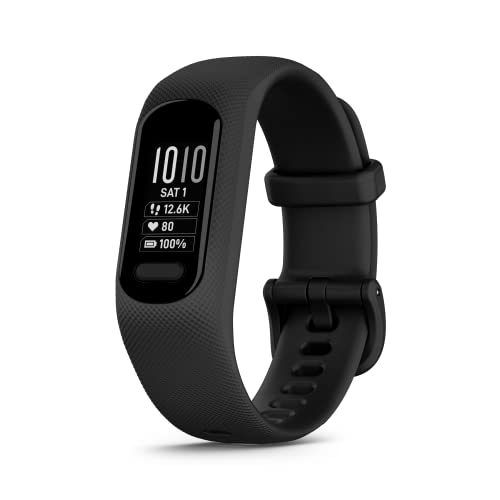
Garmin Vivosmart 5 Fitness Tracker with Long-Lasting Battery and Simple Design
- Touchscreen and button interface for easy navigation with Garmin Connect app integration
- Up to 7 days battery life, water-resistant for swimming and showering
- Sleep stage tracking, Body Battery energy monitor, SpO2, and stress tracking
The Garmin Vivosmart 5 is a no-frills fitness band for people who are already inside Garmin’s ecosystem and don’t want to leave it. Its shape is similar to the Fitbit Charge 6 — slim band, touchscreen interface — but the app and data infrastructure behind it runs on Garmin Connect, which means seamless syncing with any Garmin GPS watch, cycling computer, or multisport device a person already owns. No re-entering data across platforms, no fragmented health history.
The standout features are Garmin-specific: Body Battery energy monitoring, which calculates a 0–100 daily energy score based on sleep quality, HRV, stress, and activity history; and detailed sleep stage tracking that doesn’t require a subscription to access. Unlike Fitbit, Garmin doesn’t lock sleep data behind a paywall. SpO2 monitoring, stress tracking, and 5ATM water resistance (rated for pool swimming) round out the spec sheet. Battery life is 7 days.
The honest context: at $149.99, the Vivosmart 5 is $10 more than the Fitbit Charge 6 while offering fewer features. It has no built-in GPS (uses connected GPS from a paired phone), a smaller and less vivid display, and a design that reviewers note feels dated compared to newer trackers. The value case for the Vivosmart 5 is narrower than it used to be. It makes sense for someone already tracking activity on Garmin Connect who wants a daily band that feeds into the same dataset without switching platforms. If you’re starting fresh, the Charge 6 offers more at a lower price.
- Garmin Connect ecosystem with Body Battery energy monitoring and sleep stages
- 7-day battery life with water resistance for swimming
- Dated design with a smaller display and no built-in GPS
Garmin Lily 2
Best for: People who want a hidden-display tracker that works at the gym and at dinner.
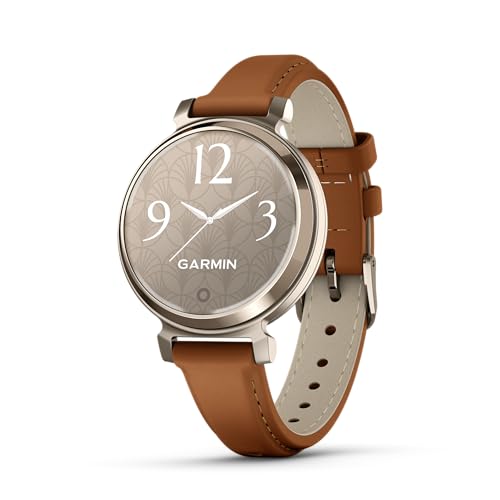
Garmin Lily 2 Small and Stylish Smartwatch with Hidden Display and Patterned Lens
- Jewelry-like design with patterned lens that reveals a bright touchscreen display on tap
- Aluminum bezel and metal case with silicone band, up to 5 days battery life
- Heart rate, SpO2, Body Battery, sleep tracking, and women's health features
The Garmin Lily 2 takes a different approach to the fitness tracker problem. Instead of making peace with looking like a tech gadget 24/7, it’s designed to look like jewelry by default. The signature feature is a patterned lens that hides the display until it’s tapped. When the screen is off, it’s a stylish watch with an aluminum bezel and metal case. When tapped, a bright touchscreen appears with health stats. At just 29 grams, it’s the lightest device on this list.
The health suite underneath is the full Garmin stack: heart rate monitoring, SpO2, Body Battery energy scoring, sleep tracking with stage analysis, stress monitoring, and women’s health features including menstrual cycle and pregnancy tracking. Water resistance is 5ATM for pool swimming. Battery runs 5–9 days depending on the variant. The Lily 2 Active version adds GPS and Gorilla Glass 3, extends battery to 9 days in smartwatch mode, and is available around $249.99 — a meaningful upgrade if outdoor tracking matters.
At $299.99, the base Lily 2 is expensive for a tracker without GPS. The small display is harder to read during workouts, and the limited sport modes don’t suit serious training. The Garmin Venu Sq 2 below is a better pick at $163 if screen size and GPS matter more than aesthetics. The Lily 2 makes sense for one specific buyer: someone who wants accurate health tracking — including Garmin’s respected sleep data — in a form that doesn’t require explaining “it’s a fitness tracker” every time they wear it to something that isn’t the gym.
- Hidden display with patterned lens that looks like jewelry when the screen is off
- Full Garmin health tracking: heart rate, SpO2, Body Battery, and women’s health
- No GPS and small display, priced at a premium for the design
Garmin Venu Sq 2
Best for: Battery-life-first buyers who want GPS and full health tracking without subscriptions.
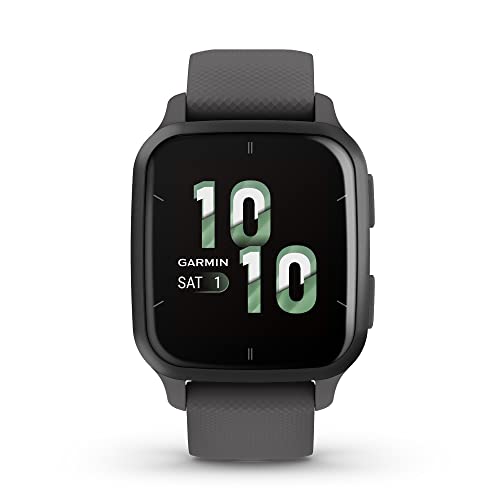
Garmin Venu Sq 2 GPS Smartwatch with AMOLED Display and All-Day Health Monitoring
- Bright AMOLED display with always-on mode and large, easy-to-read text
- Up to 11 days battery life in smartwatch mode with built-in GPS
- 25+ built-in sports apps, Body Battery energy monitoring, and sleep score
The Garmin Venu Sq 2 is the best value GPS smartwatch on this list in 2026. At $163.45 (currently 35% off from $249.99), it includes a proper AMOLED display, built-in GPS, 25+ sports apps, and 11 days of battery life in smartwatch mode. That battery number is the standout: the Apple Watch SE lasts 18 hours, the Fitbit Charge 6 lasts 7 days. The Venu Sq 2 lasts 11 days with GPS on-wrist, meaning a week and a half between charges — a meaningful quality-of-life difference.
The AMOLED display includes an always-on mode, so there’s no wrist-flicking required to check time or stats. The square design is a practical choice for readability: more screen area for workout data than comparably priced round watches. The full Garmin health stack runs without any subscription — Body Battery, sleep score with stage analysis, stress tracking, SpO2, and hydration tracking are all available from day one. Garmin Connect is the most data-rich free fitness app available, suited for serious long-term health tracking and training load analysis.
The trade-offs compared to the Apple Watch SE 2 are real: no third-party app ecosystem, no cellular connectivity, no contactless payments, no ability to take calls from the wrist. The Venu Sq 2 is a health and fitness device first, not a smartwatch trying to replace a phone. For anyone who values 11-day battery, subscription-free GPS tracking, and Garmin’s data depth over smartwatch functionality, it’s the smarter buy at nearly half the price of the Apple Watch SE. A GPS-only Apple Watch SE starts at $169 during sales — that’s the one comparison worth running before deciding.
- AMOLED display with always-on mode and 11-day battery life
- Built-in GPS with 25+ sports apps and Garmin’s Body Battery energy monitoring
- No third-party apps or cellular, but the best value for battery and fitness tracking
Polar Pacer Pro
Best for: Serious runners who want a 41g GPS watch with structured training programs and VO2Max testing.
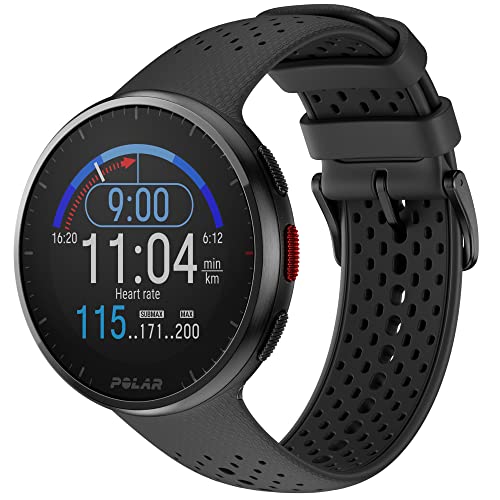
Polar Pacer Pro Ultra-Light GPS Running Watch with Training Programs and Recovery Tools
- Ultra-light at 41g, designed specifically for runners with GPS and barometric altitude
- Up to 35 hours battery in training mode, 7 days in watch mode, 100 hours in power save
- Running test for VO2Max, custom training zones, and structured training programs
The Polar Pacer Pro is a running watch built specifically for runners — not a general fitness tracker that happens to have GPS. At 41 grams, it’s one of the lightest GPS running watches available. The weight difference matters during long runs and marathons, where even 20 extra grams on the wrist creates fatigue over time. Polar designed this for athletes who want wrist-detected metrics without the heaviness of Garmin’s larger multisport watches.
The hardware spec that separates it from general trackers is the barometric altimeter. Elevation tracking uses air pressure sensors rather than GPS alone, which means accurate ascent and descent data for trail runners and hill training sessions. Battery life runs 35 hours in GPS training mode, 7 days as a daily watch, and 100 hours in power save mode. The built-in running test calculates VO2Max from actual performance data and sets custom heart rate training zones based on individual physiology, not population averages. Polar’s structured training programs are science-backed, with the Training Load Pro and Recovery Pro features updated to give more personalized adaptation signals.
The trade-offs are real: Polar’s ecosystem is smaller than Garmin’s, with fewer third-party integrations and a less active community forum. There’s no music storage and no NFC payments — this is a pure sports instrument. At $290.29 (down from $349.95), it sits between the Garmin Venu Sq 2 ($163) and comparable Garmin running watches like the Forerunner 265 ($349). For runners whose primary sport is running and who want structured training data rather than smartwatch features, the Pacer Pro delivers Garmin-level performance metrics at a lower price than Garmin charges for the equivalent.
- Ultra-light at 41g with GPS and barometric altitude for serious runners
- 35 hours in training mode with VO2Max testing and structured training programs
- Smaller ecosystem than Garmin, but strong on heart rate accuracy and training tools
Oura Ring 4
Best for: Data-driven sleepers who want the deepest recovery insights and don’t mind a $5.99/month subscription.
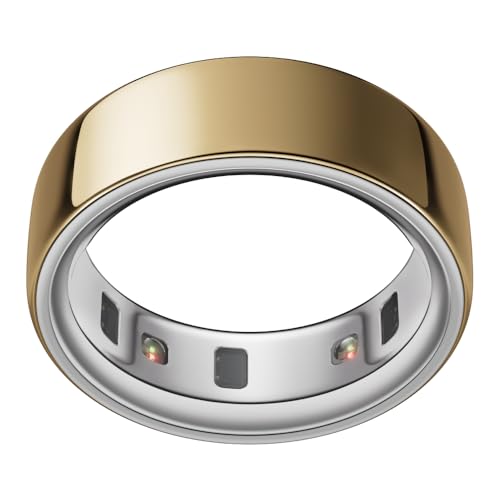
Oura Ring 4 Smart Ring with Sleep Tracking, Heart Rate, and Up to 8 Days Battery Life
- Tracks heart rate, respiratory rate, blood oxygen, skin temperature, and 40 exercise types
- Women's health features: cycle insights, pregnancy tracking, and fertile window estimates
- Up to 8 days battery life with smaller, more accurate sensors than previous models
The Oura Ring 4 is the most polished smart ring available and the gold standard for sleep and recovery tracking. The Ring 4 refined the hardware significantly over the Ring 3: interior sensors are now flat instead of raised, which eliminates the pressure point that bothered some users during sleep. The Smart Sensing platform delivers more stable readings across heart rate, respiratory rate, blood oxygen, and skin temperature — tracking 40 different exercise types through auto-detection without manual logging.
The app is the real differentiator. It doesn’t just surface raw numbers — it interprets data across weeks and months to show cardiovascular age trends, sleep regularity scores, and personalized recovery recommendations. Women’s health features are built directly in: cycle insights, pregnancy tracking, and fertile window estimates that use continuous temperature monitoring rather than one-time daily readings. Battery runs up to 8 days, and the ring is rated to 100 meters water resistance. The membership costs $5.99/month or $69.99/year — and without it, users only see daily scores, not the underlying data that makes those scores meaningful.
The total cost picture: the Oura Ring 4 in silver or black starts at $349, gold and stealth versions run $399–$499, plus $69.99/year for membership. Over two years, a black ring with annual membership costs roughly $489 all-in. The Samsung Galaxy Ring at $299.99 with no subscription costs $299.99 over the same period. The $189 gap buys deeper data analysis, more exercise detection, and substantially better app quality with the Oura. Order a free sizing kit before purchasing — Oura ring sizes don’t correspond to standard ring sizing, and returns for wrong sizes are common. This is not a workout tracker replacement. It’s a precision sleep and recovery instrument in ring form.
- Most accurate sleep and recovery tracking of any ring, with personalized health insights
- Women’s health features: cycle, pregnancy, and fertility tracking built in
- $499 plus $5.99/month subscription makes it the most expensive option on this list
How to Choose the Right Fitness Tracker
Most people don’t need 150 workout modes. They need a device they’ll actually wear tomorrow. Start with what matters most: budget, battery life, or specific features like GPS or sleep tracking.
If you’re spending under $50, the Xiaomi Smart Band 9 covers the basics and lasts three weeks per charge. If GPS in a band is the priority, the Fitbit Charge 6 at $140 is the strongest value on this list. iPhone users who want apps and cellular should go with the Apple Watch SE 2. And if battery life matters more than anything else, the Garmin Venu Sq 2 at $163.45 gives 11 days between charges with GPS included.
For runners training with structure, the Polar Pacer Pro weighs 41g and lasts 35 hours on GPS. For sleep-only tracking, the Samsung Galaxy Ring skips the subscription, and the Oura Ring 4 gives deeper data for $5.99/month. Pick the device that matches how you actually move — not the one with the longest feature list.
Frequently Asked Questions
What’s the best fitness tracker under $50 in 2026?
The Xiaomi Smart Band 9 at $47.70 is the best budget fitness tracker right now. You get a bright AMOLED display, 21-day battery life, heart rate monitoring, SpO2, sleep tracking, and 150+ workout modes. It doesn’t have GPS, but at this price, nothing does. For basic health and fitness tracking, it’s hard to justify spending more unless you need specific features like GPS or ECG.
Do I need a fitness tracker with GPS?
Only if you run, cycle, or hike outdoors and want accurate distance and pace data without carrying your phone. If you always have your phone with you during outdoor workouts, connected GPS (which uses your phone’s GPS) works fine and is available on cheaper trackers. Built-in GPS matters most for runners who want to leave their phone behind.
Are smart rings worth it compared to fitness bands?
Smart rings are worth it if sleep tracking is your main priority. They’re more comfortable to wear at night than wrist-based trackers, and the sensor placement on your finger gives accurate heart rate and temperature readings during sleep. But they can’t match wrist-based trackers for workout tracking, display readability, or GPS. A smart ring works best as a sleep-focused companion, not as the only fitness device.
Fitbit Charge 6 or Garmin Vivosmart 5?
The Fitbit Charge 6 wins for most people. It has built-in GPS (the Vivosmart 5 doesn’t), Google integration for maps and payments, and ECG readings. The Vivosmart 5 only makes sense if you’re already deep in Garmin’s ecosystem and use Garmin Connect for other devices. At nearly the same price, the Charge 6 offers more features and a better display.
How accurate are fitness tracker heart rate monitors?
Wrist-based heart rate monitors are accurate enough for general fitness tracking, typically within 5-10 BPM of a chest strap during steady-state exercise. They struggle with high-intensity interval training and strength exercises where your wrists move a lot. For casual runners and walkers, wrist-based tracking is plenty accurate. If you’re training for a marathon or doing structured heart rate zone training, pair your tracker with a chest strap for the best results.
Samsung Galaxy Ring or Oura Ring 4?
The Samsung Galaxy Ring is the better value because it has no subscription fee and costs $100 less. The Oura Ring 4 has better data analysis, deeper health insights, more exercise auto-detection (40 types vs. limited on Samsung), and women’s health features. If you want the full package and don’t mind paying $5.99/month, the Oura Ring 4 is the better ring. If subscription fees bother you, the Galaxy Ring gives you 80% of the experience for less money over time.
Can I swim with a fitness tracker?
Most modern fitness trackers are water-resistant to at least 50 meters, which covers swimming in pools and open water. The Xiaomi Smart Band 9, Fitbit Charge 6, Garmin Vivosmart 5, and Garmin Venu Sq 2 all support swim tracking. Smart rings like the Oura Ring 4 and Samsung Galaxy Ring are also water-resistant. Just don’t press buttons underwater or expose them to hot water in saunas, as that can damage the seals over time.
How long do fitness trackers last before they need replacing?
A quality fitness tracker lasts 2-4 years with daily use. Battery degradation is the main reason for replacement. You’ll notice shorter battery life after about 18-24 months. Bands and straps wear out faster, usually within a year, but those are cheap to replace. Software support also matters: Garmin and Apple tend to support their devices with updates for 3-4 years, while budget brands like Xiaomi offer shorter support windows. Buying a well-known brand means longer usable life overall.