
Best Books for CAT Preparation in 2026
CAT is the one exam where your book choice matters more than the number of hours you study. I’ve seen students burn through 6 months of prep with the wrong materials and score lower than someone who spent 3 months with the right ones. The Common Admission Test doesn’t reward rote learning. It rewards sharp thinking, pattern recognition, and the ability to solve problems under brutal time pressure.
The exam has three sections: Verbal Ability and Reading Comprehension (VARC), Data Interpretation and Logical Reasoning (DILR), and Quantitative Ability (QA). You need to clear the sectional cutoffs for each, not just the overall score. That means you can’t skip any section and hope the others carry you.
I’ve put together this list of the best books for CAT preparation based on what actually works. These aren’t affiliate-stuffed recommendations. They’re the books that IIM admits consistently credit for their scores. One solid book per section, used properly, beats a shelf full of guides you never finish.
Best Overall CAT Prep Books
Before you dive into section-specific prep, you need one book that gives you the full picture: syllabus, exam pattern, previous year questions, and a study roadmap. Start here.
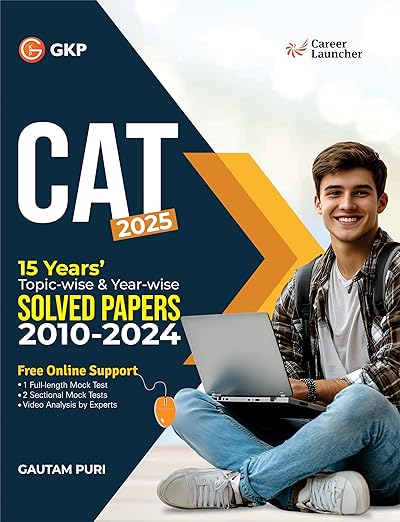
CAT Topic-Wise & Year-Wise Solved Papers by Gautam Puri
- Covers 30+ years of actual CAT questions organized by topic and year
- Detailed solutions with shortcut methods and alternative approaches
- Updated annually with the latest CAT exam pattern and questions
- Strategic approach to tackle different question types
- Practice exercises for self-assessment
- Includes difficulty level marking for each question to plan progressive practice
- Section-wise performance tracking with score prediction models
- Chapter-end practice sets mirror actual CAT difficulty and time constraints
This is the one book I tell every CAT aspirant to start with. Gautam Puri’s topic-wise and year-wise solved papers give you the most authentic practice material available. You’re solving actual CAT questions from the last 30+ years, organized so you can focus on specific topics or simulate full papers.
The solutions include shortcut methods and alternative approaches, which is critical for CAT where time management decides your score. Don’t buy multiple solved paper collections. One good one is enough, and this is the best. Make sure you grab the latest edition that includes the most recent CAT paper.
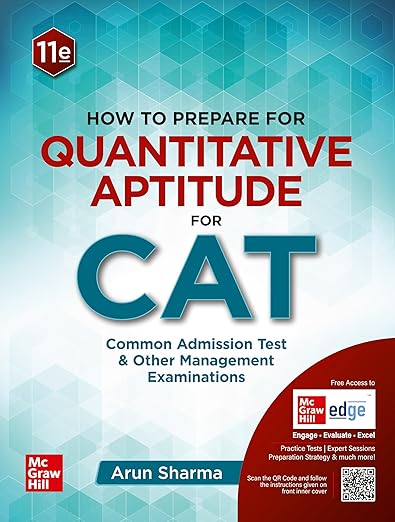
How to Prepare for CAT by Arun Sharma (Complete Guide)
- Comprehensive guide covering all three CAT sections with practice sets
- Includes mock tests and section-wise strategy for time management
- Updated regularly to match the evolving CAT exam pattern
- Covers all three CAT sections: QA, DILR, and VARC with section-specific strategies
- Includes time management techniques for the 40-minute per section constraint
- Practice problems organized by difficulty level from basic to CAT-level
- Study plan recommendations for 3-month, 6-month, and 9-month timelines
- Tips for handling sectional cutoffs and overall percentile optimization
Arun Sharma’s comprehensive CAT guide is the other must-have for anyone starting from scratch. It covers all three sections with a structured approach, includes mock tests, and provides section-wise strategies for time management. If Gautam Puri’s book gives you the raw questions, Arun Sharma teaches you how to think about them.
Best Books for Quantitative Ability (QA)
QA is where most non-engineering students struggle, and where engineering students get overconfident. The CAT doesn’t test complex math. It tests your ability to solve seemingly simple problems quickly and accurately. You need conceptual clarity more than formula memorization.
Don’t buy all these books at once. Pick one comprehensive guide (Arun Sharma or Gautam Puri), add one book per weak section, and finish those before adding more. Two books used thoroughly beat six books half-read.
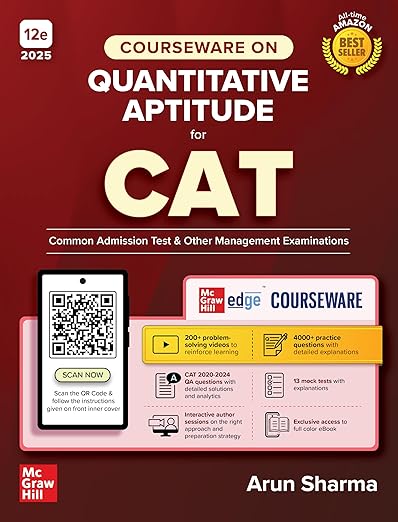
Quantitative Aptitude for CAT by Arun Sharma
- CAT 2020-2024 QA section solved papers with detailed analytics
- 200+ problem-solving author videos for visual learning
- 4,000+ practice questions across three difficulty levels
- 13 solved mock tests to replicate exam conditions
- Live interactive sessions with the author
- Practice sets with varying difficulty levels from Level 1 (basic) to Level 3 (CAT-level)
- Covers number systems, algebra, geometry, and modern math with detailed theory
- Shortcut methods and alternative approaches for time-saving in QA section
Arun Sharma’s QA book is the gold standard for CAT quant prep. It organizes problems into three difficulty levels, so you start with fundamentals and work up to CAT-level questions. The book covers all major topics: arithmetic, algebra, number systems, geometry, and modern math. What makes it essential is the shortcut methods and alternative approaches that save you precious seconds during the exam.
If your math fundamentals are weak, start with Level 1 problems and don’t move on until you can solve them without looking at solutions. Most students skip ahead too quickly and wonder why they can’t crack the harder questions.
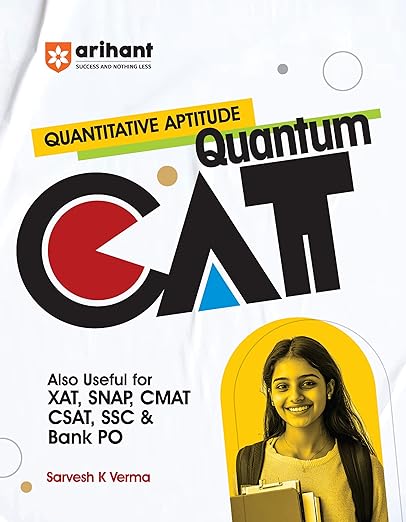
Quantum CAT by Sarvesh K. Verma (Arihant)
- Covers every quantitative topic with unique problem-solving approaches
- Known for creative methods that develop mathematical thinking
- Over 5,000 practice problems across all difficulty levels
- 2,000+ practice problems covering arithmetic, algebra, geometry, and number theory
- Five difficulty levels from basic to LOD 5 for progressive skill building
- Shortcut techniques and vedic math methods for quick calculations
- Previous year CAT questions integrated into relevant chapters
- Conceptual clarity focus with detailed theory before practice sets
Quantum CAT by Sarvesh K. Verma is the alternative to Arun Sharma that many 99+ percentilers swear by. The approach is different: Verma focuses on building mathematical intuition rather than following set procedures. The book has over 5,000 problems and is known for creative solution methods that you won’t find elsewhere. If Arun Sharma’s systematic approach doesn’t click with you, try Quantum CAT instead. Don’t buy both. Pick one and master it.
Best Books for Data Interpretation & Logical Reasoning (DILR)
DILR is the section that decides whether you get into IIM-A, B, C or the next tier down. It’s also the most unpredictable section. The question types change every year, and no amount of memorization helps. You need to develop the ability to process data fast and think logically under pressure.
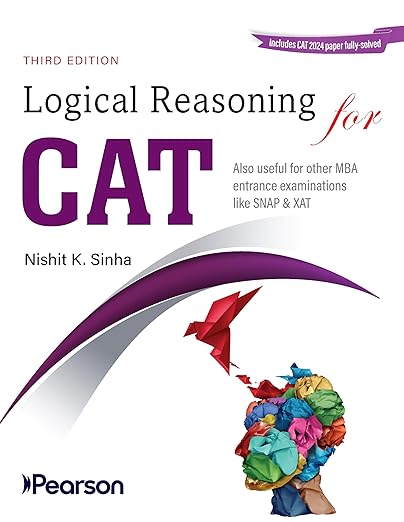
Logical Reasoning and Data Interpretation for CAT by Nishit K. Sinha
- Covers both DI and LR with CAT-specific question patterns
- Set-based practice that mirrors the actual CAT DILR format
- Includes caselets, puzzles, and data sufficiency problems
- Covers caselets, tables, bar graphs, pie charts, and unconventional DI formats
- Logical Reasoning topics include arrangements, selections, blood relations, and coding
- Previous CAT DILR sets analyzed with step-by-step solution approaches
- Practice sets designed to simulate the actual 40-minute DILR section
- Difficulty-graded exercises from moderate to advanced DILR scenarios
Nishit Sinha’s DILR book is my top recommendation for this section. It covers both data interpretation and logical reasoning with set-based practice that mirrors how CAT actually tests these skills. The book includes caselets, arrangement puzzles, data sufficiency problems, and the kind of hybrid DI-LR sets that have become common in recent CATs.
What I like about Sinha’s approach is that he doesn’t just give you standalone LR puzzles. He trains you to handle the integrated sets where you need both data interpretation and logical reasoning skills simultaneously, which is exactly how CAT tests you.
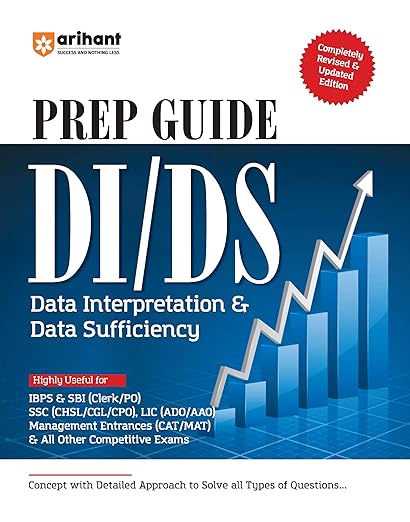
Data Interpretation and Data Sufficiency by Ananta Ashisha
- Focused specifically on data interpretation and data sufficiency
- Includes tables, charts, graphs, and calculation-heavy DI sets
- Good supplement for students weak in DI specifically
- Covers data sufficiency question types unique to CAT and MBA entrance exams
- Includes tables, graphs, caselets, and mixed data set interpretation
- Answer explanations show both brute-force and shortcut solving methods
- Practice problems organized by topic: ratios, percentages, profit-loss, time-speed
- Previous year questions from CAT, XAT, SNAP, and other MBA entrance exams
Ananta Ashisha’s book is a solid supplement if DI is specifically your weak area. It covers tables, charts, graphs, and calculation-heavy sets in detail. Use this alongside Nishit Sinha’s book if you need extra DI practice. Otherwise, Sinha’s book alone covers both DI and LR well enough.
Best Books for Verbal Ability & Reading Comprehension (VARC)
VARC is the section where most coaching institutes fail their students. You can’t crack RC passages by learning “techniques.” You crack them by being a strong reader. Period. The right books help you build reading speed, comprehension depth, and vocabulary over time.
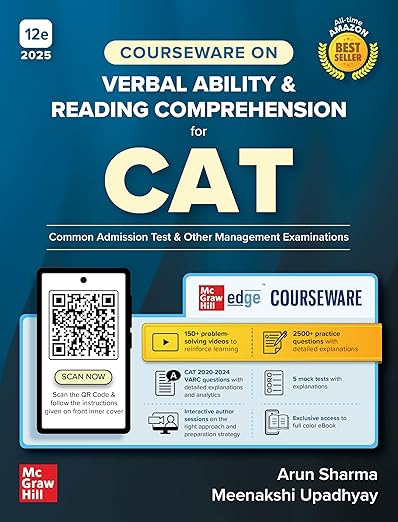
Verbal Ability and Reading Comprehension for CAT by Arun Sharma & Meenakshi Upadhyay
- Solved previous years' papers (2021-2024) for CAT VARC section
- 2,500+ solved practice questions with detailed explanations
- 150+ conceptual author videos for better understanding
- 5 full-length mock tests to simulate exam conditions
- Live interactive sessions with the author for doubt resolution
- Covers RC passages from economics, science, philosophy, and social commentary
- Para-jumble and para-summary techniques with extensive practice sets
- Critical reasoning and inference question strategies specific to CAT format
Arun Sharma and Meenakshi Upadhyay’s VARC book is the most comprehensive resource for this section. It covers every question type: RC passages, para jumbles, para summary, odd sentence out, and vocabulary-based questions. The RC practice passages cover diverse topics (philosophy, science, economics, history) that match what CAT actually throws at you.
For the verbal ability portion, focus on para jumbles and odd sentence out questions first. These are the most “learnable” VA question types, meaning practice directly translates to score improvement.
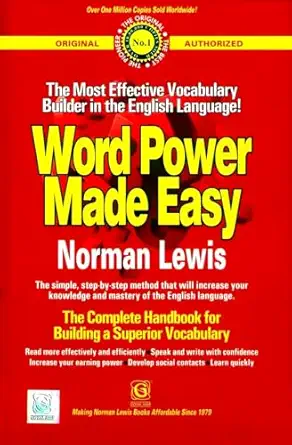
Word Power Made Easy by Norman Lewis
- The classic vocabulary building book, used by CAT toppers for decades
- Teaches word roots and etymology so you can decode unfamiliar words
- 30-day structured program that builds vocabulary systematically
- Teaches 3,000+ words through etymology, roots, prefixes, and suffixes
- Interactive exercises and quizzes after every chapter for retention
- Pronunciation guides included for commonly mispronounced English words
- Word families grouped by meaning for easier memorization and recall
- Sessions designed for 15-20 minute daily vocabulary building
Word Power Made Easy by Norman Lewis isn’t a CAT-specific book, but it’s been the go-to vocabulary builder for CAT aspirants for decades. The book teaches you word roots and etymology, which means instead of memorizing individual words, you learn to decode unfamiliar words from their components. This skill pays off heavily in RC passages where you encounter dense academic vocabulary.
Start this book 4-6 months before CAT and work through it consistently. 20 minutes a day is enough. Don’t try to cram it in the last month.
Books That Build Your Reading Muscle
CAT RC passages cover philosophy, economics, science, history, and social commentary. The students who ace VARC aren’t the ones who practiced the most RC passages. They’re the ones who read widely. Here are books that build the kind of reading stamina and comprehension depth CAT demands.
Reading novels isn’t optional for VARC. Students who read 30 minutes daily for 3 months before CAT consistently score 90+ percentile in the verbal section. Start with lighter books like The Alchemist and work up to longer, more complex fiction.
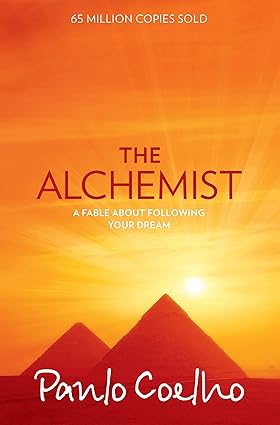
- Easy, engaging read that builds the daily reading habit CAT demands
- International bestseller translated into 80+ languages
- Builds vocabulary naturally through storytelling
- Simple, flowing prose that builds reading speed and comprehension naturally
- Philosophical themes similar to RC passages that appear in CAT VARC
- Short chapters make it perfect for daily reading habit building
- Translated from Portuguese, offering diverse narrative styles for RC practice
- Under 200 pages, completable in a week of casual reading
Start with The Alchemist if you don’t have a reading habit. It’s short, engaging, and you’ll finish it in two sittings. The point isn’t the book itself. It’s building the muscle of sitting down and reading for 30-60 minutes without checking your phone. Once that habit clicks, move to the heavier reads below.
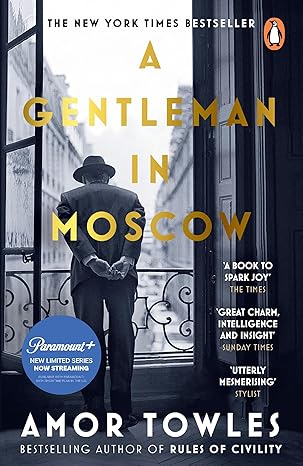
A Gentleman in Moscow by Amor Towles
- Dense, literary prose that trains you for complex CAT RC passages
- Rich character development builds critical thinking skills
- Internationally acclaimed with deep narrative layers
- Rich vocabulary and complex sentence structures that mirror CAT RC passage difficulty
- Historical and political themes common in CAT VARC reading comprehension
- Character-driven narrative that builds inferential reading skills
- Winner of multiple literary awards with critically acclaimed prose style
- 480+ pages of sustained reading that builds the stamina needed for VARC
A Gentleman in Moscow is where your RC skills actually get built. The prose is dense, the vocabulary is rich, and the narrative rewards close reading. If you can follow Towles’ writing without losing the thread, CAT RC passages will feel simpler by comparison. This is the single best fiction book for VARC preparation.
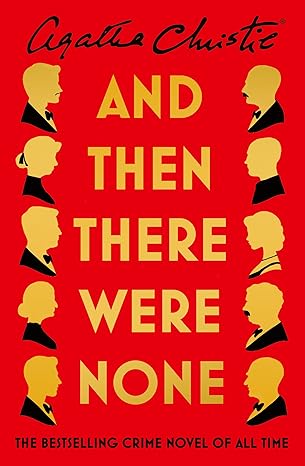
And Then There Were None by Agatha Christie
- Develops logical reasoning and deductive thinking for DILR
- Fast-paced narrative builds reading speed
- Intricate plot structure sharpens analytical skills
- Tight logical reasoning embedded in plot that exercises analytical thinking
- Short chapters and fast pacing that encourages consistent daily reading
- Complex character motivations requiring inference skills used in VARC
- One of the best-selling mystery novels ever with 100+ million copies sold
- Under 300 pages with plot twists that keep reading momentum high
Agatha Christie’s masterpiece does double duty. The fast pace builds your reading speed, while the intricate mystery forces you to track details and think logically. That’s basically what DILR tests. At 76% off, this is a steal.
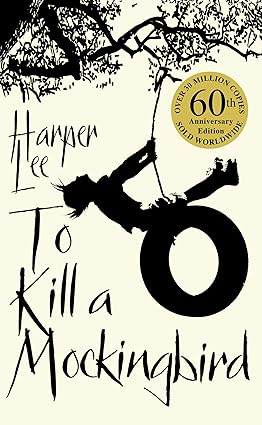
To Kill A Mockingbird by Harper Lee (60th Anniversary Edition)
- Pulitzer Prize-winning classic with rich vocabulary
- Complex social themes mirror CAT RC passage topics
- Builds comprehension for nuanced, argument-based passages
- Legal and social commentary themes that frequently appear in CAT RC passages
- First-person narrative with complex vocabulary in natural context
- Pulitzer Prize-winning prose that exemplifies strong argumentative writing
- Themes of justice, morality, and social structure common in management entrance exams
- Classic American literature frequently referenced in verbal ability sections
To Kill A Mockingbird covers social justice, ethics, and moral reasoning. These are exactly the kinds of themes CAT RC passages are built on. The vocabulary and sentence structure are a step above casual reading, which is exactly the training you need.
Also pick up Complete Works of Kahlil Gibran for philosophical and poetic prose that stretches your comprehension in ways fiction alone can’t.
Beyond books, make it a habit to read long-form articles from The Economist, Aeon, The Atlantic, and The Hindu editorial page. These mirror the tone and complexity of CAT RC passages better than any prep material.
How to Actually Use These Books (Study Strategy)
Buying the right books is step one. Using them properly is where most aspirants fail. Here’s the study strategy that works.
Don’t buy more than one book per section. I’ve seen students with 8 books on their desk and zero progress. Pick one QA book (Arun Sharma or Quantum CAT), one DILR book (Nishit Sinha), one VARC book (Arun Sharma & Meenakshi), and the solved papers. That’s your core set.
Solve before you read solutions. Spend at least 10-15 minutes on a problem before looking at the answer. The struggle is where learning happens. If you flip to the solution after 2 minutes, you’re reading, not studying.
Track your accuracy by topic. After every practice session, note which topics you got wrong and why. If you keep missing number system problems, that’s a signal to go back to the basics for that topic. Use a simple spreadsheet or a notebook. The Pomodoro technique works well for CAT prep: 25 minutes of focused practice, 5-minute break, repeat.
Take sectional mocks first, full mocks later. In the first 2-3 months, focus on section-wise practice. Start taking full-length mock tests only in the last 2-3 months when your fundamentals are solid. Mock scores are meaningless if your basics aren’t in place.
If you’re preparing from home without coaching, check out my detailed guide on how to prepare for CAT from home. I’ve covered the complete strategy, timeline, and resources you need.
My Recommended Book Combinations
Here’s what I’d buy based on your starting level.
If you’re starting from scratch (6+ months before CAT):
- Gautam Puri’s Solved Papers (for exam pattern)
- Arun Sharma’s QA book
- Nishit Sinha’s DILR book
- Arun Sharma & Meenakshi’s VARC book
- Word Power Made Easy (start immediately)
If you have strong math skills (engineers, science grads):
- Quantum CAT by Sarvesh Verma (higher difficulty ceiling)
- Nishit Sinha’s DILR book
- Focus heavily on VARC with the Arun Sharma & Meenakshi book
If VARC is your main weakness:
- Arun Sharma & Meenakshi’s VARC book
- Word Power Made Easy
- 30 Days to a More Powerful Vocabulary by Wilfred Funk
- Read 2-3 long-form articles daily from The Economist or Aeon
The golden rule: one book per section, mastered completely. A student who finishes 80% of one book will always outperform someone who reads 30% of three books. For more study tools and resources, check out my separate guide.
Frequently Asked Questions
Which single book is best for CAT preparation overall?
Arun Sharma’s comprehensive CAT guide is the best starting point for most students. It covers all three sections (QA, DILR, VARC) with structured practice and time management strategies. Pair it with Gautam Puri’s solved papers collection for authentic previous-year CAT questions. Two books, used properly, beat a shelf of guides you never finish.
How many months of preparation does CAT require?
Six months is the standard recommendation for working professionals and final-year students. If your fundamentals in quant are weak, add another 2-3 months for basics. The key isn’t just hours studied but consistency. Four hours daily for six months beats cramming in the last two months. DILR especially requires slow, regular practice to build pattern recognition.
Is Quantum CAT by Sarvesh Verma better than Arun Sharma for Quant?
They serve different learners. Arun Sharma’s book is more structured and systematic, which works better if you need clear frameworks and graduated difficulty. Quantum CAT by Sarvesh Verma builds mathematical intuition with creative solution methods, which 99+ percentilers often prefer. Don’t buy both. Try a chapter from each and pick one, then commit to it completely.
What’s the most important section to focus on in CAT prep?
DILR, because it’s the most unpredictable and can’t be cracked through memorization. VARC rewards reading habits built over months. Quant has well-defined topics you can systematically cover. DILR’s set types change every year, which means you need to develop the ability to process unfamiliar data quickly under time pressure. Most students underinvest here until it’s too late.
Do I need coaching or can I self-study for CAT using books?
Self-study works if you’re disciplined about mock tests. The books I’ve listed cover the material. What coaching gives you is a structured schedule, accountability, and peer competition. If you can replicate those with mock test series (TIME, IMS, Career Launcher all offer these), self-study with good books is completely viable for a 95+ percentile score.
The books I’ve listed above have produced more IIM admits than any other combination. Pick your set based on your starting level, follow the one-book-per-section rule, and focus on quality practice over quantity. If you want a complete preparation roadmap beyond just books, read my guide on how to prepare for CAT from home.