
What Is NxtLED™ and How Does It Differ from Regular LED Displays?
One of the first things you see when you walk into a coffee shop on a beautiful morning is people miserably working on their laptops with their heads down, turning their screens to get away from the sunlight that is playing a trick on them, frequently changing the brightness, or simply making a desperate call to their display to cooperate with the room around them.
It serves as a reminder that although screens are at the core of our work, they have not really evolved considerably over the years. That’s where NxtLED™ enters the conversation; not as a buzzword, but as part of a quiet shift happening in portable displays and modern devices.
Maybe you have not heard of that name before, but surely you have experienced the feeling that the product or service was trying to fix. The difference could not be more obvious to the naked eye if one has put the two screens next to each other. One of them looks faded and has noise, while the other is very neat and sharp, which might even come as a surprise. One strains your eyes after an hour, the other stays comfortable all afternoon. Those small differences form the backbone of interest in NxtLED™, which aims to change how screens behave in the real world rather than under ideal studio lighting.
LED panels have served as the everyday workhorse for laptops, monitors, tablets, and portable displays for a long time. They’re affordable, reliable, and familiar. But as more people shift between home, office, and outdoor environments, the cracks in the old design show up. So, how about we really compare the older generation display to the future of visual technology? Let’s get to it!
How Traditional LEDs Are Built
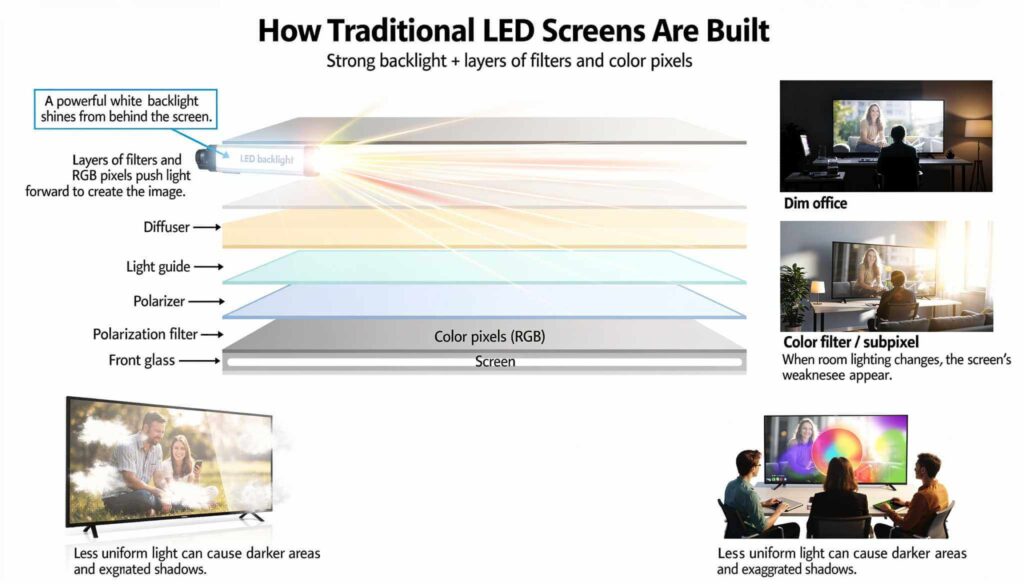
A standard LED panel works by shining a strong light behind the screen and pushing that light forward through layers of filters and color pixels. The method is simple enough, which is why it became the global default. But that same simplicity also limits it. Normally, the light is less uniform and more selective over the parts of the object it comes from. The outcome: less bright parts, irregular lighting, and shadows that darken more than they really do. When your setup is different, this is what you most understand.Move from a dim office to a sunlit room, and suddenly the screen’s weaknesses appear. Sit slightly off-center, and colors look different. These annoyances don’t ruin your day, but they add friction to something you use for hours.
A Different Take on Light
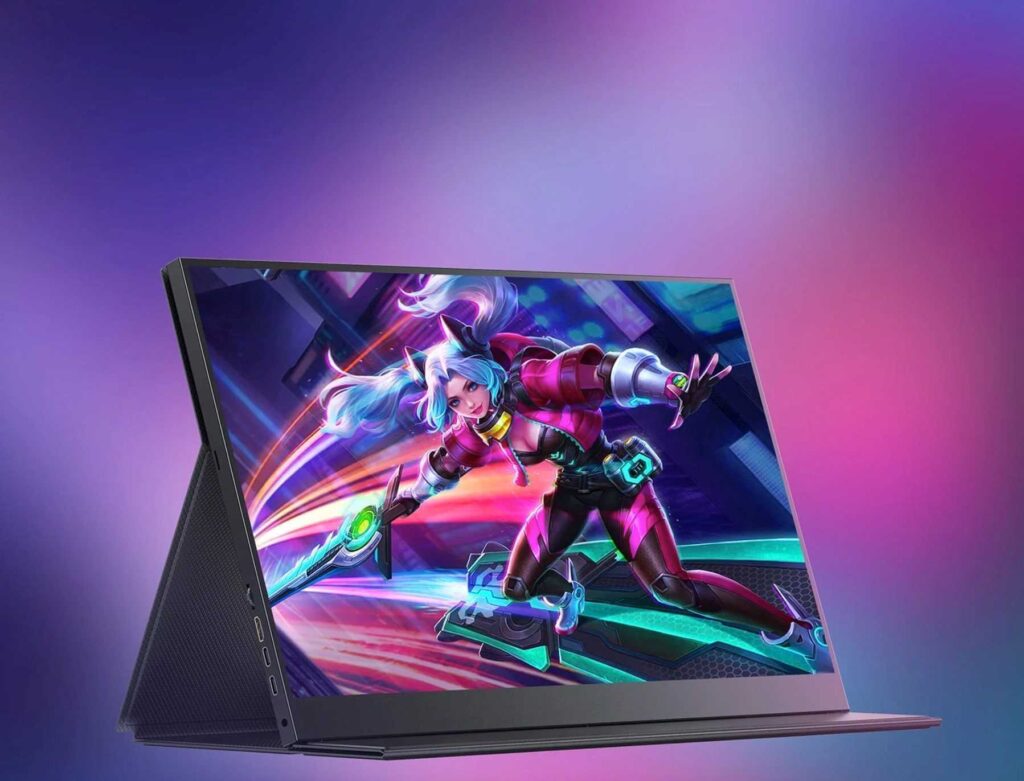
What distinguishes NxtLED™ isn’t a single dramatic feature, but a collection of refinements designed to address those everyday issues. Brightness is not mostly dependent on one single broad light source but is rather distributed more evenly across the panel. The change that is made there helps to even out the contrasts; the very bright corners, the dim center spots, the instances when dark scenes appear as indistinct shapes.
People who’ve tried devices using this newer technology often describe the image as calmer. Shadows keep their detail, colors separate cleanly, and the entire picture feels more stable. It’s subtle, but the difference becomes clear when you go back to a traditional LED and wonder why everything suddenly looks slightly dull.
Built for the Way People Work Today
Not long ago, most screens stayed put on a desk. Now they move constantly. A laptop might travel from the kitchen table to a co-working space to a client meeting. Portable displays fold into backpacks and get set up in temporary work spots. Lighting changes, surroundings shift, and traditional LED panels struggle to keep up.
Screens built with newer approaches tend to respond better to these moving environments. They stay readable near windows, hold their clarity under overhead lights, and don’t wash out as easily when the room changes. By coupling any of these screens with a portable dual monitor, individuals assembling multi-screen setups while traveling can generate a workspace that doesn’t feel any less than a regular office setup. Additionally, when a display is consistent in its performance from location to location, you focus on your work instead of combating the glare or moving your laptop for the tenth time.
Color That Doesn’t Drift
Color accuracy may seem like a concept that only designers and photographers need to be concerned with; however, it has an impact on daily usage in a more significant way than people acknowledge. Even a regular LED panel can change colors depending on the angle from which you are viewing it and the light from the environment. That’s why a photo looks perfect in one room and slightly off in another.
With the improved light control used in NxtLED™ designs, tones stay steadier. Small specifics stay recognizable, skin tones do not wander into an unnatural realm, and reds appear like reds. Hence, whatever you are doing, whether it be editing pictures, scanning papers, or reading a presentation, the screen is steady in its behavior, making it simple to believe what you are witnessing.
A Better Fit for Mobile Work
Anyone who carries their screen around knows that durability matters just as much as clarity. Constant movement takes a toll. Many displays using this updated approach feel sturdier and more stable, making them better suited for field workers, consultants, travelers, and students who pack their gear every day.
They also tend to pair well with accessories that expand usable space. Without compromising visual quality, a laptop screen extender transforms a little table or hotel desk into a more practical arrangement. This is an easy approach to lessen the sense of overcrowding in remote work.
Comfort Over Long Hours
Eye strain manifests itself slowly, not all at once. It enters gently as you squint at too-bright areas or have trouble reading darker ones More even lighting and steadier contrast help reduce that strain. When details stay sharp and the picture doesn’t shift as you move your head, the screen becomes easier to spend long stretches with.
That comfort is one of the unexpected benefits of newer screen designs. It might not be obvious to you at all, but after a long day, you can’t really overlook the difference.
Why It Matters
The shift toward better display technology isn’t about chasing specs. It is about making interfaces that are compatible with the current working style of people. Whether you are moving between different places, working together in the shared spaces, or just making long hours, you need a screen that supports your work without turning into something you have to handle again.
NxtLED™ represents one step in that direction. By evening out the light, fixing the color, and making the image sharper, it gives the impression that mobile screens are more trustworthy. Such a change fuses itself with your everyday life silently, up until the moment when you switch back to an old screen and cannot understand why it has become so difficult to look at.