
12 Website Wins that Grow Trade School Enrollments

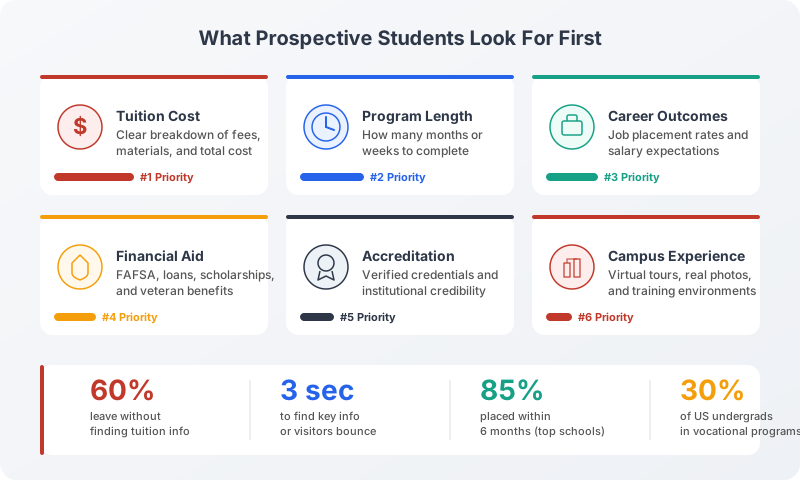
According to the NCES, over 30% of undergraduates in the US are studying at institutions that offer two-year degrees or vocational training. These institutions represent a large potential market for students looking for hands-on schooling.
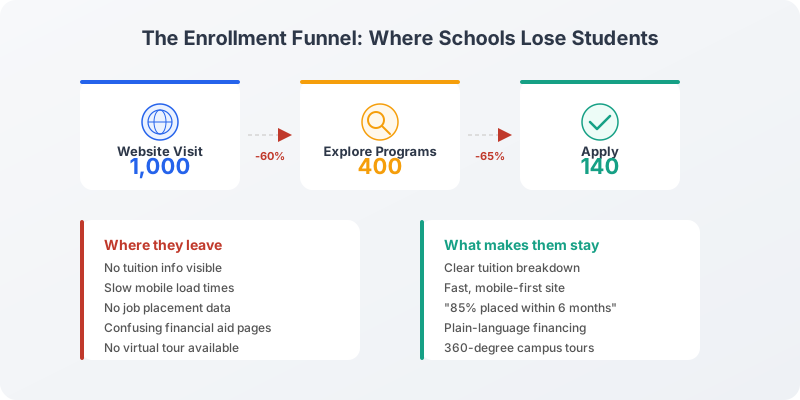
However, many vocational schools continue to struggle with converting visitors to their websites into student applicants. The unfortunate reality is that most enrollment issues arise from the college or vocational school websites and webpages more than they result from poor marketing.
If a future student visits your website and doesn’t quickly see the tuition costs, how long a program will take, or potential careers after they graduate, they will just leave. It isn’t difficult to fix. You need to remove the friction on your website and provide future students with a reliable experience.
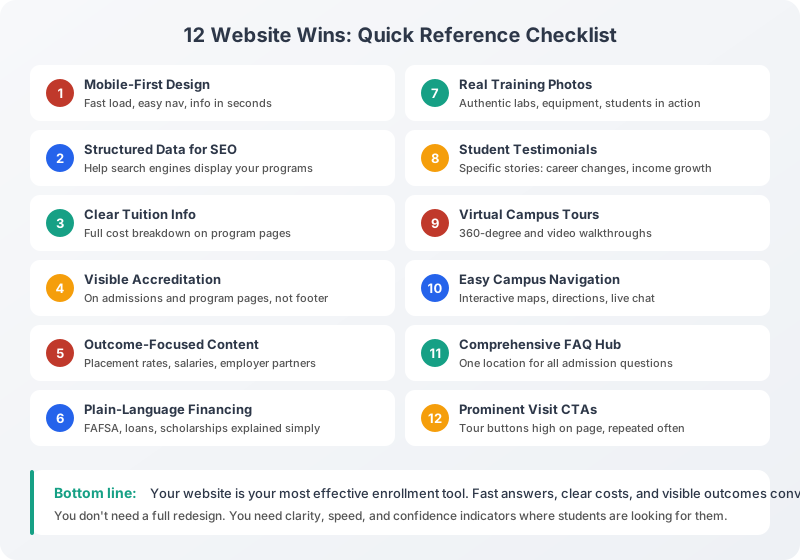
Here we’ll explore 12 website enhancements that will increase the likelihood of gaining prospective students into your trade school.
Ensure Your Mobile Site Is Easy to Use and Loads Quickly
Most students will look for colleges and vocational schools on their phones. A poor mobile website can result in visitors leaving before they discover what they wanted. They are far less likely to use your services if your mobile site takes too long to load, takes too long to find the relevant information, or requires multiple scrolls to get to the information they are searching for.
An effective mobile site will provide visitors with a positive experience by offering a simple and helpful interface, quick loading times for mobile devices, and easy navigation.
When someone views your website for the first time, they should be able to find your services and the time frame for completion in just seconds.
Help Search Engines to Recognize Your Programs
When visitors type in ‘electrician certification near my location,’ your program pages must be obvious. Adding structured program data will help search engines display the information that users are looking for.
While it’s not flashy, adding structured data does improve the visibility and click-through rates of your pages in a competitive marketplace.
Provide Clear Tuition Information
Cost anxiety stops applications before they start. They assume the worst if they cannot find tuition information on the program page. Clearly describe tuition prices, describing what is included. It may include the evaluation fees, tools, and materials.
Prospective students will feel comfortable inquiring about your program once the tuition price is transparent and they know exactly what to expect.
Display Your Accreditation Where Potential Students Will See It
The fact that you are accredited is not only a compliance issue; it is also an indicator of how credible you are as an institution. Rather than having your accreditation in the footer of your website, place it on your admission and program pages.
Clearly state the program length, how to obtain frequently asked questions, and if there are campus visits when you are marketing your programs, such as vocational training at AAI.
When you provide transparency, it establishes credibility with potential students.
Focus on Outcomes Over Classes Alone
Enrollments are not for classes; they are for future careers! Provide your job placement rates, graduation rates, and anything else you may have such as employer partners and salary information. The more specific and statistical the information is, the less uncertainty there is.
Even something as simple as “85% of students are placed within six months” gives people confidence in their enrollment decision.
Explain Financing in Plain Language
Most financial aid pages read like they’re written by a lawyer: “Don’t do that!” When explaining financing options, it’s important to do so casually. To assist students as they transition into postsecondary education, you should inform them about their options for obtaining federal financial aid (FAFSA), student loans, scholarships, and veteran benefits.
When students are able to identify and secure financing options to pay for their education, they will have the confidence to continue attending your institution.
Show Real Training Environments
Education provided in trade schools is hands-on. Your website should also provide such experience. Use real pictures and videos of labs, equipment, and students engaged in learning to allow your visitors to visualize themselves participating in that program. Authentic images outperform stock photography.
Real Stories from Current Students
Testimonials work, but only when they are specific. If your students have transitioned from one career to another, if they have increased their incomes, or if they found benefit in the flexible scheduling of your program, share that information.
Real, specific stories about students provide social proof that is difficult to gain through generic praise alone.
Provide Virtual Tours
Many prospective students cannot visit the school’s campus right away. An excellent way to keep their interest in a college high is to provide 360-degree or video tours of the campus. Virtual tours provide them with the means to make an informed decision about whether or not to come to campus before they have physically arrived on campus.
Simplify Campus Navigation
Even small delays in scheduling a visit due to uncertainty about where to park or where the admissions office is are enough to cause a prospective student to put off coming to campus. You can avoid these issues by providing an online interactive map and clear directions.
Live chat gives prospective students immediate access to answers about their questions, such as how long a program will be or if classes are offered during the evening. Providing immediate responses allows you to prevent prospective students from leaving your website to visit another college for answers.
Create a Comprehensive FAQ Hub
Instead of providing the answers to frequently asked questions on multiple pages of the college website, create one central location for frequently asked questions. It will allow prospective students to find all admission-related information in one location, including:
- The admission requirements
- Age minimums
- Materials and supplies needed for each course
- Class schedules
A well-organized FAQ section will not only reduce the workload for the admissions staff but also increase the prospective applicants’ confidence in applying.
Make the Campus Visit Impossible to Miss
Prospective students may not even see your ‘Schedule a Tour’ button if you put it near the bottom of the website. To maximize the effectiveness of your webpage for prospective students, you should move those buttons up higher on key pages, repeat them in the middle of the page, and have a clear and unambiguous process for booking a tour.
When a prospective student understands what their next steps are, they are much more likely to take action and complete them.
What Works for Your Growth
You need fast, clear information about costs that are easy to understand; credentials that are easy to verify, and verifiable outcomes for potential future employment. When your website provides fast and confident answers to these questions, enrollment will naturally increase.
You don’t have to redesign your site. However, you need to create areas within the site that will provide clear direction, fast access, and confidence indicators when a potential student is searching for them.
If you are able to consistently create these types of elements on your website then it will become your most effective asset in achieving your enrollment objectives.