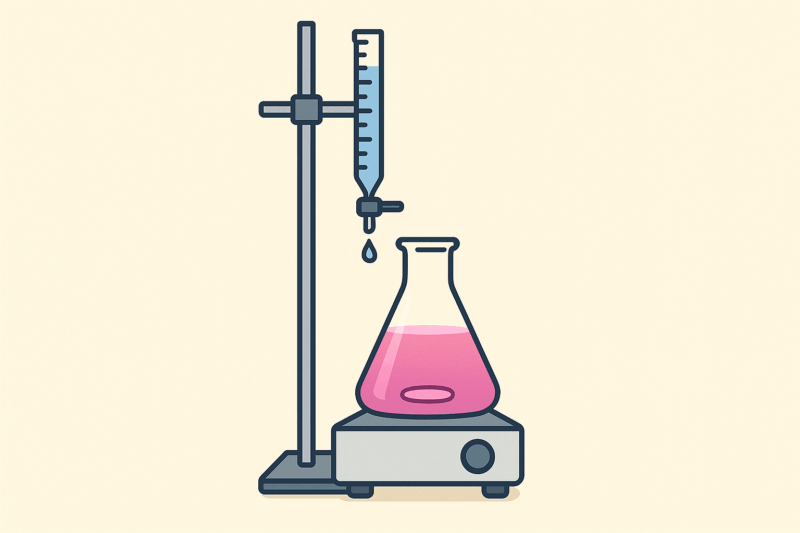
Titration is the quantitative analytical technique where a known-concentration titrant is added drop by drop to an unknown analyte until the reaction completes. This study note covers the setup (burette, flask, indicator), the acid-base calculation using M1V1 = M2V2, the difference between equivalence point and endpoint, titration curves and indicator selection, other types (redox, complexometric, precipitation, back titration), and common sources of error.
Chemistry
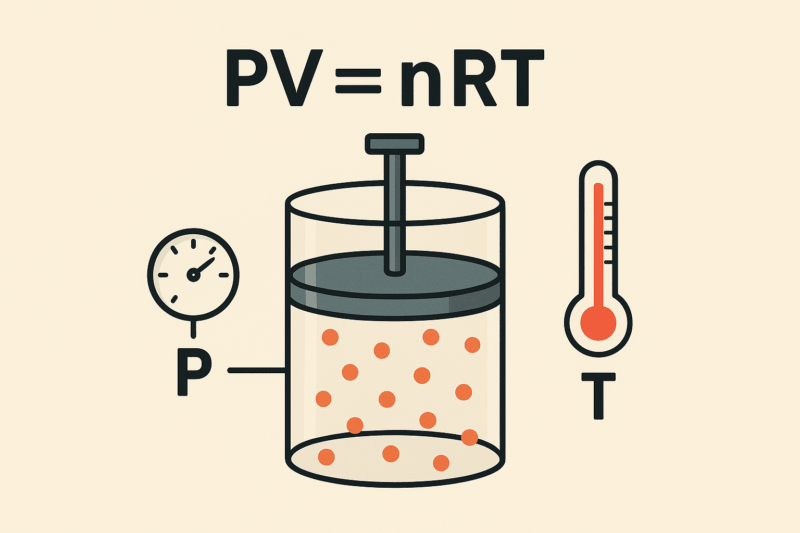
The ideal gas law connects pressure, volume, amount, and absolute temperature. Learn the formula, units, examples, assumptions, and real-gas limits.
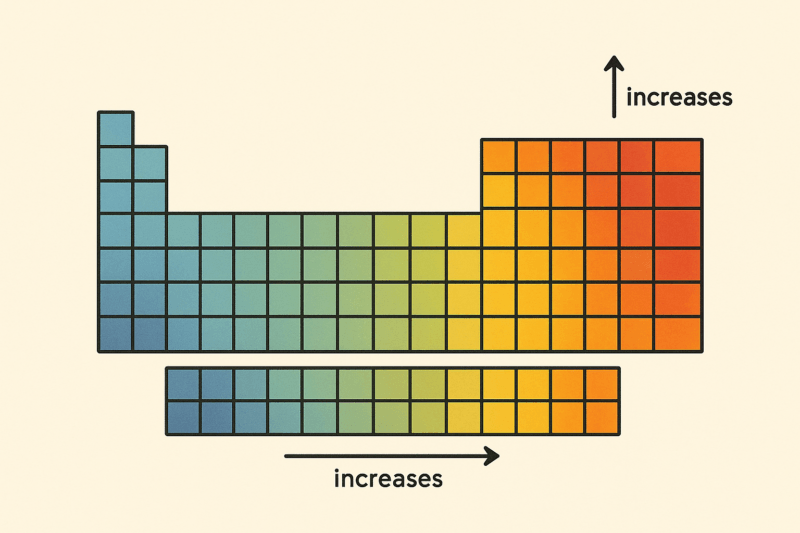
Electronegativity is how strongly an atom pulls bonded electrons toward itself. This study note covers the Pauling scale, the two periodic-table trends (across a period, down a group), how to use electronegativity differences to predict bond type (nonpolar, polar, ionic), polar molecules and dipoles, and why electronegativity is the single most useful concept in introductory chemistry.
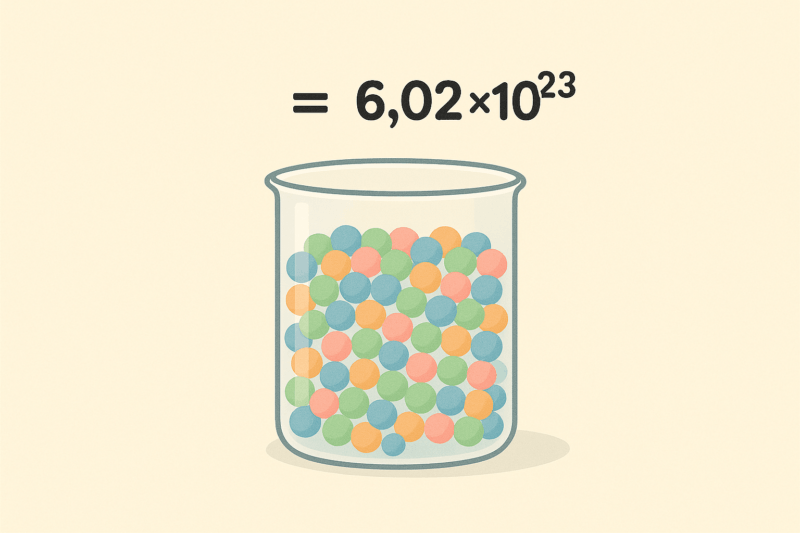
Avogadro’s number is the bridge between the atomic and the everyday — 6.022 × 10²³ particles in one mole. This study note covers the exact value, what a mole is, how to use it in mass-to-moles-to-particles calculations, molar mass and the periodic table connection, the historical story from Avogadro to modern silicon-sphere measurements, and the 2019 SI redefinition that fixed N_A as an exact constant.
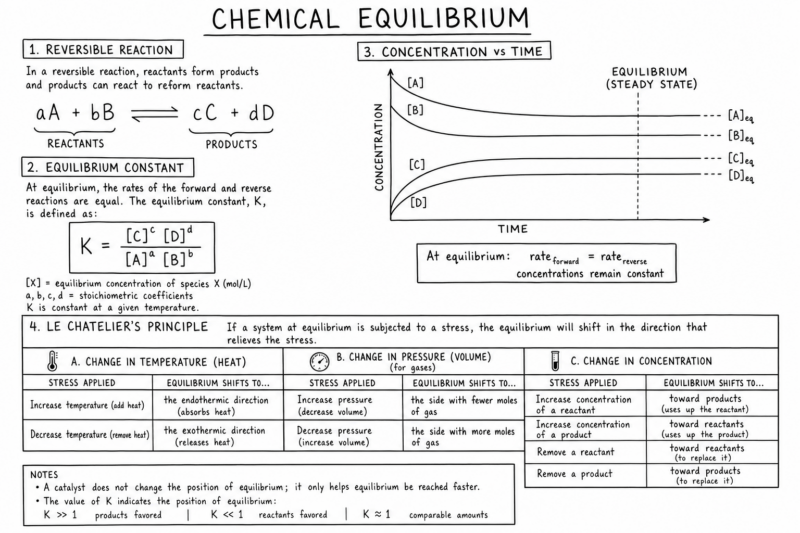
Chemical equilibrium describes reversible reactions in steady state. Full study note: equilibrium constants, Le Chatelier’s principle, ICE tables, and applications in industry and biology.
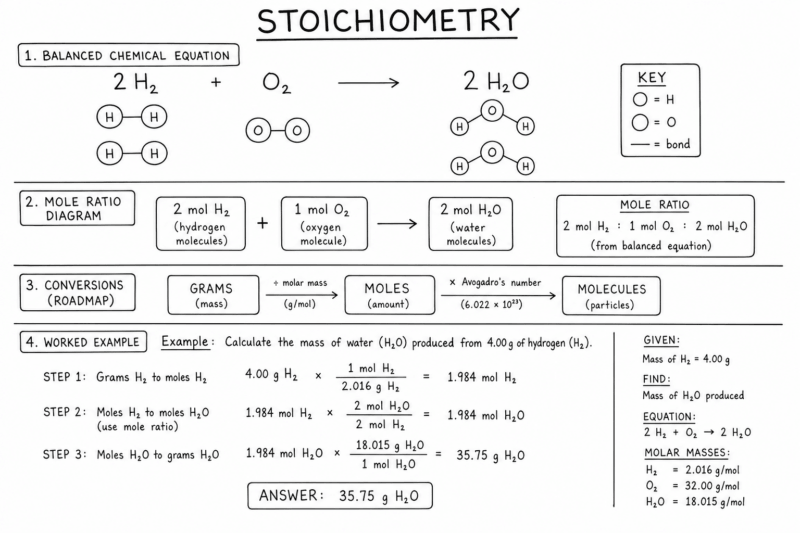
Stoichiometry is the quantitative arithmetic of chemical reactions. Full study note: balancing equations, mole ratios, limiting reagents, percent yield, and worked examples.
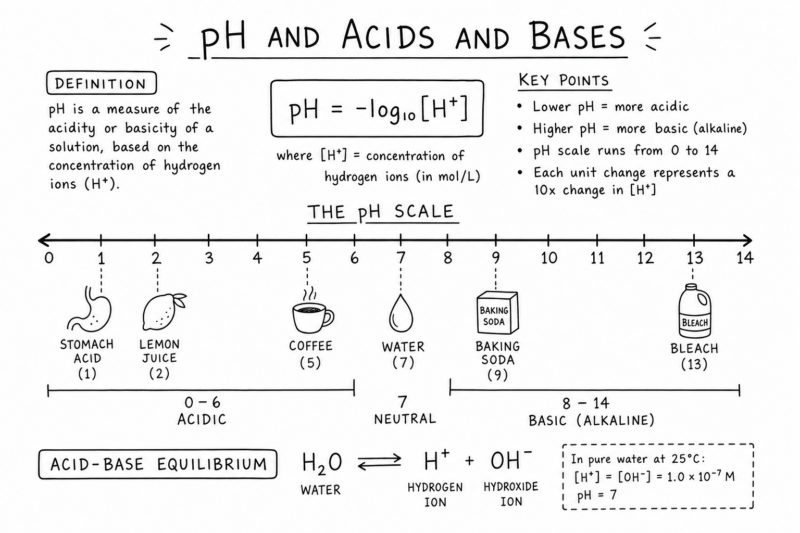
pH measures hydrogen ion concentration on a logarithmic scale. Full study note: pH definition, acid-base theories, strong vs weak, buffers, titration, and applications in biology and industry.
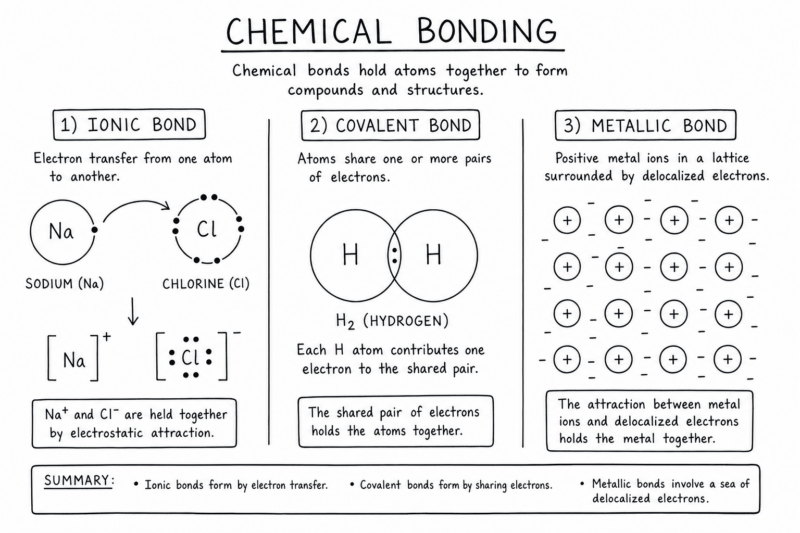
Chemical bonding holds atoms together to form molecules and materials. Full study note: ionic, covalent, and metallic bonds, polarity, intermolecular forces, and how bonding shapes material properties.
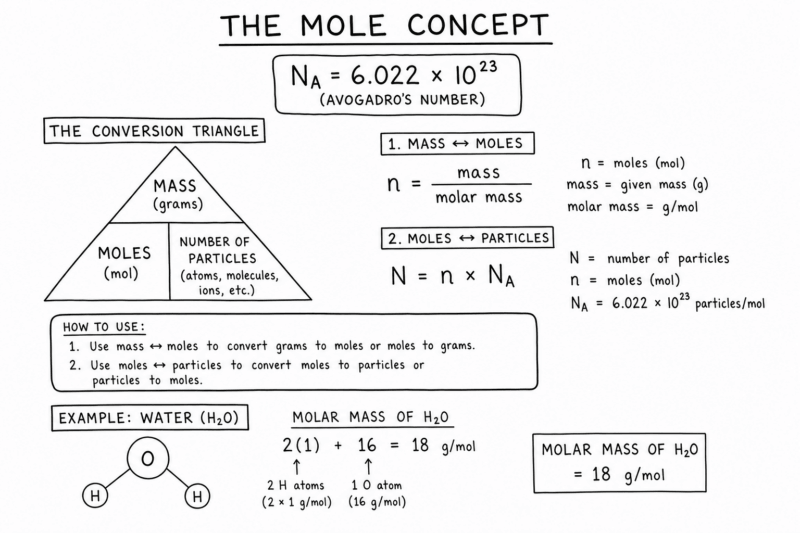
The mole concept is chemistry’s bridge between atoms and weighable amounts. Full study note: Avogadro’s number, molar mass, conversions, examples, and why it underpins all stoichiometry.
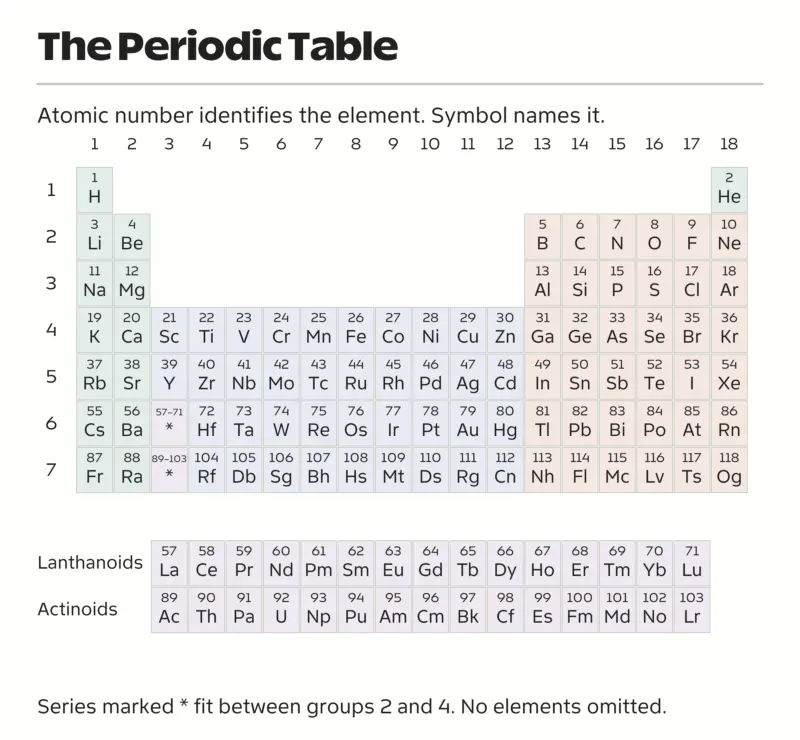
The periodic table organizes the elements by atomic number and chemical properties. Full study note: structure, groups, periods, trends, history, and the deep quantum reason behind it.
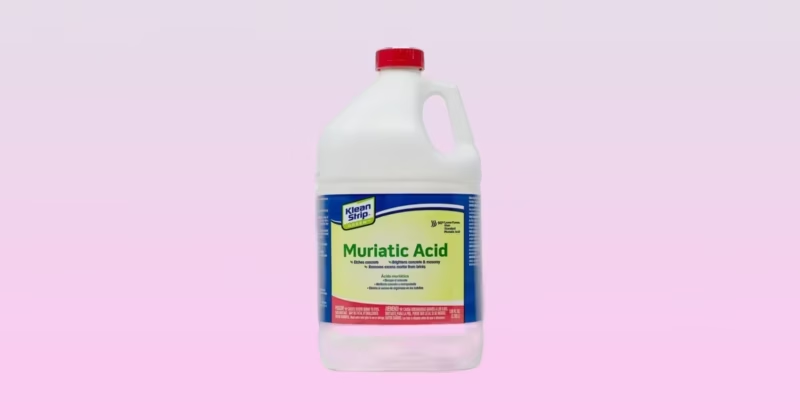
Muriatic acid, also known as hydrochloric acid, is one of the most commonly used industrial and household acids. From pool maintenance and masonry cleaning to metal processing, understanding its properties, handling procedures, and safety precautions is essential. This reference covers muriatic acid’s chemistry, common uses, safety guidelines, and storage requirements.

Chemical reactions are everywhere. From the rust on your car to the food you digest, every physical process involves a type of chemical reaction. Understanding the main types of chemical reactions like synthesis, decomposition, single replacement, double replacement, and combustion is fundamental to chemistry. This guide breaks down each type with clear examples.