
 by
by
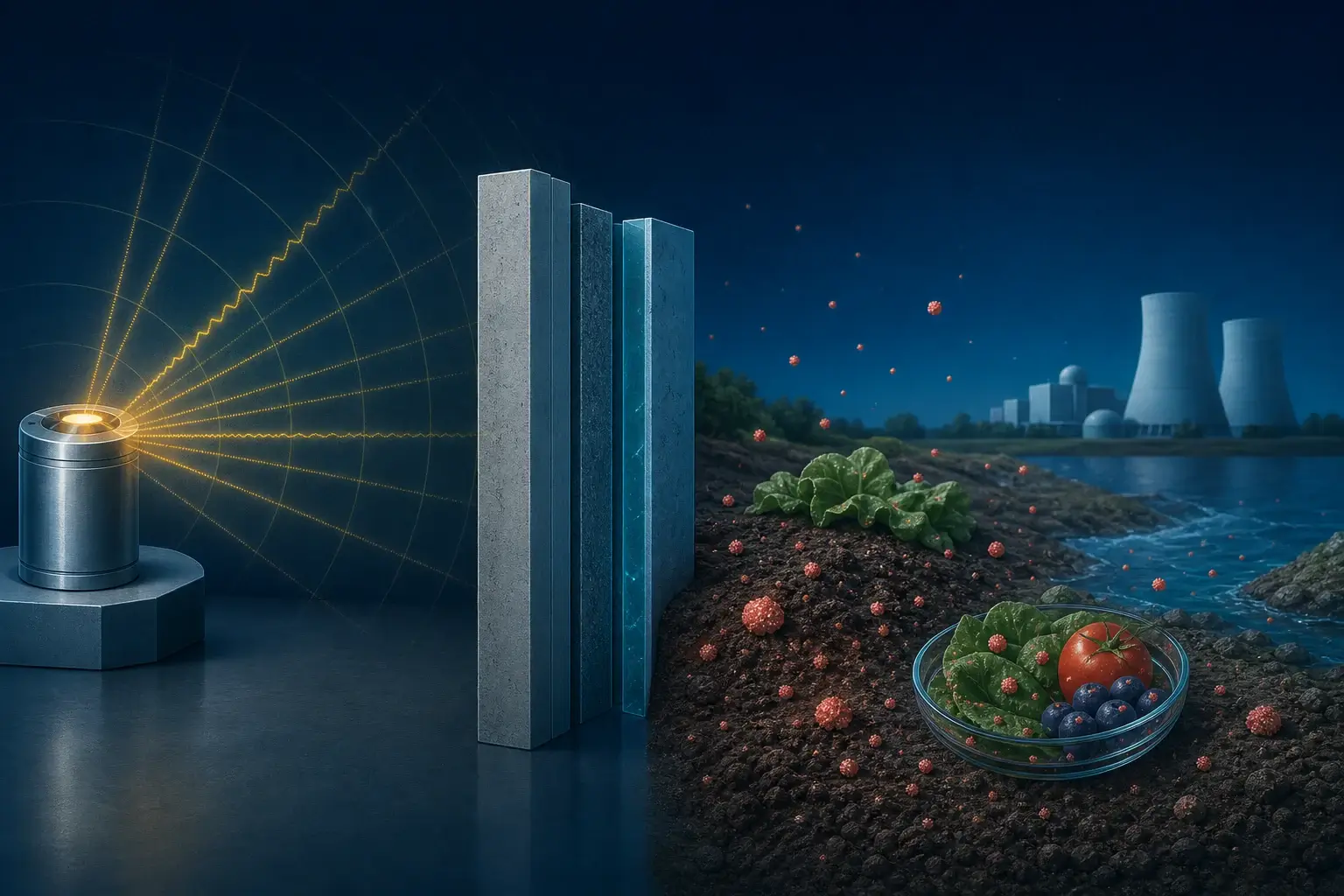
Radioactive pollution is the unwanted presence of radioactive material in air, water, soil, food, buildings, or living tissue. That is not the same as radiation exposure. You can be exposed to a sealed X-ray source without becoming contaminated, while radioactive dust on clothing can continue exposing you until it is removed.
That distinction matters because the response changes. Exposure is reduced by time, distance, and shielding. Contamination calls for containment, decontamination, monitoring, and safe waste control. Treating every radiation source as “pollution” hides the practical question: where is the radioactive material, and how can it reach people?
What Is Radioactive Pollution?
Radioactive pollution occurs when radionuclides are present where they should not be, or at concentrations that create an unacceptable exposure pathway. A radionuclide is an unstable isotope that releases energy as it changes into a more stable nucleus. The emitted radiation may include alpha particles, beta particles, gamma rays, or neutrons.
Natural background radiation is not automatically pollution. Cosmic particles, potassium-40 in the body, uranium and thorium in rocks, and radon in air are part of the normal environment. A natural source becomes a pollution problem when human activity concentrates, redistributes, or traps it in a way that raises risk. Uranium mining waste and poorly ventilated radon-prone buildings are good examples.
| Term | What it means | Practical question |
|---|---|---|
| Radiation | Energy carried by particles or electromagnetic waves | What type and energy reaches the body? |
| Exposure | Radiation passes through or deposits energy in a person or object | What dose was received? |
| Contamination | Radioactive material is present on or inside something | Where is the material and can it spread? |
| Radioactive pollution | Environmental contamination that creates harm or unacceptable risk | Which pathway links the source to people or ecosystems? |
Where Does Radioactive Pollution Come From?
The main sources are nuclear fuel-cycle operations, weapons production and testing, accidents, mining and mineral processing, medical and industrial sources, and badly managed waste. The label alone does not tell you the risk. A small, sealed calibration source can be safe in use, while dispersed powder with the same activity can be difficult to contain.
- Mining and milling: uranium, phosphate, rare-earth, coal, and oil-and-gas operations can concentrate naturally occurring radioactive material in tailings, scale, sludge, and ash.
- Nuclear facilities: controlled releases are monitored, but leaks, damaged fuel, fires, or loss of cooling can spread radionuclides beyond designed barriers.
- Weapons testing and conflict: fission products and activated material can enter the atmosphere and later deposit on land or water.
- Medicine and industry: radiotherapy, imaging, gauges, well logging, sterilization, and research create useful sources that become hazards if lost, stolen, or discarded incorrectly.
- Radon: radon-222 produced in the uranium decay chain can move from soil into buildings and accumulate in indoor air.
The cosmic radiation guide explains a different natural source: energetic particles arriving from space. Cosmic radiation contributes to dose, especially at altitude, but it does not usually contaminate a room, field, or water supply.
How Radioactive Material Reaches People
A source matters only when a pathway connects it to a receptor. Radioactive pollution moves by airborne dust and gas, surface water, groundwater, food chains, direct contact, and resuspension of contaminated soil. A proper assessment therefore traces source, transport, exposure route, dose, and affected population in that order.
- Inhalation: radon gas, aerosols, smoke, or contaminated dust enters the lungs.
- Ingestion: contaminated water, milk, crops, fish, or soil carries radionuclides into the digestive system.
- External irradiation: gamma-emitting material in soil, waste, or structures exposes the body from outside.
- Wounds and skin transfer: material can enter through broken skin or move from hands to the mouth.
- Food-chain transfer: plants and animals can concentrate some radionuclides, although transfer varies greatly by element and environment.
Alpha, Beta, Gamma, and Neutron Radiation
Radiation type changes both shielding and biological risk. Penetration is only one part of the problem. Alpha particles do not travel far through air or intact skin, but an alpha emitter inhaled into the lung can deposit energy densely in a small volume of tissue. Gamma rays are more penetrating, so external shielding becomes important.
| Radiation | Typical penetration | Main concern | Common shielding approach |
|---|---|---|---|
| Alpha | Stopped by paper or outer dead skin | Serious when inhaled or swallowed | Contain the material; prevent intake |
| Beta | Passes into skin by millimetres to centimetres | Skin dose and internal contamination | Plastic, glass, or aluminium chosen to limit secondary radiation |
| Gamma | Penetrates deeply | Whole-body external and internal dose | Dense material such as lead or thick concrete |
| Neutrons | Highly penetrating; interaction depends on energy | Tissue damage and activation of materials | Hydrogen-rich material, often combined with neutron absorbers |
How Radioactivity and Dose Are Measured
Three units answer three different questions. The becquerel tells you how quickly nuclei decay. The gray tells you how much radiation energy a kilogram of material absorbs. The sievert adjusts absorbed dose for radiation type and biological sensitivity. Confusing them is like confusing litres of fuel, heat released, and injury risk.
- Becquerel (Bq): one nuclear decay per second. It measures activity, not harm by itself.
- Gray (Gy): one joule of absorbed radiation energy per kilogram.
- Sievert (Sv): a dose quantity weighted for biological effect. Public and occupational values are often stated in millisieverts or microsieverts.
- Counts per second: a detector reading that depends on instrument efficiency, geometry, energy response, and background. It is not automatically a dose rate.
The US Environmental Protection Agency separates natural, medical, occupational, and consumer sources in its radiation source and dose overview. That framework is more useful than calling any detectable count dangerous.
Health Effects of Radioactive Pollution
Ionizing radiation can remove electrons from atoms and damage cells directly or through reactive chemical species. The outcome depends on dose, dose rate, radiation quality, tissue, age, and whether the material is outside or inside the body. A detector alarm tells you to investigate. It does not diagnose a health effect.
- Tissue reactions: burns, cataracts, marrow suppression, and acute radiation syndrome have threshold-like behaviour and appear after sufficiently high doses.
- Cancer risk: stochastic risk rises with dose, but a particular later cancer cannot usually be assigned to one low exposure.
- Embryo and fetus: sensitivity depends strongly on developmental stage and dose.
- Internal emitters: chemical behaviour matters. Iodine can concentrate in the thyroid, while strontium can follow calcium into bone.
- Ecosystems: contamination can restrict land and food use even when visible ecological damage is not immediate.
Radon Deserves Special Attention
Radon is an invisible radioactive gas produced naturally in soil and rock. Its short-lived decay products can attach to airborne particles and irradiate lung tissue when inhaled. The practical response is measurement, not guessing from geography or building age. If a test is high, better under-slab ventilation and sealing can reduce entry.
How Radioactive Pollution Is Controlled
Good control starts with the pathway that dominates dose. There is no universal cleanup method. Removing topsoil may reduce external exposure but create a large waste stream. Pumping groundwater may be slow. Sealing material in place may be safer than disturbing it. The right option depends on radionuclide half-life, mobility, concentration, land use, and the people who could be exposed.
- Characterize: identify radionuclides, activity, physical form, depth, and spatial distribution.
- Stop the source: isolate leaks, stabilize waste, control dust, and prevent contaminated water from spreading.
- Break pathways: restrict access, cover soil, ventilate radon, protect water supplies, and control affected food.
- Reduce dose: apply time, distance, shielding, respiratory protection, and remote handling where appropriate.
- Remediate: remove, wash, immobilize, contain, or allow decay under a monitored plan.
- Verify: compare follow-up measurements with cleanup criteria and keep long-term records.
The International Atomic Energy Agency remediation guide emphasizes site characterization, exposure pathways, stakeholder decisions, and long-term management. Cleanup is a risk decision, not a contest to make every detector read zero.
What To Do After a Suspected Release
Follow instructions from local emergency authorities because the correct action depends on the isotope and release. Sheltering indoors may be safer than driving through contamination. Potassium iodide protects only the thyroid from radioactive iodine, and only when authorities recommend the right dose and timing. It does not protect against other radionuclides or external gamma radiation.
- Go indoors, close windows and doors, and switch off systems that pull outside air if authorities advise sheltering.
- Remove the outer layer of clothing carefully and bag it away from people and pets; this can remove much of loose contamination.
- Wash exposed skin and hair gently with soap and water. Do not scrub hard enough to damage skin.
- Use official food, water, evacuation, and iodine guidance. Do not rely on a consumer meter alone for medical decisions.
Related Physics Guides
Use these next if you want to connect this result with the surrounding physics:
- Cosmic radiation sources and particle showers
- The four fundamental forces of nature
- Physics basics study notes
Key Takeaways
- Radioactive pollution means radioactive material is where it should not be; radiation exposure can occur without contamination.
- Risk depends on activity, radiation type, chemical form, pathway, dose, and time, not on the word “radioactive” alone.
- Becquerels measure decay rate, grays measure absorbed energy, and sieverts estimate biological effect.
- Alpha radiation can be a serious internal hazard even though it has little external penetration.
- Control works by containing material, breaking exposure pathways, reducing dose, and verifying the result with measurements.
Frequently Asked Questions
What is radioactive pollution in simple terms?
Radioactive pollution is unwanted radioactive material in air, water, soil, food, buildings, or organisms. It can create external exposure or enter the body through breathing, eating, drinking, or wounds.
Is radiation exposure the same as radioactive contamination?
No. Exposure means radiation reaches you. Contamination means radioactive material is on or inside you or your surroundings. An X-ray can expose you without contaminating you.
What are the main sources of radioactive pollution?
Important sources include uranium mining and milling, nuclear fuel-cycle failures, weapons fallout, poorly controlled medical or industrial sources, contaminated waste, and concentrated naturally occurring radioactive material.
Which type of radiation is most dangerous?
There is no single answer. Alpha radiation is dangerous inside the body, gamma and neutron radiation can create penetrating external dose, and beta radiation can harm skin or internal tissue. Dose and pathway decide the risk.
How can radioactive pollution be reduced?
Control the source, contain the material, interrupt air-water-food pathways, use time-distance-shielding principles, remediate where benefits exceed disruption, and verify the result through appropriate monitoring.
Does a Geiger counter measure radiation dose?
A Geiger counter measures detector counts. Converting counts to dose requires calibration for the radiation type, energy, geometry, and instrument response. A raw count rate is not automatically a health-risk number.
If you remember one rule, make it this: find the material, identify the pathway, and measure the dose before drawing a conclusion.
Tell Google you want more of this.
Add Gaurav Tiwari as a preferred sourceOne tap, and this site shows up more often in your own Top Stories, AI Overviews and AI Mode. Remove it any time.