by
by
Types of stars are easier to understand when you stop memorizing names and sort them by one question: what stage of life is the star in? A hot blue O-type star, a stable yellow G-type star like the Sun, a red giant, a white dwarf, and a neutron star are not random labels. They are clues about mass, temperature, fuel, and age.
The clean student version is this: stars form inside cold gas and dust clouds, spend most of their lives as main sequence stars, then end as white dwarfs, neutron stars, or black holes depending mostly on mass. Color and spectral class tell you surface temperature. Luminosity class tells you size and evolutionary stage.
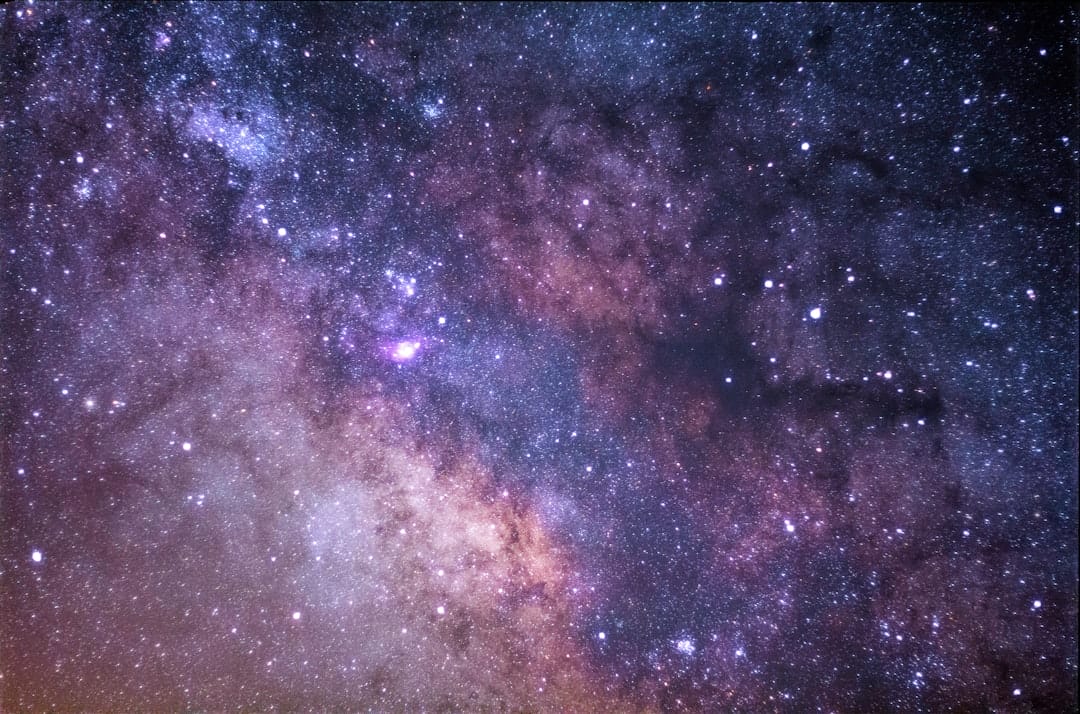
Types of Stars at a Glance
The main types of stars are main sequence stars, red giants, supergiants, white dwarfs, neutron stars, red dwarfs, and brown dwarfs. Astronomers also classify stars by spectral class: O, B, A, F, G, K, and M, from hottest blue stars to coolest red stars.
| Type or class | What it means | Example or note |
|---|---|---|
| O, B, A, F, G, K, M | Spectral classes based mainly on temperature and color | O stars are hottest and blue. M stars are coolest and red. |
| Main sequence | Stable hydrogen fusion in the core | The Sun is a G-type main sequence star. |
| Red giant | A later stage after core hydrogen runs low | The Sun should become a red giant in about 5 billion years. |
| Supergiant | A huge evolved star with high luminosity | Betelgeuse is a red supergiant. |
| White dwarf | The hot dense remnant of a low- or medium-mass star | A future stage for the Sun after its red giant phase. |
| Neutron star | The collapsed core left by some massive-star supernovae | Pulsars are rotating neutron stars. |
| Brown dwarf | A substellar object too small for sustained hydrogen fusion | Between giant planets and true stars. |
NASA’s Star Types page is a good source for this basic sorting. I would use the table above as the first mental map, then use the life cycle section below to connect the names.
What Is a Star?
A star is a massive, self-gravitating ball of hot plasma that shines because nuclear fusion releases energy in its core. Gravity pulls matter inward. Gas pressure and radiation push outward. A stable star exists because those two pressures balance for a long time.
- Fuel: main sequence stars fuse hydrogen into helium.
- Brightness: luminosity depends strongly on size and temperature.
- Color: blue stars are hotter, red stars are cooler.
- Mass: mass decides how fast a star burns fuel and how it dies.
- Composition: stars are mostly hydrogen and helium, with heavier elements in smaller amounts.
For a beginner, that balance matters more than the vocabulary. Once you understand gravity versus pressure, the rest of stellar evolution feels less like a list and more like a story. NASA’s Star Basics page explains the same idea in a clean official format.
Spectral Classification: O, B, A, F, G, K, M
Spectral classification sorts stars by temperature and the pattern of light absorbed by atoms in their atmosphere. The usual sequence is O, B, A, F, G, K, M. The old classroom memory trick is fine, but the physics is the point: color tells you heat.
| Spectral class | Color | Temperature idea | What to remember |
|---|---|---|---|
| O | Blue | Hottest | Massive, rare, short-lived |
| B | Blue-white | Very hot | Bright and young |
| A | White | Hot | Strong hydrogen lines |
| F | Yellow-white | Moderately hot | Brighter and hotter than the Sun |
| G | Yellow | Sun-like | The Sun is a G-type star |
| K | Orange | Cooler | Longer-lived than Sun-like stars |
| M | Red | Coolest | Red dwarfs are the most common stars |
Do not read this as a size chart. A red supergiant can be enormous even though it is cooler at the surface than the Sun. Spectral class gives temperature. Luminosity class and radius tell the size story.
The H-R Diagram Is the Map
The Hertzsprung-Russell diagram, usually called the H-R diagram, plots luminosity against temperature or spectral class. It is the map that makes types of stars click. Main sequence stars form a diagonal band. Giants and supergiants sit above it. White dwarfs sit below it.
- Main sequence: stable hydrogen-burning stars, including the Sun.
- Giants and supergiants: evolved stars with huge radii and high luminosity.
- White dwarfs: hot but dim remnants, small in size but dense.
- Protostars: young objects still forming before stable core fusion begins.
Chandra’s education material on stellar evolution and the H-R diagram is useful because it connects the chart to actual stages, not just dots on graph paper.
Main Sequence Stars
Main sequence stars are stars in their long stable phase, when hydrogen fusion in the core produces helium and releases energy. This is the phase most stars spend most of their lives in. The Sun is on the main sequence right now.
Mass changes everything. A massive O-type main sequence star burns hot and dies young. A small M-type red dwarf burns slowly and can last for trillions of years. That is the tradeoff students often miss: bigger stars have more fuel, but they spend it far faster.
Red Giants and Supergiants
Red giants form when a star like the Sun runs low on hydrogen in the core and expands. The outer layers swell and cool, so the star looks redder. Supergiants are the massive-star version of the evolved stage, and they can become some of the largest visible stars.
This is where a common mistake appears. A red giant is not a brand-new type of star born red and huge. It is an evolutionary stage. The same star can move from main sequence to giant as its internal fuel balance changes.
White Dwarfs, Neutron Stars, and Black Holes
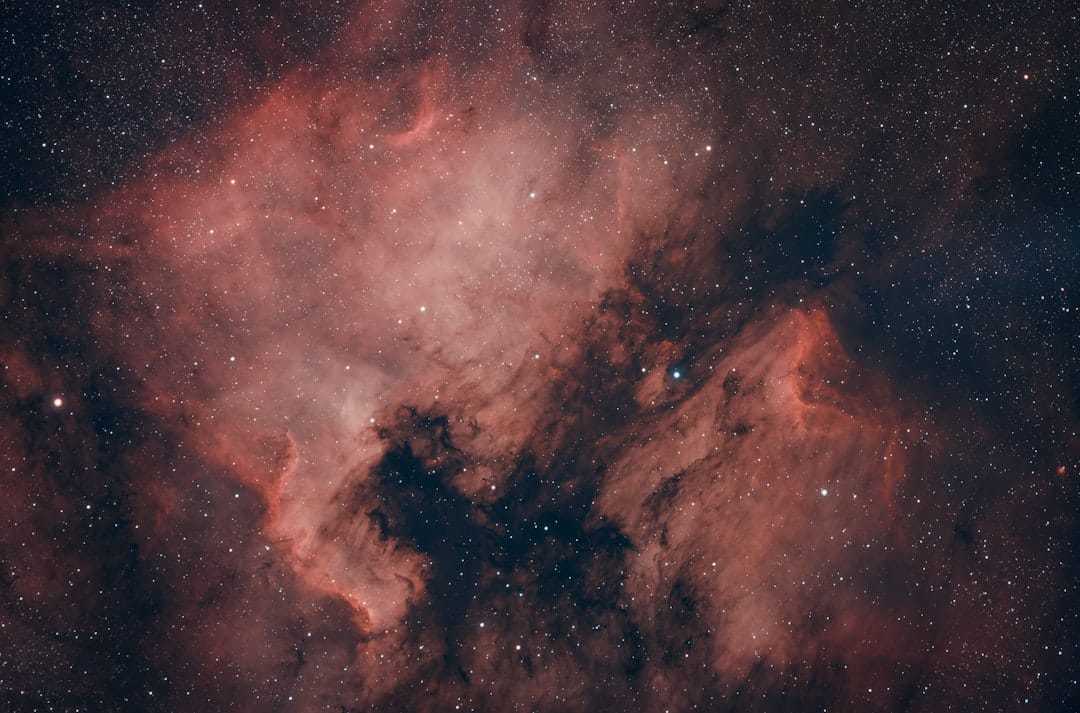
White dwarfs and neutron stars are stellar remnants, not normal fuel-burning stars. A white dwarf is the leftover core of a low- or medium-mass star. A neutron star is the collapsed core left after some massive stars explode as supernovae. A black hole can form when collapse goes further.
| Remnant | How it forms | Beginner note |
|---|---|---|
| White dwarf | A Sun-like star sheds outer layers and leaves its hot core | Dense, small, and no longer doing normal hydrogen fusion |
| Neutron star | A massive star explodes and its core collapses | Can pack more than a Sun’s mass into a city-sized object |
| Pulsar | A rotating neutron star beams radiation toward Earth | A pulsar is a neutron star seen through its pulses |
| Black hole | A massive collapsed core passes the point where light cannot escape | Not a star, but a possible endpoint of massive-star evolution |
A black dwarf is also worth naming because old textbooks mention it. A black dwarf would be a cooled white dwarf, but the universe is not old enough for white dwarfs to cool that far. So black dwarfs are theoretical, not observed objects.
Brown Dwarfs, Quasars, and Other Confusing Labels
Some astronomy labels sound like types of stars but are not normal stars. Brown dwarfs sit below the mass needed for sustained hydrogen fusion. Quasars are not stars at all. A quasar is an active galactic nucleus powered by matter falling into a supermassive black hole.
- Brown dwarf: too massive to be a planet in the ordinary sense, too small to be a true hydrogen-fusing star.
- Quasar: a bright active galaxy core, not a variable star.
- Nova: a temporary brightening event, often involving a white dwarf in a binary system.
- Supernova: a catastrophic stellar explosion, not a permanent star category.
- Variable star: a star whose brightness changes over time. The cause can vary by type.
This correction matters because the old habit of listing quasars, novae, supernovae, and pulsars as if they were the same kind of category creates confusion. Some are objects. Some are events. Some are behavior labels.
How Stars Form, Live, and Die
Stars form when cold gas and dust collapse under gravity. The center heats up, a protostar forms, and if the core becomes hot and dense enough, hydrogen fusion begins. From that point, the star’s mass decides the pace and the ending.
- Molecular cloud: cold gas and dust collect in a dense region.
- Protostar: gravity heats the center as material falls inward.
- Main sequence: stable hydrogen fusion begins.
- Expansion: the star becomes a giant or supergiant as core fuel changes.
- Final remnant: the ending becomes a white dwarf, neutron star, or black hole depending mostly on mass.
The lovely part, and the humbling part, is that stellar death also feeds new star birth. Supernovae spread heavier elements into space. Later clouds use that material to build new stars, planets, and eventually chemistry that can support life.
Binary, Multiple, and Clustered Stars
Stars are often not alone. A single star has no stellar companion. A binary system has two stars orbiting a shared center of mass. Multiple-star systems contain three or more stars. Star clusters are groups of stars born from the same cloud.
| Grouping | Meaning | Example |
|---|---|---|
| Single star | One star without a stellar companion | The Sun is single in the stellar sense, even though it has planets. |
| Binary star | Two stars gravitationally bound to each other | Sirius A and Sirius B |
| Multiple-star system | Three or more bound stars | Alpha Centauri is a nearby multiple system. |
| Open cluster | Young loose group of stars | Pleiades |
| Globular cluster | Dense old spherical cluster | Omega Centauri |
So planets do not make a star ‘single’ or ‘not single.’ In astronomy, the grouping question is about stellar companions. The Sun is a single star with planets, not a binary star.
The Sun as a Familiar Example
The Sun is a G-type main sequence star about 4.6 billion years old. It converts hydrogen into helium in its core, gives Earth most of its usable energy, and should remain broadly stable for billions of years before expanding into a red giant.
| Sun fact | Value to remember |
|---|---|
| Type | G-type main sequence star |
| Age | About 4.6 billion years |
| Main fuel | Hydrogen fusion into helium |
| Distance from Earth | About 150 million km, or about 8 light-minutes |
| Future | Red giant, then white dwarf |
For nearby-space context, my cosmic radiation guide explains high-energy particles from space, and the Eagle Nebula article gives a more visual example of a star-forming region.
What JWST Adds to the Story
The James Webb Space Telescope has made early star and galaxy formation feel less settled, in a good scientific way. Webb’s infrared view lets astronomers study distant galaxies, dusty star-forming regions, and young stellar populations that older visible-light telescopes could not see as clearly.
The basic life cycle of stars still holds. What Webb sharpens is the timeline and detail, especially in the early universe and in dusty regions where new stars are forming. For students, the lesson is simple: the textbook map is useful, but astronomy keeps adding better measurements.
NASA’s James Webb Space Telescope mission pages are the best place to follow those updates without turning every new result into hype.
Quick Corrections to Common Star Myths
Most star confusion comes from mixing classification systems. Temperature class, life stage, brightness behavior, grouping, and remnants are different sorting methods. Once you separate those buckets, types of stars become much easier to remember.
- Quasars are not stars: they are active galactic nuclei.
- Black holes are not stars: they are possible endpoints of massive-star collapse.
- Black dwarfs have not been observed: the universe is too young for them to exist yet.
- Red does not always mean small: red dwarfs are small, but red giants and red supergiants are huge.
- Brightness is not just distance: apparent brightness depends on distance, while luminosity is the star’s actual power output.
Related Physics and Astronomy Resources
If you are building a study path, read this page with Physics Basics and Key Forces, Kepler’s Laws of Planetary Motion, and Quantum Computing for Beginners. They sit in different parts of physics, but they train the same habit: define the system, name the forces, then follow the energy.
Frequently Asked Questions
What are the main types of stars?
The main types of stars include main sequence stars, red giants, supergiants, white dwarfs, neutron stars, red dwarfs, and brown dwarfs. Astronomers also classify stars by spectral classes O, B, A, F, G, K, and M, which mainly describe temperature and color.
What type of star is the Sun?
The Sun is a G-type main sequence star. It is currently fusing hydrogen into helium in its core. In about 5 billion years, the Sun is expected to expand into a red giant and later end as a white dwarf.
What is the H-R diagram used for?
The H-R diagram plots stellar luminosity against temperature or spectral class. It helps astronomers see where stars sit in their life cycle. Main sequence stars, giants, supergiants, and white dwarfs occupy different regions of the chart.
Are quasars types of stars?
No. Quasars are not types of stars. A quasar is an extremely bright active galactic nucleus powered by matter falling into a supermassive black hole. The old phrase quasi-stellar object describes appearance, not true stellar nature.
Are black dwarfs real stars?
Black dwarfs are theoretical remnants, not observed stars. A black dwarf would be a white dwarf that has cooled until it no longer emits much light. The universe is not old enough for white dwarfs to have cooled that far.
What is the difference between a red dwarf and a red giant?
A red dwarf is a small, cool, low-mass main sequence star. A red giant is an evolved star that has expanded after using much of its core hydrogen. Both look redder than the Sun, but they are very different stages and sizes.
Why are blue stars hotter than red stars?
Blue stars are hotter because their surfaces emit more short-wavelength light. Red stars are cooler and emit more light at longer wavelengths. This is the same temperature-color idea used in blackbody radiation, but applied to stellar surfaces.
Tell Google you want more of this.
Add Gaurav Tiwari as a preferred sourceOne tap, and this site shows up more often in your own Top Stories, AI Overviews and AI Mode. Remove it any time.