
How to Overcome Anxiety as a Student: 12 Techniques That Actually Help
In today’s fast-paced and highly competitive world, students often experience anxiety due to the numerous challenges they face in their academic lives. With increasing pressure to perform well in school, engage in extracurricular activities, and maintain a healthy social life, many students find it difficult to cope with the stress and anxiety accompanying these expectations. This article aims to provide students, educators, and parents with valuable information on understanding anxiety and practical strategies for overcoming it.
Table of Contents
Understanding Anxiety

Definition and Types of Anxiety
Anxiety is a natural response to stress or perceived threats, characterized by feelings of worry, unease, or fear about a particular event or situation. While mild anxiety can be beneficial by helping individuals stay alert and focused, excessive anxiety can be harmful and interfere with daily functioning.
Anxiety is a normal and often healthy emotion characterized by feelings of worry, unease, or fear about a particular event or situation. However, when these feelings become excessive, persistent, or uncontrollable, they can interfere with a person’s daily life and lead to an anxiety disorder.
Several types of anxiety disorders can affect students:
- Generalized Anxiety Disorder (GAD): Characterized by persistent and excessive worry about various aspects of life, including school, work, and personal relationships. GAD can lead to symptoms such as restlessness, fatigue, and difficulty concentrating.
- Social Anxiety Disorder: Involves intense fear and anxiety about social situations, often stemming from the fear of being judged, embarrassed, or rejected by others. Social anxiety can make it challenging for students to participate in group activities, make new friends, or engage in classroom discussions.
- Test Anxiety: A specific type of anxiety related to taking tests or exams. Students with test anxiety often experience extreme stress, nervousness, and self-doubt, which can negatively impact their performance.
Causes and Symptoms
Anxiety in students can stem from various factors, such as high academic expectations, peer pressure, family issues, and personal insecurities. Symptoms may include excessive worrying, difficulty concentrating, irritability, restlessness, fatigue, and sleep disturbances.
- High academic expectations: With increasing pressure to excel in school, students may experience anxiety about their academic performance and future prospects.
- Peer pressure: The desire to fit in and be accepted by one’s peers can lead to anxiety, particularly if students feel they are not meeting social expectations.
- Family issues: Problems at home, such as financial stress or strained relationships, can contribute to a student’s anxiety levels.
- Personal insecurities: Low self-esteem, body image issues, or a history of trauma can make a student more susceptible to anxiety.
Common symptoms of anxiety in students may include:
- Excessive worrying or fear
- Difficulty concentrating or focusing on tasks
- Irritability or agitation
- Restlessness or a feeling of being “on edge”
- Fatigue or sleep disturbances
- Rapid heart rate or shortness of breath
- Muscle tension or headaches
- Nausea or gastrointestinal issues
The Effects of Anxiety on Student Performance
Anxiety can significantly impact a student’s academic performance and overall well-being. Some potential effects include:
- Poor test scores: High anxiety levels can interfere with a student’s ability to concentrate and recall information during exams, leading to lower scores.
- Decreased motivation: Anxiety can make it difficult for students to stay motivated and engaged in their studies, potentially resulting in a decline in their overall academic performance.
- Impaired social functioning: Social anxiety can hinder a student’s ability to form and maintain friendships, engage in group projects, or participate in extracurricular activities.
- Lower self-esteem: As anxiety takes a toll on a student’s academic and social life, their self-esteem may suffer, exacerbating feelings of worry and self-doubt.
- Mental health concerns: Chronic anxiety can contribute to the development of other mental health issues, such as depression, eating disorders, or substance abuse.
Understanding the causes, symptoms, and effects of anxiety is essential for developing effective strategies to help students manage and overcome their anxiety, allowing them to achieve their full academic and social potential.
Case Studies to Help You Overcome Anxiety
In this section, we’ll explore three (hypothetical) case studies of students who have experienced different types of anxiety and how they learned to cope with and overcome their anxiety-related challenges. These may help you or someone you know — deal with anxiety-related issues.
Olivia’s Story: Test Anxiety
A high school senior, Olivia was a diligent student who always strived for academic excellence. However, as she prepared for her final exams and college entrance tests, she became increasingly anxious about her performance. The pressure to score well and secure a spot at a prestigious university took a toll on her mental well-being.
Symptoms
In the days leading up to her exams, Olivia experienced extreme stress, sleep disturbances, and difficulty concentrating. Her heart raced, and her hands trembled as she picked up her pen to begin her tests.
Interventions: Olivia sought help from her school counselor, who suggested several techniques to manage her test anxiety. These included:
- Practicing deep breathing exercises and progressive muscle relaxation to help calm her nerves before exams.
- Developing a consistent study routine and breaking her study sessions into manageable segments to reduce the pressure to cram information.
- Adopting a positive mindset and self-affirmations to boost her confidence and reduce self-doubt.
- Seeking additional support from her teachers and peers to reinforce her understanding of the course material.
Outcome
Over time, Olivia saw improvements in her ability to manage her test anxiety. Though she still experienced some nervousness before exams, she was better equipped to handle her stress and saw an improvement in her test scores.
Max’s Story: Social Anxiety
Max, a college freshman, had always been somewhat shy and introverted. When he began college, he found the prospect of making new friends and engaging in social activities daunting. His social anxiety prevented him from attending parties, participating in clubs, or even talking to his classmates.
Symptoms
Max’s social anxiety manifested as an excessive fear of being judged, embarrassed, or rejected by others. He avoided social situations and often felt isolated and lonely.
Interventions
Max decided to visit the university counseling center, where he received support and guidance on managing his social anxiety. Some strategies that helped Max included:
- Gradually exposing himself to social situations, starting with smaller, less intimidating gatherings.
- Practicing conversation skills and role-playing with his therapist to build confidence in social settings.
- Developing a support network of trusted friends and family members who could help him navigate social situations.
- Participating in cognitive-behavioral therapy (CBT) to challenge and reframe negative thoughts related to social anxiety.
Outcome
With time, effort, and professional support, Max’s social anxiety decreased, and he began to enjoy college life more. He became more comfortable in social situations and even joined a club on campus where he made new friends.
Sarah’s Story: Generalized Anxiety Disorder
Sarah, a graduate student, faced constant worry and anxiety about various aspects of her life, including her academic performance, personal relationships, and future career prospects. Her generalized anxiety disorder (GAD) made it difficult for her to focus on her studies and maintain a healthy work-life balance.
Symptoms
Sarah experienced persistent and excessive worry, restlessness, and irritability. She also had difficulty sleeping and often felt fatigued and overwhelmed.
Interventions
Sarah sought help from a mental health professional, who prescribed a combination of medication and therapy to manage her GAD. Additionally, she employed various self-help strategies, such as:
- Practicing mindfulness meditation and deep breathing exercises to help manage stress and anxiety.
- Establishing a daily routine to create a sense of predictability and structure in her life.
- Prioritizing self-care, including exercise, a healthy diet, and adequate sleep, to improve her overall well-being.
- Setting realistic and achievable goals for herself, both academically and personally, to reduce feelings of overwhelm and under excessive pressure.
- Engaging in hobbies and leisure activities that brought her joy and helped her relax, such as reading, painting, or spending time with friends and family.
Outcome
As Sarah continued to work with her mental health professional and implement these self-help strategies, she saw a significant improvement in her ability to manage her anxiety. She began to enjoy her graduate studies more and was able to maintain a healthier work-life balance. Her relationships and overall quality of life also improved as she learned to cope effectively with the challenges that life presented.
These case studies highlight the different ways anxiety can manifest in students and the various strategies that can be employed to manage and overcome it. By seeking professional help and adopting effective coping mechanisms, students like Olivia, Max, and Sarah can learn to navigate their anxiety and achieve greater success in their academic and personal lives.
Important Statistics Related to Anxiety and Mental Health
- According to the National Institute of Mental Health (NIMH), anxiety disorders are the most common mental health disorders in the United States, affecting approximately 19.1% of adults and 31.9% of adolescents (ages 13-18) in any given year [1].
- A 2019 survey conducted by the American College Health Association (ACHA) found that 63.4% of college students reported experiencing overwhelming anxiety within the past 12 months, and 23.0% reported being diagnosed or treated for anxiety by a professional [2].
- Research indicates that approximately 10-20% of students experience test anxiety, making it one of the most common academic-related anxieties [3].
- A study published in the Journal of Abnormal Psychology revealed that the prevalence of mood and anxiety disorders among young adults (ages 18-25) in the United States increased significantly between 2005 and 2017, highlighting a growing concern for mental health among this age group [4].
- The Anxiety and Depression Association of America (ADAA) reports that untreated anxiety disorders in children and adolescents can result in poor school performance, impaired social functioning, and an increased risk of developing other mental health issues, such as depression or substance abuse [5].
- A survey conducted by the National College Health Assessment in 2018 found that more than 60% of college students experienced anxiety that affected their academic performance in some way, such as receiving a lower grade on an exam or project, or having to repeat a course [6].
Sources
- [1] National Institute of Mental Health. (2021). Anxiety Disorders. Retrieved from https://www.nimh.nih.gov/health/topics/anxiety-disorders/index.shtml
- [2] American College Health Association. (2019). American College Health Association-National College Health Assessment II: Reference Group Executive Summary Fall 2018. Retrieved from https://www.acha.org/documents/ncha/NCHA-II_FALL_2018_UNDERGRADUATE_REFERENCE_GROUP_EXECUTIVE_SUMMARY.pdf
- [3] Cassady, J. C., & Johnson, R. E. (2002). Cognitive Test Anxiety and Academic Performance. Contemporary Educational Psychology, 27(2), 270-295. https://doi.org/10.1006/ceps.2001.1094
- [4] Twenge, J. M., Cooper, A. B., Joiner, T. E., Duffy, M. E., & Binau, S. G. (2019). Age, period, and cohort trends in mood disorder indicators and suicide-related outcomes in a nationally representative dataset, 2005–2017. Journal of Abnormal Psychology, 128(3), 185-199. https://doi.org/10.1037/abn0000410
- [5] Anxiety and Depression Association of America. (n.d.). Children and Teens. Retrieved from https://adaa.org/living-with-anxiety/children
- [6] American College Health Association. (2018). National College Health Assessment. Retrieved from https://www.acha.org/documents/ncha/NCHA-II_FALL_2017_REFERENCE_GROUP_EXECUTIVE_SUMMARY.pdf
Words of Advice
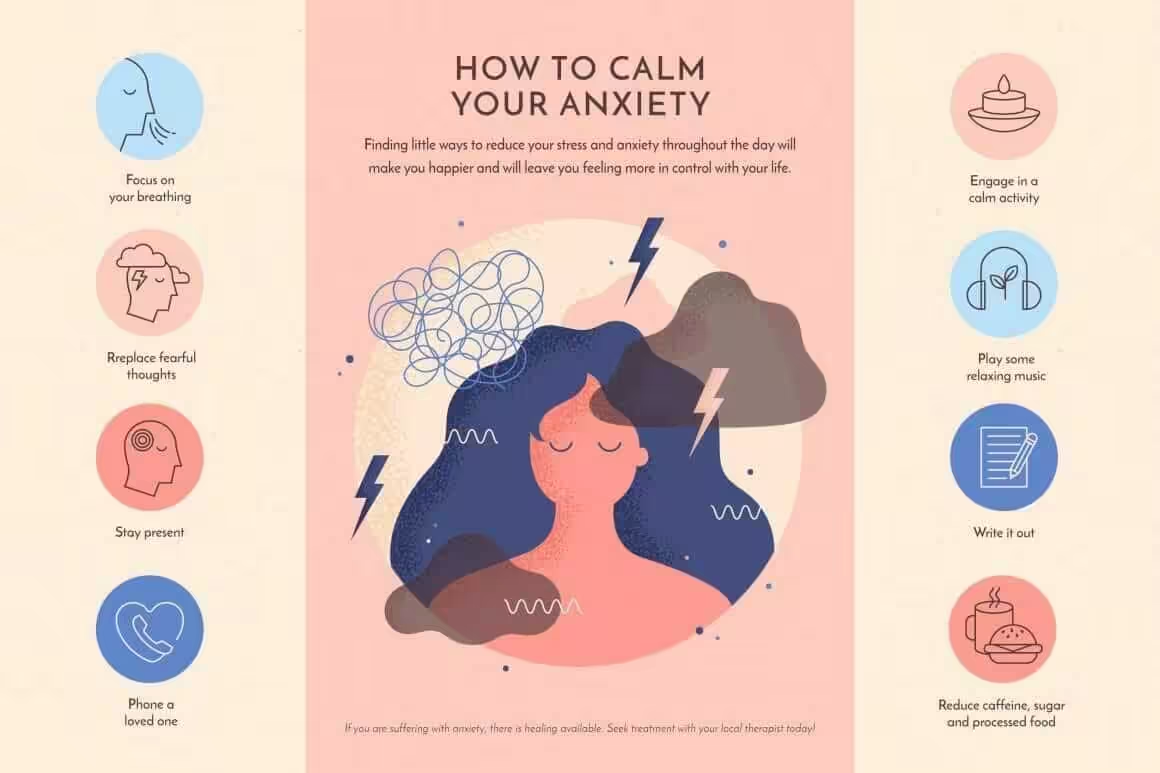
While anxiety is a common challenge faced by students of all ages, it’s essential to remember that effective strategies and resources are available to help manage and overcome these difficulties. By seeking professional help, engaging in self-care, and adopting healthy coping mechanisms, students can learn to navigate their anxiety and enhance their overall well-being.
As a student with anxiety, don’t hesitate to seek support from friends, family, teachers, or mental health professionals. Remember that you are not alone; many others have faced similar challenges and successfully overcome them. It’s important to prioritize your mental health and practice self-compassion, recognizing that everyone experiences stress and anxiety to some degree.
Moreover, be proactive in building a support network and seeking resources, such as counseling centers, support groups, or self-help books, that can provide guidance and encouragement. Implementing stress-reduction techniques, such as mindfulness meditation, exercise, and a balanced diet, can also contribute to improved mental health.
Ultimately, as you learn to manage and cope with anxiety, you’ll enhance your academic performance and develop resilience and life skills that will benefit you in your future endeavors. Embrace the journey of personal growth and remember that, with persistence and the right support, you can overcome anxiety and achieve success in both your academic and personal life.
If your anxiety is affecting your ability to attend class, complete assignments, or leave your room, that’s beyond what breathing exercises or study habit changes can address. Most universities offer free or low-cost counseling through their student services office. In the US, the 988 Suicide & Crisis Lifeline (call or text 988) also covers anxiety crises, not just suicidal ideation. You don’t have to be in a mental health emergency to use these resources. Struggling academically because of anxiety qualifies. Reach out before the anxiety compounds into something harder to treat.
The 4-7-8 breathing technique developed by Dr. Andrew Weil is one of the most studied rapid anxiety regulation tools available. The method: inhale for 4 counts, hold for 7, exhale slowly for 8. The extended exhale activates the parasympathetic nervous system and counters the fight-or-flight response driving exam anxiety. Practice it twice a day when you’re calm so it becomes automatic when you’re stressed. It works better as a trained reflex than as something you try to remember mid-panic. Three to four practice sessions at home before an exam is enough to make it a reliable tool in your kit.
What are the signs that I have academic anxiety and not just normal stress?
Normal pre-exam stress is temporary, proportionate to the stakes, and resolves after the exam. Academic anxiety is persistent, disproportionate, and interferes with function. Signs to watch for: avoidance behavior (putting off studying because thinking about the exam triggers physical anxiety symptoms), physical symptoms before or during exams that don’t match your actual preparedness (racing heart, nausea, shaking, blanking on material you studied), rumination that continues well after an exam is over, and declining performance despite adequate preparation. If you’re spending more mental energy managing anxiety about tests than actually studying for them, that’s a meaningful signal. The American Psychological Association defines anxiety disorder criteria as symptoms that persist for six or more months and cause significant impairment in daily functioning.
When should a student seek professional help for anxiety?
Seek professional help when anxiety is affecting your academic performance, sleep, social relationships, or physical health for more than two to three weeks, and self-management strategies aren’t making a dent. Practical signs: you’ve skipped class because of anxiety, you’ve missed deadlines not because of procrastination but because the anxiety made it impossible to start, or you’re using alcohol or other substances to manage academic stress. Most universities have a counseling center that offers free sessions for enrolled students. The wait time at campus counseling centers can be 2-4 weeks in peak periods (around midterms and finals), so don’t wait until the day before an exam to reach out. Make the appointment when symptoms start, not when they peak.
What breathing techniques actually work for exam anxiety?
Three techniques have solid research backing. Box breathing (4 counts in, 4 hold, 4 out, 4 hold, repeat) is used by Navy SEALs for stress regulation and works well in high-stakes testing environments because it’s subtle and doesn’t require closing your eyes. The 4-7-8 technique (inhale 4, hold 7, exhale 8) produces a stronger calming effect but is more noticeable. Diaphragmatic breathing (belly breathing, where your stomach rises before your chest) is the foundation that makes both techniques work. If you’re breathing shallowly into your chest during an exam, you’re not getting the parasympathetic activation that calms the anxiety response. The key for all three: practice when you’re calm, not just when you’re anxious. The technique needs to be automatic before it works under pressure.
What apps are actually useful for managing student anxiety?
Headspace and Calm are the two most studied apps in the anxiety management space, with Headspace having the stronger academic research base (a 2021 study in BMJ Mental Health found 30 days of Headspace use reduced stress by 11% and improved focus). Both offer student discounts: Headspace for Education is free for K-12 teachers and discounted for college students, Calm offers a 40% student discount through UNiDAYS. For anxiety specifically rather than general wellness, Woebot is worth considering. It uses cognitive behavioral therapy (CBT) techniques in a chatbot format and is free. A 2017 Stanford study found Woebot reduced depression and anxiety symptoms significantly after two weeks. iSpy, developed by the University of Washington, tracks mood patterns and flags concerning trends. None of these replace professional treatment for clinical anxiety, but they’re useful tools alongside a counselor’s guidance.
Does anxiety actually hurt test performance, or does some anxiety help?
The relationship follows an inverted-U curve called the Yerkes-Dodson law. A moderate level of arousal (mild stress, heightened alertness) improves test performance compared to being completely relaxed or indifferent. But past a threshold, increasing anxiety rapidly degrades performance. The cognitive mechanism is straightforward: high anxiety consumes working memory. Working memory is what you use to hold information in mind and manipulate it during complex problem-solving. When anxiety eats up working memory capacity, you have less available for the actual test questions. This is why students with high test anxiety often report knowing the material but blanking during the exam. The material is there. The anxiety is using the mental resources needed to retrieve it. Effective anxiety management isn’t about eliminating all nervousness before an exam. It’s about keeping arousal in the optimal zone where alertness helps without overwhelming your working memory.