
How to Design Multi-Tiered Recognition Systems for High-Performing Teams
Great work goes unnoticed more often than most managers think. And when it does, the damage is slow but real. Motivation drops. Engagement fades. Your best people start updating their resumes.
A flat, one-size-fits-all “employee of the month” approach doesn’t fix this. What works is a multi-tiered recognition system: one that matches the scale of the reward to the scale of the achievement.
Here’s how to build one that actually moves the needle on productivity, retention, and goal attainment.
Why Tiered Recognition Outperforms Flat Programs
The problem with most recognition programs is they treat all achievements the same. A quick save on a client call gets the same acknowledgment as a quarter-long project that doubled revenue. That’s demoralizing for the person who carried the bigger load.
Multi-tiered systems solve this by creating clear levels. Employees understand what earns a shoutout versus what earns a formal award. Managers get a framework that keeps recognition consistent instead of random.
Consistency matters more than people realize. When recognition feels arbitrary, it breeds cynicism. When it follows a clear structure, it builds trust.
The Three Tiers That Keep Teams Motivated
A solid recognition system runs on three tiers. Each one serves a different purpose, and skipping any of them creates gaps that hurt morale.
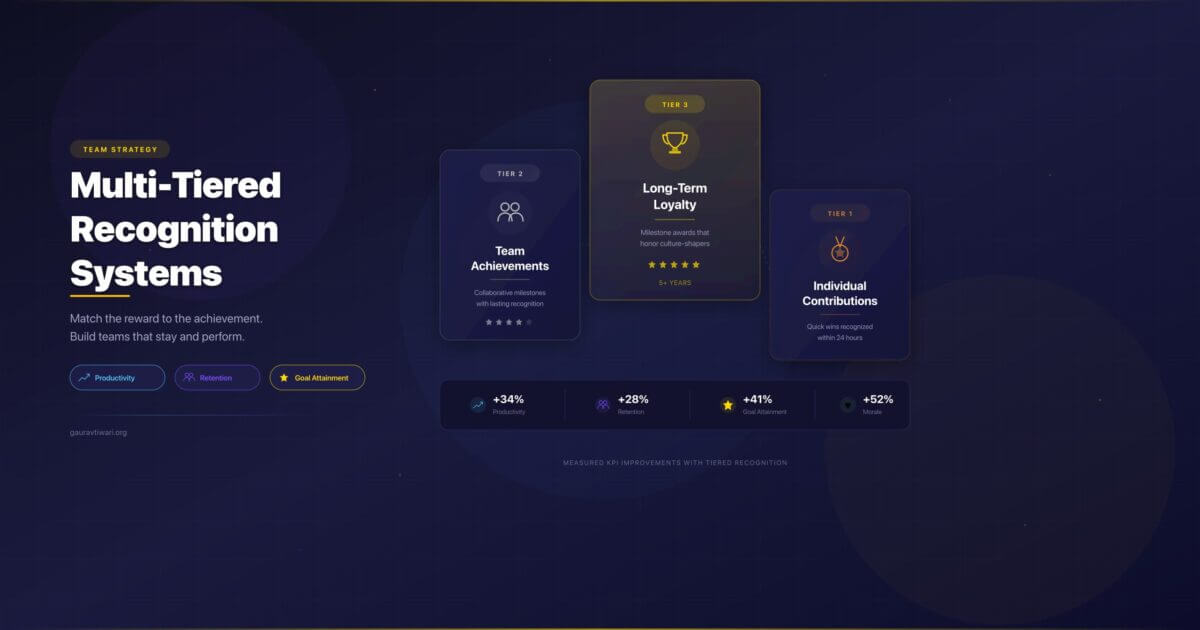
Tier 1: Individual Contributions
This covers the everyday wins. Someone solved a tricky problem without being asked. A teammate stayed late to help another team meet a deadline. A developer caught a bug before it hit production.
These moments deserve quick, lightweight recognition. A short note, a team shoutout in Slack, or a small reward. The goal isn’t ceremony. It’s speed. Recognize the behavior within 24 hours, or the moment loses its power.
Don’t overthink this tier. Keep the process simple enough that managers actually use it.
Tier 2: Team Achievements
Team milestones represent bigger wins. A product launch. A quarterly target crushed. A client retained through a difficult negotiation.
This is where recognition needs to feel more substantial. Many companies choose physical awards for this tier, and for good reason. A well-crafted plaque becomes a visual anchor in a shared workspace. Incorporating a stylish plaque design can make the recognition feel more lasting and memorable. It sits on a shelf and reminds the team, every day, that they accomplished something real together.
Tier 3: Long-Term Loyalty
Loyalty awards honor the people who’ve been around long enough to shape the company’s culture. Five years. Ten years. These milestones deserve more than a generic email.
This tier works best when it feels personal. A handwritten note from leadership. A public ceremony. An award displayed where others can see it. The specificity of the recognition signals that the company actually notices who sticks around and why it matters.
Using KPIs to Refine Your Recognition Program
Building tiers on gut feeling isn’t enough. You need data to know what’s working and what’s falling flat.
Track these three metrics before and after rolling out your recognition system:
- Productivity levels — Are recognized teams producing more?
- Goal attainment rates — Are people hitting targets more consistently?
- Retention rates — Are fewer people leaving?
If productivity rises after you introduce a new tier, that’s signal. If retention improves in departments with active recognition programs, that’s stronger signal. Let the data guide your adjustments instead of guessing.
Why Plaques Still Matter for Top-Tier Achievement
Digital badges and gift cards have their place. But for top-tier recognition, physical awards carry weight that digital alternatives can’t match.
Plaques remain one of the most respected forms of recognition in workplaces because they’re tangible and lasting. Employees display them for years. They become conversation starters. They reinforce a sense of pride that no Slack emoji can replicate.
When a plaque is reserved for top-tier achievements, it signals that the accomplishment had real impact. That distinction matters. It separates “good job” from “you changed the trajectory of this project.”
Building a Culture Where Recognition Is the Default
Recognition shouldn’t be an annual event. It should be woven into how your company operates daily. When a company celebrates progress at every level, people feel more connected to their work and more confident in their contributions. This creates a stronger sense of shared purpose for both employees and project managers.
The companies that get this right don’t just have happier employees. They have teams that perform better, stay longer, and recruit new talent through reputation alone.
Clear tiered systems guide managers, motivate employees, and make growth goals easier to reach. Over time, recognition stops being a program and becomes a reflex.
Putting This Into Practice
Start with the three tiers. Define what qualifies for each level. Give managers simple tools for Tier 1 recognition. Set quarterly reviews for Tier 2 and 3 awards.
Then measure. Track your KPIs for 90 days. Adjust based on what the data tells you, not what feels right.
The best recognition systems aren’t complicated. They’re consistent, specific, and built around what your people actually value.