
How Online Table Games Are Evolving: Strategy, UX, and Psychology
A decade ago, people wrote off table games as legacy content. Too slow. Too old-school. Too dependent on physical casinos. That prediction aged badly. In fact, the inverse became true.
Things have changed for sure, and in 2026, table games are not only alive and well, but they are also sharper, cleaner, and more intentional than most digital entertainment products competing for attention today.
The table games did not win by copying mobile games or chasing trends. They won by refining what already worked, like decision-making, pace, and control.
That is why many modern platforms & websites that offer online casino table games are no longer competing on bonuses or theatrics but rather on experience design, trust signals, and how intelligently they respect the player’s attention. The surface changed. The core did not.
Let’s break down how table games evolved, what actually matters now, and why player behavior in 2026 looks very different from even three years ago.
Table of Contents
Strategy in 2026 is about discipline
The biggest shift in table games has nothing to do with rules. It has to do with how strategy is experienced.
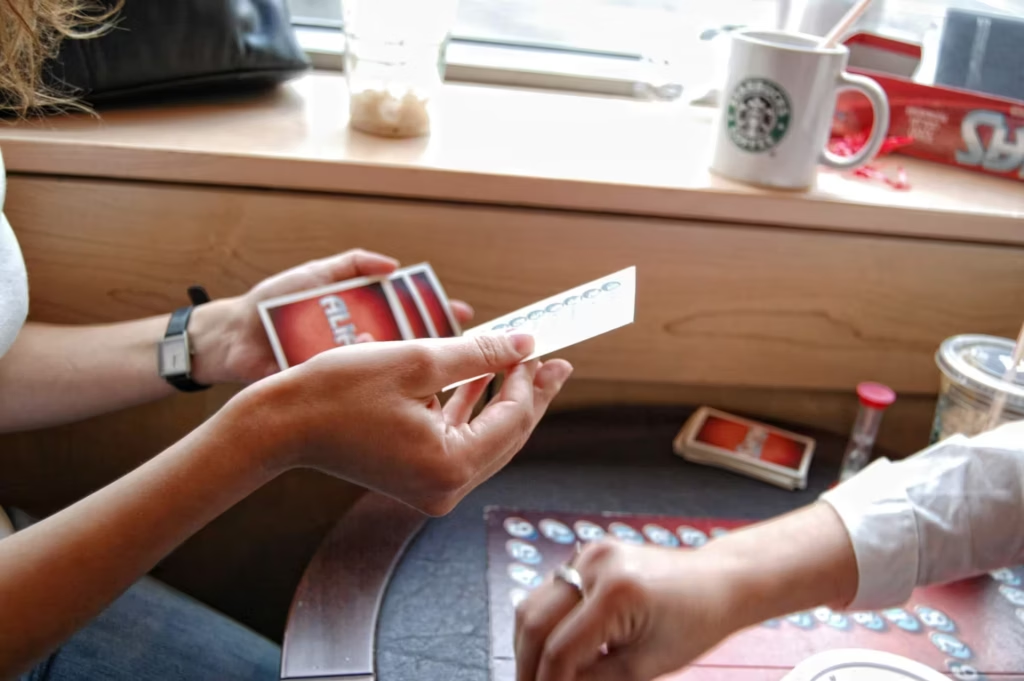
Physical table games rewarded intuition and observation. You watched hands. You read dealers. You absorbed the room. Online environments stripped most of that away. What replaced it was structure.
Modern table games emphasize:
- Clear probabilities
- Repeatable actions
- Predictable pacing
- Consistent outcomes
This does not make games easier. It makes mistakes more obvious. Players who chase emotion lose faster online because the system does not distract them with noise. There is no crowd energy to mask poor decisions. Discipline shows. So does impatience.
In physical casinos, strategy was performative. Online, it is private.
That changes behavior in subtle ways:
- Players take fewer reckless risks
- Sessions become shorter but more frequent
- Losses are processed faster
- Wins feel quieter but more controlled
I actually like this shift. It removes the illusion that luck is something you can bully into submission. Online table games reward consistency, not bravado.
UX is no longer a secondary concern
In 2026, User Experience (UX) is not a design layer. It is the product. Bad UX does not just annoy players. It drives them away permanently.
Early online table games tried to recreate casino ambiance. Felt textures. Chip animations. Decorative borders. Most of that is gone now.
Modern tables prioritize:
- Clean layouts
- Minimal visual hierarchy
- Obvious action states
- Clear confirmations
I don’t like interfaces that try to entertain me while I am making decisions. That distraction costs focus. The best platforms feel almost invisible when you are playing. Good UX steps back.
One underrated improvement is pace control.
Players can now:
- Skip animations
- Set default bets
- Repeat actions
- Exit without friction
This matters because attention spans are fragmented. A good table game respects that reality instead of fighting it. Speed is not about rushing players. It is about removing unnecessary waiting.
Trust is designed, not claimed
In 2026, trust is no longer built through slogans or disclaimers. It is built through interaction. Every delay, confirmation, and transition communicates intent. If something feels unclear, players assume the worst. And they leave.
Platforms that earn trust do a few things consistently:
- Outcomes resolve cleanly
- Rules are visible without digging
- No surprise popups mid-session
- Errors are explained in plain language
I am strongly against the platforms that hide complexity behind legal language. Transparency should be visual, not textual.
Saying a system is fair is meaningless now. Players expect to see fairness reflected in behavior.
That includes:
- Stable odds
- Predictable mechanics
- No sudden rule shifts
- Clear session summaries
The platforms that win in 2026 treat fairness like UX. If you have to explain it, you already failed.
Player Psychology Has Matured
This is where things get interesting. Table game players in 2026 behave very differently from slot-focused audiences.
Table game audiences tend to:
- Choose games deliberately
- Understand rules before playing
- Set mental limits
- Exit when conditions change
They are not impulse-driven. They are control-driven. This makes them harder to convert but easier to retain. Once trust is established, loyalty runs deep.
Online environments have also removed social pressure. No crowd. No dealer reactions. No performance anxiety.
That changes emotional processing.
Players:
- Recover from losses faster
- Do not chase as aggressively
- Treat sessions as contained events
I like this evolution. It feels healthier. Less theatrical. More honest.
Live Tables Added Human Context Without Pressure
Live dealer games deserve credit for solving a tricky problem. They brought humans back without reintroducing social exhaustion.
Seeing a real dealer:
- Anchors trust
- Slows reckless play
- Adds rhythm
But unlike physical casinos, players retain control. They can leave instantly. Mute audio. Ignore chat. That balance works.
In 2026, live tables live or die by:
- Latency
- Camera clarity
- Audio stability
Bad streaming feels unprofessional. Players notice immediately. Good streaming disappears. That is the goal.
Regulation and Responsible Design Are Now Core Features
Regulation used to be a compliance checkbox. That changed.
Modern platforms integrate:
- Session timers
- Spend tracking
- Optional reminders
- Cooling-off tools
The difference is placement. These tools are no longer buried.
I respect platforms that treat responsibility as product design instead of legal obligation. It signals maturity.
Responsible design is not about limiting players. It is about earning longevity. Platforms that respect boundaries attract serious users. Serious users stay longer. That is not ideology. It is simple economics.
What Table Games Look Like Going Forward
The next phase is not flashy. It is subtle.
AI is already being used to:
- Adapt UI density
- Adjust pacing defaults
- Surface relevant information
If done well, players barely notice. If done poorly, it feels invasive.
Execution will matter more than ambition.
The trend is not expansion. It is refinement.
You can expect:
- Fewer variants
- Cleaner rules
- Faster loading
- Consistent mechanics
Quality beats novelty in 2026.
Why Table Games Still Matter
Table games survived because they reward something most digital products ignore. Patience.
They do not rush players. They do not overwhelm them. They do not fake excitement. They let decisions breathe.
In a world obsessed with speed and stimulation, that restraint feels rare. And valuable. As long as platforms continue focusing on strategy clarity, UX honesty, and respectful player psychology, table games will remain relevant. Not loud. Not viral.
Just enduring. And honestly, that is exactly why they work.
Disclaimer: This article is for information only, not legal or financial advice. Online betting and iGaming are regulated, and rules vary by location. Make sure you are allowed to play where you live. Gambling involves real financial risk and can be addictive. Only play with money you can afford to lose, and get help if it stops being fun.