
Top Digital Education Trends to Watch in 2026
You signed up for three online courses last year. Finished zero. You’re not alone. Self-paced completion rates hover around 5-15%, and yet the e-learning market hit $399 billion in 2025. Something doesn’t add up.
The problem isn’t motivation. It’s that most digital education still mimics a 2015 lecture-on-a-screen format while the technology has leaped decades ahead. AI tutors now adapt to your weak spots in real time. Micro-credentials carry more hiring weight than a four-year degree at Google, Apple, and IBM. VR headsets are showing up in middle school science labs.
I’ve tested dozens of these platforms, built courses on some, and watched others fail spectacularly. Here are the digital education trends that actually matter in 2026, with specific tools, real numbers, and honest takes on what works and what’s just hype.

AI Tutoring Is Replacing Office Hours
AI-powered tutoring is the single biggest force reshaping education in 2026. Khan Academy’s Khanmigo, built on GPT-4o, now serves over 2 million students with personalized instruction that adapts in real time. It doesn’t just answer questions. It asks better ones, walking students through problems with Socratic dialogue instead of handing over solutions.
Duolingo Max uses GPT-4 for roleplay conversations and detailed mistake explanations. These aren’t gimmicks. They’re replacing the 30-student-per-teacher ratio with 1-on-1 instruction at scale. And ChatGPT’s custom GPTs let educators build subject-specific tutors with guardrails, turning a general-purpose AI into a focused teaching assistant.
Google’s NotebookLM takes a different approach. It turns your uploaded study materials into an interactive AI that only references what you’ve provided. No hallucinations from random internet content. I’ve used it for research deep dives and it’s genuinely useful for synthesizing large document sets.
On the teaching side, AI grading tools like Gradescope (owned by Turnitin) cut assessment time by 50-70% for STEM courses. That’s not replacing teachers. It’s giving them hours back to actually teach. If you want to build an effective study system, I wrote about active recall techniques that pair perfectly with AI tutor sessions.
Micro-Credentials Are Replacing Degrees
The degree-or-bust hiring model is crumbling fast. In 2026, Google, Apple, IBM, and Tesla have all removed degree requirements for many positions. LinkedIn’s 2025 Workplace Learning Report found that 45% of hiring managers now prioritize skills assessments over educational credentials. That’s not a trend. It’s a structural shift in how companies evaluate talent.
Google Career Certificates, available through Coursera, are now accepted by over 150 companies as equivalent to relevant experience. You can complete the Google Data Analytics Certificate in 6 months for under $300 and bypass the “entry-level position requiring 3 years experience” trap. IBM’s digital badges, issued through Credly (now part of Pearson), have crossed 80 million total issuances.
AWS, Google Cloud, and Microsoft Azure certifications carry more weight than a computer science degree for cloud engineering roles. The average AWS Solutions Architect earns $150,000+ with just a certification and demonstrated project experience. I’ve seen this firsthand with developers I’ve worked with. The ones with vendor-specific certs and a solid GitHub portfolio get hired faster than CS graduates with no practical skills.
Blockchain-verified credentials are gaining traction too. MIT’s Digital Credentials Consortium is building an open standard for tamper-proof academic records. Your transcript, certifications, and skill assessments could live in a single verified digital wallet. We’re not fully there yet, but the infrastructure is being built right now. For a deeper look at this shift, I broke down the pros and cons of online certifications from a practical standpoint.
- Google, IBM, and Meta Professional Certificates
- Accepted by 150+ employer partners
- Free audit option on most courses
- Coursera Plus at $59/month for unlimited access
VR and AR Are Finally Crossing the Affordability Threshold
VR in education is no longer a Silicon Valley demo reel. Meta Quest 3, priced at $499, is being adopted by school districts across the US for immersive science and history lessons. Arizona State University reported a 35% improvement in anatomy course retention rates after introducing VR dissection labs. That’s a measurable outcome, not a press release claim.
The use cases that actually work aren’t flashy. They’re practical. Medical students at Stanford practice surgical procedures in VR before touching real patients. Architecture students walk through 3D models at full scale. Chemistry students manipulate molecular structures with their hands instead of staring at flat diagrams on a whiteboard.
AR is arguably more practical for everyday classrooms because it doesn’t require expensive headsets. Google’s AR features in Search let students project 3D models of animals, human organs, and historical artifacts onto their desks using a smartphone. Apple’s Vision Pro ($3,499) pushes spatial computing boundaries with apps like JigSpace and Insight Heart, but it’s still a premium product for well-funded institutions.
VR works best when students forget they’re wearing a headset. The moment it feels like a tech demo instead of a learning experience, you’ve lost them.
Adaptive Learning Platforms Are Getting Smarter
Adaptive learning isn’t new. DreamBox has been adjusting math difficulty for K-8 students since 2006. But the AI layer in 2026 makes these platforms dramatically more effective. ALEKS (from McGraw-Hill) uses knowledge space theory to map exactly what each student knows and doesn’t know, then fills gaps systematically instead of pushing everyone through the same linear curriculum.
Century Tech combines AI with cognitive neuroscience to adjust not just difficulty but pacing, reward frequency, and content format based on individual performance patterns. If a student struggles with fractions, the system generates more fraction challenges with gradually increasing difficulty. It doesn’t move on and leave gaps the way a traditional classroom does.
The data on adaptive platforms is compelling. A RAND Corporation study found that students using adaptive math software showed 2-3 months of additional learning gains over a school year compared to traditional instruction. That’s significant when you consider these tools cost a fraction of hiring additional teachers. If you’re looking to learn faster and retain more, pairing adaptive platforms with active recall techniques is the most effective combination I’ve found.
Content Creators Are Becoming the New Educators
YouTube and TikTok have created an entirely new category of peer-to-peer educators. 3Blue1Brown (mathematics, 6 million subscribers), Fireship (web development, 3 million), and Ali Abdaal (productivity, 5 million) reach more students than most universities. They don’t have tenure. They have clarity, consistency, and communities.
The creator-to-educator pipeline is accelerating. Platforms like Teachable have evolved beyond simple video hosting into full business platforms with AI-powered course building, integrated coaching tools, and community features. I’ve seen creators earning $50K-200K/year on Teachable alone, but the ones who succeed treat it as a business, not a side project.
Skillshare takes the Netflix model approach. Instead of selling individual courses, creators earn royalties based on watch time. It works well for creative skills like illustration, photography, and design where students browse and explore rather than commit to a single certification path.
Substack, originally a newsletter platform, is becoming an education channel too. Writers and experts are packaging their knowledge into paid newsletters with course-like structures. It’s education without the course platform overhead. If you’re thinking about teaching online, the barrier to entry has never been lower. You need expertise, a camera, and a platform. That’s it.
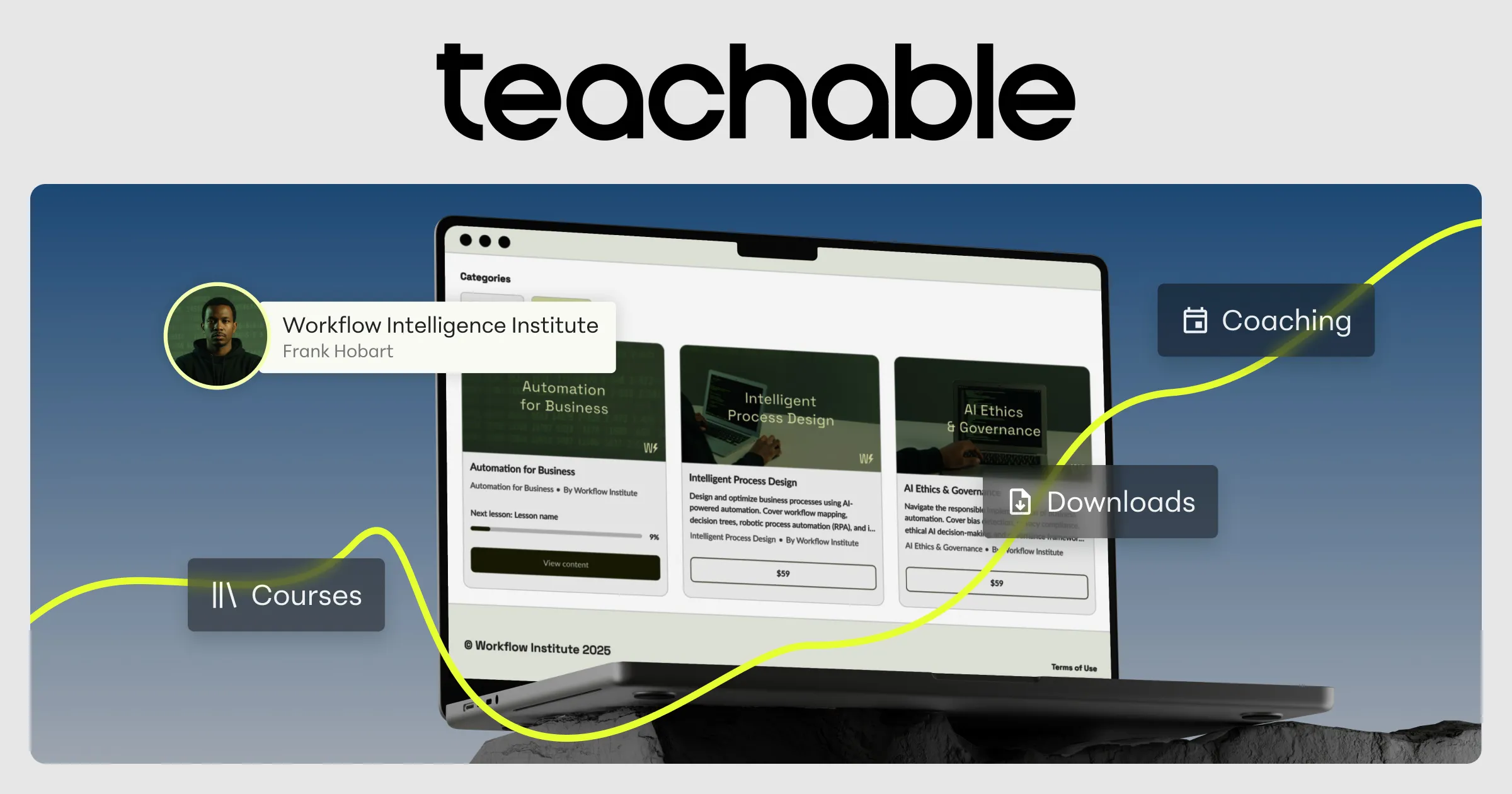
- AI course builder generates outlines and content
- Integrated coaching and community features
- Built-in payment processing and affiliates
- Free plan available to start
Gamification Done Right (Not Badges on Quizzes)
Gamification in 2026 goes way beyond slapping badges on quizzes. Duolingo’s entire business model proves it works: 97 million monthly active users, driven by streaks, leaderboards, and XP systems. Their retention metrics beat most social media apps. That’s not an accident. It’s behavioral psychology applied with precision.
Kahoot serves 9 billion cumulative participants across 200 countries. Quizlet’s Learn mode uses spaced repetition algorithms borrowed from cognitive science to optimize long-term retention. These aren’t games pretending to be education. They’re education platforms that understand human psychology.
The newer trend is AI-powered adaptive gamification. Platforms like Century Tech adjust difficulty, pacing, and reward frequency based on individual student performance. The gamification works best when it’s invisible. The moment students feel like they’re playing a “learning game,” engagement drops. The best implementations feel like apps you’d use voluntarily, not homework tools with cartoon mascots.
Microlearning Is Becoming the Default Format
Microlearning isn’t new, but in 2026 it’s the default format for professional development and skill acquisition. The average attention span for educational content has dropped to 8-10 minutes. TikTok-style learning on platforms like Brilliant, Headway, and Blinkist is exploding.
LinkedIn Learning restructured its entire course library around 5-15 minute modules. Google’s career certificates are built on microlearning principles, with each module designed for a single sitting. Research from Dresden University of Technology found that microlearning improves knowledge transfer by 17% compared to traditional long-form content. That’s a real number from a real study, not marketing copy.
I use microlearning daily. Ten minutes on language practice and 15 minutes on Brilliant for math concepts. That’s 25 minutes that compound over months. The platforms that win in 2026 are the ones that respect your time by delivering maximum value in minimum duration.
The compound effect of consistent 15-minute learning sessions beats a weekend bootcamp every time. Daily consistency trumps intensity.
Remote and Hybrid Learning Have Matured
Remote and hybrid learning have evolved past the “emergency Zoom school” era. In 2026, 74% of universities offer at least some hybrid course options, according to EDUCAUSE. The infrastructure finally matches the ambition.
Google Classroom now serves over 150 million users with integrated AI features for assignment feedback and plagiarism detection. Microsoft Teams Education added AI-powered recap features that generate class summaries for students who missed sessions. These aren’t bolt-on features. They’re core functionality that makes hybrid learning actually workable.
The real shift is pedagogical. Early remote learning was filming a lecture and putting it online. In 2026, the best hybrid programs use the “flipped classroom” model: students watch recorded lectures asynchronously, then use live sessions for discussion and problem-solving. Georgia Tech’s Online Master of Science in Computer Science costs just $7,000 total (compared to $45,000 on-campus) and consistently ranks among the top CS programs nationally.
Learning Analytics Are Getting Granular
Learning management systems are no longer just content delivery platforms. In 2026, the analytics layer has become the most valuable feature. Canvas, Blackboard, and Moodle now track not just grades and completion but engagement patterns, time-on-task, collaboration frequency, and even content interaction heatmaps.
This matters because early intervention works. Georgia State University’s predictive analytics system flags at-risk students based on 800+ data points and triggers advisor outreach before students fall behind. Since implementation, their graduation rate increased by 23%. That’s thousands of students who would have dropped out getting the support they needed at the right moment.
The privacy conversation is heating up too. Student data collection at this scale raises legitimate concerns. FERPA (Family Educational Rights and Privacy Act) wasn’t designed for an era where LMS platforms track mouse movements and session duration. Schools that implement learning analytics responsibly, with transparency about what’s tracked and student opt-out options, are building trust. The ones that surveil silently are building lawsuits.
AI-powered assessment tools like Gradescope and Turnitin’s AI writing detection help teachers handle grading workloads. Turnitin’s AI detector claims 98% accuracy for identifying AI-generated text, though independent testing puts it closer to 85-90%. It’s a tool, not a verdict. Use it as one signal among many.
Social and Collaborative Learning
Learning is becoming social again, just not in classrooms. Discord communities, Slack groups, and cohort-based courses are replacing the isolation of self-paced online learning. Platforms like Maven, Reforge, and On Deck run cohort-based programs where the network is as valuable as the content itself.
The numbers tell the story. Course completion rates for cohort-based programs run 85-90%, compared to 5-15% for self-paced courses. The accountability of learning with peers and the social pressure of showing up matter more than gamification or content quality. People finish things when other people are watching.
Study communities on Discord and Reddit (r/learnprogramming has 4 million members) provide real-time help, accountability, and mentorship that traditional education struggles to match. The best learning happens when you can ask a question at 11 PM and get a thoughtful answer from someone two time zones away.
Maven’s cohort courses charge premium prices ($500-2,000) and maintain waitlists. The value proposition isn’t the content, which you could probably find for free. It’s the curated peer group and structured accountability. I’ve taken two cohort courses, and both times the connections I made were worth more than the curriculum. It’s the modern study group, scaled with intention.
- Project-based classes with community feedback
- Unlimited access with one subscription
- Offline access on mobile
- Free trial available
Global Education Accessibility
The most important trend in 2026 isn’t flashy. It’s access. Mobile-first learning platforms are reaching students in regions where a laptop is a luxury but a smartphone is common. In sub-Saharan Africa, mobile internet penetration is projected to reach 50% by 2028, and education platforms are adapting fast.
Khan Academy serves content in 50+ languages and has been downloaded over 15 million times on mobile. Coursera’s “Coursera for Campus” program gives free access to universities in underserved regions. Wikipedia’s Kiwix offline reader lets students download the entire encyclopedia for areas without reliable internet.
UNESCO’s Global Education Monitoring Report estimates 244 million children worldwide are still out of school. Digital tools aren’t a silver bullet, but they’re reducing barriers at an unprecedented rate. A student in rural India with a $100 smartphone and a 4G connection has access to the same MIT OpenCourseWare lectures as a student on campus in Cambridge. That’s a profound leveling of the playing field. For free options to get started, I’ve compiled free Google courses that anyone can take regardless of location.
Which education trend excites you most?
What’s Next for Digital Education
AI agents that manage your entire learning journey (scheduling, content selection, assessment, and feedback loops) are being developed by Khanmigo, Synthesis, and a dozen stealth startups. The goal isn’t just a tutor. It’s a personal learning operating system that knows your goals, your schedule, and your weak spots.
Spatial computing through Apple Vision Pro and Meta Quest is moving education from flat screens to immersive 3D environments. The hardware is still expensive, but prices will drop the same way smartphones went from $800 luxuries to $100 essentials. Give it 3-5 years.
The convergence of AI, VR, gamification, and social learning is creating something genuinely new. Not e-learning 2.0. Something closer to personalized education at scale, the thing every education reformer has dreamed about for decades. We’re not fully there, but for the first time in years of covering this space, the pieces are actually fitting together.
The students and educators who thrive in 2026 won’t be the ones with the most expensive tools. They’ll be the ones who pick the right tools for their specific goals and stick with them long enough to see results. I’ve seen people jump between five platforms in a month and learn nothing. I’ve seen others commit to one app for six months and transform their career.
Start with one platform. One skill. One daily habit. The compound effect of consistent digital learning is the most underrated trend of all.
Frequently Asked Questions
What is the biggest digital education trend in 2026?
AI-powered personalized learning is the dominant trend. Tools like Khan Academy’s Khanmigo, Duolingo Max, and ChatGPT custom GPTs provide 1-on-1 tutoring at scale. Global AI-in-education spending is projected to reach $20 billion by 2030, making it the fastest-growing segment in edtech.
Are micro-credentials and online certificates taken seriously by employers?
Yes, increasingly so. Google, Apple, IBM, and Tesla have removed degree requirements for many roles. Google Career Certificates through Coursera are accepted by over 150 employer partners. LinkedIn reports that 45% of hiring managers now prioritize skills assessments over traditional degrees.
What are the best free online learning platforms in 2026?
Khan Academy offers free courses across math, science, and humanities. MIT OpenCourseWare provides free university-level content. Coursera and edX offer free audit options on most courses. YouTube channels like 3Blue1Brown and Fireship provide high-quality education at no cost.
How does VR actually improve learning outcomes?
Arizona State University reported a 35% improvement in anatomy course retention after introducing VR dissection labs. VR works best for spatial learning (anatomy, architecture, chemistry) and experiential training (surgical procedures, engineering simulations). The key is immersive practice, not passive 360-degree videos.
What are the best adaptive learning platforms for students?
DreamBox and ALEKS lead for K-12 math with AI-driven difficulty adjustment. Century Tech combines AI with cognitive neuroscience for multi-subject adaptation. Brilliant excels at interactive STEM learning for adults. A RAND Corporation study found adaptive platforms deliver 2-3 months of additional learning gains per school year.
Is it worth creating and selling online courses in 2026?
Yes, if you treat it as a business. Platforms like Teachable support AI-powered course building, coaching tools, and community features. Creators earning $50K-200K/year exist, but they invest in marketing, student outcomes, and continuous content updates. The barrier to entry is low. The barrier to success is treating it seriously.
How can educators start using AI in their teaching?
Start with free tools. Use ChatGPT to generate quiz questions, discussion prompts, and lesson plan variations. Use Google NotebookLM to create AI study guides from your course materials. Use Gradescope for automated STEM grading. These tools reduce administrative work by 50-70%, freeing time for actual teaching.
What is microlearning and why is it effective?
Microlearning delivers content in 5-15 minute modules instead of hour-long lectures. Research from Dresden University of Technology found it improves knowledge transfer by 17% compared to traditional formats. It works because it aligns with natural attention spans and fits into busy schedules, making consistent daily learning practical and sustainable.
Disclaimer: This site is reader-supported. If you buy through some links, I may earn a small commission at no extra cost to you. I only recommend tools I trust and would use myself. Your support helps keep gauravtiwari.org free and focused on real-world advice. Thanks. - Gaurav Tiwari