
Building Brand Authority: Comprehensive Social Media Strategies That Work
Most brands treat social media like a megaphone. They blast promotions, post generic content, and wonder why nobody cares. Real brand authority doesn’t come from posting frequency. It comes from saying something worth hearing, consistently, on the platforms where your audience actually spends time.
I’ve managed social media for client businesses across multiple industries, and the pattern is always the same. The brands that build real authority aren’t the ones with the biggest budgets. They’re the ones with clear positioning, genuine expertise, and a willingness to engage rather than just broadcast. Here’s how to build that kind of authority in 2026.
Why Social Media is Essential for Building Brand Authority

Social media isn’t optional anymore. With over 5 billion users worldwide, these platforms are where your audience forms opinions, discovers brands, and makes purchasing decisions. But being present isn’t the same as being authoritative. Let me break down why social media specifically drives brand authority better than any other channel.

Massive Reach and Accessibility
Social media platforms have unmatched reach. Over 89% of internet users are active on at least one platform. That means your potential audience is already there, scrolling, engaging, and forming opinions about brands like yours every single day.
A strong social media presence keeps your brand top-of-mind. When someone needs a product or service in your category, you want to be the first name they think of. That’s what authority looks like in practice, and social media builds it faster than any other channel because of the daily touchpoints it creates.
Direct Engagement with Your Audience
Unlike traditional advertising, social media is two-way communication. You can respond to comments, answer questions, and participate in conversations. This direct interaction builds trust and loyalty in ways that billboards and banner ads never will.
Set aside dedicated time each week for genuine engagement. Don’t just respond with emojis. Add value. Answer questions thoroughly, acknowledge feedback, and address concerns promptly. Brands that respond within 1 hour on social media see 7x higher engagement rates than those that respond within 24 hours.
Showcasing Expertise Through Content
Social media is the perfect stage for demonstrating what you know. Educational posts, behind-the-scenes content, thought leadership articles, and case studies all position your brand as the go-to resource in your niche.
The key is consistency. One viral post doesn’t build authority. A steady stream of valuable content over 6-12 months does. Create a content calendar and plan posts that align with your audience’s interests and pain points. When users see your brand as knowledgeable and reliable, they’re far more likely to choose you over competitors.
Amplifying Brand Storytelling
Storytelling humanizes your brand. Platforms like Instagram and TikTok are built for visual stories that resonate emotionally. Customer testimonials, employee spotlights, company milestones, and behind-the-scenes moments all create authentic connections.
Authentic storytelling differentiates your brand from competitors. Use Instagram Stories, Reels, and TikTok videos to share real moments. Don’t over-polish everything. Audiences can spot manufactured content instantly, and they’ll disengage just as fast.
Leveraging Targeted Advertising
Social media platforms offer the most advanced targeting options available in digital marketing. You can reach specific demographics, interests, behaviors, and even people who’ve visited your website before.
Start with a small budget ($10-20/day) to test different ad formats like carousel ads, video ads, and story ads. Analyze performance before scaling. Targeted ads ensure your message reaches the right people at the right time, maximizing your return on every dollar spent.
Key Components of a Successful Social Media Strategy
A successful strategy has multiple moving parts that work together. You can’t just focus on content creation and ignore community management, or run paid ads without organic engagement. Here’s what a complete social media strategy looks like.
Audience Research and Competitor Analysis
Before creating a single post, know who you’re talking to and what your competitors are doing. Use Facebook Insights, Instagram Analytics, and Google Trends to gather data on demographics, interests, and behaviors.
Study your competitors’ profiles to find gaps. If they’re neglecting video content, that’s your opening. If they post sporadically, consistency alone can differentiate you. Document what works for them, what doesn’t, and where you can provide something they’re missing.
Build detailed audience personas. Know their age range, job titles, pain points, preferred content formats, and peak activity times. This data drives every content decision you’ll make going forward.
Content Creation That Resonates
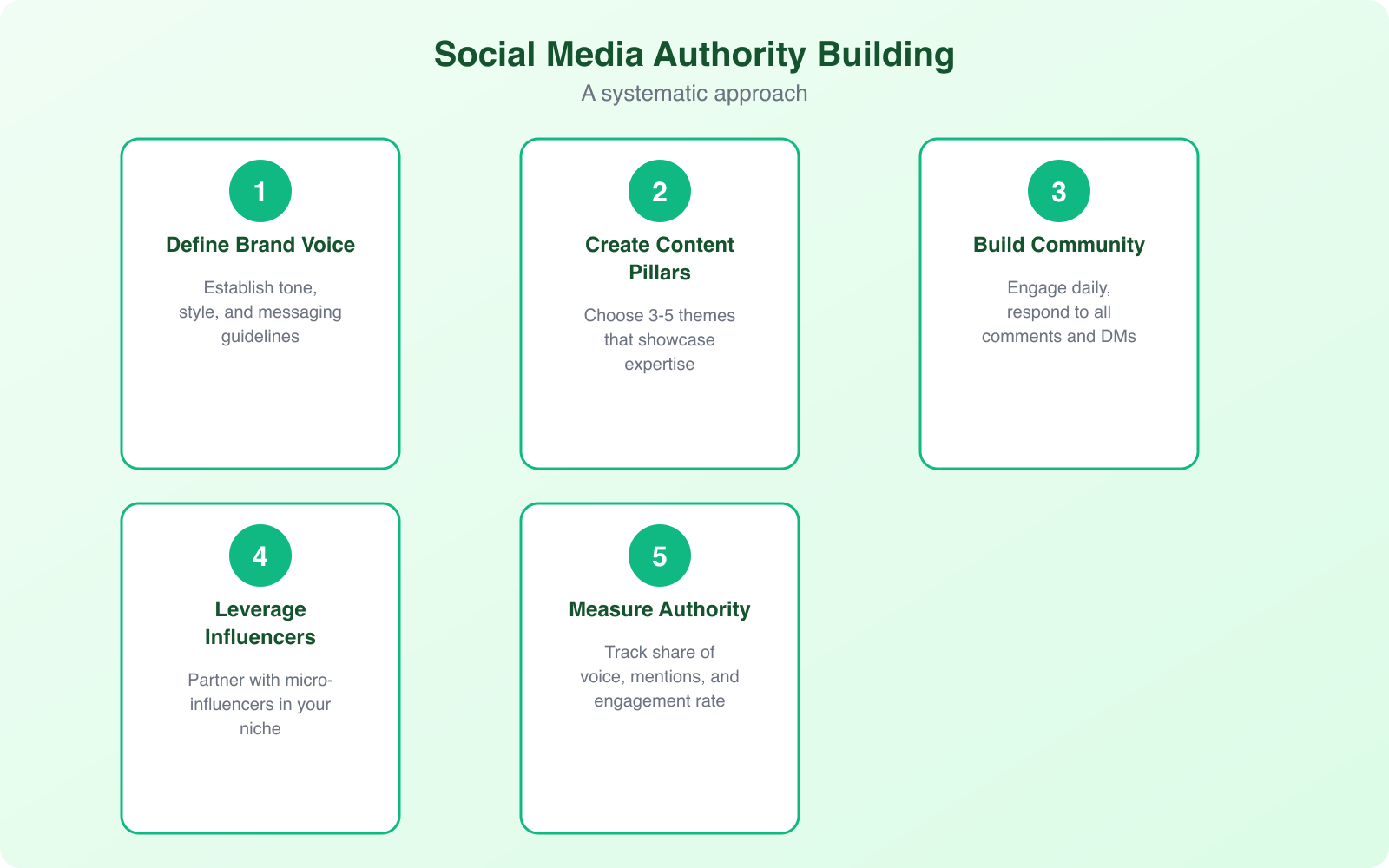
Content is the backbone of your entire social strategy. High-quality, value-driven content attracts attention and builds trust over time. But quality doesn’t mean expensive production. It means relevance and usefulness.
Follow the 80/20 rule: 80% of your content should educate, entertain, or inspire. Only 20% should directly promote. Share customer success stories, behind-the-scenes glimpses, industry insights, and practical tips. Mix formats: carousels, short videos, polls, text posts, and stories.
Stay updated on trending topics and hashtags in your niche. If you’re targeting younger audiences, TikTok challenges and Instagram Reels outperform static posts by 3-5x in engagement. For B2B audiences, LinkedIn articles and carousel posts drive the highest interaction rates.
Batch your content creation. Dedicate one day per week to creating all your posts, then schedule them using a tool like SocialPilot or CoSchedule. This saves 5-8 hours per week compared to creating posts daily and produces more consistent quality.
Platform-Specific Strategies for Maximum Impact
Each platform has its own culture, algorithm, and best practices. Treating them all the same is a guaranteed way to underperform. Here’s how to tailor your approach.
Instagram: Focus on visually appealing content like high-quality photos, carousels, and Reels. Use 5-10 relevant hashtags per post (not 30, the algorithm penalizes hashtag stuffing now). Post 3-5 times per week with daily Stories. Instagram is best for lifestyle brands, fashion, food, and visual products.
LinkedIn: Prioritize thought leadership content. Long-form posts (1,300+ characters), articles, and carousel documents perform best. Share industry insights, case studies, and professional development content. LinkedIn is the platform for B2B authority building. Personal profiles outperform company pages by 5-10x in organic reach.
TikTok: Embrace creativity, trends, and authenticity. Short, entertaining videos aligned with current trends perform best. Educational content in your niche (“5 things you didn’t know about X”) gets strong engagement. TikTok’s algorithm favors new accounts more than any other platform, making it easier to build an audience from scratch.
Facebook: Combine visual content with community features like Groups and Events. Facebook Groups in particular are powerful for building engaged communities. The platform’s organic reach for pages is low (2-5%), so pair organic posting with targeted advertising.
Community Management and Engagement
Posting content without engaging with your audience is like giving a speech and then walking off stage. Community management is where authority gets built at the individual level.
Respond to every comment and DM within 2-4 hours during business hours. Even a simple acknowledgment builds goodwill. Host interactive sessions like Q&As, live streams, and polls to encourage participation. Celebrate your audience by reposting user-generated content and featuring loyal customers.
A strong community boosts word-of-mouth promotion and defends your brand during crises. Customers who feel heard become advocates. That kind of organic advocacy is worth more than any ad campaign you could run.
AI Tools That Accelerate Brand Building
AI has changed how brands manage social media in 2026. Here are the tools I actually recommend for streamlining your workflow without sacrificing authenticity.
For scheduling and management, SocialPilot handles bulk scheduling across 9+ platforms at agency-friendly pricing. CoSchedule provides editorial calendar management with drag-and-drop rescheduling that marketing teams love. For multi-platform analytics and AI-powered content suggestions, Vista Social covers scheduling, publishing, and performance tracking from a single dashboard.
For content creation, Jasper generates social media captions, ad copy, and content ideas in your brand voice. Use it for first drafts, then edit for authenticity. AI-generated content should be a starting point, not the final product. Your audience will notice if you’re publishing generic AI output.
For engagement and growth, Crowdfire automates content curation and posting. Tailwind optimizes scheduling for Pinterest and Instagram with smart time recommendations based on your audience’s activity patterns.
Leveraging Influencers and Paid Advertising
Organic reach gets you started, but combining it with influencer partnerships and paid advertising accelerates everything. Here’s how to approach both effectively.
Influencer marketing works because people trust people more than they trust brands. The sweet spot for most businesses is micro-influencers (10K-100K followers). They charge less ($200-2,000 per post versus $10,000+ for macro-influencers), have higher engagement rates (3-6% versus 1-2%), and their audience trusts their recommendations more.
Focus on long-term partnerships rather than one-off sponsored posts. A micro-influencer who genuinely uses your product and mentions it regularly over 3-6 months drives more authority than a single celebrity post that everyone knows is paid. Give influencers creative freedom. Their audience follows them for their authentic voice, not for scripted brand messaging.
Paid advertising amplifies your best organic content. Don’t create separate ad content. Take your top-performing organic posts and boost them. This approach works because the content has already proven it resonates with your audience.
Define clear objectives before spending a dollar. Brand awareness campaigns, engagement campaigns, and conversion campaigns all require different creative approaches and targeting. Start with A/B tests on different ad formats, copy variations, and audience segments. Scale what works, cut what doesn’t.
The combination play: Repurpose influencer-generated content into paid campaigns. This maintains authenticity while extending reach beyond the influencer’s follower base. It’s the most cost-effective approach I’ve seen for building brand authority at scale.
Measuring Brand Authority on Social Media
You can’t improve what you don’t measure. Here are the metrics that actually indicate brand authority, not just vanity metrics like follower count.
Share of voice: What percentage of industry conversations mention your brand versus competitors? Tools like Brandwatch and Mention track this. Increasing share of voice is the clearest indicator of growing authority.
Engagement rate: Likes are nice, but comments, shares, and saves indicate deeper engagement. Aim for 3-6% engagement rate on Instagram, 1-3% on LinkedIn, and 4-8% on TikTok. If your rates are below these benchmarks, your content isn’t resonating.
Brand mentions: Track how often people mention your brand organically (not in response to your posts). Growing organic mentions mean people are talking about you without being prompted. That’s authority.
Inbound inquiries: The ultimate measure. If your social media presence is building real authority, you’ll see an increase in DMs, website visits from social, and direct sales inquiries. Track the customer journey from first social touchpoint to conversion.
Follower count is the most overrated metric in social media. A brand with 5,000 highly engaged followers who comment, share, and buy will outperform one with 100,000 passive followers every single time. Focus on engagement quality, not audience size.
Building Thought Leadership Through Social Content
Thought leadership is the highest form of brand authority. It’s when your audience doesn’t just buy from you; they look to you for guidance on industry direction. Here’s how to build it on social media.
Take clear positions. Thought leaders have opinions. Don’t hedge every statement. If you believe remote work is better for productivity, say so and back it up with data. If you think a popular industry trend is overhyped, explain why. Neutral content doesn’t build authority.
Share original research. Run surveys, analyze your own data, and share findings your audience can’t get elsewhere. Original data gets shared more than any other content type on LinkedIn and Twitter. A simple survey of 100 customers about their biggest challenges can fuel months of content.
Engage with industry conversations. Comment thoughtfully on other leaders’ posts. Join Twitter Spaces and LinkedIn Audio events. Be present in the conversations that matter in your industry. Don’t just broadcast. Participate.
Document your journey. Share what you’re learning in real time. Case studies from your own business, experiments you’re running, and lessons from failures all build authenticity. Your audience connects more with honest accounts of struggles and learnings than with polished success stories.

Frequently Asked Questions
How long does it take to build brand authority on social media?
Building meaningful brand authority takes 6-12 months of consistent effort. You’ll start seeing engagement improvements within 2-3 months, but true authority (where people seek you out and reference your content) takes closer to a year. The timeline depends on your niche competitiveness, posting consistency, and content quality. Brands that post valuable, original content 3-5 times per week and actively engage with their community build authority fastest.
Which social media platform is best for brand authority?
It depends on your audience and industry. LinkedIn is best for B2B companies and professional services. Instagram works well for visual brands, fashion, food, and lifestyle. YouTube builds the deepest authority because long-form video creates stronger trust. Twitter/X is good for thought leadership and real-time conversations. Don’t try to be everywhere. Pick 1-2 platforms where your target audience is most active and go deep rather than spreading thin across five platforms.
How much should I budget for social media marketing?
Small businesses should allocate 7-15% of revenue to marketing, with 30-50% of that going to social media. For a business earning $500K annually, that’s roughly $2,000-$6,000/month on social. This covers tools ($200-$500), ad spend ($500-$3,000), content creation ($500-$2,000), and possibly a part-time social media manager. Start smaller if budget is tight. Organic social media is free but requires significant time investment.
Should I use AI tools for social media content creation?
AI tools are excellent for generating content ideas, drafting initial posts, creating graphics, and scheduling. However, brand authority requires authentic voice and real expertise that AI can’t fully replicate. Use AI to handle the repetitive work (caption variations, image resizing, scheduling optimization) and spend your saved time on genuine engagement, responding to comments, and creating original insights. The brands that will win are those using AI for efficiency while keeping their human voice authentic.
How do I measure if my brand authority is actually growing?
Track share of voice (how often your brand is mentioned compared to competitors), engagement rate (not just follower count), branded search volume in Google, inbound link growth, and direct message quality (are prospects reaching out?). Social listening tools like Brand24 or Mention help track mentions. The ultimate measure is when people in your industry reference your content without being asked. That’s real authority, and it shows up in lead quality and close rates.
Start Building Your Brand Authority Today
Building brand authority on social media isn’t complicated, but it requires discipline. Choose 1-2 platforms, create valuable content consistently, engage genuinely with your audience, and measure what matters. Don’t try to be everywhere. Be exceptional somewhere.
The brands that win on social media in 2026 are the ones that treat it as a long-term investment, not a quick-win tactic. Start with audience research, build a content calendar, and commit to showing up consistently for at least 6 months. The compounding effect of consistent authority building will surprise you.
Pick your platform. Define your voice. Start today. Brand authority doesn’t build itself, and every day you delay is a day your competitors are getting ahead.
Disclaimer: This site is reader-supported. If you buy through some links, I may earn a small commission at no extra cost to you. I only recommend tools I trust and would use myself. Your support helps keep gauravtiwari.org free and focused on real-world advice. Thanks. - Gaurav Tiwari