
 by
by
If you want to know how to learn better, the honest answer is that most of what you were taught about studying is wrong. Rereading your notes feels productive and does almost nothing. Highlighting feels like work and barely moves the needle. The two techniques that actually build durable memory, retrieval practice and spaced repetition, are the ones almost nobody uses on purpose. I have taught mathematics for years, and the students who improved fastest were never the ones who read the most. They were the ones who tested themselves the most.
Here is the verdict up front. To learn better, stop passively reviewing and start actively recalling. Quiz yourself before you feel ready, space those quizzes out over days, mix related topics instead of blocking them, sleep on it, and use a tool like Anki to automate the timing. That single shift, from recognition to recall, is the highest-leverage study technique in cognitive science. Everything else on this page is detail.
The proof, in numbers. In Karpicke and Roediger’s 2008 study in Science, students who kept restudying material they had already learned showed no improvement on a delayed test, while students who kept testing themselves retained far more. In a separate retrieval-practice experiment, learners who only reread forgot about 56% of the material within two days, while those who practiced retrieval forgot just 13%. Same time spent. Roughly four times the retention. I have watched this exact gap play out in my own classrooms.
What changed by 2026. AI tutors moved from novelty to mainstream. Khan Academy’s Khanmigo grew from 40,000 to 700,000 users between the 2024-25 and 2025-26 school years, a 17x jump, with partner districts expanding from 45 to more than 380. The research is still cautious: a 2026 undergraduate physics study of 69 students found real learning gains but no statistically significant advantage over plain Google or paper for final outcomes, though students strongly preferred the AI’s step-by-step guidance. The takeaway is simple. AI is a brilliant on-demand explainer and quiz partner. It is not a substitute for the recall work your brain has to do itself.
How memory actually works when you learn
You learn better when you force your brain to reconstruct information, not when you re-expose it. Memory is not a recording you play back. It is a connection that strengthens every time you retrieve it and weakens every time you ignore it. Reading a page again is re-exposure, so it feels familiar, and that familiarity tricks you into thinking you know the material. Pulling the answer out of your head without looking is retrieval, and retrieval is what physically reinforces the memory trace.
This is why the feeling of fluency is the single most dangerous thing in studying. The smoother the notes feel on a second read, the more confident and the less prepared you usually are. Karpicke and Roediger found that students’ own predictions of how well they would do were basically uncorrelated with their actual performance. Your brain is a bad judge of its own learning. The fix is to stop trusting the feeling and start measuring it with recall.
Active recall: the single best way to learn better
Active recall means closing the book and answering from memory before you check. It is the highest-utility study technique in the research, and it is the engine behind every other tip on this page. In John Dunlosky’s landmark 2013 review for Psychological Science in the Public Interest, which graded ten common study techniques, practice testing earned one of only two top-tier “high utility” ratings. Highlighting, summarizing, and rereading all landed in the “low utility” bin.
The practical version is unglamorous. After you read a section, close it and write down everything you remember. Turn your headings into questions and answer them out loud. Cover the definition and recite it. Do a brain dump on a blank page, then compare. Every time you struggle to recall and then get it, you are doing the rep that builds the memory. The struggle is not a sign you are failing. It is the mechanism. My own students who learned to embrace that small discomfort improved faster than anyone who just kept rereading. For exam-specific recall drills, my guide on how to remember more before an exam walks through the exact routine.
Spaced repetition: learn it once, keep it forever
Spaced repetition means reviewing material at increasing intervals just as you are about to forget it, instead of cramming it all at once. The spacing effect is one of the most replicated findings in all of psychology. The same total study time, spread across days, produces dramatically stronger long-term memory than the same time packed into one session. Cramming gets you through tomorrow’s test and is mostly gone by next week. Spacing builds knowledge that sticks.
This is where software earns its keep. Anki, the free open-source flashcard app, schedules each card based on how well you knew it, pushing easy cards weeks out and surfacing hard ones tomorrow. A 2026 systematic review and meta-analysis in The Clinical Teacher looked specifically at spaced repetition tools like Anki in medical education and found measurable gains on objective tests, which is exactly why Anki has quietly become standard issue among medical students. Pair spacing with recall and you get “spaced retrieval,” the combination researchers single out as more powerful than either alone. If you want a non-software approach, my breakdown of memory methods for revision covers the manual version.
Interleaving: why mixing topics beats blocking them
Interleaving means shuffling different problem types or topics in one session instead of drilling one kind until it is “done.” It feels worse and works better. When you do twenty of the same problem in a row, you stop thinking about which method to use because it is always the same. Mix the problems up and you force your brain to first identify what kind of problem this is, which is the exact skill the exam demands. Dunlosky’s review rated interleaving as moderately useful, and in math specifically the effect is large.
I teach math, so I see this constantly. A student who blocks practice can solve quadratics flawlessly on the practice sheet and then freezes on a mixed test because the real challenge was never solving the equation. It was recognizing which equation they were looking at. Interleave from the start and that recognition becomes automatic. Expect it to feel harder and slower in the moment. That difficulty is the point.
What does not work: rereading and highlighting
The two most popular study techniques on the planet are also two of the least effective. In Dunlosky’s 2013 review, rereading, highlighting, and summarizing were all rated “low utility,” meaning the evidence that they reliably improve learning is weak. They are popular because they are easy and they produce that comforting feeling of fluency. But feeling familiar with material is not the same as being able to produce it under pressure.
I am not telling you to never read. You have to encounter material before you can recall it. The mistake is stopping at the reading. Read once to understand, then immediately switch to recall. If you catch yourself highlighting half a page in yellow, that is your signal that you are decorating instead of learning. Close the book and try to say it back. Here is the honest tradeoff: active methods feel harder and slower, so they are less pleasant in the moment. That short-term discomfort is exactly why they work and why most people avoid them.
Focus and environment: protect the input
No study technique survives a divided attention span. Your brain can only encode what it actually attends to, and a phone buzzing every few minutes shreds the continuous focus that deep learning needs. The single most effective environmental fix is to put your phone in another room, not just face down. Out of sight genuinely beats out of reach, because the mental cost of resisting a visible phone quietly drains the focus you need for recall.
Beyond that, keep it simple. Work in focused blocks of 25 to 50 minutes with real breaks between them. Study in a consistent, well-lit, clutter-free spot so sitting down becomes a cue to start. And vary your locations occasionally, because tying memories to multiple contexts makes them easier to retrieve later. None of this is exotic. It is just removing the friction between you and the recall work that does the heavy lifting.
Sleep: the part of learning you do with your eyes closed
Sleep is not the absence of studying. It is when studying gets saved. During sleep, your brain replays and consolidates what you practiced during the day, moving fragile new memories into more durable storage. Pull an all-nighter before an exam and you do not just feel terrible. You actively skip the consolidation step that would have locked in the material you crammed. The students I have seen crash hardest are almost always the ones who traded sleep for one more review pass.
The practical rule is to finish your hardest recall practice in the evening and then sleep on it, rather than reviewing once and staying up. A short review right before bed, followed by real sleep, beats a long late-night session every time. Consistent 7 to 9 hour nights during a study period will do more for your retention than the extra hour of rereading you would have squeezed in.
How to apply this and learn better starting today
You do not need to overhaul your life to learn better. You need to swap passive review for active recall and spread it out. Here is the whole system on one screen, ranked by how much evidence backs each move.
| Study technique | What you actually do | Evidence strength |
|---|---|---|
| Active recall | Close the book and answer from memory before checking | High utility (Dunlosky 2013) |
| Spaced repetition | Review at growing intervals; let Anki schedule it | High utility; 2026 meta-analysis |
| Interleaving | Mix problem types instead of blocking one kind | Moderate, large in math |
| Sleep consolidation | End on recall, then get 7-9 hours | Strong; well established |
| Rereading and highlighting | Re-expose yourself to the text | Low utility; mostly fluency illusion |
Start tomorrow with one subject. Read a section once, then close it and recall everything you can onto a blank page. Build a small deck of question-and-answer cards in Anki and let it handle the spacing. Mix in older topics rather than only the newest one. Stop before midnight and sleep. Use an AI tutor like Khanmigo to explain anything you get stuck on, but make it quiz you rather than just lecture you. If you are formalizing your study plan, the case for structured programs in my piece on the importance of online courses pairs well with these tactics, and the mindset half of the equation is covered in how a student’s mind shapes success.
The first week will feel harder than your old routine. That is the correct signal, not a problem to solve. Push through it and you will spend less total time studying while remembering far more of it, which is the entire promise of learning better.
The bigger picture: a global learning crisis
These techniques matter because, at scale, learning is failing far more people than most realize. The World Bank’s World Development Report 2018, “Learning to Realize Education’s Promise,” was the first edition entirely focused on education, and it warned of a global learning crisis. Around 260 million children are not even enrolled in primary or secondary school, and millions more reach adulthood without basic literacy despite years of attendance. Schooling, the report stressed, is not the same as learning.
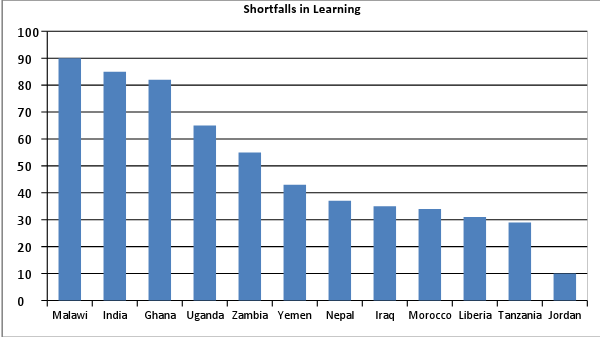
The report pins the crisis on four school-level ingredients that struggling systems lack: skilled and motivated teachers, prepared learners, learning-focused inputs, and capable management. Each one is the institutional mirror of a personal study habit. Skilled teaching is structured retrieval at scale. Prepared learners arrive with the focus and sleep their brains need. Inputs and management are the environment that protects the work. The same science that helps one student learn better is what entire systems are failing to deliver.
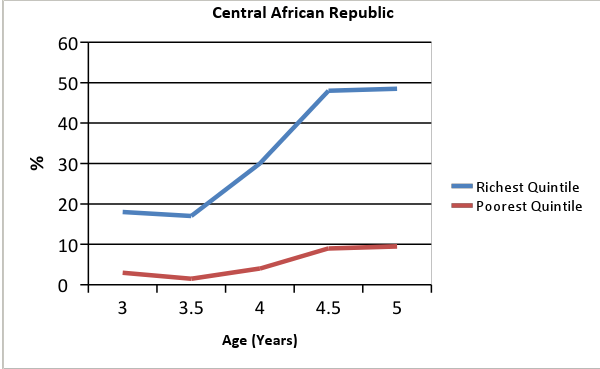
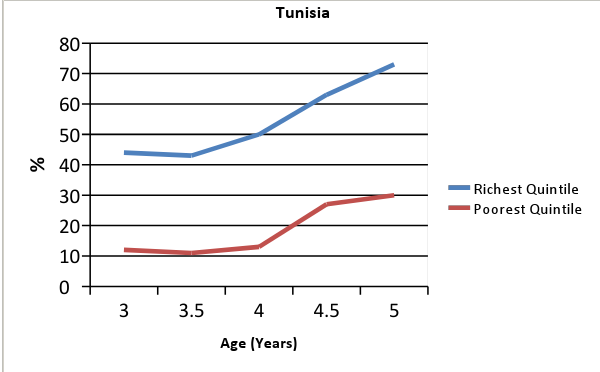
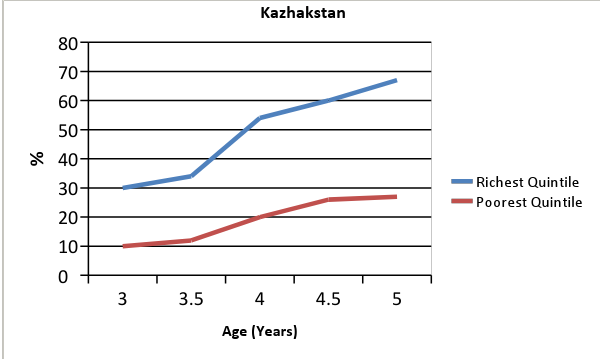
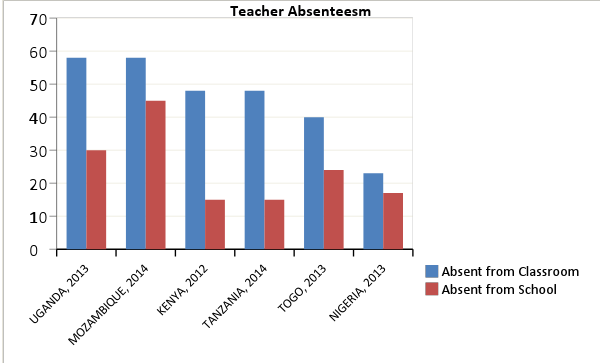
Most countries have already won the hard battle of getting children into school. The next battle is making sure those years actually produce learning. That is true for a system serving millions and for you, alone with a textbook tonight. The methods are the same. Recall it, space it, mix it, sleep on it.
Tell Google you want more of this.
Add Gaurav Tiwari as a preferred sourceOne tap, and this site shows up more often in your own Top Stories, AI Overviews and AI Mode. Remove it any time.