
How to Better Compete With Your Top Industry Rivals?
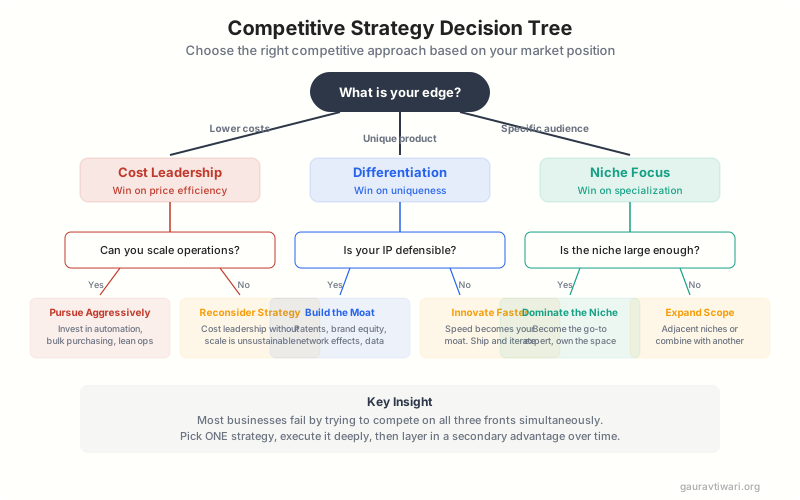
You’re spending on marketing, improving your product, and trying to grow, but your competitors keep winning deals you should be closing. Market share slips. Customers choose the rival with the louder brand or the lower price, even when your product is objectively better. It’s not a budget problem. It’s a strategy problem.
Most businesses compete by copying what their rivals do: matching prices, mimicking features, running similar ads. That’s the fastest way to become irrelevant. When you play the same game as a bigger competitor, you lose by default because they have more resources to execute the same strategy. The businesses that dominate their markets do something different. They compete on dimensions their rivals can’t easily replicate.
This guide covers 8 specific strategies for outsmarting your competition, not outspending them. Each one includes tools, real examples, and implementation steps you can start this week.
Table of Contents
1. Build a Competitive Intelligence System
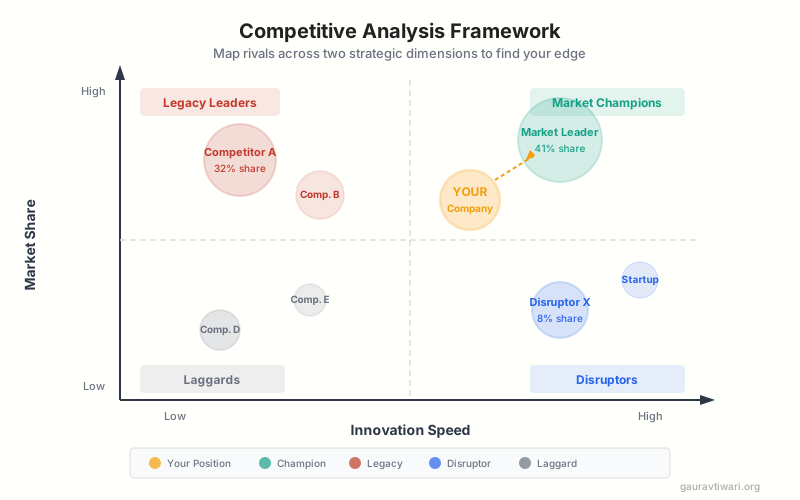
Most businesses “analyze competitors” once a year during annual planning, then forget about it. That’s not competitive intelligence. That’s a snapshot of a moving target. The companies that consistently win build ongoing systems that track competitor moves in real time.
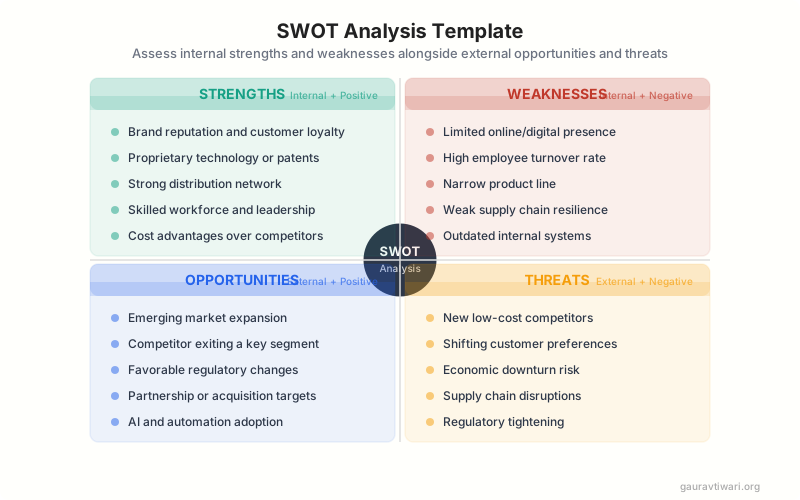
Start with a SWOT analysis (strengths, weaknesses, opportunities, threats) for your top 3-5 competitors. But don’t stop there. Set up automated monitoring using tools like Semrush for tracking competitor keyword rankings, ad spend, and content strategies. Google Alerts catches mentions. Social listening tools track sentiment shifts.
What to Track Monthly
- Pricing changes – Competitors adjusting prices signals market shifts. A price drop might mean they’re losing customers. A price increase might mean they’ve found a premium positioning that works.
- Product launches and feature updates – What problems are they solving that you aren’t? What features are they dropping?
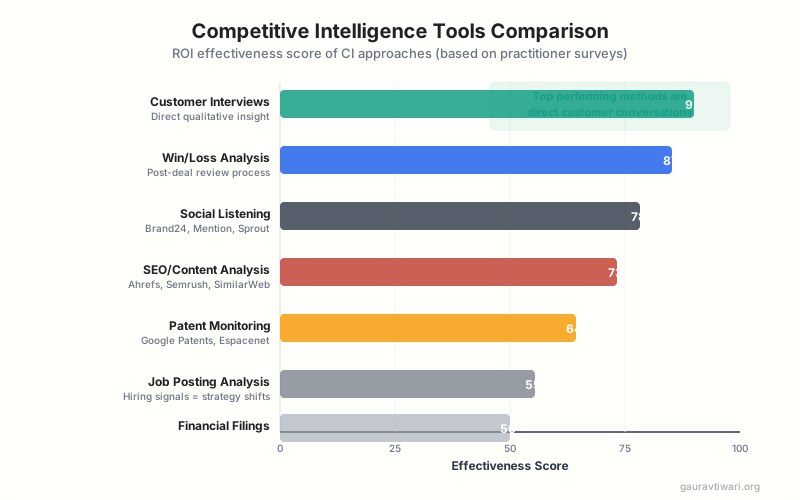
- Customer reviews and complaints – Third-party review sites like G2, Trustpilot, and Capterra reveal exactly where competitors are failing. Those failures are your opportunities.
- Content and SEO strategy – Which keywords are they targeting? What topics are they publishing? Use Semrush’s competitive analysis to see their entire content strategy laid bare.
- Hiring patterns – A competitor hiring 10 machine learning engineers tells you their product roadmap better than any press release.
2. Know Your Customers Better Than Rivals Do
The business that understands its customers best always wins. Not sometimes. Always. 44% of businesses now use buyer personas, but most of them are shallow demographic profiles that tell you nothing useful. “Sarah, 35, marketing manager” isn’t a persona. It’s a LinkedIn search filter.
Real customer knowledge comes from going deeper. What keeps your customer awake at 2 AM? What did they try before they found you? What would make them switch to a competitor tomorrow? The answers to these questions shape everything from product development to ad copy.
How to Build Deep Customer Knowledge
- Interview 10 customers quarterly – Not surveys. Actual conversations. Ask open-ended questions and listen for the language they use. That language goes directly into your marketing.
- Map the Jobs to Be Done – Clayton Christensen’s Jobs to Be Done (JTBD) framework reveals why customers actually hire your product. It’s rarely the reason you think.
- Track the “almost churned” customers – People who considered leaving but stayed can tell you more about your competitive advantages than any analysis.
- Monitor support tickets for patterns – Recurring complaints are competitive vulnerabilities. If 30% of tickets mention the same frustration, fixing it becomes a differentiator.
I use HubSpot to centralize all customer interaction data, from first touch to latest support ticket. When you can see the complete customer journey in one dashboard, patterns emerge that are invisible when data lives in silos.
What is your biggest competitive challenge right now?
3. Sell Solutions, Not Features
Your competitors sell products. You should sell outcomes. This isn’t just marketing advice. It’s a fundamental positioning strategy that makes direct price comparison nearly impossible, which is exactly where you want to be.
Think about it: if you sell “project management software,” you’re competing with Asana, Monday.com, Trello, and 200 other tools on features and price. But if you sell “a system that cuts project delivery time by 35%,” you’re competing on results. Results are harder to comparison-shop.
The Solution Selling Framework
- Lead with the problem – Before mentioning your product, articulate the customer’s pain point better than they can. When someone feels understood, they trust your solution.
- Quantify the cost of inaction – “Not solving this costs you $X per month in lost productivity.” Make the status quo more painful than change.
- Show transformation, not features – Case studies that show before/after results beat feature lists every time. “Company X reduced churn by 23% in 90 days” is more compelling than “our platform includes automated workflows.”
- Use content marketing to educate – Publish content that helps customers understand their problems deeply. When you educate people, they see you as the authority, and authorities get chosen over commodities.
4. Use Growth Marketing to Outpace Competitors
Growth marketing differs from traditional marketing in one critical way: it optimizes the entire customer lifecycle, not just acquisition. While your competitors pour money into getting new customers, growth marketers focus on activation, retention, referral, and revenue from existing ones. The math is simple: retaining an existing customer costs 5-7x less than acquiring a new one.
Growth Marketing Tactics That Beat Competitors
- A/B test everything – Landing pages, email subject lines, pricing pages, onboarding flows. Small improvements compound. A 2% conversion rate improvement per month means 27% more conversions in a year.
- Build referral loops – Dropbox grew from 100,000 to 4 million users in 15 months through referral incentives. Your product doesn’t need to be a tech startup to use this. Even service businesses can incentivize referrals with discounts or exclusive access.
- Personalize at scale – Use CRM data from HubSpot or Freshsales to segment customers and deliver targeted messaging. Generic “Dear Customer” emails get 14% open rates. Personalized ones get 26%.
- Focus on activation – Getting users to their “aha moment” fast is more important than getting more sign-ups. Slack found that teams who sent 2,000+ messages were almost never churning. So they optimized for that milestone.
5. Differentiate Through Content and Authority
Content is the one competitive moat that scales without proportional cost increases. A blog post you write today can generate leads for years. A YouTube video can rank and drive traffic indefinitely. Your competitors can copy your features, but they can’t copy your perspective, your data, or your voice.
The key is creating content your competitors can’t or won’t create. Original research, proprietary data, customer case studies with specific numbers, and honest opinions about your industry. The best content marketing tools help you execute faster, but the real advantage is in the strategy.
Content Differentiation Strategies
- Publish original research – Survey your customers, analyze your product data, or run experiments. “We analyzed 10,000 customer interactions and found…” beats “According to a HubSpot study…” every time.
- Take controversial positions – Bland, consensus content doesn’t differentiate. If you believe something your competitors won’t say publicly, say it. The best SaaS content strategies are built on strong opinions backed by evidence.
- Build a media ecosystem – Blog, podcast, newsletter, YouTube, LinkedIn. Each channel reaches different segments and reinforces your authority. Check out current digital marketing trends to see which channels are growing fastest in your niche.
- Invest in SEO early – Organic search traffic compounds like interest. Companies that invested in SEO 3-5 years ago are now nearly impossible to displace. Use Semrush to find keyword gaps where competitors are weak and own those topics first.
6. Build Switching Costs Into Your Product
The best competitive defense isn’t a better product. It’s a product that becomes harder to leave the more you use it. This isn’t about lock-in through hostage-taking (bad data portability, proprietary formats). It’s about creating genuine value that increases with usage.
Salesforce doesn’t dominate CRM because it’s the best product. It dominates because companies build their entire workflow around it. Years of customizations, integrations, and institutional knowledge create switching costs that no competitor can overcome with features alone.
Ethical Switching Cost Strategies
- Integrations – The more your product connects to other tools your customer uses, the harder it is to replace. API integrations create technical dependencies that competitors can’t easily replicate.
- Accumulated data value – When historical data becomes more valuable over time (analytics, CRM records, project history), customers have strong reasons to stay.
- Community and network effects – Products that connect users to each other (like Slack channels or LinkedIn groups) become more valuable as adoption grows.
- Training and certification – HubSpot Academy has certified over 500,000 professionals. Those certifications make HubSpot the default recommendation when those professionals make purchasing decisions.
7. Compete on Speed, Not Just Price
Price wars are a race to the bottom. Speed advantages are a race to the top. Amazon didn’t win retail by being cheapest (Walmart existed). They won by delivering faster and making the buying experience frictionless. The same principle applies to any industry.
Use Monday.com to streamline your operational workflows and eliminate bottlenecks. When your team can respond to customer inquiries in 2 hours instead of 24, launch features in weeks instead of quarters, and onboard new customers in days instead of months, speed itself becomes a competitive advantage.
Where Speed Creates Competitive Advantage
- Customer support response time – 90% of customers rate an “immediate” response as important. If your competitors take 24 hours and you respond in 1, you win.
- Product iteration speed – Ship small improvements weekly instead of big releases quarterly. Customers notice consistent improvement more than occasional overhauls.
- Sales cycle speed – Simplify your sales process. Reduce required meetings, automate proposals, and make pricing transparent. The company that makes buying easiest often wins.
- Content publishing speed – When a trend hits your industry, the first company to publish a definitive take on it captures the attention. Use proven marketing strategies and move fast.
8. Monitor and Adapt Continuously
The business landscape changes faster than ever. AI is reshaping industries in months, not years. Customer preferences shift with viral trends. New competitors emerge from adjacent markets. A strategy that works today might be obsolete in 6 months.
Build adaptation into your operating rhythm. Monthly competitive reviews, quarterly strategy adjustments, and annual strategic pivots should be standard operating procedure. The companies that survive long-term aren’t the strongest or the smartest. They’re the most adaptable.
Your Competitive Monitoring Cadence
- Weekly – Scan competitor social media, product updates, and news mentions. 15 minutes with Google Alerts and Semrush competitor tracking.
- Monthly – Deep dive into competitor content performance, keyword ranking changes, and customer review trends. Adjust tactics based on findings.
- Quarterly – Full SWOT refresh. Update buyer personas with new customer interview insights. Review and adjust growth marketing experiments. Assess whether current brand marketing tools still serve your needs.
- Annually – Strategic positioning review. Are you still differentiated? Has the market shifted? Do you need to pivot your approach entirely?
Best Tools for Competitive Intelligence
You can’t compete effectively without the right tools. These four platforms cover the essential competitive intelligence stack: market analysis, customer relationship management, operational efficiency, and sales pipeline management.
Semrush
- Full competitor keyword and backlink analysis
- Ad spend and PPC strategy tracking
- Content gap analysis across domains
- Market Explorer for industry overview
- Position tracking with daily updates
- 14-day free trial with full access

HubSpot
- Free CRM with unlimited contacts
- Marketing automation and email sequences
- Sales pipeline and deal tracking
- Customer feedback and NPS surveys
- Competitor tracking in content strategy tool
- Over 1,500 third-party integrations
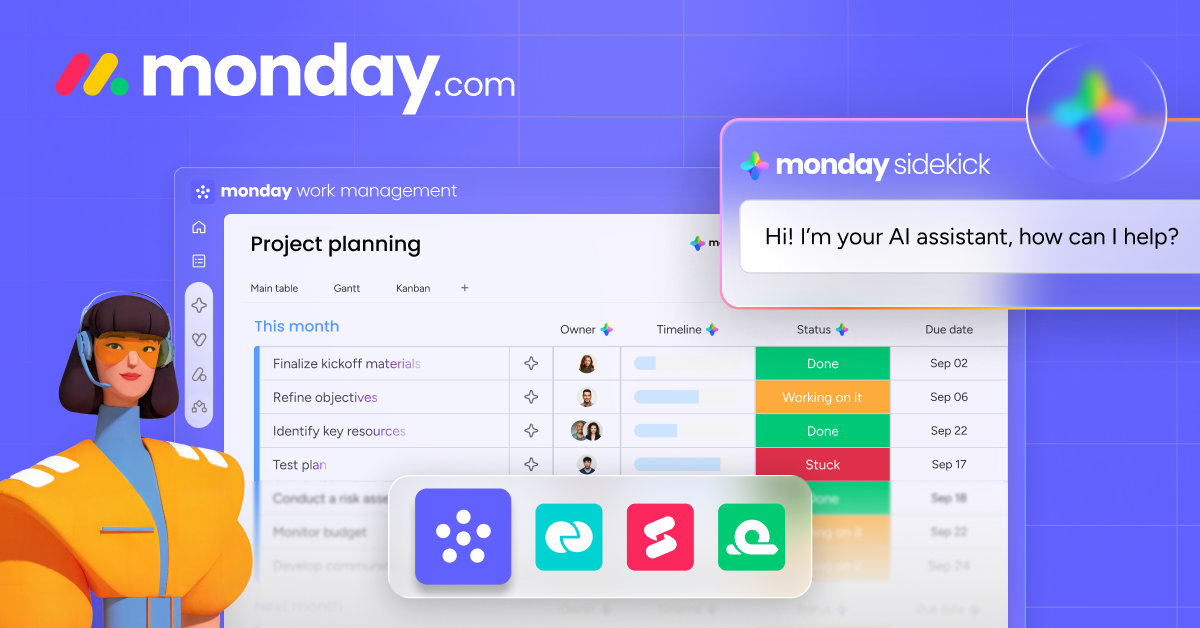
Monday.com
- Visual project management with 200+ templates
- Custom automations that eliminate manual work
- Time tracking and resource management
- Dashboards for real-time team performance
- Integrates with Slack, Gmail, and 50+ tools
- Free plan for up to 2 users
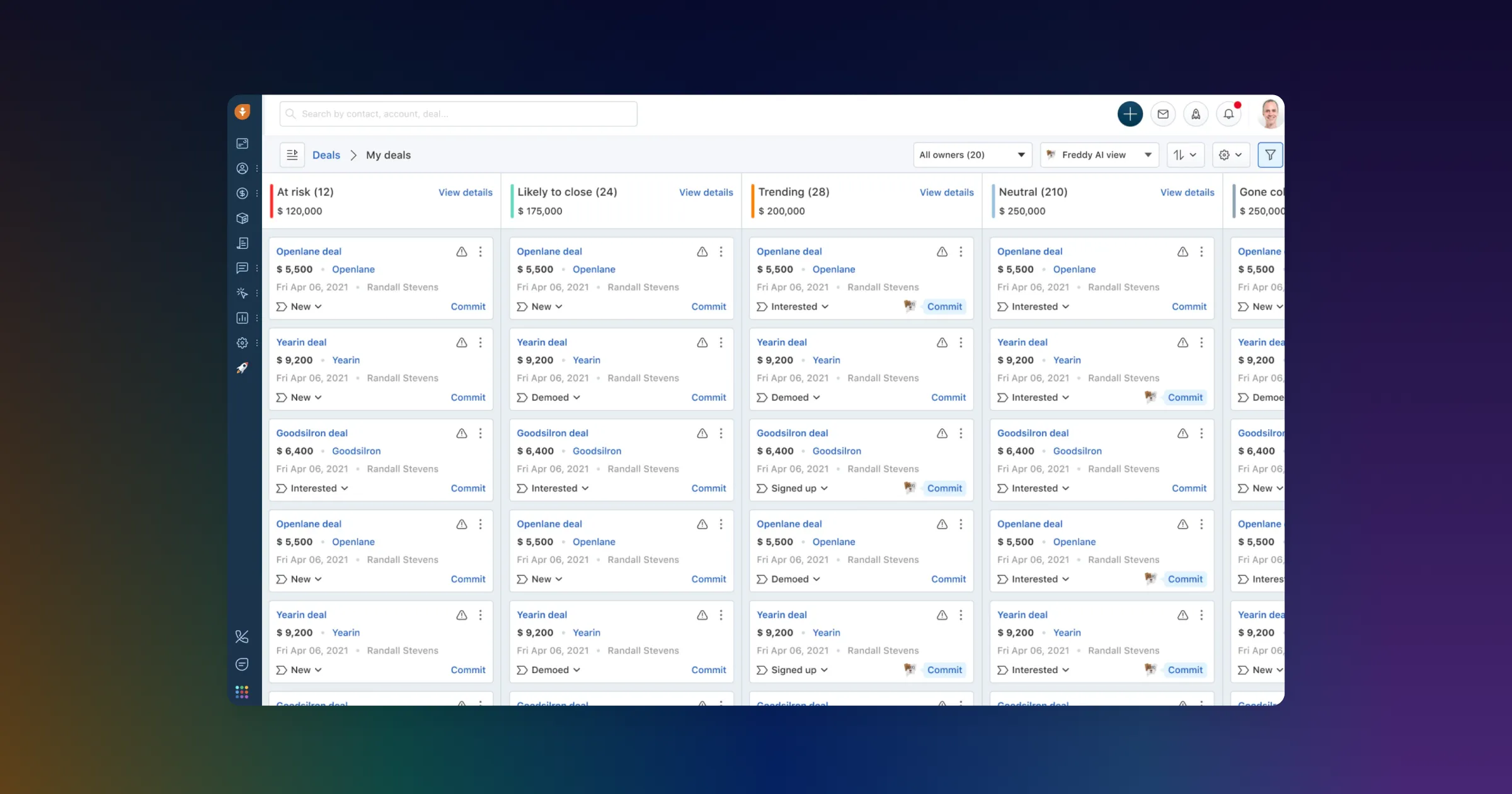
Freshsales
- AI-powered lead scoring and deal insights
- Built-in phone and email with tracking
- Visual sales pipeline with drag-and-drop
- Workflow automations for repetitive tasks
- Territory management for sales teams
- 21-day free trial with all features
Competitive Strategy Checklist
Frequently Asked Questions
How do you compete with larger, better-funded competitors?
Focus on speed, specialization, and customer intimacy. Large competitors move slowly and serve broad markets. You can win by serving a specific niche better than anyone, responding faster, and building deeper customer relationships. Content marketing and SEO also level the playing field since they reward quality over budget.
What is the best competitive analysis framework?
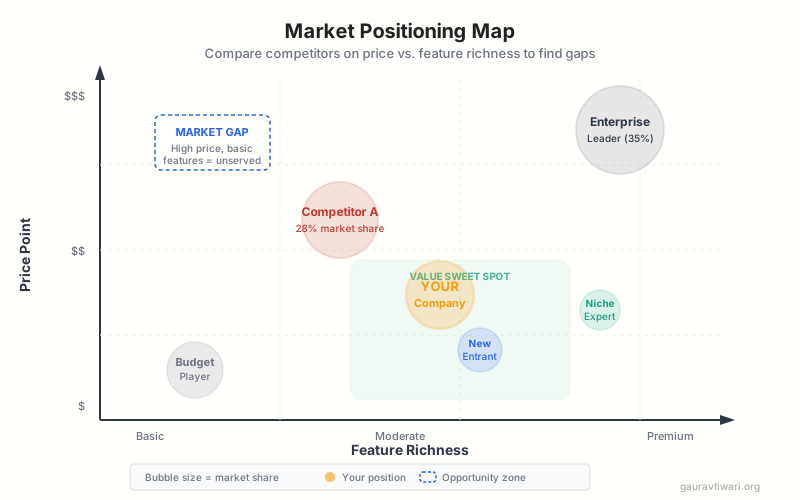
Start with a SWOT analysis (strengths, weaknesses, opportunities, threats) for each major competitor. Supplement it with Porter’s Five Forces for industry-level analysis and a competitive positioning map to visualize where you stand relative to rivals on key dimensions like price versus quality or features versus simplicity.
How often should you analyze your competitors?
Weekly light monitoring (social media, news mentions, product updates), monthly deep dives (keyword rankings, content performance, customer reviews), quarterly strategic reviews (full SWOT refresh, persona updates), and annual positioning assessments. Automated tools like Semrush and Google Alerts make the weekly monitoring nearly effortless.
Should you compete on price or differentiation?
Almost always differentiation. Price competition is a race to the bottom where only the largest players survive. Differentiation through unique positioning, superior customer experience, specialized expertise, or innovative solutions creates sustainable advantages. The exception is if you have genuine structural cost advantages (like economies of scale) that competitors cannot match.
What are the best tools for tracking competitor strategies?
Semrush is the most comprehensive for SEO and digital marketing intelligence. HubSpot centralizes customer data for relationship insights. Google Alerts provides free news monitoring. G2 and Capterra track competitor reviews and ratings. LinkedIn Sales Navigator reveals competitor hiring patterns and company growth signals.
How do you build a competitive moat for a small business?
Build switching costs through accumulated data value (CRM records, analytics history), deep integrations with customer workflows, community and network effects, and specialized expertise. Content is the most accessible moat for small businesses since it compounds over time and costs primarily time rather than money.
What is growth marketing and how does it help beat competitors?
Growth marketing optimizes the entire customer lifecycle (acquisition, activation, retention, referral, revenue) rather than just acquisition. It uses data-driven experimentation (A/B testing, personalization, referral programs) to compound small improvements. Companies using growth marketing typically see 2-3x better customer lifetime value compared to those focused solely on new customer acquisition.
How do you differentiate when competitors offer the same product?
When products are similar, differentiate on experience. Speed of delivery, quality of support, depth of documentation, strength of community, and brand personality all create meaningful differences. Apple doesn’t sell the best hardware specs but commands premium prices through design, ecosystem integration, and brand experience. Focus on the entire customer journey, not just the product itself.
Competing with industry rivals isn’t a single event. It’s an ongoing discipline. The companies that win consistently aren’t necessarily the best-funded or the most innovative. They’re the ones that build systems: systems for understanding customers, monitoring competitors, creating differentiated content, and iterating faster than everyone else.
Start with one strategy from this list. Build the competitive intelligence system first, because everything else depends on knowing where you stand. Then layer in the others one at a time. Within 6 months, you’ll have a competitive infrastructure that most of your rivals will never match because they’re still doing annual SWOT analyses and hoping for the best.
Disclaimer: This site is reader-supported. If you buy through some links, I may earn a small commission at no extra cost to you. I only recommend tools I trust and would use myself. Your support helps keep gauravtiwari.org free and focused on real-world advice. Thanks. - Gaurav Tiwari