
 by
byHomeschooling in 2026 is not what it used to be. You do not need to buy a full curriculum, subscribe to expensive boxed programs, or figure out lesson plans alone. The right websites give you K-12 math, science, reading, and creative skills for free or a few dollars per month. Some families run entire homeschool programs with nothing but Khan Academy and a library card.
This guide covers the 13 homeschooling websites I actually recommend to parents, including real pricing, which grade levels each one works for, and what each one is best at. I have built educational tools and studied how kids learn online for years, and these are the platforms that consistently deliver value.
Best Homeschooling Websites at a Glance
Here is the quick comparison before the full reviews. Every site on this list is either completely free or offers a meaningful free tier.
| Website | Best For | Grade Levels | Cost |
|---|---|---|---|
| Khan Academy | Complete K-12 curriculum | K-12 | Free |
| Skillshare | Creative and practical skills | Teens, adults | $14/month or $99/year |
| Coursera | University-level courses | High school to adult | Free audit, $49+/month Plus |
| MIT OpenCourseWare | Advanced STEM | Motivated teens, adults | Free |
| EdX | Accredited university courses | High school to adult | Free audit, $50-300 per verified course |
| LibriVox | Free audiobooks | All ages | Free |
| Time4Learning | Full K-12 homeschool curriculum | Pre-K to 12 | $24.95-55/month per student |
| IXL | Adaptive practice | Pre-K to 12 | $9.95-19.95/month |
| Education.com | K-8 worksheets and games | Pre-K to 8 | Free tier, $9.99/month Premium |
| Juni Learning | 1-on-1 coding and math tutoring | Ages 7-18 | $250+/month |
| ABCya | Educational games | Pre-K to 6 | Free with ads, $9.99/month Premium |
| MEL Science | Hands-on science kits | Ages 5-16 | $34.90+/month |
| Carson Dellosa | Printable workbooks | Pre-K to 12 | $5-20 per workbook |
If you want the short version: start with Khan Academy (free) for core academics, add IXL for adaptive practice, and layer in Skillshare or MEL Science for creative and science enrichment. This stack covers most homeschooling families for under $50/month.
Khan Academy: The Free Foundation
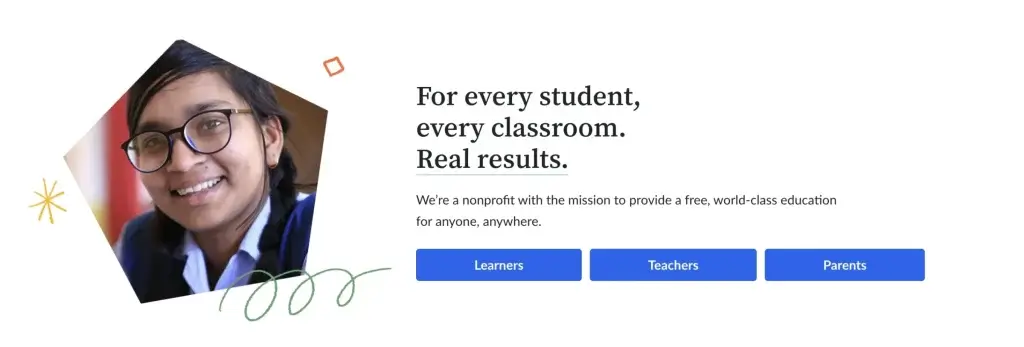
Khan Academy is the single most valuable free resource for homeschooling families. It covers math from counting through multivariable calculus, science (biology, chemistry, physics), economics, history, grammar, SAT/ACT prep, and AP courses. Every video is free, every exercise is free, and every student progress report is free.
Cost: 100% free. No ads, no premium tier, no freemium tricks. Funded by donations and grants from Bill & Melinda Gates Foundation, Google, and individual donors.
Best for: Complete K-12 math curriculum. Middle and high school science. SAT and ACT prep. AP course review. Khan Academy Kids (separate free app) for ages 2-8.
Honest limitation: Videos can feel dry for younger kids (ages 4-8). Pair with more engaging platforms like ABCya or Education.com for that age range. Best value starts around age 9.
Skillshare: Creative Skills and Project-Based Learning
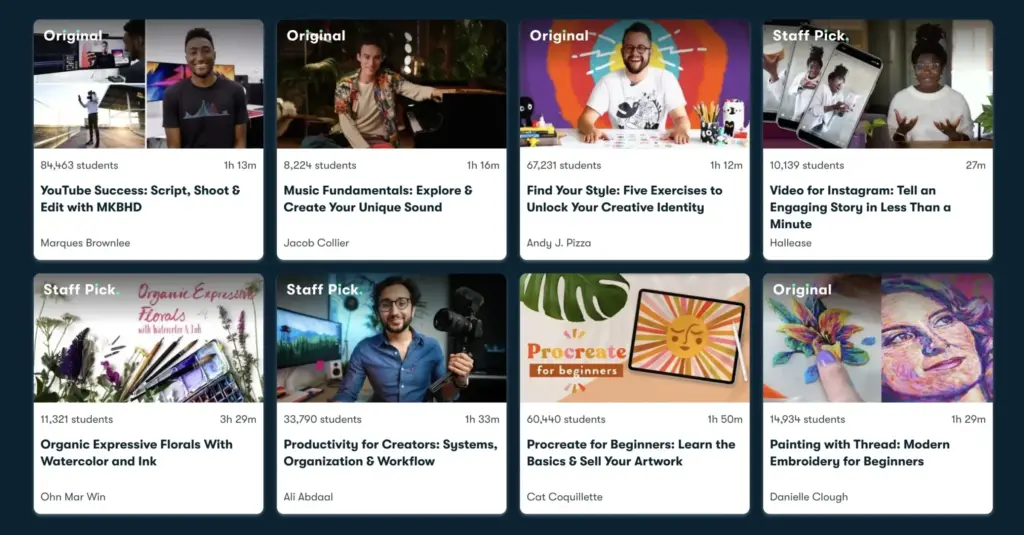
Skillshare is where homeschooling families go for the subjects traditional curricula skip: illustration, graphic design, animation, photography, creative writing, music production, cooking, and entrepreneurship. Classes are project-based, meaning kids create something real by the end of each course (not just watch videos and take quizzes).
Cost: $14/month or $99/year (Premium). 30-day free trial available for new accounts.
Best for: Teenagers exploring creative career paths. Homeschoolers building portfolio work. Parents teaching life skills (cooking, photography, design basics). Art and design enrichment.
Honest limitation: Not for young children. Most classes are taught for a teen or adult audience, so kids under 12 need parent involvement. Not a core curriculum replacement.
Coursera: University Courses at Home
Coursera offers real university courses from Stanford, Yale, Google, IBM, and 300+ other institutions. For homeschoolers in high school, this is the bridge to college-level work. Motivated teens can earn certificates that look great on college applications.
Cost: Free to audit most courses (you can watch lectures and read materials). Paid certificates start at $49 per course. Coursera Plus at $59/month or $399/year unlocks unlimited access to 7,000+ courses including certificates.
Best for: Motivated high schoolers exploring specific careers (CS, business, psychology, data science). College application credentials. Parents pursuing their own learning alongside homeschooling their kids.
Honest limitation: Most courses assume a high school reading level and mathematical maturity. Not suitable for elementary or middle school students as primary curriculum.
MIT OpenCourseWare: Free Elite STEM
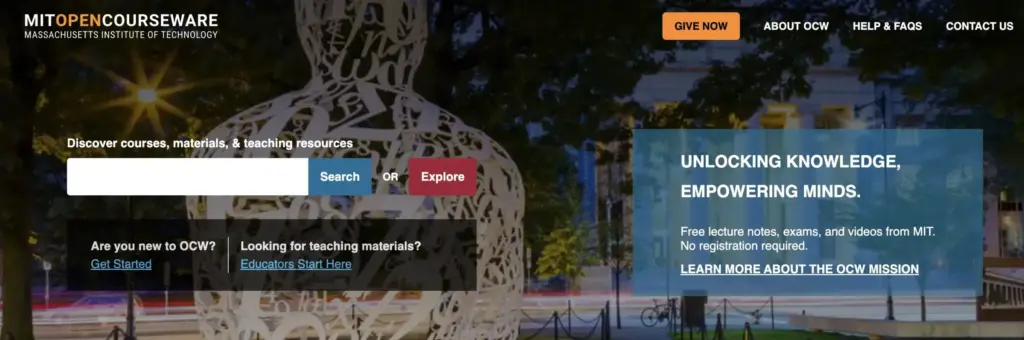
MIT OpenCourseWare (OCW) publishes complete materials from almost every course taught at MIT. Lecture videos, problem sets, exams, solutions, reading lists. For free. This is not a watered-down version of MIT’s curriculum; it is the actual curriculum.
Cost: 100% free. Completely free. No account required to access most materials.
Best for: Highly motivated homeschoolers pursuing STEM at a college level. Parents looking for rigorous secondary math and physics materials. Students preparing for MIT-level work.
Honest limitation: No structure, no instructor support, no progress tracking. Students are completely on their own. Only appropriate for self-directed learners who can work through hard material independently.
EdX: Accredited University Courses
EdX is Coursera’s main competitor, focused more heavily on university courses from Harvard, MIT, Berkeley, and other elite institutions. The content skews more academic than Coursera’s career-oriented courses.
Cost: Free to audit. Verified certificates cost $50-300 per course. MicroMasters and professional certificate programs run $600-3,000+.
Best for: High school students exploring academic fields seriously. Parents teaching advanced subjects they want rigorous source material for. Homeschoolers building a transcript with recognized credentials.
Honest limitation: Interface is clunkier than Coursera. Some courses are outdated because they are not updated regularly. The free audit tier sometimes restricts access to assignments.
LibriVox: Free Audiobooks for Literature
LibriVox is a volunteer-run project that records audiobooks of public domain literature and releases them for free. This is an underrated resource for homeschooling. Classic literature (Dickens, Austen, Twain, Shakespeare) is available as hours of free audio that kids can listen to during car rides, chores, or quiet time.
Cost: Free. No account required. Download MP3s directly or listen through their app.
Best for: Literature study at any grade level. Students who struggle with reading comprehension but learn well through listening. Long car trips and road-school families.
Honest limitation: Volunteer recordings vary in quality. Some narrators are excellent, others are hard to listen to. Check the sample before committing to a long book.
Time4Learning: All-in-One Homeschool Curriculum
Time4Learning is the closest thing to a complete boxed homeschool curriculum in digital form. It covers math, language arts, science, and social studies from Pre-K through 12th grade with a full scope and sequence. Parents get automated grading, progress reports, and a parent dashboard. Students get interactive lessons and graded assessments.
Cost: Elementary $24.95/month per student, middle school $34.95/month, high school $55/month. Family discounts available for multiple children.
Best for: Parents new to homeschooling who want structure and don’t want to design a curriculum. Families managing multiple grade levels. Homeschoolers who need automated record-keeping for state reporting requirements.
Honest limitation: Not the cheapest option. Two kids in elementary = $50/month. Three kids can hit $100+/month. For budget-conscious families, Khan Academy covers most of this for free.
IXL: Adaptive Practice That Meets Kids Where They Are
IXL is an adaptive learning platform covering math, language arts, science, social studies, and Spanish from Pre-K through 12th grade. Its strength is the skill-based structure. IXL breaks curriculum into over 9,000 individual skills, and the system adjusts difficulty in real-time based on student performance. Kids work at their actual level, not their grade level.
Cost: Single subject $9.95/month, all subjects $19.95/month. Family plans for up to 6 children at $30.95/month.
Best for: Supplemental math and language arts practice. Closing specific skill gaps (IXL’s diagnostic tool identifies what a child needs to work on). Kids who need repetition to master concepts. Parents who want measurable progress reports.
Honest limitation: IXL is practice, not teaching. It does not explain concepts deeply, just provides problems. Pair with Khan Academy or a traditional textbook for initial instruction, then use IXL for practice.
Education.com: K-8 Worksheets and Games
Education.com is a solid K-8 resource with over 30,000 worksheets, lesson plans, and interactive games aligned to Common Core standards. It covers reading, math, science, and social studies in one place. Strong library of printable worksheets makes it useful for parents who like hands-on paper work alongside screens.
Cost: Free tier gives limited daily access. Premium at $9.99/month (annual) or $15.99/month (monthly) unlocks unlimited access to all resources.
Best for: Parents teaching K-8 who want printable worksheets for offline work. Supplementing core curriculum with interactive games. Families who like a mix of screen and paper learning.
Honest limitation: High school coverage is weak. The interface feels busier than Khan Academy or IXL. Ads on the free tier can be distracting for younger kids.
Juni Learning: 1-on-1 Live Coding and Math Tutoring
Juni Learning is the only platform on this list that offers live 1-on-1 instruction from real tutors. They teach Python, JavaScript, Scratch, competition math, and creative writing to kids ages 7-18. Classes are scheduled weekly and taught by tutors from Stanford, MIT, and other top universities.
Cost: Around $250-400 per month depending on frequency. 4 classes per month at $250, 8 classes at $400. Not cheap, but you are paying for live instruction from qualified tutors.
Best for: Families where the parent does not feel qualified to teach coding or advanced math. Motivated kids pursuing competitive math or programming. Homeschoolers wanting expert 1-on-1 instruction without hiring a private tutor.
Honest limitation: Expensive. At $250/month, it is a significant commitment. Only makes sense if your child genuinely benefits from live instruction and will do the work between sessions.
ABCya: Educational Games for Young Kids
ABCya is the educational game site for Pre-K through 6th grade. It covers math, reading, typing, strategy, and art through browser-based games. Kids genuinely enjoy playing them, which makes ABCya useful as a reward after structured learning time or as a break from traditional lessons.
Cost: Free version has ads. ABCya Premium is $9.99/month (or cheaper annually) and removes ads plus adds exclusive games.
Best for: Young homeschoolers (ages 4-10). Motivation and reward time after structured lessons. Skill reinforcement through play rather than drills.
Honest limitation: Not a structured curriculum. Games are fun but the learning is incidental, not systematic. Use it as a supplement, not a primary resource.
MEL Science: Hands-On Science Kits Delivered Monthly
MEL Science is not just a website. It is a subscription service that delivers real chemistry, physics, and VR science experiments to your door monthly. Each kit includes materials, lab equipment, and accompanying videos that explain the science. Kids do real experiments, not watch simulations.
Cost: Starts at $34.90/month for the basic Chemistry or Physics kits. Full subscriptions with VR add-ons run $50-80/month.
Best for: Ages 5-16. Families who want science that involves hands-on experimentation. Parents who feel unqualified to run their own chemistry experiments safely. Kids whose learning style is kinesthetic.
Honest limitation: Physical shipping means you need to commit to the subscription. International shipping costs extra. Some experiments require adult supervision and cleanup, so it is not passive learning.
Carson Dellosa: Printable Workbooks and Curriculum Materials
Carson Dellosa is the traditional homeschool publisher that sells printable workbooks, flashcards, classroom posters, and complete grade-level curriculum packs. Not flashy, not gamified, but proven. Many homeschooling families have used Carson Dellosa materials for decades because they work.
Cost: Individual workbooks $5-20. Complete grade-level bundles $30-80. Digital downloads available for many products at slightly lower prices.
Best for: Parents who want paper-based work to balance screen time. Families using a traditional curriculum approach. Specific skills drill (multiplication facts, handwriting, phonics).
Honest limitation: Not interactive. Workbook content feels dated compared to adaptive platforms like IXL. Best used as a supplement, not a primary learning source.
How to Choose the Right Homeschooling Website
Thirteen options is overwhelming. Here is how I recommend parents narrow it down based on their situation.
If you are new to homeschooling and want structure: Start with Time4Learning ($24.95-55/month per student). It handles curriculum planning, grading, and progress tracking for you. Add Khan Academy for free extra practice. Skip the other options until you know what your child actually needs.
If you have an experienced homeschool routine and want to save money: Build your own stack with Khan Academy (free, covers most K-12 academics), IXL at $9.95-19.95/month for adaptive practice, and LibriVox (free) for literature. Under $20/month for a complete program.
If your child is in high school and preparing for college: Coursera, EdX, and MIT OpenCourseWare for advanced academics. Khan Academy for SAT/ACT prep. Skillshare for portfolio-building creative skills.
If your kids are young (ages 4-9): ABCya for game-based learning, Education.com for printable worksheets, and Khan Academy Kids (free app) for core academics. Screen time should be limited at this age regardless.
If you want hands-on science beyond textbooks: MEL Science delivers real experiments monthly. Pair with Khan Academy science videos for theory.
If your child needs 1-on-1 expert instruction (coding, advanced math): Juni Learning is expensive ($250+/month) but delivers live tutoring from qualified instructors. Only makes sense if the parent cannot teach the subject themselves.
Most homeschooling families do not need all 13 platforms. They need 2-3 that fit their specific situation. Pick one core academic resource (Khan Academy or Time4Learning), one practice platform (IXL or Education.com), and one enrichment source (Skillshare, MEL Science, or Juni).
Frequently Asked Questions
What is the best free homeschooling website?
Khan Academy is the best free homeschooling website. It covers K-12 math, science (biology, chemistry, physics), economics, history, grammar, SAT/ACT prep, and AP courses at zero cost. No ads, no freemium tricks. MIT OpenCourseWare and EdX also offer free access to university-level courses for motivated high schoolers. LibriVox provides free audiobooks of classic literature.
Can I homeschool for free using just websites?
Yes. Many families run complete homeschool programs using only free resources: Khan Academy for core academics, LibriVox for literature audiobooks, Project Gutenberg for free ebooks, Khan Academy Kids for ages 2-8, and public library resources. The limitation is that you need to plan the curriculum yourself, since free resources do not include structured scope and sequence. Paid platforms like Time4Learning solve this at $24.95-55/month per student.
What is the best homeschooling website for elementary school?
For elementary homeschoolers (ages 4-11), Khan Academy Kids (free), ABCya ($9.99/month premium), Education.com ($9.99/month), and IXL ($9.95-19.95/month) are the best options. For a complete curriculum, Time4Learning Elementary ($24.95/month per student) covers all subjects with lesson planning and grading done for you.
Which homeschooling website offers a full K-12 curriculum?
Time4Learning is the most complete paid K-12 curriculum platform, covering math, language arts, science, and social studies with grading and progress tracking. Khan Academy provides free K-12 coverage but requires parents to create their own scope and sequence. For premium families with budget, Calvert Education and Sonlight offer more traditional curriculum-in-a-box options, though they cost significantly more.
Is IXL better than Khan Academy for homeschooling?
They serve different purposes. Khan Academy is better for initial teaching of concepts through video lectures and explanations. IXL is better for adaptive practice after the concept is understood. Most homeschoolers use both: Khan Academy for learning, IXL for practicing. Khan Academy is free, IXL costs $9.95-19.95/month.
How much does online homeschooling cost per month?
It depends on your approach. A free stack (Khan Academy, LibriVox, public library) costs $0. A budget paid stack (Khan Academy + IXL + Skillshare) costs around $30-35/month total. A complete curriculum package (Time4Learning + IXL + MEL Science) runs $75-110/month per student. Premium 1-on-1 tutoring (Juni Learning) adds $250+/month.
What is the best homeschooling website for high school students?
For high school, Khan Academy covers math and sciences well and includes SAT/ACT prep. Coursera and EdX offer accredited university courses that strengthen college applications. MIT OpenCourseWare provides rigorous STEM materials for motivated students. Skillshare adds portfolio-building creative skills for students pursuing design, writing, or art careers.
Do homeschooling websites provide accredited courses?
Some do. Time4Learning is accredited through Middle States Association (for Time4Learning Online High School). Coursera and EdX offer university-accredited certificates, though these are not the same as high school accreditation. For homeschool accreditation and official transcripts, you typically need to enroll with an umbrella school or accredited online program, not just use individual websites.
Is Coursera worth it for homeschoolers?
Coursera is worth it for motivated high school homeschoolers pursuing specific career paths in computer science, business, data science, or healthcare. The free audit option is a zero-risk way to try courses. Coursera Plus at $59/month or $399/year makes sense only if your student is taking 2+ certificate courses per year. For younger students or students who do not need certificates, free Khan Academy covers most of the same topics.
What homeschooling website works best with multiple children?
IXL’s family plan covers up to 6 children for $30.95/month, making it the best value for multi-child families. Khan Academy is free and unlimited, so it works perfectly for any number of kids. Time4Learning offers multi-student discounts but still charges per student. Education.com and ABCya have family plans that cover multiple children for a single subscription fee.
Tell Google you want more of this.
Add Gaurav Tiwari as a preferred sourceOne tap, and this site shows up more often in your own Top Stories, AI Overviews and AI Mode. Remove it any time.
Disclaimer: This site is reader-supported. If you buy through some links, I may earn a small commission at no extra cost to you. I only recommend tools I trust and would use myself. Your support helps keep gauravtiwari.org free and focused on real-world advice. Thanks. - Gaurav Tiwari