
Top 10 Altcoins to Watch in 2026: Best Cryptocurrencies for Investment
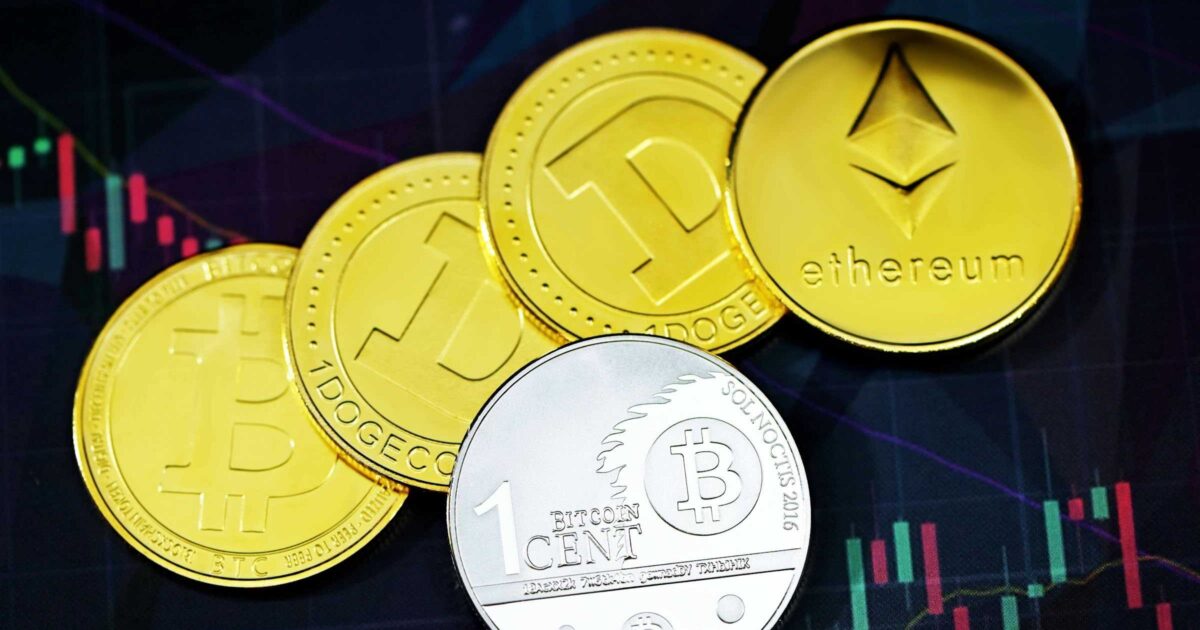
Bitcoin gets the headlines, but altcoins deliver the returns. In 2026, Bitcoin’s price movement has been relatively predictable. Meanwhile, altcoins like Solana jumped 900%+ in a single year, Avalanche tripled, and smaller tokens posted even crazier numbers. The opportunity isn’t in the obvious coin everyone already owns.
The problem? There are over 20,000 altcoins, and 95% of them will lose you money. Picking the right altcoins to invest in requires looking past hype and examining actual technology, team credibility, token economics, and real-world adoption. I’ve spent months tracking these metrics across dozens of projects to cut through the noise.
Here are the top 10 altcoins to watch in 2026, each with genuine fundamentals, active development, and real use cases that go beyond speculation.
Altcoins are significantly more volatile than Bitcoin. Many projects fail completely. Never invest more than you can afford to lose, and diversify across multiple coins rather than going all-in on one. This isn’t financial advice.
Best Altcoins to Invest In: Quick Summary
Here’s a quick look at the top altcoins to watch in 2026, ranked by fundamentals, adoption, and growth potential.
- Ethereum (ETH), The DeFi and smart contract king with the largest developer ecosystem
- Binance Coin (BNB), Powers the world’s largest exchange with $81B+ market cap
- Cardano (ADA), Research-driven blockchain with peer-reviewed development
- Solana (SOL), Fastest blockchain at 50,000+ TPS with sub-second finality
- Polkadot (DOT), Cross-chain interoperability leader with parachain technology
- Avalanche (AVAX), Multi-chain architecture rivaling Ethereum and BSC
- Chainlink (LINK), Essential oracle network connecting real-world data to blockchains
- Litecoin (LTC), Bitcoin’s faster, cheaper sibling built for everyday payments
- Stellar (XLM), Cross-border payments with MoneyGram partnership
- VeChain (VET), Supply chain transparency blockchain with enterprise adoption
1. Ethereum (ETH)
Ethereum remains the best altcoin to invest in for 2026 if you want the safest bet outside Bitcoin. Its transition to Proof of Stake slashed energy consumption by 99.95%, and the network now processes transactions more efficiently through shard chains that handle parallel processing.
The numbers tell the story: over 4,000 active dApps, $50B+ locked in DeFi protocols, and the largest smart contract developer community in crypto. Vitalik Buterin’s roadmap focuses on scaling through “The Surge” and “The Purge” upgrades, targeting 100,000 TPS without sacrificing decentralization.
ETH staking yields around 3-5% annually, making it a productive asset you can hold while earning passive income. The EIP-1559 burn mechanism has made ETH deflationary during high-usage periods, reducing supply over time. For long-term altcoin investors, Ethereum is the foundation of any crypto portfolio.
2. Binance Coin (BNB)
Binance Coin (BNB) sits at an $81.41 billion market cap, making it the third-largest altcoin. BNB hit its all-time high of $788.84 in December 2026, and its growth from $0.10 in October 2017 shows what real utility-driven adoption looks like.
BNB isn’t just an exchange token. It powers the entire BNB Chain ecosystem: smart contracts, DeFi protocols, NFT marketplaces, and token launches on Binance Launchpad. Using BNB for trading fees on Binance saves you 25%, which adds up fast for active traders. Changpeng Zhao built BNB into the backbone of the world’s largest crypto exchange.
Quarterly token burns reduce BNB’s total supply over time, creating deflationary pressure. If you’re already trading on Binance (and most serious crypto exchange users are), holding BNB is almost a no-brainer for fee savings alone.
3. Cardano (ADA)
Cardano stands out among altcoins to buy because it’s the only major blockchain built entirely on peer-reviewed academic research. Founded by Charles Hoskinson (Ethereum co-founder), Cardano uses the Ouroboros Proof of Stake protocol, which is mathematically proven to be secure.
With a market cap of ~$25.56 billion and ADA priced around $0.7265, Cardano consistently ranks in the top 10 cryptocurrencies. Its layered architecture separates the settlement layer from the computation layer, allowing upgrades to happen without disrupting the main chain.
Cardano’s real strength is its methodical approach. Every upgrade goes through rigorous academic peer review before deployment. Smart contracts through Plutus are live and growing. For investors who prefer fundamentals over hype, Cardano is one of the best altcoins in 2026 for long-term holds.
4. Solana (SOL)
Solana is the fastest major blockchain, processing 50,000+ transactions per second with sub-second finality. Launched in March 2020 by Anatoly Yakovenko, it’s become the go-to chain for DeFi, NFTs, and high-frequency trading applications that need speed.
The secret is Proof of History (PoH) combined with Proof of Stake. PoH timestamps transactions before they’re processed, eliminating the consensus bottleneck that slows other blockchains. Transaction fees average under $0.01, making Solana practical for everyday use.
Solana’s ecosystem has exploded with dApps, DeFi protocols, and NFT marketplaces. Past network outages were a concern, but the Firedancer upgrade (built by Jump Crypto) adds a second validator client to dramatically improve reliability. Among altcoins to watch in 2026, Solana offers the best combination of speed, cost, and ecosystem growth.
5. Polkadot (DOT)
Polkadot solves a problem most blockchains ignore: interoperability. Founded by Gavin Wood (Ethereum co-founder), it lets different blockchains communicate and share data seamlessly. Polkadot 2.0 launched in Q1 2026 with major scalability improvements.
The parachain architecture is what makes Polkadot unique. Projects build custom blockchains (parachains) that connect to Polkadot’s relay chain, inheriting its security while maintaining independence. This enables cross-chain DeFi, cross-chain NFT transfers, and multi-chain dApps that aren’t possible on isolated blockchains.
DOT staking yields around 12-15% annually, one of the highest among top altcoins. For investors who believe the future of crypto is multi-chain (not one chain to rule them all), Polkadot is one of the best altcoins to invest in for 2026.
6. Avalanche (AVAX)
Avalanche, launched in 2020 by Ava Labs, competes directly with Ethereum and Binance Smart Chain. It processes 4,500+ TPS with under 2-second finality and fees averaging $0.01-$0.10. The eco-friendly consensus mechanism uses a fraction of Bitcoin’s energy.
Avalanche’s multi-blockchain architecture splits into three specialized chains: Platform Chain (validators and staking), Contract Chain (smart contracts and dApps), and Exchange Chain (asset creation and cross-chain transfers). This design lets each chain optimize for its specific function without bottlenecking the others.
Subnet technology allows enterprises to create private, permissioned blockchains within Avalanche’s ecosystem. This appeals to institutional investors and businesses who need blockchain benefits with compliance controls. Among top altcoins to watch, AVAX offers institutional-grade infrastructure at competitive costs.
7. Chainlink (LINK)
Chainlink is the backbone of DeFi. Its decentralized oracle network connects real-world data (prices, weather, events) to smart contracts on every major blockchain. Founded in 2017 by Sergey Nazarov and Steve Ellis, Chainlink powers over $75 billion in transaction value.
Without oracles, smart contracts can’t access external data. Chainlink solves this by using multiple independent nodes to verify and deliver data, ensuring integrity. Every major DeFi protocol (Aave, Compound, Synthetix) relies on Chainlink price feeds. It’s not optional infrastructure; it’s essential.
The CCIP (Cross-Chain Interoperability Protocol) positions Chainlink as the bridge between blockchains and traditional finance. LINK staking launched in 2026, adding yield for holders. As DeFi grows, Chainlink’s importance only increases, making LINK one of the best altcoins in 2026 for fundamental investors.
8. Litecoin (LTC)
Litecoin is the “silver to Bitcoin’s gold,” and it’s earned that title since 2011. Created by Charlie Lee, LTC processes blocks 4x faster than Bitcoin (2.5 minutes vs. 10 minutes) with lower fees. It’s one of the most battle-tested altcoins in existence.
With a total supply of 84 million coins (4x Bitcoin’s 21 million), Litecoin is more accessible for smaller investors. The MimbleWimble upgrade added optional privacy features, giving users transaction confidentiality when needed. Litecoin’s network has maintained 100% uptime since launch, a reliability record few altcoins can match.
Litecoin won’t give you 10x returns like smaller altcoins might. But it won’t disappear overnight either. For investors who want a stable, proven altcoin to buy as a portfolio anchor alongside riskier picks, LTC delivers consistent reliability.
9. Stellar (XLM)
Stellar focuses on what crypto was supposed to do: make cross-border payments fast and cheap. Founded by Jed McCaleb (Ripple co-founder), Stellar processes international transactions in 3-5 seconds for under $0.01 in fees. In 2023, Stellar handled over $1 billion in transactions.
The MoneyGram partnership gives Stellar real-world adoption that most altcoins only dream about. Users can send money globally through MoneyGram’s network using Stellar’s blockchain rails. The Soroban upgrade introduced smart contract capabilities, expanding Stellar beyond payments into DeFi territory.
Stellar’s energy consumption is minimal compared to proof-of-work chains, appealing to sustainability-conscious investors. Transaction finality in 3-5 seconds beats most banking systems by days. For altcoins to invest in with real utility and institutional partnerships, Stellar is a strong pick for 2026.
10. VeChain (VET)
VeChain targets a specific, massive market: supply chain management. Founded by Sunny Lu (former Louis Vuitton CIO), it tracks product authenticity from factory to consumer. Enterprise clients include Walmart China, BMW, and DNV GL, giving VeChain real revenue and adoption.
The dual-token system (VET for value transfer, VTHO for transaction fees) stabilizes costs for businesses. Companies hold VET and generate VTHO passively to pay for blockchain operations. This separates speculative trading from actual business usage, a design choice that makes VeChain practical for enterprise adoption.
VeChain’s real-world use cases in food safety, luxury goods authentication, and carbon tracking give it revenue streams beyond speculation. Among altcoins to watch in 2026, VET stands out for having actual enterprise customers paying for blockchain services, not just promises.
Don’t put all your money into one altcoin. Spread your investment across 5-7 coins from different sectors (DeFi, payments, infrastructure, supply chain). If one fails, the others can still perform. Rebalance quarterly based on fundamentals, not hype.
How to Pick the Best Altcoins to Invest In
Most people pick altcoins based on Twitter hype and Reddit threads. That’s gambling, not investing. Here’s what actually matters when evaluating which altcoins to buy.
Check the team and funding. Who built it? What’s their track record? VC-backed projects with experienced founders (like Solana, Cardano, Polkadot) have better survival odds than anonymous teams with flashy websites.
Look at token economics. Total supply, inflation rate, burn mechanisms, staking yields. A coin with unlimited supply and no burns will dilute your holdings over time. Deflationary tokens (ETH, BNB) tend to hold value better.
Verify real adoption. Active wallet addresses, daily transactions, TVL (total value locked in DeFi), developer activity on GitHub. These metrics separate real projects from vaporware. If a project has a billion-dollar market cap but only 1,000 daily active users, something is wrong.
Understand the use case. “Blockchain for X” isn’t enough. Does the project solve a real problem better than existing solutions? Chainlink (oracles), Stellar (cross-border payments), and VeChain (supply chain) have clear, defensible use cases.
For help choosing where to trade these altcoins, check our guides to the best crypto exchanges in India and the best crypto trading apps. Also read our crypto myths debunked guide and the best cryptocurrencies to invest in.
Final Thoughts on the Best Altcoins in 2026
The best altcoins to invest in for 2026 share common traits: real technology, active development, measurable adoption, and clear use cases. Ethereum, Solana, and Binance Coin lead on ecosystem size. Cardano and Polkadot lead on technical innovation. Chainlink, Stellar, and VeChain lead on real-world utility.
Don’t chase moonshots. Build a diversified altcoin portfolio based on fundamentals, stake what you can for passive yield, and hold through the inevitable volatility. The crypto market rewards patience and punishes panic. Pick 5-7 projects from this list, invest what you can afford to lose, and check back in 12 months.
Frequently Asked Questions
What are the best altcoins to invest in for 2026?
The top altcoins to invest in for 2026 are Ethereum (ETH), Binance Coin (BNB), Solana (SOL), Cardano (ADA), and Polkadot (DOT) for large-cap stability. For mid-cap growth potential, consider Avalanche (AVAX), Chainlink (LINK), and Stellar (XLM). Each serves a different sector of the crypto ecosystem.
Which altcoin has the most potential in 2026?
Solana (SOL) has the highest growth potential among top altcoins in 2026. Its 50,000+ TPS speed, sub-cent fees, and rapidly growing DeFi/NFT ecosystem make it a strong contender. The Firedancer upgrade improves reliability. However, higher potential also means higher risk. Diversify rather than going all-in.
Are altcoins a good investment?
Altcoins can deliver higher returns than Bitcoin but carry significantly more risk. Top altcoins like Ethereum and Solana have strong fundamentals and real adoption. Smaller altcoins can lose 90%+ of their value. Only invest what you can afford to lose, diversify across multiple projects, and focus on coins with real utility.
What’s the difference between altcoins and Bitcoin?
Bitcoin is the original cryptocurrency, designed primarily as a store of value and digital gold. Altcoins (alternative coins) include everything else: Ethereum for smart contracts, Solana for speed, Chainlink for data oracles, Stellar for payments. Altcoins typically offer more functionality but carry higher volatility and risk.
How many altcoins should I invest in?
Invest in 5-7 altcoins across different sectors for proper diversification. Include 2-3 large-cap altcoins (ETH, BNB, SOL) for stability, 2-3 mid-caps (ADA, DOT, AVAX) for growth, and 1-2 specialized tokens (LINK, XLM, VET) for sector exposure. Avoid spreading too thin across 20+ coins.
When is the best time to buy altcoins?
The best time to buy altcoins is during bear markets when prices are low and fear is high. Dollar-cost averaging (buying fixed amounts at regular intervals) beats trying to time the market. Altcoin prices tend to follow Bitcoin’s cycles, so watch BTC dominance as an indicator. When BTC dominance drops, altcoins typically rally.
Can I buy altcoins in India?
Yes. Indian exchanges like WazirX, CoinDCX, and CoinSwitch support dozens of altcoins with INR trading pairs. For broader altcoin access, international exchanges like Binance offer 350+ coins. India’s 30% crypto tax and 1% TDS apply to all altcoin trades. Check our guide to the best crypto exchanges in India.
What are the riskiest altcoins to avoid?
Avoid altcoins with anonymous teams, no working product, unrealistic promises (1000x returns), and low liquidity. Meme coins without utility, newly launched tokens with no audit, and projects that rely entirely on celebrity endorsements are the riskiest. Stick to coins with proven technology, real users, and transparent teams.
Should I stake my altcoins?
Yes, if you plan to hold long-term. Staking yields vary: Ethereum offers 3-5%, Polkadot 12-15%, Cardano 4-6%, and Solana 6-8%. Staking locks your coins for a period, so only stake what you won’t need to sell quickly. Use official staking through the coin’s native wallet or a trusted exchange.
How do I track altcoin prices and performance?
Use CoinMarketCap or CoinGecko for real-time prices, market caps, and trading volume. Track on-chain metrics with Glassnode or Dune Analytics. Follow developer activity on GitHub. For portfolio tracking, apps like CoinStats and Delta aggregate your holdings across multiple exchanges. Set price alerts for your target buy/sell levels.