
 by
by
PFMS stands for Public Financial Management System. It is the Government of India’s payment and fund-tracking platform, and it is the system that actually moves NSP scholarships, PM-KISAN instalments, pensions and other Direct Benefit Transfer payments into your bank account.
Most people search for PFMS when a scholarship shows as approved but the money hasn’t reached the bank, or when a “PFMS credit” line turns up in a statement with no explanation. The PFMS scholarship status check is quick: open the DBT Status Tracker on pfms.nic.in, pick NSP as the category, choose Payment, then enter your application ID and the captcha. If the result shows a failed payment, the cause is usually on the bank side, and the fixes are listed right below.
How to Check PFMS Scholarship Status
PFMS shows scholarship payments in its DBT Status Tracker. The tracker covers the National Scholarship Portal (NSP) and dozens of other schemes and portals, and it accepts an application ID, a beneficiary code or a bank account number. For an NSP scholarship, the application ID is the quickest route because it ties the result to your exact application.
- Open the DBT Status Tracker. Go to the PFMS DBT Status Tracker on the official portal.
- Pick the category. Choose NSP for a National Scholarship Portal scholarship. Other schemes have their own entries in the same dropdown, so pick the one that matches where you applied.
- Choose Payment as the DBT status. The other option, Beneficiary Validation, tells you whether your bank account passed verification. Check that one first if no payment shows up at all.
- Enter your application ID. Use the NSP application ID from your scholarship dashboard. If you don’t have it, you can search by bank account number instead: type the first few letters of your bank name, select it from the list and enter the full account number.
- Complete the captcha and search. The captcha is case-sensitive. Tick the mobile-number checkbox only if you changed the mobile number linked to your bank account in the last 14 days.
Depending on the scheme, the result shows each payment linked to that application, the amount and its current state. A credited payment has already left PFMS for your bank. A failed or rejected payment means PFMS tried and the bank refused it, so searching again later won’t change the result until the cause is fixed.
Why a PFMS Scholarship Payment Fails
A scholarship can be approved by your institute and the ministry and still fail at the last step, because PFMS only sends DBT money to a bank account that passes validation. These are the usual reasons a PFMS scholarship payment fails or stays pending:
- Aadhaar isn’t seeded or NPCI-mapped. Aadhaar-based DBT payments go to the account your Aadhaar is mapped to in the NPCI mapper. If you have more than one account, the money goes to the mapped one, which may not be the account you entered in the application.
- The account is inactive, frozen or closed. Banks reject credits to dormant or KYC-pending accounts. A KYC update at the branch usually reactivates it.
- The IFSC changed after a bank merger. Applications that still carry the old IFSC of a merged bank, such as Vijaya Bank or Dena Bank (both now Bank of Baroda), can fail until the details are corrected.
- The name doesn’t match. A spelling difference between the scholarship application and the bank record can stop validation.
- The account number was mistyped. One wrong digit is enough to fail validation, and it won’t fix itself.
Start with your bank. Ask the branch to confirm that your Aadhaar is seeded and mapped with NPCI on the account you want the scholarship in, and that the account is active. If the bank side is clean and the tracker still shows a failure, the next stop is your institute’s scholarship nodal officer or the grievance option on the National Scholarship Portal, since they can see where the application is stuck and raise a correction.
How to Check PFMS Payment Status by Account Number
For any other government payment, such as a PM-KISAN instalment, a pension or a wage transfer, the Know Your Payment page checks the status by bank account. It lists the PFMS payments made into that account, whatever the scheme, and takes under two minutes.
- Open the official Know Your Payment page. Visit the PFMS Know Your Payment tool from the official portal.
- Enter your bank details. The current form asks for the first few characters of your bank name, your account number, and the same account number again for confirmation.
- Complete verification. Enter the captcha shown on screen. If you updated your mobile number in the bank recently, use the checkbox shown on the form before searching.
- Review the transaction-wise payment status. PFMS will show the status of payments linked to that bank account. Depending on the scheme, you may see transaction details, credited amounts, and the current state of the transfer.
Know Your Payment searches by bank account number only. Older guides still describe an Aadhaar search, which the current page doesn’t offer. For a scholarship, the DBT Status Tracker above is the better tool because it searches by application ID. And if your bank shows a fresh credit but PFMS hasn’t caught up yet, give it a little time before assuming the transfer failed.
What is PFMS?

PFMS full form is Public Financial Management System. Officially, it is a web-based financial management application developed and implemented by the Controller General of Accounts (CGA), Department of Expenditure, Ministry of Finance, Government of India.
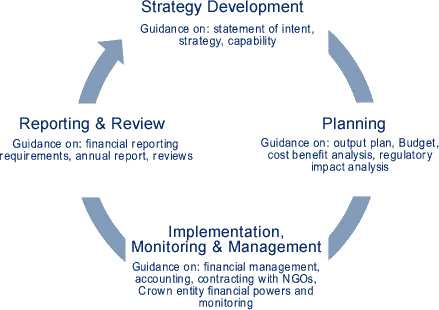
In plain English, PFMS is the government’s digital payment rail plus accounting layer. It handles fund release, payment processing, reporting, reconciliation, and beneficiary tracking across ministries, states, agencies, and DBT schemes.
PFMS started in 2009 with the objective of tracking funds released under Government of India schemes and enabling real-time expenditure reporting. Over time, it expanded into a centralized transaction platform used for payments, receipts, accounting, and fiscal reporting.
That is why PFMS sits behind systems such as PM-KISAN, NSAP, MGNREGASoft, AwasSoft, NSP, and other beneficiary applications that need validated bank transfers and status reporting. If you saw PFMS on a bank alert, you are looking at the public side of that same backend system.
PFMS also powers citizen-facing tools like Know Your Payment and Track NSP Payments, which is why students, pensioners, farmers, and wage beneficiaries keep landing on it when they need answers fast.
According to the official PFMS overview, the platform is integrated with the core banking systems of over 650 banks, including public sector banks, regional rural banks, major private banks, RBI, India Post, and cooperative banks. That bank connectivity is what makes large-scale DBT payments possible at all.
Why PFMS was formed?
Before PFMS, money could be released from the center and still disappear into reporting delays, manual reconciliations, or idle balances sitting with implementing agencies. The center knew funds had gone out, but not always whether they had actually reached the right place or been used as intended.
PFMS was built to fix that gap. The goal was not just to move money faster, but to track the full path from sanction to transfer to actual utilization. Official PFMS material also highlights its move toward “just in time” fund release, which reduces idle float with banks and improves cash management for the government.
For citizens, the practical benefit is simpler: better audit trails, fewer blind spots, and a clearer way to verify whether a scholarship, pension, subsidy, or wage payment was actually initiated and credited.
How PFMS Works
PFMS operates as the single payment backbone for every central government scheme. Here’s the payment flow from allocation to your bank account, step by step:
- Ministry releases funds. A central ministry (say, the Ministry of Agriculture for PM-KISAN, or the Ministry of Rural Development for MGNREGS) approves a budget release and generates a sanction order inside PFMS. The system creates a unique sanction ID linked to the specific scheme and beneficiary pool.
- PFMS routes through an accredited bank. The payment instruction travels electronically through PFMS to one of its integrated banking partners. PFMS does not hold funds itself. It is the routing and tracking layer sitting between the government and the banking system. Every transfer is logged in real time against the scheme and the sanctioning ministry.
- Implementing agency receives credit. The sanctioned amount hits the bank account of the implementing agency, whether that’s a state government department, a district-level body, a Gram Panchayat, or an autonomous institution. For a programme like PMAY (Pradhan Mantri Awas Yojana), this might be the state housing board. For NSP (National Scholarship Portal), it could be a college or university. The agency can view the receipt instantly on the PFMS dashboard.
- Beneficiary receives DBT transfer. For direct benefit transfer schemes like PM-KISAN or MGNREGS, the final leg bypasses the implementing agency entirely. PFMS pushes the payment directly to the beneficiary’s Aadhaar-seeded bank account via NPCI’s DBT infrastructure. The transfer is recorded in real time, the beneficiary gets an SMS alert, and the central system marks the transaction as settled. No middleman. No cash. No delay.
This end-to-end digital trail is why PFMS is described as “just-in-time” fund release. Money moves only when it is needed, which reduces idle float sitting in intermediate accounts and cuts the government’s borrowing costs.
What PFMS Achieves
PFMS delivers results across three distinct groups: the central government and its departments, ordinary citizens, and state governments. The impact looks different for each. Here’s how it breaks down.
Government Bodies
PFMS gives central ministries and implementing agencies a live command view of every rupee in motion. That changes how government bodies plan, audit, and execute schemes.
- PFMS ensures transparency by routing every rupee through accredited banks and linking the bank accounts of implementing agencies to a central portal. Every transaction, down to the last paisa, is recorded and visible to the central government, building trust and confidence in public finance.
- The system eliminates inconsistencies and delays in fund flow, reducing the scope for mismanagement. By providing clear audit trails and near real-time reconciliations, PFMS helps auditors keep a close eye on how funds are being used.
- To ensure funds are used as intended, PFMS establishes implementing agencies at the state, district and grassroots levels that are accountable for every rupee. These entities track receipts and expenditures, detect bottlenecks and flag underutilization or misappropriation before money is wasted.
- PFMS streamlines the release of grants and subsidies to NGOs, autonomous bodies and government ministries. Instead of sending cheques through the post, the system electronically credits registered bank accounts of agencies and beneficiaries, leaving no room for middlemen to siphon off funds.
- Traditionally, finance systems only booked the release of funds but rarely tracked how those funds were spent. PFMS mandates recording of actual utilization and outcomes, fostering a culture of accountability and ensuring taxpayers see real results for their money.
- By minimizing idle balances in bank accounts, PFMS improves cash and debt management. The system tightens fund flow and schedules transfers just when needed, which reduces borrowing costs and improves the government’s financial health.
- PFMS automates the creation of sanction orders. This reduces manual data entry and the associated errors, saving time for government staff and ensuring sanctions are generated quickly and accurately. Comprehensive reports track pending, issued and settled sanctions in real time.
- The system clearly distinguishes between funds allocated, funds released and actual expenditure. Policymakers can see at a glance how much was sanctioned, how much was disbursed, and how much was spent on the ground. Under PMGSY (Pradhan Mantri Gram Sadak Yojana), for instance, every road construction payment is tracked against the specific district sanction.
- PFMS flags agencies, including NGOs, that receive grants from multiple schemes or departments. This oversight prevents double-dipping and ensures funds are distributed equitably.
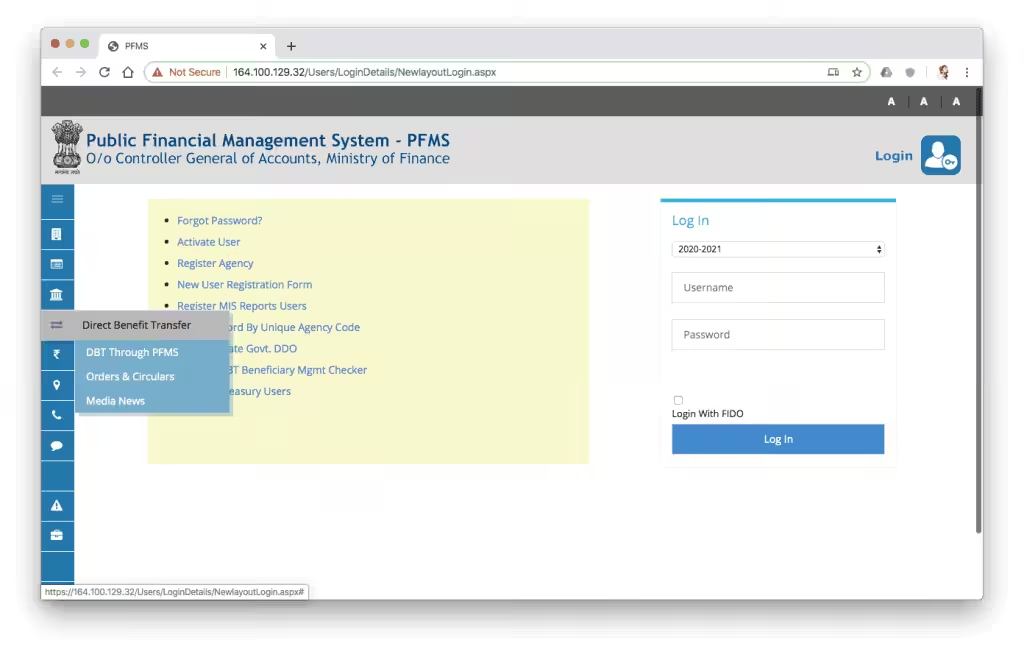
Citizens
PFMS empowers ordinary citizens with direct visibility and control over government welfare funds. If you’re a PM-KISAN beneficiary, an NSP scholarship recipient, or a MGNREGS wage earner, PFMS is the system that puts money in your account and lets you verify it arrived.
- Registered citizens receive real-time alerts when funds are released to government facilities in their area. The alerts specify the amount, purpose and scheme, so residents know what’s planned for their community.
- PFMS supports direct payments under social sector schemes and conditional cash transfers. Money goes straight from the treasury to beneficiaries’ bank accounts, cutting out middlemen and reducing corruption.
- Citizens can self-register on the PFMS portal by providing basic details and their geographical location. This allows them to track benefits, verify transactions and participate in local monitoring.
- PFMS supports multiple payment modes including demand drafts, cheques, RTGS, ECS, online banking and printed advice. This flexibility accommodates users with varying levels of digital access.
The Citizen Information Portal offers an easy-to-use dashboard that displays state-wise releases, district-wise releases, scheme-wise details, agency registrations and investment data. Residents can quickly see where money is being deployed and hold authorities accountable.
- State-wise releases
- District-wise releases
- Agency-wise releases
- Scheme-wise releases
- Information of all agencies registered
- Millennium development goals investment
- Sector-wise investment
- Flagship scheme investment
State Governments
- PFMS gives state governments a unified dashboard showing every planning grant they receive via treasury transfers, special purpose vehicles, societies, autonomous bodies, NGOs and individuals registered in the state. This level of detail helps officials plan budgets, forecast cash flows and ensure that no funds fall through the cracks.
- It enables full implementation, monitoring and management of schemes at every level, making the entire programme lifecycle from sanction to execution visible online. Administrators can track progress, check compliance and troubleshoot issues without wading through paper records.
- The system offers transparent, searchable lists of all grants received from central ministries under various schemes, including PMAY central releases to state housing departments and PMGSY allocations to state rural development bodies. States can quickly verify the amount, date and purpose of each transfer and align it with local spending priorities.
- At the district and block level, agencies can generate unique sanction IDs and component-wise investments within PFMS. These IDs are integrated with banking transactions and updated in real time, allowing finance officers to track each rupee from sanction to utilisation.
PFMS FAQs
Here are the quick answers most people usually need after landing on the PFMS portal.
What is the full form of PFMS?
PFMS stands for Public Financial Management System. It is the Government of India’s web-based platform for payments, accounting, reporting, and tracking scheme funds and beneficiary transfers.
What does PFMS credit mean in a bank statement?
PFMS credit usually means a government-linked payment was processed through the Public Financial Management System and credited to your bank account. This may relate to a scholarship, pension, subsidy, wage payment, or another DBT-linked scheme.
Is PFMS an official government portal?
Yes. PFMS is developed and implemented by the Controller General of Accounts under the Department of Expenditure, Ministry of Finance, Government of India. The official website is pfms.nic.in.
Can I check PFMS payment status with Aadhaar?
Not directly. Know Your Payment searches by bank account number, and the DBT Status Tracker searches by application ID, beneficiary code or account number. Aadhaar still matters, because Aadhaar-based DBT payments go to the account your Aadhaar is mapped to with NPCI.
Can I check PFMS scholarship status without an application ID?
Yes. The DBT Status Tracker also searches by bank account number: choose your scheme as the category, pick Payment, type the first letters of your bank name, select it and enter the full account number. Know Your Payment works with the same account details and shows every PFMS payment into that account.
Which schemes use PFMS?
PFMS is used across many Government of India payment flows, including Direct Benefit Transfer schemes and systems such as PM-KISAN, NSAP, MGNREGASoft, AwasSoft, and NSP-linked payment tracking.
Tell Google you want more of this.
Add Gaurav Tiwari as a preferred sourceOne tap, and this site shows up more often in your own Top Stories, AI Overviews and AI Mode. Remove it any time.