
SEO Meets AI: How LLMs Are Changing the Rules of Search
For a long time, SEO has remained pretty fixed. Sure, there have been algorithm updates that have come along to shift the ranking landscape, but nothing really fundamental has changed the way search works. With the rapid rise of AI, however, that has all changed.
The impact of LLMs has been astronomical, with some market forecasts reaching around $87 billion by 2030, and because of this, SEO is facing a paradigm shift that could completely rewrite the rules of search, forcing businesses around the world to rethink their strategies.
- LLMs are revolutionizing SEO by emphasizing user intent and context over traditional keyword usage, reshaping the search landscape.
- The SEO market is projected to reach $87 billion by 2030, highlighting the shift’s significance.
- Businesses must focus on high-quality, relevant content optimized for long-tail, conversational queries to rank well.
- Regular content updates and incorporating structured formats like Q&As can enhance visibility in AI-driven searches.
- Adapting to AI-driven SEO is crucial for businesses to remain competitive in a changing digital environment.
What Are LLMs and How Do They Work?
Before we get into this shift, then, what exactly are LLMs and how do they work? To put it simply, LLMs – or Large Language Models – are AI systems trained on massive amounts of text data to understand, generate, and predict human-like language. They can answer questions, summarize content, generate new text, and even understand context in ways that traditional algorithms cannot.
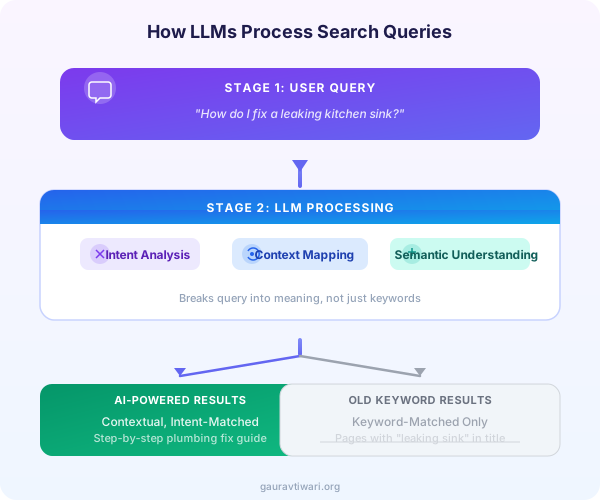
The result of this is a digital landscape that has been reshaped and accelerated by an AI-driven environment. People can now utilize AI when learning how to build a website or create content – with providers such as Wix offering free AI website builders for clients – and even use LLMs to draft copy, optimize, or process data for personalization. Not only this, search engines themselves are leveraging LLMs to understand queries more deeply, delivering results that go far beyond simple keyword matching.
The Impact of AI on Search Algorithms
Traditionally, search algorithms relied heavily on metadata to determine relevance and keywords to match queries. If a website had enough backlinks and keyword density, it could rank well even if the content itself wasn’t fully aligned with user intent.
This is still the case, but with AI now influencing search, it’s no longer enough. Search engines now understand context and content quality, while also interpreting user intent far more effectively than ever before. To explain this shift a little more clearly, here’s a table that sums up the impact of traditional SEO compared to AI-driven SEO:
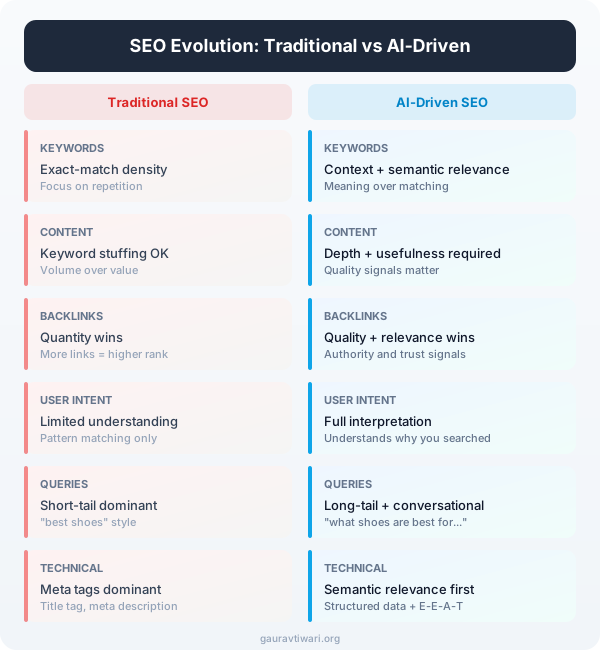
| Aspect | Traditional SEO | AI-driven SEO | Strategic Impact |
|---|---|---|---|
| Keywords | Exact-match keywords and density | Context and semantic relevance | Switch to acknowledging keywords as themes or topics rather than exact phrases |
| Content Quality | Keyword stuffing over content quality | Coherence, depth, and usefulness | An emphasis on high-value, user-focused content |
| Backlinks | Core ranking signal | Backlinks rewarded, but quality and relevance matter more | Prioritization of authoritative, relevant links rather than quantity |
| User Intent | Limited understanding | Full interpretation, including nuanced or conversational queries | Switch to tailoring content to answer user questions, not just match words |
| Query Types | Short-tail queries dominate | Long-tail queries prioritised | Optimization for natural language, FAQs, and voice search |
| Technical SEO | Meta tags, URL structure, and sitemaps | Technical SEO rewarded, but less dominant than semantic relevance | Maintain technical standards, but focus equally on content value |
How LLMs Change Keyword Research

Above are examples of how LLMs impact SEO strategies, but when it comes to content quality, the changes don’t have to be too intimidating. On the contrary, websites have historically ranked highly under the old SEO regime, and yet failed to truly engage customers due to their lack of depth and relevance, making this new approach a positive for both businesses and users alike.
In addition to this, platforms like Wix have numerous tools and resources to help with this, including the option to hire an SEO professional to work through a site and optimize it for search performance. The more daunting change is keyword research, and how keywords need to be far more focused on intent, context, and relevance. This is more of a technical switch-up than anything – less about optimizing your content for depth and insight, and more about understanding user intent and adapting keywords accordingly.
Voice Search and Conversational Queries
When it comes to query types, for instance, AI-driven SEO clearly prioritizes long-tail queries over short ones. Let’s say you’re working in the plumbing industry: a common keyword in the past might have been ‘plumbing services’ or ‘plumbers near me’, but with users increasingly searching in neutral language – or through voice search, which promotes natural, conversational queries – searches are now more likely to be ‘how do I fix a leaking kitchen sink?’ or ‘what emergency plumbers near me are available today?’
This shift means that search engines are evaluating content based on how well it answers specific questions, rather than simply matching broad keywords, which leaves organizations in the position of preempting exactly what a user might be asking for, and creating content around it. This can be done in a few key ways.
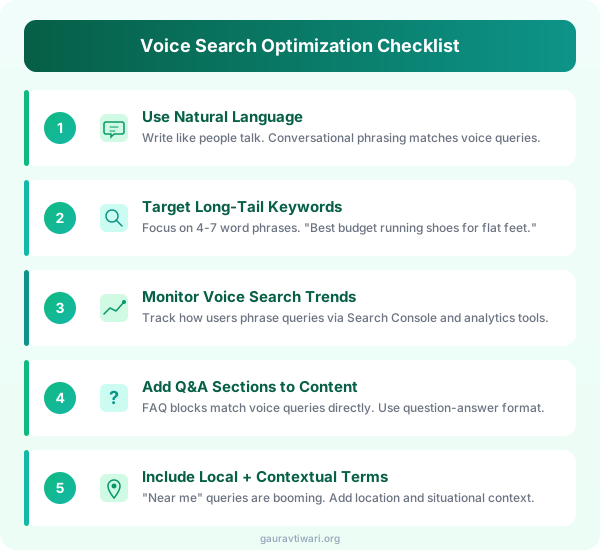
Use Natural Language, Write sentences and headings the way people actually speak or ask questions, allowing search engines to understand intent and match queries more accurately.
Incorporate Long-Tail Keywords, Focus on full phrases and question-based queries rather than short, single keywords.
Monitor Voice and Conversational Trends, Content must be regularly pruned and updated based on new ways users are asking questions in a specific industry.
Add Q&A Sections, Search engines often pull Q&A or FAQ sections for results, so these can be used to directly address common questions users might ask.
Include Local and Contextual Terms, For local businesses, add location-specific details naturally, ensuring search engines can associate your content with the right geographic area.
Final Thoughts
AI is not only changing the way we build websites and craft content, it’s changing the way people find that content and search engines rank it. With this in mind, any company that doesn’t adapt their SEO strategies to this new landscape is likely to fall behind, especially as the world of search becomes more AI-driven and user expectations for relevance and context get even more demanding.
Frequently Asked Questions
What are LLMs and how do they impact SEO?
LLMs, or Large Language Models, are AI systems designed to understand and generate human-like language by leveraging vast amounts of text data. In the realm of SEO, LLMs are reshaping how search engines interpret queries, focusing on context and user intent rather than just keyword matching. This results in a search landscape where high-quality, relevant content that answers specific user questions is prioritized, facilitating better engagement and user experience.
How should businesses adapt their SEO strategies in response to LLMs?
To remain competitive in an AI-driven landscape, businesses need to rethink their SEO strategies by focusing on creating high-quality content that aligns with user intent. This includes optimizing for long-tail keywords and conversational queries, regularly updating content to reflect current interests, and adding structured formats like FAQs to enhance visibility in search results.
Can AI-generated content negatively impact my website’s SEO?
Yes, AI-generated content can lead to lower ranking if it does not provide value or depth. Search engines prioritize content that is coherent and useful to users. To mitigate this risk, it is crucial to maintain human oversight in content creation, ensuring that the AI serves as an aid while the final output retains a human touch and relevant insights.
How frequently should content be updated for optimal SEO performance?
With the rise of AI-driven search engines, it’s essential to update content regularly to ensure it stays relevant and accurate. Businesses should analyze traffic data to identify underperforming pages and refine or prune those to maintain user engagement and search rankings.
Do AI-powered search engines prefer specific content formats over others?
AI-driven search engines do not inherently favor specific content formats, but they interpret structured content more effectively. Formats such as lists and Q&As can help LLMs understand user intent better. Additionally, multimedia elements like videos and images can enhance content engagement when complemented with descriptive text and metadata.