12 Best Ways to Sell Your Artwork in 2026 (Tips for Photographers)
 by
by
Talent gets you a portfolio. It doesn’t get you sales. If you want to sell your artwork in 2026, you need a promotion system that puts the right pieces in front of the right buyers, on the channels where they actually spend money. The artists who build a durable business treat distribution as seriously as the work itself.
Here’s the short version. Own a website and portfolio as your home base, use one or two marketplaces for discovery, sell prints through print-on-demand so you never hold inventory, and use social media to drive people back to the channels you control. Do those four things consistently and you’ll outsell people with better art and worse habits. Below is the full playbook for sellers, photographers, and anyone trying to promote their art without burning a year on the wrong tactics.
Verdict: The fastest path to sales is a website you own plus one marketplace plus print-on-demand for fulfillment. Skip the part most beginners obsess over, the perfectly grown Instagram following, until you have somewhere for that audience to actually buy. There is no single market forecast that tells you whether your work will sell. The bottleneck you can test is packaging and distribution: who saw the offer, who bought, what each sale contributed, and how much labor the channel consumed.
What changed for 2026: AI-generated images flooded every feed, and buyers reacted. Collectors are now gravitating toward work that clearly carries human authorship, what the industry calls the “authenticity economy.” That’s good news if you make real things. Show your hands, your process, your studio. Meanwhile the NFT panic has cooled. Digital art’s share of collections sits around 13%, and NFTs now work as infrastructure for provenance and royalties rather than a get-rich scheme. Don’t chase the hype cycle. Build something durable.
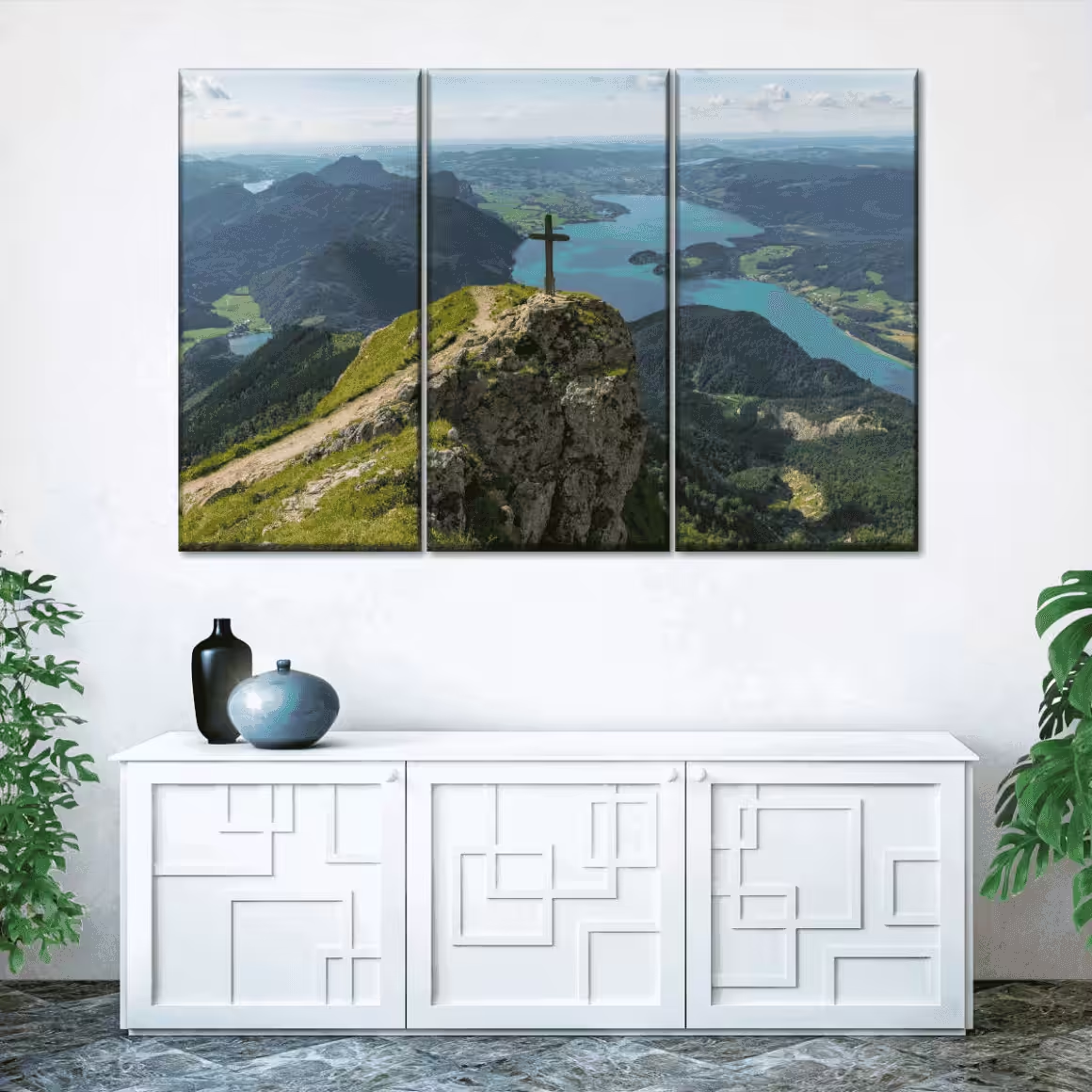
Build a home base you actually own
Start with a website and a portfolio, because everything else points back to them. Marketplaces and social platforms can change their rules, throttle your reach, or disappear overnight. Your own site can’t be deplatformed. It’s where you control the price, keep the full margin, build an email list, and tell the story behind the work. Running your own store also offers the highest profit potential of any channel, since you’re not handing 6.5% to 40% to a middleman on every sale.
Your portfolio is the quick guide to your best work, so be ruthless. Twelve strong pieces beat forty average ones. Group them by series or theme, write a short caption on each, and put a clear “buy” or “commission” path on every page. Add an about section with your art journey and a real photo of you working. That human context is exactly what 2026 buyers are looking for. If you’d rather not code, a site builder gets you live in a weekend, and you can use a tool like Canva for your logo, mockups, and social graphics so the whole brand looks consistent from day one.
For a WordPress portfolio, Indium includes artwork, prints, commissions, and exhibition layouts. Connect the purchase buttons to your actual shop or payment route; the theme presents the work but does not process print orders by itself.
Pick the right marketplaces to sell your art online
Marketplaces are for discovery, not for building your business on. They bring built-in buyers you’d take years to reach alone, and you trade a commission for that traffic. The smart play is to use one or two to sell art online for reach, then drive repeat customers to your own store where the margin is better. Here’s how the main options compare so you can match the platform to the kind of art you sell.
| Platform | Best for | What it costs | The catch |
|---|---|---|---|
| Etsy | Affordable prints, handmade, crafts | $0.20 listing fee + 6.5% transaction fee | Crowded; you compete on price and SEO |
| Saatchi Art | Original fine art and serious collectors | 40% commission | High cut, but global gallery-level reach |
| Your own store | Repeat buyers, full brand control | Hosting/platform fee only | You have to drive your own traffic |
| Print-on-demand | Beginners, passive product sales | Free to list, lower per-sale margin | Thinner margins than selling direct |
If you sell prints and lower-priced pieces, Etsy’s 90 million-plus active buyers are hard to ignore. If you make original fine art, Saatchi Art’s collector base can justify the steep 40% commission on a single sale. Either way, list on a marketplace for reach, but make your own site the place you actually want people to land. For more on getting your products in front of buyers in the first place, this guide on simple ways to boost awareness of your product pairs well with a marketplace strategy.
Make social media actually move work
Social media is where most artists discover their buyers, but it’s also where most of them waste the most time. Instagram can put visual work in front of art directors, interior designers, galleries, and buyers, but discovery does not guarantee a sale. The mistake is posting finished images without a clear offer, destination, or way to attribute an inquiry.
Do not build a content mix around an undocumented algorithm percentage. Test process videos, finished pieces, carousels, and direct offers against the same business outcome. Show your process, your hands, or a timelapse when it helps a buyer understand authorship and value. Tag the product when the platform supports it, then record qualified visits and orders rather than likes alone. If you want a focused starting point, my tips to get noticed on Instagram go deeper on the habits that compound.
Sell prints and products without holding inventory
Print-on-demand is the lowest-risk way to start selling, especially if cash is tight. You upload a design once, and the platform prints it on canvas, posters, t-shirts, phone cases, and dozens of other products only when someone orders. No upfront stock, no boxes in your spare room, no shipping logistics. Margins are thinner than selling direct, but the risk is close to zero, which makes it perfect for testing which pieces actually sell before you commit money to inventory.
The setup I recommend is a print-on-demand back end feeding your own storefront. You can connect Printify to handle production and fulfillment across a global network of print providers, then run the actual shop on Shopify so you own the checkout, the customer data, and the brand. That combination gives you the passive, no-inventory upside of print-on-demand without surrendering your margin and audience to a marketplace. When you sell prints, start with three or four product types, see what moves, then expand only into what sells.
Show up offline: galleries, fairs, and competitions
Offline promotion still works, and for original art and photography it often converts better than anything online. Real-world settings build trust that a thumbnail can’t. Opening a small gallery, even a converted spare room or a rented pop-up space, gives buyers a place to see scale and texture in person. Present the work cleanly, keep it tidy, and put your website and social handles on every wall label and business card so the offline moment feeds your online channels.
Local fairs and exhibitions are where you meet fellow artists and start building the contacts that open doors later. Competitions are worth the effort for the same reason: they put you in front of experts and peers, and a win lands your name in newspapers and local press. The real payoff is the conversations. As I’ve written before, when you compete inside a tight niche, those in-person conversations with people from your niche tend to open more opportunities than the prize itself.
Use blogging, guest posts, and paid ads to compound reach
Social posts vanish in a day. A blog post can send buyers your way for years, which is why content is the most underrated channel to market your photography and art. Write about your process, the story behind a piece, or the techniques you use, and you give search engines and AI assistants something to surface when someone looks for work like yours. If you don’t have one yet, here’s how to start a blog, and these content marketing strategies show how to turn those posts into a steady stream of the right visitors.
To borrow other people’s audiences, guest post on established sites in art, design, and photography. A single feature on a respected blog can introduce you to thousands of relevant readers and earn a backlink that helps your own site rank. Once you have a product that converts and you’re financially ready to scale, paid advertising buys reach you’d otherwise wait months for. Just don’t run ads to a weak page. Get your site and offer right first, then learn how to create effective ads for paid campaigns so you’re amplifying something that already works.
The Channel Economics Behind an Art Sale
A photographer or artist should compare channels on contribution per sale, cash timing, customer ownership, and the work required to create demand. Audience size alone hides the part that pays the bills.
| Example sale | Gross price | Known platform deduction | Amount before other costs | Costs still missing |
|---|---|---|---|---|
| Etsy print | $100 | $0.20 listing + $6.50 transaction fee | $93.30 | Payment processing, shipping, production, ads, tax, returns |
| Adobe Stock photo, illustrative $10 net license price | $10 | Adobe retains the balance after a 33% contributor royalty | $3.30 royalty | Production time, model/property releases, tax, payout timing |
| Direct $100 print | $100 | No marketplace transaction fee in this model | $100 | Store/payment fee, production, shipping, support, traffic acquisition |
The inputs come from the platforms themselves. Etsy lists a $0.20 listing fee and a 6.5% transaction fee; payment processing and location-specific charges can add more. Adobe Stock states a 33% royalty for photos, vectors, and illustrations and 35% for video. Adobe also says standard-image minimum royalties in large subscriptions can be $0.33 to $0.38, depending on lifetime license count. Those are very different businesses: Etsy sells your product, while Adobe licenses a reusable asset.
Run a 30-Day Channel Test
- Choose one offer: the same print, commission package, or license across the test.
- Use one primary discovery channel: marketplace search, a social platform, an email list, or local events.
- Track four numbers: qualified visits, inquiries, paid orders, and contribution after production, platform, shipping, refunds, and ad costs.
- Record labor: include listing, posting, packing, messaging, and revisions. A channel that earns $300 in 20 hours is different from one that earns $250 in four.
- Keep attribution honest: ask buyers how they found the work and use tagged campaign URLs where possible.
Suppose Marketplace A produces eight $75 orders with $31 contribution each after all variable costs. That is $248. Your direct store produces four orders with $48 contribution each, or $192. If the marketplace consumed 12 hours and the store consumed four, contribution per working hour is about $20.67 versus $48. The smaller channel is doing the better job.
The practical choice: keep a marketplace when it creates profitable discovery. Build the owned site and email list because they let a repeat buyer return without paying the same discovery toll again. Judge both with contribution and time, not follower count.
The channel most artists waste time on
If I had to name the single biggest time sink, it’s chasing follower counts before there’s anywhere to buy. Artists pour months into growing an Instagram audience, then realize they have no website, no shop, and no way to convert attention into income. Followers are not customers. A buyer who can’t find a “buy” button leaves and forgets you. Build the home base and the checkout first, then send your social audience somewhere that actually sells.
So here’s where to put your energy to sell your artwork in 2026: own a website and portfolio, list on one marketplace for discovery, set up print-on-demand so fulfillment runs itself, and use Reels and DMs to drive people back to the channels you control. Promotion is a system, not a lucky break. Set it up once, run it consistently, lean into the human authenticity that buyers are hungry for, and the recognition and sales follow the work.
Tell Google you want more of this.
Add Gaurav Tiwari as a preferred sourceOne tap, and this site shows up more often in your own Top Stories, AI Overviews and AI Mode. Remove it any time.