
Cell Biology
Cell biology sits at the foundation of everything else in life sciences. Genetics, physiology, biochemistry, medicine: all of it traces back to understanding cells. This comprehensive resource covers cell structure, function, division, signaling, and the molecular mechanisms that drive life at its most fundamental level, organized for students and researchers.
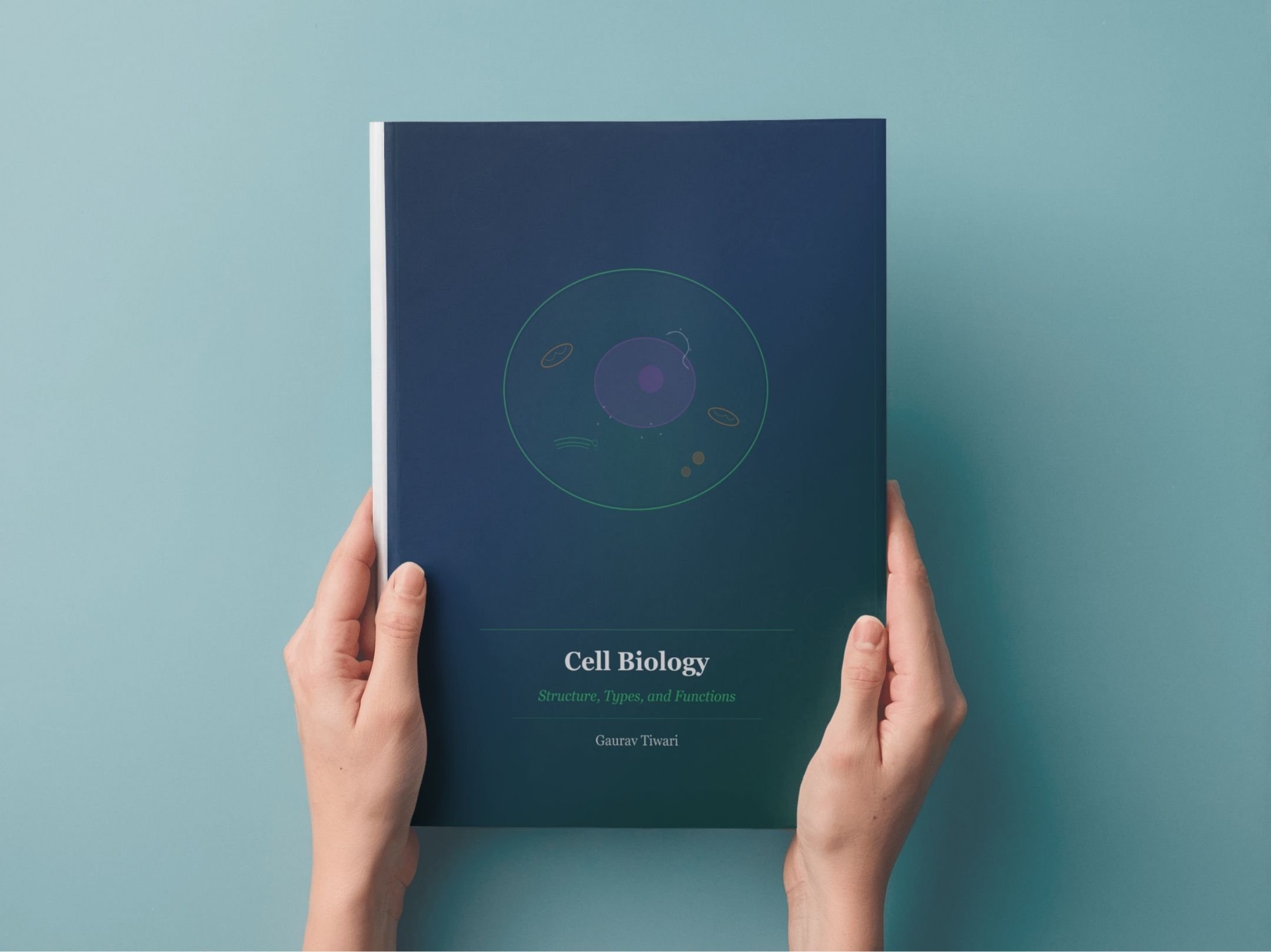
Cell biology sits at the foundation of everything else in life sciences. Genetics, physiology, biochemistry, medicine. All of it traces back to what happens inside cells.
This guide covers cell biology the way it should be taught. Starting from the cell theory proposed by Schleiden and Schwann, moving through the structural differences between prokaryotes and eukaryotes, and then taking apart each organelle one by one.
The prokaryotic section covers bacterial cell structure in detail. Cell envelope layers, Gram staining procedure with step-by-step instructions, flagella structure, and the role of plasmids. If you’re confused about why Gram-positive bacteria stain purple while Gram-negative bacteria turn pink, the explanation here will clear that up.
For eukaryotic cells, each organelle gets its own section. The plasma membrane chapter explains the fluid mosaic model and covers passive transport, active transport, endocytosis, and exocytosis. The endomembrane system section walks through the ER, Golgi apparatus, lysosomes, and vacuoles as a coordinated unit rather than isolated structures.
Mitochondria and chloroplasts are covered as semi-autonomous organelles. The guide explains why they have their own DNA and ribosomes, and what that tells us about their evolutionary origin.
The nucleus section covers nuclear envelope structure, chromatin organization, and chromosome types. The difference between heterochromatin and euchromatin is explained clearly. Giant chromosomes like lampbrush and polytene chromosomes get dedicated coverage for students who need that level of detail.
Throughout the guide, technical terms are defined where they first appear. Diagrams support the text rather than replacing it. The goal is understanding, not just memorization.
This isn’t a condensed summary or a collection of bullet points. It’s a proper reference that covers cell biology at the depth required for competitive exams while remaining readable enough to actually learn from.