
Interesting Math Articles and Must Read Research Papers for Students
Are you a mathematics student looking to feed your curiosity with some interesting math articles and research papers? You’re in the right place.
I’ve collected some excellent and interesting math articles and research papers that I’ve read and found genuinely useful. Not the dry, impenetrable kind. The kind that makes you think “wait, that’s actually cool.”
All of these are easily available online. The main sources are ArXiv.org, academic websites, and the personal pages of professors who actually know how to write.
If you know any paper or article that you find extremely interesting and it’s not listed here, drop a comment with the article name and URL. I’m always looking to expand this list.
Papers and articles are cited as paper titles first, then URLs, then author names.
Philosophy and Psychology of Mathematics
These pieces explore what mathematics actually is, how mathematicians think, and why beauty matters in proofs.
The Two Cultures of Mathematics
Timothy Gowers presents the contrasting cultures in mathematical research: problem solvers and theory builders. Some mathematicians want to build grand unified theories. Others want to solve hard problems, one at a time. Gowers argues both approaches are valid, and the tension between them is productive.
The Two Cultures of Mathematics
What is Good Mathematics?
Terence Tao explores the essential characteristics of good mathematical work. What makes a proof beautiful? When is a result “important”? Tao offers insights on beauty, clarity, and usefulness in mathematics that will change how you evaluate your own work.
Mathematical Creation
Henri Poincaré wrote this in 1908, and it’s still the best essay on mathematical creativity I’ve read. He describes his famous moment stepping onto an omnibus when Fuchsian functions suddenly struck him. No warning. Just clarity.
Poincaré explores how the “subliminal self” makes brilliant choices while you’re doing other things. His argument: aesthetic sensibility guides mathematical intuition. “The useful combinations are precisely the most beautiful.”
The Phenomenology of Mathematical Beauty
MIT’s legendary combinatorialist Gian-Carlo Rota asks why mathematicians constantly talk about beauty while artists often shy away from the term. His answer: mathematical “beauty” is really about enlightenment. That sudden understanding of why something must be true, not just that it is true.
His observation stuck with me: “Theorems are never beautiful; they become beautiful.”
The Phenomenology of Mathematical Beauty
A Mathematician’s Apology
G.H. Hardy’s passionate defense of pure mathematics as art. He wrote this in 1940 when he felt his creative powers fading. Part autobiography, part manifesto, part lament.
Hardy includes two complete, beautiful proofs accessible to non-mathematicians (infinitude of primes and irrationality of √2). He’s also delightfully snobbish about “trivial” applied work. Graham Greene compared this book to Henry James’s notebooks as “the best account of what it was like to be a creative artist.”
On Proof and Progress in Mathematics
William Thurston discusses the evolving nature of mathematical proofs and how they contribute to broader progress in the field. This isn’t just about what makes a proof valid. It’s about what makes mathematics move forward.
On Proof and Progress in Mathematics
A Mathematician’s Lament
Paul Lockhart critiques traditional mathematics education, and he doesn’t pull punches. He argues for a more engaging and creative approach to teaching mathematics. If you’ve ever felt that school math missed the point entirely, Lockhart articulates exactly why.
Truth as Value of Duty: Lessons of Mathematics
Yuri I. Manin explores the ethical and intellectual responsibilities inherent in mathematical research and discovery. Mathematics isn’t just about finding truth. It’s about the obligation to find it honestly.
Mathematical Knowledge: Internal, Social, and Cultural Aspects
Yuri I. Manin examines the social and cultural factors influencing how mathematical knowledge develops and spreads. Math doesn’t happen in a vacuum. It’s shaped by communities, institutions, and culture.
The Cult of Genius
Julianne Dalcanton explores society’s fascination with genius, particularly in mathematics, and its impact on education and innovation. The myth of the lone genius might actually be hurting how we teach and learn math.
What Numbers Could Not Be
Paul Benacerraf wrote this philosophical blockbuster in 1965, and it’s told through a parable. Two children learn arithmetic through different set-theoretic definitions. When Ernie tells Johnny “one is a member of three,” Johnny declares this false.
Benacerraf argues numbers aren’t any particular objects. They’re positions in structures. This paper launched modern structuralism in philosophy of mathematics. The parable format makes deep philosophy surprisingly engaging.
Career Advice and Mathematical Life
Practical wisdom for students and working mathematicians. These pieces will save you years of learning the hard way.
Career Advice
Terence Tao provides invaluable career advice for mathematicians. Research strategies, time management, balancing personal and professional life. This is the advice I wish I’d had earlier.
For Potential Students
Ravi Vakil shares advice for students aspiring to enter the world of mathematics. Both academic and personal development. If you’re considering grad school in math, read this first.
Advice to a Young Mathematician
Timothy Gowers offers practical advice to young mathematicians. The emphasis is on perseverance and finding joy in research challenges. Mathematical research is hard. Gowers helps you understand why that’s okay.
Advice to a Young Mathematician
Ten Lessons I Wish I Had Been Taught
Gian-Carlo Rota again, this time with deliciously irreverent advice. “Every lecturer should make only ONE point.” “Publish the same result several times.” “Do not worry about your mistakes.” “Give lavish acknowledgments.”
Features anecdotes about Norbert Wiener falling asleep at colloquia and the mysterious thickness of Frederick Riesz’s Collected Papers. Part wisdom, part provocation.
Ten Lessons I Wish I Had Been Taught
Ten Signs a Claimed Mathematical Breakthrough is Wrong
Scott Aaronson lists key warning signs to help identify dubious or exaggerated claims in mathematics. Essential reading before you get excited about the next “proof” of the Riemann Hypothesis you see online.
Ten Signs a Claimed Mathematical Breakthrough is Wrong
How to Supervise a Ph.D.
Strategies and best practices for effectively supervising Ph.D. students in mathematics. Useful whether you’re a supervisor or a student trying to understand what good supervision looks like.
Essential Steps of Problem Solving
I explain the critical steps needed to solve complex mathematical problems, with practical examples. Problem-solving is a skill. It can be learned.
Essential Steps of Problem Solving
How to Survive a Math Class
Matthew Saltzman and Marie Coffin provide tips on how students can successfully navigate challenging math courses. Practical, no-nonsense advice.
Success in Mathematics
Saint Louis University provides strategies for achieving success in mathematics. Study habits, conceptual understanding, and the mindset that actually works.
Remarks on Expository Writing in Mathematics
Robert B. Ash offers guidance on how to effectively communicate complex mathematical ideas through expository writing. If you want your math to be understood, you need to learn to write it well.
Mathematical History and Biography
The human stories behind the theorems. Mathematics is made by people, and their lives are often as fascinating as their work.
Évariste Galois: Mathematical Revolutionary
The night before his fatal duel in 1832, twenty-year-old Galois frantically scribbled mathematics. He annotated his papers with “I have not time; I have not time.”
This young revolutionary was rejected by the establishment and imprisoned for political activism. He died at 20 in a duel, possibly over a woman. Hermann Weyl called his final letter “perhaps the most substantial piece of writing in the whole literature of mankind.”
Évariste Galois: Mathematical Revolutionary
Life and Work of the Mathemagician Srinivasa Ramanujan
K. Srinivasa Rao’s biographical sketch of Srinivasa Ramanujan, one of the most brilliant mathematicians of the 20th century. A clerk from India who sent letters to G.H. Hardy containing theorems that seemed impossible. Many still aren’t fully understood.
Life and Work of Srinivasa Ramanujan
The World of Blind Mathematicians
Visit the Paris apartment of blind geometer Bernard Morin and discover his clay sphere-eversion models. Sculptures created entirely by touch.
When asked how he computed signs in proofs, Morin replied: “by feeling the weight of the thing, by pondering it.” Also profiles Euler, who produced half his work after going blind, and Pontryagin’s mother who read math aloud using “tails down” for the intersection symbol.
Deeply moving piece showing mathematical beauty can be perceived without sight.
The World of Blind Mathematicians
All’s Fair in Love and Maths
In 1548, a Milan church hosted an epic mathematical battle. Niccoló Tartaglia (“the stammerer,” scarred by a soldier’s blade as a child) faced Lodovico Ferrari over cubic equations.
Deathbed secrets. Broken oaths sworn on “the Sacred Gospels.” Betrayals. A mathematician fleeing in shame. The dramatic human story behind the cubic formula reads like a Renaissance soap opera.
The Lost Mathematicians: Numbers in the (Not So) Dark Ages
In 8th-century England, the Venerable Bede wrestled with a mathematical crisis: When exactly is Easter? “Computus,” a now-forgotten branch reconciling lunar and solar calendars, obsessed medieval monks with mathematical precision in service of faith.
Challenges the myth that the Middle Ages were a mathematical wasteland.
Harald Bohr: Olympic Footballer and Mathematician
Harald Bohr won Olympic silver for Denmark in football (1908). When he defended his doctoral thesis, more football fans than mathematicians filled the audience.
His brother Niels won the Physics Nobel, but Harald proved major results about the Riemann zeta function and helped refugees flee Nazi Germany. Shows mathematicians aren’t all stereotypical introverts.
Harald Bohr: Olympic Footballer and Mathematician
Age of Einstein
Frank WK Firk’s exploration of the scientific and cultural impact of Albert Einstein’s theories. A new era in physics, told accessibly.
Foundational Papers That Changed Everything
These are the papers that built modern mathematics and computer science. Surprisingly readable.
On the Electrodynamics of Moving Bodies
Albert Einstein’s foundational paper on special relativity. Revolutionized physics and our understanding of space-time. Written when Einstein was a patent clerk. Accessible to anyone with high school physics.
On the Electrodynamics of Moving Bodies
On Computable Numbers, with an Application to the Entscheidungsproblem
Alan Turing’s landmark paper that laid the foundation for modern computing and the theory of computation. He invented the concept of a universal machine (what we now call a computer) just to answer a question about mathematical logic.
A Mathematical Theory of Communication
Claude Shannon’s groundbreaking work on information theory and communication. A cornerstone of modern computing and mathematics. Everything from compression algorithms to cryptocurrency traces back to this paper.
A Mathematical Theory of Communication
On a Property of the Collection of All Real Algebraic Numbers
Georg Cantor’s founding document of set theory. Under 5 pages. In it, Cantor proves two revolutionary results: algebraic numbers are countable, but real numbers are uncountable.
This short paper established different sizes of infinity. It also earned Cantor fierce opposition from Kronecker. The nested interval proof is elegant and uses only basic concepts. Mind-bending philosophical implications accessible with high school mathematics.
The Octonions
John C. Baez calls the octonions “the crazy old uncle nobody lets out of the attic” among division algebras. Non-associative, mysterious, fascinating.
Baez tours from Hamilton carving quaternions into a Dublin bridge, through the exotic Fano plane, to connections with exceptional Lie groups and supersymmetry. Won the Levi L. Conant Prize for expository writing. A masterclass making abstract algebra feel like adventure.
The Unreasonable Effectiveness of Mathematics in the Natural Sciences
Eugene Wigner’s famous essay on the surprising success of mathematics in explaining natural phenomena. Why does math work so well for describing the physical world? Nobody knows. It’s genuinely mysterious.
The Unreasonable Effectiveness of Mathematics
Birds and Frogs
Freeman Dyson contrasts two types of mathematicians: birds, who see the big picture and fly high over the landscape, and frogs, who work on specific problems deep in the mud. Both are necessary. Neither is superior.
Missed Opportunities
Freeman Dyson reflects on the potential discoveries missed by the mathematical community due to overlooked ideas or unexplored paths. What could we have discovered earlier if we’d paid attention?
Recreational Mathematics and Puzzles
Mathematics at its most playful. These pieces prove that math can be fun without being trivial.
Three Math Puzzles Inspired by John Horton Conway
This tribute to Conway features his “Digital Perfection” puzzle. Find a 10-digit number abcdefghij where each prefix divides evenly by its length. Conway called it “plucked from puzzle heaven.”
The collection includes geometric golden-ratio challenges and Life-like exploration games. Perfect for pencil-and-paper puzzle solving that reveals deep number theory underneath.
Three Math Puzzles Inspired by John Horton Conway
The Entertainer: In Praise of Raymond Smullyan
Raymond Smullyan created baroque logic puzzles set in Transylvania. Humans tell the truth. Vampires lie. Some are sane, some insane. “Bal” and “da” mean yes or no, but you don’t know which.
Also features stunning retrograde chess problems where you deduce what moves created impossible-looking positions. Smullyan used Satan-themed puzzles to elegantly explain Cantor’s proof that real numbers are uncountable. Seriously.
Hexaflexagons: Martin Gardner’s First Column
THE article that launched Martin Gardner’s legendary 25-year Mathematical Games column in Scientific American. Hexaflexagons are paper toys that reveal hidden faces when “flexed.” They were invented by Princeton student Arthur Stone while trimming paper to fit American binders.
Richard Feynman was on the original “Flexagon Committee.” After publication, advertising offices across Manhattan were covered in flexing hexagons. You can make hexaflexagons while reading.
The Hot Game of Nim
“One of the oldest and most engaging two-person mathematical games known.” Interactive applets let you play variants including Kayles and the Silver Dollar game.
The elegant winning strategy uses binary XOR operations. And here’s the mathematical punchline: all impartial games are secretly Nim in disguise. Simple rules leading to profound theory.
Tromino Puzzle: Deficient Squares
Solomon Golomb proved any 2ⁿ × 2ⁿ chessboard with ONE square removed can be perfectly tiled by L-shaped trominoes. The proof uses elegant mathematical induction and “became a model of elegance in elementary mathematics.”
The interactive applet makes the theorem visceral before you see the proof. Connects to polyominoes (Tetris pieces!) and demonstrates how constraints create beautiful mathematics.
Tromino Puzzle: Deficient Squares
Who Can Name the Bigger Number?
Scott Aaronson delves into the fascinating world of extremely large numbers and their place in mathematical theory. How do you even describe numbers so large that writing them would take more atoms than exist in the universe?
Who Can Name the Bigger Number?
Division by Three
Doyle and Conway explore an intriguing problem related to division by three, with deep implications in number theory. Sounds simple. It isn’t.
Funny Problems
Florentin Smarandache presents a collection of mathematical puzzles and paradoxes that challenge conventional thinking. Some will make you laugh. Some will make your head hurt.
The Mysteries of Counting
John Baez discusses the foundational concept of counting and its deeper implications in mathematics and logic. You’ve been counting since you were three. Do you actually understand what you’re doing?
Paradoxes and Counterintuitive Results
Mathematics where your intuition fails completely. These pieces will break your brain in the best way.
Banach-Tarski and the Paradox of Infinite Cloning
Can you turn one apple into two by cutting and rearranging? Mathematics says yes.
Decompose a 3D ball into five pieces and reassemble into two complete balls of the same size. Or turn a pea into the Sun. The pieces are so “jagged” they lack well-defined volume. Infinity’s weirdness makes the impossible possible.
Beautiful graphics build from Hilbert’s Hotel through the full paradox.
Mathematical Mysteries: The Barber’s Paradox
A barber shaves all men who don’t shave themselves. And only those men. Does he shave himself?
If he does, he mustn’t. If he doesn’t, he must. This innocent puzzle (Russell’s paradox) “exposed a huge problem and changed the entire direction of twentieth century mathematics.”
Hilbert’s Hotel
Your infinite hotel is completely full. A new guest arrives. No problem. Move everyone up one room. An infinite bus arrives? Still no problem. Move everyone to double their room number.
David Hilbert’s thought experiment shows infinity + infinity = infinity, and reveals why Banach-Tarski works. Makes counterintuitive infinite arithmetic playful and intuitive.
The St. Petersburg Paradox
A coin flips until heads. If heads on flip n, you win $2ⁿ. Expected value: infinite. You should pay your entire life savings to play.
Yet nobody would pay more than $20. What’s wrong with mathematics? Or with us? This 1713 paradox inspired Bernoulli’s “utility,” the foundation of modern economics. Three centuries later, still unresolved.
Popular Mathematics Essays
Great mathematical writing for general audiences. These pieces show that mathematical ideas can be communicated beautifully.
Math’s Beautiful Monsters
Karl Weierstrass, a schoolteacher turned revolutionary, created a “monster.” A continuous function nowhere smooth. Poincaré called these functions “an outrage against common sense.”
Yet today they’re essential to Brownian motion, stochastic calculus, and the Black-Scholes formula used on trading floors. “Monsters have a habit of finding their way in from the cold.”
How Infinite Series Reveal the Unity of Mathematics
Steven Strogatz from Cornell explores how infinite sums serve as secret passages connecting distant mathematical realms. What looks like simple addition reveals hidden connections between geometry, calculus, and number theory.
Strogatz is the master of making mathematics sing.
How Infinite Series Reveal the Unity of Mathematics
Beauty in Mathematics
A 17-year-old student (Plus new writers award winner) takes readers through Euler’s identity: e^(iπ) + 1 = 0. “The most beautiful theorem in mathematics.”
Using only Taylor series, he shows step-by-step how three strange numbers combine to produce zero. Feynman called it “one of the most remarkable formulas in all of mathematics.”
Proves you don’t need a PhD to appreciate mathematical beauty.
Take it to the Limit
A New York Times article delving into mathematical limits, both as a concept and metaphor, within various scientific disciplines.
Soft Analysis, Hard Analysis, and the Finite Convergence Principle
Terence Tao dissects the mysterious divide between “hard analysis” (ε, N, explicit bounds) and “soft analysis” (convergence, abstract spaces).
He reveals these seemingly different mathematical cultures are secretly two sides of the same coin, connected by a clever “finitization” principle. Includes a dictionary translating between approaches.
Mathematical philosophy at its most practical. Anyone puzzled by why some proofs use epsilons while others invoke compactness will find enlightenment here.
Number Theory and Special Topics
Deep dives into specific mathematical areas, written accessibly.
Why Everyone Should Know Number Theory
Minhyong Kim argues that understanding number theory is essential for appreciating modern mathematics and its real-world applications. Number theory isn’t just abstract. It’s everywhere.
Why Everyone Should Know Number Theory
Meta Math! The Quest for Omega
Gregory Chaitin explores the mathematical constant Omega and its implications for understanding randomness and incompleteness. A journey into the limits of mathematical knowledge itself.
Meta Math! The Quest for Omega
Ramanujan Type 1/π Approximation Formulas
Nikos Bagis presents Ramanujan-style approximation formulas for 1/π, with applications in number theory and computational mathematics. These formulas are almost magical.
Ramanujan Type 1/π Approximation Formulas
Collatz’s 3x+1 Problem and Iterative Maps on Interval
Wang Liang explores the famous 3x+1 problem, one of the most enigmatic unsolved problems in mathematics. Pick any positive integer. If it’s even, divide by 2. If it’s odd, multiply by 3 and add 1. Repeat. Does every number eventually reach 1? Nobody knows.
Proof of Riemann Hypothesis
Jinzhu Han’s controversial work proposing a proof for the Riemann Hypothesis, one of the biggest open questions in mathematics. (Note: Not a verified proof. Read with appropriate skepticism.)
Solving Polynomial Equations from Complex Numbers
Ricardo S. Vieira presents a method for solving polynomial equations involving complex numbers, contributing to algebraic geometry.
Generalization of Ramanujan Method of Approximating Root of an Equation
R.K. Muthumalai builds on Ramanujan’s method for approximating the roots of equations, with novel generalizations.
Generalization of Ramanujan Method
Vedic Mathematics
W.B. Vasantha Kandasamy and Florentin Smarandache discuss ancient Indian mathematical methods and their relevance in modern computation.
Probability, Games, and Decision Making
Where mathematics meets real-world choices.
How to Gamble if You are in a Hurry
Ekhad, Georgiadis, and Zeilberger offer mathematical insights into quick gambling strategies backed by probability theory. Surprisingly practical.
How to Gamble if You are in a Hurry
Is Life Improbable?
John Baez delves into the mathematical probability of life existing in the universe, with insights from physics and biology. The numbers are both humbling and fascinating.
On Multiple Choice Questions in Mathematics
Terence Tao reflects on the role and limitations of multiple-choice questions in assessing mathematical understanding. Why standardized tests often miss the point.
Teaching and Learning Mathematics
Resources for students, teachers, and parents.
Teaching and Learning Mathematics
Terry Bergeson’s comprehensive guide on teaching strategies and methods to enhance student engagement in mathematics.
Teaching and Learning Mathematics
Helping Your Child Learn Mathematics
The US Department of Education provides resources for parents to help their children succeed in mathematics.
Helping Your Child Learn Mathematics
Engaging Students in Meaningful Mathematics Learning
Michael T. Battista explores different perspectives on engaging students in mathematics and achieving complementary educational goals.
Engaging Students in Meaningful Mathematics Learning
Must-Read Math Books

The Princeton Companion to Mathematics
View on Amazon
The Colossal Book of Mathematics: Classic Puzzles, Paradoxes, and Problems
View on Amazon
Magical Mathematics: The Mathematical Ideas That Animate Great Magic Tricks
View on Amazon
The Best Writing on Mathematics 2020
View on Amazon
How to Bake Pi: An Edible Exploration of the Mathematics of Mathematics
View on Amazon
Tessellations: Mathematics, Art, and Recreation
View on Amazon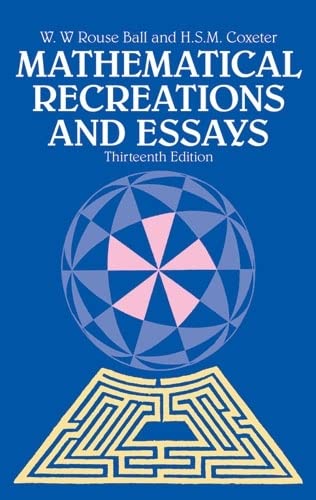
Mathematical Recreations and Essays (Dover)
View on Amazon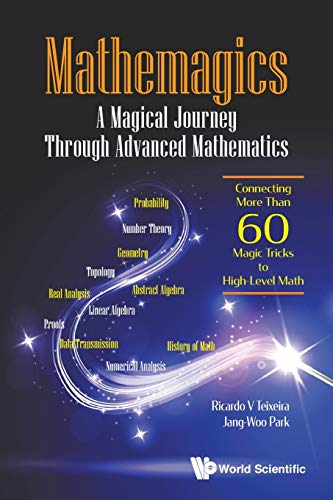
Mathemagics: A Magical Journey Through Advanced Mathematics
View on Amazon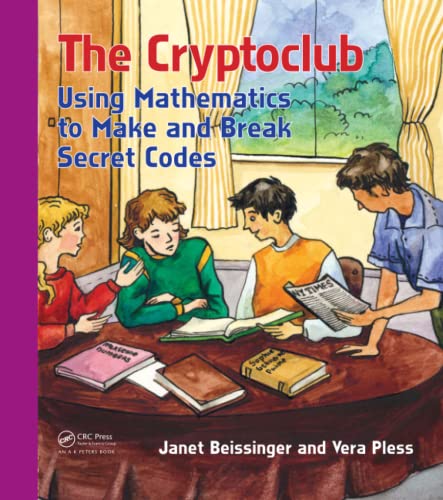
The Cryptoclub
View on Amazon
Solving Mathematical Problems: A Personal Perspective
View on Amazon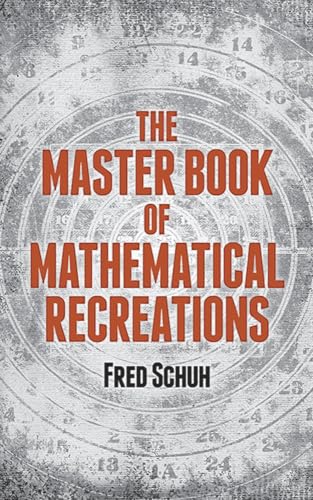
The Master Book of Mathematical Recreations (Dover)
View on Amazon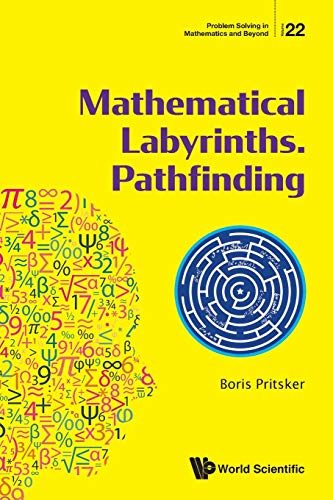
Mathematical Labyrinths: Pathfinding
View on Amazon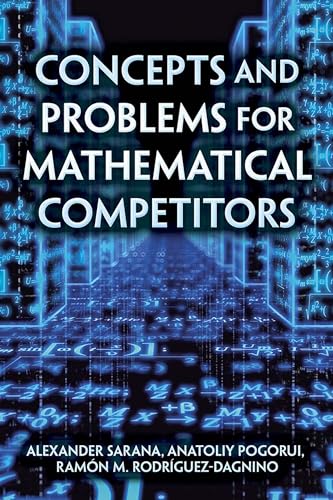
Concepts and Problems for Mathematical Competitors (Dover)
View on Amazon
X Games In Mathematics: Sports Training That Counts!
View on Amazon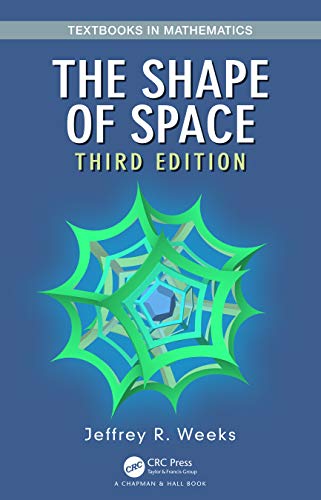
The Shape of Space
View on Amazon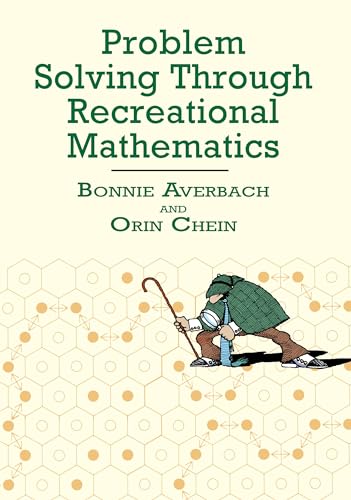
Problem Solving Through Recreational Mathematics (Dover)
View on AmazonQuick Reference by Category
| Category | Articles |
|---|---|
| Philosophy & Psychology | Two Cultures, What is Good Math, Poincaré’s Creation, Rota on Beauty, Hardy’s Apology, Thurston on Proof, Lockhart’s Lament, Benacerraf’s Numbers |
| Career & Advice | Tao Career Advice, Vakil for Students, Gowers’ Advice, Rota’s Ten Lessons, Aaronson’s Warning Signs |
| History & Biography | Galois, Ramanujan, Blind Mathematicians, Cubic Equation Battles, Medieval Math, Harald Bohr, Einstein |
| Classic Papers | Einstein Relativity, Turing Computability, Shannon Information, Cantor Set Theory, Wigner Effectiveness, Baez Octonions |
| Puzzles & Games | Conway Puzzles, Smullyan Tribute, Hexaflexagons, Nim, Trominoes, Division by Three |
| Paradoxes | Banach-Tarski, Barber/Russell, Hilbert’s Hotel, St. Petersburg |
| Popular Essays | Beautiful Monsters, Strogatz Infinite Series, Euler’s Identity, Take it to the Limit |
| Number Theory | Why Number Theory, Chaitin’s Omega, Ramanujan Formulas, Collatz, Vedic Mathematics |
Reading Paths for Different Interests
While you’re exploring math concepts, the calculator tools let you experiment with the math hands-on. For statistics specifically, the statistics for entrepreneurs article shows how these concepts apply in business. If you’re using math for academic writing, the LaTeX editor handles equation formatting.
- If you want wonder: Start with Banach-Tarski paradox → Hilbert’s Hotel → Cantor’s infinities
- If you want stories: Start with Galois biography → Cubic equation battles → Blind mathematicians
- If you want puzzles: Start with Conway’s puzzles → Smullyan tribute → Hexaflexagons → Nim
- If you want philosophy: Start with Poincaré’s Mathematical Creation → Hardy’s Apology → Rota on Beauty
- If you want practical advice: Start with Tao’s Career Advice → Gowers’ Advice to Young Mathematicians → Rota’s Ten Lessons
Mathematics is beautiful. There’s no such thing as ugly mathematics in this world. Mathematics originates from creativity and develops through research papers.
These research papers aren’t just detailed and tough to understand. They’re interesting. I hope these math articles, research papers, and the recommended books help you see mathematics the way working mathematicians see it.