
How to Increase Ecommerce Sales: 12 Practical Fixes That Actually Work
Most ecommerce stores do not have a traffic problem. They have a leakage problem. People land on product pages, hesitate, compare, and leave… then the store owner spends more on ads instead of fixing the leak. If you want to increase ecommerce sales, start by tightening the buying path you already have.
When a store is underperforming, the same weak spots keep showing up. Product pages do not answer buying questions, checkout asks for too much, trust is hidden, email follow-up is lazy, and repeat buyers are treated like strangers. Fix those issues, and the same catalog can produce more revenue without you scrambling for a bigger ad budget.
I refreshed this guide on March 6, 2026 for what still works in 2026. No hype. No generic growth hacks. Just practical fixes I would prioritize if your store were live today and sales were flatter than they should be.
Why most stores struggle to increase ecommerce sales
Most store owners look at flat revenue and assume they need more reach. Sometimes they do. But a lot of the time they already have enough visitors to validate demand, and the real problem lives between the product page and the thank-you page. That is where money leaks quietly.
Baymard’s benchmark still places average cart abandonment around 70%, which should tell you something important. Buyers often have intent, then hit a cost surprise, a clumsy form, weak trust, or plain confusion. Not every abandoned cart was yours to win, of course. But far too many stores make purchasing harder than it needs to be.
When I audit a weak store, I try to find the bottleneck before I talk about campaigns or new channels. Sometimes the issue is product pages that read like catalog dumps. Sometimes checkout feels like tax paperwork. Sometimes the offer is fine, but no one gets a reason to come back.
| If this is happening | It usually means | Fix this first |
|---|---|---|
| You have traffic, but orders stay weak | Product pages are not doing enough selling | Clarify the offer, proof, shipping, and returns on-page |
| Add-to-cart is healthy, but checkout completion is poor | Checkout friction or surprise costs are killing intent | Show totals early, trim fields, and allow guest checkout |
| Orders come in, but average order value stays low | You are not structuring the cart to grow basket size | Add bundles, thresholds, and relevant cross-sells |
| First-time buyers rarely return | Retention and post-purchase follow-up are thin | Build welcome, post-purchase, and win-back flows |
| Paid traffic clicks, but sales stay erratic | Landing-page message and buyer intent do not match | Tighten the page before scaling budget |

Fix the path from product page to checkout
If you want to increase ecommerce sales, this is where I would start. Buyers do not move in a straight line. They scan, compare, doubt, scroll back up, and look for one reason to trust you… or one reason to bail. Your job is to remove the second part.
Make product pages answer buying questions
A product page should do more than list features. It should answer the quiet questions buyers ask before they ever click “Add to cart”: What is this? Who is it for? Why this version? What happens after I buy? Can I trust the quality? If the page leaves those questions hanging, the buyer opens another tab and your sale starts slipping away.
Start with the basics. Use photos that show scale, texture, packaging, or real use. Put delivery timelines, returns, warranty, and important specs close to the price and button. If your catalog is crowded or confusing, study what already works in 8 Website Design Tips for High-Converting Ecommerce Store and compare it to your current layout without being sentimental about it.
This is also where message clarity matters more than clever copy. The strongest stores explain the main benefit in plain English, then support it with proof and detail. If you want a sharper way to think about that structure, read What Makes a Product Sell? Shopify Research Strategies That Work. I would rather have one page that answers real objections than ten pages full of vague adjectives.
Remove checkout friction before the buyer cools off
Checkout should feel boring. That is a compliment. The minute it feels like work, you lose momentum that was expensive to build in the first place. Buyers are ready to finish, not audition for a loan application.
Show the full cost early, including shipping and taxes as soon as you reasonably can. Baymard keeps finding the same pain point here: people hate getting emotionally committed, then discovering the real total later. If your store hides cost until the last step, do not be shocked when carts collapse right there.
Then trim the form. Remove fields you do not need, allow guest checkout, support autofill, and place trusted payment methods where they can be seen. If your store sells to mobile-heavy traffic, digital wallets matter even more because they cut thumb-work and indecision.
If checkout is weak, fix these four things first: show total cost earlier, allow guest checkout, remove non-essential fields, and keep payment reassurance close to the button. Those changes are not glamorous, but they are usually worth more than a fresh campaign.
A lot of stores rush to redesign the homepage while the real problem sits three clicks deeper. Bad idea. The homepage can wait if checkout is still asking people for information you do not need. Clean the leak before you widen the pipe.
Make trust obvious at every decision point
Trust is not a separate section of the site. It is the feeling buyers get every time they scroll, tap, or hesitate. If your store looks polished but your returns page is vague, trust drops. If the product looks good but support feels invisible, trust drops again.
Use reviews and social proof that reduce doubt
Baymard’s research shows how heavily ecommerce buyers rely on reviews, and that matches what I see in practice. People do not just want praise. They want context. They want to know whether the product fit, lasted, arrived on time, matched the photos, and worked for someone like them.
Put your best proof close to the buying decision. That can be star ratings, review snippets, user photos, common questions, or short testimonials that mention an outcome. Conversion-ready pages matter because they reduce uncertainty one objection at a time, not because they shout louder.
Do not over-polish this section. A review area with only perfect five-star praise looks suspicious. A few balanced reviews, clear replies to complaints, and proof that support exists usually sell harder than a fake wall of perfection.
Keep brand, policy, and support signals consistent
Brand is not just a logo and a color. It is how stable your store feels when someone is about to spend money. If the product page feels thoughtful but the checkout page looks stitched together, people notice. They may not explain it that way, but they feel the wobble.
Use the same tone, design language, and reassurance across product, cart, checkout, and support pages. Make sure shipping policy, returns, warranty, contact info, and delivery expectations are easy to find. If you are still unsure what that consistency looks like, Best Practices & Tips for Building an eCommerce Brand from Scratch is worth a look.
Support matters here too. If a buyer cannot find a human contact option, expected response time, or a sensible FAQ, trust falls faster than most owners realize. You do not need live chat everywhere, but you do need to make help feel reachable.
You do not need a dramatic rebrand to increase ecommerce sales. You need consistency where buying decisions get made. Calm design, clear policies, visible support, and believable proof beat flashy redesigns almost every time.
Increase average order value before buying more traffic
More traffic is expensive. Larger baskets are not. That is why average order value deserves more attention than it gets. If you can move a $42 average order to $53 without hurting conversion, that lift compounds through every channel you already use.
Raise order value without feeling pushy
The safest way to increase order value is to make the next logical purchase easier. Bundle products that naturally belong together. Add a free shipping threshold that sits slightly above your current average order. Offer a single relevant add-on in the cart instead of six desperate upsells that make the store look needy.
I also like post-purchase offers when the product relationship is obvious. A refill, case, extended warranty, setup add-on, or complementary digital download can work well because the buyer has already committed. But if the upsell feels random, you damage trust for a tiny shot at extra revenue.
Be careful with discounts. Stores use discounts because they are easy, not because they are smart. If you train buyers to wait for a coupon, you may increase orders in the short term while shrinking margins and weakening brand strength in the long run.
Use discounts when they support a purpose, not as a daily habit. First-order incentives, bundle savings, and threshold-based offers can make sense. Blanket sitewide discounting every week is often a sign that positioning or pricing is weak.
Use email and retention like revenue channels
A surprising number of stores still treat email like a side task. That is a mistake. Email is one of the few channels where you are talking to people who already know you, clicked before, or bought before. If you want to increase ecommerce sales without starting from zero every day, retention has to do more work.
Build four flows before you chase more subscribers
You do not need a huge automation tree on day one. You do need four dependable flows: welcome, abandoned cart, post-purchase, and win-back. Those four cover the biggest moments where revenue is either created, recovered, or protected.
Your welcome flow should set expectations and push the best first action. Your abandoned-cart flow should remind people what they left, restate the benefit, and reduce last-minute doubt. Your post-purchase flow should help the buyer use the product well, ask for a review at the right time, and suggest the most relevant next purchase. And your win-back flow should re-activate quiet customers before they forget you exist.
The copy matters, but the CTA matters just as much. Weak buttons waste strong intent, which is why Email CTAs: How to Write, Style and Test Call to Action in Emails is still useful if your campaigns feel soft. Keep the message simple, the timing sensible, and the ask obvious.
Retention is not just email either. It is packaging, support response time, reorder reminders, loyalty logic, and how well the product matched the promise. Buyers return when the first experience felt reliable. They disappear when the first order felt like work.
Bring in traffic that is ready to buy
Once the buying path is tighter, then go chase more demand. But be picky. More random traffic does not help you increase ecommerce sales. It just gives you nicer vanity charts while the same underlying problems stay unresolved.
Create pages for buying intent, not vanity traffic
Product-led SEO still works because high-intent pages compound over time. Comparison pages, category pages, use-case pages, problem-solution guides, and detailed product content can pull in people who are already close to buying. If your store is not publishing anything that helps buyers choose, you are leaving search money on the table.
That does not mean stuffing your site with thin blog posts. It means creating pages that help someone decide, compare, trust, or act. 7 Simple Ways to Boost Sales with Ecommerce SEO covers the broader search angle, but the practical rule is simpler: write for people who are solving a buying problem, not just browsing a topic.
Paid traffic needs the same discipline. Do not send cold traffic to a weak homepage and call it testing. Match the ad promise to the landing page, keep the offer tight, and measure whether the page earns the click it just bought. If the landing page is leaking, more spend only buys faster disappointment.
Social can help too, especially when it creates proof and remarketing audiences. But the stores that win here usually show the product in use, answer objections in public, and repurpose customer proof. They do not just post “new arrival” graphics and hope for magic.
Track the numbers that tell you why sales are flat
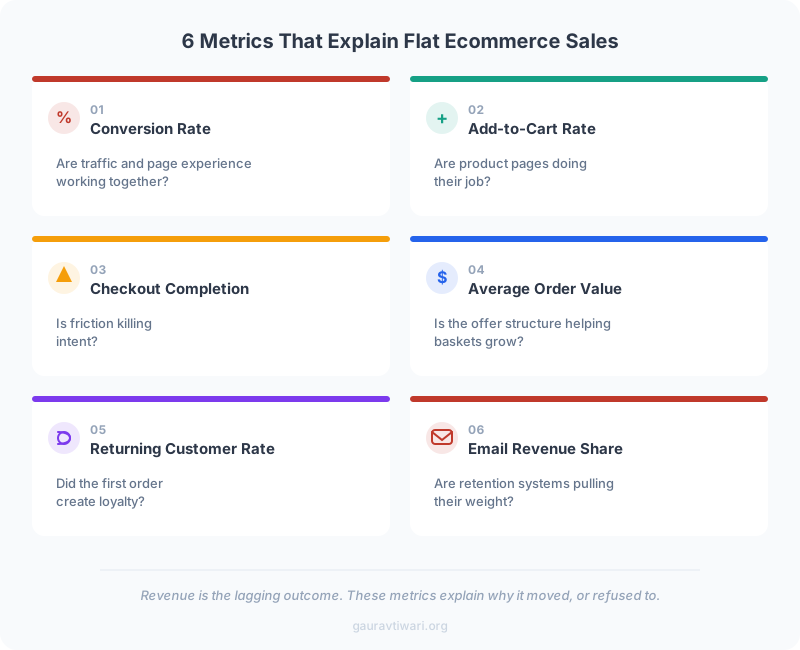
You cannot increase ecommerce sales consistently if all you watch is total revenue. Revenue is the lagging outcome. You need the numbers that explain why the outcome moved, or refused to move.
Watch these closely:
- Conversion rate: This tells you whether traffic and page experience are working together.
- Add-to-cart rate: Useful for spotting weak product pages before checkout even becomes relevant.
- Checkout completion rate: The clearest sign of friction, cost surprise, or payment hesitation.
- Average order value: Shows whether your offer structure is helping each order grow.
- Returning customer rate: Tells you whether the first order created any real loyalty.
- Email revenue share: Useful for checking whether retention systems are pulling their weight.
Do not obsess over daily noise. Look for patterns by device, source, product type, and landing page. If mobile converts much worse than desktop, your buttons, forms, or payment flow may be clumsy. If one product family converts much better than the rest, study what that page is doing right instead of assuming the result was random.
This is also where simple session recordings or heatmaps can help, because buyers will show you the friction they cannot explain in a survey. Watch enough sessions and you start seeing the same stall points again and again… dead clicks, long pauses, rage taps, abandoned fields, confused scrolls. That is direct evidence, not guesswork.
A 30-day sprint to increase ecommerce sales
Sales growth works better as a focused sprint than an endless wishlist. Pick one month, define the metrics you care about, and force the team to work in order. The athlete image below feels more relevant than the old article ever intended… because this part is about starting clean, running hard, and measuring every week.
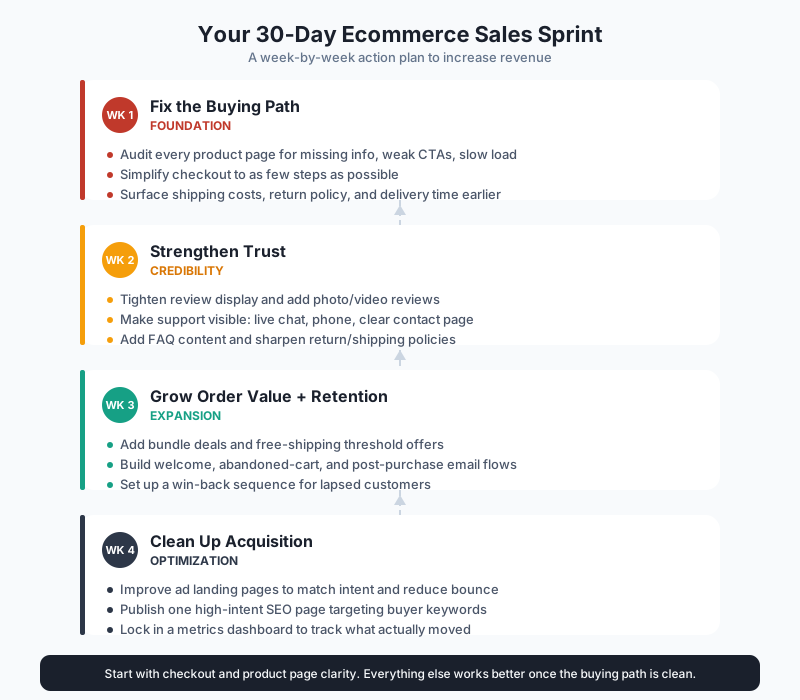
Use a simple sequence:
- Week 1, fix the buying path. Audit your top product pages, simplify checkout, and surface total cost, returns, and delivery information earlier.
- Week 2, strengthen trust. Tighten reviews, support visibility, FAQ content, and policy clarity around the highest-traffic pages.
- Week 3, grow order value and retention. Add one bundle or threshold offer, then finish your welcome, abandoned-cart, post-purchase, and win-back flows.
- Week 4, clean up acquisition and measurement. Improve the landing pages behind your ads, publish one high-intent SEO page, and lock in the metrics dashboard you will review every week.
That sequence is not fancy. It is practical. It also keeps you from doing what most weak stores do, which is touching ten channels at once and learning nothing from any of them.
If I had to pick only one starting point, I would choose checkout and product page clarity first. Better traffic helps. Better branding helps. Better email helps. But none of them rescue a store that still makes it annoying to buy.
FAQ
A few questions keep showing up whenever people ask how to increase ecommerce sales. These answers are the short version, but they should help you choose where to act first.
How can I increase ecommerce sales without spending more on ads?
Start with product pages, checkout, and retention. If the current traffic is leaking, more ad spend only makes the leak more expensive. Clean the buying path first, then scale acquisition.
What is the fastest way to increase ecommerce sales?
Usually checkout cleanup. Show total cost earlier, remove unnecessary fields, support guest checkout, and keep payment options visible. Those changes can recover revenue faster than most top-of-funnel campaigns.
Should I focus on new customers or repeat customers first?
Fix the first purchase experience first, then build repeat sales around it. A weak first order experience does not create loyal customers. Once the first purchase feels smooth, post-purchase email and reorder logic become much more valuable.
Do discounts really help online store sales?
Sometimes, but they are not a substitute for strong positioning. Use discounts to support a purpose, like first-order conversion, bundles, or thresholds. If you run blanket discounts all the time, buyers learn to wait and your margins get squeezed.
What should I fix if carts are getting abandoned?
Check for cost surprise, payment friction, mandatory account creation, and too many fields. Those are the usual culprits. Then review mobile checkout, because small screens make weak forms much worse.
Which metrics matter most when ecommerce sales are flat?
Watch conversion rate, add-to-cart rate, checkout completion, average order value, returning customer rate, and email revenue share. Together they tell you where the leak actually lives. Revenue alone only tells you that something is wrong, not why.