
How to Promote Your Music in 2026: A Complete Guide for Independent Artists
A measurable 30-day music promotion campaign for independent artists, from distribution and content to saves, email capture, spend, and break-even.
 by
by
Music promotion works when one release is treated as a 30-day campaign, not a release-day post. Pick one discovery platform, distribute the track early, pitch the focus track at least two weeks before release, prepare a repeatable set of short videos, and capture listeners you can reach again.
The goal is not a viral spike. It is a measurable path from reach to qualified listening: video completion, profile visits, saves, repeat listeners, email signups, and revenue. I bring 18 years of digital publishing experience to the measurement side, not a claim to be a record-label insider. A campaign that produces fewer streams but more saves and owned contacts can be the better result.
Here’s a practical, no-fluff guide to promoting your music in 2026, whether you’re an independent bedroom producer or a band looking to grow beyond your local scene.
The current scale. Spotify reported 761 million monthly active users and 293 million Premium subscribers for Q1 2026. Spotify also said more than 100,000 new songs are delivered each day. YouTube reports that Shorts averages more than 200 billion daily views. Reach is abundant; sustained attention is the scarce part.
The independent path is large, but uneven. Spotify reported more than $11 billion paid to the music industry in 2025. Independent artists and labels received about half of Spotify royalties, yet Spotify does not pay a fixed per-stream rate. Build budgets from your own distributor statements, rights splits, listener markets, and revenue mix.
A 30-day release campaign with a measurable budget
This model uses a $450 cash budget and 20 hours of artist time. It is a planning example, not a promise. The deliverables are chosen so one idea can be tested repeatedly instead of betting everything on one expensive video.
| Window | Work | Output | Primary signal | Cash budget |
|---|---|---|---|---|
| Days -21 to -15 | Distribution, metadata, pitch, landing page | 1 release setup | Profile ready | $50 |
| Days -14 to -8 | Create hooks and stories | 6 short videos + 2 emails | Completion rate | $100 |
| Days -7 to -1 | Publish tests and contact curators | 4 videos + 20 pitches | Saves and replies | $100 |
| Release week | Release, email, live session, retargeting | 5 videos + 1 live session | Save rate | $150 |
| Days +8 to +30 | Re-cut winners and follow up | 5 videos + 2 emails | Repeat listeners | $50 |
- Content output: 20 short videos, four emails, one live session, and one reusable landing page.
- Attention: track three-second holds and completion rate before celebrating views.
- Streaming quality: watch saves, repeat listeners, playlist adds, and listener-to-follower conversion.
- Owned audience: record email signups and the percentage who click back to the release.
- Spend guardrail: pause an ad when it produces cheap clicks but no saves, signups, or repeat listening.
Break-even streams are a scenario, not a platform rate
Spotify royalties are based on streamshare and rights agreements, so there is no official fixed payout per stream. For planning only, you can divide campaign cost by a conservative effective revenue assumption from your own statements. Do not publish that assumption as a Spotify rate.
| Campaign cost | Modeled effective revenue per qualifying stream | Streams to recover cash cost |
|---|---|---|
| $450 | $0.0025 | 180,000 |
| $450 | $0.0030 | 150,000 |
| $450 | $0.0040 | 112,500 |
That table is the reason I would not optimize a release around streams alone. Direct sales, tickets, memberships, sync, merch, and email-driven repeat listening can recover the same campaign cost with a much smaller audience.
Pick Your Primary Platform First
The biggest mistake independent artists make is trying to be everywhere at once. You end up half-present on six platforms instead of dominant on one. Pick a primary platform based on your genre, your audience, and where you’re most comfortable creating content.
Spotify reported 761 million monthly active users and 293 million Premium subscribers in Q1 2026. For editorial consideration, deliver the release early and pitch the focus track through Spotify for Artists at least two weeks before release. The pitch should explain the sound, story, collaborators, location, and promotion plan without making claims you cannot support.
TikTok can expose a sound beyond an artist’s existing followers, but reach is volatile. Use it when you can produce several versions of the same hook and learn from retention, rewatches, shares, and profile visits. Do not build the release plan around one predicted viral moment.
YouTube combines Shorts, long-form video, live streams, and YouTube Music in one discovery system. YouTube says Shorts now averages more than 200 billion daily views. Revenue varies by format, market, rights, and ad demand, so compare retention and owned-audience growth before chasing a payout estimate. A few simple YouTube marketing tactics go a long way once your channel is live.
SoundCloud still matters for electronic, hip-hop, and experimental genres. It’s where producers share works-in-progress, remixes, and DJ sets. The community is smaller but more engaged than mainstream platforms. Billie Eilish, Post Malone, and XXXTentacion were all discovered on SoundCloud.
Bandcamp is built for direct fan purchases, including digital music and merchandise. Its fee and payment-processing structure differs from pooled streaming royalties, so compare net revenue per buyer, repeat purchases, and email capture rather than declaring one platform universally highest-paying.
Pick one. Master it. Then expand.
| Platform | Best use | Current scale or signal | Decision metric |
|---|---|---|---|
| Spotify | Streaming and playlist discovery | 761M MAU; 293M Premium in Q1 2026 | Saves and repeat listeners |
| TikTok | Fast hook testing | Reach can extend beyond followers | Completion, shares, profile visits |
| YouTube | Short and long-form discovery | 200B+ daily Shorts views | Retention and returning viewers |
| SoundCloud | Scene and peer discovery | Genre-specific communities | Comments, reposts, follows |
| Bandcamp | Direct fan revenue | Direct sales and merch | Buyers and revenue per fan |
Distribution: Get Your Music Everywhere
Before you promote anything, your music needs to be available on all major streaming platforms. You can’t upload directly to Spotify, Apple Music, or Amazon Music. You need a digital distributor.
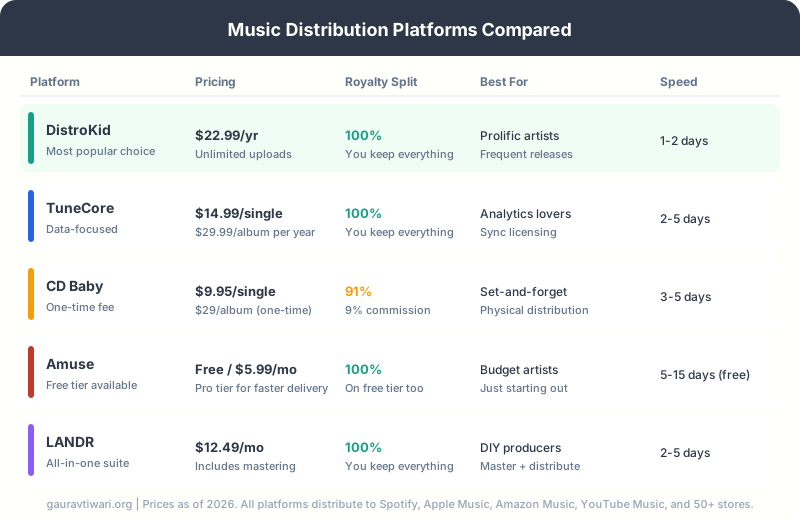
A distributor sends the release to streaming and social platforms, collects reported earnings, and provides catalog data under its own terms. Treat it as the release layer in your content distribution system. Compare the current options below by cost model, commission, stores, support, splits, and catalog portability.

DistroKid
- Annual unlimited-release plan; verify the current regional price before purchase
- No distributor commission on standard store earnings; optional services can add fees
- Delivery time varies by store, so schedule well before the release date
- Built-in tools: lyrics, release date scheduling, pre-saves
- Delivery to major streaming and social platforms
An annual-subscription distributor for artists who release frequently. Compare the current plan, optional fees, stores, support, and catalog terms.
TuneCore
- Distribute to Spotify, Apple Music, Amazon, and 150+ stores
- Compare current commission, renewal, and optional-service terms by plan
- Detailed analytics dashboard with audience insights
- Sync licensing marketplace for TV, film, and advertising placements
- YouTube Content ID monetization included
A tiered music-distribution service with analytics, publishing, and social-platform options that vary by plan.
CD Baby uses one-time per-release pricing. Its current official pricing is $9.99 for a single and $14.99 for an album, with a 9% commission on download and streaming revenue. That tradeoff suits artists who prefer per-release costs over an annual catalog subscription.
Amuse offers tiered distribution plans. Compare the current delivery speed, royalty splits, support, and artist limits on the plan you are considering instead of choosing it only because a free option is advertised.
LANDR currently lists Distribution Basic at $24 per year and Distribution Pro at $45 per year, with unlimited distribution also included in LANDR Studio plans. It is worth comparing when you want distribution and mastering tools in one workflow.
Spotify for Artists: Your Command Center
Spotify for Artists
- Free for all artists distributed to Spotify
- Pitch unreleased tracks to Spotify's editorial playlist team
- Real-time streaming data: listeners, saves, playlist adds, demographics
- Customize your artist profile with images, bio, and artist pick
- Canvas (looping visuals) and Clips for enhanced engagement
Spotify’s artist dashboard for profile management, editorial pitching, audience data, and release analytics.
If you’re on Spotify (and you should be), Spotify for Artists is the single most important free tool in your promotion arsenal. Claim your profile immediately after your first release goes live.
What Spotify for Artists lets you do:
- Pitch to editorial playlists at least two weeks before release. Write a compelling pitch describing the mood, genre, instrumentation, and story behind the track. Spotify’s editorial team reviews thousands of pitches weekly.
- Track real-time analytics: streams, listener demographics, save rates, playlist additions, and which cities your listeners are in (useful for tour planning).
- Customize your profile with header images, bio, artist pick (pin your latest release), and Canvas (looping visuals that play on mobile).
- Access Marquee and Discovery Mode where eligible to promote releases for new releases among likely fans.
Check Spotify for Artists weekly, but do not confuse correlation with a cause. Look for changes in saves, repeat listeners, playlist additions, followers, and geography after each promotion. If a track develops a real audience in one market, test localized content and measure whether the listener quality improves.
Social Media Strategy for Musicians
Social media isn’t optional for musicians anymore. It’s the primary way fans discover new artists. But posting randomly won’t get you anywhere. You need a strategy. The same content marketing strategies that grow a blog or a brand grow a music career, and platform-specific playbooks like getting noticed on Instagram apply directly to artists.
Content that works for musicians in 2026:
- Behind-the-scenes clips. Show your production process, recording sessions, or rehearsals. A 30-second clip of you building a beat from scratch can outperform a polished music video. Authenticity beats production value.
- Short covers and remixes. Cover trending songs or remix viral audio. This piggybacks on existing search traffic and algorithmic momentum. A cover of a trending TikTok sound can introduce your voice to millions.
- Song breakdowns. Show how you made a specific part of your track. Producers love this. Fans love this. The algorithm loves this.
- Storytelling. Share the story behind your tracks. Why did you write this song? What were you going through? Emotional context turns casual listeners into real fans.
- Gear and process content. What DAW do you use? What plugins? What’s your recording setup? This content attracts fellow musicians who become your most loyal sharers.
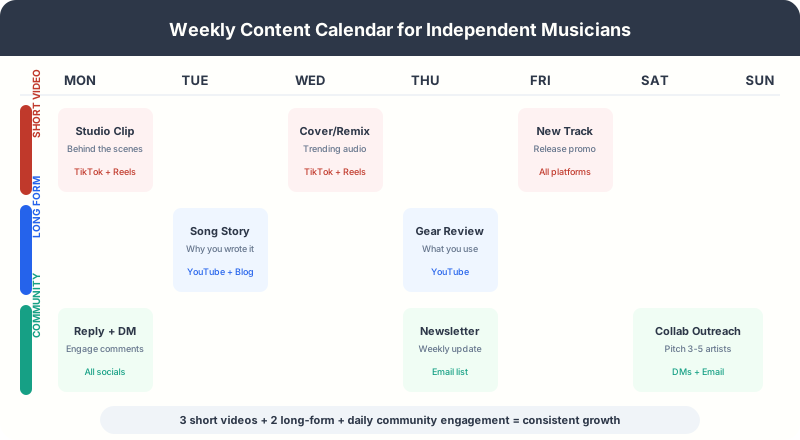
Do not use a fixed entertainment-to-promotion ratio as a rule. Build a small mix of performance clips, process stories, direct release posts, and fan responses. Keep the formats that earn completion, saves, profile visits, and repeat listening.
Build an Email List Early
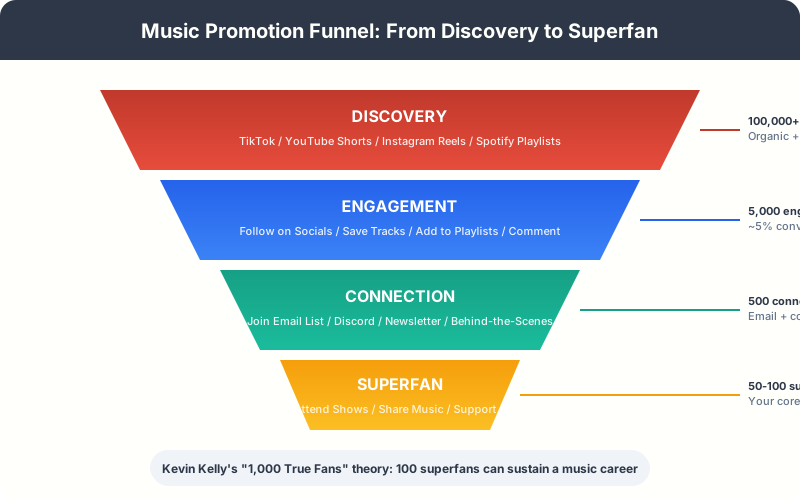
Your email list is the audience you can reach without depending on one social feed. Platforms can change ranking and recommendation systems without notice. Capture permission with a clear reason to subscribe, then measure clicks and downstream listening rather than list size alone.
Your email subscribers are different. They opted in. They want to hear from you. And no algorithm can get between you and their inbox.
How to build your music email list:
- Offer a free exclusive track or demo in exchange for an email signup
- Add a signup link in your Linktree, Instagram bio, and YouTube descriptions
- Use Mailchimp (free up to 500 contacts), ConvertKit, or Beehiiv
- Send a weekly or biweekly newsletter with behind-the-scenes updates, new releases, and exclusive content
- When you release new music, email your list first. They can create a measurable first-day audience, but judge the result by qualified listeners and repeat engagement
Even 200 dedicated email subscribers can generate more meaningful engagement than 10,000 passive social followers. Kevin Kelly’s “1,000 True Fans” concept applies perfectly to musicians: a small group of superfans who buy everything you release can sustain an entire career.
Playlist Pitching Strategy
Getting onto playlists is one of the fastest ways to grow streams. There are three types of playlists that matter:
- Spotify editorial playlists. Pitch one unreleased focus track through Spotify for Artists at least two weeks before release. Include accurate genre, mood, instruments, collaborators, location, and campaign context.
- Algorithmic playlists. Spotify does not publish a simple trigger formula. Watch saves, repeat listeners, playlist adds, skips, and follower growth without claiming one 48-hour threshold guarantees placement.
- Independent curated playlists. Research fit, verify that engagement looks real, write a specific pitch, and avoid anyone selling guaranteed placement or streams.
Never pay for guaranteed playlist placement. Spotify actively penalizes artists caught using paid playlist services. It can get your music removed from the platform entirely. Organic pitching takes more effort but carries zero risk and builds real relationships with curators.
SoundCloud and Bandcamp: Direct Indie Platforms
SoundCloud
- Free uploads for emerging artists with SoundCloud Basic
- Direct fan engagement: comments, reposts, and messaging
- SoundCloud Premier monetization for eligible artists
- Works-in-progress and DJ set sharing (not just finished tracks)
- Discovery engine launched careers of Billie Eilish, Post Malone, and XXXTentacion
A music-sharing platform with comments, reposts, messaging, and genre-based discovery, often used for works in progress and DJ sets.
Bandcamp
- Direct-sale revenue minus Bandcamp's current share and payment processing
- Fans can pay more than asking price (name-your-price model)
- Physical merch integration: vinyl, CDs, cassettes, apparel
- Bandcamp Fridays: platform waives its share on select days
- No algorithm: fans discover music through editorial and tags
A direct-to-fan storefront for digital music and merchandise. Check the current revenue share and payment-processing fees for your market.
Don’t overlook these two platforms just because they’re not as mainstream as Spotify. SoundCloud and Bandcamp serve different but equally important purposes in your promotion strategy.
SoundCloud is where you build community. Upload demos, works-in-progress, live recordings, and DJ sets. Comment on other artists’ tracks. Repost tracks you genuinely love. The SoundCloud community is tight-knit, especially in electronic, hip-hop, lo-fi, and experimental genres. Getting noticed on SoundCloud still launches careers. Check out my tips on getting noticed on SoundCloud as a new artist.
Bandcamp is where direct fan economics become visible. A fan can buy a release or merchandise in one transaction, while streaming revenue is pooled and allocated through rights and streamshare systems. Compare revenue per buyer, repeat buyers, and email capture with your streaming metrics. Do not reduce the comparison to a fixed per-stream number.
Labels vs. Independence in 2026
The old model was simple: get signed, let the label handle promotion, give up most of your royalties. In 2026, the math has changed dramatically.
Independent distribution gives artists control over masters, release timing, and marketing decisions, but the distributor, collaborator, publisher, collection society, and territory still affect what reaches the artist. Spotify reports that independent artists and labels received about half of its royalties in 2025. Control is real; a universal 80-100% take-home claim is not.
That said, labels still offer real value for:
- Upfront funding for recording, music videos, and marketing campaigns
- Established relationships with radio stations, sync licensing supervisors, and press outlets
- A team that handles logistics so you can focus on creating
- Global distribution infrastructure and playlist connections that independents struggle to replicate
Build measurable demand independently before judging a label offer. Bring clean listener data, owned contacts, direct revenue, ticket history, and a release process you understand. Then compare the offer’s ownership, term, recoupment, services, and exit conditions with what you can fund and operate yourself.
Collaboration and Networking
Collaboration can introduce two artists to each other’s listeners when the creative fit is real and both sides promote the work. It is not a free audience swap: writing, rights, credits, splits, release timing, and promotion all need agreement before the track goes live.
Where to find collaborators:
- SoundCloud and Bandcamp communities in your genre
- Reddit: r/WeAreTheMusicMakers (2.3M members), r/MusicInTheMaking, r/Songwriting, and genre-specific subs
- Discord servers: BeatStars, Splice, and genre-specific communities have thousands of active producers
- Local scenes: open mics, music events, studio sessions in your city
- Social DMs: reach out to artists at your level on Instagram and TikTok. Don’t cold-pitch superstars. Pitch peers.
The key: collaborate with artists at your level or slightly above. Both parties benefit. Don’t chase clout. Chase genuine creative partnerships that produce music you’re both proud of.
Your Website and Electronic Press Kit
Every serious musician needs a website. Not just a Linktree (though that’s fine as a supplement). A proper website with your bio, discography, press photos, contact information, and links to all your platforms.
Your Electronic Press Kit (EPK) should include:
- A professional bio (2-3 paragraphs, third person)
- High-quality press photos (at least 3-5 images, both portrait and landscape)
- Embedded players for your best 3-5 tracks
- Notable achievements: press features, playlist placements, streaming milestones, live shows
- Contact email for booking, press, and sync licensing inquiries
- Social media and streaming platform links
- Stage plot and technical rider (if you perform live)
WordPress is still the best platform for a musician’s website. It’s flexible, affordable, and you own your content. I’ve built hundreds of WordPress sites, and the same setup that powers a fast blog powers a fast EPK: your own domain, a clean theme, embedded players, and a contact form for booking.
Paid Promotion: When It Makes Sense
Organic promotion should be your foundation, but paid ads can accelerate growth when used strategically. Don’t spend money on ads until you have a released track getting some organic traction, a clear funnel, and at least $5-10/day to test with.
Best paid channels for music promotion in 2026:
- Meta ads: test short video hooks against a landing page or trackable destination, then judge saves, signups, and repeat listening beside click cost.
- TikTok Spark Ads: amplify an organic post only after it shows stronger retention or engagement than your other posts.
- YouTube ads: use them when the video and audience match, with retention and returning viewers as guardrails.
- Spotify advertising: confirm current eligibility, formats, targeting, and minimum spend in your market before budgeting.
- Curator outreach: pay only for a legitimate review workflow, never for guaranteed streams or playlist placement.
If someone guarantees a specific number of streams, followers, or playlist placements for a flat fee, it’s a scam. These services use bots that Spotify, YouTube, and TikTok all detect. Getting caught tanks your algorithmic standing and can get your music permanently removed. Stick to legitimate advertising platforms and organic outreach.
AI Tools for Music Promotion
AI can remove repetitive work from a release campaign, but every tool needs a defined job and human review. The useful categories in 2026 are planning, transcription, editing, asset resizing, copy variation, and campaign analysis.
- LANDR and BandLab for AI-assisted mastering. Get release-ready masters in minutes for a fraction of studio costs.
- ChatGPT and Claude for writing press releases, social media captions, playlist pitch descriptions, and EPK bios.
- Canva’s AI tools for creating cover art, social media graphics, and promotional banners without design skills.
- Descript for editing podcast interviews, behind-the-scenes videos, and creating short clips from longer content.
- Suno and Udio for generating reference tracks, exploring ideas, and creating backing tracks (use ethically and disclose).
AI won’t replace your creativity or your authentic voice. But it can handle the repetitive marketing tasks that eat into your studio time. Use it for promotion. Make the music yourself. For more on how AI is changing music, read about AI music creators and the new frontier of creativity.
Track What Works
You can’t improve what you don’t measure. Use these free analytics tools to understand what’s working:
- Spotify for Artists: streams, listener demographics, playlist placements, save rates, and city-level data
- YouTube Studio: watch time, audience retention, traffic sources, and subscriber conversion
- TikTok Analytics (Pro account, free): video performance, audience demographics, trending content
- Instagram Insights: reach, engagement rate, and which content types drive follows
- Google Analytics on your website: traffic sources, geographic data, and conversion tracking
- Chartmetric or Soundcharts (free tiers): cross-platform analytics that aggregate data from Spotify, Apple Music, YouTube, and social platforms
Check analytics weekly. Double down on what’s working. Cut what isn’t. If your TikTok behind-the-scenes clips get 10x the engagement of your polished promos, make more behind-the-scenes clips. Let data guide your strategy.
Frequently Asked Questions
How much does music promotion cost in 2026?
A music-promotion campaign can start with time and owned channels, but distribution, creative production, email tools, and paid testing may add cash cost. Set a capped 30-day budget, assign every expense to a measurable signal, and stop spend that produces clicks without saves, signups, or repeat listening.
What is the best platform to promote music in 2026?
There is no universal best platform. Choose Spotify for streaming and playlist tools, YouTube for short plus long-form discovery, TikTok for rapid hook testing, SoundCloud for scene-specific feedback, or Bandcamp for direct sales. Pick the one that matches your format and audience, then measure listener quality.
How do I get my music on Spotify playlists?
Deliver the release early and pitch one unreleased focus track through Spotify for Artists at least two weeks before release. Provide accurate genre, mood, instruments, collaborators, location, and campaign context. Research independent curators carefully and never pay for guaranteed placement or streams.
Do I need a record label to succeed as a musician?
No. Independent distribution gives artists access to major platforms and more control over masters, timing, and marketing. The tradeoff is that the artist or team must fund and run the campaign. Build measurable demand first, then judge any label offer by ownership, term, recoupment, services, and distribution.
How often should I release new music?
Release as often as you can support with strong music and a complete campaign. Work backward from delivery, pitching, creative production, and follow-up. A slower schedule with enough assets and audience follow-through is better than a fixed cadence that leaves each release unsupported.
What is the best music distribution service?
Choose a distributor by release volume, annual versus per-release cost, commission, rights, stores, support, delivery time, royalty splits, withdrawal terms, and catalog portability. DistroKid, TuneCore, CD Baby, Amuse, and LANDR use different models, so verify the current plan that matches your catalog before paying.
Can AI help with music promotion?
Yes, but keep human review. AI can help organize a release calendar, draft variations, transcribe video, resize assets, and summarize campaign data. Verify facts, rights, credits, likenesses, and platform rules, and do not let generated copy invent press, listeners, or placements.
Start Now, Improve Later
The biggest mistake in music promotion isn’t picking the wrong platform or running a bad ad. It’s waiting. Waiting until the mix is perfect. Waiting until you have 1,000 followers. Waiting for the “right time.”
Every successful musician I’ve watched grow started promoting before they felt ready. They put out imperfect tracks, made cringe-worthy TikToks, and sent awkward emails to playlist curators. Then they got better.
Here’s your action plan: Pick one platform. Distribute your music everywhere through DistroKid or TuneCore. Claim your Spotify for Artists profile. Post content three times a week. Pitch to playlists before every release. Build an email list. Track your analytics weekly. Collaborate with peers.
That’s the entire playbook. The artists who execute it consistently for 12-24 months will be in a completely different position than those who spend that same time “planning.” Start now. Adjust as you go.
For more on a content-led music career, read getting noticed on SoundCloud, how AI music creators are changing production, and the best podcast hosting platforms if a music podcast is part of the plan.
Tell Google you want more of this.
Add Gaurav Tiwari as a preferred sourceOne tap, and this site shows up more often in your own Top Stories, AI Overviews and AI Mode. Remove it any time.