
10 Best Podcast Hosting Platforms Right Now
Over 4 million podcasts exist right now, and that number keeps climbing. But most new podcasters don’t fail because of bad content. They fail because they picked the wrong hosting platform.
A bad host means choppy audio delivery, zero analytics to track what’s working, limited distribution that keeps you off Apple Podcasts or Spotify, and clunky tools that waste hours every week. I’ve watched creators lose subscribers simply because their host couldn’t handle traffic spikes or didn’t auto-distribute to major directories.
I’ve tested and compared the top podcast hosting platforms on what actually matters: storage limits, distribution reach, analytics depth, monetization options, and pricing. Here’s how they stack up.

Quick Summary: Best Podcast Hosting Platforms in 2026
- Spotify for Podcasters: Best free option with built-in monetization and deep analytics
- Buzzsprout: Best for beginners who want a simple, guided setup
- Blubrry: Best for WordPress users with its PowerPress plugin integration
- Fusebox: Best for creators who want to drive traffic to their own website
- Castos: Best for WordPress podcasters who also need YouTube publishing
- Podbean: Best for monetization with its built-in ad marketplace and live streaming
- Breaker.Audio: Best for casual podcasters who want zero setup friction
- Transistor: Best for brands and teams running multiple podcasts from one account
- Captivate: Best for growth-focused podcasters who want marketing tools baked in
- RadioPublic: Best for podcasters who want a free platform with listener tipping
Spotify for Podcasters
Best for: Creators who want a completely free platform with built-in monetization and detailed audience analytics.
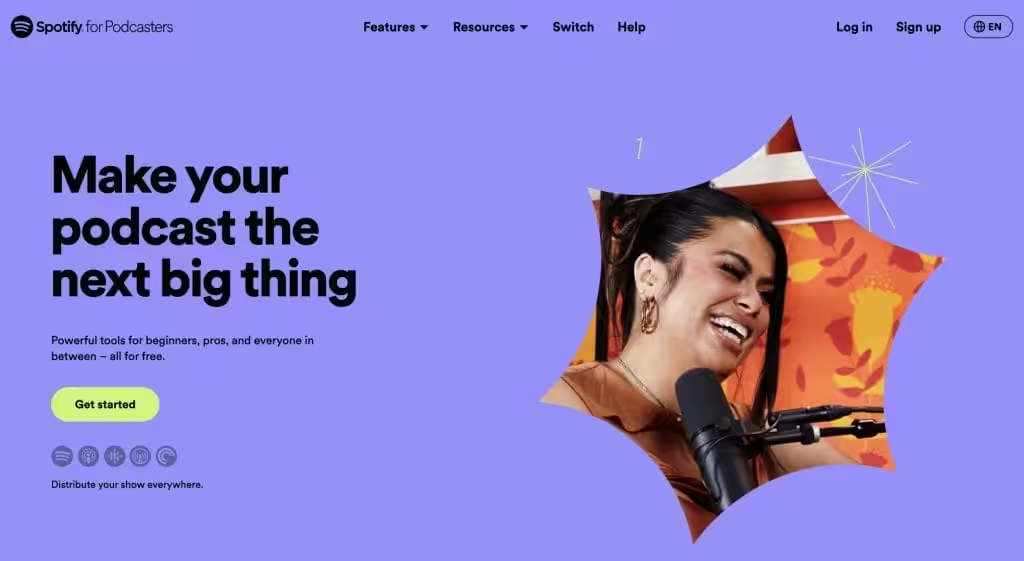
Spotify for Podcasters (formerly Anchor.fm) is the biggest free podcast host on the market right now.
It’s completely free and still packs more features than most paid hosts.
With Spotify for Podcasters, you are the only owner of your content and with just a single click, you can upload your episodes on all major hubs like Spotify, Apple Podcasts, Overcast, Pocket Casts, and more!
What sets it apart from most hosts is the analytics depth. You get age breakdowns, listening time comparisons, gender data, and topic concentration reports, all without paying a cent.
Spotify for Podcasters’ other features include:
- An optional button on your Spotify for Podcasters profile lets listeners donate monthly without ever needing to create an account.
- Spotify for Podcasters Sponsorships, which lets you record audio ads in your own voice, and choose where they go in your episodes.
- Spotify for Podcasters lets you insert songs and mix music with conversation in a few clicks.
Buzzsprout
Best for: Beginners who want a clean interface, guided setup, and automatic distribution to all major directories.
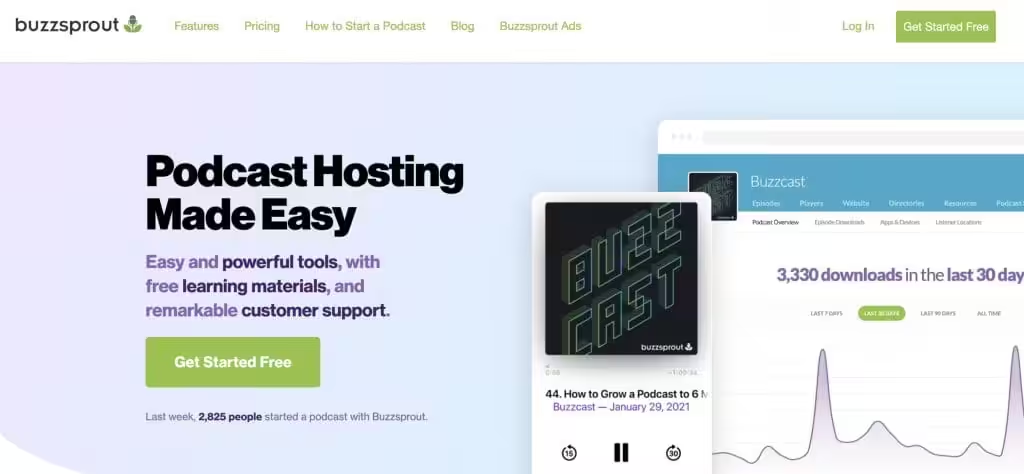
Buzzsprout has been around since 2008, and it shows. The interface is clean, the tools are straightforward, and it’s one of the best picks if you’re just starting out or want a platform that doesn’t overcomplicate things.
All you need to do is embed your episodes through your website, and if you don’t have one, Buzzsprout does it for you!
Buzzsprout handles distribution automatically. It uploads your episodes to Apple Podcasts, Spotify, Google Podcasts, Stitcher, and other major directories without you lifting a finger.
You can upload up to 2 hours of episode time per month that last for a total of 90 days before they are eventually deleted. To avoid this, you can subscribe to Buzzsprout’s premium plan for just $12 and upload up to 3 hours of episode time which would be available on all hubs without getting deleted after 90 days.
Some of Buzzsprout’s other features include:
- Advanced podcast statistics to see how your podcast is performing.
- Transcription services to get your episodes converted into text form.
- Chapter markers that allow busy listeners to skip to certain segments of your episodes.
- Magic mastering to enhance the audio quality of your episodes (Paid add-on)
Blubrry
Best for: WordPress users who want to manage their podcast directly from their site’s dashboard via the PowerPress plugin.
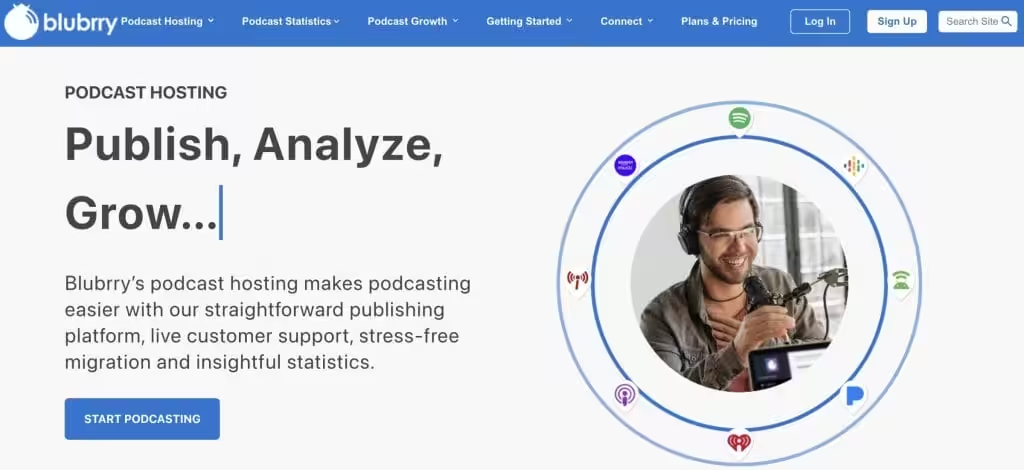
Along with its podcast hosting services, Blubrry stands out in other departments as well, may it be an external integration in the form of voice/video calls or its PowerPress plugin which makes it ever so easy to embed your podcast into a WordPress-powered website.
The PowerPress plugin also allows you to conveniently manage your podcast right from your WordPress dashboard.
Some of the other features of Blubrry include:
- A migration file system to transfer all of your files if you’re moving in from another platform.
- Unlimited bandwidth (Included in all plans).
- A tracking system to track and take note of all your episodes.
For $12 per month, you get 5 hours of episode time plus 100MB of storage. Blubrry also offers a free first-month trial so you can test it before committing.
Fusebox
Best for: Podcasters who run a blog or website and want embedded players that drive traffic back to their own content.
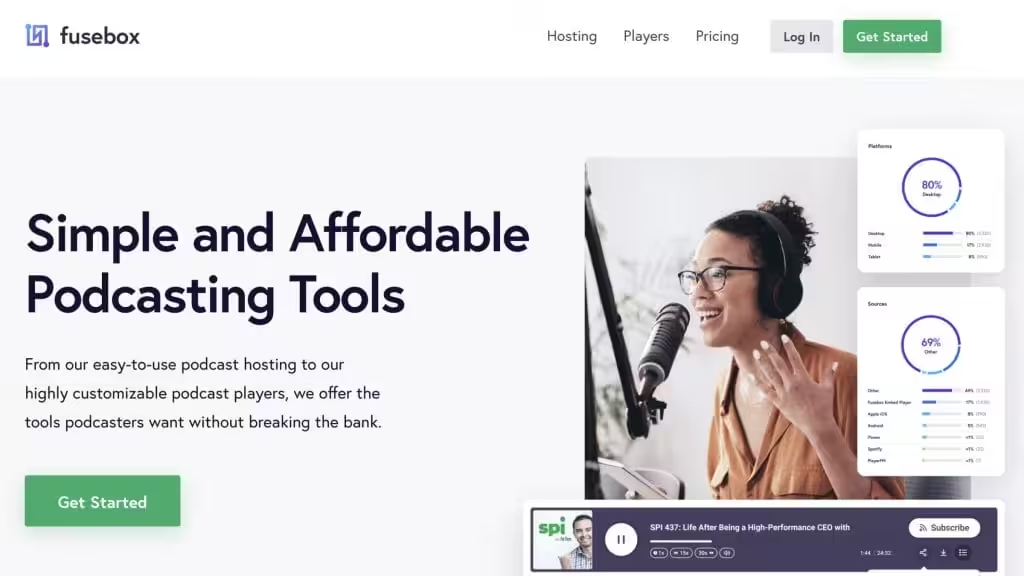
If you’re looking to start off a podcast and are as keen in promoting your own website and/or blog, Fusebox can be the perfect match for you.
It focuses on integrating its users with all the popular platforms like WordPress, Squarespace, Wix, Webflow, or any other HTML5 website.
Fusebox has a beginner plan which allows its users to upload and share their podcast episodes across all hubs, but the views are capped at 10,000 per month, which would not be the case if you purchase its pro plan starting at $16 per month.
Other features include:
- A specialized email capture option to help grow your reach faster
- Also allows you to attach a download option to all your episodes so that the listeners can download and listen in anywhere!
- Allows you to upload as many shows as you want.
Castos
Best for: WordPress podcasters who also want YouTube auto-publishing and private podcast support.
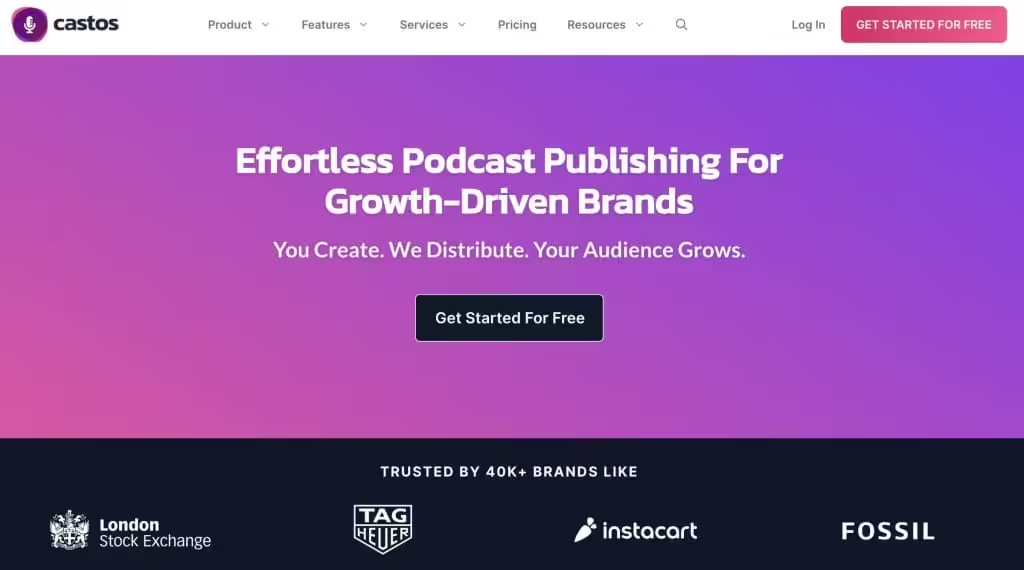
Like Blubrry, Castos has its own WordPress plugin that lets you manage your podcast from the WordPress dashboard. You don’t have to switch between platforms to upload, edit, or track episodes.
Users have the ability to create their own public or private podcasts with equal benefits to both.
Castos also allows Integrated publishing to YouTube with the ability to turn your audio files into a video for greater reach and style points.
Castos’ other features include:
- Integrated transcription mode to convert your audio content into text for its viewers.
- Advanced analytics to help your podcast grow.
- Also allows video hosting.
All this and more is included in Castos’ membership plan which starts at $15.83 per month and includes a 14-day trial in the beginning.
Podbean
Best for: Podcasters focused on making money, with a built-in ad marketplace, premium content options, and live streaming.
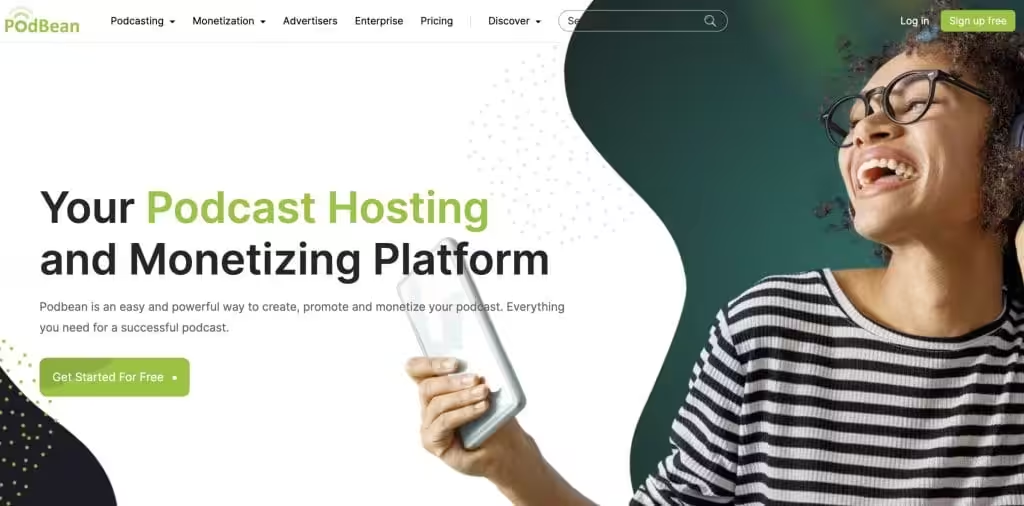
With its advanced user interface and user-friendly directories, Podbean does a great job of managing your podcast for you.
Like Buzzsprout, Podbean too has its own website for users who do not wish to embed their podcasts through WordPress. It allows you to customize the website as per your liking as well.
You can upload up to 5 hours of episodes on the free tier. Paid plans remove all bandwidth and storage limits.
Other features include:
- A custom-built ad marketplace to help you monetize your podcast.
- Has its own ad broadcasting system which allows the user to put in ads for reach.
- Supports live streaming!
You can purchase one of the various plans Podbean has on offer, starting at $9 per month.
Breaker.Audio
Best for: Casual creators who want a free, no-frills platform to publish audio and video podcasts quickly.
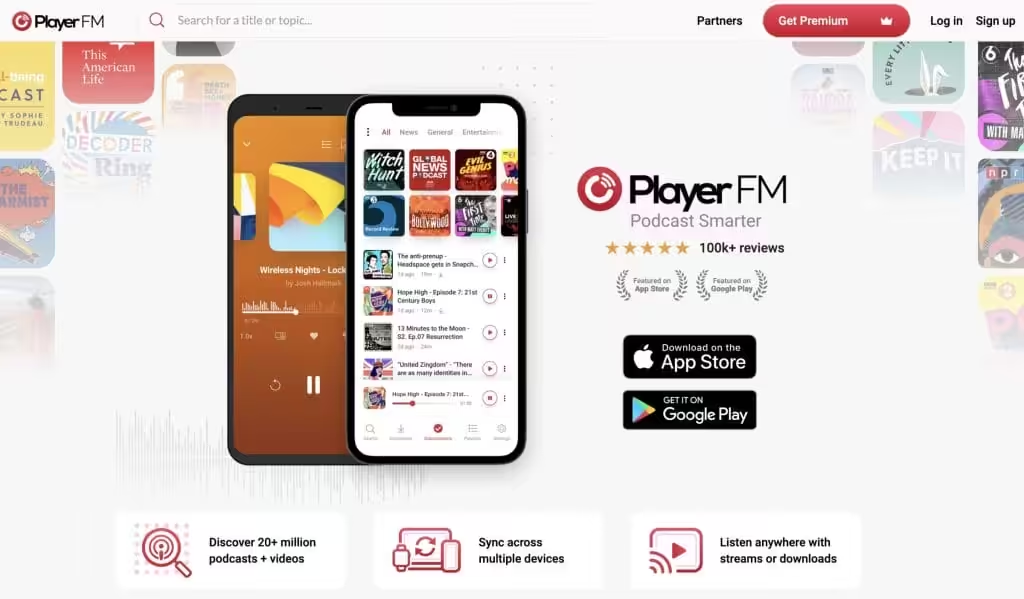
Acquired by Twitter a while back, Breaker is a stripped-down platform built around one idea: make podcast publishing as simple as possible.
You visit the site, sign up, pick a channel name, and start uploading episodes. That’s it. No complicated setup, no credit card required.
Breaker’s other features include:
- Breaker has its own base for uploading and listening to various podcasts.
- It supports video hosting.
- It’s free, no paid plans or hidden fees.
Transistor
Best for: Brands and teams that need to run multiple public and private podcasts from a single account.
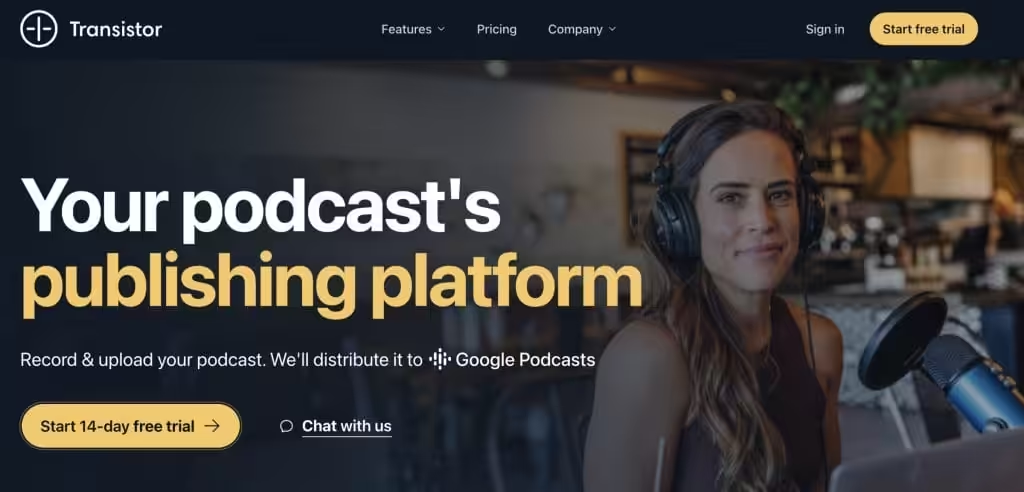
Transistor is another great option for those who want an enhanced podcasting experience.
With Transistor, you get all that what you ask for and more with its versatility, allowing a single user to host public as well as private podcasts from the same account!
That flexibility works well whether you’re running a company podcast behind a paywall or a public show aiming for Apple Podcasts and Spotify.
Some of Transistor’s other features include:
- Share and promote your podcast on multiple major hubs like Apple Podcasts, Spotify, Google Podcasts, and more!
- Provides detailed analytics to improve the conditioning of your Podcast.
- Can help you create your own website if you don’t have one already.
Transistor does not offer any free plans, but users can engage with a starting fee of $19 per month with a 14-day trial at the beginning. One drawback is Transistor is that it caps the number of times your episodes can be downloaded by other users, so you’ll have to keep upgrading for the maximum benefits.
Captivate
Best for: Growth-minded podcasters who want built-in marketing tools, sponsorship kits, and auto-generated share links.
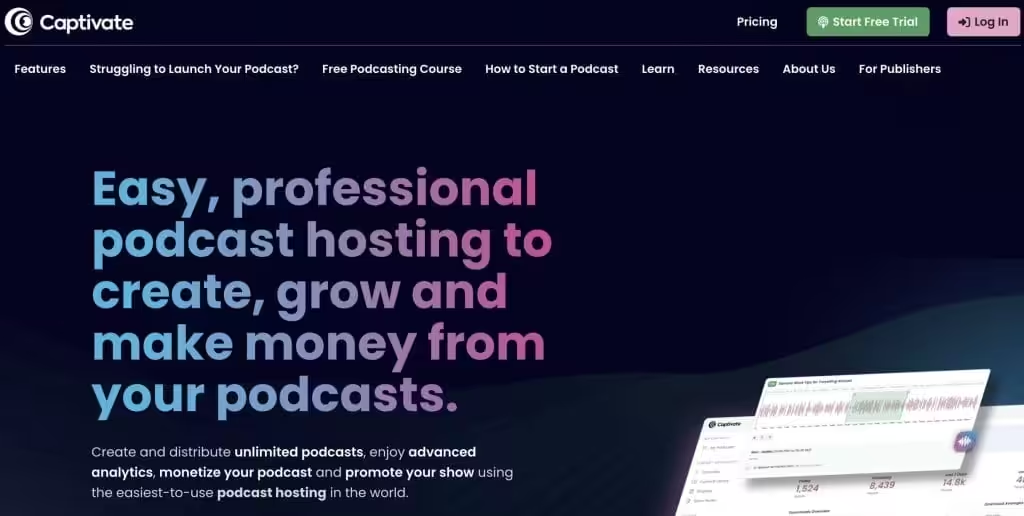
Captivate emphasizes growth more than anything else, with available features that can bump up the stream count of any Podcast host!
It possesses a special set of marketing skills with advanced auto-generated links of your Podcast that get uploaded on various other platforms like Overcast, Pocket Casts, and more.
Captivate’s other features include:
- Podcast sponsorship PDFs that help you to monetize your gig.
- Helps you customize your website with its multiple design concepts.
- Built-in analytics generator which provides you with important details.
Captivate doesn’t offer a free plan, but premium plans start with $17 per month with an allowance of over 12,000 downloads and a 7-day trial.
RadioPublic
Best for: Podcasters who want a free platform with listener tipping, audiograms, and a personalized pod-site.
Having been founded in 2006, RadioPublic is one of the first online platforms that has altered its approach and now focuses on podcasting as well!
It’s since added Google analytics integration, monetization tools, and a listener tip system. And the best part? It’s completely free to use.
RadioPublic has also done a great job in adding in personal features like a personalized pod-site and audiograms, which lets you add a summarized transcript of your episodes to make it flawless for the listeners.
RadioPublic’s other features include:
- Listener tips that give the hosts a chance to earn real-time money!
- The platform handles marketing and distributes your podcast across major listening directories automatically.
- Allows you to bookmark a featured episode of your podcast so that you can give out a generalized idea of what your show is all about to the audience.
If you’re just getting started and don’t want to spend a dime, Spotify for Podcasters is the obvious pick. It’s free, distributes everywhere, and the analytics are better than most paid platforms.
If you run a WordPress site, Blubrry or Castos will save you the most time with their dashboard integrations. And if you’re serious about monetizing from day one, Podbean’s built-in ad marketplace gives you options that other hosts simply don’t offer at that price point.
Pick the one that fits your budget and workflow. You can always migrate later, but starting with the right host saves you a lot of headaches down the road.
Disclaimer: This site is reader-supported. If you buy through some links, I may earn a small commission at no extra cost to you. I only recommend tools I trust and would use myself. Your support helps keep gauravtiwari.org free and focused on real-world advice. Thanks. - Gaurav Tiwari