
15 Best Organic Chemistry Books for Undergraduates and Graduates
Organic chemistry nearly ended my academic confidence. I remember staring at reaction mechanisms during my second semester, wondering if I’d picked the wrong subject entirely. The difference between passing and actually understanding the material came down to one thing: the textbook I was using.
Most organic chemistry textbooks cost between $50 and $375. That’s a wide range, and price doesn’t always correlate with quality. I’ve gone through over a dozen of these books while helping students prepare for exams, tutoring undergraduates, and building study resource guides. Some are genuinely excellent. A few are overpriced doorstops.
If you want the single best organic chemistry book for undergraduates, go with Organic Chemistry by Clayden, Greeves, Warren, and Wothers. It explains reaction mechanisms through clear visuals and builds understanding from molecular orbital theory up. It is widely used in top chemistry programs worldwide.
This list covers the 15 best organic chemistry books for undergraduate students in 2026. I’ve included options for complete beginners who need a gentler introduction, mid-level students taking their first or second semester, and advanced undergraduates looking for deeper mechanistic understanding. Every recommendation includes the author’s background, what makes the book stand out, and who it’s best suited for.
If you’re also studying other chemistry branches, check out my guides on the best inorganic chemistry books and best physical chemistry books. And if calculus is part of your curriculum (it probably is), I’ve got a separate list of the best calculus textbooks worth looking at too.
Organic Chemistry as a Second Language by David Klein
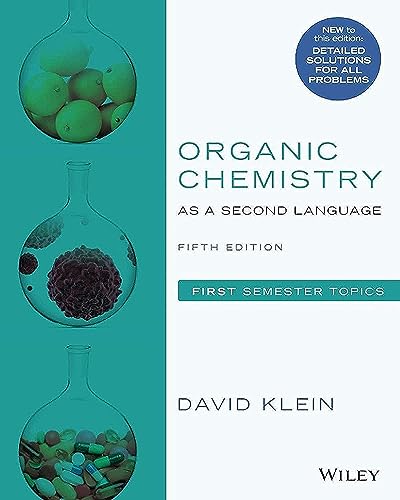
Organic Chemistry as a Second Language: First Semester Topics
- Klein, David R. (Author)
- English (Publication Language)
- Covers reaction mechanisms with electron-pushing arrows
- Includes spectroscopy and structure determination methods
- Detailed coverage of stereochemistry and chirality
- Covers named reactions used in modern synthesis
- Includes retrosynthetic analysis techniques
- Treats functional group transformations systematically
If you’re struggling with organic chemistry, start here. David Klein wrote this book because he noticed that students don’t fail organic chemistry due to lack of effort. They fail because they don’t know how to study it properly. This isn’t a full textbook. It’s a companion guide that teaches you how to think about organic chemistry, and that distinction matters.
The book comes in two volumes covering first and second semester topics separately. Klein reviews core concepts, then walks you through exercises with step-by-step explanations. You won’t find dense walls of text. Instead, you get a conversational approach that breaks down arrow-pushing, resonance structures, and stereochemistry into digestible pieces. The fifth edition added new practice problems and refined explanations based on student feedback.
I recommend this to every student who feels lost in their first organic chemistry course. It’s also available in Kindle format if you prefer studying on a tablet. At under $70, it’s the best investment you can make before diving into a full-sized textbook.
Organic Chemistry: Principles and Mechanisms by Joel Karty
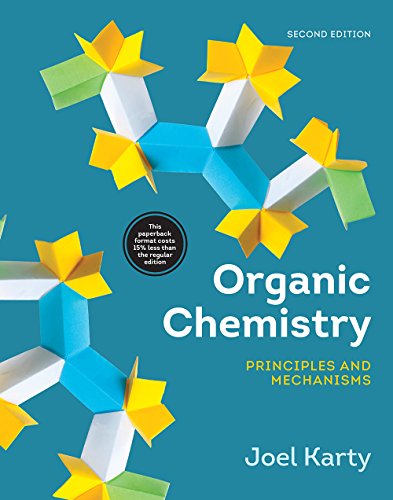
Organic Chemistry: Principles and Mechanisms
- Karty, Joel (Author)
- English (Publication Language)
- Covers reaction mechanisms with electron-pushing arrows
- Includes spectroscopy and structure determination methods
- Detailed coverage of stereochemistry and chirality
- Covers named reactions used in modern synthesis
- Includes retrosynthetic analysis techniques
- Treats functional group transformations systematically
Most organic chemistry textbooks organize content by functional group. Karty’s book takes a different route entirely. It’s built around core principles and mechanisms, so you learn the underlying logic first and then apply it across different compound types. Once you understand why reactions happen, memorizing individual reactions becomes almost unnecessary.
Joel Karty earned his BS in chemistry at the University of Puget Sound and his Ph.D. at Stanford. He teaches organic and general chemistry at Elon University and designed this textbook specifically to fight the rote memorization trap that derails most students. The mechanism-first approach means you’ll spend more time understanding electron flow and less time making flashcards.
At $82.75 (down from $140.25), this is a solid deal for a comprehensive textbook. If your professor doesn’t assign it, consider picking it up as a supplementary resource alongside whatever book your course requires. The way Karty explains mechanisms is genuinely different from most other authors on this list.
Organic Chemistry for Dummies by Arthur Winter
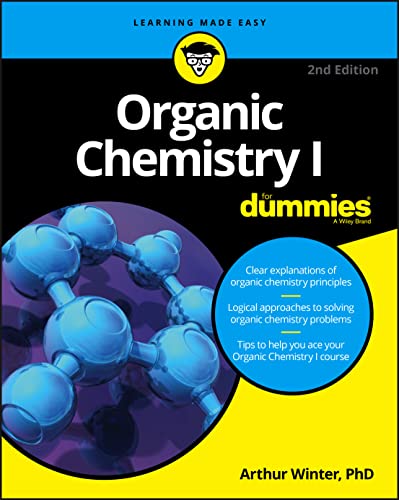
Organic Chemistry I For Dummies (For Dummies Math and Science)
- Winter, Arthur (Author)
- English (Publication Language)
- Covers reaction mechanisms with electron-pushing arrows
- Includes spectroscopy and structure determination methods
- Detailed coverage of stereochemistry and chirality
- Covers named reactions used in modern synthesis
- Includes retrosynthetic analysis techniques
- Treats functional group transformations systematically
Don’t let the title put you off. Organic Chemistry for Dummies is one of the most approachable introductions to the subject you’ll find anywhere. Arthur Winter, a professor at Iowa State University, breaks down the language of organic chemistry, major compound classes, and key reactions into plain English. You can work through it at your own pace without feeling overwhelmed.
The book covers carbon bonding, functional groups, stereochemistry, spectroscopy, and the major organic reactions you’ll encounter in your first semester. Winter’s writing style strips away the intimidation factor that makes many students dread the subject. He uses clear diagrams, practical examples, and a touch of humor to keep things moving.
At under $18, this is the cheapest book on this entire list. I’d recommend it as a starter book before your semester begins, or as a quick-reference companion if your assigned textbook feels too dense. Winter received his Ph.D. from the University of Maryland, where his research focused on studying extremely short-lived reactive intermediates using laser spectroscopy. The man knows his organic chemistry.
Organic Chemistry by John McMurry
Organic Chemistry by John McMurry (9th Edition)
- Comprehensive coverage of organic chemistry for undergraduate courses
- Hardcover textbook by Cengage Learning
- Covers reaction mechanisms with electron-pushing arrows
- Includes spectroscopy and structure determination methods
- Detailed coverage of stereochemistry and chirality
- Covers named reactions used in modern synthesis
- Includes retrosynthetic analysis techniques
- Treats functional group transformations systematically
McMurry’s Organic Chemistry is the textbook that many universities default to, and for good reason. His writing is some of the clearest you’ll find in any chemistry textbook. McMurry has a genuine talent for showing the beauty and logic behind organic reactions without dumbing things down. You’ll actually enjoy reading some of these chapters, which is rare for a 1,000+ page textbook.
McMurry holds a BA from Harvard and a Ph.D. from Columbia. He’s received the Alexander von Humboldt Senior Scientist Award, the Max Planck Research Award, and the NIH Career Development Award. His academic credentials are impeccable, but what makes this book special is how he translates that expertise into accessible teaching.
The original list price of $375.95 is eye-watering, but you can grab it for around $124 on Amazon right now. If your professor assigns McMurry, you’re in good hands. If they don’t, this is still worth considering as a reference book. The way he presents reactions and mechanisms sets the standard that other authors aim for.
Organic Chemistry by David Klein
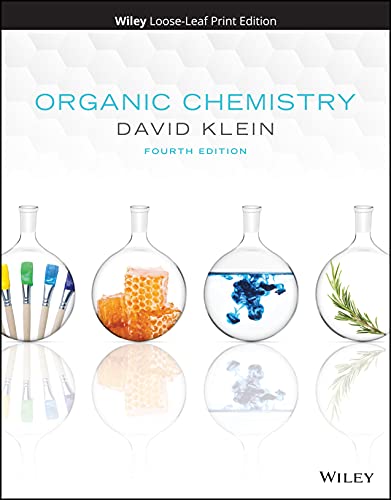
Organic Chemistry by David R. Klein (4th Edition)
- Klein, David R. (Author)
- English (Publication Language)
- Covers reaction mechanisms with electron-pushing arrows
- Includes spectroscopy and structure determination methods
- Detailed coverage of stereochemistry and chirality
- Covers named reactions used in modern synthesis
- Includes retrosynthetic analysis techniques
- Treats functional group transformations systematically
Yes, David Klein appears twice on this list, and both entries are earned. While his “Second Language” series is a companion guide, this is his full-sized textbook. Klein takes a skills-based approach that bridges the gap between memorizing reactions and actually understanding why they happen. Every chapter builds your problem-solving ability through applied exercises and activities.
The fourth edition ships with WileyPLUS, an online environment loaded with interactive study tools, practice problems, and learning strategies tailored to different study styles. If you’re someone who learns better through active practice than passive reading, Klein’s approach will resonate with you. The content moves at a deliberate pace, making sure you’ve nailed one concept before introducing the next.
At $147.75, it’s mid-range for a comprehensive organic chemistry textbook. If your university uses Klein as the assigned text, you’ll benefit from the WileyPLUS integration. If you’re self-studying, the textbook alone is still excellent. I’d pair it with the “Second Language” companion for the complete Klein experience.
Fundamentals of Organic Chemistry by John McMurry
Fundamentals of Organic Chemistry, International Edition
- McMurry, John E. (Author)
- English (Publication Language)
- Covers reaction mechanisms with electron-pushing arrows
- Includes spectroscopy and structure determination methods
- Detailed coverage of stereochemistry and chirality
- Covers named reactions used in modern synthesis
- Includes retrosynthetic analysis techniques
- Treats functional group transformations systematically
This is McMurry’s condensed version of his flagship textbook. If you don’t need the encyclopedic depth of his full Organic Chemistry but still want his clarity and teaching style, this is the book to grab. McMurry presents crisp, concise content that gives you a deep understanding of organic mechanisms without the 1,000-page commitment.
The newer edition includes material showing how organic chemistry applies to everyday life, which helps students who struggle to see the point of learning yet another reaction mechanism. It also features updated problems and improved visualizations of molecular structures.
At $38.00, this is one of the best value-for-money picks on this entire list. You get McMurry’s writing quality at a fraction of the price of his comprehensive textbook. I’d especially recommend this for students in biology, pre-med, or other programs that require organic chemistry but don’t need the full-depth coverage that chemistry majors do.
Organic Chemistry by Brown, Iverson, and Anslyn
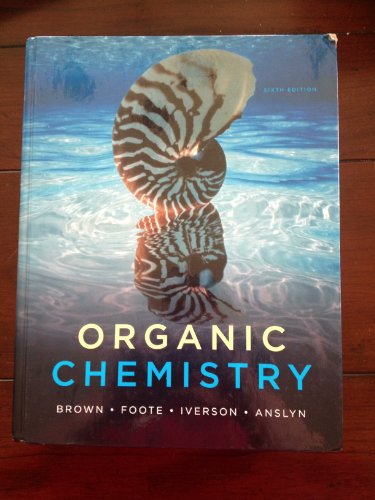
Organic Chemistry by William H. Brown, Brent L. Iverson, and Eric Anslyn (7th Edition)
- Comprehensive organic chemistry textbook
- Published by Brooks/Cole (Cengage)
- Covers reaction mechanisms with electron-pushing arrows
- Includes spectroscopy and structure determination methods
- Detailed coverage of stereochemistry and chirality
- Covers named reactions used in modern synthesis
- Includes retrosynthetic analysis techniques
- Treats functional group transformations systematically
The seventh edition of this textbook stands out for its emphasis on practical “how to” skills. Brown, Iverson, and Anslyn pack in more end-of-chapter problems and in-text examples than most competitors. The mini study guides built into each chapter are something I wish every textbook had. They give you a quick checkpoint to make sure you’ve absorbed the key ideas before moving forward.
The book features innovative roadmap problems that challenge you to plan multi-step syntheses, which is exactly the kind of thinking you’ll need for exams and beyond. Pre-med students will appreciate the numerous biological examples woven throughout. The running margin glossary is a nice touch that saves you from constantly flipping to the back of the book.
Originally priced at $359.95, you can now get it for about $58 on Amazon. That’s an 84% discount, making it an incredible bargain for a textbook of this caliber. If you’re a pre-med student looking for a textbook that connects organic chemistry to biology and medicine, this should be at the top of your list.
Organic Chemistry: A Short Course by Harold Hart
Organic Chemistry: A Short Course by Harold Hart, Christopher M. Hadad, and Leslie E. Craine
- Hardcover Book
- Hart, Harold (Author)
- Covers reaction mechanisms with electron-pushing arrows
- Includes spectroscopy and structure determination methods
- Detailed coverage of stereochemistry and chirality
- Covers named reactions used in modern synthesis
- Includes retrosynthetic analysis techniques
- Treats functional group transformations systematically
Not every student needs a 1,200-page deep organic chemistry. If you’re a biology, environmental science, or pre-nursing major who needs a solid organic chemistry foundation without the exhaustive detail, Hart’s “A Short Course” is exactly what you’re looking for. The writing style is engaging, and the book uses real-life applications to make abstract concepts stick.
Written by Harold Hart, Christopher M. Hadad, and Leslie E. Craine, the thirteenth edition includes updated art and new content that keeps the material relevant. The visual style is one of the book’s strongest features. You’ll find well-designed diagrams and illustrations that make reaction mechanisms much easier to follow than text alone.
This is the book I point non-chemistry majors toward first. It covers all the essential topics without burying you in details you’ll never use in your actual career. The range of topics is carefully chosen to match what non-chemistry science programs actually need from an organic chemistry course.
Structure and Reactivity in Organic Chemistry by Howard Maskill
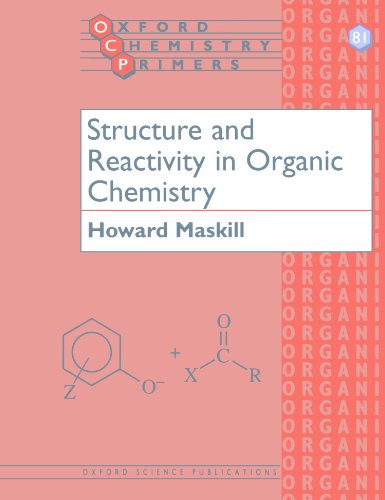
Structure and Reactivity in Organic Chemistry by Howard Maskill
- Maskill, Howard (Author)
- English (Publication Language)
- Covers reaction mechanisms with electron-pushing arrows
- Includes spectroscopy and structure determination methods
- Detailed coverage of stereochemistry and chirality
- Covers named reactions used in modern synthesis
- Includes retrosynthetic analysis techniques
- Treats functional group transformations systematically
This book is different from everything else on this list. Maskill wrote it for advanced undergraduates who want to understand the physical and mechanistic side of organic chemistry without getting bogged down in heavy mathematics. These topics are essential in modern chemistry degrees but are usually scattered across separate physical chemistry courses or skipped entirely in standard organic textbooks.
The book starts with intermolecular reactions and molecular vibrations, then introduces potential energy profiles and reaction maps to describe organic chemical transformations. From there, it explores the relationship between kinetics and organic reaction mechanisms, which is where most students start to develop real intuition about why reactions proceed the way they do.
At just $25, this is a steal for any student who wants to go deeper than a standard textbook takes you. I wouldn’t recommend this as your first organic chemistry book, but once you’ve got the basics down, Maskill’s approach will fundamentally change how you think about organic reactions. It’s the kind of book that separates students who memorize from students who truly understand.
Organic Chemistry by L. G. Wade Jr.
Organic Chemistry by L. G. Wade Jr. with MasteringChemistry (8th Edition)
- Includes MasteringChemistry access code
- Hardcover textbook by Pearson
- Covers reaction mechanisms with electron-pushing arrows
- Includes spectroscopy and structure determination methods
- Detailed coverage of stereochemistry and chirality
- Covers named reactions used in modern synthesis
- Includes retrosynthetic analysis techniques
- Treats functional group transformations systematically
Wade’s Organic Chemistry is known for two things: clarity and precision. The author takes a systematic approach to explaining organic reactivity, starting from fundamental principles and building up to complex reaction mechanisms. He maintains scientific rigor while keeping the writing engaging enough that you don’t zone out halfway through a chapter.
What I appreciate about Wade’s approach is how he develops your problem-solving strategies rather than just presenting information. Every chapter in the eighth edition includes new chapter goals, essential problem-solving strategies, and updated practice problems. This systematic methodology helps students build the scientific intuition they’ll need for future research and advanced coursework.
The book comes bundled with MasteringChemistry, Pearson’s online learning platform, which adds interactive tutorials and auto-graded homework. At $150.22 (down from $346.65), the price includes the access code. If your professor uses MasteringChemistry for assignments, this package saves you from buying the access code separately. If you’re looking for study tools that actually work for college students, the combination of Wade’s textbook and the online platform is hard to beat.
Organic Chemistry by Jones Jr. and Fleming
Organic Chemistry by Maitland Jones Jr. and Steven A. Fleming (5th Edition)
- Jones Jr., Maitland (Author)
- English (Publication Language)
- Covers reaction mechanisms with electron-pushing arrows
- Includes spectroscopy and structure determination methods
- Detailed coverage of stereochemistry and chirality
- Covers named reactions used in modern synthesis
- Includes retrosynthetic analysis techniques
- Treats functional group transformations systematically
Jones and Fleming designed this textbook to work for every kind of student. Whether you’re someone who reads the textbook cover to cover or someone who only opens it when exam week hits, the “visualize, understand, draw” approach helps either way. The emphasis on drawing molecules properly is something that many other textbooks gloss over, and it’s a skill that pays off enormously on exams.
The fifth edition has been revised to be more accessible while maintaining focus on the fundamentals. The problem sets are comprehensive and provide the kind of practice that actually prepares you for exam-style questions. Jones Jr. and Fleming don’t waste your time with filler content. Every section earns its place in the book.
At $177.77, it’s on the higher end price-wise, but the W. W. Norton publishing quality is evident in the layout, diagrams, and overall readability. If your course uses this book, you’ll appreciate how clearly it presents even the most challenging topics. The visualization exercises alone are worth the price if you’re someone who struggles to think in three dimensions about molecular structures.
Organic Chemistry: Structure and Function by Vollhardt and Schore
Organic Chemistry: Structure and Function by K. Peter C. Vollhardt and Neil E. Schore (8th Edition)
- Vollhardt, K. Peter C. (Author)
- Hardcover textbook by W. H. Freeman
- Covers reaction mechanisms with electron-pushing arrows
- Includes spectroscopy and structure determination methods
- Detailed coverage of stereochemistry and chirality
- Covers named reactions used in modern synthesis
- Includes retrosynthetic analysis techniques
- Treats functional group transformations systematically
Vollhardt and Schore are among the most respected organic chemistry educators and researchers working today. Their textbook takes a functional group approach while emphasizing how molecular structure directly influences chemical behavior. That connection between structure and function is the central theme of the book, and it gives you a framework for understanding reactions rather than just memorizing them.
What sets this book apart is how Vollhardt and Schore weave real-world applications into every chapter. You’ll see how organic chemistry applies to drug design, materials science, and biological systems. The eighth edition includes updated examples and revised problem sets that reflect current research in the field.
Originally priced at $324.99, you can grab it for around $89 on Amazon. That’s a significant discount for a textbook published by W. H. Freeman with production quality to match. If your curriculum emphasizes the relationship between structure and reactivity (as most modern programs do), Vollhardt and Schore’s approach will align well with what your professors are teaching.
Organic Chemistry by Janice Smith
Organic Chemistry by Janice Smith (6th Edition)
- Organic Chemistry 6th Edition by Janice Smith
- Smith, Janice (Author)
- Covers reaction mechanisms with electron-pushing arrows
- Includes spectroscopy and structure determination methods
- Detailed coverage of stereochemistry and chirality
- Covers named reactions used in modern synthesis
- Includes retrosynthetic analysis techniques
- Treats functional group transformations systematically
Janice Smith’s Organic Chemistry is refreshingly different from the typical dense textbook. The format relies on concise bulleted lists, minimal walls of text, and clearly labeled illustrations. If you’ve ever opened an organic chemistry textbook and felt your eyes glaze over at a full page of unbroken paragraphs, Smith’s approach will feel like a relief.
The sixth edition features a redesigned look with updated content and new practice problems. Smith’s teaching philosophy centers on making the material accessible without sacrificing accuracy. The illustrations are particularly well done. Each mechanism is broken into individual steps with clear annotations, so you can follow the electron flow without getting lost.
At $81.99 (down from $199.95), the price is reasonable for a comprehensive textbook. I’d recommend Smith’s book to visual learners and students who prefer structured, bite-sized content over long-form prose. The bulleted format makes it easier to review for exams because the key points are already pulled out for you.
Essential Organic Chemistry by Paula Bruice
Essential Organic Chemistry by Paula Yurkanis Bruice with MasteringChemistry (3rd Edition)
- Includes MasteringChemistry access code
- Hardcover textbook by Pearson
- Covers reaction mechanisms with electron-pushing arrows
- Includes spectroscopy and structure determination methods
- Detailed coverage of stereochemistry and chirality
- Covers named reactions used in modern synthesis
- Includes retrosynthetic analysis techniques
- Treats functional group transformations systematically
Paula Bruice built this textbook around a single philosophy: stop rote memorization and start understanding. She organizes the content around reaction similarities, which means you’ll see patterns across different functional groups rather than studying each one in isolation. Once you grasp these patterns, predicting the outcome of unfamiliar reactions becomes much easier.
The third edition includes contemporary biochemical connections that show how organic chemistry applies to biological systems. Bruice also added more worked examples and updated practice problems. The writing style is direct and purposeful. She doesn’t waste pages on tangential details. Every section is focused on building your analytical reasoning and problem-solving skills.
At $114.79 (down from $293.32), the package includes MasteringChemistry access for online homework and tutorials. Bruice’s approach works particularly well for students who feel overwhelmed by the sheer volume of reactions they’re expected to know. By teaching you to recognize reaction patterns, she reduces what feels like 500 individual reactions into a manageable set of core principles.
Organic Chemistry by Solomons, Fryhle, and Snyder
Organic Chemistry by T.W. Graham Solomons, Craig B. Fryhle, and Scott A. Snyder (12th Edition)
- Solomons, T. W. Graham (Author)
- Hardcover textbook by Wiley
- Covers reaction mechanisms with electron-pushing arrows
- Includes spectroscopy and structure determination methods
- Detailed coverage of stereochemistry and chirality
- Covers named reactions used in modern synthesis
- Includes retrosynthetic analysis techniques
- Treats functional group transformations systematically
Solomons, Fryhle, and Snyder have been a trusted name in organic chemistry education for decades. The twelfth edition continues their tradition of combining a functional group approach with thorough coverage of reaction mechanisms. The content strikes a balance between breadth and depth that most instructors appreciate.
One thing that sets this book apart is how the authors demonstrate the biological significance of organic molecules and reactions wherever possible. If you’re studying organic chemistry as part of a pre-med, biochemistry, or molecular biology track, you’ll find these connections extremely valuable. The problem sets are comprehensive and graded in difficulty, so you can start with basic recall questions and work up to synthesis challenges.
Priced at $121.16 (down from $329.95), it’s a solid investment for a Wiley-published textbook with a strong reputation. Solomons’ Organic Chemistry has been used in hundreds of university programs worldwide, and the twelfth edition reflects decades of refinement based on instructor and student feedback. If you want a textbook that’s been battle-tested across multiple generations of chemistry students, this is it.
How to Choose the Right Organic Chemistry Textbook
With 15 books on this list, you’re probably wondering which one is actually right for you. Here’s my quick breakdown based on your situation.
If you’re completely new to organic chemistry and feeling intimidated, start with Organic Chemistry for Dummies ($17.91) or Organic Chemistry as a Second Language ($66.84). Both are designed to build your confidence before the semester starts. They’re companions, not replacements, for your assigned textbook.
If you need a comprehensive textbook for a two-semester course, McMurry, Klein, Wade, and Solomons/Fryhle/Snyder are all excellent choices. McMurry’s writing is the clearest. Klein’s skills-based approach is the most practical. Wade pairs well with MasteringChemistry. Solomons has the longest track record.
For pre-med students, Brown/Iverson/Anslyn has the best biological examples. For non-chemistry majors, Hart’s A Short Course covers what you need without the excess. And for advanced students who want to understand the deeper physical principles behind organic reactions, Maskill’s Structure and Reactivity at $25 is an absolute bargain.
Don’t overthink the choice. Any book on this list will serve you well. What matters more is that you actually read it, work through the problems, and practice drawing mechanisms until they feel natural. The best organic chemistry book is the one you’ll actually use. If you’re building out your full study setup, take a look at my guide on essential study tools for college students as well.
Related Inorganic Chemistry Books
Organic chemistry doesn’t exist in isolation. Most courses expect you to understand inorganic chemistry concepts too, especially coordination compounds and molecular orbital theory. These companion books fill that gap.
I used Inorganic Chemistry For Dummies alongside my organic chem textbook. It’s not deep enough for a dedicated inorganic course, but it covers exactly what you need to connect the dots between organic and inorganic. For the full list, check my inorganic chemistry book recommendations.
Inorganic Chemistry For Dummies
- Covers reaction mechanisms with electron-pushing arrows
- Includes spectroscopy and structure determination methods
- Detailed coverage of stereochemistry and chirality
- Covers named reactions used in modern synthesis
- Includes retrosynthetic analysis techniques
- Treats functional group transformations systematically
- Practice problems with detailed answer explanations
- Color-coded diagrams for reaction mechanisms
Inorganic Chemistry: Reactions, Structures and Mechanisms
- Covers reaction mechanisms with electron-pushing arrows
- Includes spectroscopy and structure determination methods
- Detailed coverage of stereochemistry and chirality
- Covers named reactions used in modern synthesis
- Includes retrosynthetic analysis techniques
- Treats functional group transformations systematically
- Practice problems with detailed answer explanations
- Color-coded diagrams for reaction mechanisms
Principles of Inorganic Chemistry
- Covers reaction mechanisms with electron-pushing arrows
- Includes spectroscopy and structure determination methods
- Detailed coverage of stereochemistry and chirality
- Covers named reactions used in modern synthesis
- Includes retrosynthetic analysis techniques
- Treats functional group transformations systematically
- Practice problems with detailed answer explanations
- Color-coded diagrams for reaction mechanisms
Best E-Readers for Chemistry Students
Most of these textbooks have Kindle editions at half the print price. A dedicated e-reader means you’re not distracted by notifications while studying, which matters more than you think during a tough synthesis problem. For physical chemistry resources, see my physical chemistry books guide.
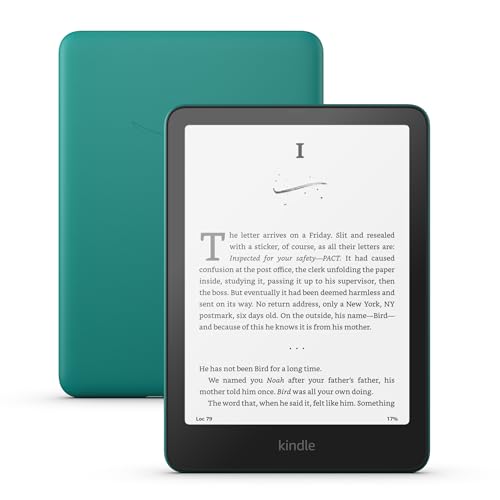
- Our fastest Kindle ever – The next-generation 7“ Paperwhite display has a higher contrast ratio and 25% faster page turns.
- Ready for travel – The ultra-thin design has a larger glare-free screen so pages stay sharp no matter where you are.
- Escape into your books – Your Kindle doesn’t have social media, notifications, or other distracting apps.
- Battery life for your longest novel – A single charge via USB-C lasts up to 12 weeks.
- Read in any light – Adjust the display from white to amber to read in bright sunlight or in the dark.
- Covers reaction mechanisms with electron-pushing arrows
- Includes spectroscopy and structure determination methods
- Detailed coverage of stereochemistry and chirality
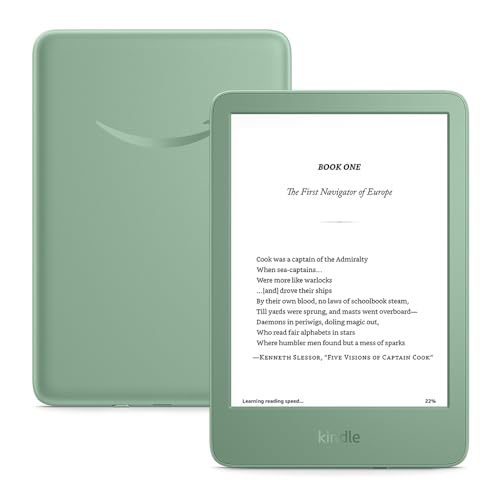
- The lightest and most compact Kindle – Now with a brighter front light at max setting, higher contrast ratio, and faster page turns for an enhanced reading experience.
- Effortless reading in any light – Read comfortably with a 6“ glare-free display, adjustable front light, now 25% brighter at max setting, and dark mode.
- Escape into your books – Tune out messages, emails, and social media with a distraction-free reading experience.
- Read for a while – Get up to 6 weeks of battery life on a single charge.
- Take your library with you – 16 GB storage holds thousands of books.
- Covers reaction mechanisms with electron-pushing arrows
- Includes spectroscopy and structure determination methods
- Detailed coverage of stereochemistry and chirality
Frequently Asked Questions
What is the best organic chemistry book for beginners?
Organic Chemistry as a Second Language by David Klein is the best starting point for beginners. It’s not a full textbook but a companion guide that teaches you how to think about organic chemistry. At around $67, it covers arrow-pushing, resonance structures, and stereochemistry in a conversational style. Organic Chemistry for Dummies by Arthur Winter is another excellent beginner-friendly option at under $18.
Which organic chemistry textbook is most commonly used in universities?
McMurry’s Organic Chemistry, Wade’s Organic Chemistry, Klein’s Organic Chemistry, and Solomons/Fryhle/Snyder’s Organic Chemistry are the four most widely adopted textbooks at universities across the US and internationally. McMurry is particularly popular for its clear writing style, while Klein is gaining adoption for its skills-based approach. Your best bet is to check which textbook your specific course requires before buying.
How much should I expect to spend on an organic chemistry textbook?
Organic chemistry textbooks range from $18 to $375 at list price. However, most books on Amazon sell well below their list price. Expect to pay between $60 and $150 for a comprehensive textbook. Budget picks like McMurry’s Fundamentals ($38), Maskill’s Structure and Reactivity ($25), and Organic Chemistry for Dummies ($18) offer solid coverage at lower price points. Used copies and older editions can save you even more without sacrificing content quality.
Can I use an older edition of an organic chemistry textbook?
Yes, in most cases. The core concepts of organic chemistry haven’t changed dramatically between editions. Newer editions typically add updated practice problems, refined diagrams, and contemporary examples, but the fundamental content remains the same. The main issue is if your professor assigns homework problems by page number from a specific edition. In that case, you’ll need the matching edition. Otherwise, buying one edition older can save you 50-70% with minimal downside.
Is organic chemistry really as hard as people say?
Organic chemistry is challenging, but it’s not impossible. The subject gets its reputation because students approach it the wrong way. Trying to memorize hundreds of reactions without understanding the underlying mechanisms is a recipe for failure. If you focus on understanding electron flow, arrow-pushing, and reaction patterns, the subject becomes much more manageable. A good textbook combined with consistent practice makes all the difference. Most students who struggle are either using the wrong study methods or not putting in enough practice with mechanism problems.
What’s the best organic chemistry book for pre-med students?
Brown, Iverson, and Anslyn’s Organic Chemistry has the most biological examples woven into the content, making it ideal for pre-med students. Bruice’s Essential Organic Chemistry also makes strong biochemical connections. Both books show how organic reactions relate to biological systems, drug design, and metabolic pathways. For pre-med students, I’d also recommend supplementing with Klein’s Second Language series for building foundational skills.
Should I buy a physical textbook or a digital version?
For organic chemistry specifically, I’d recommend a physical textbook if your budget allows it. You’ll frequently need to flip back and forth between reaction tables, mechanism reference pages, and practice problems. Physical books make this much faster than scrolling through a digital version. That said, Kindle editions are significantly cheaper and let you search for terms instantly. If portability matters to you, a digital version plus a printed companion guide like Klein’s Second Language works well as a hybrid approach.
How should I study organic chemistry effectively?
Focus on understanding mechanisms, not memorizing reactions. Practice drawing reaction mechanisms by hand every single day. Use your textbook’s practice problems religiously. Don’t just read the solutions. Attempt every problem yourself first. Study in short, focused sessions of 45-60 minutes rather than marathon cramming. Join or form a study group where you explain concepts to each other. Teaching a topic is the fastest way to identify gaps in your understanding. And start early. Organic chemistry rewards consistent daily practice over last-minute review.