
 by
byThe best mass communication colleges in India, on the India Today rankings: IIMC New Delhi first, AJK MCRC at Jamia Millia Islamia second, and the Symbiosis Institute of Media and Communication in Pune third. IIMC is the postgraduate standard, and government fees keep it between ₹50,000 and ₹2 lakh for the programme.
AJK MCRC is the one worth arguing for. Jamia sits thirteenth overall on NIRF at 66.99, and its media centre runs production studios and Delhi industry ties that most private schools charge four times as much to approximate, at ₹60,000 to ₹1 lakh a year. If you’re choosing on value rather than brochure, that’s the pick.
The industry these colleges feed has changed shape: print and traditional broadcast have shrunk, and digital, podcasting and brand content absorbed the difference. Pick accordingly. For how media compares against the other streams, see my comparison of the best colleges in India.
This list is based on factors like faculty expertise, industry connections, placement records, course curriculum, and campus infrastructure. I focused on colleges that consistently produce media professionals working at top organizations across India.
Best journalism colleges in India and top mass communication institutes
NIRF doesn’t publish a mass communication category, so this table runs on the India Today rankings plus each institution’s NIRF standing where one exists. Fees are indicative per year unless noted.
| Rank | Institute | City | Type | Entry | Fees |
|---|---|---|---|---|---|
| 1 | IIMC | New Delhi | Government, PG | CUET PG | ₹50,000 to ₹2L total |
| 2 | AJK MCRC, Jamia | New Delhi | Central university | Jamia entrance | ₹60,000 to ₹1L/yr |
| 3 | SIMC Pune | Pune | Private | SNAP plus SIMC process | ₹5L to ₹8L total |
| 4 | Xavier Institute of Communications | Mumbai | Private | Own entrance | ₹2L to ₹4L |
| 5 | Asian College of Journalism | Chennai | Private | Own entrance | ₹4L to ₹6L |
| 6 | Delhi University (Journalism) | Delhi | Central university | CUET UG | DU band, very low |
| 7 | Manipal Institute of Communication | Manipal | Private | Own entrance | ₹3L to ₹5L |
| 8 | Christ University | Bengaluru | Private | Own entrance | ₹2L to ₹4L |
Which media school fits the job you actually want
Journalism, corporate communication and film are three different careers, and the schools that feed them barely overlap.
| If you want | Top pick | Runner-up | Why |
|---|---|---|---|
| Hard news journalism | IIMC New Delhi | Asian College of Journalism | The postgraduate standard, and the newsroom pipeline to match |
| Broadcast and production | AJK MCRC, Jamia | SIMC Pune | Production studios and Delhi industry ties at central-university fees |
| Corporate communication and PR | SIMC Pune | Xavier Institute of Communications | Built for brand-side and agency roles rather than newsrooms |
| Digital media and content | SIMC Pune | Christ University | The curriculum that adapted fastest as print shrank |
| Advertising | Xavier Institute of Communications | MICA Ahmedabad | Mumbai agency access, and XIC’s copy training is the strongest in India |
| The lowest cost credible route | AJK MCRC, Jamia | Delhi University | ₹60,000 to ₹1 lakh a year against ₹5 lakh-plus at the private schools |
| Film and documentary | FTII Pune | AJK MCRC, Jamia | FTII remains the only serious film-school answer in the country |
Top Mass Communication Colleges for 2026
The 2026 top tier in Indian mass communication education. 1. Indian Institute of Mass Communication (IIMC), Delhi: government, low fees (~₹70K-1L/year), highly selective (admission via national entrance exam), strong placements in traditional media plus growing digital placements. 2. Asian College of Journalism (ACJ), Chennai: private, mid-tier fees (~₹4-6 lakh for the full PG program), excellent reputation for serious journalism. 3. Symbiosis Institute of Media and Communication (SIMC), Pune: private, ~₹5-7 lakh/year, broad media curriculum, good corporate-communication placements. 4. Xavier Institute of Communications (XIC), Mumbai: long-established Jesuit institution, focused on social-purpose journalism and communication.
5-10 (still very good): Jamia Millia Islamia (AJK MCRC), Indian Institute of Journalism and New Media (IIJNM, Bangalore), Manorama School of Communication (Kottayam), Manipal Institute of Communication, Indraprastha College for Women (DU). The 2026 reality for mass-comm graduates: traditional journalism placements have shrunk (newspapers, TV channels have reduced hiring); digital media, content marketing, corporate communications, and podcast/video production have grown. The institutions that have adapted curricula toward digital storytelling, data journalism, and platform-native content production place graduates substantially better. Verify each program’s current placement report; ignore brochure claims that are 5+ years old.
Best Mass Communication Colleges in India (Ranked)
- Symbiosis Institute of Media and Communication, Pune
- Christ University, Bangalore
- Madras Christian College, Chennai
- St. Xavier’s College, Mumbai
- Institute of Mass Communication, Kurukshetra University
- Indian Institute of Mass Communication (IIMC), New Delhi
- AJK Mass Communication Research Centre, Jamia Millia Islamia
- Dept. of Media Studies, Savitribai Phule Pune University
- Manipal Institute of Communication, MAHE
- Manorama School of Communication (MASCOM), Kottayam
Symbiosis Institute of Media and Communication (Under Graduate), Pune

Symbiosis Institute of Media and Communication (SIMC)
- Location: Pune, Maharashtra
- Courses: BA in Media Studies, PG Diploma
- Established: 2008
- Affiliation: Symbiosis International University

One of India’s most critically acclaimed mass communication colleges, SIMCUG Pune is a part of Symbiosis society and is affiliated with Symbiosis International University, Pune.
Starting in 2008, this college has risen as a symbol of excellence in Indian media education. Symbiosis Institute offers three years long courses in Bachelor of Media Studies.
SIMCUG Pune has a welcoming and competitive learning environment for students. It provides seminars, fieldwork, case studies, and regular academic activities to help them learn more.
In addition, it has a technologically focused research culture and offers comprehensive academic placement programs that help students obtain excellent job placements. The critical faculty members at SIMCUG Pune have extensive industrial, educational, and research experience, and its visiting and guest lecturers work in the media industry.
Christ University, Bangalore

Christ University
- Location: Bangalore, Karnataka
- Courses: BA in Journalism, MA in Media Studies
- Established: 1969
- Department: Media Studies (3 decades legacy)
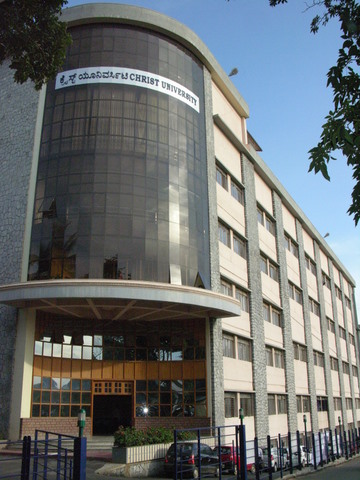
Christ University offers three years of degree-level courses in Journalism under their Arts faculty. It is one of the best in the country in most of the courses and being one of the best mass communication colleges is just another perk of its reputation.
The Department of Media Studies at Christ University boasts a rich legacy spread over three decades and has emerged as one of the trustworthy leaders in the domain of media education. It combines communication and journalism to create a professional and effective approach to communication studies. It provides several opportunities to help students deepen their disciplinary knowledge, hone academic and professional skills, and nurture an attitude of professional and societal service.
Madras Christian College, Chennai

Madras Christian College (MCC)
- Location: Chennai, Tamil Nadu
- Courses: Visual Communication, Journalism, Electronic Media
- Established: 1837
- Programs: UG and PG courses
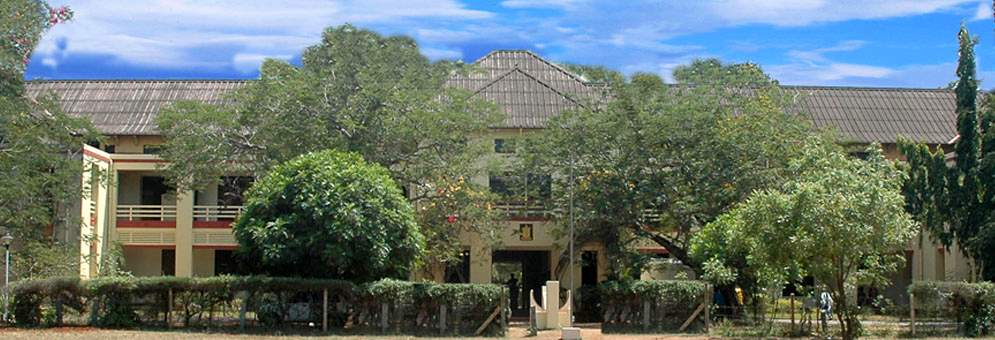
MCC Chennai has several Mass Media and Communications courses, including undergraduate and postgraduate courses in Visual Communication, Journalism and Electronic media.
In 2005, the college introduced a programme in journalism that provides specialization in the field of print (newspaper and magazine) and broadcast (television and radio) media, photography and videography (documentary filmmaking), web designing, research, development communication, public relations, and advertising and film journalism. To meet the industry requirements, it is revised at regular intervals with subject experts and journalists from various organizations, creating more employment opportunities for the students.
St. Xavier’s College, Mumbai
St. Xavier's College
- Location: Mumbai, Maharashtra
- Courses: Bachelor of Mass Media (BMM)
- Duration: 3 years full-time
- Focus: Journalism, Mass Communication

St. Xavier’s college offers three years B. M. M. (Bachelor of Mass Media) courses for media students.
The course is a full-time, postgraduate diploma programme that provides instruction in the role and function of journalism and mass communication. It effectively combines the creation and dissemination of knowledge to impart the requisite skills and context with practical projects, including in-class assignments. After completing the course, students will have diverse skills and the ability to perform tasks in journalism, mass communication and social interactions.
Institute of Mass Communication and Media Technology, Kurukshetra University
Institute of Mass Communication, Kurukshetra University
- Location: Kurukshetra, Haryana
- Courses: BA/MA/MSc in Mass Communication
- Students: 570+ with 265 annual intake
- Specialties: Animation, Graphics, Gaming
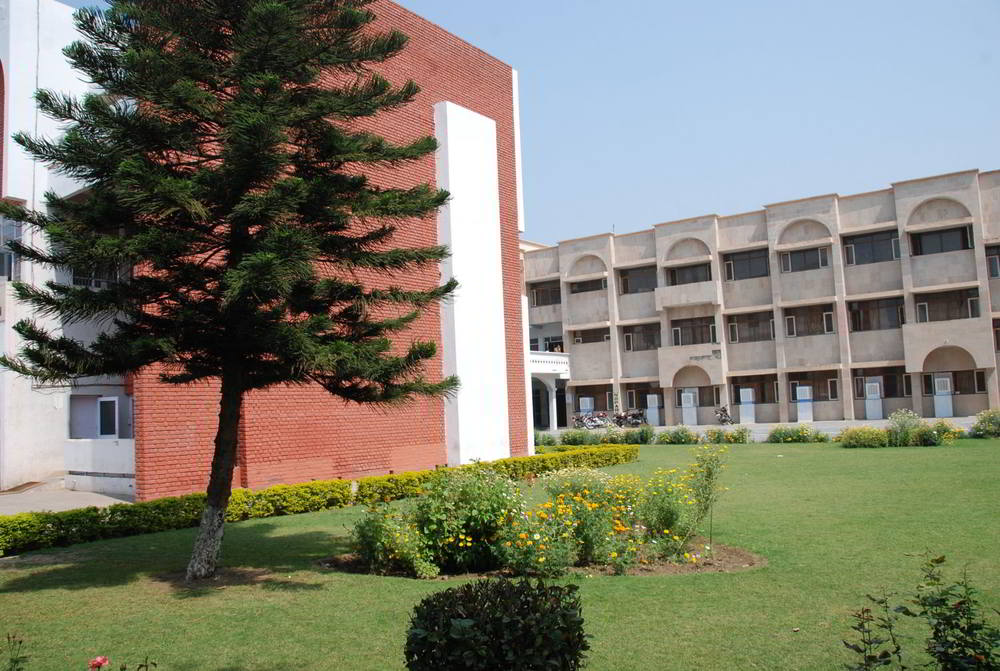
The Institute of Mass Communication and Media Technology (IMCMT) offers several media courses at Kurukshetra University. Interested students can opt for B. A./M. A./ M. Sc. in Mass Communication, B. Sc. in Multimedia & Graphics and M. Sc. in Electronic Media.
Some of the institute’s courses are remarkably innovative and unique. For example, its courses in animation, graphics and gaming are the only graduate courses available in north India. As of now, it offers ten media courses with an intake of 265 students every year. With over 570 students, more than 30 members, and state-of-art equipment and infrastructure, the IMC&MT is arguably the largest media institute in the country.
Indian Institute of Mass Communication (IIMC), New Delhi

Indian Institute of Mass Communication (IIMC)
- Location: New Delhi
- Established: 1965
- Courses: PG Diploma in various media disciplines
- Funding: Ministry of Information and Broadcasting
Founded in 1965, the Indian Institute of Mass Communication aims to set global standards for media education, research, extension and training using state-of-the-art technology. The IIMC Society is an autonomous body registered under the Societies Registration Act 1867 and is responsible for running the Institute. The Government of India funds it through the Ministry of Information and Broadcasting, Govt. of India. The institute considers mass communication as an imperative for development and offers carefully tailored training programs meet the specific needs of our country.
Over the past decade, it has expanded its academic activities and started various specialized courses to meet the manpower requirements of the rapidly expanding media and communication industry. The syllabi are reviewed every year to make changes and suitable modifications to make them relevant to the needs of the industry.
AJK Mass Communication Research Centre, Jamia Millia Islamia

AJK Mass Communication Research Centre, Jamia Millia Islamia
- Location: New Delhi
- Established: 1982
- Courses: Graduate and Post-graduate media programs
- Collaborations: Univ. of York, Westminster, Sciences Po
The AJK Mass Communication Research Centre is a premier Indian media institution, founded in 1982 by Anwar Jamal Kidwai (former VC of Jamia Millia Islamia and later, Chairman of the Centre). It offers graduate and post-graduate courses in the art, craft and technology of modern media. The institute has gained a reputation of providing the highest standard of media education and training.
It strives to offer comprehensive and cooperative media education that enables students to advance their individual expertise and talents within a healthy and collaborative working environment. To provide global exposure and expertise to students, the institute has also produced collaborative ties with the University of York, Toronto (Canada), the University of Westminster, London (UK) and Sciences Po, Paris (France).
Department of Media and Communication Studies, Savitribai Phule Pune University

Dept. of Media and Communication Studies, Savitribai Phule Pune University
- Location: Pune, Maharashtra
- Established: 1990
- Courses: MPhil, PhD, MSc Media Studies
- Focus: Research, Teaching, and Production
The Department of Media and Communication Studies (DMCS) at Savitribai Phule Pune University was established in July 1990. It offers M.Phil. and Ph.D. Media and Communication Studies and M.Sc. Media and Communication Studies as a part of the science faculty. Over the years, the course has also incorporated emerging areas in the fields of mass communication, interpersonal and organizational communication.
The most important and unique aspect of these courses is the way they bring together research, teaching and production. The DMCS has a plethora of facilities, equipment and instruments to train its students for the industry. These include a fully equipped computer lab, digital broadcast cameras, classrooms powered by the latest teaching apparatuses, an independent library, and an industry NLE Console.
Manipal Institute of Communication, MAHE

Manipal Institute of Communication, MAHE
- Location: Manipal, Karnataka
- Courses: MA in Media and Communications (MAMC)
- Duration: 2 years post-graduate
- Specialties: Print, TV, Radio, Digital Media
The MA in Media and Communications (MAMC) offered at Manipal Institute of Communication, MAHE, is a two-year postgraduate degree program that exposes students to aesthetic, critical, theoretical, and technological processes involved in different stages of media production. Its goals are:
- To help students interested in entering the media industry with mastering the skills needed to become an expert media professional and communication executive
- To aid students keen on research and doctoral studies in strengthening their conceptual underpinnings in media and communication studies research
By the end of this course, students will become competent communication professionals with specialized knowledge in the areas of print journalism, corporate communications management, TV and radio production, media research, and digital news and entertainment content production.
Manorama School of Communication (MASCOM), Kottayam

Manorama School of Communication (MASCOM)
- Location: Kottayam, Kerala
- Established: 2002
- Courses: PG Diploma in Journalism
- Recruiters: DNA, Network18, PTI, Hindustan Times
Founded in 2002 by K.M. Mathew, the MASCOM aims to inculcate in students an understanding of the crucial role of journalists in Indian society and help them develop a deep appreciation for the significance of meticulous research and careful analysis. It strives to give them hands-on experience in the functioning of large and small media organisations.
As of now, MASCOM offers postgraduate diploma courses across two streams – Print and Digital Journalism and Broadcast and Digital Journalism. The institute has state-of-the-art facilities such as smart classrooms, a modern computer lab, and a well-stocked library. Some of the top recruiting companies that regularly visit the MASCOM campus for placements include DNA, Network18, Press Trust of India, The Hindustan Times, and Indian Express.
Don’t just look at the college name. Check their placement records, alumni network, and whether they offer practical training through live newsrooms, production studios, or industry internships. The best media education combines theory with hands-on experience.
Mass Media or Mass communication is a tool for transferring information and ideas to the masses. Indian media is about two centuries old. Starting with print, it has ultimately evolved into many new dimensions. From newspaper journalism to TV anchoring, media were and will always be, very important to a democratic India. This is one reason enough to explain why BMM and MMC courses have seen an evolution in recent years.
What are the best mass communication colleges in India?
The top mass communication colleges in India include Symbiosis Institute of Media and Communication (Pune), Indian Institute of Mass Communication (New Delhi), Christ University (Bangalore), AJK Mass Communication Research Centre at Jamia Millia Islamia, and Manipal Institute of Communication.
What is the eligibility for mass communication courses?
Most undergraduate mass communication programs require a 10+2 pass from a recognized board. Postgraduate programs typically need a bachelor’s degree in any discipline. Entrance exams and personal interviews are common selection methods.
What is the average salary after a mass communication degree?
Entry-level salaries in mass communication typically range from INR 3-5 lakhs per annum. With experience and specialization in areas like digital media, advertising, or broadcast journalism, professionals can earn INR 8-15 lakhs or more.
What are the career options after mass communication?
Graduates can pursue careers in journalism, advertising, public relations, digital marketing, content creation, filmmaking, radio broadcasting, corporate communications, and media research. Many also work as independent media consultants.
Is mass communication a good career choice?
Mass communication offers excellent career prospects, especially with the growth of digital media. The industry needs skilled professionals who can create compelling content across multiple platforms. Job opportunities exist in both traditional and new media organizations.
What entrance exams are required for mass communication colleges?
Common entrance exams include the IIMC entrance test, IPU CET, SET (Symbiosis Entrance Test), CUET, and various university-specific exams. Some private colleges also accept direct admissions based on 10+2 marks and interviews.
What is the difference between mass communication and journalism?
Journalism is a subset of mass communication that focuses specifically on news gathering, reporting, and editing. Mass communication is broader and includes advertising, public relations, film studies, digital media, and corporate communication alongside journalism.
Which city is best for studying mass communication in India?
Delhi, Pune, Mumbai, and Bangalore are considered the best cities for mass communication studies. They offer proximity to media houses, production studios, and advertising agencies, providing better internship and placement opportunities.
In India, there are around 1500 recognized colleges and universities offering graduate courses in Mass Communication. Out of those 1500, these are the best mass communication colleges in India.
Tell Google you want more of this.
Add Gaurav Tiwari as a preferred sourceOne tap, and this site shows up more often in your own Top Stories, AI Overviews and AI Mode. Remove it any time.