
Student Help · free download
You thought being feared would get you what you wanted. It doesn’t.
Bullying leaves marks, and not only on the people it lands on. This guide is written to the person who did it, is done with it, and wants a route back that involves more than saying sorry.
Free on this site · no payment · written to the student, not about them
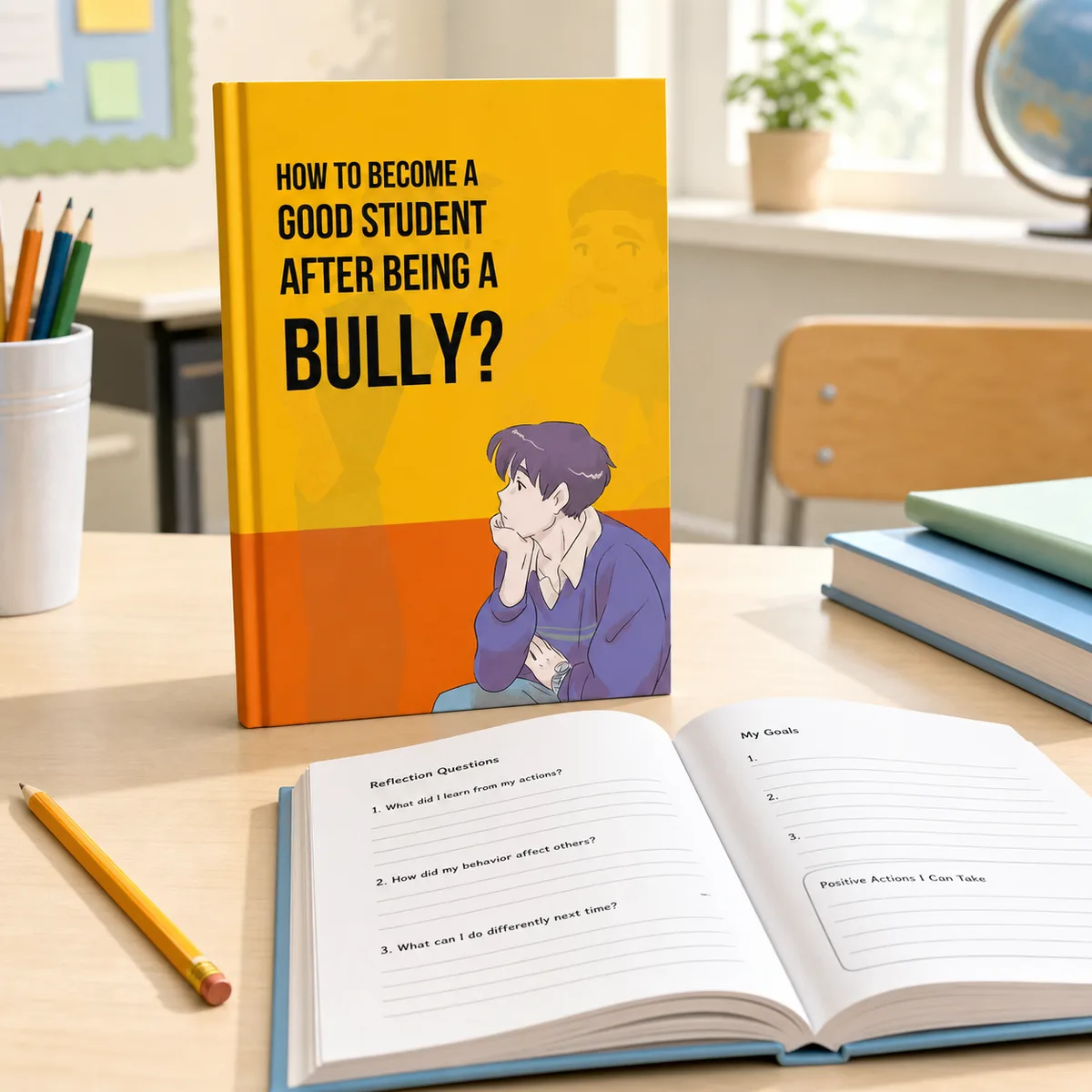
What’s inside
Two sides of the same change: the relationships, and the schoolwork.
The guide walks through why it happened, how to make amends in a way people can believe, and how to become someone with a solid foundation instead of a reputation.
Why you did it
- Thinking it wasn’t a big deal
- Wanting to fit in with a group
- Passing along what someone did to you
- Recognizing patterns instead of making excuses
Apologizing properly
- Approaching people you hurt
- Why words alone don’t rebuild trust
- Showing sincerity through actions
- Being patient when they don’t believe you yet
Getting organized
- A folder for each subject
- Bookmarks that keep your place
- Preparing materials the night before
Paying attention in class
- Taking notes that are worth reading again
- Asking questions without fear
- Avoiding distractions from others and from yourself
Study habits that hold
- Mind mapping when a subject feels overwhelming
- Breaks every two hours to keep your brain sharp
- Studying with the people you bullied, as accountability
The legal reality
- Where bullying crosses into harassment
- States with laws that target it specifically
- Why fear is the wrong motivation to change
Your grades matter. Your character matters more. The guide treats both as the same project.
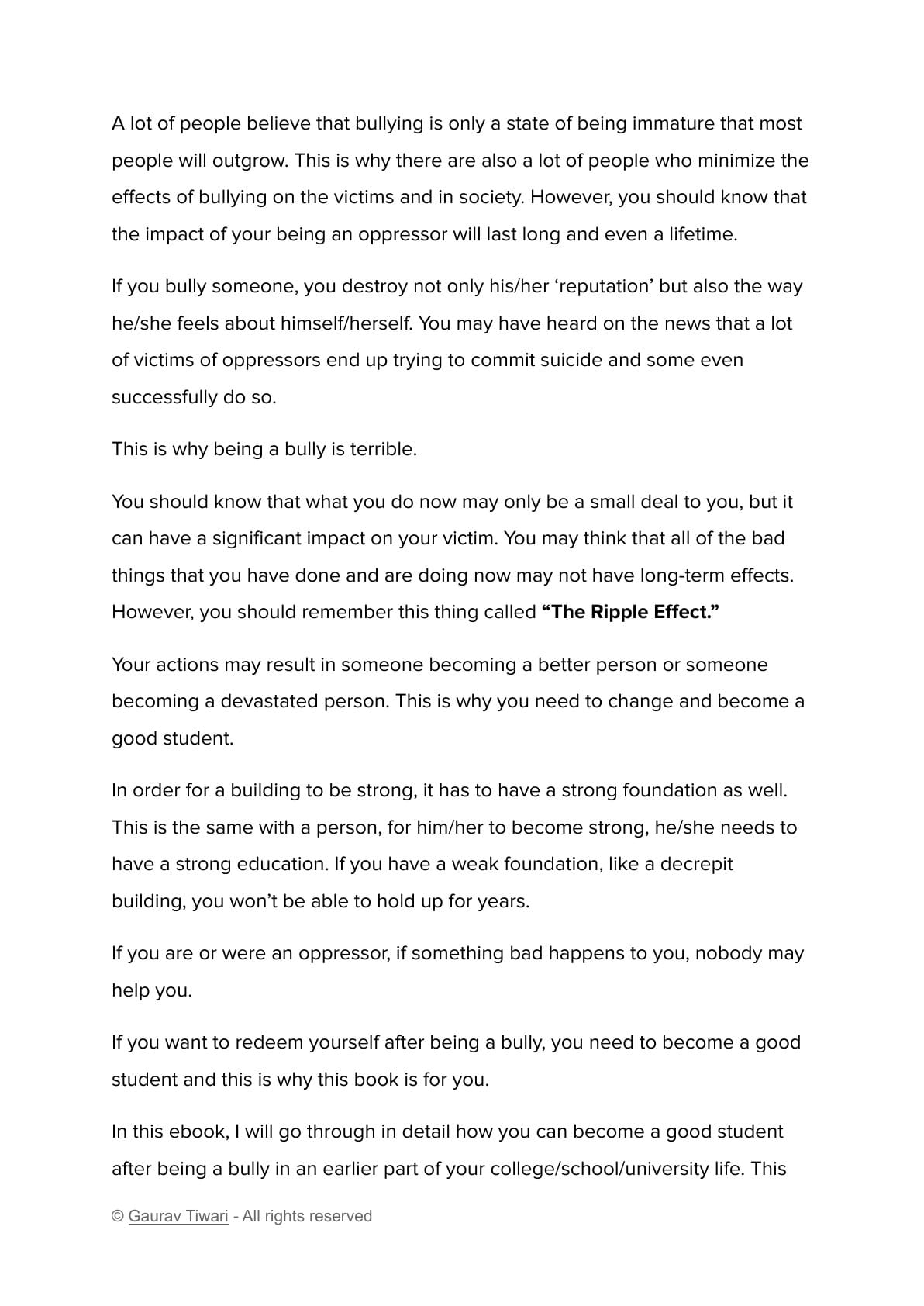
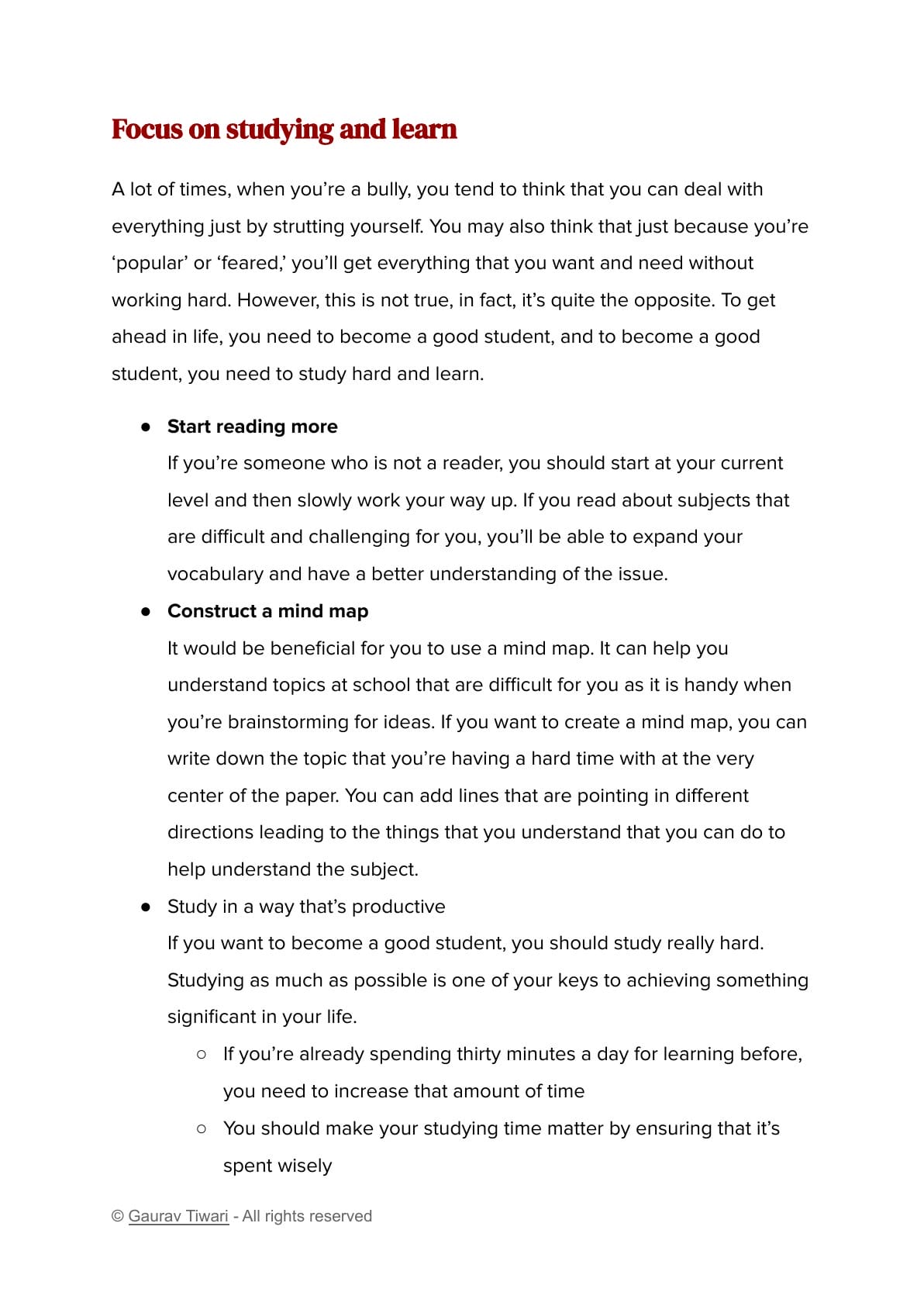
Look inside the book.
Preview the writing, structure, and page layout before you decide.
Get the guide
Bully to Better Student
Free
Free on this site · no payment · download link issued at checkout
- Name the pattern that got you here, without turning it into an excuse
- Apologize in a way that carries actions behind it, not just the word sorry
- Rebuild trust with people who have good reason to withhold it for a while
- Set up an organization system: a folder per subject, materials ready the night before
- Take notes and ask questions in class without worrying about how it looks
- Understand where bullying crosses into harassment, and what the law says about it
No payment. Checkout creates your download link instantly.
How to actually use it
Read it once, then do the uncomfortable part first.
1. Start with the reasons
Read the first section and work out which reason was actually yours. It isn’t about excusing it. It’s about seeing the pattern well enough to break it.
You leave with: the pattern named.2. Apologize, then keep showing up
Approach the person, say it, and then prove it over weeks. Walk with someone you used to ignore. Help when you can. Expect to be doubted for a while.
You leave with: an apology people can check against your behavior.3. Fix the school basics
Folders per subject, materials packed the night before, notes in class, distractions handled. Mind mapping when a subject feels like too much.
You leave with: a week that runs on a system.4. Study with the people you hurt
Ask them to review your notes. Do homework together. It repairs the relationship and keeps you accountable at the same time.
You leave with: amends and accountability in one habit.Questions before you download
Answered straight, without a lecture.
Is this for someone being bullied?
No. It’s written to the person who did the bullying and wants to stop being known for it. That’s an unusual audience for a guide, and it’s the whole point of this one.
Why is there a study skills section in a guide about bullying?
Because being feared or popular doesn’t get you what you actually want. What matters is becoming someone with a solid foundation, and that starts with how you approach school.
What if they don’t forgive me?
That’s likely at first. People who have been bullied struggle to trust, and earning that back takes time. The guide covers showing sincerity through actions, then being patient while those actions accumulate.
Is the legal section meant to scare me?
No, and fear is the wrong motivation anyway. Bullying can cross into harassment, and some states have laws that target it specifically. Knowing the landscape is just part of growing up.
Isn’t understanding my reasons just an excuse?
Only if you stop there. The reason matters because it’s the pattern, and you can’t break a pattern you haven’t looked at.
Does it really cost nothing?
Nothing. Checkout is there to create your download link, and no payment is taken.
What I’m not going to claim
This doesn’t undo anything. It’s a framework for changing what you do next, and the people you hurt get to decide how they feel about that on their own schedule.
It also isn’t counselling, and it isn’t written by a counsellor. If something bigger is driving this, a school counsellor or another adult you trust is a better first stop than a guide.
And it’s short and free. It’s a starting framework for a student who’s tired of being known for the wrong reasons, not a program. If you want the work to hold, the work happens after you close the file.

Hey, I’m Gaurav 👋
I spent years teaching students, and the ones who turned things around rarely did it through a big dramatic moment. They did it by changing something small and boring, like how they packed their bag the night before, and then holding it long enough that people noticed a different person.
The numbers, since you probably won’t read a full bio:
- 18 years building on the web, and a WordPress core contributor
- 2,000+ articles published since 2008, a lot of them written for students
- 850+ clients delivered, which is the work that keeps this shelf free
This one stays free here permanently. It’s aimed at someone who probably isn’t going to ask a parent to buy them a book about it.
Start today
Being in control of who you become is the only part nobody else decides.
Not your circumstances. Not the group you were trying to impress. You. Read it tonight, and start with the reasons.
Free here · no payment · download link issued at checkout