
How Profitable is an Online Boutique Business?
I’ve watched dozens of clients launch online boutiques over the years, and the question I hear most is: “Can I actually make money doing this?” The short answer is yes. The longer answer involves understanding exactly where your money goes, what margins look like in fashion e-commerce, and which tools give you an edge over the competition.
According to Statista, e-commerce apparel revenue in the US alone reached $183.6 billion in 2022 and is projected to hit $305.2 billion by 2027. The opportunity is real. But opportunity and profit aren’t the same thing. Let me walk you through what it actually takes to run a profitable online boutique in 2026.
Typical Expenses of an Online Boutique

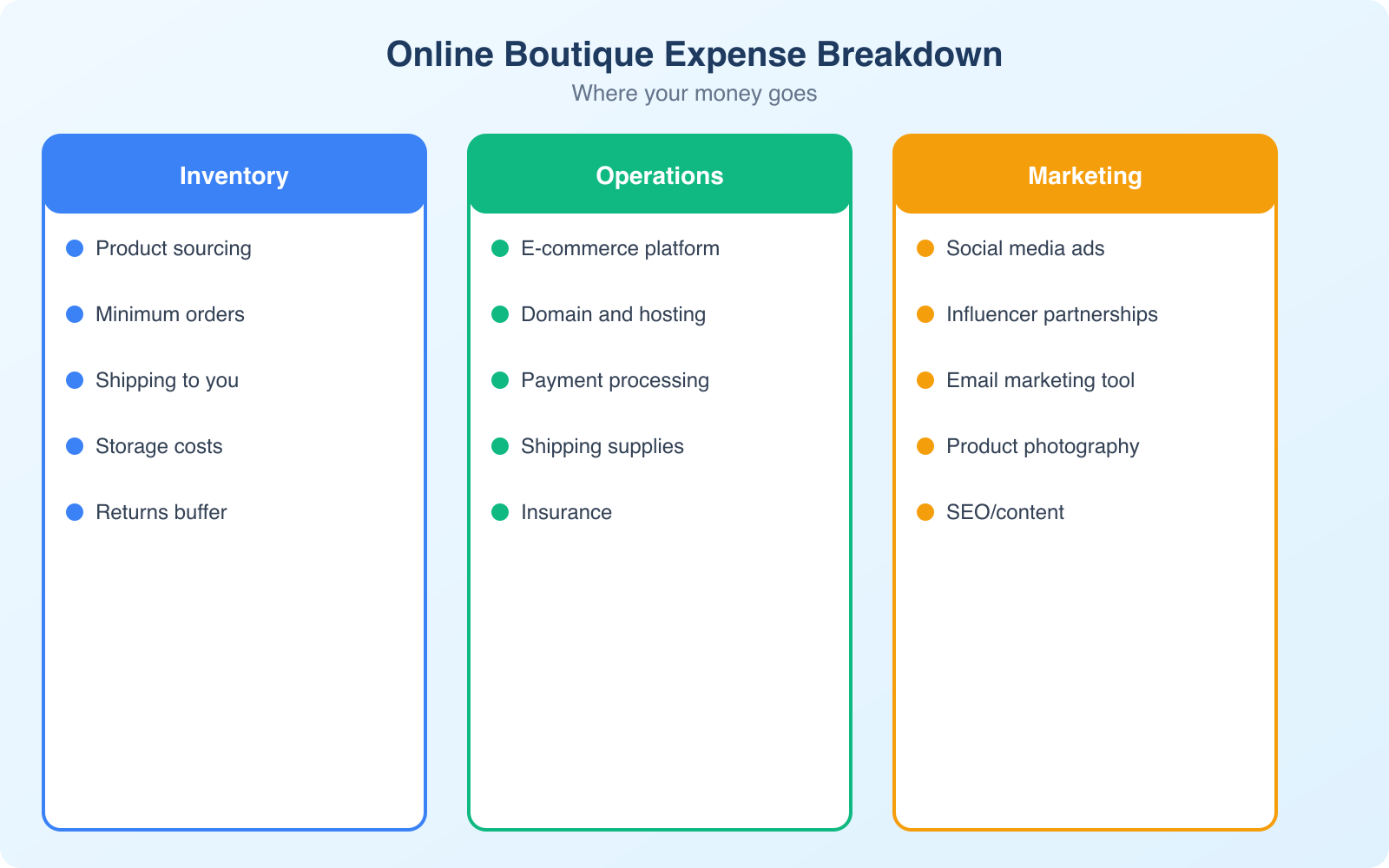
Before you can calculate profit, you need to understand where your money goes. I’ve broken down the major cost categories that every online boutique owner faces, regardless of niche or scale.
Cost of goods sold (COGS) is your biggest expense. This includes everything you spend to acquire or produce the clothing you sell. For most boutiques, COGS runs between 40-60% of revenue. If you’re sourcing from wholesale suppliers, expect to pay roughly 50% of your retail price per item. Handmade or custom pieces can push this lower (30-40%), but they limit your volume.
Inventory storage costs depend on your model. Dropshipping eliminates warehousing costs entirely, but you sacrifice control over shipping speed and quality. If you hold inventory, budget $200-$800/month for storage depending on your volume. Some boutique owners start from a spare bedroom and scale to a small warehouse as orders grow.
Website and platform fees replace the rent you’d pay for a physical storefront. This includes your domain name ($10-15/year), hosting or e-commerce platform subscription ($29-299/month depending on Shopify, WooCommerce, or similar), SSL certificates, and payment processing fees (typically 2.9% + $0.30 per transaction). For a WordPress-based boutique, I’d recommend Cloudways for hosting. You get managed cloud hosting with fast load times, which directly impacts your conversion rate. A 1-second delay in page load can cost you 7% in conversions.
Bookkeeping is non-negotiable. Whether you use QuickBooks ($25-75/month) or hire a part-time bookkeeper ($300-500/month), you need accurate financial tracking. Tax season for e-commerce businesses with multi-state sales tax obligations can be brutal without proper records.
Marketing costs are where most boutique owners either underspend or overspend. Plan for 10-20% of your revenue going toward paid ads, email marketing tools, and influencer partnerships. Facebook and Instagram ads typically cost $0.50-$2.00 per click for fashion brands, while Google Shopping ads can run $0.30-$1.50 per click.
Packaging and shipping costs add up fast. Custom branded packaging ranges from $1-5 per order. Shipping costs depend on your carrier and whether you offer free shipping (which 75% of consumers now expect). Budget $4-12 per domestic order if you’re absorbing shipping costs.
Don’t offer free shipping on everything from day one. Set a minimum order threshold ($50-75) for free shipping. This increases your average order value while keeping shipping costs manageable. I’ve seen boutiques increase AOV by 25-30% with this one change.
Realistic Profit Margins for Online Boutiques
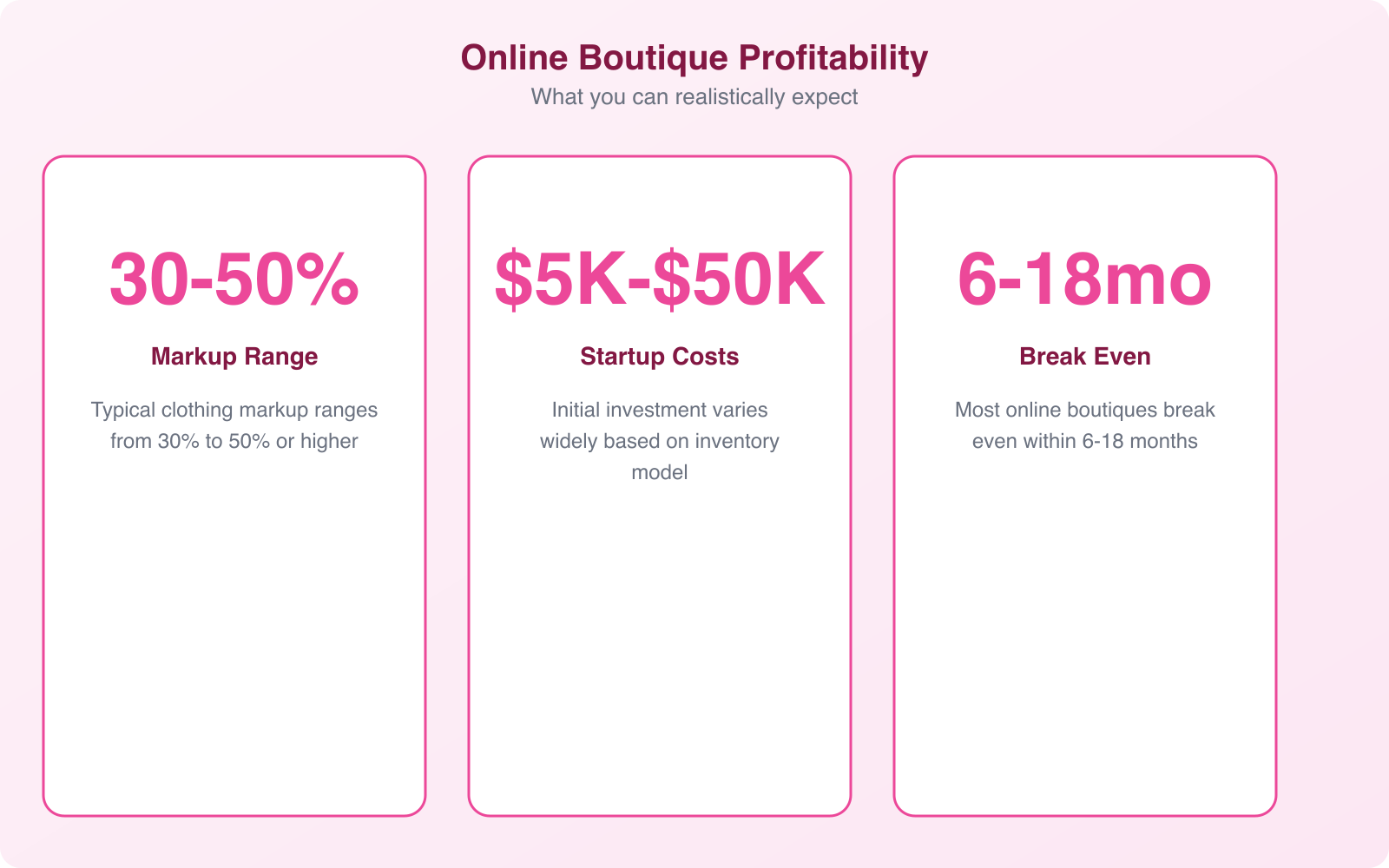
Let’s talk real numbers. The fashion e-commerce industry sees average gross margins between 40-60%, but net profit margins (what you actually keep) typically fall between 10-20%. Here’s how that breaks down for a boutique doing $500,000 in annual revenue.
Revenue: $500,000. COGS (45%): $225,000. Gross profit: $275,000. From that gross profit, subtract operating costs: marketing ($75,000), website and tools ($15,000), shipping ($40,000), salaries or contractor costs ($80,000), packaging ($10,000), and miscellaneous expenses ($15,000). That leaves you with a net profit of approximately $40,000, or an 8% net margin.
That 8% might sound low, but here’s the thing: most boutiques in their first year operate at break-even or a small loss. By year two or three, as you optimize your supply chain and marketing, net margins of 15-20% are achievable. I’ve seen well-run boutiques hit 25% net margins once they’ve built a loyal customer base and dialed in their advertising spend.
Key Factors That Affect an Online Boutique’s Profitability
Profitability isn’t random. It’s the result of getting a handful of critical decisions right. Here are the factors that separate profitable boutiques from ones that struggle.
Target Audience
Understanding who you’re selling to changes everything. A boutique targeting women aged 25-35 who care about sustainable fashion will price, market, and source differently than one targeting budget-conscious college students. The more specific your audience, the easier it is to create products and messaging that convert.
Loyal customers who identify with your brand make repeat purchases. Repeat customers spend 67% more than new ones on average. That’s why building a customer profile early matters. Use tools like Google Analytics and your e-commerce platform’s built-in analytics to track who’s buying, what they’re buying, and how often they come back.
Product Selection and Sourcing
Your product mix makes or breaks your margins. Offering unique, high-quality clothing that you can’t find at every other online store lets you command higher prices. If you’re selling the same fast-fashion items available on Amazon, you’re competing on price alone, and that’s a race to the bottom.
If you want to test products without buying inventory upfront, Spocket lets you dropship curated fashion and lifestyle products from US and EU suppliers with branded invoicing. This approach keeps your startup costs under $500 while you validate demand.
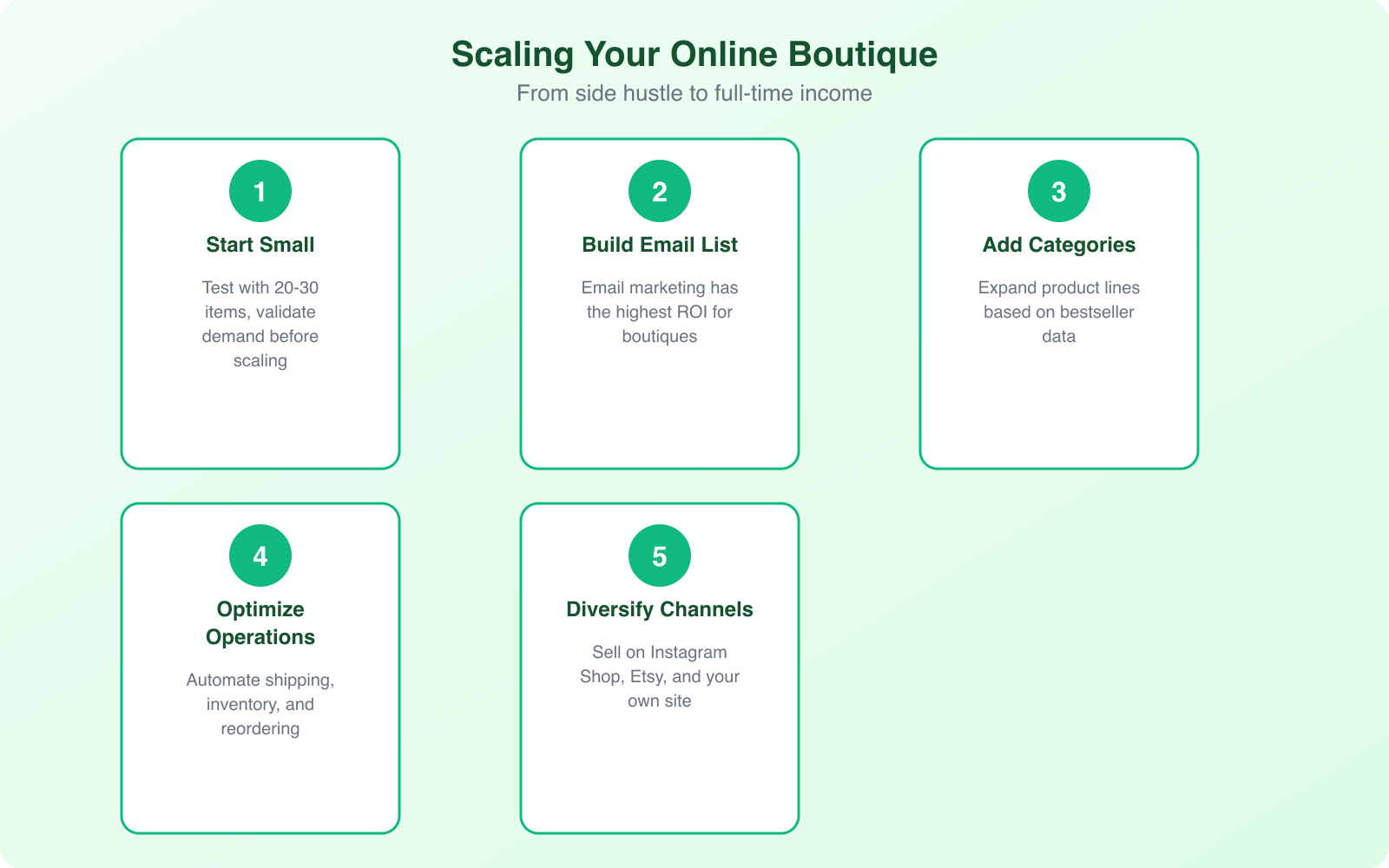
Niche selection matters too. Boutiques focused on a specific category (plus-size workwear, vintage-inspired dresses, sustainable activewear) consistently outperform generalist stores. You don’t need 500 SKUs. Start with 30-50 carefully curated items and expand based on what sells.
Inventory Management
Too much inventory ties up cash and leads to markdowns. Too little means you’re missing sales. The sweet spot is a just-in-time approach where you reorder based on sell-through rates rather than gut feelings.
Track your inventory turnover ratio. A healthy fashion e-commerce business turns inventory 4-6 times per year. If you’re sitting on the same items for 90+ days, it’s time to discount and move on. Dead inventory is dead money.
Seasonal planning also matters. Order holiday inventory by September, spring collections by January, and summer items by March. Late ordering means paying rush shipping fees that eat into your margins.
Pricing Strategy
Most successful boutiques use keystone pricing (2x wholesale cost) as a starting point, then adjust based on market positioning. Premium boutiques can mark up 2.5-3x on exclusive items. Budget-focused stores might work with 1.5-2x markups but need higher volume to compensate.
Don’t just copy competitor pricing. Factor in your actual costs: COGS, shipping, payment processing fees, returns (fashion has a 20-30% return rate), and marketing. If you’re spending $15 to acquire a customer through ads and your average order profit is $12, you’re losing money on every new customer.
Bundle pricing and limited-time offers work well for fashion. “Buy 2, get 15% off” increases average order value without deep discounting. Flash sales create urgency and help move seasonal inventory.
Marketing Strategy
Effective marketing drives customers to your store without bleeding your budget. The best-performing channels for online boutiques are Instagram (organic and paid), email marketing, and influencer partnerships. Facebook ads still work but costs have risen significantly since 2020.
Email marketing delivers the highest ROI for fashion e-commerce, generating $36-42 for every $1 spent. Build your email list from day one. Offer a 10-15% discount for new subscribers, then nurture them with weekly new arrivals, styling tips, and exclusive offers.
Influencer partnerships with micro-influencers (10K-50K followers) typically deliver better ROI than celebrity endorsements. A micro-influencer with an engaged fashion audience might charge $200-500 per post but drive $2,000-5,000 in sales. Leverage platforms like social media to build brand recognition over time.
Essential Tools for a Profitable Online Boutique
The right tech stack saves you time and money. Here are the tools that actually matter for running a profitable boutique.
E-commerce platform: Shopify ($39/month) is the easiest to start with. WooCommerce (free plugin, but you pay for hosting) gives you more control and lower ongoing costs. For WooCommerce stores, pair it with Cloudways hosting for reliable performance at $14-46/month depending on traffic.
Email marketing: Klaviyo is the gold standard for fashion e-commerce. Free up to 250 contacts, then $20-45/month as you grow. Its Shopify and WooCommerce integrations let you send automated abandoned cart emails, post-purchase sequences, and back-in-stock notifications.
Social media management: Canva ($12.99/month) for creating product graphics and Instagram content. Later or Planoly ($18-25/month) for scheduling posts across platforms.
Analytics: Google Analytics (free) plus your platform’s built-in analytics. Track your conversion rate (aim for 2-3%), average order value, customer acquisition cost, and customer lifetime value.
Scaling Your Online Boutique for Higher Profits
Once you’ve found product-market fit and are running at a positive margin, scaling becomes the focus. Here’s what that looks like practically.
Expand your product line strategically. Don’t add random categories. If you’re selling dresses, expand into accessories that complement them (jewelry, handbags, shoes). Cross-selling to existing customers is 5-7x cheaper than acquiring new ones.
Launch a private label. This is where the real margin improvement happens. Instead of buying wholesale at 50% of retail, manufacturing your own designs can drop your COGS to 20-30% of retail. The upfront investment is higher ($5,000-20,000 for initial production runs), but the long-term margin improvement is significant.
Build a subscription or VIP program. Monthly style boxes or early access programs for loyal customers create predictable recurring revenue. Even a small VIP program with 200 members paying $49/month generates $9,800 in predictable monthly income.
Invest in SEO. Organic traffic has zero marginal cost per visit. A well-optimized boutique site ranking for terms like “sustainable women’s workwear” or “boho maxi dresses” can drive hundreds of free visitors daily. This compounds over time and reduces your dependence on paid advertising.
Returns are the silent profit killer in fashion e-commerce. The average return rate for online clothing is 20-30%. Build return costs into your pricing from the start. Detailed size guides, multiple product photos, and even short video clips of items being worn can reduce your return rate by 10-15%.
Case Study: How a $1M Boutique Makes Money
Let’s look at a more detailed profitability analysis. Consider “Fashionista Boutique,” an online store selling unique fashion accessories, established in 2018 and operating primarily in the US.
Annual revenue: $1,000,000. Cost of goods sold: $400,000 (40%). This includes product purchases, import duties, and associated fees. Gross profit: $600,000.
From gross profit, subtract operational costs: marketing and advertising ($150,000), website maintenance and tools ($20,000), salaries including owner’s draw ($200,000), and miscellaneous costs like packaging and utilities ($50,000). Total operational costs: $420,000.
Net profit: $180,000 (18% net margin). That’s a solid result for a fashion e-commerce business. For every dollar in revenue, the owner keeps 18 cents after all expenses. Compare that to physical retail boutiques, which typically operate at 5-10% net margins due to rent and staffing costs.
The 18% margin isn’t guaranteed. It’s the result of efficient operations, a well-optimized marketing spend, and a loyal customer base built over several years. New boutiques should plan for lower margins initially and focus on the metrics that drive long-term profitability.
Common Mistakes That Kill Boutique Profits
I’ve seen plenty of boutiques fail, and the reasons are usually the same handful of mistakes.
Overspending on branding before validating demand. Don’t drop $5,000 on custom packaging, a professional photo shoot, and a brand identity package before you’ve made your first 100 sales. Start lean, prove the concept, then invest in branding.
Ignoring unit economics. If you don’t know your customer acquisition cost, average order value, and customer lifetime value, you’re guessing. Track these numbers weekly. If your CAC exceeds your first-order profit, you need either better ads or stronger email nurturing to drive repeat purchases.
Discounting too aggressively. Running 40-50% off sales every month trains your customers to wait for discounts. You’ll sell more units but make less money. Keep deep discounts to 2-3 times per year for seasonal clearance.
Not building an email list. Social media reach is declining. Instagram’s organic reach for business accounts is below 5%. Your email list is the only marketing channel you truly own. Start building it from day one.
Trying to compete with Amazon and Shein on price. You can’t. They have supply chain advantages you’ll never match. Compete on curation, customer service, brand story, and exclusivity instead. Customers who buy from boutiques want something they can’t get from mass-market retailers.
Frequently Asked Questions
How much money do I need to start an online boutique?
You can start a basic online boutique for $500-$2,000 if you use dropshipping or print-on-demand. Holding your own inventory typically requires $5,000-$15,000 for initial stock, packaging, and shipping supplies. Add $200-$500 for a Shopify or WooCommerce setup, domain, and basic marketing. The biggest variable is inventory. Start small with 20-30 items, test what sells, then reinvest profits into expanding your collection.
What is the average profit margin for an online boutique?
Online boutique profit margins typically range from 30% to 60% depending on your sourcing strategy. Clothing purchased wholesale at 50% off retail gives you a 50% margin before expenses. After shipping, platform fees, marketing, and returns, net profit usually lands at 15-25%. Boutiques selling unique or handmade items can command higher margins (40-60%) because there’s less price comparison shopping. Volume and repeat customers are what make boutiques genuinely profitable.
Is dropshipping or holding inventory more profitable?
Holding inventory is more profitable per item because your margins are higher (you buy wholesale). Dropshipping has lower upfront costs but thinner margins (typically 15-30%) and less control over quality and shipping times. The best approach for beginners is starting with dropshipping to validate demand, then transitioning to inventory for your bestsellers. This hybrid model minimizes risk while maximizing profit on proven products.
How long does it take for an online boutique to become profitable?
Most online boutiques take 6-18 months to become consistently profitable. The first 3 months are typically spent building your audience and testing products. Months 4-6 usually see your first regular sales. Breakeven happens when monthly revenue covers all fixed costs (platform fees, tools, marketing). If you’re reinvesting in inventory, true profitability takes longer. Boutiques that focus on a specific niche and build an email list tend to reach profitability faster.
What are the best platforms to sell online boutique products?
Shopify is the most popular choice for dedicated boutique stores because of its built-in e-commerce features and beautiful themes. WooCommerce on WordPress offers more flexibility and lower monthly costs if you’re comfortable with a bit more setup. Etsy works well as an additional sales channel for unique or handmade items. Instagram Shop is essential for fashion boutiques. Most successful boutique owners sell on 2-3 platforms simultaneously to maximize reach.
Final Verdict: Is an Online Boutique Worth It?
Yes, an online boutique can be highly profitable. The fashion e-commerce market is growing, startup costs are low compared to physical retail, and the tools available today make it easier than ever to build, market, and manage a boutique from anywhere.
But profitability isn’t automatic. It requires understanding your numbers, choosing the right niche, managing inventory wisely, and investing in marketing channels that deliver measurable returns. Start small, track everything, and reinvest profits into what’s working.
The boutiques that succeed in 2026 and beyond are the ones that treat it like a real business from day one, not just a side hobby. Pick your niche, know your margins, and build for the long term. The opportunity is there if you’re willing to do the work.
Disclaimer: This site is reader-supported. If you buy through some links, I may earn a small commission at no extra cost to you. I only recommend tools I trust and would use myself. Your support helps keep gauravtiwari.org free and focused on real-world advice. Thanks. - Gaurav Tiwari