
Protein
Proteins are the most versatile macromolecules in your body. They’re heteropolymers of amino acids, physically complex and functionally indispensable. The name itself comes from the Greek word proteios, meaning “holding the first place,” and that’s not an exaggeration. From catalyzing reactions to building structural tissue, proteins do the heavy lifting in virtually every biological process you can think of.
Role of Protein
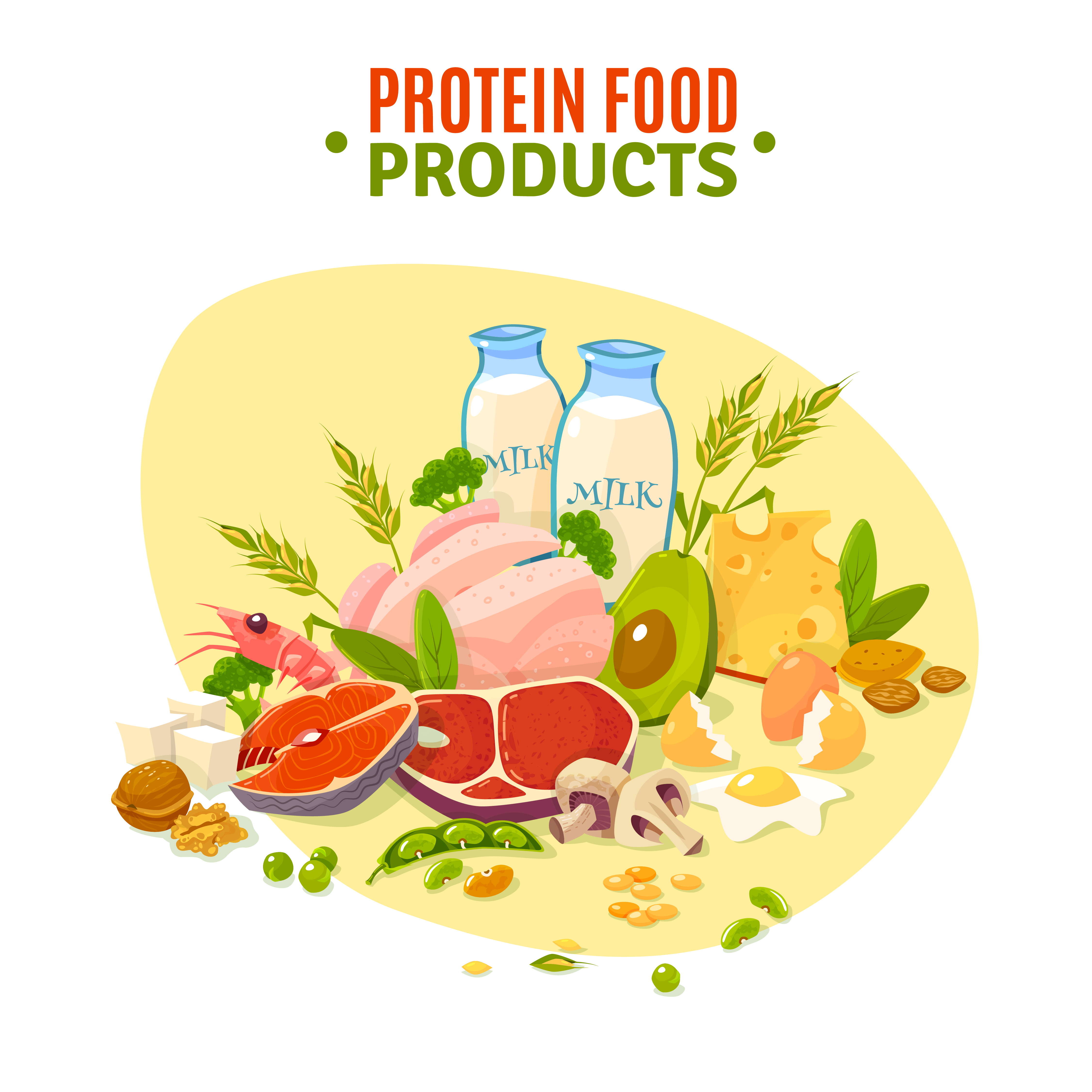
Proteins play an astonishing range of roles in living systems. Spider silk protein, for instance, is pound-for-pound stronger than steel, yet flexible enough to absorb the impact of a flying insect. Your hair, fingernails, and the outer layer of your skin are made of keratin, a tough structural protein. The transparent lenses in your eyes are composed of crystallin, a protein so precisely folded that it refracts light without scattering it.
When certain proteins are missing from your blood, even in tiny amounts, it can signal that your metabolism is falling out of balance. Juvenile-onset diabetes mellitus, for example, results from insufficient insulin, a small protein hormone produced by the pancreas. A deficiency in growth hormone, another protein, can lead to dwarfism. Antarctic fish survive in sub-zero waters thanks to unique “antifreeze” proteins that prevent ice crystals from forming in their blood.
These examples only scratch the surface. Proteins serve as enzymes that speed up reactions, antibodies that fight infection, transport molecules like hemoglobin that carry oxygen, and signaling molecules that coordinate your cells. You’ll encounter proteins at every level of biology, from molecular genetics to ecology.
Amino Acids
To understand proteins, you first need to understand their building blocks: amino acids. Each amino acid contains an amino group (–NH2) and a carboxyl group (–COOH). Depending on where the amino group sits relative to the carboxyl group, amino acids can be classified as α, β, γ, δ, and so on. When you hydrolyze a protein in the lab, you exclusively obtain α-amino acids, the type where both groups are attached to the same carbon atom.
There are 20 standard amino acids found in proteins. Each one has a trivial name that often reflects its source or a property. Glycine is named for its sweet taste (from the Greek glykos, meaning “sweet”), while tyrosine gets its name from cheese (Greek: tyros), because it was first isolated from casein. You’ll see amino acids represented by three-letter codes (like Gly, Tyr, Ala) or single-letter codes (G, Y, A) in biochemistry literature.
Amino acids can be acidic, basic, or neutral depending on the relative number of amino and carboxyl groups in their side chains. Those with equal numbers are neutral. Those with extra amino groups are basic, and those with extra carboxyl groups are acidic. This classification matters because the charge on amino acid side chains directly affects how a protein folds and functions.
Your body can synthesize some amino acids on its own; these are called nonessential amino acids. The ones your body cannot make, and that you must get from food, are the essential amino acids. There are nine essential amino acids for humans, including leucine, isoleucine, valine, and tryptophan. This is why a balanced diet with adequate protein sources matters so much for your health.
Protein is built from 20 standard amino acids, but your body can only make 11 of them. The remaining 9, called essential amino acids, must come from your diet. Complete protein sources like eggs, meat, and soy contain all 9. Plant-based eaters can combine foods (rice + beans, for example) to cover the full set.
Properties of Amino Acids
Physically, amino acids are colorless, crystalline solids. They dissolve readily in water, have high melting points, and behave more like salts than simple amines or carboxylic acids. This unusual behavior comes from the fact that each molecule carries both an acidic group and a basic group. Because of this dual nature, amino acids are amphoteric (also called amphiprotic), meaning they can react as either an acid or a base depending on the pH of the solution.
In water, something interesting happens. The carboxyl group loses a proton (H+) while the amino group picks one up, creating a dipolar ion called the Zwitter ion. The molecule is electrically neutral overall but carries both a positive and a negative charge simultaneously. This is why amino acid solutions conduct electricity and why amino acids migrate in an electric field. You can exploit this behavior in a technique called electrophoresis, which separates proteins based on their charge.
The pH at which an amino acid carries no net charge, and therefore doesn’t migrate toward either electrode, is called the isoelectric point (pI). Every amino acid has a characteristic isoelectric point. This concept is essential in lab techniques for purifying and identifying proteins.
With the exception of glycine, all naturally occurring α-amino acids are optically active because their α-carbon is bonded to four different groups, making it a chiral center. They exist in two mirror-image forms, D and L. Almost all amino acids found in biological proteins have the L-configuration. When you draw their Fischer projection, the –NH2 group appears on the left side. This L-preference is one of biology’s most fundamental asymmetries, and its origin remains an active area of research.
Polypeptides
Proteins are built by linking amino acids together through peptide bonds. A peptide bond is essentially an amide linkage, formed when the –COOH group of one amino acid reacts with the –NH2 group of another, releasing a molecule of water. The resulting bond (–CO–NH–) is strong, planar, and partially double-bonded in character, which gives the protein backbone a degree of rigidity.
When two amino acids join, the product is a dipeptide. For example, when glycine’s carboxyl group reacts with alanine’s amino group, the result is glycylalanine. Add a third amino acid and you get a tripeptide with two peptide bonds. Four amino acids make a tetrapeptide, five a pentapeptide, and so on.
Once you exceed roughly ten amino acid residues, the chain is called a polypeptide. When a polypeptide contains more than about a hundred amino acid residues and has a molecular mass above 10,000 daltons, it’s generally called a protein. That said, the boundary between “polypeptide” and “protein” isn’t rigid. Insulin, for instance, has only 51 amino acids but is universally called a protein because it adopts a well-defined three-dimensional shape and performs a specific biological function.
Here’s a useful way to think about it: what makes something a protein isn’t just size. It’s function and structure. A polypeptide becomes a protein when it folds into a specific conformation that allows it to do something in a living system.
Structure of Proteins
Based on their overall molecular shape, proteins fall into two broad categories. Each category behaves very differently in water and performs distinct roles in your body. Protein is one of the four major biomolecules, alongside carbohydrates, lipids, and nucleic acids, and its structural diversity is unmatched among them.
Fibrous Proteins
When polypeptide chains run parallel to each other and are held together by hydrogen bonds and disulfide bridges, they form long, rope-like structures known as fibrous proteins. These proteins are typically insoluble in water, which makes sense because their job is structural. Keratin, the protein in your hair, wool, feathers, and nails, is a classic fibrous protein. Collagen, the most abundant protein in your body, forms the framework of your skin, tendons, and bones. Myosin, found in muscles, is another example. Silk fibroin, spun by spiders and silkworms, is a fibrous protein prized for its combination of strength and elasticity.
Globular Proteins
When polypeptide chains coil and fold tightly into compact, roughly spherical shapes, the result is a globular protein. Unlike fibrous proteins, globular proteins are usually soluble in water. This solubility is crucial because most globular proteins work in aqueous environments, whether in your blood, inside cells, or in digestive fluids. Insulin, albumin, hemoglobin, and nearly all enzymes are globular proteins. Their compact shape creates pockets and grooves on the surface that serve as active sites for binding substrates, hormones, or other molecules.
Structure and Shape of Proteins
Biochemists study protein architecture at four distinct levels, each more complex than the last. Understanding these levels helps you see how a simple chain of amino acids transforms into a sophisticated molecular machine.
Primary Structure
The primary structure of a protein is simply the linear sequence of amino acids in its polypeptide chain. Think of it as the protein’s “spelling.” Every protein in your body has a unique primary structure encoded by a specific gene in your DNA. Change even a single amino acid in that sequence and you can produce a completely different protein, or a malfunctioning one.
A famous example is sickle cell anemia, where substituting just one amino acid (glutamic acid to valine) at position 6 of the β-globin chain causes hemoglobin molecules to aggregate into stiff rods, deforming red blood cells into a sickle shape. That’s how sensitive biology is to primary structure.
When drawing primary structures, you place the N-terminal amino acid (with a free amino group) on the left and the C-terminal amino acid (with a free carboxyl group) on the right. This convention is universal in biochemistry.
Secondary Structure
The polypeptide chain doesn’t just hang around as a floppy thread. It folds into regular, repeating patterns stabilized by hydrogen bonds between the C=O group of one peptide bond and the –NH– group of another. These local folding patterns constitute the secondary structure.
The two most common secondary structures are the α-helix and the β-pleated sheet. In an α-helix, the chain coils into a right-handed spiral, like a twisted ribbon. Each –NH– group hydrogen bonds to the C=O group four residues earlier in the chain, creating a remarkably stable structure. Keratin in your hair is predominantly α-helical, which is why hair can stretch and spring back.
In a β-pleated sheet, the polypeptide chain stretches out nearly fully extended and lies alongside other segments, held together by intermolecular hydrogen bonds. The resulting structure has a pleated, zigzag appearance, similar to folded drapery. Silk fibroin is rich in β-sheets, which gives silk its incredible tensile strength but limited elasticity. Most real proteins contain a mix of both α-helices and β-sheets, connected by loops and turns.
The four levels of protein structure build on each other: primary (amino acid sequence) dictates secondary (local folding patterns like helices and sheets), which drives tertiary (overall 3D shape), which can combine into quaternary (multi-subunit assemblies). Disrupting any level affects everything above it. For a deeper look at how enzymes use these structural levels to catalyze reactions, see the enzyme study notes.
Tertiary Structure
The tertiary structure refers to the overall three-dimensional shape of a single polypeptide chain. It arises when secondary structure elements (α-helices, β-sheets, and loops) fold further upon themselves, driven by interactions between amino acid side chains. Imagine crumpling a coiled ribbon into a compact ball. That compact shape is the tertiary structure.
Several forces stabilize this level of folding: hydrogen bonds between polar side chains, disulfide bridges (covalent S–S bonds between cysteine residues), van der Waals forces between nonpolar side chains packed in the protein’s interior, ionic bonds between oppositely charged side chains, and the hydrophobic effect, which drives nonpolar residues to cluster away from water.
Tertiary structure is what gives a protein its specific function. An enzyme’s active site, an antibody’s antigen-binding region, and a receptor’s ligand-binding pocket are all products of precise tertiary folding. Disrupt that folding and you lose function, which is exactly what happens during denaturation.
Quaternary Structure
Some proteins consist of two or more individually folded polypeptide chains, called subunits, that assemble into a larger functional complex. The way these subunits are arranged in space, relative to each other, is the quaternary structure.
The classic example is hemoglobin. Adult human hemoglobin has four subunits: two α-chains and two β-chains. These four subunits fit together like puzzle pieces, and their arrangement enables a remarkable property called cooperative binding. When one subunit picks up an oxygen molecule, it slightly changes shape, making it easier for the remaining subunits to bind oxygen too. This is why hemoglobin is so efficient at loading oxygen in your lungs and unloading it in your tissues.
Other examples include DNA polymerase (multiple subunits for reading and copying DNA), ATP synthase (a rotary motor made of many subunits), and collagen (a triple helix of three polypeptide chains). Quaternary structure is not present in all proteins, only those composed of multiple subunits.
Denaturation of Proteins
Proteins in their natural, functional state are called native proteins. They have a specific three-dimensional shape that’s essential for their biological activity. When you subject a native protein to physical stress (like high temperature) or chemical stress (like extreme pH, heavy metals, or detergents), the weak bonds holding the secondary and tertiary structures together begin to break.
As those bonds break, the protein unfolds. Helices uncoil, sheets come apart, and the compact globular shape opens up into a disordered chain. The protein loses its biological activity. This process is called denaturation. Crucially, the primary structure, the sequence of amino acids, remains intact. It’s only the higher-order folding that’s destroyed.
You’ve seen denaturation in everyday life. When you boil an egg, the clear, liquid albumin turns white and solid. That’s thermal denaturation: heat disrupts the hydrogen bonds and hydrophobic interactions in albumin, causing the protein to unfold and aggregate irreversibly. When milk curdles, Lactobacillus bacteria produce lactic acid that lowers the pH, denaturing the casein proteins so they clump together.
Some denaturation is reversible. If you gently remove the denaturing agent (for example, by slowly dialyzing away a chemical denaturant), some proteins can refold back into their native shape and regain function. This process is called renaturation. However, many denatured proteins, especially those exposed to extreme conditions, aggregate and cannot recover. Understanding denaturation is important in medicine (fever kills pathogens partly by denaturing their proteins), food science (cooking), and biotechnology (protein purification). If you’re studying for biology exams, a good biology reference book will cover these protein folding concepts with detailed diagrams.
The classification and types you describe for proteins are presented much more clearly here than in my textbook.
I teach introductory biology and often point my students to this resource. The explanations are accurate and accessible.
Thank you for including both the basic definitions and the deeper biochemistry. Covers everything from intro to advanced level.
I’m studying for my biology exam and this article saved me. Everything about proteins is covered so clearly.
The FAQs at the end are really useful. They cover the exact questions students typically ask about proteins.
This is an excellent overview of proteins. The level of detail is perfect for undergraduate students.
Shared this with my entire study group. The protein structure levels section in particular cleared up a lot of confusion.
As a medical student, understanding proteins at the molecular level is crucial. This resource nails that balance between depth and clarity.
The FAQs at the end are really useful. They cover the exact questions students typically ask about proteins.
As a medical student, understanding proteins at the molecular level is crucial. This resource nails that balance between depth and clarity.
The real-world examples make proteins so much more interesting. I actually enjoyed studying this chapter now.
This page on proteins is now my primary reference for revision. Well-written, accurate, and free. Can’t ask for more.
I love how you connect the structure of proteins to its biological function. That’s the key insight most resources miss.