
10 Best Educational YouTube Channels for Kids and Young Learners
My kid watches YouTube. Your kid probably does too. The question isn’t whether they’ll watch, it’s whether they’ll watch something that actually teaches them anything.
I’ve spent years curating YouTube channels for my own family, testing which ones hold kids’ attention while genuinely teaching something. Most “educational” channels are just colorful noise. But a few are genuinely brilliant, built by educators who understand how children learn.
These 10 channels are the ones I keep coming back to. They cover science, animals, geography, math, reading, and general curiosity. All free. All age-appropriate. All parent-approved after extensive testing by the toughest critics: actual kids.
The best educational YouTube channels don’t feel educational to kids. They feel fun. That’s the trick. If your child is begging to watch “one more episode” of a science channel, you’ve found the right one. TED-Ed, Sesame Street, and National Geographic Kids nail this balance better than anyone else on the platform.

Best Educational YouTube Channels for Kids in 2026
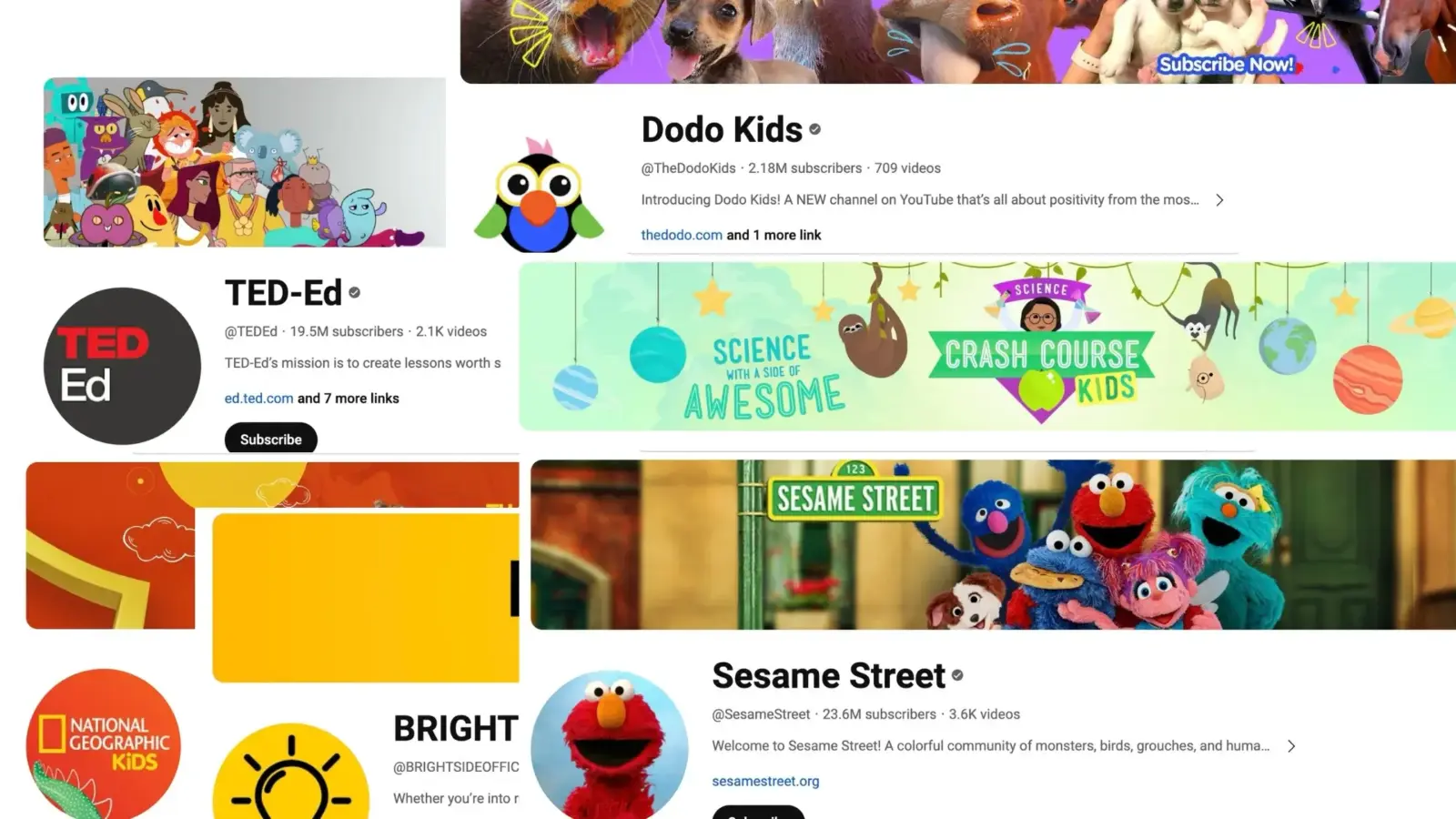
Here are the 10 best educational YouTube channels for kids, ranked by content quality, production value, and how well they actually hold children’s attention. Each channel is completely free to watch.
All channels listed below are completely free. You don’t need YouTube Premium or any paid subscription. Just search for the channel name and hit subscribe.
TED-Ed
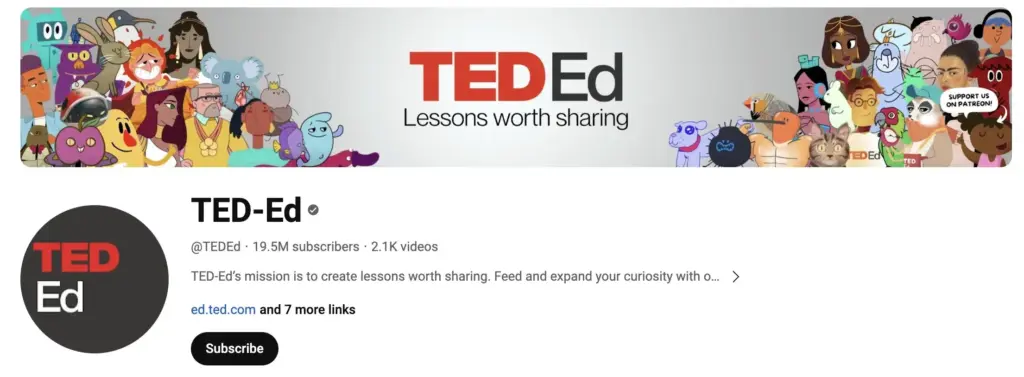
- 19M+ subscribers, part of the TED Talks ecosystem
- Covers science, history, philosophy, language, and math
- Beautiful custom animations that explain complex topics simply
TED-Ed is my top pick. It’s the educational arm of TED Talks, and the production quality shows. Every video uses custom animations to break down topics like “Why do cats purr?” or “How do black holes work?” into 5-minute lessons that are genuinely fascinating.
The channel covers science, history, philosophy, language, and mathematics. What makes TED-Ed stand out is the depth. These aren’t dumbed-down explanations. They’re carefully crafted lessons that respect kids’ intelligence while keeping the language accessible. My kids have learned more about ancient civilizations from TED-Ed than from most textbooks.
With over 19 million subscribers, it’s one of the most popular educational channels on YouTube. Best suited for kids aged 8 and up, though younger kids can enjoy the animations even if some concepts go over their heads.
Best for: Curious kids who love asking “why?” about everything.
Sesame Street
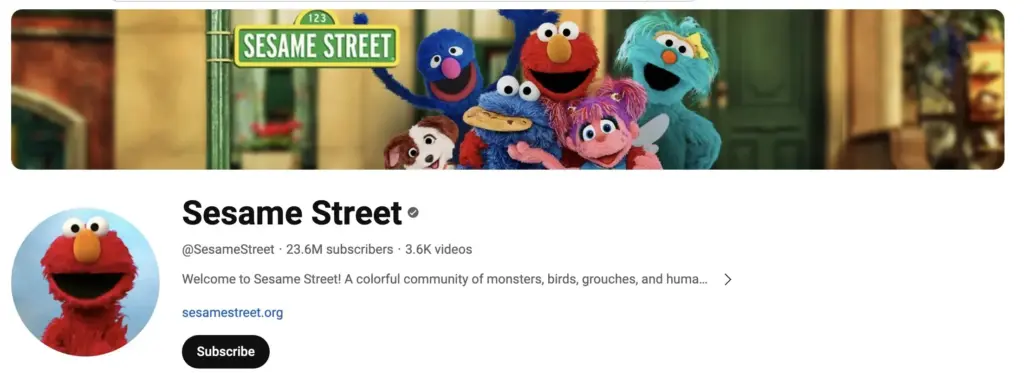
- 24M+ subscribers, running since 1969
- Letters, numbers, social skills, and emotional learning
- Iconic characters: Elmo, Big Bird, Cookie Monster, Grover
Sesame Street has been teaching kids since 1969. That’s over 55 years of early childhood education through characters like Elmo, Big Bird, and Cookie Monster. If you grew up watching it, you already know it works.
The YouTube channel gives you free access to clips, full segments, and educational compilations. Letters, numbers, colors, social skills, emotional intelligence, kindness. Sesame Street covers the foundation that every preschooler needs. And they do it with a warmth that no other channel has matched.
With 24 million subscribers, it’s the most subscribed educational kids’ channel on this list. The content is specifically designed for ages 2-6 and backed by decades of research into how young children learn. You can’t go wrong here.
Best for: Preschoolers learning letters, numbers, and social skills.
National Geographic Kids
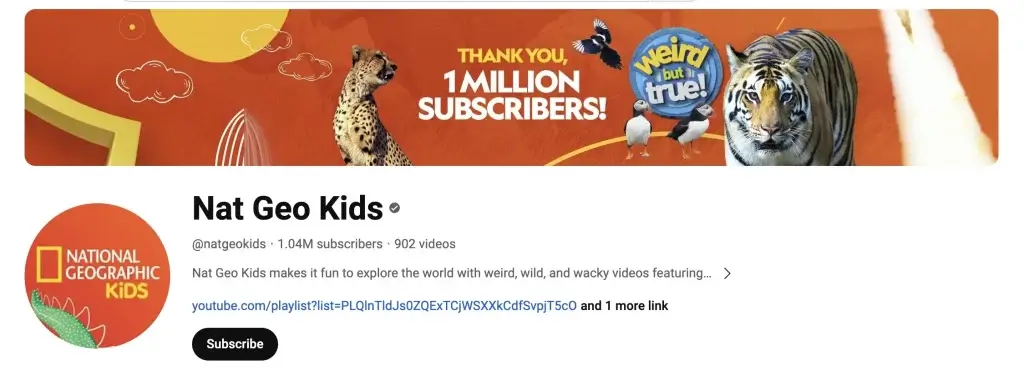
- 1.2M+ subscribers, backed by National Geographic
- Wildlife, geography, oceans, ecosystems, and earth science
- Stunning visuals and real-world footage
National Geographic Kids brings the quality you’d expect from the National Geographic brand, scaled down for younger viewers. Wildlife documentaries, geography lessons, ocean exploration, ecosystem breakdowns. All presented with the kind of stunning visuals that make kids stop scrolling and start watching.
The channel doesn’t talk down to kids. It presents real science with real footage, just at a pace and language level that children can follow. If your kid is obsessed with animals, dinosaurs, or “how the earth works” type questions, this channel will become a daily habit.
Best for ages 6-12. The production quality is a cut above most educational YouTube channels, which makes sense given the National Geographic pedigree.
Best for: Kids who love animals, nature, and understanding how the planet works.
Khan Academy Kids
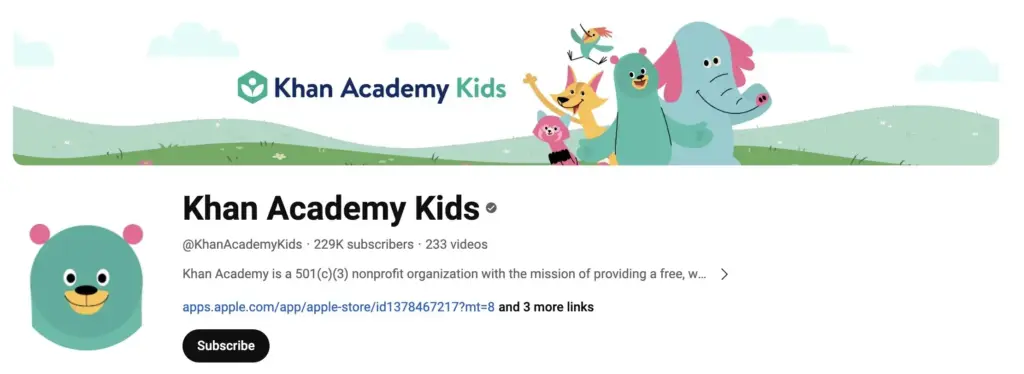
- 250K+ subscribers, from the Khan Academy nonprofit
- Math, reading, science, and social-emotional learning
- Structured curriculum with animated character guides
Khan Academy Kids is the closest thing to a proper school curriculum on YouTube. It’s from the same nonprofit that built Khan Academy (one of the best free learning platforms in the world), designed specifically for children aged 2-8.
The channel uses animated characters to guide kids through math concepts, reading exercises, and basic science. Unlike random educational videos, these follow a structured learning path. Your kid isn’t just watching random facts. They’re building foundational skills in a logical sequence.
It’s not the flashiest channel on this list. The animations are simple, the pacing is deliberate. But if you want actual learning outcomes rather than just entertainment, Khan Academy Kids delivers. Many parents and homeschoolers use it as a supplement to formal education.
Best for: Parents who want structured, curriculum-based learning for preschoolers and early elementary kids.
CrashCourse Kids
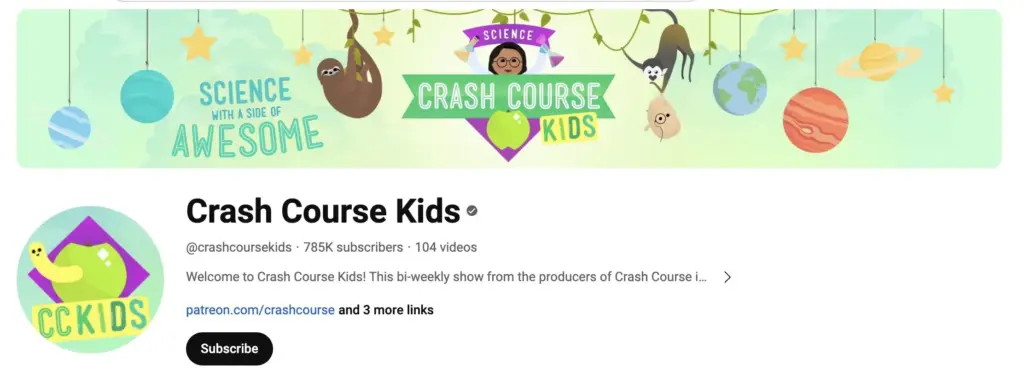
- 1.2M+ subscribers, part of the CrashCourse family
- Earth science, space, biology, and engineering
- Energetic host with colorful animations and graphics
CrashCourse Kids is the younger sibling of the famous CrashCourse series. Same energy, same quality, just built for elementary-aged kids instead of high schoolers.
The channel focuses on science topics: earth science, space, biology, engineering, and how things work. Each video is about 5-8 minutes, hosted by an energetic presenter with colorful animations layered on top. The pacing is fast enough to keep kids engaged but not so fast that they miss the point.
What I appreciate about CrashCourse Kids is how they break down genuinely complex topics. They don’t oversimplify to the point of being useless. A 9-year-old watching their episode on the water cycle will actually understand the water cycle afterward. That’s the bar, and they clear it.
Best for: Elementary kids (ages 6-12) who want fast-paced, well-explained science lessons.
Dodo Kids
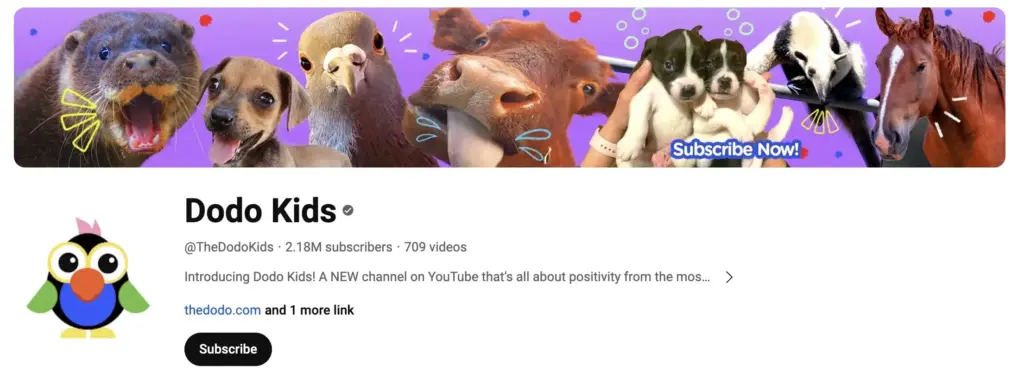
- 2.3M+ subscribers, from The Dodo media brand
- Animal rescue stories, wildlife behavior, and pet care
- Real footage with kid-friendly narration
Dodo Kids is dedicated entirely to animals. Rescue stories, wildlife behavior, pet care tips, and behind-the-scenes looks at how animals live. It’s from The Dodo media brand, which has built one of the largest animal content audiences online.
The channel mixes real-life footage with kid-friendly narration. Kids see actual rescue operations, watch baby animals grow up, and learn about animal behavior from real examples. It’s not textbook learning, it’s storytelling that happens to teach empathy, compassion, and biology along the way.
With 2.3 million subscribers, it’s clearly resonating. If your kid loves animals (and most do), this channel turns that interest into genuine learning about wildlife, conservation, and responsibility toward animals. Especially useful if you have pets at home and want your child to understand how to care for them properly.
Best for: Animal-loving kids who learn best through stories rather than lectures.
Kids Learning Tube
- 2.1M+ subscribers with 700+ educational videos
- Catchy songs covering science, geography, and math
- Musical approach that makes facts stick through repetition
Kids Learning Tube takes a musical approach to education. Every topic gets turned into a catchy song with colorful animations. Geography, the solar system, the human body, countries and capitals. All set to tunes that get stuck in your head (fair warning to parents).
With over 2.1 million subscribers and 700+ videos, the library is massive. The channel works because music and repetition are genuinely effective learning tools for young children. My kids could name all the planets in order after watching the solar system song twice. Try getting that result from a textbook.
The animation quality is decent but not spectacular. This channel wins on content strategy, not production value. If your kid learns better by singing than by sitting still, this is the one.
Best for: Younger kids (ages 3-8) who learn best through music and repetition.
Socratica Kids
- 160K+ subscribers focused on quality over quantity
- Science topics explained with clear graphics and animation
- Teaches kids to think scientifically, not just memorize facts
Socratica Kids is a smaller channel (about 160K subscribers) that punches well above its weight in content quality. It’s the kids’ version of the excellent Socratica channel, focused on making science accessible and genuinely interesting for young learners.
The channel uses clear graphics and animation to demonstrate scientific concepts. What sets it apart from bigger channels is the teaching approach. Socratica Kids doesn’t just present facts. It teaches kids how to think scientifically, how to ask questions, and how to observe the world around them.
The library isn’t as large as the bigger channels, but every video is carefully produced. Quality over quantity. If you want your child to develop a genuine interest in science rather than just memorize facts for school, this is an excellent starting point.
Best for: Kids aged 5-10 who are developing an interest in science and how things work.
Bright Side
- 44M+ subscribers, one of the biggest channels on YouTube
- Fun facts, riddles, science experiments, and trivia
- Entertaining presentation that keeps kids watching
Bright Side is massive. 44 million subscribers. It covers fun facts, riddles, science experiments, trivia, and “what if” scenarios. The channel is entertaining and kids genuinely enjoy watching it.
I’ll be honest though: Bright Side is more “edutainment” than pure education. Some videos lean toward clickbait titles and sensationalized facts. The accuracy isn’t always as rigorous as channels like TED-Ed or National Geographic Kids. I’d rate the entertainment value highly but the educational depth a step below the top picks.
That said, there’s value in sparking curiosity. If a Bright Side video makes your kid ask “Is that really true?” and then go look it up, that’s a win. Just treat it as a starting point for conversations rather than a definitive source of information.
Best for: Older kids (8+) who enjoy fun facts, riddles, and “did you know” style content.
FunScienceDemos
- Hands-on science experiments and demonstrations
- Covers physics, chemistry, and biology with visual demos
- Great for kids who want to try experiments at home
FunScienceDemos is a smaller channel focused entirely on science experiments and hands-on demonstrations. If your kid is the type who wants to mix things in the kitchen and see what happens, this channel channels that energy into actual learning.
The videos show real experiments that demonstrate physics, chemistry, and biology concepts. Seeing a principle demonstrated visually sticks with kids much longer than reading about it. Many of the experiments can be replicated at home with basic materials, which makes it interactive rather than passive.
The production quality is modest compared to bigger channels, and the library is smaller. But for its niche (visual science demonstrations), it does the job well. Think of it as a supplement to the bigger channels rather than a standalone learning resource.
Best for: Hands-on learners who want to see science in action, not just hear about it.
| Channel | Best For | Age Range | Subscribers | Topics | Rating |
|---|---|---|---|---|---|
| TED-Ed | Curious learners | 8+ | 19M+ | Science, history, philosophy, math | 4.5/5 |
| Sesame Street | Preschoolers | 2-6 | 24M+ | Letters, numbers, social skills | 4.5/5 |
| Nat Geo Kids | Nature lovers | 6-12 | 1.2M+ | Wildlife, geography, oceans | 4.5/5 |
| Khan Academy Kids | Structured learning | 2-8 | 250K+ | Math, reading, science | 4.5/5 |
| CrashCourse Kids | Science fans | 6-12 | 1.2M+ | Earth science, space, biology | 4.0/5 |
| Dodo Kids | Animal lovers | 4-10 | 2.3M+ | Animals, rescue, wildlife | 4.0/5 |
| Kids Learning Tube | Music learners | 3-8 | 2.1M+ | Geography, solar system, body | 4.0/5 |
| Socratica Kids | Young scientists | 5-10 | 160K+ | Science fundamentals | 4.0/5 |
| Bright Side | Fun facts fans | 8+ | 44M+ | Trivia, riddles, experiments | 3.5/5 |
| FunScienceDemos | Hands-on learners | 6-12 | Small | Physics, chemistry, biology | 3.5/5 |
The best screen time isn’t zero screen time. It’s intentional screen time. A kid watching TED-Ed or National Geographic Kids for 30 minutes is learning more than they would from most homework assignments.
How to Choose the Right Channels for Your Kids
Start with your child’s age. This matters more than anything else.
For toddlers and preschoolers (ages 2-5), stick with Sesame Street, Khan Academy Kids, and Kids Learning Tube. These channels use simple language, slower pacing, and lots of repetition. All three are designed around how young brains actually process information.
For elementary kids (ages 6-10), the options open up. TED-Ed, CrashCourse Kids, National Geographic Kids, and Dodo Kids all work well. Let your child’s interests guide the choice. Science-obsessed kids will love CrashCourse. Animal-obsessed kids will prefer Dodo. Geography and nature kids go straight to Nat Geo.
For tweens (10+), TED-Ed becomes the standout choice. The content is sophisticated enough to challenge older kids without being patronizing. Bright Side also works for this age, though treat it more as entertainment than strict education.
One practical tip: use YouTube Kids (the separate app) for children under 8. It filters out inappropriate content and gives you parental controls over watch time. For older kids, consider creating a supervised YouTube account where you can manage their subscriptions directly.
Also worth mentioning: a few more channels that didn’t make the top 10 but deserve a look. Art for Kids Hub is excellent for creative kids. Free School covers history and science with clear narration. And Simple History is a great pick for kids interested in historical events.
Always use the YouTube Kids app for children under 8. It filters inappropriate content, disables autoplay to unrelated videos, and gives you screen time controls. Regular YouTube’s algorithm isn’t designed with young viewers in mind.
Compare Kids Learning Platforms
| Feature | Juni Learning | Education.com | Khan Academy Kids | Scratch (MIT) | Code.org |
|---|---|---|---|---|---|
| Age Group | 8-18 | Pre-K to 5th grade | Ages 2-8 | Ages 8-16 | Ages 4-18 |
| Price | $275/mo (1-on-1) | $9.99/mo | 100% Free | 100% Free | 100% Free |
| Focus Area Specialty | Coding + Math (live tutors) | Worksheets, reading, math | Early learning (reading, math) | Visual programming | Computer science basics |
| Live Instruction | Yes (1-on-1 tutors) | No (self-paced) | No (self-paced) | No (self-paced) | No (self-paced) |
| Programming Languages | Python, Java, Scratch, Web Dev | N/A | N/A | Scratch (block-based) | Block-based, JavaScript, Python |
| Curriculum Quality | Structured, project-based | US Common Core aligned | Expert-designed | MIT Media Lab | CSTA standards |
| Progress Tracking | Yes (parent dashboard) | Yes | Yes | Basic | Yes (teacher dashboard) |
| Printable Resources | No | Yes (35,000+ worksheets) | No | No | Yes (lesson plans) |
| Best For | Serious young coders | Elementary school practice | Toddlers + early learning | Creative coding intro | School CS curriculum |
| Visit Juni | Visit Education.com | Visit Khan Kids | Visit Scratch | Visit Code.org |
Frequently Asked Questions
Common questions parents ask about educational YouTube channels for kids.
What is the best educational YouTube channel for kids?
TED-Ed is the best overall. It covers the widest range of subjects (science, history, math, philosophy, language) with the highest production quality. Every video uses custom animations to explain complex topics in 5-minute lessons. For preschoolers specifically, Sesame Street is unmatched with 55+ years of research-backed educational content.
Are educational YouTube channels safe for young children?
The channels on this list are safe and age-appropriate. But YouTube itself can lead kids to unrelated content through autoplay and recommendations. For children under 8, use the YouTube Kids app instead of regular YouTube. It filters content and gives parents control over screen time limits. For older kids, set up a supervised Google account and manage their subscription list directly.
How much educational screen time is OK for kids?
The American Academy of Pediatrics recommends no screen time for kids under 18 months (except video calls), 1 hour per day of high-quality content for ages 2-5, and consistent limits for ages 6+. The key word is “high-quality.” A 30-minute TED-Ed session is fundamentally different from 30 minutes of random YouTube browsing. Focus on what they’re watching, not just how long.
Can YouTube replace school or tutoring for kids?
No. YouTube channels are supplements, not replacements. They’re great for sparking curiosity, reinforcing concepts, and making learning fun. But they lack the structured progression, personalized feedback, and social interaction that formal education provides. The exception is Khan Academy Kids, which comes closest to a structured curriculum. Many homeschooling parents use it as a core resource alongside their own teaching.
What age should kids start watching educational YouTube?
Most pediatricians recommend introducing screen-based content around age 2, starting with short sessions of high-quality content like Sesame Street or Khan Academy Kids. Watch with your child at first so you can discuss what they’re seeing. By age 5-6, most kids can watch independently for short periods. The important thing is co-viewing early on so screen time becomes interactive, not passive.
Disclaimer: This site is reader-supported. If you buy through some links, I may earn a small commission at no extra cost to you. I only recommend tools I trust and would use myself. Your support helps keep gauravtiwari.org free and focused on real-world advice. Thanks. - Gaurav Tiwari