
How to Buy the Best Headphones in the Market?
The average person replaces their headphones every 18 months. Not because they want to. Because cracked ear pads, muddy bass, or a headband that pinches after 30 minutes forces the decision. The headphone market crossed $17 billion in 2024 and keeps growing, which means more options, more marketing noise, and more risk of buying the wrong pair.
Five variables actually determine whether headphones hold up: noise cancellation quality, audio fidelity, build materials, comfort under extended wear, and honest value relative to price. Get all five right and you won’t be shopping again next year. Get one wrong and you’ll know it within a week.
Here’s what to check before you buy, plus 5 specific models worth considering in 2026.
Best Headphones at a Glance
- Philips Fidelio X2HR — Best open-back wired sound for home listeners and audiophiles
- Beats Solo3 Wireless — Best for iPhone users who need all-day battery without fuss
- Powerbeats2 Wireless — Best secure-fit option for runners and heavy gym sessions
- ROAM Ropes — Best for commuters who want app-controlled EQ and tangle-free design
- Sony MDR10RBT — Best long-battery Bluetooth pick with a wired fallback
Check on Noise Cancellation
Noise cancellation splits into two types, and confusing them is an expensive mistake. Passive noise cancellation uses physical design, thick ear cushions and a tight seal, to block sound from reaching your eardrums. It works well for mid and high frequencies but won’t stop a rumbling AC unit or a droning airplane engine. Active noise cancellation (ANC) goes further: tiny microphones measure ambient noise in real time and generate an inverse sound wave that cancels low-frequency sound before it reaches you. The result is a measurable reduction, typically 20-30 dB on quality ANC headphones like the Sony WH-1000XM5.
Not all ANC is equal. Budget ANC headphones often introduce a faint hiss or pressure sensation that some users find more distracting than the noise it replaces. The best implementations, found in Sony and Bose’s flagship lines, are transparent enough that you forget the feature is running. When shopping, check reviews specifically for “ANC hiss” complaints. A headphone with mediocre ANC is worse than one with strong passive isolation.
Determine The Audio Quality
Headphone audio quality comes down to driver size, tuning, and frequency response. Most consumer headphones use 40mm drivers. Audiophile-grade models step up to 50mm or larger, which moves more air and reproduces low frequencies with greater detail. The frequency response tells you the range a headphone can reproduce: 20 Hz to 20,000 Hz covers human hearing, but headphones claiming 5 Hz to 40,000 Hz offer headroom that prevents distortion at the edges of that range.
Tuning matters more than raw specs. A “V-shaped” tuning boosts bass and treble while recessing the midrange. It sounds exciting at first and fatiguing after an hour. Flat or reference tuning is more accurate and better for long listening sessions. Warm tuning emphasizes bass without scooping the mids, which is what most people actually prefer for everyday music. When reading reviews, look for mentions of how bass and treble balance, not just whether the headphone sounds “good.” Amazon reviewer language like “thumpy bass” or “crisp highs” is useful but check multiple sources across genres.
Check On Durability
Build quality is where budget headphones show their true cost. The failure points are always the same: ear pad leather cracks after 12-18 months, the headband plastic develops stress fractures at the adjustment points, and the cable housing frays near the jack. Premium headphones address this with memory foam velour pads (which breathe better and last longer than pleather), stainless steel or aluminum headband reinforcement, and detachable cables that can be replaced when they wear out.
Detachable cables are the single most underrated durability feature. A fixed cable that fails means the whole unit is trash. A detachable cable that fails costs $10 to replace. The Philips Fidelio X2HR uses a 3m detachable oxygen-free copper cable for exactly this reason. For wireless headphones, check whether replacement ear pads are available and sold separately. Many mainstream brands discontinued third-party pad support, which means once the pads go, so does your investment.
Check On Comfort And Weight
Comfort degrades along three axes: clamping force, weight, and heat. Over-ear headphones with tight clamping force cause temple and ear pressure within 45-60 minutes. Weight above 300g creates neck fatigue on long sessions. Closed-back designs trap heat, which turns a 2-hour listening session into a sweaty experience after the first hour. Open-back headphones breathe but leak sound, making them poor choices for public use.
Memory foam ear pads with velour or mesh fabric covering outperform pleather for sustained use because they don’t retain heat the same way. The catch: velour pads reduce passive noise isolation since the weave isn’t airtight. For desk use that trade-off is fine. For commuting or the gym it isn’t. On-ear headphones, which rest on the outer ear rather than surrounding it, tend to run lighter but cause more pressure per square centimeter, which some users find uncomfortable past 90 minutes. This is the most personal variable in headphone selection and the one most reviews underweight.
Check On Price
The $50-$100 range buys you functional audio and little else. Build quality is inconsistent, drivers are average, and ANC (when included) is usually more hiss than cancellation. The $100-$200 range is where value peaks: you get quality drivers, decent build, and real differences between models. Above $300, diminishing returns kick in hard and you’re paying for brand positioning as much as performance.
Brand markup is real but not uniform. Beats carries a 40-50% brand premium based on independent acoustic tests comparing similarly specced models. That said, brand often correlates with warranty support, accessory availability, and software ecosystems, which have real value for non-audiophile buyers. A strong brand name means better resale value and easier replacement part sourcing. For pure sound per dollar, lesser-known brands like Philips Fidelio punch above their price. For ecosystem integration, Apple-owned Beats earns its premium for iPhone users.
Buying the Best Headphones
Headphones aren’t just for music anymore. They’re for Zoom calls, gaming sessions, podcasts, commuting, and blocking out the open office. That makes use-case fit more important than brand loyalty. A headphone optimized for the gym will frustrate a home audiophile. A wired studio monitor will annoy a commuter. The five models below cover those scenarios across a $116-$200 price range.
Best Headphones to Buy in 2026
Each of these models scores well on the five criteria above. Here’s where each one wins and where it falls short.
1. Philips Fidelio X2HR
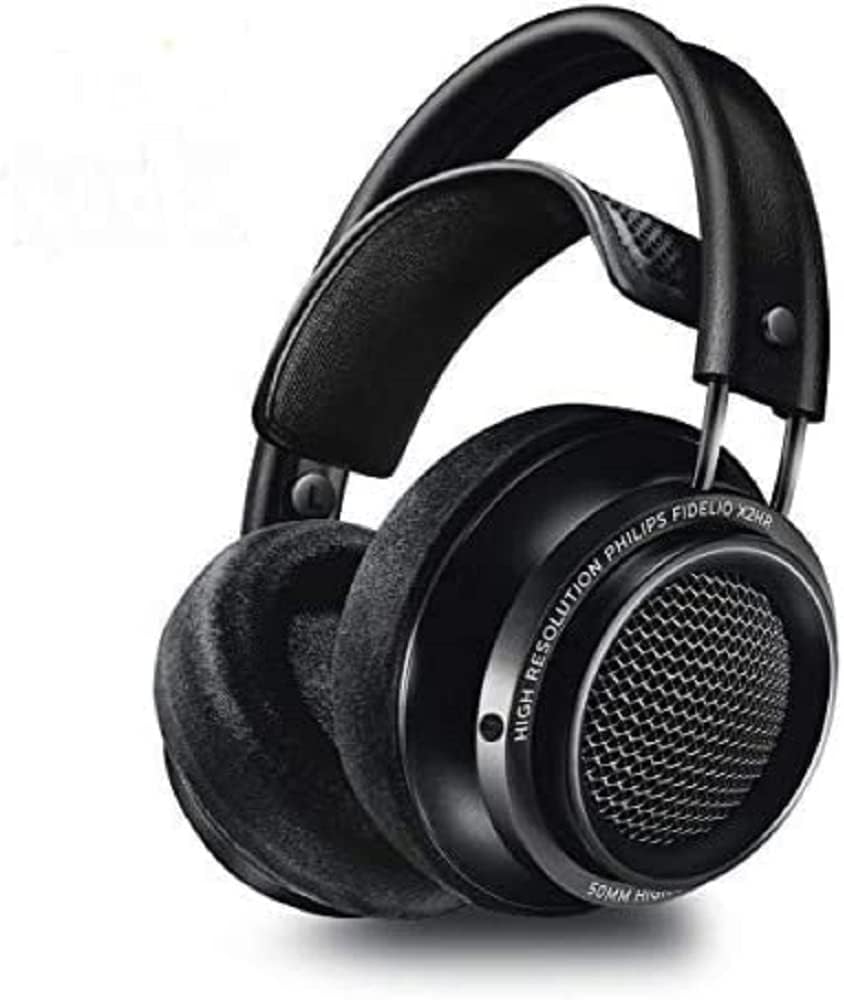
Best for: Home listeners and audiophiles who want open, natural sound without needing a dedicated amplifier.
The Philips Fidelio X2HR uses 50mm neodymium drivers with a low-mass compound (LMC) diaphragm covering a frequency range of 5 Hz to 40 kHz. That wide response means no distortion at bass or treble extremes. The open-back design with double-layered ear shells creates a spacious soundstage that closed-back headphones can’t replicate, which is why this model shows up in both music and gaming setups. At 30 ohms impedance, any phone or laptop drives it without an amp.
The build holds up well. Replaceable memory foam velour ear pads breathe during long sessions and are sold separately when they wear. The 3m detachable oxygen-free copper cable means a cable failure doesn’t kill the headphones. At 380g it’s on the heavier side, and the open-back design leaks audio, so it’s a desk headphone, not a commuting one. Treble can run sharp on some recordings at high volume.
Bluetooth or Wired? Wired only
Price: ~$116-$120
Rating: 4.4/5
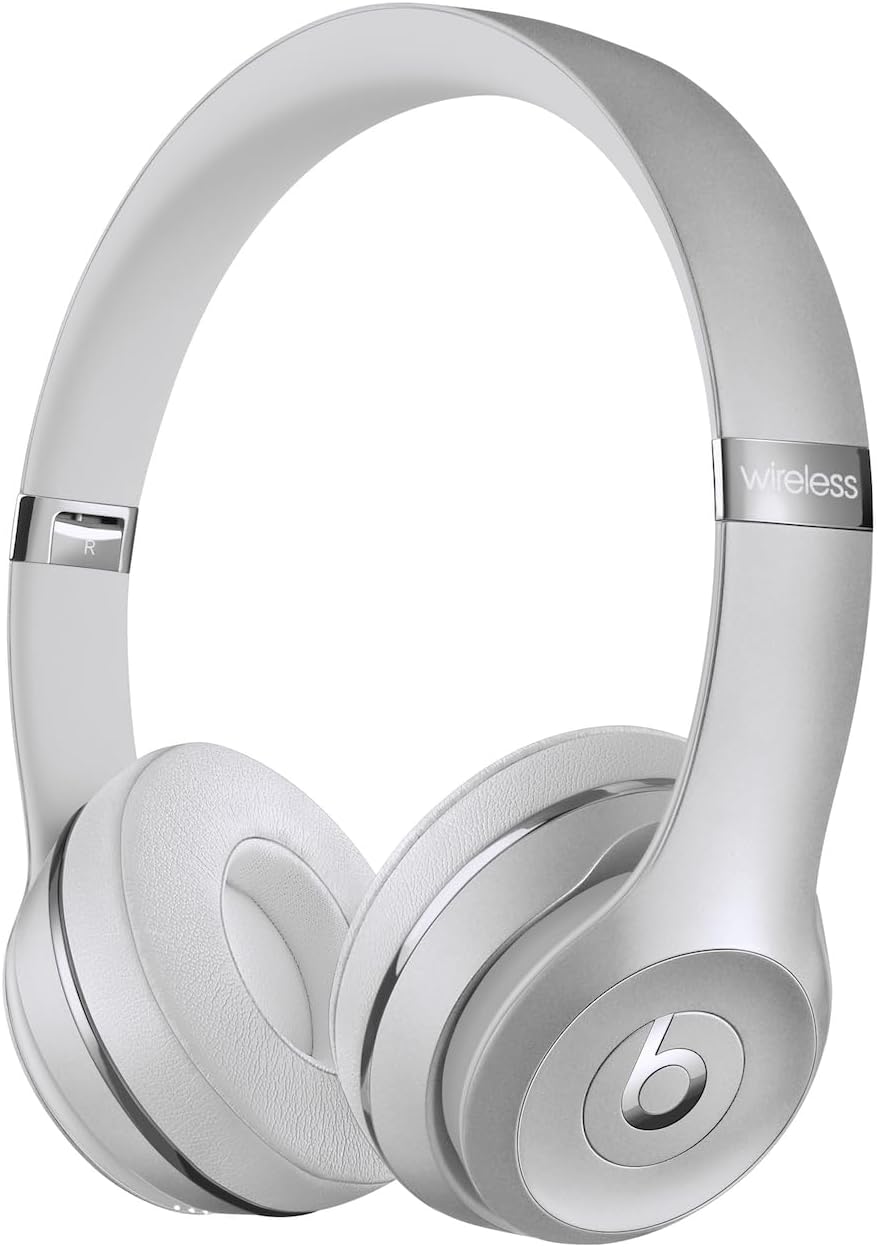
2. Solo3 Wireless
Best for: iPhone users who want all-day wireless listening with near-instant pairing and minimal setup.
The Beats Solo3 Wireless runs Apple’s W1 chip, which cuts iOS pairing time to under 3 seconds, a meaningful difference if you switch between devices throughout the day. Battery life hits 40 hours per charge, which no competitor at this price matches. Fast Fuel charging delivers 3 hours of playback from a 5-minute charge, making a dead battery a minor inconvenience rather than a day-ender. It folds flat for travel and includes a carrying case.
The tuning skews bass-heavy, which suits hip-hop, pop, and electronic but can overwhelm acoustic or classical music where the midrange carries the detail. The on-ear design (not over-ear) puts pressure directly on the ears and gets uncomfortable past 90 minutes for some users. There’s no active noise cancellation, which is a notable gap at this price. For Android users, the W1 chip provides no benefit and standard Bluetooth pairing applies.
Bluetooth or Wired? Both, with an option to plug the wire
Price: ~$119-$149
Rating: 4.8/5
3. Powerbeats2
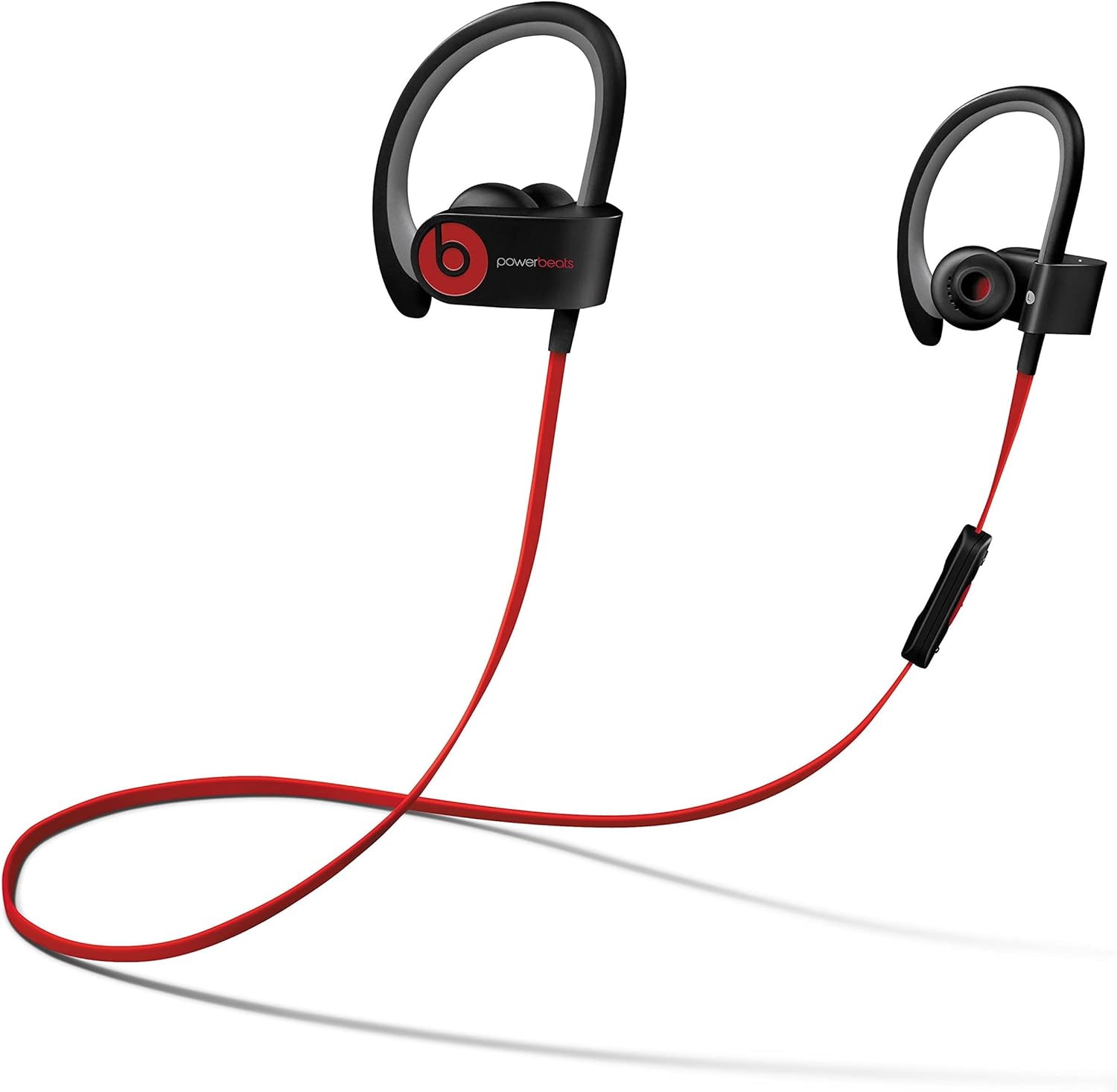
Best for: Runners and gym-goers who need a sweat-resistant, hook-secured fit that won’t fall out mid-sprint.
The Powerbeats2 Wireless weighs 24 grams and uses adjustable ear hooks designed to lock in place during lateral movement, sprinting, or high-impact training. IPX4 sweat and water resistance means rain and workout sweat won’t kill them. Dual-driver acoustics deliver stronger bass than single-driver sports earphones at the same price. Three ear tip sizes are included for a custom seal that also improves passive noise isolation during loud gym environments.
One honest downside: this is a discontinued model. New units are no longer manufactured. What’s available on Amazon comes as renewed or refurbished stock, typically priced $50-$80. Battery life is 6 hours per charge, which covers most workout routines but won’t last a full travel day. Charging uses Micro USB, not USB-C. If that matters to your setup, the current Powerbeats Pro 2 is the natural successor with 45-hour case battery and ANC. The Powerbeats2 is worth considering only at a heavily discounted renewed price.
Bluetooth or Wired? Bluetooth
Price: ~$50-$80 (renewed)
Rating: 4.1/5
4. ROAM Ropes
Best for: Daily commuters who want audiophile-grade sound with app-controlled EQ and a tangle-free carry design.
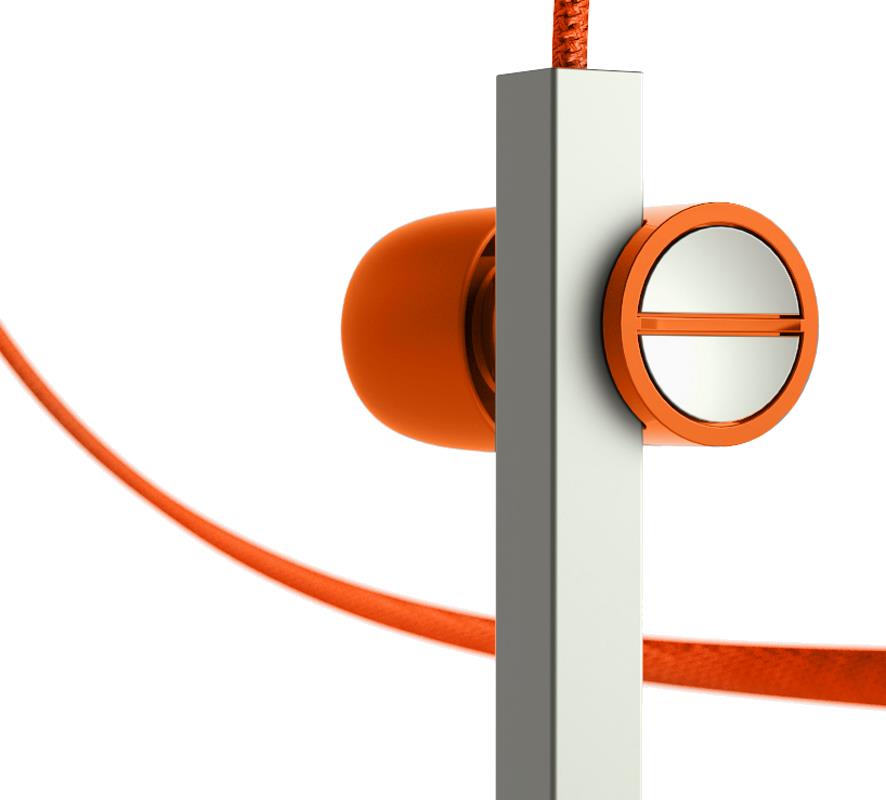
ROAM Ropes pack a 50 MIPS 24-bit stereo DAC (digital-to-analog converter) directly into the earphone unit, which processes audio at a higher fidelity than the DAC in most phones. The Bluetooth 4.1 wireless version covers a 500 square foot range and pairs with the ROAM EQ companion app, which lets listeners set per-genre EQ profiles (hip-hop, rock, classical) or dial in custom bass and treble manually. The neck-hang design means they sit around the collar when not in use rather than disappearing into a bag.
Battery life reaches 8-10 hours with 15 minutes of charging delivering 1 hour of playback. The tangle-free cable eliminates the knot problem that ruins most wired earphones. The honest downside is availability: ROAM is a niche brand with limited retail presence, and stock can be inconsistent. The app dependency means the EQ features don’t work without a paired smartphone. For commuters who want precision sound and can track down a pair, the sonic performance at this price is difficult to match.
Bluetooth or Wired? Wired (with Bluetooth wireless version available)
Price: ~$150-$199
Rating: 4.0/5
5. Sony MDR10RBT
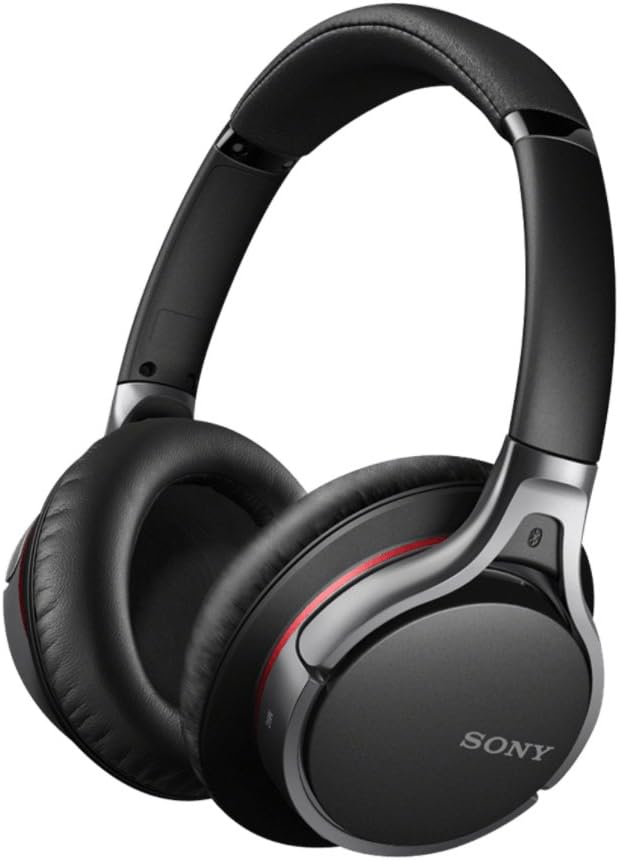
Best for: Gamers and movie watchers who prioritize long battery life and a wired fallback over active noise cancellation.
The Sony MDR10RBT runs 17 hours on a single charge, which covers a transatlantic flight with hours to spare. NFC one-touch pairing connects in under 2 seconds on compatible devices. The frequency response in wired mode hits 4 Hz to 40,000 Hz (the extended Hi-Res range), far beyond the 20-20kHz Bluetooth ceiling. An auto-sleep function activates after 15-20 minutes of inactivity, which stretches actual battery life further on intermittent listeners. When the battery dies entirely, a 3.5mm cable keeps it functional.
The trade-offs are worth knowing. Bluetooth spec is version 3.0, older than current models that run 5.0 or 5.3, which affects range and stability in crowded wireless environments. Bass in wireless mode reviews as lighter than the wired equivalent. The plastic construction receives mixed marks on durability, with some long-term owners noting stress fractures at hinge points. There’s no active noise cancellation. At around $100-$200 depending on availability, it’s a strong option for listeners who prioritize battery and flexibility over noise cancellation.
Bluetooth or Wired? Bluetooth with NFC, plus 3.5mm wired fallback
Price: ~$100-$200 (check current Amazon pricing)
Rating: 3.8/5
Don’t grab the first pair with solid reviews. Think about how you’ll actually use them: commuting, gaming, working out, or working from home. The Philips Fidelio X2HR wins on audio quality per dollar if a wire doesn’t bother you. The Beats Solo3 is the safest all-rounder for wireless iPhone users. For the gym, the Powerbeats2 stays put when nothing else will. Pick the pair that fits your use case, not the one with the biggest marketing budget.