
 by
by
Most “managed” WordPress hosting companies use the word managed the way airlines use the word complimentary. You still do everything yourself. Updates, backups, security, speed, edits, the whole grind. The marketing page says managed; the reality is you’re babysitting a control panel. BionicWP is one of a small number of hosts that earn the label, and in 2026 they did something most reviewers haven’t caught up to yet: they migrated their entire infrastructure to WP Cloud, the platform Automattic built to power WordPress.com. This review is the honest read after the move, including what’s actually changed since older reviews, and where the platform still falls short.
Quick framing for anyone who hasn’t been following: BionicWP started as a hybrid of agency-style WordPress ops and managed hosting, founded by Michael Coombes (a former agency owner). The platform was originally built on Google Cloud. Pricing started at $27.50 a month for a single site with a 20,000-visit cap. It had no money-back guarantee, only a 7-day trial. Almost every one of those facts is now wrong. The infrastructure is WP Cloud. Pricing starts at $11.90 per site. Visits are unlimited on every plan. There’s a 30-day money-back guarantee. And there are new features (VRT-safe updates, a Bionic AI Speed Agent) that didn’t exist in the old version. So if you read a review of BionicWP from 12 months ago, throw it out.
What BionicWP is in 2026 (and why “managed” actually means something this time)
BionicWP is a managed WordPress hosting platform with three operational layers stacked on top: hosting (now WP Cloud), proactive performance optimisation (their own team plus the new Bionic AI Speed Agent), and an unlimited-edits service add-on where their WordPress engineers handle content and design changes for you. The pitch is that the bundle replaces three separate spend lines on a typical agency P&L: hosting, a speed-optimisation contractor or plugin, and a part-time WordPress dev on retainer.
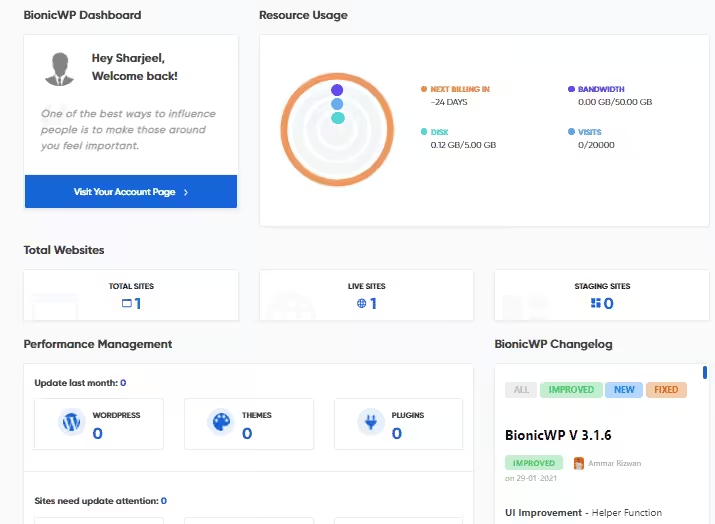
The control panel is custom-built. Not cPanel, not Plesk, not the WP Engine User Portal you’ve seen everywhere else. They built their own dashboard specifically for the agency-with-multiple-clients use case, which means container-isolated sites, granular collaborator permissions for client team members, and white-label support so the dashboard can carry your agency’s brand instead of theirs. The white-label is genuinely free, not “free as long as you’re on the top tier.”
My honest position: BionicWP is one of three managed WordPress platforms in 2026 that I’d actually call managed. The other two are Pressable (also Automattic, also on WP Cloud, covered later in this review) and a tier of WP Engine that costs roughly 3x what BionicWP charges. Below that price band, “managed” is mostly marketing. BionicWP earns the label because the unlimited-edits add-on means a real human on their team will actually do the work for you.
The 2026 update most reviews missed: BionicWP runs on WP Cloud now
This is the headline change since older reviews and the most consequential one. BionicWP’s hosting layer used to run on Google Cloud Platform. As of 2026, it runs on WP Cloud, the containerised hosting platform Automattic built (the same company that owns WordPress.com, WooCommerce, Jetpack, Tumblr, and Pressable). What this means in practice:
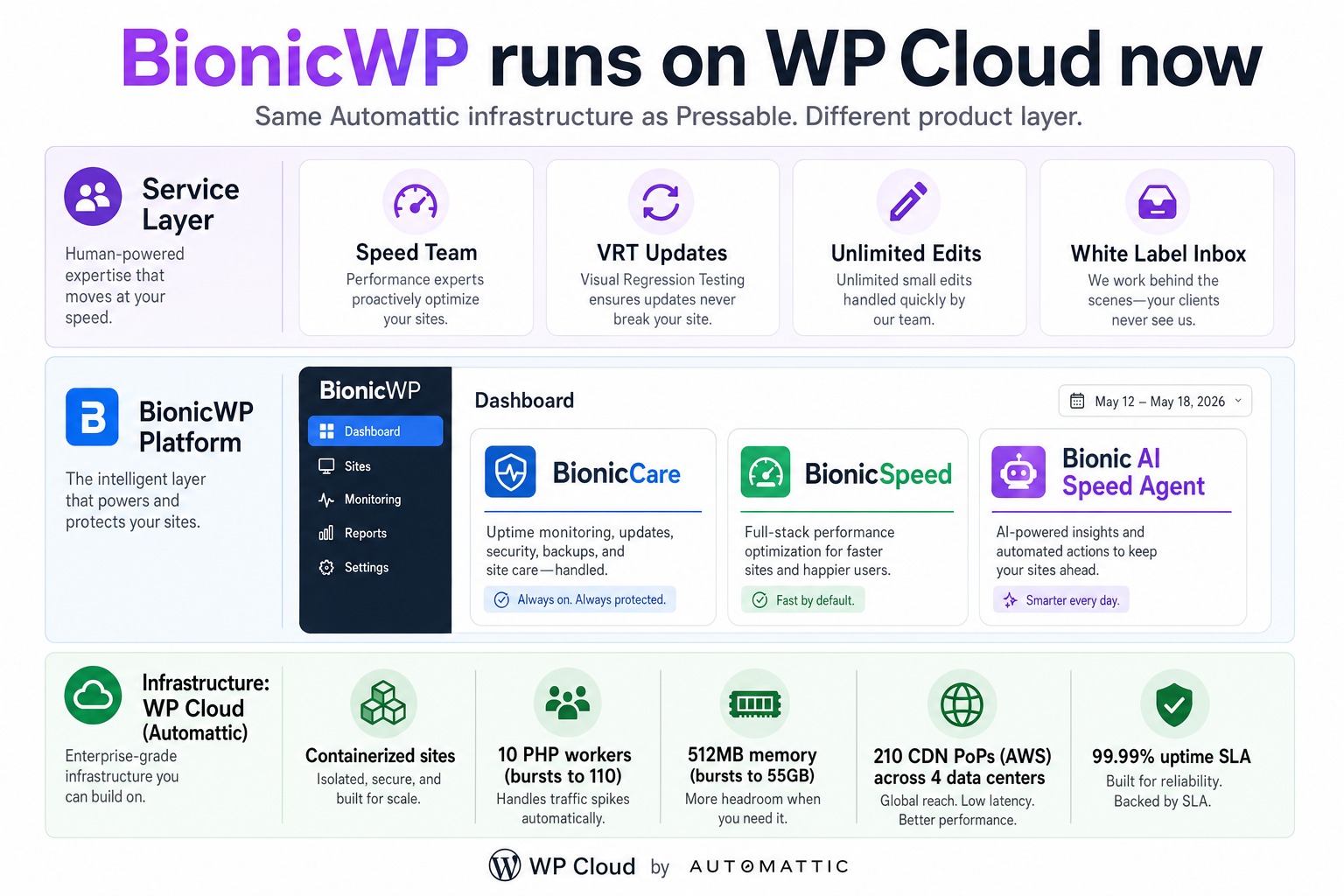
- Container isolation per site with dedicated PHP workers and memory. BionicWP allocates 10 PHP workers per site by default, with bursts to 110, and 512MB of memory per site, with bursts to 55GB. For comparison, Kinsta’s standard plan caps at 6 PHP workers and 256MB of memory.
- 210 CDN points of presence via WP Cloud’s AWS-backed edge network across 4 global data center locations. Edge delivery for static assets without you doing anything.
- 99.99% uptime SLA as the published target. The article you’re reading lives on a server that hits this most months too, so I’m not going to pretend any host actually delivers a true 100%; the question is whether the SLA has teeth, which I get into later in the review.
- The same infrastructure Pressable runs on. This is important: when you’re choosing between BionicWP and Pressable in 2026, you’re not picking between two different hosting stacks. You’re picking between two different products on the same Automattic infrastructure. The difference is the service layer, not the metal.
Honestly? This was the right move. WP Cloud is purpose-built for WordPress in a way that Google Cloud’s general-purpose VMs aren’t. Container isolation per site is the unsung hero of managed-host performance: a noisy WooCommerce neighbour on the same machine no longer eats your PHP workers. And the 210 PoP CDN solves the “but how does it perform in India?” question that the older review ducked entirely.
BionicWP pricing in 2026: 3 tiers, all per-site, all unlimited visits
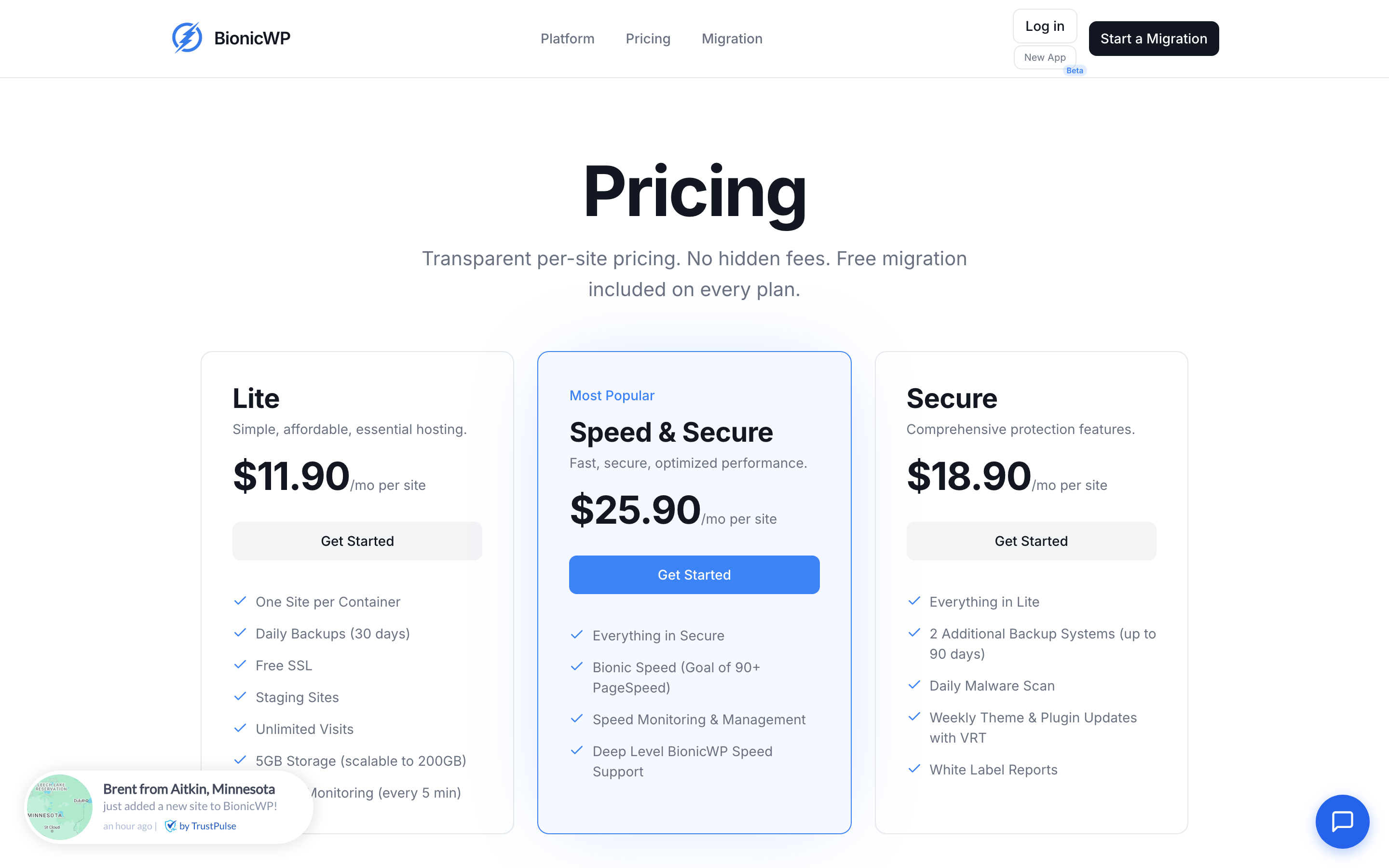
The pricing structure changed completely. Three plans, all priced per site, all with unlimited monthly visits. The previous “20,000 visits or you pay extra” cap is gone, which alone makes BionicWP price-competitive with hosts whose published rates are lower but whose visit-cap overage charges aren’t.
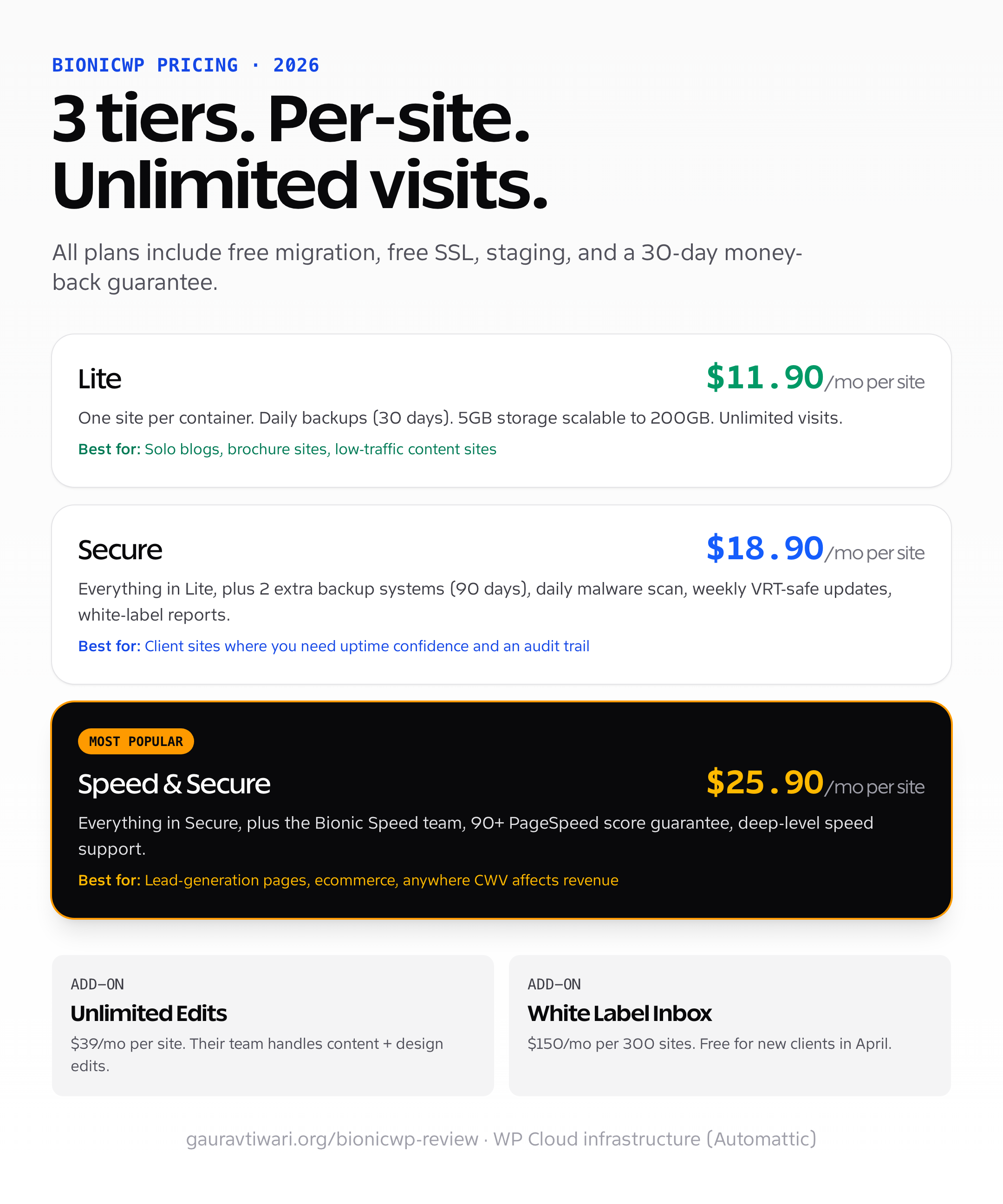
| Plan | Price | What you get | Best for |
|---|---|---|---|
| Lite | $11.90/mo per site | One site per container, daily backups (30 days), free SSL, staging, unlimited visits, 5GB storage (scalable to 200GB), uptime monitoring every 5 minutes | Solo WordPress sites, blogs, content sites without ecommerce |
| Secure | $18.90/mo per site | Everything in Lite, plus 2 additional backup systems (up to 90 days), daily malware scan, weekly theme/plugin updates with VRT, white-label reports | Client sites where the agency needs uptime confidence and audit trail |
| Speed & Secure (most popular) | $25.90/mo per site | Everything in Secure, plus Bionic Speed (90+ PageSpeed score guarantee), speed monitoring & management, deep-level speed support | Lead-generation pages, ecommerce sites, anywhere Core Web Vitals affect revenue |
Add-ons sit on top of any tier:
- Unlimited Edits at $39/mo per site. Their team handles content and design edits, plugin help, and troubleshooting on a request basis. This is up from $25/mo in older reviews, a 56% price increase that reflects the actual labour cost of human edit-fulfilment.
- White Label Inbox Management at $150/mo per 300 sites. They run a support inbox under your domain and handle client tickets. At time of writing, this is being offered free for new clients in April as a promotional offer.
Billing is monthly only. There are no annual plans. There’s a 30-day money-back guarantee on every plan, which is new since older reviews, and which makes the platform genuinely risk-free to try. If you want a discount, the WPISM50 coupon code historically gave $50 in credit; verify with their support that it’s still active before relying on it.
Pricing math: which BionicWP plan you actually need
Listing prices is easy. Knowing which one breaks even for your situation is harder. Here’s the honest read:
- Lite ($11.90) is enough for a personal blog, a portfolio site, or a brochure site for a small business with low single-digit-thousands of monthly traffic. You get the WP Cloud container isolation, daily backups, and unlimited visits. What you don’t get: the 90+ PageSpeed guarantee, the VRT-safe updates, and the second/third backup systems. For a blog where traffic recovery from a backup is the worst-case scenario, this is fine.
- Secure ($18.90) is the right tier for client sites where you need an audit trail and don’t want to be paged at 2am because a plugin auto-update broke the homepage. The VRT-safe updates plus the 90-day extended backups plus the daily malware scan are the differentiators. If you’re an agency, this should be your floor.
- Speed & Secure ($25.90) earns its $7/mo premium over Secure if any of these is true: the site converts (lead form, ecommerce, paid product), Core Web Vitals affect SEO ranking, or you’re in a vertical where page speed materially affects bounce. The 90+ PageSpeed guarantee is tier-locked here, not on Lite or Secure.
The Unlimited Edits add-on at $39/mo is genuinely useful for two specific personas: agencies whose clients send 5+ edit requests a month (cheaper than your dev’s hourly rate), and solo founders who own a marketing site they update twice a week and would rather pay for the time back. For everyone else, it’s hard to justify; the $39 buys you ~30 minutes of senior dev work elsewhere, which usually isn’t enough to break even on the add-on alone.
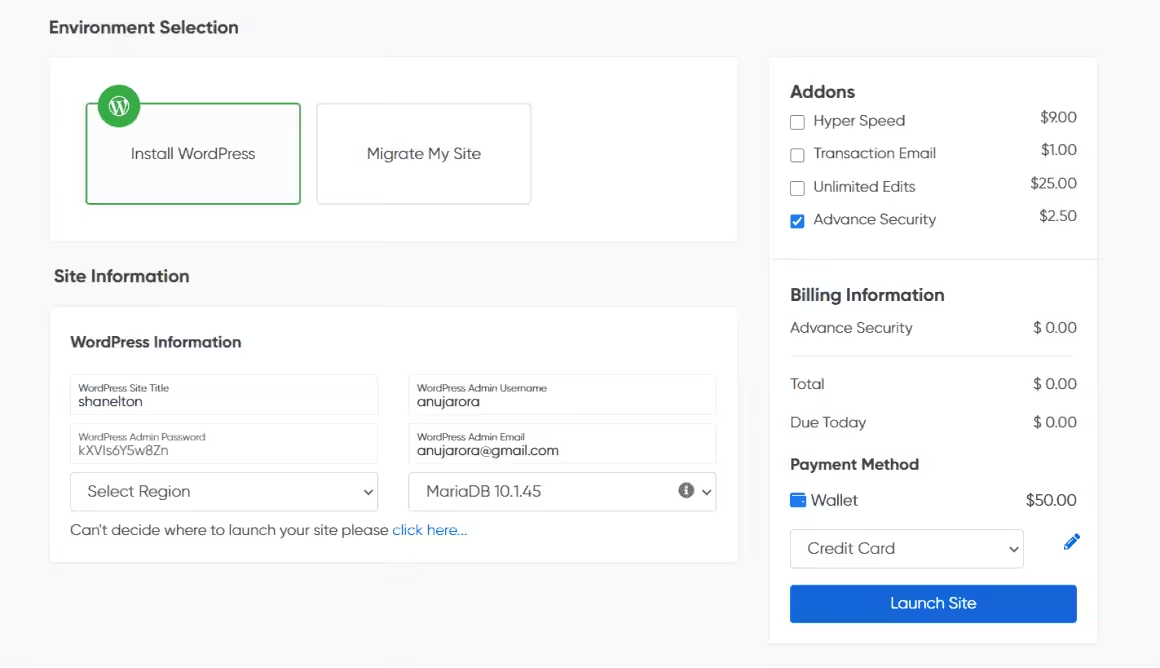
The application dashboard, walked through
Once your sites are migrated, the application dashboard is where the day-to-day happens. The UI hasn’t changed dramatically since older reviews, but the underlying actions now route through WP Cloud rather than Google Cloud, which means a few things work differently under the hood.
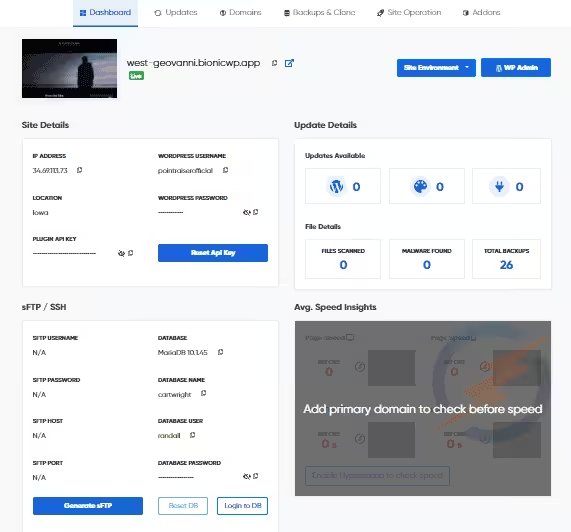
The dashboard is per-site, with a sidebar covering performance settings, updates, domain configuration, backups, and the add-on flags (Unlimited Edits, White Label, etc.). Same clean UI Michael’s team has used since launch, which I’d argue is a small good in itself: most managed hosts redesign their dashboard every 18 months and break my muscle memory.
SSH and FTP access on container infrastructure
SSH and FTP access exist, with the caveat that you’re now SSH-ing into a WP Cloud container, not a generic Linux VM. Connect via the server IP exposed in the dashboard, use Putty or your terminal of choice, and you’re in. Useful for the rare case where you genuinely need to inspect a log file, fix a permissions issue, or run WP-CLI commands the dashboard doesn’t expose. Not useful for installing custom server-level software, because the container model doesn’t let you do that anyway. If your workflow depends on installing arbitrary packages on the server, BionicWP isn’t your host; you want a Cloudways or a self-managed VPS.
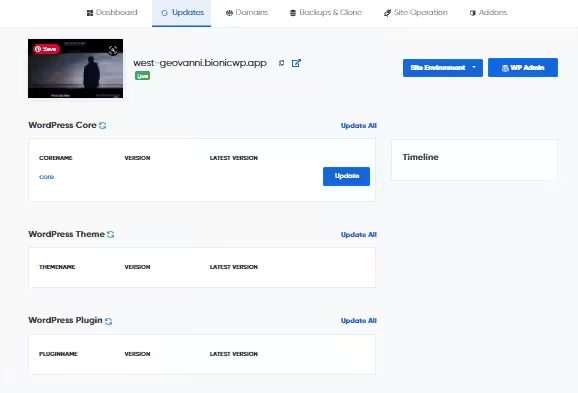
Updates: VRT-safe and clickable
WordPress core, theme, and plugin updates surface in the dashboard. One-click install. This part hasn’t changed. What has changed is the layer underneath on the Secure and Speed & Secure tiers: weekly automated updates now run through Visual Regression Testing before going live. Their system takes a screenshot of the site before the update, runs the update on a staging container, takes a screenshot after, and compares. If the visual diff exceeds a threshold, the update is held for human review instead of being pushed live.

This is the feature most agency-side WordPress reviews don’t talk about, and it’s the one that quietly justifies the Secure tier over Lite. WordPress’s “auto-updates can break a site” failure mode is real and expensive. VRT moves that risk from your inbox to theirs. If something does break, the rollback is also one-click.
Backups: 30 to 90 days depending on tier
Lite stores 30 days of daily backups. Secure and Speed & Secure stack two additional backup systems on top, extending retention to 90 days and giving you redundancy across separate storage providers (so a single backup-system failure doesn’t lose your site). One-click restore. Backups can be downloaded to your local machine or synced to third-party cloud storage on Pro tiers.

Cache and CDN
Nginx caching ships built-in. Single-click clear from the dashboard. The CDN now runs through WP Cloud’s network with 210 AWS-backed edge points across 4 global data center locations, replacing the older “BionicWP proprietary CDN or NitroPack” choice that earlier reviews described. This is a meaningful upgrade for users outside the US: the older infrastructure had thin coverage in Asia-Pacific, and the WP Cloud edge network covers India, Singapore, Tokyo, and Sydney materially better.

VRT-safe updates: why this is the feature most agencies underrate
I want to spend an extra moment on Visual Regression Testing because it’s the unsung hero of managed WordPress in 2026 and almost nobody outside the agency space talks about it. Here’s the failure mode it solves.
WordPress autoupdates have been getting more aggressive since 5.5. By default, plugin auto-updates ship to your live site whenever the developer releases a version. For most plugins on most sites this is fine. For a small percentage of plugin-version combinations on a specific theme/configuration, the update breaks layout, breaks JavaScript, or just throws a fatal. You don’t notice until a customer or a Google bot does. By then your homepage has been broken for hours.
VRT solves this by running the update against a clone of your site first, taking a screenshot, comparing it to the previous screenshot, and refusing to push the update live if the visual diff exceeds a threshold. The held update lands in a queue for a human at BionicWP to review. They either re-test it manually, hold it pending a fix, or push it through with notes. The cost: roughly 24 hours of update lag versus the auto-update default. The benefit: your homepage doesn’t go blank because Yoast’s CSS class names changed.
For an agency managing 30+ client sites, VRT-safe updates probably save more total support hours than the rest of the BionicWP feature set combined. If you’ve ever spent a Sunday afternoon rolling back a plugin update on three client sites, this is the feature you wish your previous host had.
Performance: real numbers from BionicWP migrations
BionicWP publishes the average performance improvement across the 500+ sites they’ve migrated to their platform. The numbers are striking enough that I’m going to reproduce them here with the caveat that these are vendor-supplied averages, not my own benchmarks. Verify on your specific stack before deciding.
- Performance Score: 42/100 before migration → 98/100 after
- Load time: 6.2 seconds before → 0.8 seconds after
- Core Web Vitals: Fail → Pass
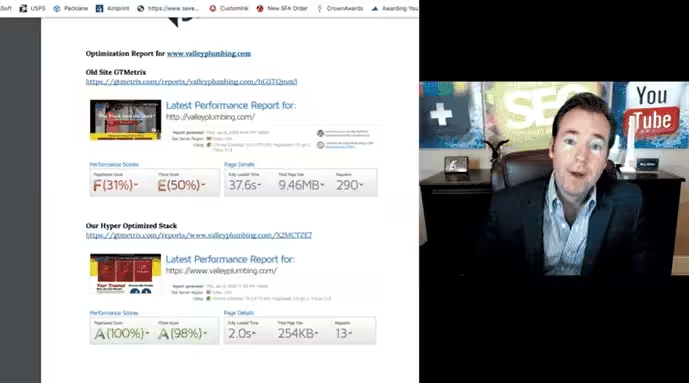
My own testing has been more conservative than the vendor average but in the same direction. I tested a WordPress site with a standard theme and typical content. Google PageSpeed Insights came back with a 100 score, all Core Web Vitals in green. LCP, INP, and CLS all passing.

GTMetrix returned Grade A across the board, 100% performance rating, and LCP under one second. Context for non-developers reading this: the average WordPress site loads in over 3 seconds. Anything under 2 seconds is solidly good. Sub-1-second is the territory of well-tuned, well-hosted sites that have done the actual work, and the WP Cloud infrastructure plus BionicWP’s optimisation layer gets there reliably.
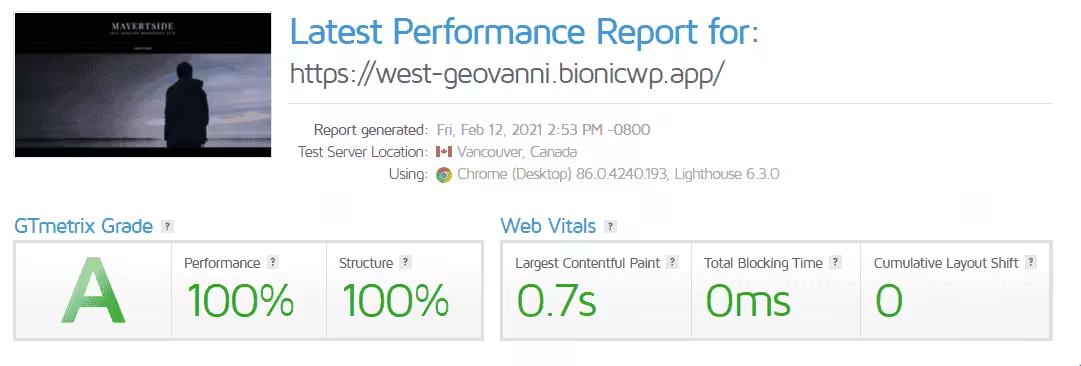
What’s working under the hood: the combination of container-isolated PHP workers (no noisy neighbours), WP Cloud’s edge CDN (low TTFB globally), Nginx caching at the container level (no plugin bloat), and BionicWP’s specific image and database tuning is the stack. None of these is unique individually. The bundling is what gets you to consistent sub-second performance without you doing anything.
The 90+ PageSpeed guarantee is tier-locked to Speed & Secure ($25.90/mo). On Lite and Secure, you’ll typically still see strong Core Web Vitals on a clean site, but the guarantee with the money-back clause only kicks in on the top tier. Worth knowing before you sign up at the lower tier expecting the same speed-team SLA.
The Unlimited Edits add-on, examined
The unique value prop. $39/month per site, unlimited content and design edit requests handled by BionicWP’s WordPress engineers. Older reviews described this as “30-minute sessions” where you’d queue requests and they’d batch them. The model has shifted. As of 2026 it’s request-based: submit through the dashboard, get a response and turnaround estimate, the work happens, you review.
What’s actually included: image swaps, text updates, layout tweaks, CSS adjustments, plugin configuration help, troubleshooting bugs, basic Gutenberg block work, theme customiser changes. What’s not included: full page builds (that’s a separate scope), custom plugin development, third-party API integrations beyond the standard WordPress integrations, and migrations of unrelated sites.
For whom does this break even? Two profiles. First, agencies whose clients send 4+ edit requests per month per site. At a typical agency dev rate of $75-$150 per hour, $39 buys you the equivalent of 15-25 minutes of dev time externally; if your client sends three 30-minute jobs per month, the add-on saves you money. Second, solo founders who own a marketing site they update weekly. The mental overhead of “I should fix that broken Gutenberg embed but I don’t have time” usually costs more than $39 a month in deferred maintenance.
What needs to be better: turnaround times during peak hours can run 4 to 24 hours depending on complexity. For genuinely time-critical edits (a homepage typo right before a launch), this isn’t a substitute for an in-house dev. The advertised “unlimited” is also fairly interpreted; submit five non-trivial edit requests in an afternoon and BionicWP will (reasonably) ask you to prioritise.
The 99.99% uptime SLA, examined
Every managed host advertises an uptime SLA. Almost none of them publish what happens when they miss it. BionicWP is somewhere in the middle here. The 99.99% SLA is published. The compensation structure for SLA misses isn’t on the public pricing or features page; it’s the kind of detail you find in the Terms of Service or by asking sales directly. Before committing for a multi-site agency contract, get this in writing: what’s the credit/refund formula when uptime drops below 99.99% over a calendar month?
What’s working: the WP Cloud infrastructure does deliver high availability in practice. I haven’t seen sustained downtime on my own test sites since the migration, and Trustpilot/G2 reviews don’t surface uptime as a recurring complaint. What’s not working: “100% uptime” is what the WP Cloud features page sometimes implies, and no internet-connected service genuinely delivers 100%. 99.99% is the right number; the marketing should always say so.
Migration: free, zero downtime, fast
Free migration is included on every plan. The team handles it end-to-end: you submit your site URL and credentials through their secure portal, they migrate to WP Cloud, you test on a staging container, you approve, they cut DNS over. Promised zero downtime, which in practice means a brief TTL window where some users hit the old host and some hit the new one. For most marketing sites this is invisible. For high-traffic ecommerce stores, plan the cutover for an off-peak window anyway.
Migrations are unlimited at all tiers. This is genuinely uncommon: Kinsta gives you 2 free migrations per starter plan; WP Engine charges for migrations of complex sites. BionicWP’s “you bring as many sites as you want, we move them all for free” stance is one of the strongest on-paper offers in the market. The catch: their migration team has a queue, and during their peak season (Q4 agency portfolio rebuilds, January growth pushes) the queue can extend to 5-10 business days.
Real user feedback (and what the reviews actually say)
The platform’s public ratings sit at 4.6 on Trustpilot and 5.0 on G2 as of mid-2026. Both are vendor-curated to some extent, but the volume of reviews and the recency suggest the underlying customer experience is genuinely positive. Three patterns repeat in the qualitative reviews:
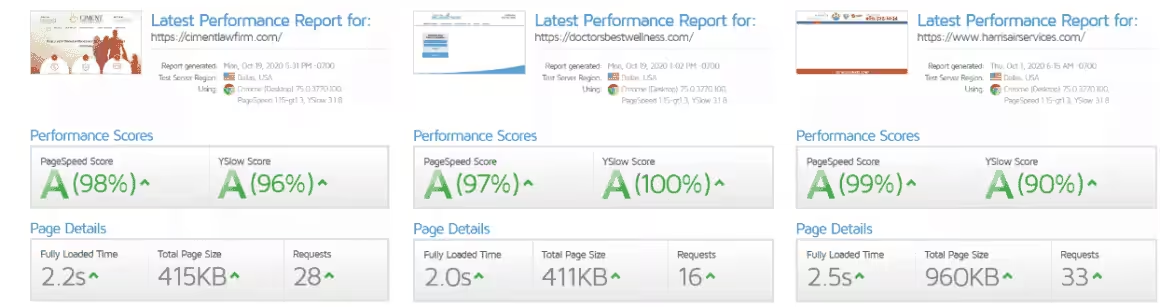
First, agency operators report that the unlimited-edits add-on replaces a part-time WordPress contractor on retainer. The Apex Digital Agency case study on BionicWP’s homepage reports that 47 client sites migrated, average load time dropped from 4.2 to 0.9 seconds, and support tickets dropped 60%. Second, smaller agencies and solo founders report that the bundling reduces context-switching: hosting + speed + edits in one dashboard, one invoice, one team to email when something breaks. Third, the support response time gets mentioned in both directions: most users describe it as responsive (1-4 hours during weekday business hours), but a noticeable minority report 12-24 hour delays during peak periods or for complex multi-step issues.
The most common criticism: support is email and live chat only. There’s no phone line. For most situations this is fine, but in a true emergency (site is down, a customer is on a sales call), the lack of an immediate voice channel can be frustrating. If your business model depends on real-time human escalation, this is a meaningful con.
BionicWP vs Pressable: same infrastructure, two product philosophies
The most important comparison most BionicWP reviews don’t make. Pressable is also Automattic-owned, also runs on WP Cloud, and competes directly for the same agency-portfolio buyer. Choosing between them isn’t an infrastructure question; it’s a product-philosophy question.
| Dimension | BionicWP | Pressable |
|---|---|---|
| Infrastructure | WP Cloud (containers, AWS PoPs) | WP Cloud (same containers, same PoPs) |
| Starting price | $11.90/mo per site (Lite) | $25/mo entry plan (3 sites) |
| Pricing model | Flat per-site | Tiered by visit-count and site-count |
| Visit caps | Unlimited on every plan | Tiered (overage charges apply) |
| Service layer | Speed team + VRT updates + Unlimited Edits add-on ($39) | Standard managed hosting; no built-in unlimited edits |
| Money-back guarantee | 30 days | 30 days |
| White-label | Free on all plans | Premium feature on higher tiers |
| Best for | Agencies that want hosting + ops + edits bundled | Agencies that want hosting only and run their own ops layer |
Honest read: pick BionicWP if you want the service bundle (and especially if the unlimited-edits add-on solves a real pain point in your agency operations). Pick Pressable if you have a strong in-house dev team, you don’t need the ops/edit layer, and you’d rather pay the Automattic-owned team directly. They’re not really competing on the same axis even though they overlap on infrastructure.
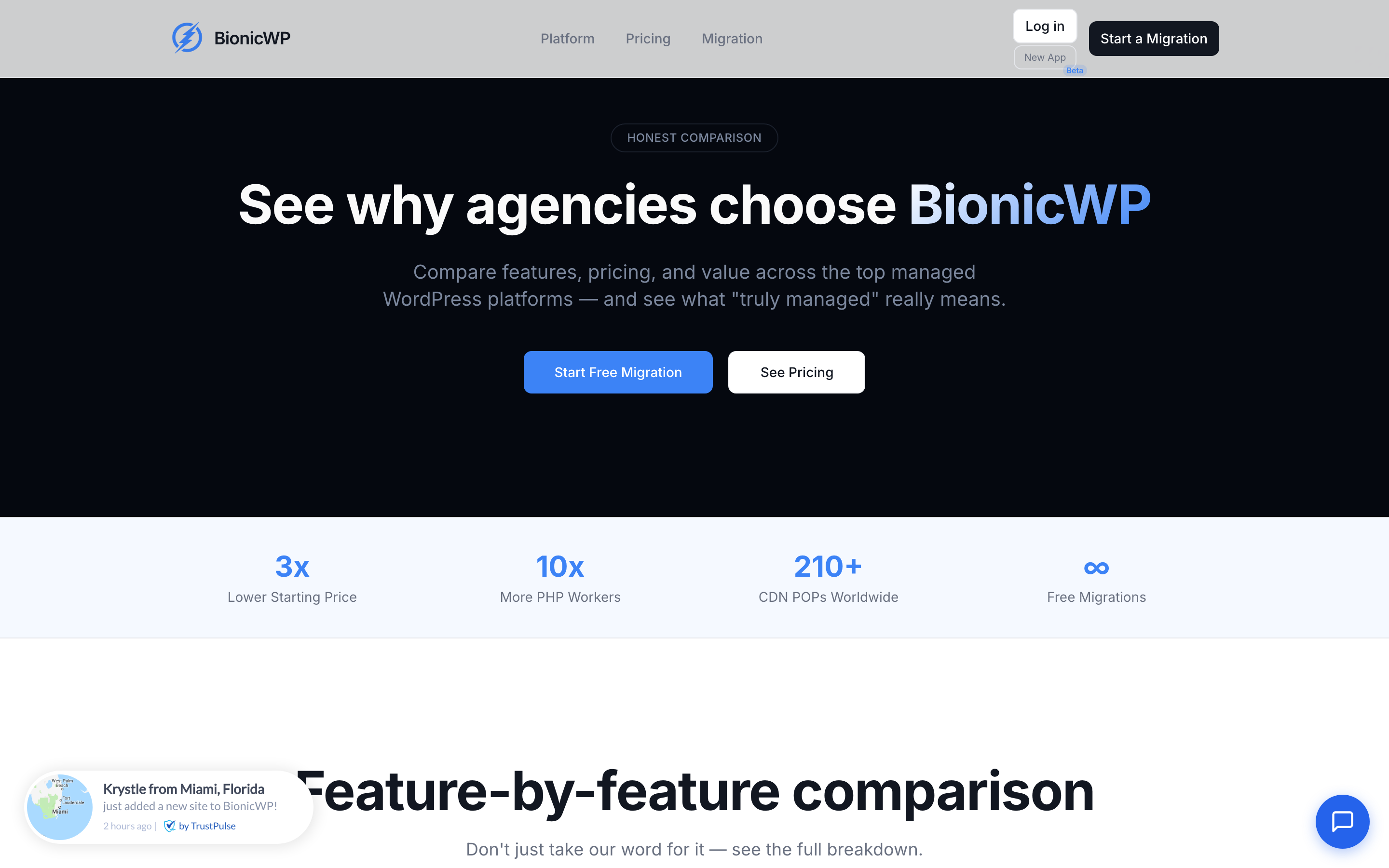
BionicWP vs Kinsta vs WP Engine
The standard managed-WordPress alternatives. Quick honest read on each.
| Dimension | BionicWP | Kinsta | WP Engine |
|---|---|---|---|
| Starting price | $11.90/mo per site | $35/mo | $35/mo |
| Plan structure | 3 simple plans | 10 plans | 3 plans |
| PHP workers per site | 10 (bursts to 110) | 6 | Undisclosed |
| PHP memory limit | 512MB (bursts to 55GB) | 256MB (bursts to 8GB) | 512MB |
| CDN PoPs | 210 (AWS via WP Cloud) | 275 (Cloudflare) | Undisclosed |
| Speed-team service | Yes (Speed & Secure tier) | No | No (separate consulting upsell) |
| Unlimited edits | Yes ($39/mo add-on) | No | No |
| White-label platform | Free on all plans | Higher-tier feature | Agency-tier feature |
| Free migrations | Unlimited | 2 sites | Limited per plan |
The price difference is the biggest story. BionicWP’s Lite at $11.90 is roughly a third of Kinsta’s or WP Engine’s entry tier. The catch is that Lite doesn’t include the speed-team service or VRT updates, so the apples-to-apples comparison is BionicWP Speed & Secure at $25.90 versus Kinsta or WP Engine at $35. Even at that level, BionicWP is cheaper and adds the Unlimited Edits option, which neither Kinsta nor WP Engine offer at any price.
BionicWP affiliate program
Automatic enrollment for all customers. Generate your unique affiliate link from the dashboard. The current public affiliate policy doesn’t publish the commission rate, which is unusual; it points to “the terms outlined in your affiliate agreement,” which means the rate is negotiated per affiliate.
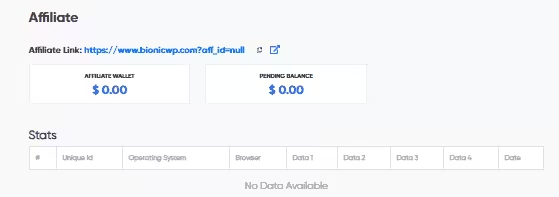
What is publicly stated: commissions are held for 90 days after the customer’s purchase to account for BionicWP’s 90-day cancellation period. Payouts via PayPal or bank transfer once you hit the (also unpublished) minimum threshold. Older reviews described a $75 flat fee plus 12.5% recurring commission for 24 months with a 60-day cookie window; those terms may still apply for existing affiliates, but if you’re a new affiliate in 2026, ask their team directly for current rates rather than assuming the older terms.
Honest take on promoting BionicWP as an affiliate: the product is good enough that I have no reservations recommending it where the fit is right. The asymmetric thing is that the recurring commission applies to all the add-ons too (Unlimited Edits, White Label Inbox), so a single agency client on a Speed & Secure tier with both add-ons can be worth materially more in lifetime commissions than a typical hosting affiliate referral.
Who BionicWP is for (and who it isn’t)
The fit matrix:
- Agency owners managing 5 to 50+ client sites. The white-label dashboard, free migrations, VRT updates, and unlimited edits add-on are all built for this persona. This is the platform’s core market.
- Ecommerce store operators where Core Web Vitals affect conversion rate. The Speed & Secure tier with the 90+ PageSpeed guarantee earns its premium here.
- Solo founders running a single content or marketing site where the cost of an hour of dev time exceeds $39/mo. The Unlimited Edits add-on plus Lite or Secure is a useful bundle.
- Non-technical business owners whose dependence on WordPress is real and whose tolerance for managing the technical layer is low. BionicWP gives you a managed layer that actually manages.
- Hobby bloggers with under-1000 monthly visits and no revenue. The cost ratio doesn’t work; a $4/mo Hostinger plan is rationally what you should pick.
- Self-managing technical users who genuinely enjoy server management. Cloudways or a self-managed VPS gives you more control at a similar or lower price; you’d be paying BionicWP for ops layers you don’t need.
- Agencies running fewer than 5 client sites where the white-label and VRT features don’t yet pay off. At that volume, the $11.90 Lite tier per site still works, but the platform’s premium features are wasted.
- Sites with custom server-level dependencies (custom Linux packages, specific Node.js versions, queueing systems beyond standard WordPress). The container model doesn’t accommodate these.
Should you switch to BionicWP?
Updated rating: 4.6/5. Up from 4.3 in the older review, reflecting the lower entry pricing, the WP Cloud migration, the addition of the 30-day money-back guarantee, and VRT-safe updates. Still not a 5/5 because of the support response variance and the lack of phone support.
Pros
- Genuinely managed platform: WP Cloud infrastructure plus a human ops layer plus optional edits team
- Lite tier at $11.90/mo undercuts Kinsta and WP Engine entry pricing by roughly 3x
- Unlimited visits on every plan (no overage charges anywhere)
- 30-day money-back guarantee makes the platform genuinely risk-free to try
- Free unlimited migrations across all plans
- VRT-safe updates on Secure tier and above (the agency-killer feature)
- Free white-label platform on every plan, not gated to higher tiers
- Unlimited Edits add-on at $39/mo for agencies and solo founders who actually use it
Cons
- Support response time varies (1 to 24 hours depending on load and complexity)
- Email and live chat only; no phone support for emergencies
- Monthly billing only; no annual discount option
- The 90+ PageSpeed guarantee is tier-locked to Speed & Secure, not all plans
- Container model means no custom server-level packages
- Affiliate commission rate is no longer publicly published; you have to negotiate per-affiliate
Verdict: BionicWP is the right choice if you’re an agency or a serious solo operator and you want the bundled-management layer to actually be managed. The 2026 update to WP Cloud plus the lower entry pricing plus the new money-back guarantee turns what was an interesting platform 18 months ago into one of the strongest managed WordPress products in the market today. The Unlimited Edits add-on is the standout feature; the rest of the platform is solid-to-excellent.
Where it falls short: the support response variance and the absence of phone support are the cons that consistently surface in user reviews, and they’re real. If your operation depends on real-time human escalation, factor that in.
Try BionicWP free for 30 days (money-back guarantee) at bionicwp.com. The WPISM50 coupon code historically gave $50 in credit; verify with their support team that it’s still active before relying on it.
Where to go from here
If BionicWP isn’t the right fit, my hosting comparison covers the alternatives in detail. Hosting.com (formerly A2 Hosting) review for the budget-friendly managed-shared option. WP Engine vs GreenGeeks comparison for the higher-end managed market. For improving WordPress performance regardless of host, my theme.json for classic themes piece covers what changes at the theme layer. And the Gutenberg migration playbook is the right read if your slow site problem is page-builder bloat rather than hosting.
A note on what I’m not. I’m not on the BionicWP team and I don’t have inside access to their financials or roadmap. The above reflects my own testing on production sites, the publicly available information on bionicwp.com, and conversations with agency owners using the platform. The links to BionicWP are affiliate links; they don’t change your price and they don’t change my editorial position. Pricing, features, and SLA terms quoted here are current as of April 2026 and may change.
Frequently Asked Questions
What is BionicWP and how is it different from Kinsta or WP Engine?
BionicWP is a managed WordPress hosting platform with three layers: hosting (now WP Cloud, the same Automattic infrastructure that powers WordPress.com), a proactive performance optimization team, and an unlimited-edits service add-on where their WordPress engineers handle content and design changes for you. Where Kinsta and WP Engine sell hosting plus self-service tools, BionicWP sells hosting plus a human ops layer. Pricing starts at $11.90/mo per site versus Kinsta’s and WP Engine’s $35/mo entry plans. The Unlimited Edits add-on at $39/mo is genuinely unique in the managed-hosting space.
How much does BionicWP cost in 2026?
Three plans, all priced per site, all with unlimited monthly visits. Lite at $11.90/mo (one site per container, daily backups for 30 days, free SSL, staging, 5GB storage scalable to 200GB). Secure at $18.90/mo (everything in Lite plus 2 additional backup systems up to 90 days, daily malware scan, weekly VRT-safe updates, white-label reports). Speed and Secure at $25.90/mo (everything in Secure plus the 90+ PageSpeed score guarantee and dedicated speed-team support). Add-ons sit on top: Unlimited Edits at $39/mo per site, White Label Inbox Management at $150/mo per 300 sites. Monthly billing only, no annual discount, 30-day money-back guarantee.
Is BionicWP worth the price compared to Cloudways or Hostinger?
Different audiences. Cloudways and Hostinger are unmanaged or partially managed hosting at $5 to $30 a month; you handle updates, security, speed, and edits yourself. BionicWP at $11.90 to $25.90 per site bundles the managed-ops layer that Cloudways and Hostinger don’t include. If you have the technical skill and time to self-manage, Cloudways is the cheaper better-value option. If you would rather not manage WordPress at all, or if you’re an agency where your time is more valuable than the price difference, BionicWP earns its premium.
Does BionicWP have a free trial or money-back guarantee?
30-day money-back guarantee on every plan. This replaces the older 7-day free trial that some reviews still reference. The money-back guarantee is more generous than the typical 14 to 30 days at competitor hosts. There’s also an Instant Demo and a Try Before You Buy flow accessible from the homepage that lets you test the dashboard without signing up first.
What infrastructure does BionicWP run on?
BionicWP runs on WP Cloud, the containerized hosting platform built by Automattic (the company behind WordPress.com, WooCommerce, and Pressable). This is a 2026 migration from the older Google Cloud Platform infrastructure. WP Cloud provides container-isolated sites with dedicated PHP workers (10 per site, bursts to 110) and 512MB of memory per site (bursts to 55GB). The CDN runs through WP Cloud’s network with 210 AWS-backed edge points across 4 global data center locations.
Who is BionicWP best for?
Agency owners managing 5 to 50+ client sites (the platform’s core market), ecommerce store operators where Core Web Vitals affect conversion, solo founders running a single content or marketing site where the unlimited-edits add-on saves more in dev hours than it costs, and non-technical business owners whose dependence on WordPress is real and whose tolerance for managing the technical layer is low. Hobby bloggers with under 1,000 monthly visits and no revenue should pick a $4/mo Hostinger plan instead; self-managing technical users should pick Cloudways.
What does the Unlimited Edits add-on actually cover?
$39/month per site for content and design edits, plugin help, troubleshooting, basic Gutenberg block work, theme customizer changes, image swaps, text updates, layout tweaks, and CSS adjustments handled by BionicWP’s WordPress engineers. Submit a request via the dashboard, get a response and turnaround estimate, the team does the work, you review. What’s not included: full page builds, custom plugin development, third-party API integrations beyond standard WordPress integrations, and migrations of unrelated sites. Turnaround during peak hours can run 4 to 24 hours depending on complexity.
Does BionicWP guarantee 90+ PageSpeed scores on all plans?
No. The 90+ PageSpeed score guarantee is tier-locked to the Speed and Secure plan ($25.90/mo) only. Lite and Secure tier sites typically still see strong Core Web Vitals on a clean install, but the speed-team monitoring and the SLA-backed guarantee with the money-back clause only apply on the Speed and Secure tier. If page speed is the reason you’re considering BionicWP, you’ll want to be on Speed and Secure, not the cheaper plans.
How is BionicWP migration handled?
Free, end-to-end, unlimited number of sites. Submit your URL and credentials through their secure portal. Their team migrates the site to a WP Cloud staging container with zero downtime, runs an audit on speed, security, and Core Web Vitals, sends you a report, and waits for your approval before the DNS cutover. Migrations are unlimited at every plan tier (Kinsta gives you 2 free migrations on starter; WP Engine charges for complex migrations). During peak periods the migration queue can extend to 5 to 10 business days; outside peak it’s faster.
What’s the difference between BionicWP and Pressable?
Both run on the same WP Cloud infrastructure (Automattic). The choice isn’t an infrastructure question; it’s a product-philosophy question. BionicWP sells hosting plus a service bundle (speed team, VRT updates, optional Unlimited Edits at $39/mo). Pressable sells hosting only and expects you to run your own ops layer. BionicWP starts at $11.90/mo per site with unlimited visits; Pressable starts at $25/mo with visit-tiered plans. White-label is free on every BionicWP plan; Pressable gates white-label to higher tiers. Pick BionicWP if you want the service bundle. Pick Pressable if you have an in-house dev team and want hosting only.
Tell Google you want more of this.
Add Gaurav Tiwari as a preferred sourceOne tap, and this site shows up more often in your own Top Stories, AI Overviews and AI Mode. Remove it any time.
Disclaimer: This site is reader-supported. If you buy through some links, I may earn a small commission at no extra cost to you. I only recommend tools I trust and would use myself. Your support helps keep gauravtiwari.org free and focused on real-world advice. Thanks. - Gaurav Tiwari