
15 Best Biology Books for College Students
Most biology textbooks are 1,000+ pages and cost over $200. Picking the wrong one wastes both your money and your semester. I put together this list with help from MBBS, MD, and college professor friends who actually teach from these books.
The 15 books below cover three categories: comprehensive biology (for intro courses), botany, and zoology. Each one is used in real classrooms and rated highly by students worldwide. I’ve included the edition that’s currently worth buying.
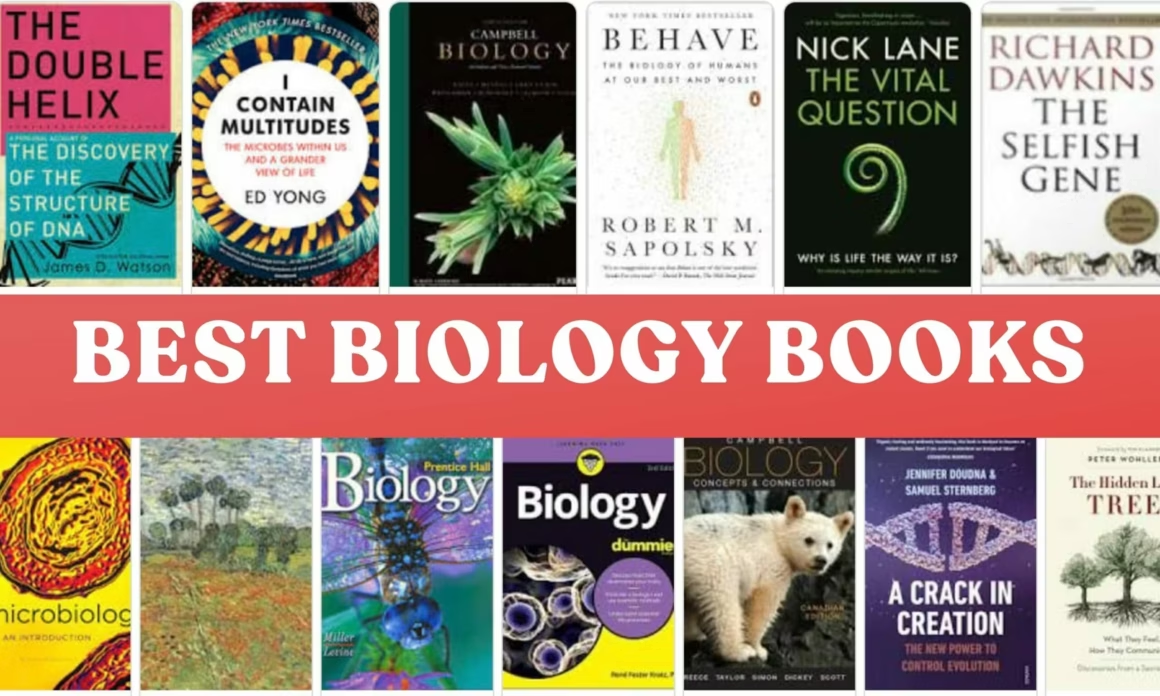
Every book on this list was recommended by at least two biology professors or is a standard adoption in university courses. I prioritized clarity of writing, quality of illustrations, and how well the book actually helps students pass exams. Supplementary materials (online quizzes, practice problems) were a bonus.
Best Biology Books for College and Self Study
These five textbooks cover both botany and zoology in a single volume. They’re the ones you’ll most likely be assigned in a general biology course. If you’re not sure which category you need, start here.
Campbell Biology Textbook
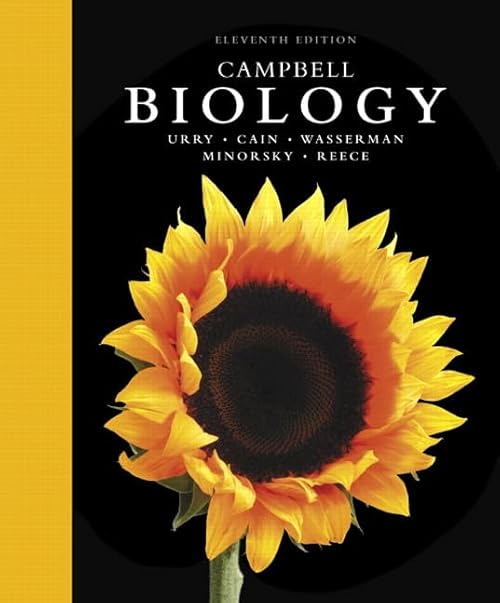
Campbell Biology (11th Edition)
- The gold standard intro biology textbook, widely called the Bible of Biology
- Covers cell biology, genetics, evolution, ecology, and physiology in 56 chapters
- Full-color illustrations and photographs on every page
- Hands-on activities and exercises integrated into each chapter
- MasteringBiology online resources with practice problems and tutorials
- Used in more college biology courses worldwide than any other textbook
Campbell Biology is the textbook that other biology textbooks are measured against. Written by a team of practicing biologists and professors, it’s been the standard for college-level biology courses for over a decade. The 11th edition adds new hands-on activities and exercises designed to develop deeper understanding.
What sets Campbell apart is the combination of clear writing, innovative art, and a logical progression through topics. The layout keeps you engaged and helps you retain information. The one downside: you need a separate purchase to access the MasteringBiology companion resources, which include the practice problems you’ll want for exam prep.
Biology by Eldra Solomon et al.
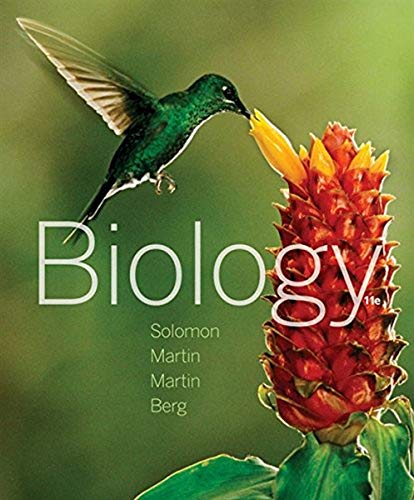
Biology by Eldra Solomon et al. (11th Edition)
- Built-in learning system with core concepts and objectives for every chapter
- Chapter summaries and self-assessment quizzes after each section
- Designed specifically for biology majors at the introductory level
- Strong focus on information retention through spaced practice
- Written by practicing biologists and experienced educators
- Clear structured layout that guides you through fundamentals step by step
If you’re planning to major in biology, this is the textbook designed specifically for you. The 11th edition is structured like a built-in study guide: each chapter starts with core concepts, moves through learning objectives, and ends with summaries and self-assessment quizzes. Information retention is the main goal, and the layout delivers on that promise.
The writing is student-friendly without being dumbed down. Plenty of opportunities to test your knowledge as you go. The main drawback is price, and you’ll need to buy a separate product for quiz solutions.
Prentice Hall: Biology
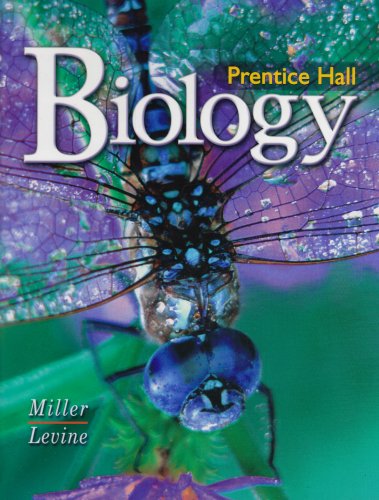
- Comprehensive intro text ideal for high school and early college biology
- Full-color pages with reading strategies and study hints throughout
- Worksheets available for each section for hands-on practice
- Online resources for both in-class and virtual learning
- Friendly engaging tone with career exploration for biology students
- Great refresher before taking college-level biology courses
Prentice Hall Biology is the best pick if you’re bridging the gap between high school and college biology. The tone is friendly (even humorous in places), the pages are full-color, and it includes study hints and reading strategies that most textbooks skip. Worksheets for each section and online resources make it work for both classroom and self-study.
The book also covers career possibilities in biology, which is surprisingly useful for students still figuring out their path. The only caution: the sheer volume of information can be overwhelming if you’re not taking a full two-semester course.
Biology by Peter Raven et al.
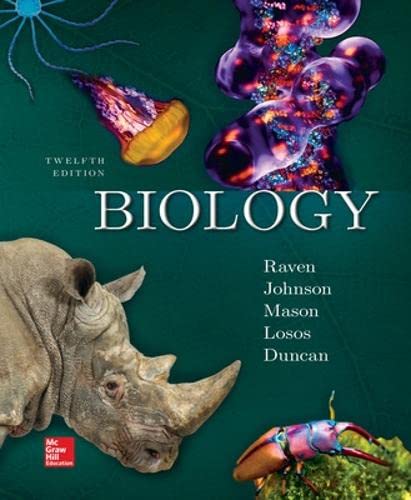
Biology by Peter Raven et al. (12th Edition)
- Emphasizes the organizing power of evolution across all biology topics
- 1472 pages with beautiful graphics, tables, and detailed explanations
- Integrates cell biology, molecular biology, and genomics throughout
- Two tables of contents: brief overview and detailed topic index
- Strong focus on critical thinking and data analysis skills
- Suitable for both beginners and biology majors
At 1,472 pages, this is one of the thicker biology textbooks available. But the 12th edition earns every page. Unlike many peers, Raven’s Biology emphasizes evolution as the organizing principle across all topics. It integrates cell biology, molecular biology, and genomics in a way that feels modern and cohesive.
The book features two tables of contents (brief and detailed), beautiful graphics, and a strong focus on critical thinking and data analysis. It’s consistently one of the highest-rated biology textbooks among students. Good for both beginners and biology majors who want depth without sacrificing readability.
Molecular Biology of the Cell
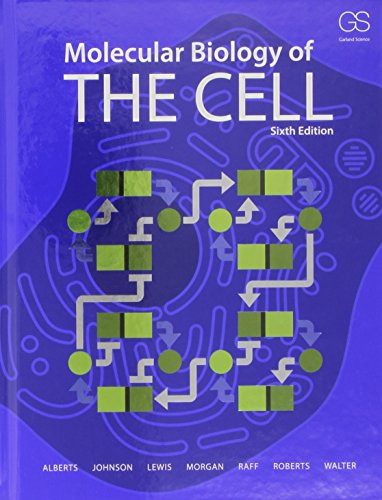
Molecular Biology of the Cell (6th Edition)
- The definitive reference for cell and molecular biology at graduate level
- Extensively revised with the latest cell biology research
- Explains not just what we know but how we know it
- Striking illustrations and diagrams of cellular processes
- Covers real-life applications, research studies, and social context
- Essential for careers in molecular biology, genetics, and biomedical research
Often called “the bible of the natural world,” this textbook is for upper-level and graduate students. The 6th edition condenses the ever-expanding ocean of cell biology knowledge into clear, concise principles with striking illustrations.
What makes this book unique is its emphasis on how we know things, not just what we know. It motivates you to think like a researcher. If you’re pursuing a career in molecular biology, genetics, or biomedical research, this is the reference you’ll keep on your shelf for years.
Best Botany Books
These five books focus specifically on plant biology. Whether you need a comprehensive botany textbook for a course or want to explore specialized topics like plant pathology or medicinal plants, there’s an option here for you.
Botany: An Introduction to Plant Biology
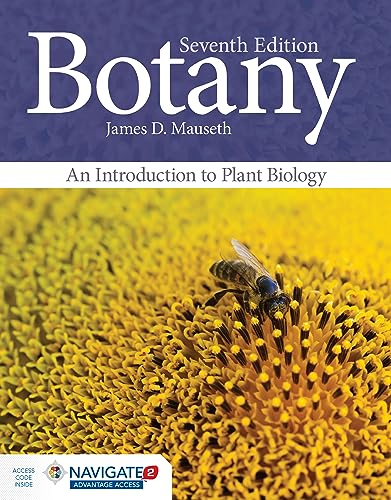
Botany: An Introduction to Plant Biology (7th Edition)
- Covers plant structure, development, ecology, genetics, and evolution
- 844+ pages with rich illustrations, diagrams, charts, and photographs
- End-of-chapter summaries and exercises for self-assessment
- Includes a comprehensive glossary of botanical terminology
- Suitable for undergraduate courses and self-study
- One of the most highly-rated plant biology textbooks available
The 7th edition covers everything you need to know about plants without overwhelming you. It’s divided into sections on plant structure, development, ecology, and genetics/evolution. At 844+ pages with rich illustrations and a comprehensive glossary, it’s thorough but approachable.
Each chapter ends with summaries and exercises so you can test yourself as you go. It works equally well for undergraduate courses and independent learners interested in plants from any discipline.
Stern’s Introductory Plant Biology
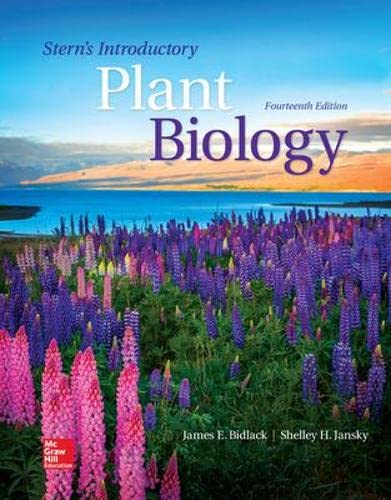
Stern's Introductory Plant Biology (14th Edition)
- Updated with the latest discoveries in botany from around the globe
- New content on biotechnology, molecular biology, ecology, and evolution
- Engaging writing style that makes complex topics accessible
- New figures and tables for visual understanding of plant processes
- Comprehensive introduction suitable for one- or two-semester courses
- Avoids unnecessary detail while covering all essential topics
The 14th edition of Stern’s is the best option if you want a botany textbook that stays current. It’s been updated with the latest discoveries and includes new content on biotechnology, molecular biology, ecology, and evolution. The writing is engaging and avoids bogging you down in unnecessary detail.
New figures and tables throughout the text make complex topics easier to visualize. If you want a comprehensive but efficient introduction to plant biology, this is the one I’d recommend.
What a Plant Knows: A Field Guide to the Senses
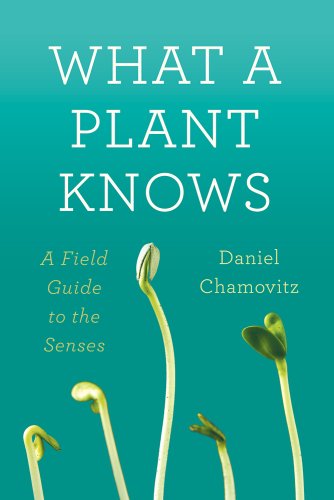
What a Plant Knows by Daniel Chamovitz
- Explores how plants see, smell, taste, feel, and respond to environment
- Written for a general audience with no prior science background needed
- Covers plant communication, consciousness, and intelligence
- Practical advice for gardeners alongside scientific discoveries
- Gripping stories connecting plant biology to human biology
- A unique perspective on botany not found in standard textbooks
This isn’t a standard textbook. Daniel Chamovitz explores how plants see, smell, taste, and feel their environment. He explains that plants have senses similar to ours but working through completely different mechanisms. It’s fascinating science presented in a way that anyone can enjoy.
The book also covers plant communication, consciousness, and intelligence. If you’re a gardener or just curious about the hidden world of plants, this is the most engaging read on the list. It’s loaded with quality scientific information you won’t find in any standard botany textbook.
Medical Botany: Plants Affecting Human Health
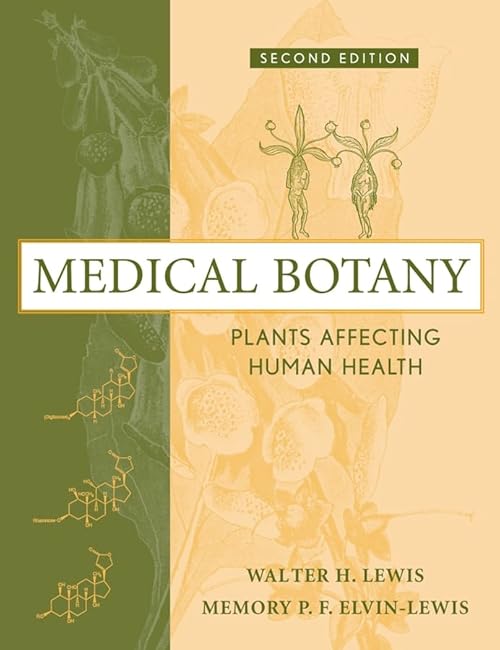
Medical Botany: Plants Affecting Human Health
- Covers hundreds of medicinal plant species in modern and traditional medicine
- Detailed phytochemical tables with chemical structures for each genus
- Includes herbal actions, pharmacological effects, and drug interactions
- Organized by condition and disease for quick reference
- Covers traditional uses across cultures and throughout history
- Essential reference for botany students pursuing health sector careers
This is a specialized reference for students interested in where botany and medicine intersect. It covers hundreds of medicinal plant species, with detailed phytochemical tables, pharmacological actions, contraindications, side effects, and drug interactions for each.
The book is organized so you can quickly find information on specific conditions or diseases. Each entry includes traditional uses across cultures throughout history. If you’re a botany student aiming for a career in health sciences, pharmacology, or ethnobotany, this is essential reading.
Plant Pathology by Agrios
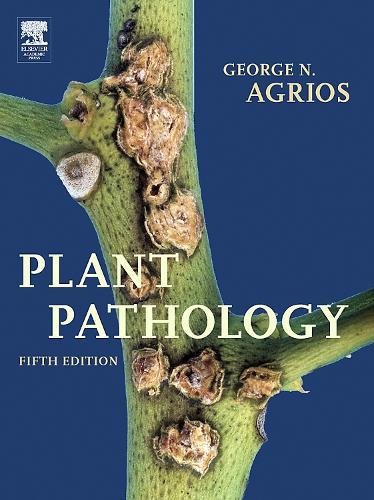
Plant Pathology by George N. Agrios (5th Edition)
- The classic comprehensive textbook on plant pathology
- Covers abiotic disorders, bacterial, viral, and nematode infections
- Annotated flow diagrams for pathogen life cycles and epidemics
- Hundreds of color photographs and illustrations of plant diseases
- Updated with discoveries since the 4th edition
- Extensive references for further reading in each chapter
Agrios’ Plant Pathology is the classic textbook in its field. The 5th edition covers everything from abiotic disorders like drought stress to detailed chapters on bacterial, viral, and nematode infections. It uses annotated flow diagrams to explain pathogen life cycles, the gene-for-gene concept, and epidemic forecasting.
Hundreds of color photographs let you see what each disease looks like before encountering it in the field. Each chapter includes extensive references for further reading. It’s ideal for undergraduate students and anyone involved in applied plant pathology research.
Best Zoology Books
These five books cover animal biology, from comprehensive introductory texts to specialized references on invertebrates. Pick based on your course requirements and whether you need a general survey or focused depth.
Integrated Principles of Zoology
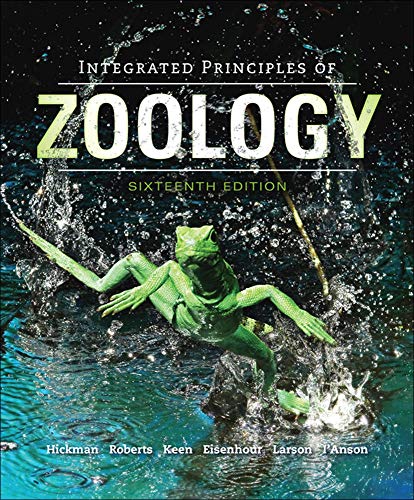
Integrated Principles of Zoology
- The bestselling zoology textbook emphasizing evolution and diversity
- High-quality illustrations and photographs throughout
- Covers physiology, ecology, evolution, and animal adaptations
- Organized into five parts for flexible one- or two-semester courses
- Written by five renowned biology experts from top universities
- Standard reference text for introductory zoology courses
This is the bestselling zoology textbook for a reason. It emphasizes evolution as the driving force behind animal diversity and describes animals’ incredible adaptations across ecological niches. The illustrations and photographs are some of the best in any biology textbook.
Organized into five parts covering biological principles, evolution, diversity, physiology, and ecology, it works for both one- and two-semester courses. The five authors are all renowned biology experts from Washington University, Morehead State, Washington and Lee, UC Davis, and University of Miami.
An Introduction to Zoology: Investigating the Animal World

An Introduction to Zoology: Investigating the Animal World
- Written for one-term undergraduate zoology courses
- Concept-driven approach rather than rote memorization
- Connects chapters show how animals relate to economics and culture
- Critical thinking questions instead of typical review questions
- Accessible writing style that avoids encyclopedic overload
- Develops scientific processing skills alongside content knowledge
Joseph Tucker Springer wrote this specifically for one-term undergraduate courses. Unlike most zoology textbooks that overwhelm you with encyclopedic detail, this one takes a concept-driven approach. It teaches you to think about zoology, not just memorize terminology.
Each chapter ends with “Connects” sections that discuss how animals relate to human life from economic, ecological, medical, and cultural perspectives. The end-of-chapter questions are thought-provoking challenges that develop your scientific processing skills, not just rote recall.
Oxford Dictionary of Zoology
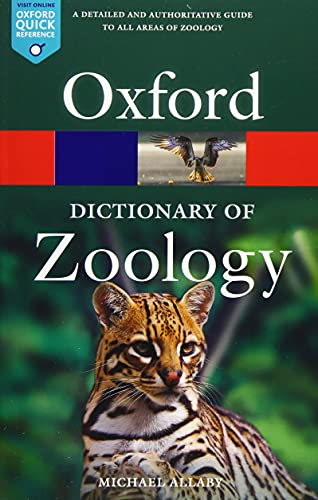
Oxford Dictionary of Zoology (5th Edition)
- 6000+ entries covering all areas of zoology
- Extensive taxonomic coverage of arthropods, fish, reptiles, birds, mammals
- Includes terms from ecology, evolution, genetics, and physiology
- 400 new entries in the latest edition with updated web links
- Common Names appendix and new illustrations
- Authoritative reference by editor of multiple Oxford dictionaries
Not a textbook in the traditional sense, but an indispensable companion to any zoology course. With 6,000+ entries covering taxonomy, ecology, evolution, genetics, and physiology, it’s the most comprehensive zoology reference dictionary available.
The latest edition adds 400 new entries, a Common Names appendix, new illustrations, and web links accessible through a companion website. Written by Michael Allaby, who also edits the Oxford dictionaries for Ecology, Plant Sciences, and Geology. Keep it on your desk alongside whatever main textbook you’re using.
Zoology by Stephen Miller
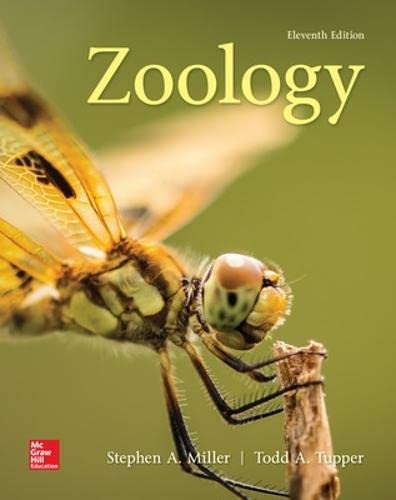
Zoology by Stephen Miller and Todd Tupper (11th Edition)
- Compact adaptable text for non-majors or combined zoology courses
- Organized in three parts: life processes, diversity, and comparative anatomy
- Full-color artwork depicting evolutionary changes in organ systems
- Covers cell biology, genetics, evolution, and ecological principles
- Suitable for first- and second-year undergraduate students
- Principle-oriented approach that builds conceptual understanding
The 11th edition of Miller’s Zoology is the best choice if you need a compact, adaptable text that works for non-majors or combined courses. It’s organized into three parts: common life processes (cell biology, genetics, evolution), animal diversity and adaptations, and comparative anatomy with full-color artwork showing evolutionary changes.
The principle-oriented approach builds conceptual understanding rather than drowning you in detail. It’s specifically designed for first- and second-year students who need a solid foundation without a 1,500-page commitment.
Invertebrate Zoology: A Tree of Life Approach
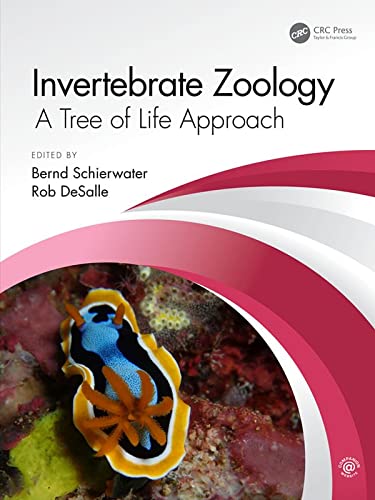
Invertebrate Zoology: A Tree of Life Approach
- Combines classical morphology with next-gen sequencing and evo-devo
- Organized along taxonomic lines using latest invertebrate phylogeny
- One of the first textbooks to merge three major biological approaches
- Ancillary materials include downloadable figures, slides, and matrices
- Detailed coverage of invertebrate diversity from phylogenetic perspective
- Written by Rob Desalle with cutting-edge research integration
Rob Desalle’s textbook is groundbreaking because it’s one of the first to combine three approaches: classical morphology, next-generation sequencing data, and evo-devo (evolutionary developmental biology). This gives you a perspective on invertebrate diversity that no other textbook offers.
The book is organized along taxonomic lines following the latest understanding of invertebrate phylogeny. It comes with extensive ancillary materials including downloadable figures, lecture slides, phylogenetic data matrices, and web links. If you’re studying invertebrate biology at any level, this is the most current and comprehensive option available.
How to Choose the Best Biology Books for Self Study
The best biology books for self study share three qualities: clear writing, strong visuals, and practice problems you can work through without a professor. Whether you’re a college student supplementing lectures or teaching yourself biology from scratch, these biology books deliver.
With 15 books on this list, here’s how to narrow it down based on where you are:
First-year biology student? Campbell Biology is the safe default. It’s the most widely assigned textbook and has the best supplementary resources. If your professor uses a different text, go with theirs.
Biology major? Solomon’s Biology is designed specifically for you. The built-in study system and self-assessment quizzes are perfect for a multi-semester commitment.
Need a botany textbook? Stern’s Introductory Plant Biology is the most current and well-rounded option. For something more engaging and less textbook-like, add What a Plant Knows to your reading list.
Zoology course? Integrated Principles of Zoology is the standard. For a lighter, one-semester option, Miller’s Zoology is compact and principle-oriented.
Graduate level? Molecular Biology of the Cell for cell/molecular biology. Plant Pathology by Agrios for plant science. Invertebrate Zoology for invertebrate specialists.
Check if your university library has copies available before buying. Many of these textbooks are available in international editions that cost significantly less. Older editions (one version back) often cover 95% of the same material at a fraction of the price. Also check if your professor requires access codes for online components, as those usually only come with new copies.
More Biology Books and Resources
- 10 Best Biology YouTube Channels for Biology Learners
- Best Physics, Chemistry & Biology Books for NEET Preparation
- How To Write Perfect Biology Notes For Quick Revision
- Cell Biology: Definition, Types, Structure and Functions
- Best Study Tools for College Students
Frequently Asked Questions
Which biology textbook is best for beginners?
Campbell Biology is the best starting point for beginners. It covers all major biology topics with clear writing, excellent illustrations, and a logical progression. Prentice Hall Biology is a good alternative if you want something more approachable with study hints and reading strategies built in.
What is the best biology book for self-study?
Campbell Biology and Khan Academy’s free online biology course together make the best self-study combination. Campbell provides the depth and practice problems, while Khan Academy videos help you understand concepts visually. Solomon’s Biology is another strong option because its built-in study system with chapter quizzes works well for independent learners.
Are older editions of biology textbooks worth buying?
Yes, in most cases. Biology fundamentals don’t change between editions. An edition that’s one version older typically covers 95% of the same material at a fraction of the cost. The main things you’ll miss are updated research examples and access codes for online resources. Check with your professor first, as some courses require specific editions for homework assignments.
Which botany book should I start with?
Stern’s Introductory Plant Biology is the best all-around choice for a botany course. It’s current, well-written, and covers all essential topics without unnecessary detail. If you want something more exploratory and less textbook-like, What a Plant Knows by Chamovitz is a fascinating read about plant senses and intelligence.
Do I need both a biology textbook and a zoology textbook?
Not usually. If you’re taking a general biology course, one of the comprehensive books (Campbell, Solomon, or Raven) covers both botany and zoology. You only need a dedicated zoology textbook if you’re taking a specific zoology course. The same applies to botany books.
What is the best zoology textbook for college?
Integrated Principles of Zoology is the standard choice for college zoology courses. It covers evolution, diversity, physiology, and ecology with excellent illustrations. For a shorter, more focused option, Zoology by Miller and Tupper works well for one-semester courses or non-majors.
Can I use YouTube channels instead of biology textbooks?
YouTube channels like Crash Course and Khan Academy are great supplements, but they can’t replace textbooks for college courses. Textbooks provide the depth, practice problems, and detailed diagrams you need for exams. Use YouTube to understand concepts visually, then reinforce with your textbook. See my list of the best biology YouTube channels for recommendations.
Biology is a broad and rewarding discipline. The right textbook makes the difference between struggling through a course and actually understanding the material. I hope this list helps you find a book that works for your specific needs. If you’re also looking for visual learning resources, pair your textbook with the best biology YouTube channels for a complete study system.
Shared this with my classmates. The descriptions for each recommendation are detailed enough to help us make informed choices.
Great compilation. This is exactly the kind of curated list that saves students hours of searching.
This list helped me find resources I didn’t even know existed. Already started with your top recommendation.
The honest assessments here are refreshing. Not just a generic list but actual opinions on what works and what doesn’t.
I’ve tried several of these recommendations and they’re all solid choices. Good to see a well-researched list.
Thank you for putting this together. As a student on a budget, knowing which resources are worth investing time in is really valuable.
I’ve been looking for a good guide like this for months. Your recommendations for biology textbooks are spot-on.
Would love to see this list updated regularly. The field changes fast and your curation is genuinely helpful.