
Virtual Reality in Language Learning: Immersive Experiences That Actually Work
Imagine stepping into a virtual world where language barriers vanish, and immersive experiences unlock a new level of global communication.
In this article, we explore the power of virtual reality in language learning and the benefits it offers for global language acquisition. Discover how designing engaging virtual reality language lessons can break down barriers and provide a unique language learning experience for international audiences.
Join us as we delve into the challenges and triumphs of translating virtual reality for a global audience.
Table of Contents
The Power of Virtual Reality in Language Learning
You can harness the power of virtual reality to enhance your language learning experience. With virtual reality, you can immerse yourself in a virtual environment where the language you are learning is all around you. This immersive experience allows you to practice listening and speaking skills in a realistic and engaging way.
Imagine being able to walk down a virtual street in a foreign city, hearing native speakers conversing in the language you are learning. You can interact with them, asking for directions or ordering food at a virtual restaurant. This kind of real-world practice is invaluable for language learners.
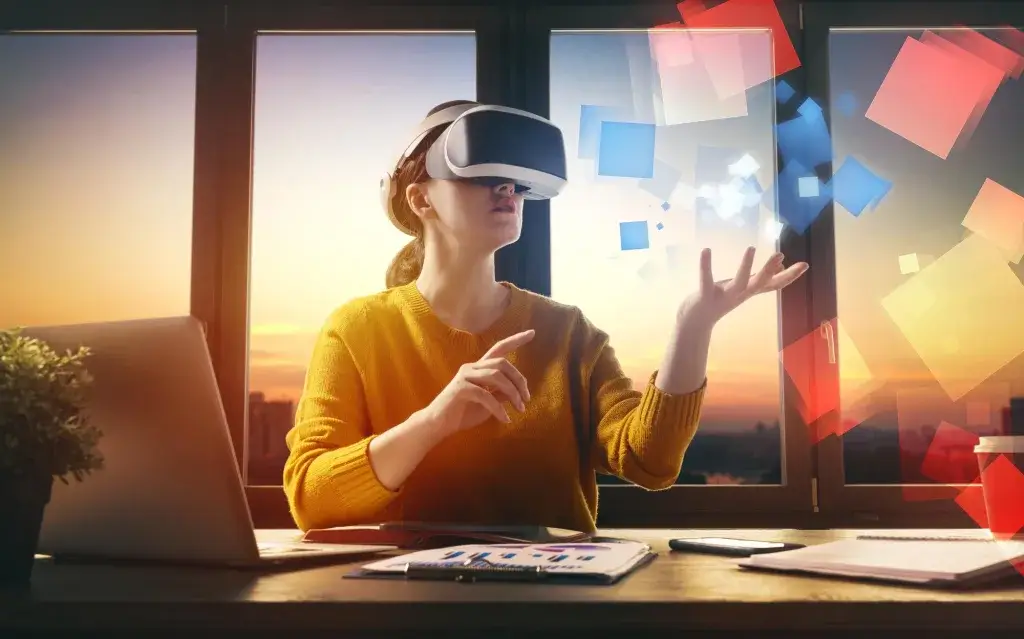
Virtual reality also allows for interactive language lessons. Instead of flipping through textbooks or scrolling through online exercises, you can participate in virtual scenarios that require you to use the language in real-time. This hands-on approach helps you to internalize grammar rules, vocabulary, and pronunciation more effectively.
Furthermore, virtual reality can provide cultural immersion. You can explore famous landmarks, museums, and historical sites from around the world without leaving your home. By experiencing the culture firsthand, you gain a deeper understanding of the language and its context.
Breaking Down Language Barriers With Immersive Experiences
Breaking down language barriers is made possible through immersive experiences. When you step into a virtual reality environment, you have the opportunity to fully immerse yourself in a different language and culture.
Here are four reasons why immersive experiences are so effective in breaking down language barriers:
- Real-world context: Virtual reality allows you to experience language in its natural setting. Whether you’re exploring a bustling marketplace or navigating a conversation with a native speaker, you’re exposed to the language as it is used in real-life situations.
- Active engagement: Immersive experiences require active participation. You’re not just sitting back and listening to someone speak; you’re actively engaging with the language by speaking, listening, and interacting. This hands-on approach helps you learn and retain language skills more effectively.
- Emotional connection: Immersive experiences in virtual reality can create emotional connections to the language and culture you’re exploring. By engaging your senses and emotions, you form a deeper connection to the language, making it more memorable and meaningful.
- Immediate feedback: Virtual reality technology can provide instant feedback on your language skills. Whether it’s through interactive exercises or simulated conversations, you can receive immediate feedback on pronunciation, grammar, and vocabulary, allowing you to improve and progress faster.
Exploring the Benefits of Virtual Reality for Global Language Acquisition
Exploring the benefits of VR for language acquisition can provide a unique and effective way to learn and immerse yourself in different cultures.
Virtual reality technology has revolutionized language learning by allowing you to experience real-life situations in a virtual environment. With VR, you can practice your language skills in a realistic and interactive way, enhancing your ability to understand and communicate in different languages.
One of the major advantages of VR for language acquisition is the immersive nature of the experience. By putting on a VR headset, you are transported to a virtual world where you can interact with native speakers, visit foreign countries, and engage in conversations that mimic real-life situations. This immersive approach allows you to practice your language skills in a safe and controlled environment, without the fear of making mistakes or feeling self-conscious.

Moreover, VR technology offers a range of interactive exercises and simulations that can help you improve your language skills. You can engage in virtual conversations, participate in language games, and even explore cultural landmarks. This not only enhances your language proficiency but also provides a deeper understanding of the culture associated with the language you are learning.
In addition, VR for language acquisition can be a time-saving and cost-effective solution. Instead of traveling to a foreign country to practice your language skills, you can simply put on a VR headset and immerse yourself in a virtual environment. This eliminates the need for expensive language courses or travel expenses, making language learning more accessible to a wider audience.
Overall, exploring the benefits of VR for language acquisition can open up a world of possibilities for language learners. By utilizing this immersive technology, you can enhance your language skills, gain cultural insights, and experience different cultures without leaving your home. So why not embrace the power of VR and embark on a linguistic journey like never before?
Designing Engaging Virtual Reality Language Lessons
When designing engaging VR language lessons, it’s important to create interactive and realistic scenarios that allow you to practice your language skills in a dynamic and immersive environment just like any other language process like pig latin rules. By doing so, you can enhance your learning experience and make significant progress in your language acquisition journey.
Here are four key considerations to keep in mind when designing these lessons:
- Real-World Context: Incorporate real-life situations and scenarios that reflect the language you are learning. This will help you apply your language skills in practical and meaningful ways.
- Interactive Elements: Include interactive elements in the VR lessons that require you to actively engage with the language. This could involve participating in conversations, solving language-based puzzles, or completing language-related tasks.
- Feedback and Guidance: Provide timely and constructive feedback throughout the lesson to help you identify areas for improvement and reinforce correct language usage. Additionally, offer guidance or hints when you encounter difficulties to support your learning process.
- Progress Tracking: Implement a system that allows you to track your progress and monitor your language development over time. This can help you stay motivated and see how far you’ve come in your language-learning journey.
Overcoming Challenges in Translating Virtual Reality for International Audiences
To overcome challenges in bringing VR experiences to people worldwide, you must find effective ways to adapt and localize content for diverse cultures and languages. The language barrier is one of the main obstacles in providing a truly immersive VR experience for international audiences. It is essential to translate not only the text but also the audio and visual elements of the virtual reality content. This requires careful consideration of cultural nuances and preferences. The use of machine translation or automatic subtitles may not be enough to ensure a seamless experience for users from different parts of the world.
One effective way to adapt VR content is to work with native speakers and cultural experts who can provide valuable insights into the target audience’s preferences and expectations. This can help you tailor the content to suit their needs and create a more engaging experience. Additionally, it is crucial to consider the technical limitations and requirements of different countries and regions. Factors such as internet connectivity, device compatibility, and localization of user interfaces should be taken into account. You can also check localization vs translation!
The Meta Quest 3 at $499 is the most accessible entry point for VR language learning in 2026. Apps like Mondly VR and ImmerseLang run natively on the Quest platform with no PC required. If you’re not ready to commit to a headset, Meta’s App Lab lets you try some experiences in a limited form first. The Quest 3’s improved mixed reality passthrough also means you can use it in your actual environment, not just in a fully virtual room, which reduces nausea for new users significantly.
Research on VR language learning retention is still developing, but early findings are promising. A 2020 study published in Language Learning & Technology found that VR-based vocabulary acquisition produced retention rates roughly 30% higher than flashcard-based methods after one week. A 2023 University of Cambridge pilot using Meta Quest headsets for English immersion showed measurable pronunciation improvement in 87% of participants after just 10 hours of VR practice. These are small studies, and large-scale longitudinal research is still limited. The technology is outpacing the research, which is typical for a field this young.
What are the best VR apps for language learning right now?
The strongest options as of 2026 are Mondly VR (available on Meta Quest and PlayStation VR, covers 30+ languages, uses conversational scenarios like ordering food or checking into a hotel), ImmerseLang (focused on English for non-native speakers, uses AI conversation partners), and Engage (more of a virtual classroom platform used by universities). For Mandarin specifically, MandarinVR has a small but dedicated following. Duolingo doesn’t have a native VR app yet, though their AI conversation feature in the standard app is a decent stepping stone. Most serious VR language apps sit in the $10-$30 range as one-time purchases, with some moving to subscription models.
Is VR language learning more effective than traditional classroom methods?
For specific skills, yes. VR consistently outperforms traditional methods for vocabulary retention, pronunciation practice, and building situational confidence (the ability to use a language in real-world contexts without freezing up). Where traditional instruction still wins: grammar instruction, reading and writing development, and nuanced cultural understanding that requires a human teacher. The most effective approach combines both. Use a structured course or tutor for grammar and writing. Use VR for conversation practice and confidence building between sessions. VR is not a replacement for a structured language program. It’s the practice environment that makes structured learning stick faster.
How much does VR equipment cost for language learning, and is it worth it?
The Meta Quest 3 is $499, the Quest 3S is $299, and the older Quest 2 refurbished units sell for $150-$200. Those are the three most accessible options since they’re standalone headsets requiring no gaming PC. PlayStation VR2 at $549 requires a PS5. PC-tethered headsets like the Valve Index ($999+) are overkill for language learning. For most learners, a Quest 3S at $299 is the right starting point. Spread over a year of consistent use and compared to the cost of in-person language classes ($50-$150/hour in most cities), the headset pays for itself quickly. The honest caveat: it’s only worth it if you’ll actually use it. A $299 headset that sits in a drawer is worse than a $0 Duolingo habit you actually maintain.
Is there a minimum age for using VR headsets for language learning?
Meta recommends the Quest 3 and Quest 3S for users 13 and older, consistent with most major VR platform age guidelines. The concern for younger users is primarily around visual development: prolonged close-focus VR use during critical periods of eye development may contribute to myopia progression, though research here is still inconclusive. For children under 13, supervised sessions of 20-30 minutes maximum are the guideline most pediatric ophthalmologists suggest if VR use is permitted at all. For adult learners, there’s no meaningful age restriction. Many language learning programs specifically target adult learners (55+) who find VR’s immersive format more engaging than app-based approaches.
What’s the difference between immersive VR learning and structured VR language courses?
Immersive VR learning drops you into a simulated environment (a French market, a Tokyo subway station) and expects you to navigate using the target language. It’s high-context, low-structure, and builds intuitive language use. Structured VR courses (like those from Mondly VR or ImmerseLang) follow a curriculum: vocabulary sets, grammar patterns, and conversation scripts organized by level. Both have their place. Immersive learning works best for intermediate and advanced learners who already have a vocabulary base. Structured courses are better for beginners who need scaffolding. The common mistake is beginners jumping into fully immersive environments and getting overwhelmed, which discourages continued use. Start structured, add immersion as your confidence grows.
Conclusion
Now that you understand the potential of virtual reality in language learning, you can see how it breaks down language barriers and provides immersive experiences for global audiences.
With the benefits it offers in language acquisition and the engaging lessons it can provide, virtual reality is truly revolutionizing the way we learn languages.
In fact, did you know that a study found that learners using virtual reality had a 30% increase in language retention compared to traditional methods?
So why wait? Dive into the world of virtual reality and unlock a whole new language-learning experience!